
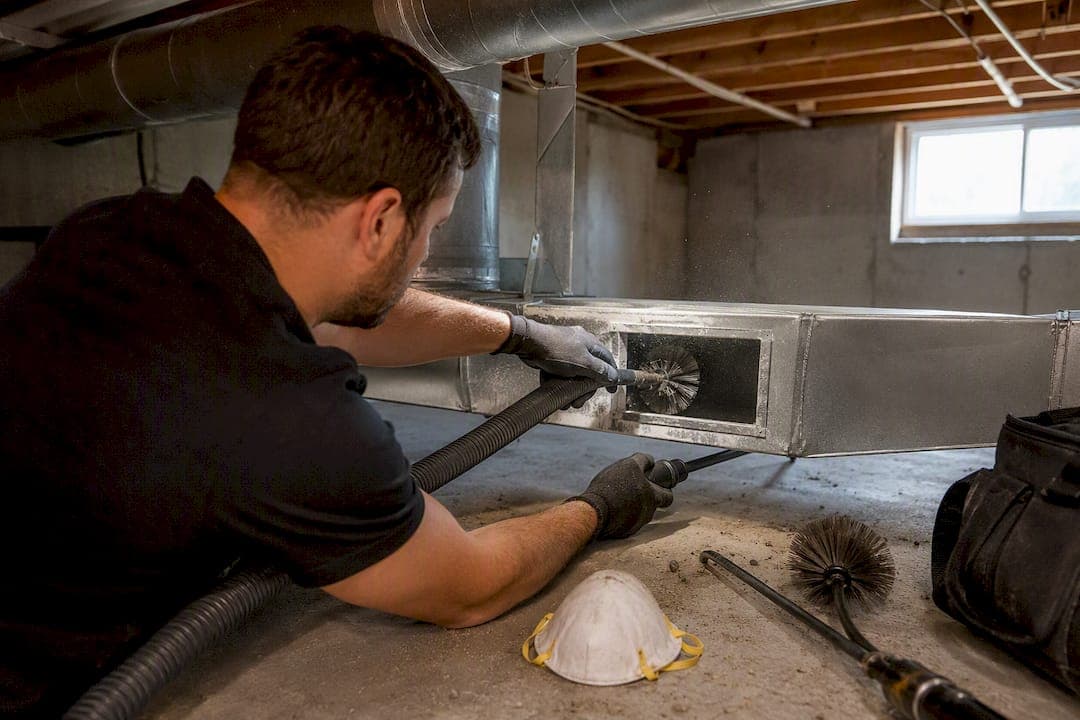
A professionally performed whole-home air duct cleaning typically costs $300 to $700 for a single-system house, with most homeowners landing near a $389 average. Per-vent pricing runs $25 to $50 a register, and per-system pricing runs $400 to $650 per unit, which is why a two-system home often lands closer to $800 to $1,200.
The spread between a cheap quote and an honest one almost always comes down to scope, not skill. A $99 "whole-home special" usually skips half the ductwork, the coil, and the air handler.
- Typical range: $300 to $700 for one system
- National average: around $389
- Watch for: teaser prices under $150 that expand fast once a technician sees your attic
Before you book anything, check the section below on getting a written, line-item quote. It's the single best defense against a $99 ad turning into a $600 upsell.
Key Takeaways
Air duct cleaning cost mainly reflects scope and system count, not location or marketing, and a written quote is the only reliable way to compare bids.
| Point | Details |
|---|---|
| Typical price range | Expect $300 to $700 for a single-system home, averaging near $389. |
| Pricing model matters | Per-system pricing ($400 to $650) is usually clearer than per-vent counts, which vary by contractor. |
| Not always necessary | The EPA advises against routine cleaning for well-maintained systems, reserving it for mold, pests, or renovation dust. |
| Add-ons add up fast | Dryer vent cleaning ($100 to $250) and coil cleaning ($150 to $400) are common but separate charges. |
| Documentation protects you | Airanddryerventcleaningavondale provides NADCA-aligned scope, before-and-after media, and air quality testing in Avondale, AZ. |
Table of Contents
- Average Air Duct Cleaning Cost by Home Size
- How Companies Price Duct Cleaning Jobs
- What Makes Your Quote Go Up or Down
- Common Add-On Services and What They Cost
- When Duct Cleaning Is Worth the Money (and When It Isn't)
- How to Get a Quote You Can Actually Trust
- What a Documented, Full-Scope Cleaning Looks Like
- Why Most Duct Cleaning Guides Get the Price Question Wrong
- Book a Full-Scope Cleaning With a Local Avondale Provider
- Sources
- FAQ
Average Air Duct Cleaning Cost by Home Size
The national average sits close to $389, but that number hides a lot of range. A small condo with eight vents and one system costs far less than a two-story house with a finished basement and a second furnace.
Here's how the math tends to break down using per-vent pricing of $25 to $50 per register:
- Small home, 1 system, 8 to 10 vents: roughly $300 to $450
- Medium home, 1 system, 12 to 15 vents: roughly $400 to $600
- Large home, 2 systems, 18+ vents: roughly $700 to $1,100
- Multi-unit or duplex with shared systems: often quoted per system, adding $400 to $650 per unit
That $271 to $509 aggregated range HomeAdvisor reports tracks closely with these scenarios once you account for register count and system age. A house built in the 1990s with original ductwork and a dusty attic run will price higher than a five-year-old build with tight, accessible trunk lines.
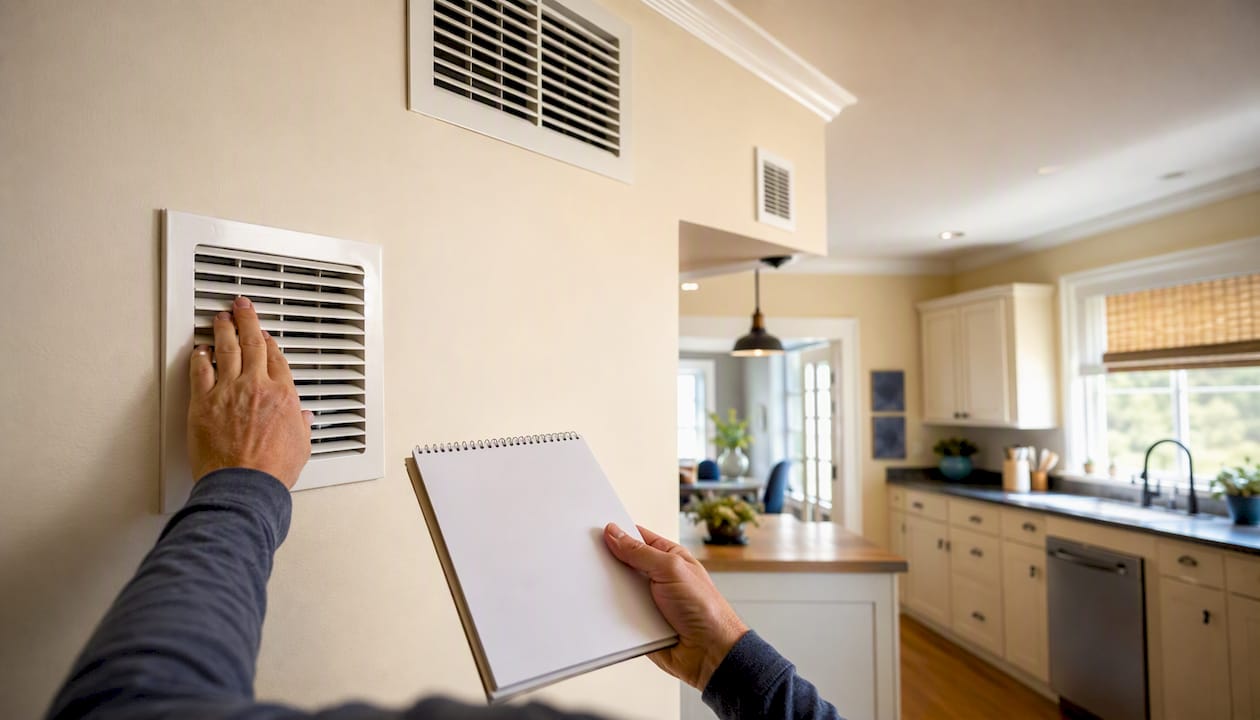
Pro Tip: Count your own vents before calling anyone. Walk each room and tally supply and return registers, then compare that number to what the quote says they're cleaning. Mismatches are the fastest way to catch a lowball bid that will balloon later.
How Companies Price Duct Cleaning Jobs
Contractors bill one of four ways, and understanding each one makes comparing bids far easier.
- Per system. Most residential jobs price this way, typically $400 to $650 per HVAC system. It covers the full loop: supply and return ducts, registers, the air handler, and usually the coil. This is the clearest model for homeowners because it's hard to hide missing scope.
- Per vent or register. Common in high-vent-count homes, running $25 to $50 a vent. It sounds transparent, but vendors count registers differently, so ask exactly what counts as a "vent" before you compare two quotes.
- Hourly. Rare for standard residential jobs, but used for unusual layouts, severe contamination, or commercial buildings where scope is hard to predict upfront. Expect a technician crew rate rather than a flat total.
- Square footage. Occasionally used by larger companies as a rough proxy for system size, though it's less precise than per-system pricing since duct length varies more with layout than floor area.
Per-system pricing is usually the easiest to trust. Per-vent pricing works fine in big homes, but only if you and the contractor agree on the count before work starts.
What Makes Your Quote Go Up or Down
Four things move the price more than anything else: how hard the ducts are to reach, how dirty they actually are, their age and condition, and where you live.
- Accessibility. Crawlspace ductwork, rooftop units, and tight attic runs take longer to reach and clean, adding labor time to the invoice.
- Contamination level. Construction dust, pest droppings, or visible mold push a job from routine to specialized, and heavy contamination can require remediation instead of standard cleaning.
- Duct age and condition. Cracked, disconnected, or crushed ductwork sometimes needs repair or replacement rather than cleaning, which is a different line item entirely.
- Local labor and overhead. Rates vary by region and by how competitive the local market is for HVAC trades.
Pro Tip: If a technician finds pest debris or heavy mold once they're already in your attic, get a written change order before they touch anything. Verbal "it'll be a little more" conversations are where surprise bills come from.
Common Add-On Services and What They Cost
Base duct cleaning rarely covers everything connected to your HVAC system. Here's what typically gets quoted separately, based on current 2026 trade pricing:
- Dryer vent cleaning: $100 to $250, and this one is worth prioritizing since a clogged dryer vent is a documented fire hazard, not just an efficiency issue.
- Blower and coil cleaning: $150 to $400, often bundled into per-system pricing but sometimes billed separately.
- Antimicrobial or sanitizing treatments: $50 to $200, and generally unnecessary unless a technician has actually confirmed microbial growth.
- Video inspection: often included with reputable providers, sometimes a $50 to $100 add-on with budget vendors.
If mold shows up during inspection, that's a different conversation. Mold remediation runs $1,200 to $3,800 or more depending on severity, and it's a separate service from standard duct cleaning entirely.
When Duct Cleaning Is Worth the Money (and When It Isn't)
The EPA's own guidance is blunt: for a properly maintained system, routine duct cleaning has little proven effect on indoor air quality. That's not what most marketing tells you, but it's the honest starting point.
Cleaning tends to pay off after specific events, not on a fixed calendar:
- Recent renovation or construction that filled ducts with drywall dust
- Confirmed pest infestation (rodents, insects) in the ductwork
- Visible mold growth inside registers or the air handler
- Musty odors that persist after filter changes
- Moving into a home with an unknown maintenance history
If none of those apply, cheaper fixes often solve the actual problem. Upgrading filters, sealing leaky duct joints, or scheduling an HVAC repair can improve comfort and efficiency for far less than a full cleaning. Most homeowners who do proceed plan on cleaning every 3 to 5 years or after one of the triggers above, not annually.
How to Get a Quote You Can Actually Trust
A reliable quote starts before the technician ever shows up.
- Walk your own house first. Count registers, note your system count, and photograph any hard-to-reach spots like attic hatches or crawlspace access.
- Ask if the technician is NADCA-certified. NADCA's standard defines a complete cleaning as supply and return ducts, registers, grilles, the air handler, blower, and coil, not just a quick vacuum of visible vents.
- Request a written, line-item scope. It should say exactly what's included, not just a total price.
- Ask for before-and-after photos or video. A provider confident in their work documents it.
- Get the price in writing before anyone starts. Verbal quotes evaporate once labor is already underway.
Watch for three red flags: an ad price under $150 for a "whole house," a mandatory upsell pitched only after the crew arrives, and any company that quotes a firm price without seeing your home first.
Pro Tip: Ask specifically whether the coil and air handler are included in the base price. That single question separates a NADCA-standard cleaning from a vents-only wipe-down that leaves the dirtiest parts of the system untouched.
What a Documented, Full-Scope Cleaning Looks Like
Airanddryerventcleaningavondale performs full-scope residential and commercial cleaning across air ducts, dryer vents, air vents, and connected HVAC components for homes and businesses in Avondale, Arizona. Jobs include duct repair, air filter replacement, and air quality testing when a homeowner wants measurable proof of what improved.
A cleaning that follows NADCA's scope should leave you with more than a cleaner-smelling house. Reputable providers document airflow before and after, photograph the ductwork at each access point, and put the covered systems in writing so you know exactly what you paid for.
- Full duct and vent cleaning with documented before/after media
- Dryer vent cleaning and repair for fire-safety compliance
- Air quality testing to verify results, not just claim them
- Flexible and after-hours scheduling with warranty-backed work
A written scope and a before-and-after record turn duct cleaning from a guessing game into a job you can verify, not just trust on faith.
Why Most Duct Cleaning Guides Get the Price Question Wrong
Most articles on this topic treat price like the only variable that matters. It isn't. The research is clear that scope determines price far more than location does, and yet nearly every "average cost" list online skips straight past that point to a single number.

The conventional advice, "get three quotes and pick the middle one," falls apart when the three quotes aren't measuring the same job. A $150 quote and a $550 quote aren't a range. They're two different services wearing the same name.
What actually matters is sequencing: figure out whether you even need cleaning before you shop price. The EPA's own stance, that routine cleaning rarely helps a well-maintained system, should reorder the entire decision process. Confirm a real trigger first, mold, pests, renovation debris, then request a scope in writing, then compare prices. Skip that order and you'll either overpay for an unnecessary job or underpay for one that skips the coil entirely.
If you take one thing from this guide, let it be this: the price question is secondary to the scope question. Solve that first.
Book a Full-Scope Cleaning With a Local Avondale Provider
If you've read this far, you already know the real risk isn't overpaying, it's paying for a job that skips the coil, the air handler, or half the ductwork. Airanddryerventcleaningavondale gives Avondale homeowners a documented, NADCA-aligned scope with before-and-after proof built into every job, so you're not left guessing what "cleaning" actually meant.
That matters most for the parts of your home other companies rush past: dryer vents that pose an actual fire risk, and duct repairs that cleaning alone can't fix. If your ductwork is older or you've noticed reduced airflow, pair a cleaning quote with an air duct replacement assessment so you know upfront whether repair or replacement makes more sense than cleaning alone. For the base service, start with a look at residential air vent cleaning in Avondale and request a written, line-item quote before anyone steps foot in your attic.
Sources
- Industry standards, specifications and resources | NADCA
- Duct Cleaning Price Guide 2026: Average Rates & How to Charge | Housecall Pro
- How Much Does It Cost to Clean Air Ducts? 2025 Data | HomeAdvisor
- Air Duct Cleaning Cost in 2026: Real Prices and When to Skip It | Home Energy Decisions
FAQ
Does cleaning air ducts really make a difference?
It depends on your starting point. The EPA notes that routine cleaning has little proven benefit for a well-maintained system, but it makes a real difference after renovation dust, pest infestation, or confirmed mold.
What is the average cost to clean air ducts?
The national average is around $389, with most single-system homes falling between $300 and $700 depending on vent count and accessibility.
How much does professional duct cleaning typically cost compared to advertised specials?
Advertised specials under $150 usually cover only a partial scope, while a full NADCA-standard cleaning covering ducts, the air handler, blower, and coil typically runs $400 to $650 per system.
How do I know if my air ducts need to be cleaned?
Look for visible mold, pest debris, persistent musty odors, or recent construction dust. Absent those signs, filter upgrades or duct sealing often solve airflow and dust problems for less money.
How often should I schedule air duct cleaning?
Most homeowners plan on every 3 to 5 years, or sooner after a renovation, pest issue, or confirmed contamination event.