
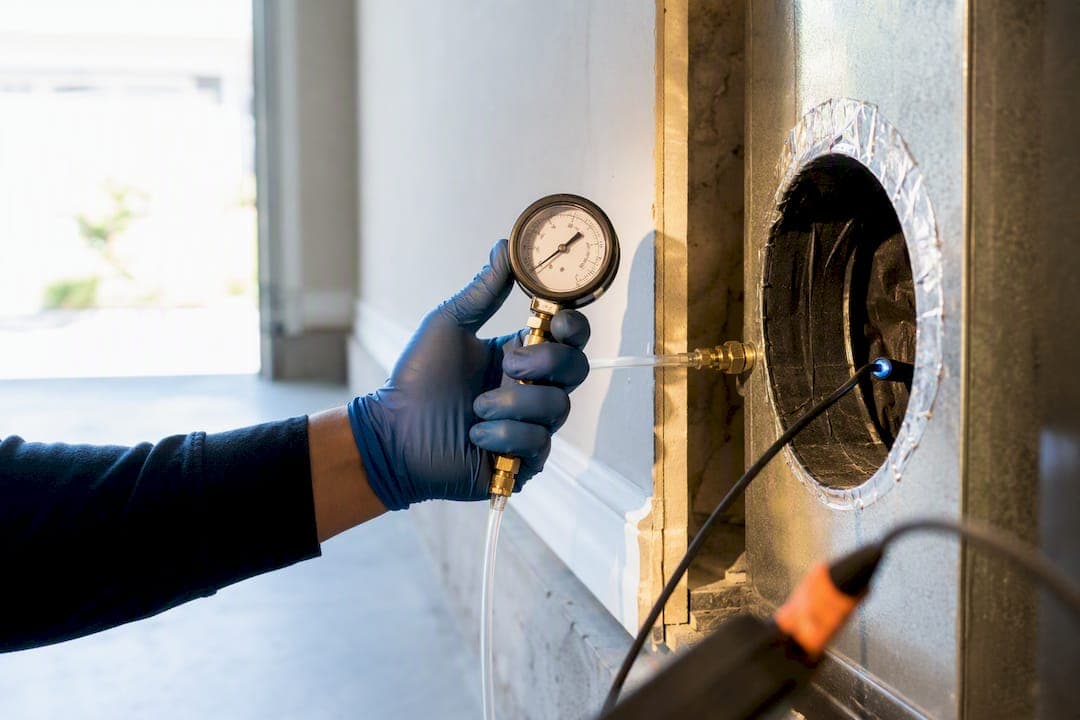
Most homeowners facing air duct cleaning vs. replacement can settle it with one question: is the problem dirt, or is it damage? Contamination, dust, pet hair, and construction debris get solved with cleaning. Crushed runs, wet insulation, or ducts that were never sized right need replacement. Before you spend a dollar on either, ask for camera footage and a static pressure reading. Those two checks tell you which category you're actually in.
TL;DR:
- Most duct problems are structural, requiring replacement when insulation is wet or porous, or when ductwork is crushed or disconnected, rather than just cleaning.
- Duct cleaning is only effective for removing contamination like dust, pet hair, or debris from remodeling, and offers limited benefits for system efficiency or air quality unless coils or filters are also serviced.
- A professional inspection with camera footage and a static pressure test is essential to accurately diagnose whether you need cleaning or replacement, preventing unnecessary costs.
- Full duct replacement costs typically range from 1,400 to 7,000 dollars, depending on home size and system accessibility, while targeted repairs are usually less expensive.
- Poorly executed cleaning can worsen indoor air quality if vacuum equipment releases contaminants instead of removing them; insist on documented diagnostics before proceeding.
Table of Contents
- Air Duct Cleaning vs. Replacement: A Quick Decision Checklist
- When Cleaning Is the Right Call
- When Replacement Is the Right Call
- Repair and Sealing: The Middle Ground Worth Considering
- What Cleaning, Repair, and Replacement Actually Cost
- What to Ask a Pro to Inspect Before You Decide
- Risks of Bad Cleaning and Common Upsell Tricks
- What the Ductwork Usually Tells Us Before We Touch It
- Get a Straight Answer on Your Ducts, Not a Sales Pitch
- Sources
- FAQ
Air Duct Cleaning vs. Replacement: A Quick Decision Checklist
You can sort most duct problems into a short list before a technician ever shows up. Walk through your vents and returns with a flashlight and check for the following:
- Visible mold or heavy debris at vent openings usually means cleaning or targeted debris removal solves it.
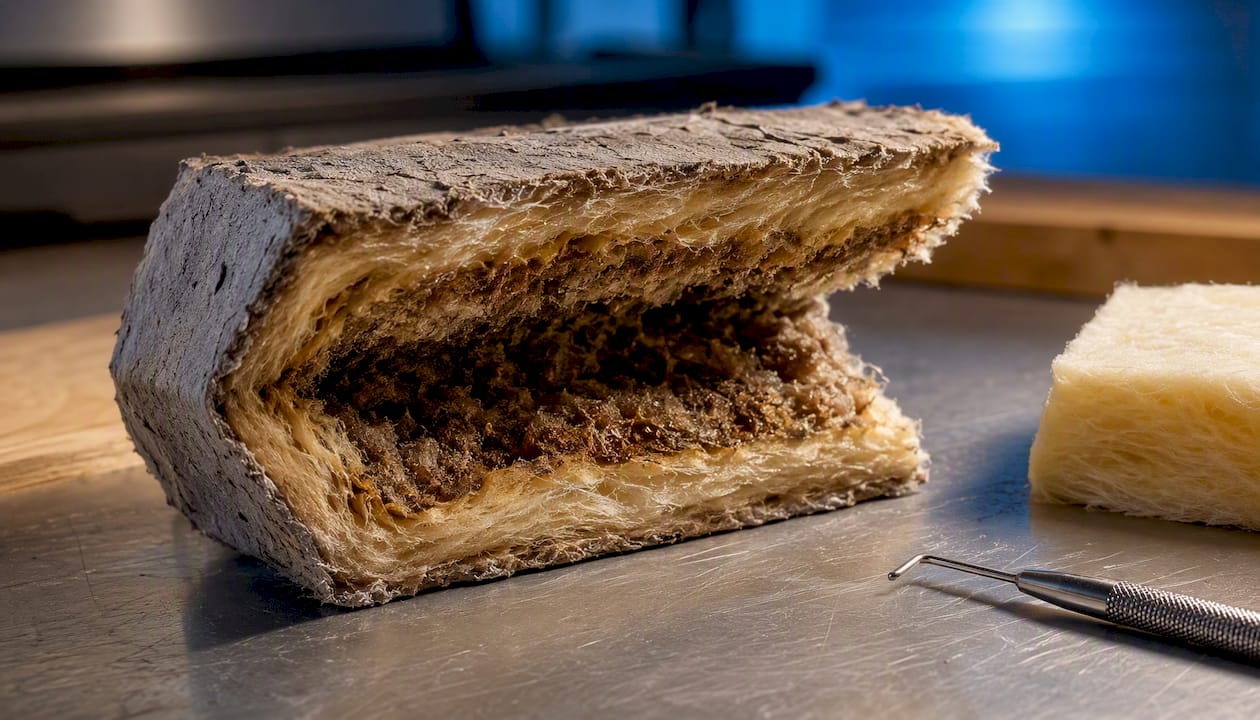
- Insulation inside the ducts that's wet, crumbly, or peeling almost always means replacement, since porous material that's absorbed moisture can't be cleaned back to a safe state.
- Sections that are crushed, disconnected, or that keep failing point toward replacement rather than repeated patch jobs.
- Isolated leaks or a single damaged joint are usually a repair and sealing job, not a full system replacement.
- Uneven airflow, rooms that never cool right, or a system that runs constantly are signs you need real diagnostics before spending on either option.
If your situation doesn't fit neatly into one of these, that's the signal to call for an inspection rather than guess. A camera run through the ductwork combined with a static pressure test tells a technician whether you're dealing with a contamination problem or a structural one, and guessing wrong here is how homeowners end up paying twice.
When Cleaning Is the Right Call
Cleaning earns its cost when there's something to actually remove: dust buildup, pet dander, rodent or insect debris, or the fine construction dust that settles into ductwork after a remodel. It also helps when a dirty blower wheel or coil is choking airflow, since removing that buildup can restore performance that cleaning the ducts alone wouldn't touch.
The EPA does not recommend cleaning ducts on a fixed schedule. The agency advises cleaning only when there's substantial visible mold, a pest infestation, or heavy debris, treating it as an as-needed fix rather than routine maintenance.
That guidance matters because plenty of cleaning companies sell it as an annual habit. It isn't one. Here's what to expect and watch for:
- Cleaning removes contamination; it does nothing for undersized or damaged ductwork.
- Little evidence shows that cleaning the ducts alone improves system efficiency unless the coils, fan, or heat exchanger were also serviced.
- Consumer testing has found duct cleaning rarely improves indoor air quality for homes without obvious contamination. Filters and coil maintenance often deliver more for the money.
- Reputable technicians document their work with vacuum equipment specs and before/after camera footage. If a company can't show you either, that's a red flag.
Pro Tip: Ask any cleaning company what HEPA-filtered vacuum system they use before work starts. An underpowered or improperly sealed vacuum setup can pull contaminants back into your living space instead of removing them.
When Replacement Is the Right Call
Replacement stops being optional once the problem is structural rather than surface level. Wet or porous insulation inside fiberglass ductwork or duct board can't be sanitized. Once moisture gets into that material, it stays a mold risk no matter how thoroughly it's vacuumed, and cleaning it just spreads spores through the system.
The same goes for ducts that were sized wrong from the start. If your system is running above its rated external static pressure, roughly 0.5 inches of water column on most residential equipment, the ductwork is fighting the blower on every cycle. That shows up as higher energy bills, short-cycling equipment, and rooms that never balance out no matter how many times you adjust the dampers.
Other clear signals point the same direction:
- Crushed or disconnected runs, often from attic foot traffic or age, that can't be reliably resealed.
- Repeated blower motor or capacitor failures, which can indicate the system has been straining against bad duct geometry for years.
- Extensive leakage across multiple joints rather than one isolated spot.
- Ductwork installed decades ago that predates current sizing standards, especially if you've since upgraded the furnace or air conditioner.
Replacement costs more upfront, but it comes with a real payoff: correctly sized ductwork paired with new equipment tends to run quieter, last longer, and hold its warranty coverage. Cleaning an undersized system just delays the real fix.
Repair and Sealing: The Middle Ground Worth Considering
Not every problem needs a full system replacement. A lot of duct issues are solved with targeted work that costs a fraction of a full tear-out:
- Reconnecting or replacing short runs where a single section has come loose or degraded, without touching the rest of the system.
- Sealing joints and seams with mastic rather than tape, which holds up far longer under temperature swings in an attic or crawlspace.
- Replacing damaged boots and registers where airflow escapes before it reaches the room.
- Pairing a repair with a cleaning when the affected section also has accumulated debris, so you're not paying for two separate visits.
A repair is durable when it's sealed with mastic, tested afterward for leakage, and backed by a warranty. It's a stopgap when a technician tapes over a problem and moves on. Ask for before and after camera footage on any repair. If they can't show you the fix, don't pay for it as a permanent solution.
What Cleaning, Repair, and Replacement Actually Cost
Prices vary by home size, duct material, and access, but there are real ranges worth knowing before you get quotes.
- Professional duct cleaning typically runs $270 to $1,000, depending on square footage and how many vents and returns need service.
- Targeted repairs and sealing usually fall well below full replacement cost, often a few hundred dollars per affected section.
- Full duct replacement can run into the thousands, with the real-world range for many homes landing between $1,400 and $7,000 depending on home size and how much of the system needs to come out.
Cleaning jobs usually finish in a few hours. Repairs depend on access; a boot swap in an open attic takes less time than sealing runs buried in a finished ceiling. Full replacement can take a full day or more depending on how much crawlspace or attic work is involved. Whatever you're comparing quotes on, insist on a written scope, a stated warranty period, and documentation of what was actually found before work started. The cheapest bid on paper isn't the best value if it skips the diagnostics that tell you what you're actually paying to fix.
What to Ask a Pro to Inspect Before You Decide
The diagnostics matter more than the sales pitch. Two measurements separate a contamination problem from a structural one, and you should ask for both before agreeing to any major work.
- Camera inspection shows dust, mold, pest debris, disconnected sections, and crushed runs directly, rather than relying on someone's guess.
- Static pressure reading, taken with filters and registers in their normal operating position, tells you whether the system is working within its rated range or straining against undersized ductwork.
- Coil and blower inspection catches buildup that's dragging down airflow independent of the duct condition itself.
- Humidity and register airflow checks flag comfort problems that duct work alone won't fix, including issues better solved with filtration or ventilation.
Camera footage paired with a static pressure reading is the standard way professionals separate contamination issues from geometry and capacity problems, and it's worth asking for both in writing, not just a verbal summary.
Pro Tip: A quality inspection should end with photos or video, a written measurement of static pressure, and a specific recommendation, not just a verbal "you need new ducts." If a company can't produce that paperwork, get a second opinion before you sign anything.
Risks of Bad Cleaning and Common Upsell Tricks
Improper duct cleaning isn't harmless. The EPA warns that an inadequate vacuum collection system can release contaminants back into the home instead of removing them, which is worse than doing nothing at all.
Watch for these warning signs before hiring anyone:
- A quote for full replacement with no camera footage or static pressure numbers to back it up.
- Pressure to sign the same day, especially paired with a "limited time" discount.
- No mention of NADCA membership, references, or documented before/after evidence.
Pro Tip: Get two independent quotes before committing to replacement. Pair that with a filtration upgrade, since Harvard's public health researchers point out that HEPA purifiers and MERV 13 filters do meaningful work reducing indoor particulates regardless of what you decide about the ducts themselves.
What the Ductwork Usually Tells Us Before We Touch It
Most of the ductwork we open up tells its own story before we say a word. Crushed flex runs in an attic, insulation that's gone soft from years of condensation, boots that were never sealed to begin with. Camera footage first, every time, because guessing at what's inside a wall or attic cavity is how homeowners get sold work they don't need.
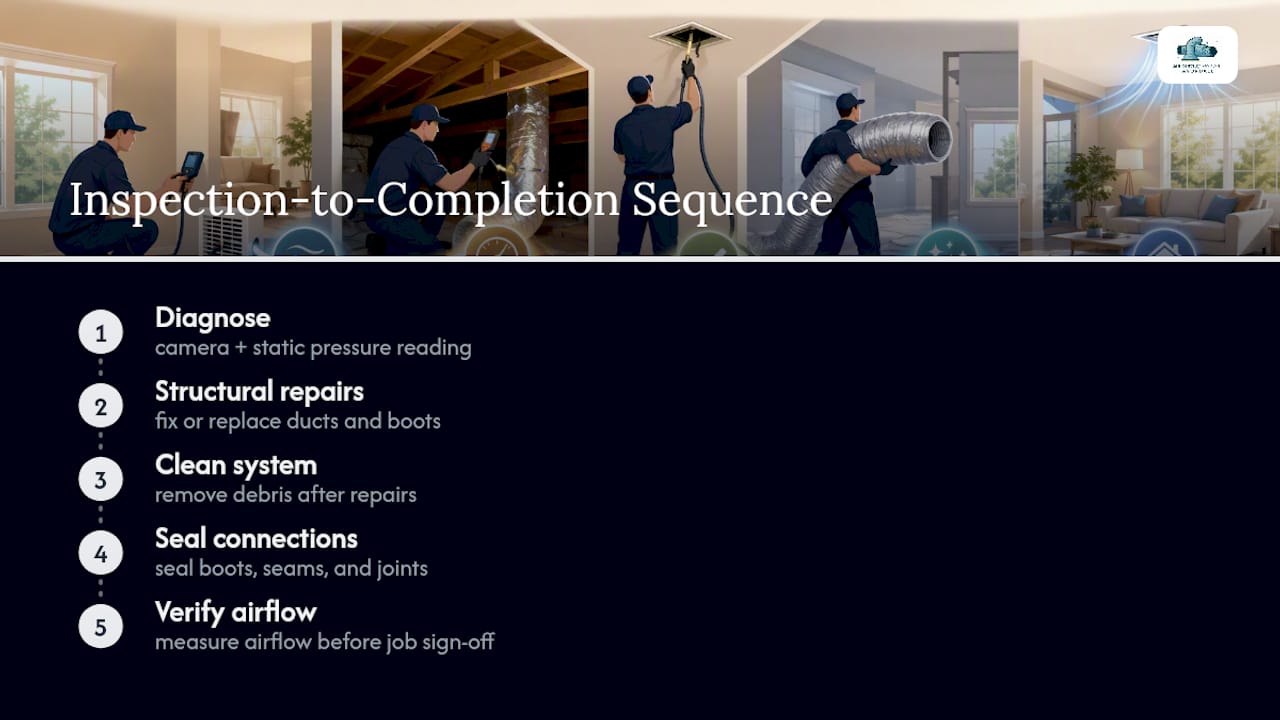
Our sequence stays consistent: diagnose with a camera and static pressure reading, fix or replace anything structural first, clean what's left, seal the connections, then verify airflow before we call the job done. Cleaning a system before repairing a leak just pushes old debris through new sections. That order isn't a sales script. It's what actually prevents a callback six months later.
— Shaun
Get a Straight Answer on Your Ducts, Not a Sales Pitch
Some companies run camera inspections and static pressure checks before recommending anything, so you can pay for the fix your ductwork actually needs, not whichever service pays out the biggest ticket. If your ducts turn out to be a contamination problem, our air duct cleaning service handles it with documented, professional-grade equipment.
If the footage shows crushed runs, wet insulation, or a system fighting its own static pressure, our air duct replacement team scopes out a written plan with a real warranty attached, not a verbal estimate. We also handle air quality testing if you want a clearer picture of what's actually circulating through your home before deciding. Whatever your inspection turns up, request a written scope and documented camera footage as part of any quote. Reach out to a professional HVAC contractor in Avondale, AZ to schedule an inspection and get an honest answer on which path your ductwork actually needs.
Sources
- Should You Have the Air Ducts in Your Home Cleaned? | US EPA
- Simple steps for improving indoor air quality | Harvard T.H. Chan School of Public Health
- So, Is Duct Cleaning Kind of a Scam? We Asked the Experts. | Reviews by Wirecutter
- How Much Does Air Duct Replacement Cost? (2026 Pricing)
FAQ
What Are the Downsides to Air Duct Cleaning?
Cleaning offers little benefit if there's no real contamination to remove, and improperly executed cleaning with weak vacuum equipment can actually release dust and debris back into your home instead of removing it.
How Much Does It Cost to Replace Ductwork in a 2,000-Square-Foot House?
Costs vary by access and material, but full replacement for a typical home commonly falls in the $1,400 to $7,000 range, with larger or harder-to-access homes landing at the higher end.
Is It Worth It to Clean Ducts When You Buy a House?
It's worth an inspection first. A camera check tells you whether the previous owner's ductwork has real contamination worth cleaning or structural issues that cleaning won't fix.
How Do I Know If My Ductwork Needs to Be Replaced?
Wet or crumbling insulation, crushed or disconnected runs, and a static pressure reading above your equipment's rated limit are the clearest signs. A professional inspection with camera footage confirms it before you commit to the cost.