
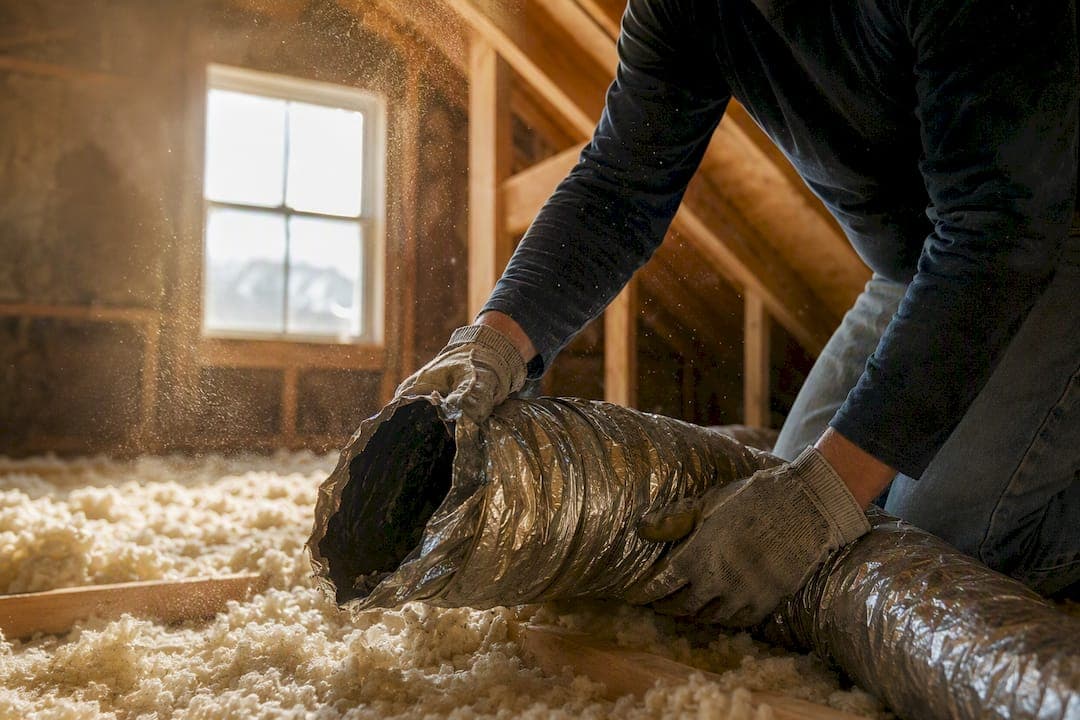
Full air duct replacement typically runs $1,400 to $7,000, averaging around $3,500, with per-foot pricing near $9 to $25 for flex or spiral duct and $20 to $60+ for custom sheet metal. Since ducts commonly leak 20 to 30% of the air moving through them, sealing or targeted repair often solves the comfort problem for far less than a full swap. Replace outright only when you're dealing with visible damage, mold, asbestos wrap, or ducts too small for a new system. A company like Air Duct and Dryer Vent Cleaning Avondale can inspect first and tell you which category you're in.
TL;DR:
- Replacing ducts can cost between $1,400 and $7,000, but sealing leaks often provides similar comfort improvements at a much lower price.
- Labor accounts for 40 to 60 percent of the total cost, especially in hard-to-access areas like finished basements or cramped crawl spaces.
- Full replacement is necessary only if ducts are physically damaged, moldy, contain asbestos, or are severely undersized for a new HVAC system.
- Sealing options like mastic or Aeroseal can reduce leaks for $300 to $3,500, offering cost-effective alternatives to costly full replacements.
- Accurate quotes depend on detailed scope and inspection, as structural damage or hidden issues often drive costs higher than material prices alone.
Table of Contents
- How Much Does Air Duct Replacement Cost Nationally?
- How Much Should Duct Replacement Cost for Your Home Size?
- What Factors Affect the Cost of Duct Replacement?
- Are There Cheaper Alternatives to Full Duct Replacement?
- How Do You Get an Accurate Duct Replacement Quote?
- When Is Air Duct Replacement Actually Necessary?
- What Extra Costs Should You Budget for Duct Replacement?
- Can You Replace Air Ducts Yourself?
- What I've Learned Inspecting Ducts Around Avondale
- Get an Inspection Before You Commit to a Number
- Sources
- FAQ
How Much Does Air Duct Replacement Cost Nationally?
The national picture is wider than most homeowners expect. Industry estimates put full ductwork installation anywhere from $1,500 on the low end to $20,000+ for large or oddly configured homes, though many residential jobs typically fall in a moderate price range. Typical averages are moderate for single-family home replacements.
Per-linear-foot pricing is the number contractors actually use to build a quote, and it varies a lot by material:
| Duct material | Installed cost per linear foot |
|---|---|
| Insulated flex duct | $9 to $16 |
| Spiral metal duct | $9 to $25 |
| Rigid sheet metal | $20 to $60+ |
| Fiberglass duct board | $16 to $19 |
This Old House pegs a common planning figure at $16 to $19 per foot, which puts a 200 foot run around $3,100 to $3,700 before extras.
Here's what most homeowners underestimate: labor, not material, drives the bill.
- Labor typically accounts for 40 to 60% of the total invoice.
- Tight attic access, crawl spaces, or finished ceilings can double the labor hours on an otherwise average job.
- Removing old ductwork before installing new adds real time, which is why replacement projects run about 25% higher than fresh installs in a new build.
How Much Should Duct Replacement Cost for Your Home Size?
Square footage is a rough proxy for linear feet of ductwork, but layout matters more than raw size. A single-story ranch with a central trunk line needs far less duct than a two-story home with multiple zones.
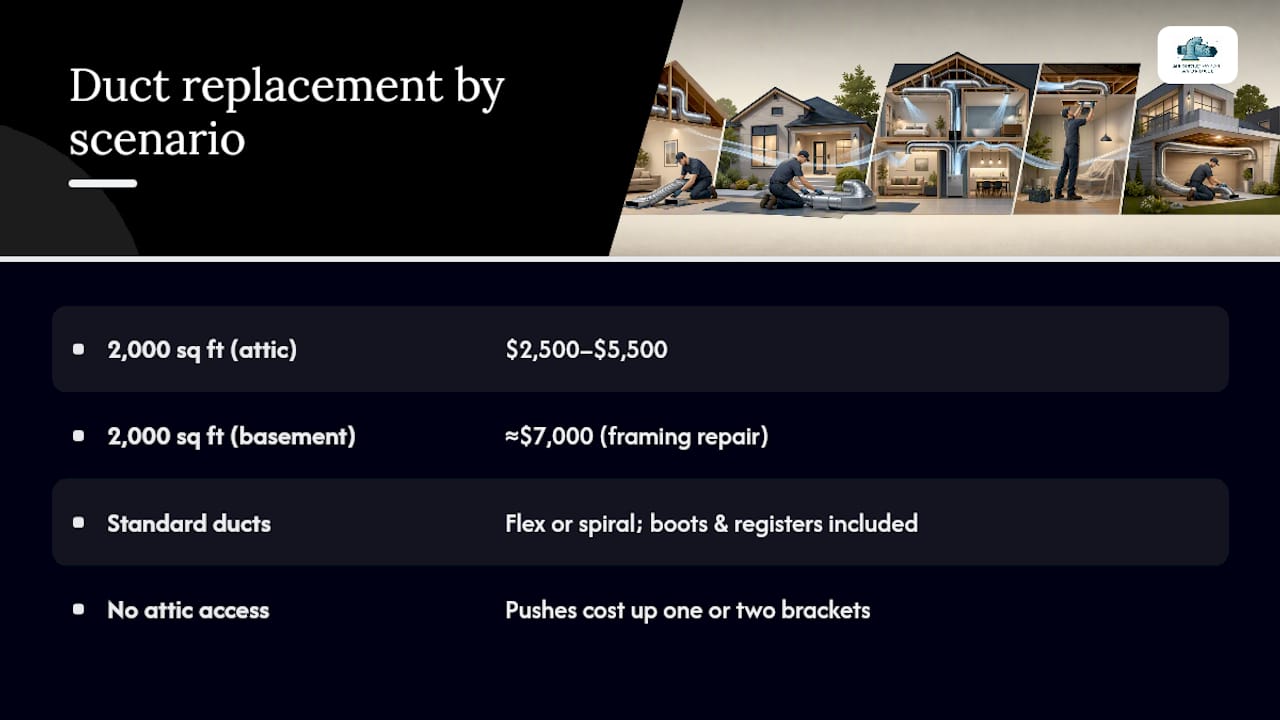
These ranges assume accessible attic space, standard flex or spiral duct, and new boots and registers included in the scope. A crawl space or a home with no attic access can push the same square footage into the next bracket up, sometimes two.
A 2,000 square foot home with a reachable attic and no drywall demo usually lands around $2,500 to $5,500 total. That same home with ducts buried in a finished basement ceiling can climb toward $7,000 once you add framing repair and patching. Size alone never tells the full story.
What Factors Affect the Cost of Duct Replacement?
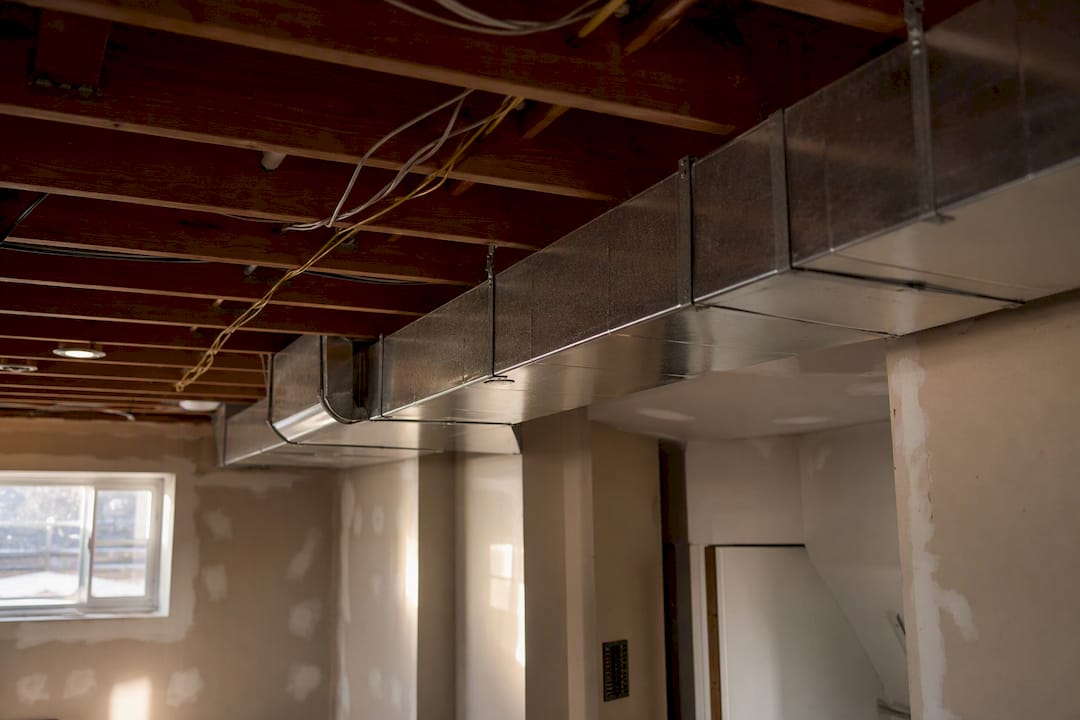
Two houses of identical square footage can get bids $3,000 apart, and access is usually why. A crew working in an open, walkable attic moves fast. A crew snaking new trunk lines through a finished ceiling or a cramped crawl space burns hours, and hours are what you're paying for.
Several variables stack on top of each other in every bid:
- Access type: attic work is fastest and cheapest; basement, crawl space, and in-wall runs add labor hours and sometimes require opening drywall.
- Material and insulation level: sheet metal costs more upfront but often outlasts flex duct by decades; higher R-value insulation adds a few dollars per foot but pays back on comfort.
- Scope: a partial swap of one damaged run costs far less than replacing every trunk and branch, but full replacement lets a contractor correct sizing errors and rebalance airflow with a proper Manual J calculation.
- Permits and inspections: many jurisdictions require a permit for ductwork changes, and skipping one can complicate a future home sale.
- Local labor rates and code requirements: some regions enforce stricter insulation or sealing standards similar to California's Title 24, which can raise material specs and cost.
Pro Tip: Ask whether your contractor is quoting a full system replacement or just the damaged sections. "Replace the ducts" means very different things depending on scope, and that ambiguity is where budgets blow up.
Are There Cheaper Alternatives to Full Duct Replacement?
Full replacement isn't always the right call, and treating it as the default is how homeowners overspend. Since a quarter or more of conditioned air typically escapes through leaky joints, sealing is often the higher-value move dollar for dollar.
- Manual mastic sealing: roughly $300 to $1,500 depending on system size, usually sufficient when ducts are structurally sound but leaking at joints.
- Aeroseal: an aerosolized sealant blown through the duct system that bonds to leak edges from the inside, typically priced $1,500 to $3,500 for a whole-house job. It works well when ducts are otherwise intact but riddled with small, hard-to-reach leaks.
- Spot repair and re-insulation: $200 to $800 per section, generally extending duct life another 5 to 10 years when damage is localized.
| Option | Typical cost | Best for |
|---|---|---|
| Mastic sealing | $300 to $1,500 | Leaky joints, sound structure |
| Aeroseal | $1,500 to $3,500 | Hidden leaks, hard-to-reach seams |
| Spot repair | $200 to $800 per section | Localized crushing or disconnection |
| Full replacement | $1,400 to $7,000+ | Structural damage, mold, asbestos, undersizing |
The decision rule is simple: if you see structural damage, mold, wet insulation, or asbestos wrap, replace it. If the ducts are intact and just leaky or undersized in a spot or two, seal or repair first and see how much airflow you recover.
How Do You Get an Accurate Duct Replacement Quote?
Vague quotes are how homeowners end up with change orders halfway through a job. Treat estimate-gathering like a checklist, not a favor.
- Collect three written quotes and insist each one break out linear-foot pricing rather than a single lump sum.
- Confirm what's included: removal and disposal of old ductwork, new boots and registers, testing and balancing after install, and permit fees.
- Ask for the hourly labor rate and estimated crew hours, which tells you whether the bid is realistic for your access conditions.
- Request licensing and references, and call at least one past customer if the contractor is new to you.
- Watch for red flags: a scope with no mention of airflow testing, a contractor who suggests skipping the permit, or a bid dramatically lower than the other two.
A homeowner's guide to comparing contractor estimates built for a different trade still applies here: the goal is always to compare identical scopes, not just bottom-line numbers.
When Is Air Duct Replacement Actually Necessary?
Replacement earns its cost when the ducts themselves have failed, not just underperformed. A few conditions push the decision firmly toward full replacement rather than repair:
- Visible physical damage: crushed, disconnected, or torn duct runs that can't be patched reliably.
- Wet or moldy insulation, which has to be removed and replaced rather than cleaned.
- Asbestos-wrapped insulation, common in homes built before the 1980s.
- Severe undersizing relative to a new HVAC system, which no amount of sealing will fix.
Our recommended sequence starts with a visual inspection and a leak test, not a demolition estimate. If the system passes and just needs sealing or a spot repair, we handle that and retest airflow afterward. If it fails on structural or contaminant grounds, we write an itemized quote before any work begins, so you're approving a scope, not a guess. Post-job testing confirms the fix actually improved airflow rather than just looking better on paper.
What Extra Costs Should You Budget for Duct Replacement?
The base per-foot number rarely reflects what you actually pay. Line items that get left off cheap bids tend to show up as change orders once the crew opens a wall.
- Permits and inspections: typically $50 to $500 depending on your municipality, triggered by most full-replacement projects.
- Drywall repair and finishing: $1,000 to $4,000 when ductwork runs through a finished ceiling that has to be opened and patched.
- Asbestos abatement: $1,500 to $4,500 for older homes with asbestos-wrapped insulation, usually handled by a separately licensed abatement firm.
- Federal tax credits and utility rebates: some efficiency upgrades tied to duct sealing or HVAC replacement qualify for federal energy credits or local utility rebates, though eligibility depends on your system's efficiency rating and your utility's current program.
Roughly a quarter to nearly a third of conditioned air escapes through duct leaks in a typical system, which is exactly why a sealing-first approach often pays for itself faster than a full rebuild.
Can You Replace Air Ducts Yourself?
Duct sizing, sealing, and airflow balancing look simple until the system underperforms in a way you can't diagnose. A trunk line sized wrong by a few inches can throttle airflow to an entire wing of the house, and there's no way to spot that from a tape measure alone.
- Common DIY mistakes: undersized trunk lines, tape used where mastic was needed, missed leaks at boot connections, and failed inspections that delay closing on a home sale.
- Basic maintenance, like replacing a filter or vacuuming an accessible register, is fine to handle yourself.
- Anything involving cutting into ductwork, resizing runs, or working near suspected asbestos calls for a licensed HVAC contractor.
What I've Learned Inspecting Ducts Around Avondale
The surprise cost almost never comes from the ductwork itself. It's the drywall that has to come down to reach it, or the asbestos abatement nobody budgeted for because the house was built in the 1970s. I've seen sealing jobs under $1,000 solve comfort complaints that homeowners assumed meant a $6,000 replacement. I've also seen crushed, moldy runs in a crawl space where sealing would have been a waste of money.
The pattern holds: inspect before you commit to either extreme, then act on what the ducts actually show. If you're at that decision point, our duct repair and replacement page walks through what an inspection covers.
— Shaun
Get an Inspection Before You Commit to a Number
Air Duct and Dryer Vent Cleaning Avondale is the alternative to guessing your way through a duct project: a real inspection and leak test before you spend a dollar on repair or replacement, so the number you get is based on what's actually behind your walls, not a phone-estimate average. Our inspection checks duct condition, tests for leakage, and results in an itemized written quote, so you know upfront whether sealing solves the problem or replacement is genuinely required.
We handle everything from mastic sealing and spot repairs to full replacement, with post-job airflow testing included so you're not left wondering whether the work actually improved anything. Warranties and flexible scheduling, including after-hours appointments, come standard. If your ducts are due for a look, book an air duct inspection and get a written quote before committing to a full rebuild you may not need. We also handle dryer vent cleaning and indoor air quality testing if you want the whole system checked at once.
Sources
- Air Duct Replacement Cost in 2026: By Foot, By Home Size, and When to Seal Instead | Home Energy Decisions
- What Does HVAC Duct Installation Cost? - Trane®
- How Much Does Air Duct Replacement Cost? (2026)
- How much does it cost to install ductwork? | Fixr
FAQ
Is it worth it to replace ductwork?
It's worth it when ducts show structural damage, mold, asbestos wrap, or severe undersizing. If the system is intact but leaky, sealing or spot repair usually delivers similar comfort gains for a fraction of the cost.
How much does it cost to replace ductwork in a 1,500 sq ft house?
Expect roughly $1,400 to $3,000 for a 1,000 to 1,500 square foot home with accessible attic space, based on typical per-foot pricing of $9 to $25 depending on material.
Does homeowners insurance cover air duct replacement?
Standard homeowners insurance generally does not cover duct replacement from normal wear, but it may cover damage from a covered event like a fire, burst pipe, or storm. Check your specific policy language before assuming coverage.
Can I replace air ducts myself?
Duct sizing, sealing, and airflow balancing require specialized knowledge, and mistakes like undersized trunk lines or poor sealing can hurt comfort and fail inspections. Basic maintenance is fine for homeowners, but cutting into or resizing ductwork should go to a licensed HVAC contractor.