
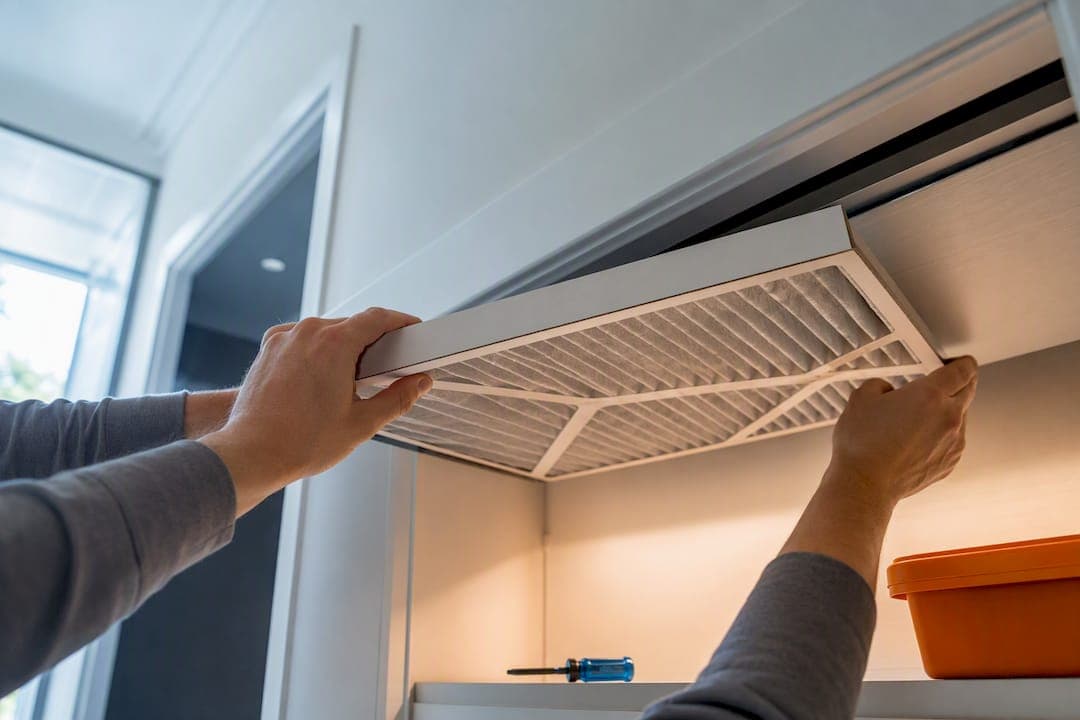
Expect to pay $40 to $200 for a professional residential filter replacement, or $10 to $150 if you buy the filter yourself and skip labor. Commercial jobs run wider, from about $150 for a single rooftop unit to $4,500 for a full multi-unit change. Most homeowners can DIY monthly swaps just fine. Book a professional for annual inspections, warranty compliance, or any system with rooftop access or multiple units.
TL;DR:
- Professional costs for residential filter replacement range from $40 to $200, with DIY options costing $10 to $150 depending on filter grade.
- Commercial projects vary widely, from about $150 for a small rooftop unit to $4,500 for large multi-unit systems, influenced by unit complexity and access difficulty.
- High-MERV pleated filters are significantly more expensive than basic fiberglass filters, with costs increasing based on size, customization, and installation challenges.
- Annual professional inspections are recommended to ensure proper sealing, correct filter fit, and to detect issues like coil icing or airflow restrictions that can cause costly damage.
- Proper filter management offers a high return on investment, with industry estimates of up to 1,600% when energy savings and equipment longevity are factored in.
Table of Contents
- Air Filter Replacement Cost Breakdown by Job Type
- DIY Filter Swaps vs. Hiring a Professional
- What Actually Drives the Price Up or Down
- What a Professional Visit Actually Covers
- Budgeting for Filter Replacement Over a Year
- Why the Cheapest Filter Rarely Wins Long Term
- Get a Filter Replacement Quote from Local Specialists
- Sources
- FAQ
Air Filter Replacement Cost Breakdown by Job Type
The number on a quote depends on four things: the filter itself, the labor to install it, the equipment needed to reach it, and what happens to the old one afterward. A basic fiberglass filter might cost $5. A high-MERV pleated filter in a custom size can run $60 or more per unit. Labor is where professional visits earn their keep, and that typically includes a trip fee or minimum service charge layered on top of the filter cost itself.
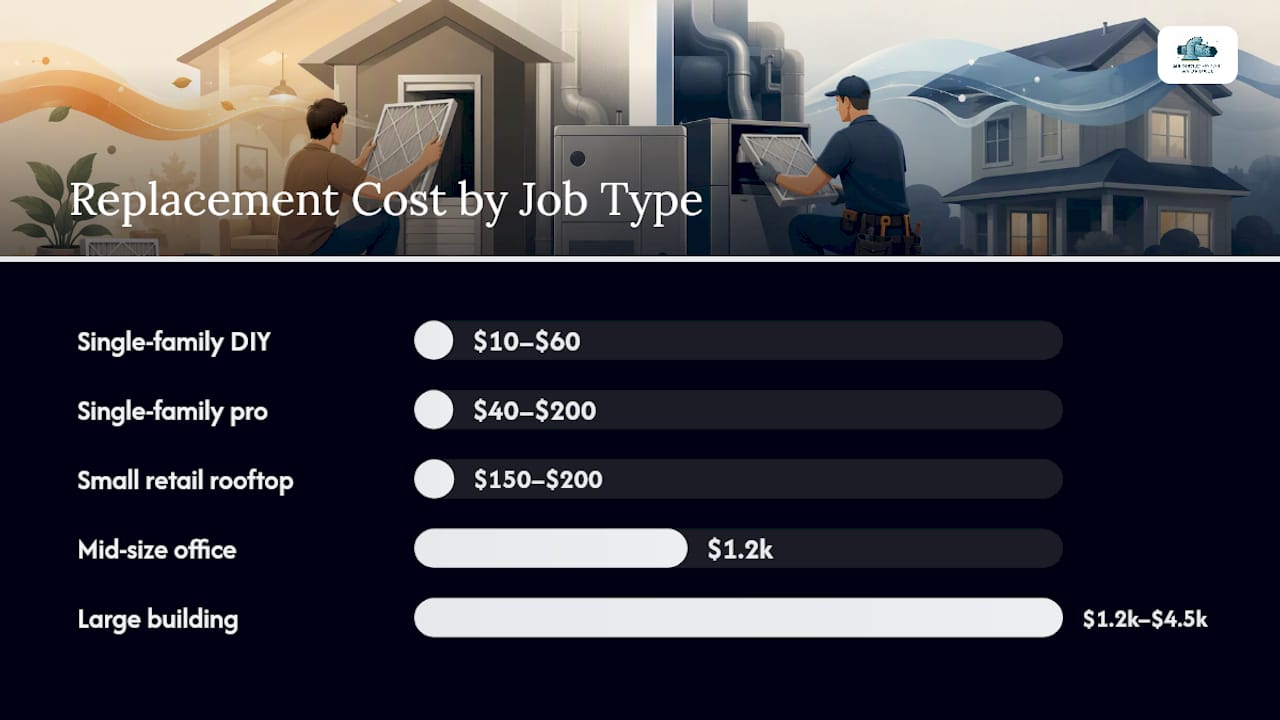
For a single-family home, a standard pro visit lands in the $40 to $200 range, with the lower end covering a straightforward swap and the higher end reflecting premium filters or add-on diagnostics. Retail filters alone, if you're buying without labor, span $10 to $150 depending on filter class.
Commercial pricing scales with the number of units and how hard they are to reach. A small retail space with one rooftop unit might see a bill starting around $150, while a mid-size office with several air handlers often lands somewhere in the middle of that spread. A large building with multiple rooftop units, lift rental, and specialty filtration can hit $1,200 to $4,500.
| Scenario | Filter Type | Estimated Total |
|---|---|---|
| Single-family home, DIY | Standard pleated | $10–$60 |
| Single-family home, pro visit | Pleated or HEPA-style | $40–$200 |
| Small retail unit, one rooftop AC | Commercial pleated | $150–$200 |
| Mid-size office, multiple air handlers | High-MERV commercial | $1,200 |
| Large building, full multi-unit change | Specialty/HEPA filtration | $1,200–$4,500 |
Regional labor rates move these numbers too. Urban and high-cost states tend to run higher than rural markets, and peak-season demand, especially the first hot week of summer, can add a premium on top of the base rate.
DIY Filter Swaps vs. Hiring a Professional
Buying and swapping your own filter is the cheapest route, typically $5 to $80 depending on filter grade, and takes most people under ten minutes once they know their filter size. A professional visit including inspection and labor commonly runs $80 to $250. That gap is real money, but it isn't the whole story.
What you're paying for with a pro isn't just the swap. It's correct MERV selection for your specific system, a check that the filter is seated and sealed properly, and documentation that can matter for warranty claims.
A pro makes sense when:
- Your HVAC warranty requires documented professional maintenance.
- The unit sits on a rooftop or requires a lift or ladder access.
- You manage multiple units across one property.
- You've noticed frozen coils, weak airflow, or rising energy bills.
Pro Tip: Keep a photo of your filter's size and MERV rating in your phone. It saves the guesswork every time you order a replacement or call for service, and it speeds up phone quotes considerably.
For homeowners comfortable with basic maintenance, this step-by-step filter change sequence covers the order of operations that keeps a DIY swap from turning into a bigger problem.
What Actually Drives the Price Up or Down
Filter type and MERV rating do most of the heavy lifting on cost. A basic fiberglass filter might run a few dollars; a HEPA-style or high-MERV pleated filter in the same size can cost ten times that, because denser media and stiffer frames cost more to manufacture.
Six factors shape your final number:
- MERV rating and thickness. Higher filtration efficiency means denser media, which costs more per unit.
- Custom or odd sizes. Anything outside standard dimensions usually carries a surcharge.
- Volume. Multi-unit commercial jobs often qualify for per-unit discounts that single residential swaps don't.
- Access difficulty. Rooftop units, crawl spaces, and tall commercial ceilings can require lifts or extra labor time.
- Timing. Emergency or after-hours calls, and peak summer/winter demand, tend to add a surcharge.
- Extras. Cabinet repairs, disposal fees for old filters, and cleaning around a badly sealed housing can all land on the final invoice.
Cheap filters aren't always the cheaper choice long term. Lower-grade fiberglass filters let more debris through, which can increase coil cleaning and other maintenance costs down the line.
What a Professional Visit Actually Covers
A quote that looks high next to a $10 filter is paying for a lot more than the part itself. A proper professional visit typically includes a multi-point check: confirming filter orientation, sealing any cabinet bypass leaks with UL-listed foil tape, inspecting the blower and evaporator coil, checking condensate drains, and often measuring static pressure before and after installation.
Each of those steps prevents a specific, expensive failure:
- A poorly sealed cabinet lets unfiltered air bypass the filter entirely, which loads dust onto the coil.
- A dirty or icing evaporator coil can eventually damage the compressor, one of the priciest HVAC repairs.
- Skipping static pressure checks means nobody notices restricted airflow until the system is already straining.
That diagnostic work is why industry estimates put facility-level ROI from proper filter management in the 600% to 1,600% range once energy savings and extended equipment life are factored in. Some professional service providers include these inspection steps in standard filter service calls, often backed by service warranties and flexible scheduling for property owners who need them. You can read more about how regular replacement supports both air quality and energy costs in a broader look at the maintenance side of things.
Budgeting for Filter Replacement Over a Year
A monthly basic-filter routine might cost $60 to $120 a year in filters alone if you're doing it yourself. Switching to quarterly high-MERV filters often lands in a similar range, sometimes higher, but with fewer swaps and better filtration. A hybrid approach, DIY monthly changes paired with one annual professional tune-up, tends to run $150 to $350 a year for most homes once you add in that single inspection visit.
For commercial properties, the smarter budgeting move is skipping the calendar entirely. Pressure-drop monitoring with a magnehelic gauge or pressure sensor tells you exactly when a filter is restricting airflow, instead of guessing based on days since the last change.
A few practical habits pay off regardless of property size:
- Set a recurring reminder tied to your actual filter size and MERV rating, not a generic 90 day rule.
- Buy filters in bulk when you know your system's specs, since per-unit cost usually drops.
- Track condition, not just the calendar, especially for larger or multi-unit systems.
Why the Cheapest Filter Rarely Wins Long Term
Most advice on this topic obsesses over the price tag on the filter itself, and that's the wrong number to optimize. The filter is a $10 to $60 line item. What actually costs money is a system running dirty for six months because nobody checked static pressure, or a coil that iced over because a cabinet bypass never got sealed.
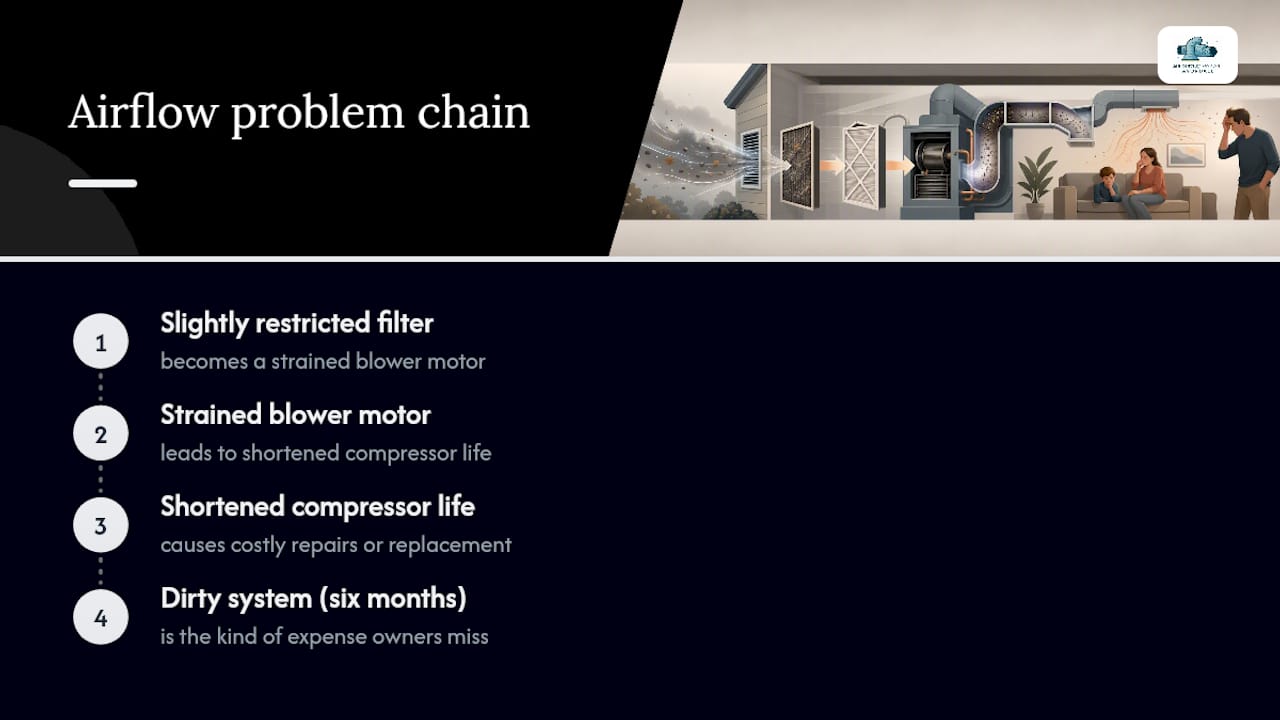
The industry ROI numbers on filter management, north of 600% in some facility estimates, aren't marketing fluff. They reflect a simple mechanical truth: airflow problems compound. A slightly restricted filter becomes a strained blower motor becomes a shortened compressor life. Homeowners who treat filter replacement as a $15 errand miss that chain entirely.
My take: DIY the routine swaps, absolutely, and save the money. But budget for at least one professional visit a year, not because the filter installation is hard, but because the diagnostic check around it catches problems while they're still cheap to fix. That's the real value proposition, and it's the one most price comparisons skip entirely.
— Shaun
Get a Filter Replacement Quote from Local Specialists
If you're weighing a DIY swap against calling in help, the calculation usually comes down to what's beyond the filter itself. Professional companies handle the diagnostic side that a filter-only purchase can't: multi-point inspections, correct MERV matching for your specific system, and documentation that protects your HVAC warranty, often backed by service guarantees and scheduling that includes after-hours slots.
Beyond straight filter replacement, the team also handles duct cleaning, air quality testing for homes dealing with allergens or musty odors, and vent repairs when a filter problem turns out to be an airflow problem somewhere else in the system. If you manage a commercial property with multiple rooftop units or unusual access requirements, that's exactly the scenario where a professional visit earns its cost. Request a quote through the commercial air duct cleaning page and get a scope-based estimate before any work starts.
Sources
Price ranges here draw from residential and commercial cost guides, ACHR News on pressure-drop monitoring, and Camfil on facility ROI. Local quotes will vary by region and system.
- How the right air filtration strategy can significantly reduce facility energy costs - Camfil
- Keeping HVAC systems running clean: The importance of proper filter maintenance | ACHR News
- HVAC Filter Replacement Cost Guide for U.S. Homeowners 2026 - Pick Comfort
FAQ
How Much Does It Cost to Replace an Air Filter?
A DIY filter swap typically costs $10 to $150 for the filter alone, while a professional visit including labor and inspection runs $40 to $200 for most homes.
Is It Cheaper to Replace My Own Air Filter?
Yes, DIY is cheaper upfront, often $5 to $80 per filter, but it skips the inspection and diagnostic checks a professional visit includes, which can catch problems before they become expensive repairs.
How Much Does Commercial Filter Replacement Cost?
Commercial jobs range from about $150 for a single small unit to $4,500 for large multi-unit buildings, depending on unit count, filter type, and access requirements.
How Often Should I Replace My Air Filter?
Most homes do well with monthly swaps for basic filters or quarterly for high-MERV filters, paired with one annual professional inspection for warranty compliance and system health.
What Does a Professional Filter Service Include Beyond the Swap?
A proper visit covers filter orientation, sealing cabinet bypass leaks, inspecting the blower and coil, checking condensate drains, and often measuring static pressure, all services Air Duct and Dryer Vent Cleaning Avondale includes in standard visits.