
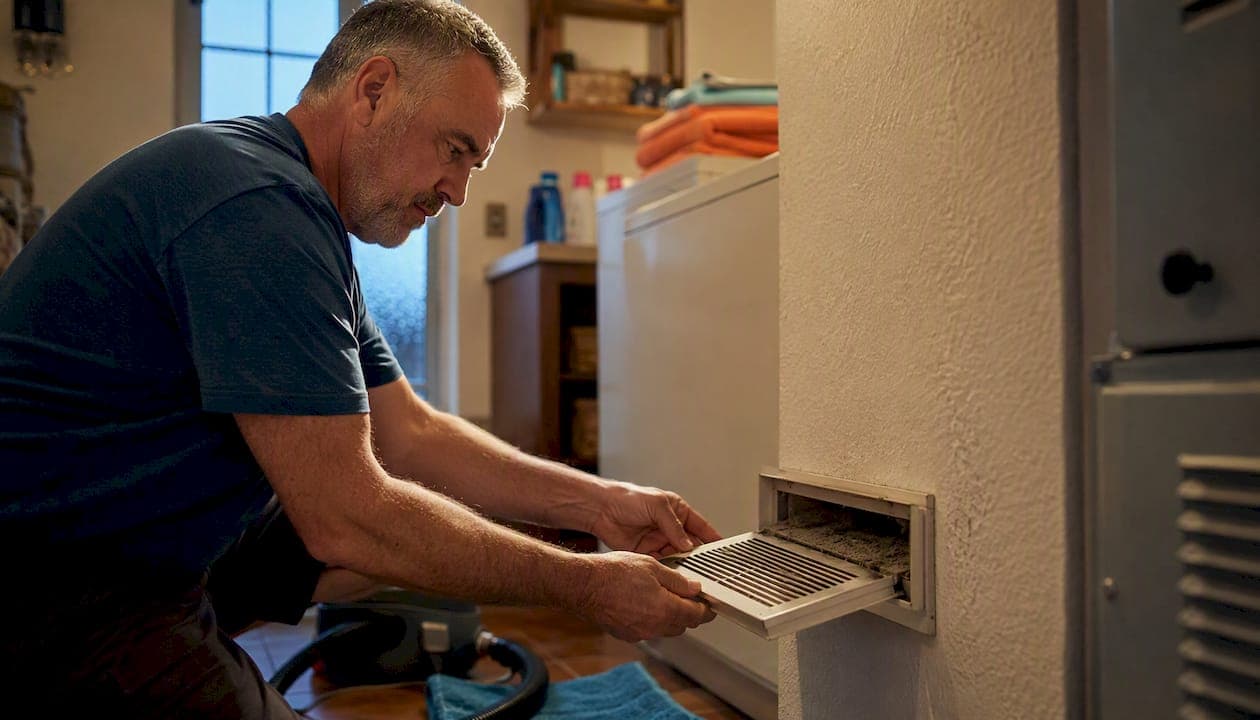
The biggest air quality risk factors in most American homes are fine particulate matter (PM2.5), combustion gases (carbon monoxide and nitrogen dioxide), ozone, volatile organic compounds (VOCs), and indoor radon. Right now, the three highest-impact actions you can take are: stop or properly vent any indoor combustion source, confirm your CO and smoke alarms work, and test your home for radon if you never have. WHO estimates-air-quality-and-health) that ambient air pollution caused 4.2 million premature deaths worldwide in 2019, driven largely by PM2.5 exposure. That number puts the stakes in plain terms.
- Stop indoor combustion or vent it properly (gas stoves, fireplaces, space heaters)
- Check CO and smoke alarms are installed and functional on every floor
- Close windows on high-AQI days and run a HEPA air cleaner
- Test for radon with a short-term kit from a hardware store or online retailer
Pro Tip: Before spending money on air purifiers, identify your actual sources. A $15 radon test kit or a working CO alarm addresses risks that no air cleaner can touch.
Table of Contents
- Which pollutants actually drive health risk?
- How air pollutants affect your health: short-term vs. long-term
- Why some homes and offices become air-quality hotspots
- How to measure and monitor air-quality risk where you live
- Practical steps to reduce your air-quality risk: source control first
- What do common air-quality fixes actually cost?
- When should you call a professional?
- Key Takeaways
- The part most homeowners get backward
- Clean air starts with the right professional in Avondale
- Authoritative sources and further reading
- FAQ
Which pollutants actually drive health risk?
Not all pollutants carry equal weight. PM2.5 is the primary indicator health agencies use because particles smaller than 2.5 micrometers penetrate deep into the lungs and can reach the bloodstream and organs. WHO identifies PM, carbon monoxide, ozone, nitrogen dioxide, and sulfur dioxide as the pollutants of strongest public-health concern.
Here is a quick breakdown of each, with where they come from:
- Radon: — A naturally occurring radioactive gas that enters homes from soil through foundation cracks and gaps. The second-leading cause of lung cancer in the U.S. after smoking, according to the EPA. Entirely an indoor risk.
According to the EPA, building materials, combustion appliances, cleaning products, and occupant behavior are the main drivers of indoor air-quality problems. Radon and certain VOCs are almost exclusively indoor concerns, while ozone is mostly outdoor but can drift inside through ventilation and gaps.
How air pollutants affect your health: short-term vs. long-term
Exposure effects split cleanly into two categories, and the distinction matters for how urgently you act.
Short-term effects show up within hours or days of elevated exposure: eye, nose, and throat irritation; coughing; worsened asthma symptoms; headaches; and dizziness. CO at high concentrations causes confusion and can be fatal within minutes. People with asthma or COPD often notice an exacerbation before anyone else in the household does.
Long-term effects build over months and years. Chronic exposure to PM2.5 raises the risk of stroke, ischemic heart disease, COPD, and lung cancer. Children exposed to elevated pollution during development show reduced lung function that can persist into adulthood. Adverse pregnancy outcomes, including low birth weight, are also linked to sustained pollution exposure.
| Effect Type | Pollutants Involved | Typical Onset | Examples |
|---|---|---|---|
| Short-term | PM2.5, O3, NO2, CO, VOCs | Hours to days | Coughing, asthma attack, headache, dizziness |
| Long-term | PM2.5, NO2, radon, VOCs | Months to years | COPD, lung cancer, heart disease, reduced lung development |
| Acute emergency | CO, very high PM2.5 | Minutes to hours | CO poisoning, severe asthma attack |
One critical point: for PM2.5 and several other pollutants, health agencies have found no safe lower threshold. Any reduction in exposure produces a measurable health benefit, which is why source control matters even when AQI readings look moderate.
Why some homes and offices become air-quality hotspots
The same outdoor air quality can produce very different indoor exposure depending on how a building is built and how people use it.
Building-level factors:
- Low air exchange rate: Tightly sealed homes trap pollutants generated indoors. EPA's Exposure Factors Handbook documents that air exchange rates vary significantly by region, season, and building type, directly affecting how long pollutants linger.
- Poor HVAC filtration: A low-grade filter (MERV 1–4) captures large dust but lets fine particles recirculate continuously.
- High humidity: EPA guidance links elevated temperature and humidity to higher concentrations of some indoor pollutants and to mold growth, which adds biological particles to the air.
- Dust resuspension: Settled dust in ducts and on surfaces re-enters the air during HVAC operation or foot traffic.
Behavioral multipliers:
- Indoor smoking is the single highest-impact source of PM2.5 in any home where it occurs.
- Frying and high-heat cooking without range hood ventilation generates PM2.5 spikes that can exceed outdoor pollution levels on bad days.
- Using solvents, spray cleaners, or oil-based paints indoors without ventilation releases VOCs that linger for hours.
- Burning candles or incense adds fine particles and, depending on the product, VOCs.
- Opening windows during high-AQI days or wildfire events brings outdoor pollution directly inside.
Seasonal and weather factors shift outdoor risk significantly. Temperature inversions in winter trap vehicle and industrial emissions close to the ground, raising ground-level concentrations. Wildfire season in the Southwest, including Arizona, can push AQI into "Unhealthy" or "Very Unhealthy" ranges for days at a time. Spring pollen seasons add biological particles that worsen allergic respiratory disease even when PM2.5 readings are moderate.
Pro Tip: During wildfire events, run your HVAC system on recirculation mode rather than fresh-air intake, and upgrade to a MERV 13 filter if your system can handle it. Bringing smoke-laden outdoor air through a low-grade filter makes indoor conditions worse, not better.
How to measure and monitor air-quality risk where you live
You do not need expensive equipment to get a useful picture of your exposure.
Free community-level monitoring:
- AirNow.gov (run by the EPA and state agencies) provides real-time AQI readings by zip code. Check it before outdoor exercise or before opening windows. The AQI scale runs from 0–50 (Good) to 301+ (Hazardous).
- State and local air-quality agencies often publish hyperlocal data and wildfire or inversion alerts.
Affordable home monitoring:
- Portable PM monitors (such as IQAir AirVisual, Temtop, or PurpleAir indoor sensors) measure PM2.5 and sometimes PM10 in real time. Use them comparatively, before and after a fix, rather than as regulatory-grade absolute readings, since low-cost sensors vary in accuracy.
- CO alarms are non-negotiable in any home with gas appliances, an attached garage, or a fireplace. Place one on each sleeping level.
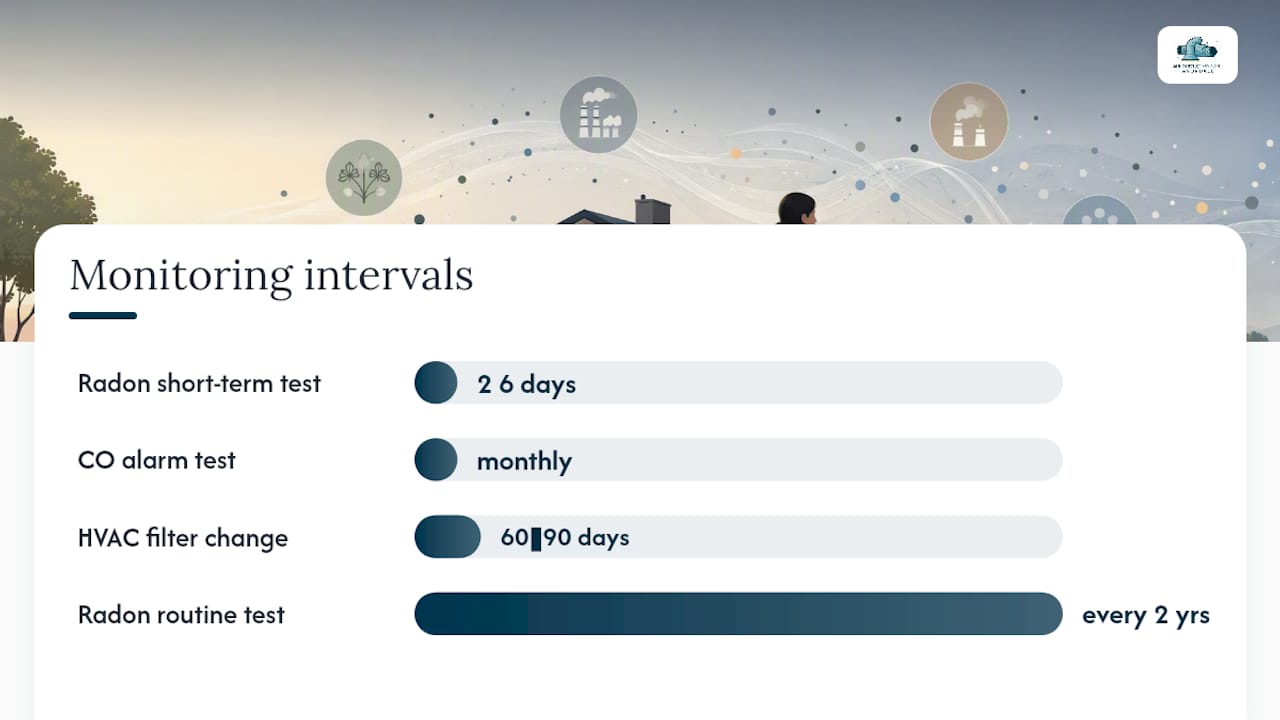
- Radon test kits (short-term, 2–7 days; long-term, 90+ days) are available at hardware stores and online for under $30. The EPA recommends testing every two years and after any major renovation.
- VOC monitors can flag elevated levels from cleaning products or off-gassing materials, though they do not identify specific compounds.
Daily monitoring checklist:
- Check AirNow before outdoor workouts or yard work.
- Run HEPA filtration when AQI exceeds 100 (Unhealthy for Sensitive Groups).
- Keep CO alarms tested monthly.
- Test radon every two years, or after sealing or renovating the basement.
- Replace HVAC filters on schedule (typically every 60–90 days for standard filters).
Practical steps to reduce your air-quality risk: source control first
The hierarchy matters here. Source control beats ventilation, and ventilation beats filtration. Filtration alone cannot compensate for a strong ongoing source.
Source control (highest impact):
- Ambient (outdoor) air pollution and health-air-quality-and-health)
- Air quality, energy and health
- Indoor Pollutants and Sources | US EPA
- Introduction to Indoor Air Quality | US EPA
- Exposure Factors Handbook — Chapter 19: Building characteristics and exposure
- Preventing spread of respiratory viruses — indoor spaces | US EPA
- Indoor air quality | National Institute of Environmental Health Sciences
Ventilation:
- Open windows and run exhaust fans when outdoor AQI is good (below 50) and you are generating indoor pollutants (cooking, cleaning, painting).
- On high-AQI days, keep windows closed and rely on recirculation with good filtration.
- EPA recommends increasing outdoor-air ventilation as one of the most effective controls for reducing airborne particle concentrations indoors, when outdoor air quality permits.
Filtration:
- Upgrade your HVAC filter to MERV 13 or the highest rating your system can accommodate without restricting airflow. MERV 13 captures most PM2.5-sized particles.
- Add a portable HEPA air cleaner sized for the room (check the CADR rating against room square footage).
- Filtration helps particles. It does not meaningfully reduce CO, radon, or most gaseous VOCs. Match the tool to the pollutant.
Maintenance:
- Replace HVAC filters every 60–90 days, or monthly during wildfire season. A clogged filter restricts airflow and stops capturing particles effectively. Keeping your HVAC system well-maintained is one of the most cost-effective long-term strategies.
- Have ducts cleaned when there is visible mold, verifiable pest infestation, or heavy debris accumulation. Routine duct cleaning in a well-maintained system has limited evidence of benefit, but removing pollutants from HVAC systems matters when contamination is real.
What do common air-quality fixes actually cost?
Realistic cost ranges help you prioritize. Prices vary by home size, system condition, and local labor rates in the Avondale, AZ area and across the U.S.
| Intervention | Typical Cost Range | Timeline |
|---|---|---|
| Portable HEPA air cleaner (mid-range) | $100 | Same day |
| HVAC filter upgrade (MERV 13, per filter) | $15 | Same day |
| Professional HVAC/duct cleaning | — | 1–2 weeks to schedule |
| Radon short-term test kit | $15–$30 | 2–7 days to complete |
| Radon mitigation system (professional) | — | 1–4 weeks |
| Dryer vent cleaning (professional) | — | Days to schedule |
| Basic mechanical ventilation upgrade | — | Weeks to months |
The fastest wins are also the cheapest: a new MERV 13 filter and a radon test kit together cost under $60 and take an afternoon. Radon mitigation, if needed, is the most expensive item but addresses a risk with no other workaround.
When should you call a professional?
Some problems genuinely require a licensed technician. Knowing the red flags saves time and prevents underreacting to serious hazards.
Call a pro immediately if:
- A CO alarm activates. Evacuate first, then call your gas utility and a licensed HVAC technician.
- Radon tests consistently return results at or above 4 pCi/L (the EPA action level).
- You see visible mold on or near HVAC components, ductwork, or supply vents.
- A combustion appliance malfunctions and leaves soot or unusual odors.
- Household members experience symptoms (headaches, fatigue, respiratory irritation) that consistently improve when they leave the building.
What to ask when hiring:
- Is the technician licensed and insured in Arizona?
- For duct cleaning: do they follow NADCA standards? Ask for before-and-after documentation.
- For radon mitigation: are they certified through a state-approved program or the National Radon Proficiency Program (NRPP)?
- For HVAC work: do they hold EPA 608 certification for refrigerant handling?
Professional HVAC and duct cleaning typically includes inspection, mechanical agitation of duct surfaces, and high-powered vacuum extraction. It reduces settled particulate matter in the duct system, which matters most after construction, renovation, or a verified contamination event. The role of HVAC in property safety extends beyond air quality to fire prevention, especially for dryer vents.
Pro Tip: Cleaning improves particulate conditions in the duct system, but it does not replace source control or proper filtration. If you clean ducts without fixing the underlying source (moisture, a malfunctioning appliance, a missing filter), the problem returns within months.
Key Takeaways
Source control, ventilation, and filtration in that order form the most effective hierarchy for reducing air-quality health risk, with professional testing and maintenance filling the gaps that DIY monitoring cannot.
| Point | Details |
|---|---|
| PM2.5 is the primary risk indicator | Fine particles penetrate deep into lungs and organs; no safe exposure threshold exists. |
| Source control beats filtration | Eliminating or venting combustion sources reduces risk more than any air cleaner alone. |
| Vulnerable groups need priority protection | Children, older adults, pregnant people, and those with asthma or heart disease face higher risk at the same exposure level. |
| Test for radon every two years | Radon kits cost under $30; the EPA action level is 4 pCi/L, and mitigation runs —. |
| Airanddryerventcleaningavondale covers professional needs | For duct cleaning, dryer vent cleaning, HVAC maintenance, and air-quality testing in Avondale, AZ, Airanddryerventcleaningavondale is the local professional option. |
The part most homeowners get backward
Most people who contact me about indoor air quality have already bought an air purifier. Sometimes two. They want to know which filter to upgrade next. What they have not done is walk through the house and identify what is actually generating the problem.
That sequencing error is understandable. Air purifiers are visible, purchasable, and feel like progress. Source control is less satisfying because it often means changing habits or spending money on a furnace inspection rather than a gadget. But filtration is the last line of defense, not the first. A HEPA cleaner running in a room where someone smokes, or where a gas stove vents directly into the kitchen, is working against a continuous source it cannot keep up with.
The "step-out test" is the simplest diagnostic most homeowners never try: if your symptoms (headaches, fatigue, irritated eyes) consistently improve within an hour of leaving the building and return when you come back, the source is almost certainly indoors. A short-term PM monitor placed in different rooms before and after cooking, cleaning, or running the HVAC can show you exactly where concentrations spike. That data tells you where to act, and it usually points to something cheaper to fix than a new air purifier.
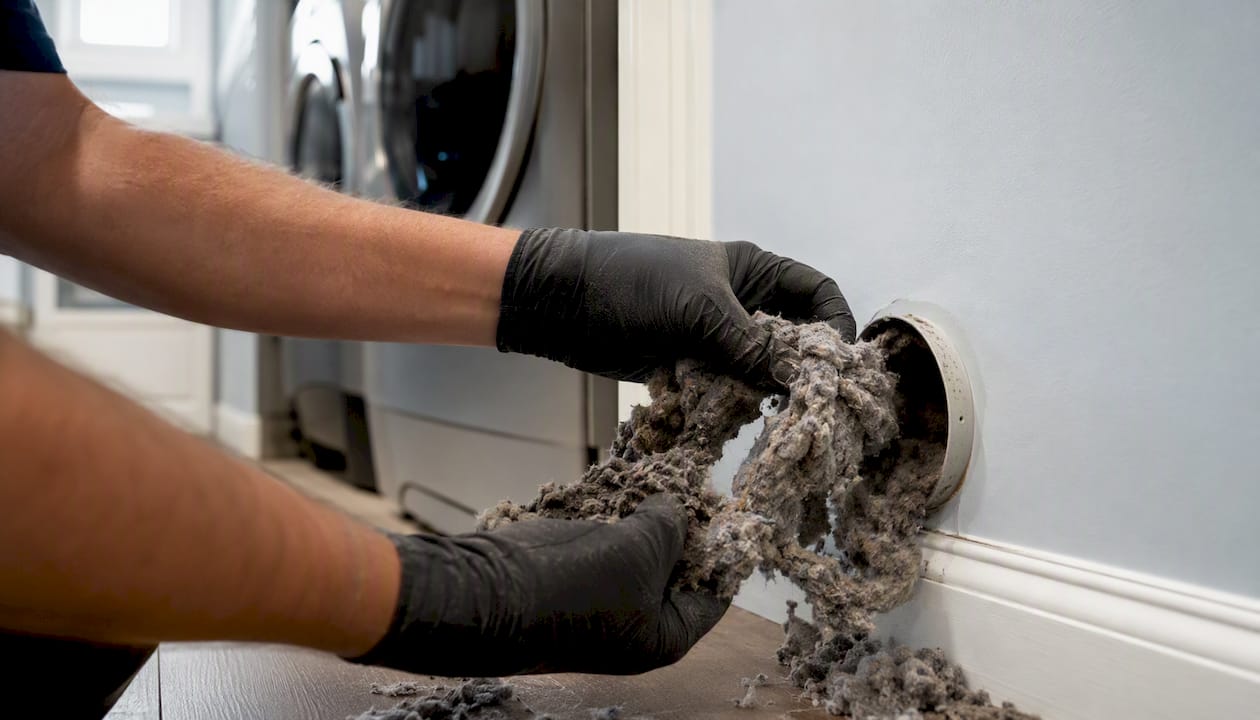
In Avondale, the most common issues I see are clogged dryer vents that have not been cleaned in years, HVAC filters left in place well past their service life, and gas appliances that have never been inspected since installation. None of those require expensive equipment to fix. They require a scheduled service call and a $20 filter.
Clean air starts with the right professional in Avondale
If you have worked through the checklist above and still have concerns, or if you want a professional baseline before making any changes, Airanddryerventcleaningavondale offers the full range of services that address indoor air-quality risk directly: air duct and vent cleaning, dryer vent cleaning, HVAC filter upgrades, vent replacement, and professional air-quality testing including radon screening.
The difference between a DIY approach and a professional service is documentation and equipment. Airanddryerventcleaningavondale uses commercial-grade vacuum systems and provides before-and-after verification so you know the work was done correctly, not just done. Scheduling is flexible, including after-hours options for homeowners and commercial property managers in Avondale, AZ. To book a service or get a quote, visit the air-quality testing page or call directly.
Authoritative sources and further reading
- WHO: Ambient air pollution and health — Global burden data, PM2.5 mortality estimates, and policy context.
- WHO: Air quality, energy and health — Pollutant-specific health pathways and susceptible population data.
- EPA: Indoor pollutants and sources — Comprehensive list of indoor sources; useful for homeowners identifying specific risks.
- EPA: Introduction to indoor air quality — Ventilation, humidity, and symptom guidance for residential settings.
- EPA: Exposure Factors Handbook, Chapter 19 — Technical data on building characteristics and air exchange rates.
- EPA: Preventing spread of respiratory viruses in indoor spaces — Ventilation and MERV filtration guidance.
- NIEHS: Indoor air quality — Vulnerability data and exposure research for sensitive populations.
This article provides general educational information about air quality. It is not a substitute for professional testing, medical advice, or guidance from a licensed HVAC technician. Consult the EPA, your state environmental agency, or a qualified professional for your specific situation.
FAQ
What is the most dangerous indoor air quality risk factor?
Radon and carbon monoxide are the most acutely dangerous because both are odorless and can reach lethal concentrations without warning. PM2.5 from combustion sources carries the highest long-term disease burden.
How do I know if my indoor air quality is making me sick?
If symptoms like headaches, fatigue, or eye irritation consistently improve when you leave the building and return when you come back, an indoor source is likely. A short-term PM monitor and a CO alarm can help identify the cause.
What does the AQI number actually mean for my health?
The AQI scale runs from 0–50 (Good) to 301+ (Hazardous). Values above 100 are "Unhealthy for Sensitive Groups." Check AirNow.gov for your zip code before outdoor exercise on any day that might be affected by traffic, industry, or wildfires.
When should I get professional air duct cleaning?
Professional duct cleaning is warranted after construction or renovation, if there is visible mold in the duct system, after a verified pest infestation, or when heavy debris accumulation is confirmed. Routine cleaning in a well-maintained system has limited evidence of benefit without one of these triggers.
Can Airanddryerventcleaningavondale test my home's air quality?
Yes. Airanddryerventcleaningavondale offers professional air-quality testing, including radon screening, for residential and commercial properties in Avondale, AZ. Testing provides a documented baseline so you know exactly what you are dealing with before spending on mitigation.