
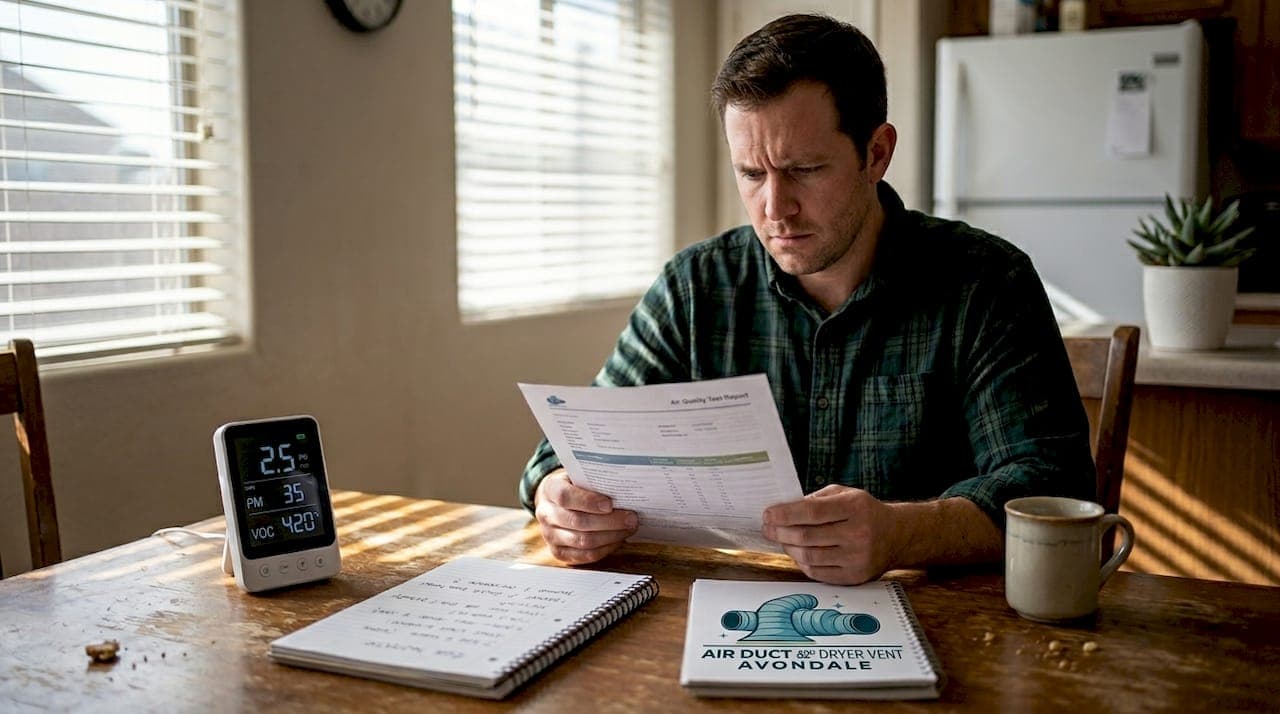
Your home or office might look spotless, but the air inside could still be working against your health. The most dangerous indoor pollutants are invisible. You can't see carbon monoxide, radon, or fine dust particles, and you often can't smell volatile organic compounds (VOCs) at harmful levels. Indoor air pollutants like particulate matter (PM2.5, PM10), VOCs, carbon monoxide, radon, and mold spores are measured through air quality testing using sampling and monitoring methods. For Avondale residents, where dust storms and intense heat push people indoors for months at a time, understanding what's actually in your air isn't optional. It's essential.
Table of Contents
- What is air quality testing?
- How does air quality testing work? Methods and tools explained
- What do test results mean? Key benchmarks for healthy indoor air
- Special challenges for Avondale: Dust, outdoor air, and apartment concerns
- Improving indoor air: What actually works after testing
- Local air quality experts: Making Avondale homes and businesses safer
- Frequently asked questions
Key Takeaways
| Point | Details |
|---|---|
| Invisible threats | Air quality testing reveals hidden risks that can impact your health even if your space looks clean. |
| Expert testing options | DIY monitors find basics but professionals can uncover issues like radon or precise PM2.5 levels. |
| Avondale’s unique challenges | Dust storms, ozone, and shared HVAC systems create extra risks for local homes and businesses. |
| Best IAQ fixes | Control pollution sources first, then seal and upgrade filters, retesting after big changes. |
| Professional help value | Local experts deliver targeted testing, thorough cleaning, and customized solutions for healthier air. |
What is air quality testing?
Air quality testing is the process of measuring the concentration of specific pollutants inside a building. It tells you what's in your air, how much of it is there, and whether those levels are safe. Think of it as a blood test for your home or office.
Air quality testing identifies key pollutants including:
- Particulate matter (PM2.5 and PM10): Tiny particles from dust, pollen, and combustion that lodge deep in your lungs
- Volatile organic compounds (VOCs): Gases released from paints, cleaning products, furniture, and building materials
- Carbon monoxide (CO): An odorless, colorless gas from gas appliances and vehicles
- Radon: A naturally occurring radioactive gas that seeps up from soil
- Mold spores: Microscopic particles that trigger allergies and respiratory issues
- Carbon dioxide (CO2): A marker for poor ventilation when levels climb too high
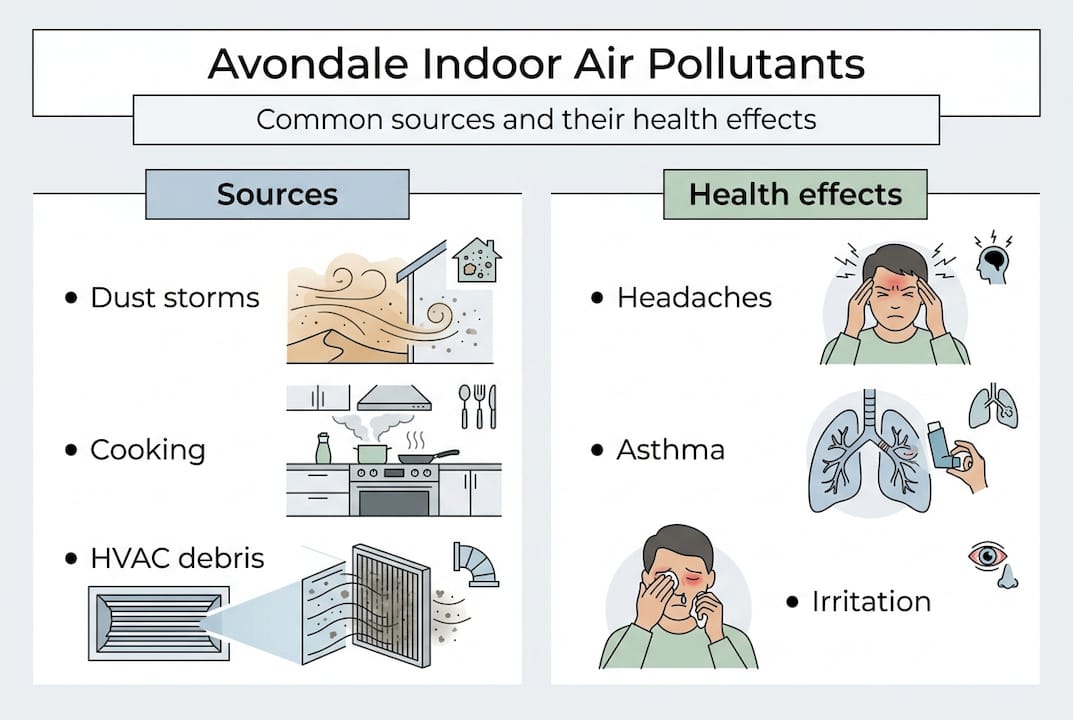
Poor indoor air quality is linked to headaches, fatigue, eye and throat irritation, worsened asthma, and long-term respiratory disease. In Avondale, common pollution sources include outdoor dust blowing in through gaps, ozone from vehicle traffic, and VOCs from household products used in tightly sealed, air-conditioned spaces.
| Pollutant | Common source in Avondale homes | Health effect |
|---|---|---|
| PM2.5 | Dust storms, cooking, HVAC debris | Lung irritation, asthma |
| VOCs | Cleaning sprays, new furniture | Headaches, dizziness |
| CO | Gas stoves, attached garages | Poisoning, fatigue |
| Radon | Soil beneath foundation | Lung cancer risk |
| Mold spores | Moisture, AC condensation | Allergies, respiratory issues |
How does air quality testing work? Methods and tools explained
Not all testing methods are equal. The right approach depends on what you're testing for, your budget, and how detailed you need the results to be.
Testing methodologies include passive sampling using diffusion tubes, active sampling with pumps, continuous real-time monitors, and lab analysis of collected samples. Each has a different use case.
Here's a numbered breakdown of the main approaches:
- Passive sampling: Small devices placed in a room absorb pollutants over days or weeks. Simple and low-cost, but slow.
- Active sampling: A pump pulls air through a collection medium at a set rate. More accurate, typically used by professionals.
- Real-time monitoring: Electronic sensors give instant readings for CO, CO2, PM, humidity, and VOCs. Great for ongoing awareness.
- Lab analysis: Collected samples are sent to a certified lab for detailed breakdown. The gold standard for mold, radon, and VOC identification.
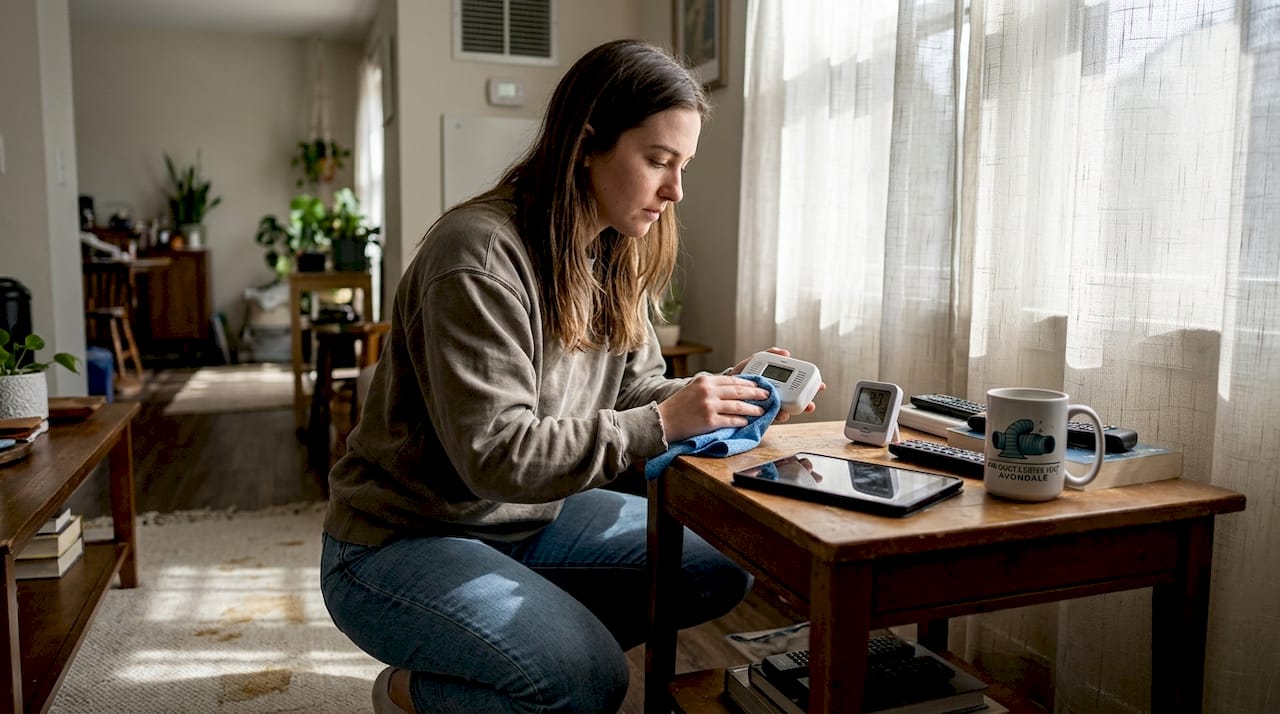
DIY options include CO and radon detectors, hygrometers to track humidity (target 30 to 50%), and multi-sensor monitors. Professional testing uses air sampling sent to accredited labs for precise results.
| Method | Best for | Cost range | DIY or pro? |
|---|---|---|---|
| CO/radon detector | Ongoing safety monitoring | $20 to $150 | DIY |
| Mold/VOC test kit | Spot-checking specific concerns | $30 to $100 | DIY |
| Multi-sensor monitor | Real-time air overview | $100 to $400 | DIY |
| Professional lab sampling | Full pollutant profile, legal reports | $200 to $600+ | Pro |
Pro Tip: If you've recently renovated, moved into a new space, or noticed unexplained health symptoms, skip the DIY kit and go straight to professional air testing. Lab results give you specific numbers you can act on.
What do test results mean? Key benchmarks for healthy indoor air
Getting results back is only useful if you know what the numbers mean. Here's a plain-language guide to the benchmarks that matter most.
EPA indoor air quality guidelines set these key benchmarks: CO2 should stay below 800 to 1,100 ppm above outdoor levels for adequate ventilation; PM2.5 should be as low as possible; humidity should stay between 30 and 50%; and radon testing is recommended for all homes.
| Pollutant | Safe range | Action needed if... |
|---|---|---|
| CO2 | Less than 800 to 1,100 ppm above outdoor | Levels consistently higher |
| PM2.5 | As low as possible | Any elevated reading |
| Humidity | 30 to 50% | Below 30% or above 50% |
| Radon | Below 4 pCi/L | At or above 4 pCi/L |
| CO | 0 ppm (any reading is a concern) | Any detectable level |
Important: A single high reading doesn't always mean a crisis. Context matters. A spike in PM2.5 right after vacuuming is different from a consistently elevated baseline. Look for patterns over time.
When reading a lab report, focus on the units used (ppm, pCi/L, µg/m³), the comparison to reference values, and whether the lab flags anything as exceeding guidelines. Upgrading to MERV 13+ rated filters can capture over 50% of particles in the 0.3 to 1 micron range, which directly improves PM readings. Staying on top of filter replacement is one of the simplest ways to keep those numbers in check.
Pro Tip: Write the date on your filter every time you change it. If your PM readings creep up between tests, a clogged filter is often the first thing to check.
Special challenges for Avondale: Dust, outdoor air, and apartment concerns
Avondale's climate creates air quality challenges that most national guides don't address. The desert environment means dust is a constant factor, and haboobs (large dust storms) can push PM10 levels to extreme highs in minutes.
Opening windows during poor outdoor air events like wildfire smoke, high ozone days, or dust storms actually makes indoor air worse, not better. Ventilation only helps when outdoor air is cleaner than indoor air. In Avondale, that's not always the case.
Key regional concerns to watch for:
- Dust infiltration: Fine desert dust enters through gaps around windows, doors, and duct connections
- Ozone: Vehicle traffic and industrial activity in the Phoenix metro area push ozone levels up, especially in summer
- AC condensation: Avondale's humidity spikes during monsoon season, creating moisture inside HVAC systems that feeds mold growth
- Apartment and shared-space issues: In multi-unit buildings, pollutants can migrate between units through shared ductwork, wall gaps, and ventilation systems
For apartment residents and small business owners in shared buildings, inter-unit contamination is a real risk. Smoke, VOCs, and mold spores from a neighboring unit can show up in your air test results. Keeping your air ducts in Avondale clean and sealed reduces the chance of cross-contamination significantly.
Avondale note: During dust storm season, keep windows and exterior doors closed. Run your HVAC on recirculate mode and check your filters more frequently than the standard schedule.
Improving indoor air: What actually works after testing
Once you have test results, you need a plan. Here's what actually moves the needle.
The most effective approach starts with source control: eliminate or reduce the pollutant at its origin before adding filtration or ventilation. No amount of air purification fully compensates for an active source.
- Eliminate sources first: Stop smoking indoors, fix water leaks immediately, switch to low-VOC cleaning products and paints
- Upgrade your filters: Move to MERV 13 or higher if your HVAC system supports it
- Clean your ducts: Debris-filled ducts recirculate dust and mold spores every time your system runs. Scheduling duct cleaning removes that buildup at the source
- Seal gaps and duct leaks: Unsealed ducts pull in attic dust and outdoor pollutants directly into your airstream
- Control humidity: Use a dehumidifier during monsoon season to keep levels between 30 and 50%
- Ventilate strategically: Open windows only when outdoor air quality is good. Check the AQI for Avondale before ventilating
- Retest after changes: Wait 4 to 6 weeks after making improvements, then retest to confirm the numbers improved
Things to avoid in Avondale's desert climate: opening windows during dust events, skipping filter changes in summer when your system runs constantly, and ignoring HVAC condensation drip pans that can become mold reservoirs.
Pro Tip: The benefits of professional HVAC cleaning go beyond just cleaner ducts. A thorough cleaning also reveals leaks, blockages, and moisture problems that a filter swap alone won't fix. Pair it with an air filter replacement for the best results.
Local air quality experts: Making Avondale homes and businesses safer
When your test results show elevated pollutants, or when you're not sure where to start, local expertise makes a real difference. Generic advice doesn't account for Avondale's dust, monsoon humidity, or the specific HVAC setups common in Arizona homes.
At Air Duct and Dryer Vent Cleaning Avondale, we provide local air quality testing tailored to the conditions our clients actually face here. We don't just hand you a report. We help you understand what the numbers mean and what to do next. Our duct cleaning services remove the built-up debris that keeps recirculating through your system, and our dryer vent experts address a commonly overlooked source of lint buildup and fire risk. Whether you're a homeowner or a small business owner, we offer flexible scheduling and solutions built around your specific space and concerns.
Frequently asked questions
What are the most important indoor air pollutants to test for?
Test for particulate matter, VOCs, CO, radon, and mold spores to get complete coverage of the most common and harmful indoor pollutants.
How often should indoor air be tested in Avondale homes or businesses?
Test at least once a year, and also after major renovations, HVAC system changes, or whenever occupants experience unexplained health symptoms like persistent headaches or fatigue.
Can I do air quality testing myself, or do I need a pro?
DIY kits and detectors work for basic monitoring, but professional lab analysis gives you a detailed, accurate pollutant profile that simple consumer devices can't match.
What's the safest level for common pollutants like CO2 and dust?
CO2 should stay below 800 to 1,100 ppm above outdoor levels, PM2.5 should be as low as possible, and indoor humidity should stay between 30 and 50%.
Does opening windows always improve indoor air?
Not in Avondale. During dust storms or high-ozone days, opening windows pulls outdoor pollutants inside. Keep windows closed and rely on certified filters during those events.