
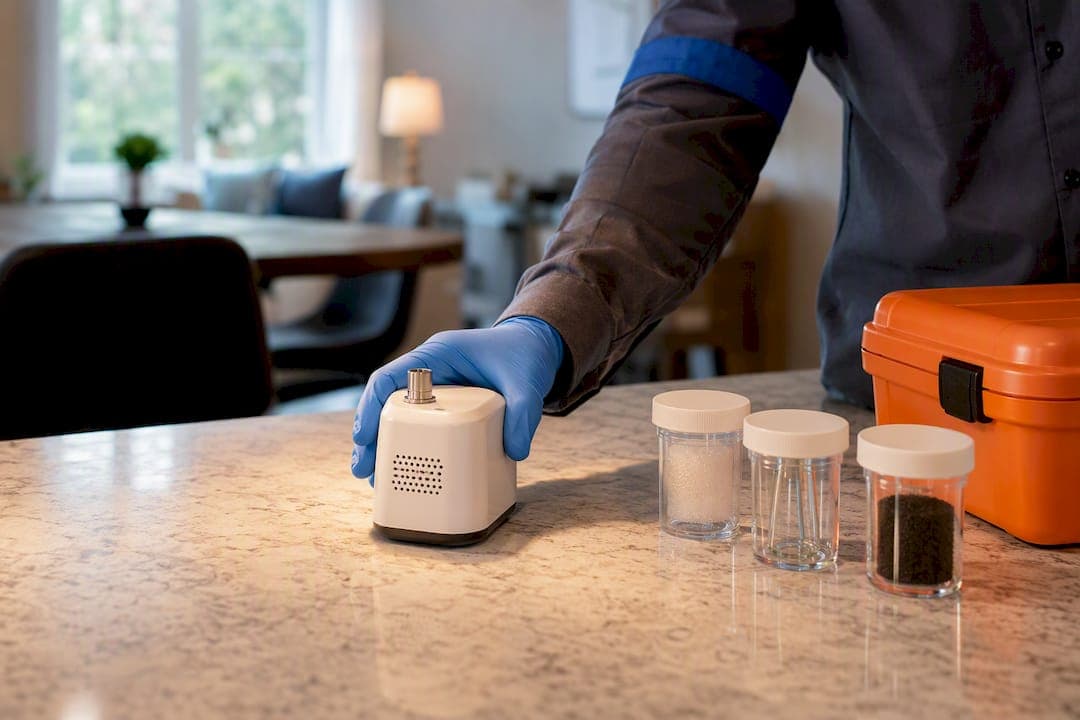
A comprehensive professional indoor air quality assessment typically runs $300 to $600, while a targeted single-pollutant test starts around $150 and forensic multi-room panels can top $1,000. The final cost usually includes base diagnostic visit fees and per-sample lab charges. Which price band applies to you depends on how many pollutants you're checking and how many rooms need sampling, covered in the scenarios below.
TL;DR:
- Single-pollutant tests generally cost between $150 and $300, suitable for quick checks like radon or carbon monoxide detection.
- Comprehensive assessments usually range from $300 to $600, including multiple pollutants and detailed reports for larger or more complex homes.
- Multi-room forensic testing or real estate-related evaluations can exceed $1,000 due to expanded sampling and analysis.
- Costs for specific pollutants vary: radon is typically the cheapest, mold and VOC testing are moderate, and specialized labs for asbestos or lead increase prices further.
- Quotes differ mainly based on sample count, pollutant complexity, regional labor rates, and added services like rush results or duct inspections.
Table of Contents
- How Much Does Air Quality Testing Cost by Scenario?
- What Does Testing Cost for Radon, Mold, VOCs, and Particulates?
- Why Do Air Quality Testing Quotes Vary So Much?
- Should You Buy a DIY Kit or Hire a Professional?
- What Should You Ask For in a Written Quote?
- What Professionals Actually Do During a Test
- Get a Straight Answer on Your Home's Air Quality
- Sources
- FAQ
How Much Does Air Quality Testing Cost by Scenario?
The right way to budget for air quality testing cost is to match your situation to one of four common scenarios, because contractors price radon checks very differently from a full-home forensic sweep.
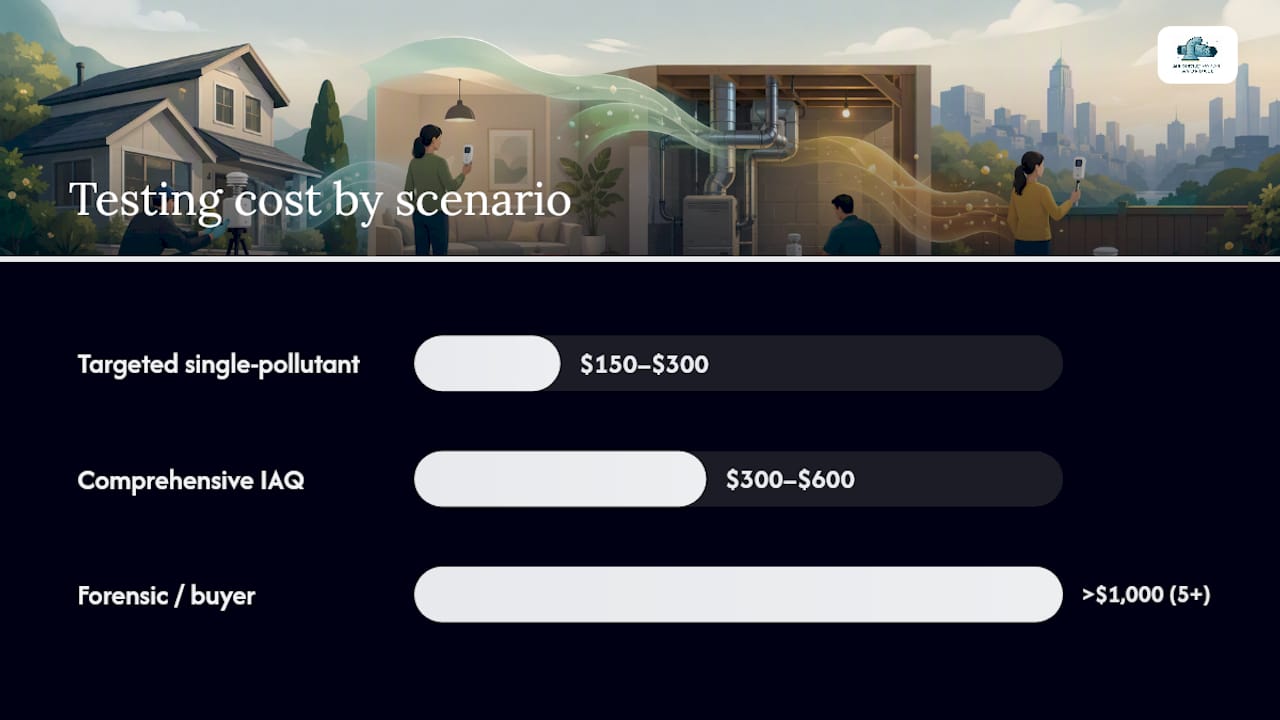
Scenario A: Targeted single-pollutant test. If you only need one answer, like whether radon or carbon monoxide is present, expect to pay roughly $150 to $300. This covers a short visit, one or two sampling devices, and a single lab analysis. It's the cheapest entry point and the most common first move for homebuyers checking radon before closing.
Scenario B: Standard comprehensive IAQ assessment. This is the middle tier most homeowners actually book, and it's why $300 to $600 is the figure that keeps showing up in homeowner cost guides. It typically bundles mold, VOCs, particulates, and carbon monoxide/CO2 checks into one site visit, plus lab analysis on multiple samples and a written report. HomeAdvisor's cost data puts the national average closer to $303 to $616, which lines up with that range once you account for home size differences.
Scenario C: Multi-room forensic inspection or buyer contingency testing. Real estate transactions, insurance disputes, or suspected widespread mold contamination push costs above $1,000. Forensic work often means sampling five, eight, or more locations, running surface swabs alongside air samples, and sometimes testing HVAC ductwork directly. That broader chain-of-custody handling and higher sample count is exactly why testing prices climb sharply for multi-pollutant panels.
Scenario D: Continuous or home monitoring systems. Instead of a one-time snapshot, some homeowners install a monitoring device that tracks air quality over weeks or months. Upfront hardware costs vary widely by brand and sensor count, and many systems carry a modest annual subscription or calibration fee on top of the initial purchase.
A few extras show up on quotes regardless of scenario:
- Expedited or rush lab turnaround, often an added flat fee
- Attic or crawlspace access charges when sampling points are hard to reach
- Retesting after remediation to confirm the problem cleared
Homeowners deciding between a quick radon check and a full assessment should read our guide to detecting indoor pollutants before booking, since the right scope depends heavily on your home's age, ventilation, and recent renovation history.
What Does Testing Cost for Radon, Mold, VOCs, and Particulates?
Price varies a lot by pollutant, mostly because some tests need specialized lab equipment and others just need a sensor and a few days.
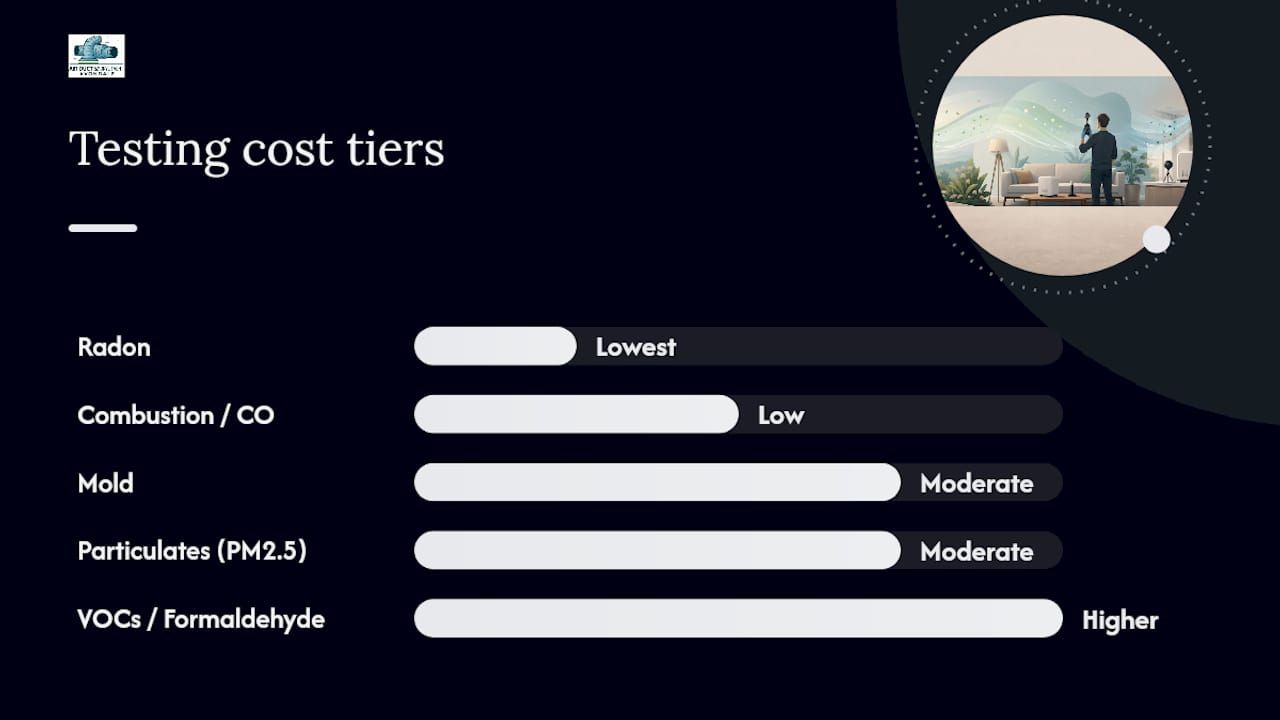
Radon testing is the cheapest starting point. Short-term radon detectors with lab analysis are typically more affordable, while professional continuous radon monitoring tends to be costlier but provides quicker and more reliable results. Mold testing typically combines air sampling with surface swabs, and a full-home mold panel costs more than a single-room check because each additional sample carries its own lab fee. VOC and formaldehyde screening tends to run higher because these tests require specialized lab equipment, and demand jumps after renovations or new furniture purchases, since fresh paint, adhesives, and pressed wood off-gas heavily in the first weeks. Combustion safety and carbon monoxide checks are appliance-focused diagnostics, often cheaper than a full IAQ panel because they target a furnace, water heater, or gas range directly. Particulate (PM2.5) testing can be a quick spot check or a longer monitoring session, and continuous monitoring generally costs more than a snapshot reading.
| Test type | What drives the price | Relative cost tier |
|---|---|---|
| Radon | Detector type, lab analysis | Lowest |
| Combustion/CO | Appliance access, diagnostic time | Low |
| Mold | Sample count, air + swab combo | Moderate |
| Particulates (PM2.5) | Spot check vs. continuous monitoring | Moderate |
| VOCs/formaldehyde | Specialized lab screening | Higher |
Per-sample lab fees generally run in the $30 to $220 range depending on complexity, and specialized tests like asbestos push costs even higher because they require different handling and equipment. If you've recently remodeled, a low-dust renovation process can reduce how many pollutants you're dealing with before testing even starts.
Why Do Air Quality Testing Quotes Vary So Much?
Two homes of the same square footage can get wildly different quotes, and it almost always comes down to five factors.
- Sample count and home size. More rooms sampled means more lab fees stacked onto the base visit charge, so a 3,000 square foot home with six sampling points costs more than a 1,200 square foot condo with two.
- Pollutant complexity. Standard mold and CO checks cost less per sample than specialized screens for asbestos or lead, which require different lab handling entirely.
- Bundled vs. itemized pricing. Some companies quote one flat number; others break out the visit fee, each lab sample, and the report separately. Itemized quotes are easier to compare but can look higher at first glance.
- Regional labor markets. Testing costs shift by metro area based on local labor rates and lab availability, the same way any home service does.
- Rush and after-hours fees. Same-day scheduling or expedited lab results typically add a surcharge on top of the base price.
Add-ons like a duct inspection, full HVAC system check, or written remediation recommendations also nudge the total upward, though they often save money later by pinpointing the actual source instead of guessing at fixes.
Pro Tip: Before you accept a quote, ask specifically whether lab fees and the final written report are already included in the number you're seeing, or billed separately after the visit. That single question catches most surprise charges before they land on your invoice.
Should You Buy a DIY Kit or Hire a Professional?
Low-cost monitors and DIY kits have a real place in home air quality management, just not as a full diagnostic tool. The EPA is direct about this: these devices can track specific pollutants or flag activity-related changes, like a spike after cooking, but they don't provide a complete picture of indoor air quality and aren't a substitute for calibrated sampling with lab analysis.
A professional visit adds three things a consumer monitor can't: calibrated equipment, lab-verified results, and an expert reading those results against health benchmarks.
- Choose a DIY kit when you want a rough baseline reading or you're monitoring a known issue day to day.
- Choose a professional test when you need documented, lab-verified results for a real estate transaction, health concern, or insurance claim.
- Choose a professional test when your symptoms or suspicions point to something a basic sensor can't detect, like specific mold species or formaldehyde levels.
Our pollutant detection guide breaks down which household warning signs justify the jump to professional testing.
What Should You Ask For in a Written Quote?
Comparing quotes gets easy once you know exactly what to request in writing. Ask every company for the same list before you commit:
- Full list of pollutants tested and the sampling method used for each
- Number of samples and their exact locations in the home
- Name of the lab performing analysis and expected turnaround time
- Total price broken down by visit fee, per-sample lab charges, and report cost
- What's included in the final report and whether follow-up questions are covered
Then ask directly about rush lab fees, extra charges for additional samples mid-visit, and travel or after-hours surcharges. These are the line items most likely to inflate a bill after the fact.
Pro Tip: Line up two or three quotes side by side using this exact checklist. If one company won't answer all five points in writing before you book, that's worth noting on its own.
Our guide on best practices in air quality testing walks through sample-by-sample comparisons in more detail.
What Professionals Actually Do During a Test
A typical on-site visit starts with a walk-through diagnostic: a technician identifies likely sampling points based on room use, ceiling height, and any suspected sources like a damp basement or an aging furnace. Sample counts scale with square footage and the number of hotspots flagged during that walk-through. Ductwork and HVAC components often get checked too, since airflow patterns move contaminants between rooms.
The real value shows up after the lab results come back. Interpreting those numbers correctly turns raw data into a targeted repair plan rather than a guess. A written report that pinpoints the actual source often saves money by avoiding expensive, unnecessary blanket fixes. A local specialist applies a thorough on-site diagnostic approach: diagnose first, sample deliberately, then explain what the numbers mean in plain language.
— Shaun
Get a Straight Answer on Your Home's Air Quality
Professional air quality testing provides homeowners something a generic lab mail-in kit can't: a technician who inspects your ducts and HVAC system on the same visit, so any contamination source gets flagged instead of just measured. That matters because a number on a lab report doesn't fix anything on its own. It just tells you where to look next.
Beyond air quality testing, the same visit can cover air duct cleaning or a dryer vent check if combustion or lint buildup is part of the concern. When you request a quote, expect a clear breakdown of the visit fee, sample count, and lab charges before any work happens, with flexible scheduling if you need an after-hours appointment. Ready to know what's actually in your air? Request a written quote for professional air quality testing and get a scope that matches your home instead of a one-size-fits-all number.
Sources
- Indoor Air Quality Testing Cost: 2025 Homeowner’s Guide
- How Much Does Indoor Air Quality Testing Cost? 2025 Data
- Low–Cost Air Pollution Monitors and Indoor Air Quality | US EPA
- How much does indoor air quality testing cost? — Angi
- Air Quality Test Price Guide: Typical Costs, Ranges, and What Drives the Price 2026 – Current Cost
FAQ
How much does it cost to have air quality tested?
Most homeowners pay $300 to $600 for a comprehensive assessment, with targeted single-pollutant tests starting around $150 and forensic multi-room panels running over $1,000.
Is it worth getting an air quality test?
Yes, particularly if you have unexplained symptoms, recent water damage, an aging HVAC system, or you're buying a home. A written professional report identifies the actual source, which often prevents spending money on the wrong fix.
Can poor air quality cause palpitations or nasal congestion?
Exposure to indoor pollutants like combustion byproducts, mold, and VOCs is documented by the EPA as a driver of respiratory and cardiovascular symptoms, including nasal irritation and, in some cases, heart palpitations tied to carbon monoxide or poor ventilation.
Do I need to move out if radon is found in my home?
No. Short-term elevated radon isn't typically an emergency requiring evacuation, and mitigation systems that resolve the issue commonly cost in the low-to-mid thousands to install.
How long does professional air quality testing take from booking to report?
Scheduling to report delivery generally spans several days to about two weeks, depending on lab turnaround time and whether you request expedited processing for an added fee.