
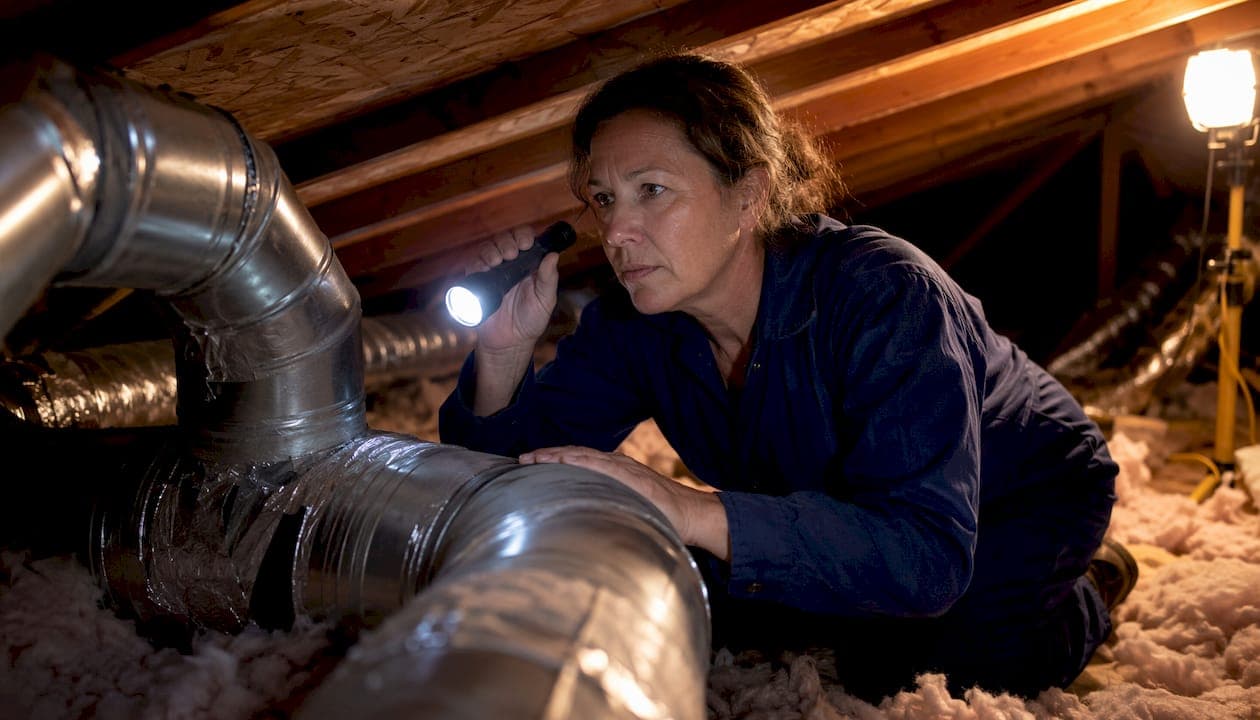
What causes air vent noise? The quick answer
Most air vent noise causes come down to three things: restricted airflow, loose or damaged components, and ductwork that was never sized or installed correctly. Keeping all registers open and unobstructed is one of the simplest ways to prevent the most common noises. Here is a fast breakdown before diving deeper:
- Whistling or rushing sounds: blocked vents, clogged air filters, or air forced through a narrow opening
- Rattling or buzzing: loose duct joints, loose vent grilles, or debris inside the ductwork
- Banging or popping: metal ducts expanding and contracting with temperature changes, or sudden pressure surges
- Humming: blower motor strain from restricted airflow or a motor starting to fail
- Hissing: refrigerant leaks, duct leaks, or air escaping through gaps in duct joints
These noises fall into three broad categories: airflow turbulence, thermal expansion, and mechanical vibration. Knowing which type you are hearing points you straight to the fix.
1. Closed or blocked vents
Closing vents in spare bedrooms feels like a smart move, but it raises static pressure throughout the entire duct system. That extra pressure forces air through fewer openings at higher speed, producing whistling, popping, and vibration at every other register in the house. Furniture pushed against a return grille does the same thing. Open every vent fully and pull furniture at least a foot away from grilles.

2. Dirty or clogged air filters
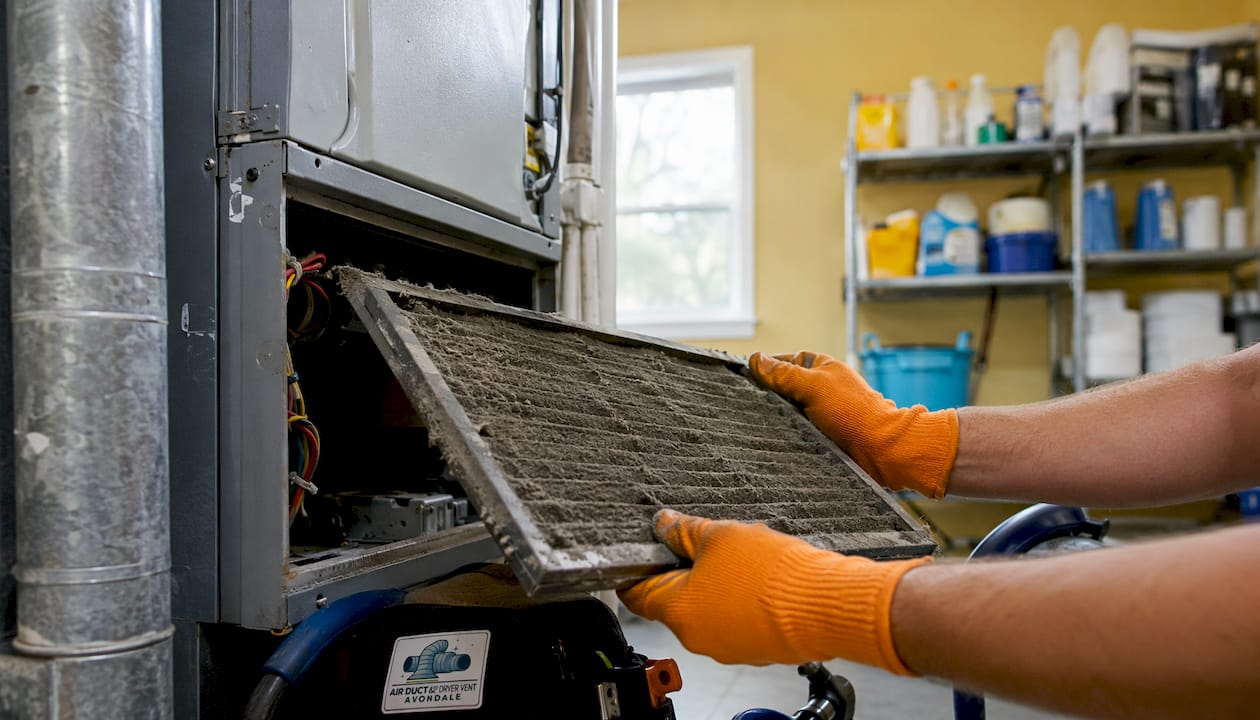
A clogged filter is one of the most common HVAC vent noise reasons, and one of the easiest to fix. When the filter is packed with dust, air cannot enter the system freely, so pressure builds inside the ducts and you hear a whistling or rushing sound near the vents. Filters should be replaced periodically under normal conditions. Check yours monthly if you have pets or live in a dusty climate like Avondale, Arizona.
3. Loose duct joints or vent grilles
Metal ductwork expands, contracts, and shifts slightly every time your system cycles. Over time, joints loosen and vent covers work themselves free. Airflow then causes those parts to vibrate against studs, drywall, or other metal, creating a rattling or buzzing that travels through the whole run. Tightening the mounting screws on a vent cover takes two minutes and often stops the noise immediately. Loose duct joints can be resealed with metal tape or mastic sealant.
4. Thermal expansion of metal ducts
That sharp pop or bang you hear when the heat kicks on is almost always metal ducts expanding as warm air flows through them, then contracting again when the system shuts off. It is generally harmless, though repeated loud popping can also signal elevated pressure inside the system. Long, unsupported duct runs are most prone to this. Adding support straps or insulating the duct surface reduces the movement and quiets the noise.
5. Undersized or poorly designed ductwork
When an HVAC system pushes more air than the ductwork was built to handle, velocity climbs and noise follows. Older homes are especially vulnerable because original ducts were often sized for smaller equipment. Sharp bends, abrupt transitions, and rectangular ducts all add turbulence. Round ducts with gradual elbows move air more quietly. This is not a DIY fix; a technician needs to assess whether the duct layout matches your current system's output.
6. High fan speed or air handler settings
Sometimes the air handler is simply running faster than the home requires. High fan speed pushes air through at higher velocity, and that velocity creates noise at every register, not just one. As HVAC experts note, adjusting the air handler speed is often the simplest starting point when whistling is widespread rather than isolated to a single vent.
7. Debris inside the ductwork
Nails, screws, small toys, leaves, and construction dust all find their way into duct systems over time. Once inside, they rattle and flap as air moves past them. Replacing the filter and opening vents will not fix this one. If you can see or hear debris moving inside a duct, professional cleaning is the right call. Airanddryerventcleaningavondale recommends professional duct cleaning every 3–5 years, or sooner after construction or renovation work.
8. Duct leaks
Gaps at duct joints let pressurized air escape, producing a hissing or whistling sound. Beyond the noise, duct leaks reduce heating and cooling efficiency by bleeding conditioned air into unconditioned spaces like attics or crawlspaces. Sealing joints with foil tape or mastic stabilizes pressure throughout the system and typically lowers noise at every register.
9. Refrigerant leaks or compressor problems
A hissing or bubbling sound that does not match any duct location is a warning sign. Refrigerant leaks and compressor pressure issues both produce this sound, and neither is safe to ignore or handle without a license. Turn the system off and call a professional. An AC compressor replacement can be costly, so catching the problem early matters.
10. Blower motor strain or failure
When airflow is restricted for too long, the blower motor works harder to compensate. That extra strain shows up as humming that travels through the ductwork to every vent in the house. A motor that is starting to fail may also squeal or screech. Fixing the underlying airflow restriction often quiets the motor. If the humming persists after filters are clean and vents are open, the motor itself may need inspection.
How to fix and reduce air vent noise yourself
Most noisy air vents respond to a short checklist before you need to call anyone:
- Replace the air filter first. It costs a few dollars and resolves a surprising share of whistling and rushing sounds.
- Open every vent fully. Closed vents raise system pressure and make noise worse at other registers.
- Tighten vent grille screws. A loose cover vibrates constantly; two screws fix it.
- Clear furniture and rugs from return grilles. Blocked returns restrict airflow just as badly as a dirty filter.
- Inspect visible duct joints. Reseal gaps with metal foil tape or mastic sealant.
- Vacuum inside accessible vent openings. Dust buildup alters airflow patterns and adds turbulence.
- Straighten bent vent fins. Bent louvers create uneven flow paths that whistle.
Pro Tip: Never close multiple dampers at once to quiet a single noisy vent. Closing one register pushes the same air volume through fewer openings, raising velocity and noise everywhere else. If you need to reduce airflow to a room, adjust the balancing damper upstream in the duct run, not the register itself. Replacing a restrictive wood vent cover with a metal one also helps; metal registers generally allow more airflow than wood ones of the same size.
When to call a professional HVAC technician
Some noises are beyond what a homeowner can safely or effectively address:
- Persistent hissing or bubbling: possible refrigerant leak; shut the system off and call immediately.
- Loud banging at startup or shutdown that does not stop: may indicate pressure surges or a failing compressor.
- Humming or squealing that continues after filter replacement: blower motor bearings may be worn.
- Reduced airflow in multiple rooms: points to main duct leaks, blockages, or a failing blower.
- Rattling that returns after tightening screws and cleaning: collapsed flex duct or loose duct straps inside walls.
- Any electrical clicking that is constant rather than occasional: thermostat or relay issues that need a licensed technician.
- Suspected mold or condensation inside ducts: requires professional remediation, not just cleaning.
Ignoring these signals stresses the equipment, raises energy bills, and shortens system life. A professional inspection checks static pressure, CFM airflow, and component condition in ways a homeowner cannot replicate.
What Airanddryerventcleaningavondale sees on the job
Airanddryerventcleaningavondale specializes in air vent cleaning, duct repair, vent replacement, and indoor air quality testing for homes and businesses in Avondale, Arizona. The team's experience with local construction styles and the desert climate's effect on duct systems gives them a specific advantage when diagnosing noise that generic guides miss.
Noisy vents wearing you out? Airanddryerventcleaningavondale offers professional duct cleaning and vent replacement with flexible scheduling, including after-hours appointments. Get a cleaner, quieter system without the guesswork.
Key Takeaways
Airflow restriction is the single most common driver of noisy air vents, and most homeowners can eliminate it with a filter swap and open registers before calling anyone.
| Point | Details |
|---|---|
| Replace filters regularly | A clogged filter raises duct pressure and causes whistling; replace every 90 days. |
| Keep all vents open | Closing registers increases pressure and noise at every other vent in the house. |
| Tighten loose components | Loose grille screws and duct joints cause rattling; tighten or reseal them first. |
| Adjust dampers upstream | Closing a register damper worsens noise elsewhere; balance airflow at the main duct run. |
| Call a pro for hissing or motor noise | Refrigerant leaks and failing blower motors need a licensed technician, not a DIY fix. |
FAQ
Is it normal for air vents to make noise?
A low, steady hum or soft whoosh as air moves through vents is normal. Rattling, banging, hissing, or loud whistling signals a problem worth investigating.
How do you stop noise coming through air vents?
Start by replacing the air filter and opening all registers fully. If noise continues, tighten vent grille screws, check for furniture blocking returns, and inspect visible duct joints for gaps.
What does a refrigerant leak sound like through vents?
A refrigerant leak typically produces a hissing or bubbling sound. Turn the system off immediately and contact a licensed HVAC technician, since handling refrigerants requires a professional license.
Why do my air vents pop and bang?
Popping and banging usually come from metal ducts expanding as warm air flows through them and contracting when the system stops. Repeated loud banging can also indicate elevated pressure from closed vents or a clogged filter.
When should I call a professional about vent noise?
Call a professional when hissing, persistent humming, or loud banging continues after basic fixes, when airflow drops in multiple rooms, or when you suspect mold or condensation inside the ductwork.