
TL;DR:
- Most homeowners rely on consumer air quality monitors that only detect relative changes, not precise pollutant levels. Accurate assessment requires combining different testing methods, professional calibration, and addressing source control rather than just filtration. Ongoing testing and source mitigation are essential for maintaining truly safe indoor air environments.
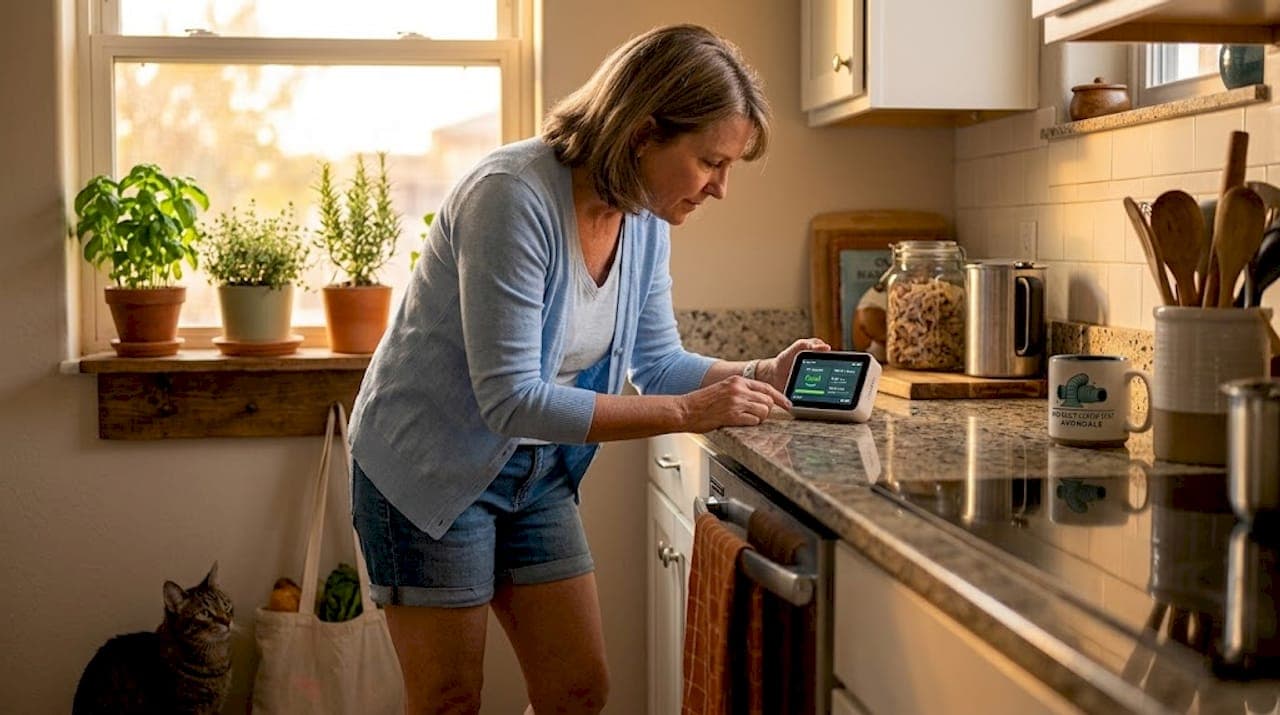
You bought a consumer air quality monitor, set it on the shelf, and figured you were covered. Most homeowners do exactly this, and most are working with incomplete information as a result. Following the best practices in air quality testing means understanding that a single device showing a green light is not the same thing as a verified, safe indoor environment. This guide walks you through what real testing looks like, which methods actually work, and how to connect your results to solutions that protect your family or tenants.
Table of Contents
- Key takeaways
- What indoor air pollutants you are actually dealing with
- Understanding air quality testing methods
- How to run effective tests at home or on your property
- How to select and work with professional testing services
- What to do after you get your results
- My take: what most homeowners get wrong about air quality testing
- Get professional air quality testing in Avondale, AZ
- FAQ
Key takeaways
| Point | Details |
|---|---|
| DIY monitors have real limits | Consumer monitors detect relative changes, not precise pollutant counts — spikes need professional verification. |
| Test method must match the goal | Spot tests, continuous monitors, and lab analysis each serve a different purpose and should be combined. |
| Calibration is non-negotiable | Sensors drift within 12 to 18 months and require annual calibration to stay accurate. |
| Source control beats filtration | Removing or isolating pollutant sources is more effective than running air purifiers indefinitely. |
| Professional testing protects you legally | Accredited labs with documented chain of custody produce data that holds up under regulatory or legal review. |
What indoor air pollutants you are actually dealing with
Before you can test effectively, you need to know what you are testing for. Indoor air carries a wider range of contaminants than most people realize, and the sources are often things you would never suspect.
The most common indoor air pollutants homeowners and property managers should account for include:
- Volatile organic compounds (VOCs): Released by paints, adhesives, cleaning products, and off-gassing furniture. New construction and recently remodeled spaces are especially high risk.
- Carbon dioxide (CO2): Elevated CO2 from poor ventilation causes fatigue, headaches, and reduced cognitive performance. It is one of the most overlooked comfort pollutants.
- Mold spores: Damp basements, leaky roofs, and poorly maintained HVAC systems create the conditions mold needs to grow and spread through the air.
- Particulate matter (PM2.5 and PM10): Tiny particles from cooking, candles, cleaning, and outdoor infiltration lodge in lungs and trigger respiratory symptoms.
- Radon: A naturally occurring radioactive gas that seeps through foundations. It is the second leading cause of lung cancer in the U.S. and has no odor or color.
The source of a pollutant matters as much as the pollutant itself. Understanding indoor air pollution causes in your specific property type tells you which contaminants to prioritize in testing.
Humidity deserves its own mention. Indoor humidity between 30% and 50% is the target range for preventing mold growth and limiting dust mite populations, both of which degrade air quality significantly. Arizona homes face unique challenges here because the dry desert air can tempt homeowners to over-humidify, pushing conditions toward mold risk without realizing it.
The combination of pollutant type, source location, and humidity creates a unique air quality profile for every property. That profile is what effective testing needs to capture.
Understanding air quality testing methods
Not all testing approaches are created equal. Each method has a different level of precision, a different cost point, and a different situation where it makes the most sense. Knowing the difference protects you from drawing the wrong conclusions.
| Method | Best for | Limitations |
|---|---|---|
| Consumer monitors | Continuous trend tracking, everyday awareness | Relative sensing only; not precise enough for health decisions |
| Spot testing | Identifying specific problem areas at a point in time | Misses intermittent pollution events |
| Accredited lab analysis | Legal, regulatory, or health-driven decisions | Higher cost; requires proper sample handling |
Consumer-grade monitors
These devices are genuinely useful tools but they are widely misunderstood. Consumer monitors detect relative changes in pollutant concentration rather than absolute molecule counts. A spike in your PM2.5 reading could reflect harmless candle smoke or a more serious particulate problem. Without context and verification, you cannot know which it is.
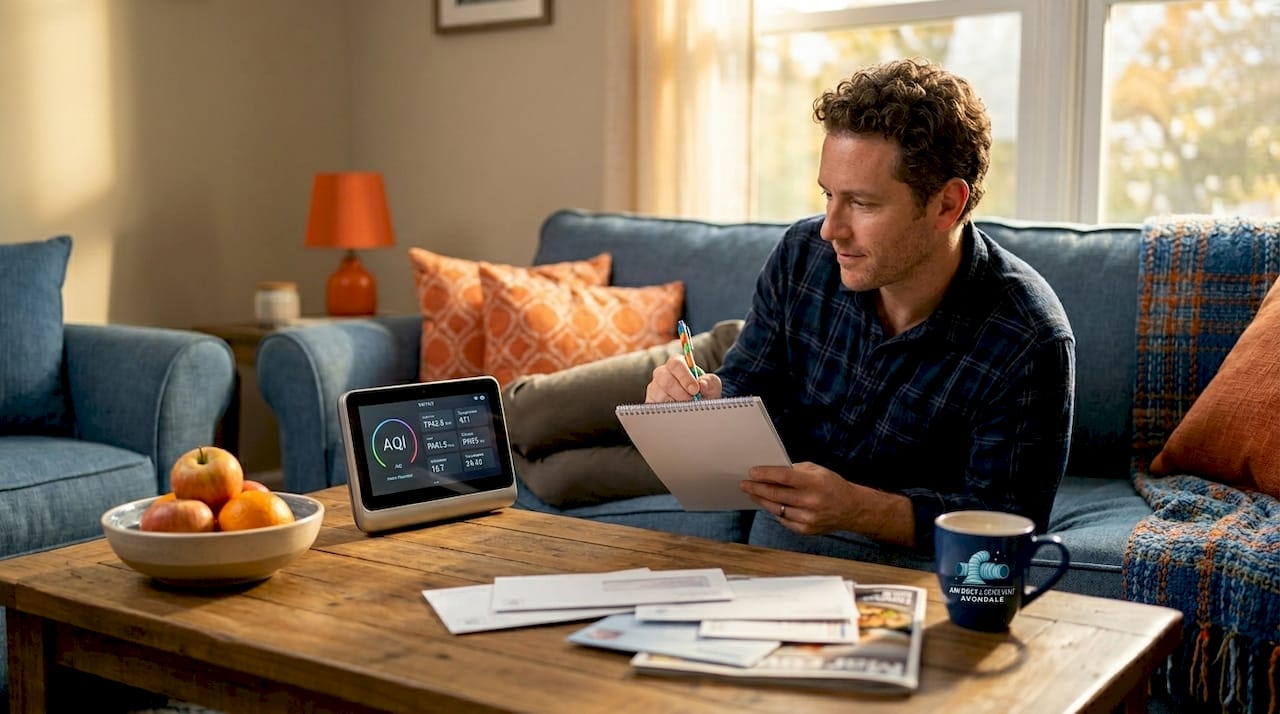
Most consumer devices use NDIR sensors for CO2 and laser particle counters for particulates. The problem is that these sensors drift within 12 to 18 months and require NIST-traceable calibration to stay accurate. Most homeowners never calibrate their devices at all.
Pro Tip: Place your consumer monitor in the room where occupants spend the most time, at breathing height. Avoid placing it near vents, windows, or kitchens, where readings will be artificially skewed by localized sources.
Spot testing
Spot testing uses more precise, often handheld equipment to capture a pollutant reading at a specific location and time. HVAC technicians and environmental consultants use calibrated instruments to collect targeted data. It is more accurate than consumer monitors but misses the pollutants that only appear at night, during certain activities, or when the HVAC cycles on.
Laboratory and accredited testing
When the stakes are high, such as a real estate transaction, a tenant complaint, or a suspected mold or radon problem, lab testing with documented chain of custody is the only method that produces defensible, audit-ready data. Accredited labs follow strict protocols that validate their results for regulatory or legal use.
One more consideration worth raising: testing for emerging contaminants like airborne microplastics is still evolving. Results from different testing methods for these newer pollutants are often not directly comparable, which means you should be cautious about interpreting such results without professional guidance.
How to run effective tests at home or on your property
Getting accurate results from any type of testing requires following a structured approach. Collecting data randomly or without preparation leads to numbers you cannot trust or act on.
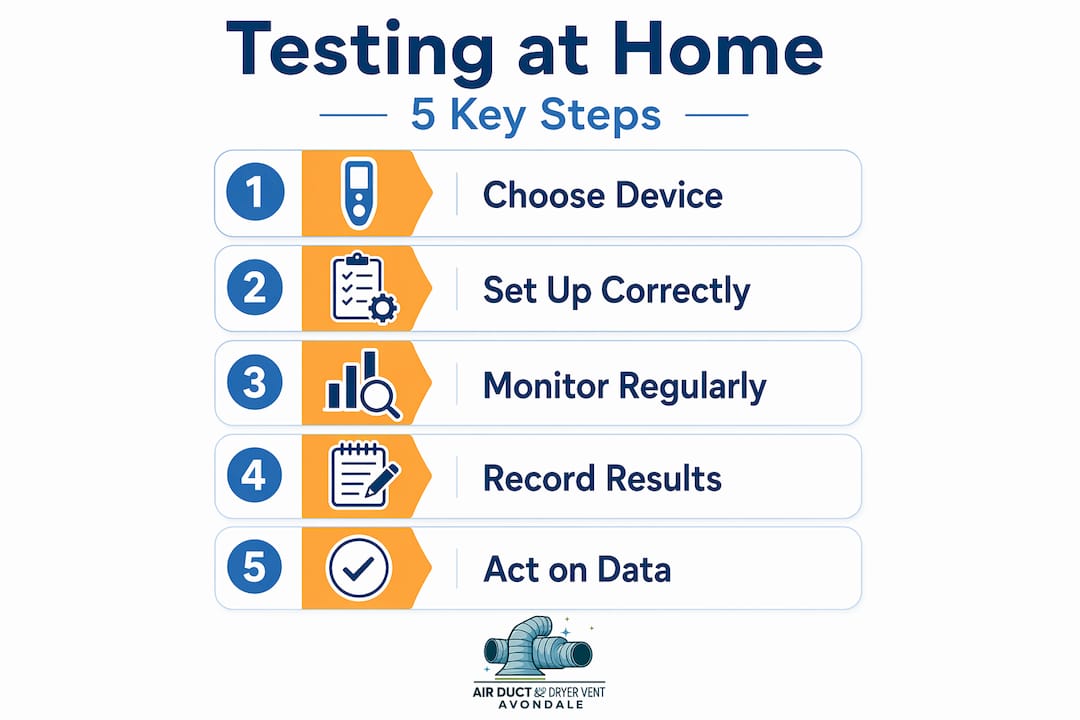
- Define your testing goal first. Are you checking for general comfort issues, investigating a health complaint, or preparing documentation for compliance? Your goal determines the method and the scope.
- Choose monitor placement deliberately. Position devices at breathing height, typically 3 to 5 feet above the floor, in occupied areas. Avoid placing them within 3 feet of air supply vents or exterior walls.
- Account for timing and occupancy. Air quality varies by time of day and by what is happening in the space. Test during normal occupancy and during activities like cooking, cleaning, or running the HVAC.
- Use continuous monitoring alongside spot checks. Continuous monitoring combined with periodic spot testing gives you both the trend data and the precise point-in-time readings needed for a complete picture.
- Calibrate your equipment on schedule. Annual calibration is the minimum standard for consumer sensors. Document the calibration date and method so your data has a verifiable baseline.
- Benchmark against established standards. ASHRAE, EPA, OSHA, and WELL each publish thresholds for key pollutants. Compare your readings against these benchmarks to determine whether results indicate a problem or fall within an acceptable range.
- Know when to stop interpreting and start calling. If your readings show consistently elevated VOCs, CO2 over 1,000 parts per million during normal occupancy, or any mold or radon indicators, bring in a professional before taking action.
Pro Tip: Test before and after making any changes to your HVAC system, ventilation, or filtration. This gives you a before and after comparison that shows whether your actions actually made a measurable difference.
Following these air quality assessment guidelines transforms your testing from an activity into a process. The practical steps for air quality testing you establish early on will pay dividends every time you add a new monitor or investigate a new concern.
How to select and work with professional testing services
When you decide to bring in a professional, the quality of the service provider matters as much as the tests themselves. A poorly run lab or an uncertified technician can produce results that are worse than useless. They can be misleading.
Here is what to look for when evaluating a professional air quality testing provider:
- Accreditation and certification. The lab processing your samples should hold relevant accreditations such as AIHA-LAP, LLC accreditation for industrial hygiene laboratories, or state-level environmental lab certification. Ask directly. A reputable provider will answer this question without hesitation.
- Chain-of-custody documentation. Defensible air quality data requires documented chain of custody from sample collection through lab analysis. If the provider cannot explain their chain-of-custody process, their data will not hold up to scrutiny.
- Clear, readable reports. A good professional testing report tells you what was found, what the applicable standard is, whether there is a concern, and what to do next. Avoid providers whose reports are raw numbers with no context.
- Validated methods. Ask whether the methods they use are validated against EPA, NIOSH, or ASTM standards. For emerging contaminants, ask specifically about method variability and interpretation limitations.
- No conflict of interest. Be cautious of services that both test for a problem and sell the remediation. While not always problematic, it creates an incentive to find issues. Opt for testing-only services when your situation allows.
Property managers should pay particular attention to documentation quality. If a tenant raises a health complaint tied to air quality, your response and the data supporting it may face legal or regulatory review. Only properly accredited testing with full documentation protects you in that scenario.
What to do after you get your results
Testing tells you where you stand. What you do with that information determines whether anything actually improves. Many homeowners test once, see the results, and do nothing specific about them. That is the most common failure point.
The most effective follow-up actions after air quality testing include:
- Prioritize source control above all else. Source control is the most effective IAQ strategy, more impactful than running purifiers or increasing ventilation. Address the root cause. Remove the off-gassing furniture, fix the moisture source, or replace the moldy materials.
- Upgrade your HVAC filtration. If particulates are elevated, upgrade to a MERV 13 filter or higher. Confirm your HVAC system can handle the increased resistance before making the switch, as some older systems cannot support high-MERV filters without reduced airflow.
- Improve ventilation strategically. Open windows when outdoor air quality permits. Use exhaust fans in kitchens and bathrooms consistently. For tighter homes, consider an energy recovery ventilator to bring in fresh air without spiking your energy bill.
- Use supplemental air cleaners appropriately. HEPA air purifiers address particulates effectively. Activated carbon filters help with VOCs. Neither replaces source control or proper ventilation. They are support tools, not primary solutions.
- Manage humidity actively. Keep indoor humidity between 30% and 50% year-round. In Arizona summers, dehumidification is rarely the issue. During monsoon season or in homes with moisture intrusion, it becomes critical. Read more about HVAC mold prevention as part of your humidity management strategy.
- Bring in expert remediation when needed. If your results show mold contamination, radon above 4 pCi/L, or persistent elevated VOCs from an unidentified source, professional remediation is not optional. Addressing indoor pollutant sources through professional intervention is more effective and safer than DIY approaches for these categories.
| Pollutant concern | Recommended first action | When to call a professional |
|---|---|---|
| Elevated PM2.5 | Upgrade HVAC filter to MERV 13 | If levels persist after filter upgrade |
| High CO2 | Increase fresh air ventilation | If ventilation upgrades do not reduce levels |
| Mold indicators | Address moisture source immediately | Always confirm with professional lab testing |
| Elevated VOCs | Identify and remove the source | If source cannot be identified |
| Radon above 4 pCi/L | Retest for confirmation | Always, radon mitigation requires licensed contractor |
My take: what most homeowners get wrong about air quality testing
I have seen a consistent pattern in how homeowners and property managers approach indoor air quality, and it follows a predictable arc. They buy a monitor, watch the numbers for a few weeks, and then forget about it entirely until something prompts concern again. That cycle does not produce safer air. It produces a false sense of security.
What I have found consistently is that the homeowners who actually improve their indoor air quality are the ones who treat testing as an ongoing process, not a one-time event. They run consumer monitors for trend awareness and then bring in professional testing once a year or whenever something changes: a renovation, a new HVAC unit, a health complaint.
The other thing that surprises people when they first hear it is that spending more on air purifiers before addressing source control almost always produces disappointing results. I understand the appeal. A good air purifier feels like a complete solution. But if you have off-gassing materials in your space or a moisture problem feeding mold growth, a purifier is managing symptoms while the root cause continues unchecked.
The cost-effective approach is straightforward: test first, identify what you are actually dealing with, address the source, and then monitor to confirm the fix worked. Professional testing does not have to happen every month. Pairing annual professional testing with continuous consumer monitoring covers both your day-to-day awareness and your need for defensible, accurate data when decisions or compliance require it.
Air quality is not a problem you solve once. It shifts with the seasons, with occupancy changes, and with the age of your building systems. Treating it as an ongoing priority is what separates the homes where residents consistently feel well from the ones where something always seems slightly off.
— Shaun
Get professional air quality testing in Avondale, AZ
If your testing results have raised questions or you want a verified baseline before buying, selling, or renting a property, Airanddryerventcleaningavondale provides professional-grade indoor air quality testing for residential and commercial clients throughout Avondale, Arizona.
Testing alone only tells part of the story. Contaminated ductwork recirculates dust, mold, and allergens regardless of how good your monitor readings look on a given day. That is why Airanddryerventcleaningavondale pairs testing with professional air duct and vent cleaning to give you a complete picture of what is moving through your air. The team offers flexible scheduling, including after-hours appointments, and backs its work with service warranties. Reach out to schedule a consultation and find out exactly what your air is carrying.
FAQ
What are the best practices in air quality testing for homes?
The best practices in air quality testing for homes include using properly calibrated monitors at breathing height, combining continuous monitoring with periodic professional spot testing, and benchmarking results against EPA and ASHRAE standards before taking action.
How often should homeowners test indoor air quality?
Run consumer monitors continuously for trend awareness and schedule professional accredited testing at least once a year or after any major renovation, HVAC replacement, or occupancy change that could affect indoor air.
Can a DIY air quality monitor give accurate results?
Consumer monitors are useful for tracking trends but provide relative readings rather than precise pollutant counts. Spikes should always be verified with professional lab testing before making health decisions based on the data.
What should I do if my air quality test shows elevated mold or radon?
Mold indicators should be confirmed with accredited lab testing, and the moisture source must be addressed immediately. Radon readings above 4 pCi/L require retesting followed by a licensed radon mitigation contractor, regardless of the initial reading method.
Why does air quality testing need chain-of-custody documentation?
Chain-of-custody documentation proves that samples were collected, handled, and analyzed without contamination or tampering. Without it, results cannot be used for regulatory compliance, legal proceedings, or defensible health claims.