
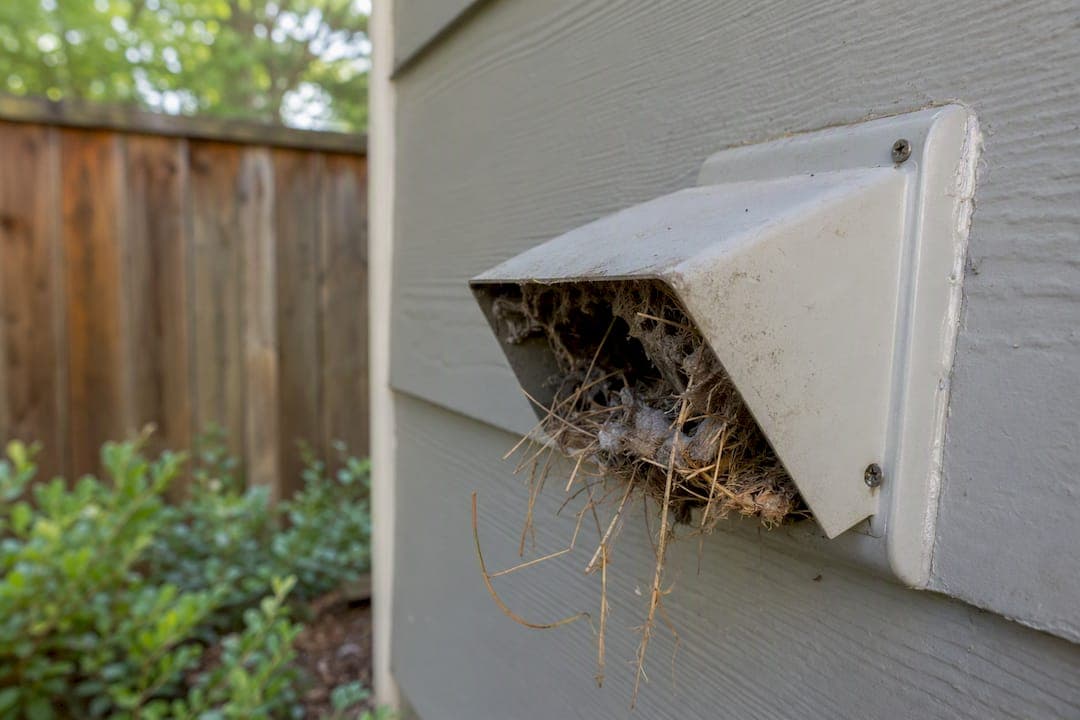
If you hear chirping or scratching from your dryer vent, unplug the dryer immediately and stop running loads until the vent is clear. Do not touch, remove, or disturb the nest if you see eggs or chicks. Federally protected species make that illegal, so your options are to wait it out or call a wildlife professional. For an empty or inactive nest, a cautious DIY clearing is possible, but a dryer vent technician is the safer bet when the nest reaches into the ductwork.
TL;DR:
- Dryer vents often attract nesting birds due to warmth and shelter, which can lead to blockages, slow drying times, and fire hazards if not addressed promptly.
- Confirming nest activity is crucial, as protected native bird nests cannot be removed or disturbed until inactive, whereas invasive species’ nests can be cleared anytime.
- DIY removal is limited to inactive, shallow nests near the exterior vent and must avoid pushing debris deeper into the duct system or attempting to force nests out with tools like blowers or hangers.
- A professional dryer vent technician should handle full cleanings, inspections, and pest-proof cover installations to ensure safe and complete removal of nests and debris.
- Preventative measures include using heavy metal covers with dampers, trimming nearby branches, and scheduling annual inspections and cleanings to avoid recurring bird nesting problems.
Table of Contents
- Signs of Birds in Your Vent (and Why It's Not a Minor Problem)
- What to Do the Moment You Suspect a Nest
- Removing Birds From a Dryer Vent: DIY Limits and Legal Rules
- Stopping Birds From Coming Back
- When to Call a Professional Dryer Vent Technician
- Why We Treat Every Vent Call as a Full Inspection
- Getting Your Vent Cleared and Protected for Good
- Where to Verify These Rules and Get More Help
- Sources
- FAQ
Signs of Birds in Your Vent (and Why It's Not a Minor Problem)
Birds love dryer vents for the same reasons you'd want a good apartment: warm air, shelter from weather, and a spot nobody bothers them. That combination makes vents surprisingly attractive real estate, and once a bird claims one, it often comes back to the same opening year after year even after you clear it out.
You'll usually catch dryer vent bird nesting through your ears before your eyes. Listen for these clues:
- Chirping, scratching, or fluttering sounds coming from the vent duct or wall
- Twigs, straw, or lint sticking out of the exterior vent hood
- Birds repeatedly flying to and from the same wall or roof opening
- Droppings or nesting debris scattered on the ground below the vent
- Clothes that take noticeably longer to dry than usual
- A musty, earthy, or burning smell when the dryer runs
- Heat or lint smell backing up into the laundry room instead of venting outside
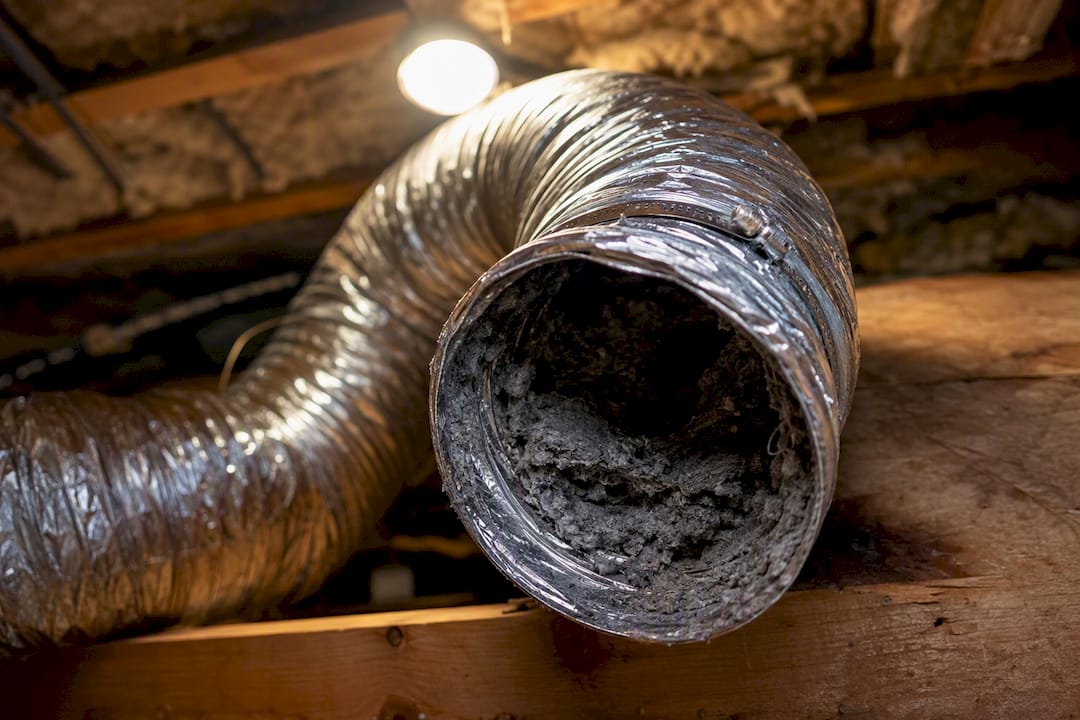
That last group of signs matters more than people realize. A vent packed with sticks and lint doesn't just slow your laundry down. It traps heat inside the dryer drum and duct, and a blocked vent with nesting material is a genuine fire hazard that can also cause dangerous carbon monoxide buildup in gas dryers. Add in the pest and disease risk that comes with bird droppings and mites, plus the physical damage a woven nest can do to flexible ducting, and a "cute bird problem" becomes a home safety issue fast.
Pro Tip: If your dryer suddenly takes two cycles to do what one used to, check the exterior vent hood before you assume it's a mechanical issue. Nine times out of ten, homeowners find debris, not a broken dryer.
What to Do the Moment You Suspect a Nest
Once you've confirmed the signs, the sequence of your next moves matters. Follow these steps in order.
- Turn off and unplug the dryer. Stop running loads immediately, even if clothes are only slightly damp. A dryer forcing hot air against a blocked vent doesn't just get louder or less effective. It heats up dramatically inside the vent and drum, which is exactly the condition that ignites trapped lint and nesting material.
- Keep household members and pets away from the vent opening, both inside and outside, until you know what you're dealing with.
- Document what you see. Take photos of the exterior vent, any visible nest material, and note whether you can see eggs or hear chicks. This record helps a technician or wildlife professional assess the situation without you disturbing it further.
- Resist the urge to force debris out. Don't stick a leaf blower, garden hose, or coat hanger into the vent. These tricks usually push nesting material deeper into the ductwork instead of out of it, turning a simple job into a bigger one.
- If you have a gas dryer and smell exhaust or gas near the vent, ventilate the area and call a professional immediately. That's not a wait-and-see situation.
Removing Birds From a Dryer Vent: DIY Limits and Legal Rules
Before you touch anything, figure out whether the nest is active. An active nest has eggs, chicks, or a parent bird coming and going regularly. This distinction isn't just practical, it's legal. Most native North American birds, including common cavity nesters, are protected under the Migratory Bird Treaty Act, which makes it illegal to disturb, remove, or destroy an active nest containing eggs or young. If you find one, your job is to wait, not intervene, or contact a wildlife rehabilitator or removal professional who can advise you on timing.
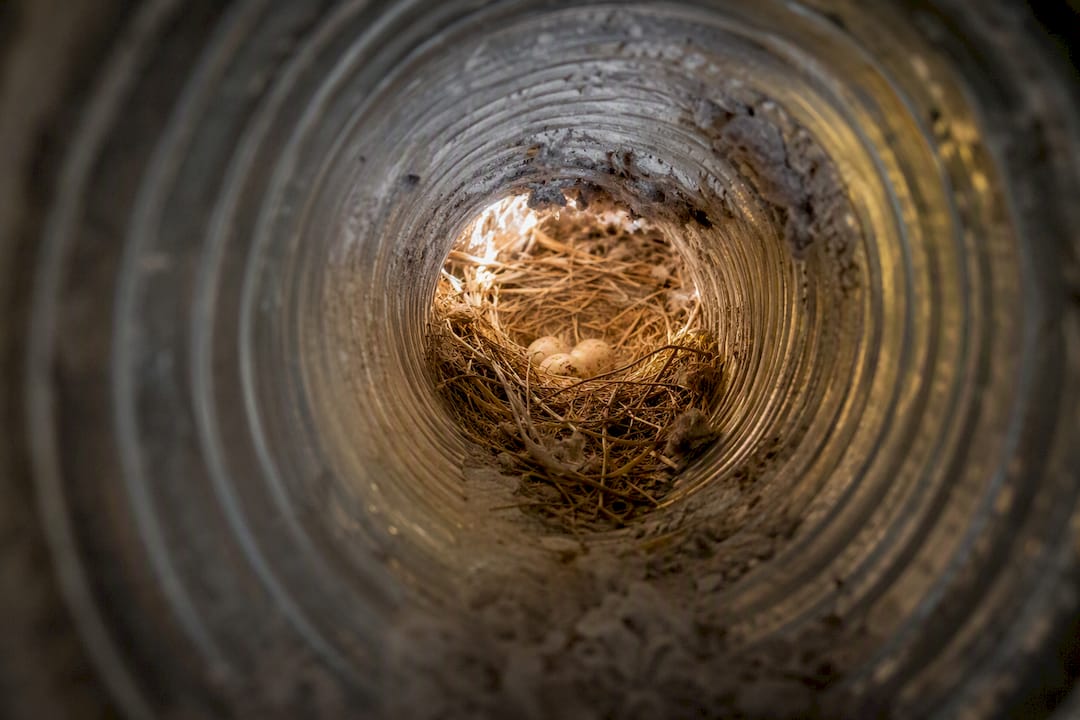
There's an important exception worth knowing: invasive species like European starlings and house sparrows aren't protected under federal migratory bird law, so those nests can be removed at any time without a permit. Telling the difference between a protected native species and an invasive one isn't always obvious, though, which is another reason a wildlife professional's opinion is worth getting before you assume you're in the clear.
If the nest is confirmed inactive, here's a safe removal sequence for a shallow blockage near the exterior opening:
- Put on gloves, eye protection, and a dust mask. Old nests carry mites, droppings, and mold spores.
- Unplug the dryer and remove the exterior vent cover or hood.
- Hand-remove visible nesting material in sections rather than yanking it all at once, which can tear debris into a shop vac's hose.
- Use a flexible vent brush kit or a shop vac with a hose attachment to clear remaining debris from the accessible section of duct.
- Sanitize the area with an appropriate disinfectant, since old nests can harbor bacteria and parasites.
- Reattach the vent cover securely and test the dryer for a full cycle before considering the job done.
Here's what not to do: never run the dryer to try to "blow out" a nest, never push debris deeper with a broom handle or wire hanger, and never use a leaf blower, which tends to compact material further into the line rather than clearing it.
Even a textbook DIY job has a blind spot. Technicians frequently find that nests don't stop at the exterior opening. They extend well into the flexible duct inside the wall or attic, sometimes several feet past what a homeowner can reach or see. If your brush hits resistance you can't clear, or your vent run has more than one bend, that's your signal to stop and call a professional rather than force it. A partially cleared vent can look fine from outside while still restricting airflow enough to overheat the dryer.
Pro Tip: If your vent exits through the roof rather than a sidewall, don't attempt the climb yourself. Roof access adds a fall risk on top of the bird problem, and a technician who handles roof vent repair can inspect flashing and seals at the same time.
Stopping Birds From Coming Back
Clearing one nest without addressing why the bird chose your vent in the first place just buys you a few months before the problem repeats. Prevention comes down to two things: the right cover and a maintenance schedule you actually keep.
- Choose a heavy-gauge metal cage or mesh cover, not a plastic louvered flap. Plastic cracks in the sun and birds can pry weak louvers open with surprisingly little effort.
- A recessed cover with a spring-loaded damper works even better than open mesh, since a tight-fitting spring damper is harder for birds to force open than a simple flap-style vent hood.
- Trim back branches, wires, or ledges near the vent opening that give birds a place to perch and scope out the spot before nesting.
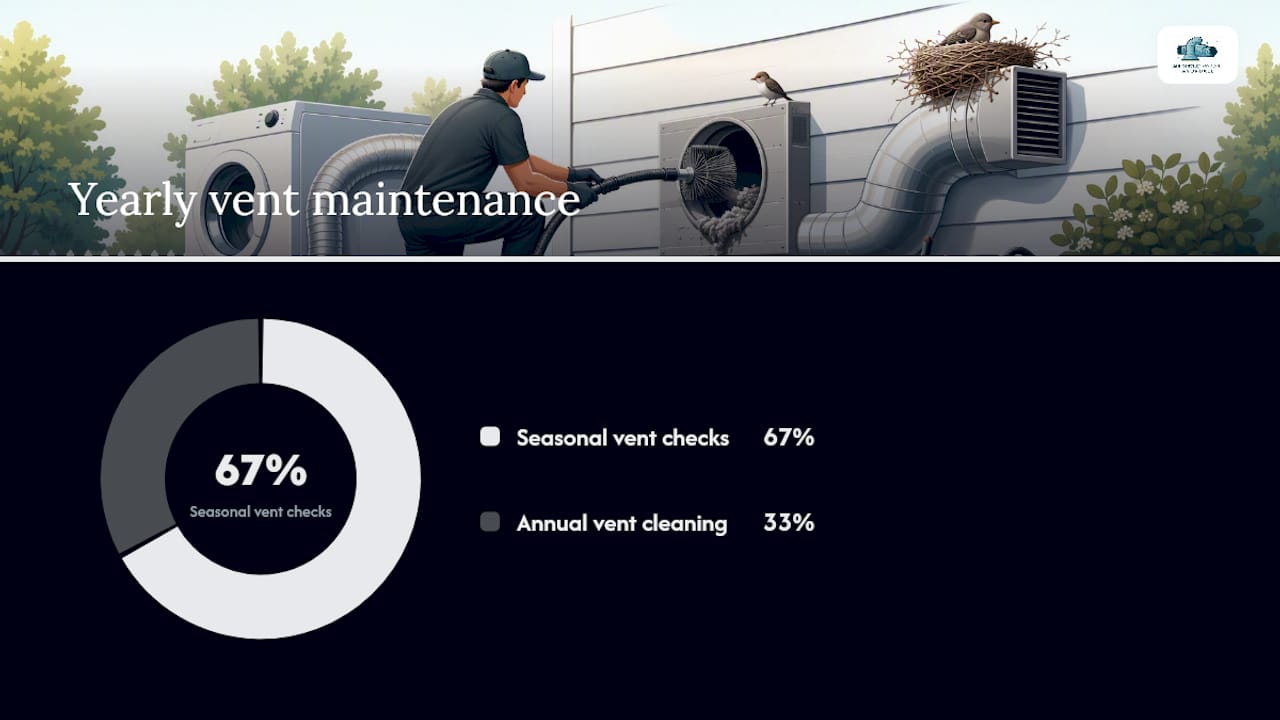
- Inspect your vent cover every spring, right before nesting season ramps up, and again in early fall.
- Schedule a full vent cleaning annually, even without visible signs of a problem, since compacted lint builds up long before it becomes obvious.
Where your vent exits changes your approach slightly. A sidewall vent near ground level is easy to inspect yourself with a flashlight and mirror. A roof vent is harder to monitor, easier for birds to reach undisturbed, and more dependent on how the roofing ventilation system is configured around it. If overgrown trees near your roofline are giving birds an easy landing spot, it's also worth looking at ways to keep critters off the roof entirely as a companion fix.
Pro Tip: Mark your calendar for vent cover checks the same week you change your smoke detector batteries. Pairing the two tasks means you'll actually remember to do both.
When to Call a Professional Dryer Vent Technician
Some situations are DIY territory. A confirmed inactive nest sitting a few inches inside a straight sidewall duct, with tools on hand and no legal complications, is one of them. Everything else, and honestly most real-world cases, calls for a professional.
A proper service visit typically includes:
- Safe removal of nesting material, handled correctly whether the nest is active or not
- Full-length brushing of the vent run, not just the exterior few feet
- Inspection of the ductwork for tears, compression, or disconnected joints the nest may have caused
- Installation of a pest-proof vent cover rated to keep birds and rodents out long term
- Sanitizing the line to remove droppings, mites, and odor
- Before-and-after documentation so you know exactly what was found and fixed
When you're vetting a technician, ask about insurance coverage, workmanship warranties, and whether they document the job with photos. A written quote before work begins is standard, and a company with visible local reviews has a track record you can actually check. Before your appointment, take a few photos of what you've observed and make sure the technician has clear access to both the interior dryer connection and the exterior vent opening. That alone speeds up the visit and helps them assess whether the nest reaches further into the line than what's visible from outside.
Why We Treat Every Vent Call as a Full Inspection
After years around dryer vent systems, one pattern shows up constantly: what looks like a small twig problem at the exterior hood turns out to be a nest that runs three or four feet into the flex duct, with compacted lint packed around it from months of restricted airflow. Homeowners who catch it early and get a full-line cleaning avoid the bigger repair bill that comes from a scorched duct or a dryer motor that's been overworking against a blockage for weeks. That's the real argument for annual service instead of a one-time fix. A vent that's clean today can host a new nest by next spring, and the difference between catching that early and finding out the hard way usually comes down to whether someone inspected the full run, not just the opening.
— Shaun
Getting Your Vent Cleared and Protected for Good
A DIY brush and a trip to the hardware store can handle a shallow, inactive nest. What it can't do is guarantee the duct behind that nest is undamaged, fully clear, or protected against the next bird that finds the same warm opening. Airanddryerventcleaningavondale handles the part homeowners can't see: full-length vent brushing, nest and debris removal, pest-proof cover installation, and a warranty on the work, all from a team that knows Avondale's housing stock and vent layouts.
Our dryer vent cleaning service covers nest removal, full duct inspection, and cover installation in one visit, so you're not guessing whether the job actually reached the blockage. If the nest situation has you wondering about air quality in the rest of the house, our indoor air quality testing can check for contamination beyond the vent line. When you call to book, ask what the visit includes, whether a pest-proof cover comes standard, and what the warranty covers. Getting those answers upfront means no surprises when the technician shows up.
Where to Verify These Rules and Get More Help
Federal protections for nesting birds fall under the Migratory Bird Treaty Act, and your state or local wildlife agency can confirm species status if you're unsure whether a nest is protected. For broader vent maintenance guidance, see our DIY air vent inspection tips and our guide to common vent blockage causes. When in doubt about a species, contact a local wildlife rehabilitator before touching anything.
Sources
- Birds in Your Dryer Vent? Here's How to Remove Them Safely and Humanely — Bob Vila
- Found A Bird Nest In Your Dryer Vent? Here’s Exactly What To Do — AOL
FAQ
Can a Bird's Nest in a Dryer Vent Cause a Fire?
Yes. Nesting material combines with trapped lint to create a dense, flammable blockage, and running the dryer against that blockage raises internal temperatures enough to ignite the debris.
What Smells Do Birds Dislike Most?
Birds tend to avoid strong scents like peppermint oil, vinegar, and predator-scent products, but smell-based deterrents are unreliable for an active nest and shouldn't replace a proper vent cover or professional removal.
What Should I Do if There Are Birds in My Vents?
Stop using the dryer right away, avoid disturbing the nest if it contains eggs or chicks, and either wait for the nest to become inactive or call a wildlife professional or vent technician for safe removal.
How Do I Get Birds to Leave a Dryer Vent?
If the nest is inactive, safe DIY removal with PPE and a vent brush works for shallow blockages; if it's active or reaches deep into the ductwork, a licensed technician or wildlife professional should handle it to stay within legal protections under the Migratory Bird Treaty Act.