
TL;DR:
- Proper ventilation in Avondale must handle extreme heat, dust, and humidity for healthy indoor air.
- Balanced ERV systems offer the best IAQ, energy savings, and humidity control for dusty, humid conditions.
- Regular maintenance, filter changes, and professional inspections are essential for system efficiency and indoor air quality.
Avondale's climate is not easy on your home's ventilation. Triple-digit summer heat, heavy dust from desert winds, and the sudden humidity surge of monsoon season create a unique set of challenges that most generic ventilation guides simply ignore. The air vent system you choose directly affects how much you spend on energy and how healthy the air inside your home or business actually is. Get it wrong, and you end up with stuffy rooms, climbing utility bills, and air that carries dust and allergens all year long. This guide breaks down the main system types, what separates them in real Avondale conditions, and which options give you the best results for comfort, efficiency, and indoor air quality.
Table of Contents
- Key factors for choosing an air vent system
- Exhaust-only air vent systems: Simple but risky
- Supply-only air vent systems: Filtering the incoming air
- Balanced and energy recovery systems: The sweet spot for Avondale
- Practical tips for maintenance and optimal performance
- Expert perspective: Why the right system—and regular care—matters most in Avondale
- Enhance your air quality with local Avondale solutions
- Frequently asked questions
Key Takeaways
| Point | Details |
|---|---|
| Balanced ERV systems excel | They combine fresh air, humidity management, and energy savings for Avondale homes and businesses. |
| Regular cleaning is crucial | Yearly inspections and filter changes before monsoon season ensure healthy, efficient airflow. |
| System choice affects energy bills | Selecting the right system can reduce cooling costs by recovering up to 80% of wasted energy. |
| Climate impacts suitability | Some systems that work elsewhere (like exhaust-only) are not ideal for Avondale’s hot and dusty climate. |
Key factors for choosing an air vent system
Before comparing system types, you need a clear picture of what actually matters for your property. In Avondale, that starts with the climate. Summer temperatures routinely exceed 110°F, desert dust settles fast, and monsoon season brings rapid humidity spikes that can push moisture into places you do not want it. Your ventilation system has to handle all three phases of the year without failing at any of them.
The type of building you have also shapes your decision. A single-family home with one or two residents has very different needs than a small retail shop or office with higher foot traffic. Residences often prioritize allergy and asthma management, while small businesses may also care about meeting code requirements and keeping customers comfortable. Knowing why ventilation matters for both health and energy helps frame every other choice.
Ventilation standards exist for a reason. Whole-house mechanical ventilation must meet ASHRAE 62.2, which sets a minimum rate of 0.35 air changes per hour (ACH) or a CFM formula based on floor area and number of bedrooms. When systems are improperly sized or balanced, the result is inefficiency and pressure imbalances that work against your HVAC. These problems are more common than most people realize, and they add up on your energy bill every single month.
Energy efficiency and indoor air quality (IAQ) are your two core drivers. A cheap system that leaks in dust or runs your AC harder is not actually saving you money. You also need to consider the vent benefits in Avondale specific to your property, including how existing ductwork and filter quality influence your results.
Here are the main evaluation criteria to keep in mind:
- Climate compatibility: Can the system handle heat, dust, and monsoon humidity?
- IAQ performance: Does it filter or dilute indoor pollutants effectively?
- Energy cost: What are the upfront and long-term operating costs?
- Building size and use: Is it sized right for your space and traffic?
- Maintenance demands: How often does it need cleaning or filter swaps?
- Code compliance: Does it meet ASHRAE 62.2 minimums for your square footage?
Pro Tip: Schedule air filter replacement at least every 90 days in Avondale, more often if you notice visible dust on grilles or if allergy symptoms worsen around storm season.
Exhaust-only air vent systems: Simple but risky
Exhaust-only systems are the most straightforward option. They work by using one or more fans to push indoor air out of the building. As air leaves, it creates negative pressure, or depressurization, which draws outdoor air in through gaps, cracks, and passive vents in the building envelope. The concept is simple, and that simplicity is both the appeal and the problem.
On the plus side, exhaust-only systems cost less to install, are easy to retrofit into older homes, and require minimal equipment. For a small bathroom or laundry area, a single exhaust fan does the job without any complex controls. Many older Avondale homes already have basic exhaust setups in place.
Pros of exhaust-only systems:
- Low upfront cost
- Simple installation, good for retrofits
- Reliable for spot ventilation in bathrooms and kitchens
- Fewer mechanical components to maintain
The cons are harder to ignore, especially here. Because exhaust systems depressurize the home, outside air does not enter through a controlled, filtered point. It seeps in wherever it can find an opening. In Avondale, that means desert dust, pollen, and during monsoon season, humid outside air, all enter without any filtration. Whole-house mechanical ventilation research confirms that exhaust-only designs depressurize the home and can pull in outdoor pollutants, making them a poor fit for hot, dusty, or humid climates.
"Exhaust systems suit cold climates, but can draw dust and humidity indoors in hot climates like Arizona."
Cons of exhaust-only systems:
- No filtration on incoming air
- Draws in dust, allergens, and monsoon humidity
- Can cause negative pressure that strains HVAC equipment
- Less effective at managing IAQ in extreme heat
- May pull combustion gases from appliances indoors (backdrafting)
For Avondale homeowners dealing with dust allergies or anyone running a business where air quality matters for customers, exhaust-only systems create more problems than they solve. They work fine in cold northern climates where outdoor air is cleaner and drier. In Arizona, relying on them as your primary ventilation strategy is a gamble that rarely pays off.
If you currently have an exhaust-only setup, keeping those vents clean is critical to limiting the damage. Dirty or partially blocked fans work harder, create stronger negative pressure, and pull in even more unfiltered air. Vent cleaning for better airflow becomes especially important in this scenario. You can also check out home ventilation basics to understand how different configurations impact your air quality before committing to any changes.
Supply-only air vent systems: Filtering the incoming air
Supply-only systems flip the script. Instead of exhausting air out and letting outdoor air sneak in, these systems use fans to push fresh outdoor air into the building. That creates positive pressure, meaning air inside is at a slightly higher pressure than outside, so air leaks out through gaps rather than in. The main benefit is that incoming air passes through a filter before it enters your living or working space.
For Avondale, positive pressure is appealing because it reduces the amount of unfiltered dust and allergens that sneak in through the building envelope. When paired with a high-quality air filter, supply-only systems can make a real difference for dust-sensitive households.
Pros of supply-only systems:
- Filters incoming air before it reaches living spaces
- Positive pressure reduces uncontrolled infiltration of dust and allergens
- More control over where fresh air enters compared to exhaust-only
- Good for retrofits in moderate climates
However, supply-only systems come with their own limitations. Whole-house mechanical ventilation guidance notes that supply systems pressurize the home and help filter outdoor pollutants, but without proper air mixing they can create uncomfortable drafts, and without exhaust balance they may push moisture into wall cavities, especially during humid monsoon periods. Moisture trapped inside walls is a recipe for mold, which is a serious IAQ problem.
Cons of supply-only systems:
- Can create uncomfortable drafts if air is not well distributed
- Positive pressure may push humid monsoon air into walls and insulation
- No energy recovery, so conditioned indoor air is simply lost
- Requires careful duct design to avoid pressure imbalances
- Filter maintenance is critical and often overlooked
Pro Tip: If you use a supply-only system in Avondale, upgrade to MERV-11 or higher filters and check them monthly during monsoon season. Dust loads spike dramatically during haboobs (large desert dust storms), and a clogged filter turns your supply system into an air blocker overnight. You can maintain performance by staying on top of supply vent maintenance year-round.
Supply-only systems are a step up from exhaust-only in terms of air quality control, but they still leave the energy efficiency problem unsolved. Conditioned air escapes, unconditioned air enters, and your AC has to make up the difference. For Avondale's high-heat climate, that gap on your energy bill adds up fast. Learning about air exchanger benefits can help you see how the next level of technology addresses these shortcomings.
Balanced and energy recovery systems: The sweet spot for Avondale
Balanced systems bring in and exhaust equal amounts of air at the same time, maintaining stable indoor pressure. The most advanced versions are heat recovery ventilators (HRV) and energy recovery ventilators (ERV). These units transfer heat and, in the case of ERV, moisture between the incoming and outgoing airstreams, so the energy you have already paid to heat or cool the air is not simply wasted when ventilation happens.
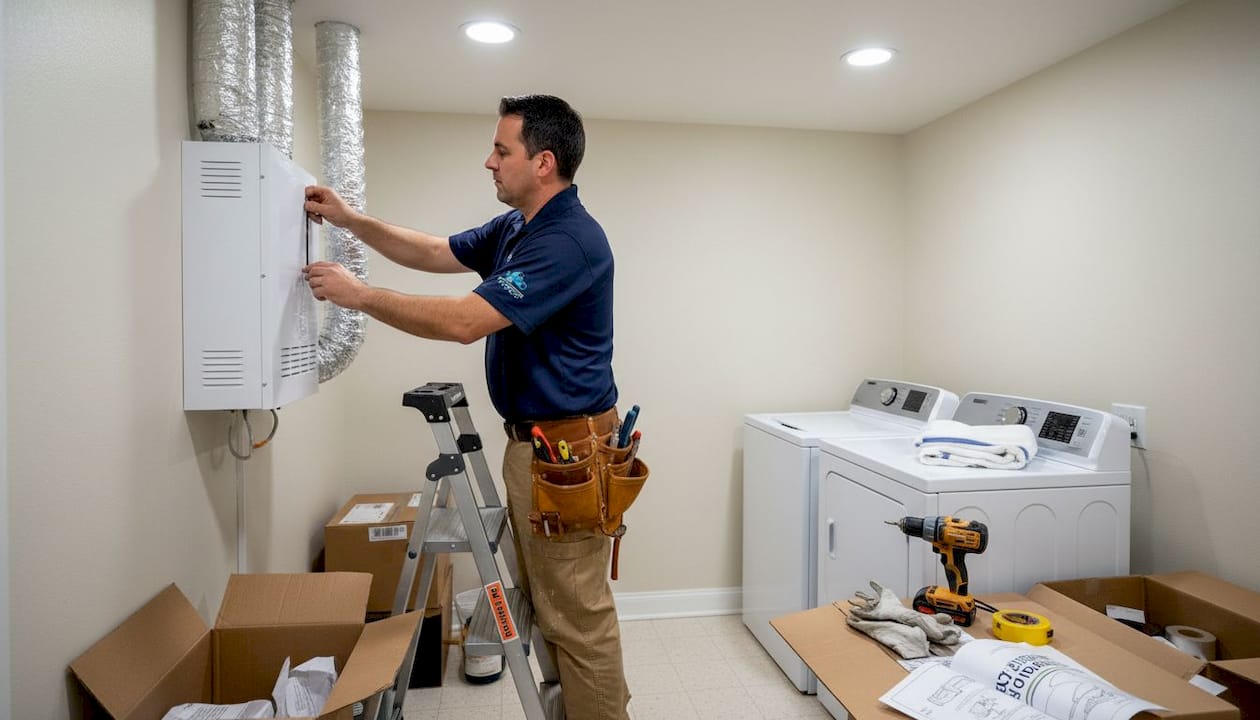
ERV/HRV systems recover 70-80% of the energy from exhaust air and transfer it to incoming fresh air. That is a massive reduction in the energy penalty of ventilation. In Avondale's summer, when your AC is running hard for months, that efficiency gain directly lowers your utility bills.
ERV systems also transfer moisture, which matters a great deal during monsoon season. Instead of letting humid outside air pour into your space unchecked, an ERV manages the moisture exchange, keeping humidity levels stable. HRV systems only transfer heat, not moisture, making them better suited to colder climates. For Avondale, ERV is the stronger choice precisely because of the humidity swings.
Pros of balanced ERV/HRV systems:
- Best IAQ performance: controlled, filtered fresh air exchange
- Energy recovery reduces heating and cooling costs significantly
- ERV manages humidity during both dry and monsoon periods
- Stable indoor pressure, no negative or excessive positive pressure
- Integrates with existing HVAC for efficient air duct performance
Cons of balanced ERV/HRV systems:
- Higher upfront cost compared to exhaust-only or supply-only
- Requires professional sizing and installation
- Needs regular filter and core cleaning to maintain efficiency
- More complex system with more components to maintain
| System type | Upfront cost | IAQ performance | Energy efficiency | Humidity control | Best climate |
|---|---|---|---|---|---|
| Exhaust-only | Low | Poor | Low | Poor | Cold, dry |
| Supply-only | Low-moderate | Moderate | Low | Moderate | Moderate |
| Balanced/ERV | Higher | Excellent | High | Excellent | Hot, humid, dusty |
For most Avondale homeowners and small business owners, the ERV system represents the best long-term value. Keep filters clean with timely filter replacement for balanced systems to protect that investment. You can also explore zone systems for efficiency to further optimize comfort room by room.
Practical tips for maintenance and optimal performance
No matter which system you choose, maintenance is what keeps it performing as designed. A well-chosen but poorly maintained ERV quickly loses its edge over a simple, well-kept exhaust system. In Avondale's environment, maintenance is not optional.
Five steps to keep your air vent system in top shape:
- Inspect and replace filters monthly during dust season. Check filters every 30 days from April through October and replace them when dust load is high, not just on a fixed schedule.
- Clean vent grilles and registers quarterly. Dust accumulates on grilles quickly in Avondale. Wipe them down every three months to maintain airflow.
- Clear outdoor intake and exhaust ports. Check that outdoor vents are not blocked by debris, nests, or monsoon storm material after every major weather event.
- Test airflow balance annually. Have a professional verify that your system's intake and exhaust are balanced. Imbalance causes pressure problems and reduces efficiency.
- Schedule a full professional inspection once per year. A trained technician can spot early signs of duct leakage, mold growth, or equipment wear before they become expensive problems.
Maintaining clean, unblocked vents and replacing filters on schedule is the single highest-impact maintenance habit for any system type in a hot, dusty, monsoon-affected climate.
| System type | Filter check | Grille cleaning | Professional inspection | Post-storm check |
|---|---|---|---|---|
| Exhaust-only | Monthly | Quarterly | Annually | After every event |
| Supply-only | Monthly | Quarterly | Annually | After every event |
| Balanced/ERV | Monthly | Quarterly | Annually | After every event |
Pro Tip: Schedule your professional inspection in late spring, before monsoon season begins. Reviewing the vent cleaning workflow and following up with a post-monsoon checkup in October keeps your system ahead of Avondale's two biggest stress periods.
If you are not sure whether your vents need attention, look at the vent replacement steps to understand when cleaning is enough versus when replacing damaged vents is the better call. Following HVAC maintenance tips from qualified sources rounds out your routine and keeps your whole system working together.
Expert perspective: Why the right system—and regular care—matters most in Avondale
We see the same pattern year after year. A homeowner or small business owner picks the cheapest ventilation option, skips routine cleaning, and then wonders why their energy bills are high or why family members keep dealing with allergies. The problem is rarely the HVAC unit itself. It is almost always the ventilation system or the lack of care given to it.
Conventional wisdom says to buy what fits the budget and upgrade later. But in Avondale, that approach costs more over time. An improperly sized or poorly maintained exhaust system fills your ducts with desert dust faster than you can imagine. A supply system without regular filter changes stops filtering within weeks during a bad haboob. The system you ignore becomes the system that fails you.
Balanced ERV systems really do pay for themselves, but only when they are properly sized and actually maintained. We have seen ERV units running at a fraction of their potential because the core had not been cleaned in two years. The energy savings disappear. The IAQ benefits disappear. What remains is an expensive box that moves air no better than a basic fan.
The most honest advice we can give: invest in good design, commit to the vent cleaning process, and treat maintenance as part of your system, not an afterthought. That combination, more than any single product choice, is what actually delivers clean air and lower bills in Avondale's demanding climate.
Enhance your air quality with local Avondale solutions
Ready to take your indoor air quality seriously? Whether you are maintaining an existing system or planning an upgrade, professional cleaning and assessment make a real difference in how well any air vent system performs. Dust, debris, and buildup inside your vents work against every efficiency and IAQ benefit your system is designed to deliver.
At Air Duct and Dryer Vent Cleaning Avondale, we specialize in helping homeowners and small businesses get the most from their ventilation systems. From dryer vent cleaning to full air vent cleaning services, our team knows Avondale's unique conditions inside and out. We also offer indoor air quality testing so you can see exactly what is circulating through your space. Reach out today to schedule your assessment and start breathing easier.
Frequently asked questions
How often should I clean or inspect my air vents in Avondale's climate?
Air vents should be inspected every year and filters checked monthly, with professional cleaning before and after monsoon season for best results. In Avondale's dusty, high-activity climate, keeping vents unblocked and clean is a baseline requirement for any system type.
Do energy recovery ventilators (ERV/HRV) actually reduce energy bills?
Yes, ERV and HRV systems recover 70-80% of heating and cooling energy from exhaust air, significantly reducing energy costs, especially during Avondale's long, high-cost cooling season.
Which air vent system offers the best control over humidity for Avondale homes?
Energy recovery ventilators (ERV) provide the best humidity control because they transfer moisture between air streams, making them ideal for Avondale's hot, dry summers and humid monsoon season.
Can improper ventilation sizing cause issues?
Yes, improper sizing or poor balance causes inefficiency and pressure problems that stress your HVAC and reduce air quality. Following ASHRAE 62.2 standards for your space ensures the system works as designed.
Recommended
- Air Vent Cleaning, Air Duct Cleaning, Avondale, AZ
- Types of air ducts: Choose the best for clean, efficient air
- Air vent cleaning workflow for a healthier home
- Air Vent Replacement, Dryer Vent Cleaning, Avondale, AZ
- Top 6 Best Home Ventilation Systems 2026
- Air Exchangers: Fresh Air Benefits for Your Home | 2025