
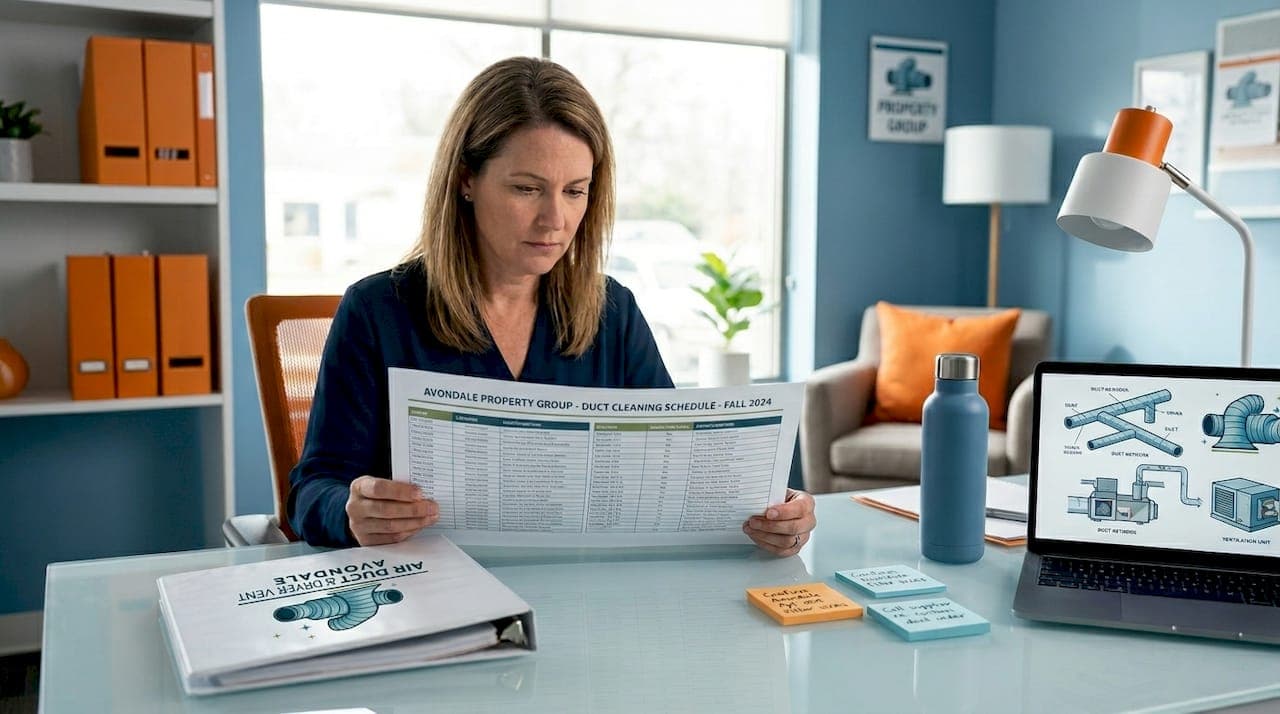
TL;DR:
- Effective commercial vent cleaning requires a planned approach that integrates EPA triggers, NADCA intervals, and ASHRAE documentation to ensure safety, compliance, and cost efficiency.
- Proper inspections, credentialed contractors, root cause correction, and verified documentation are essential to prevent recurring contamination and operational disruptions.
Commercial vent cleaning planning is the strategic process of scheduling, documenting, and managing duct and ventilation system maintenance to meet safety codes, protect indoor air quality, and sustain energy efficiency across a facility. For property managers and business owners in commercial settings, this process is not optional maintenance. It directly affects fire risk, occupant health, regulatory compliance, and operating costs. Standards from the EPA, NADCA, and ASHRAE 180 each define when and how cleaning must occur, and understanding all three is the foundation of any credible ventilation system maintenance program.
What are the EPA and NADCA guidelines for commercial vent cleaning?
The EPA does not recommend routine duct cleaning on a fixed calendar schedule. Instead, EPA cleaning triggers focus on three specific conditions: visible mold growth inside ducts or on HVAC components, confirmed vermin infestation, and ducts clogged with excessive dust or debris that releases particles into occupied spaces. This means the EPA's framework is reactive by design. It tells you when cleaning is non-negotiable, not how often to schedule it proactively.
NADCA fills that gap. The National Air Duct Cleaners Association recommends cleaning every 3 to 5 years for commercial buildings as a proactive baseline. That interval assumes normal occupancy and use. High-traffic facilities like schools, hospitals, restaurants, and laundromats should shorten that window based on actual contamination rates, not just the calendar.
ASHRAE 180 adds a third layer. This standard defines minimum inspection and maintenance requirements for commercial HVAC systems, including documented inspection protocols and service records. ASHRAE 180 compliance is increasingly required by property insurers and local building authorities, particularly in Arizona's desert climate where dust infiltration accelerates contamination.
The most effective commercial vent cleaning planning integrates EPA triggers as your minimum threshold, NADCA intervals as your proactive baseline, and ASHRAE 180 documentation as your compliance record. Relying on any single standard alone leaves gaps.
The distinction between reactive and proactive cleaning matters financially. Reactive cleaning, triggered only by a visible problem, typically costs more because contamination has already spread through the system. Proactive planning based on integrated EPA and NADCA guidelines reduces the scope of each cleaning event and prevents the compounding damage that mold or pest infiltration causes when left unaddressed.
Correcting root causes is as critical as the cleaning itself. If moisture intrusion is driving mold growth in your ductwork, cleaning without fixing the source produces a temporary result. Your vent cleaning plan must include a root cause assessment at every scheduled interval, not just a surface cleaning pass.
What tools and inspections does effective planning require?
Before any cleaning work begins, a thorough inspection defines the scope. Visual inspections identify obvious contamination, debris buildup, and damaged duct sections. Camera duct inspections go further, capturing footage inside inaccessible runs to document conditions that no flashlight can reveal. For large commercial properties, camera inspections are not a luxury. They are the only way to build an accurate scope of work and avoid billing disputes with contractors.
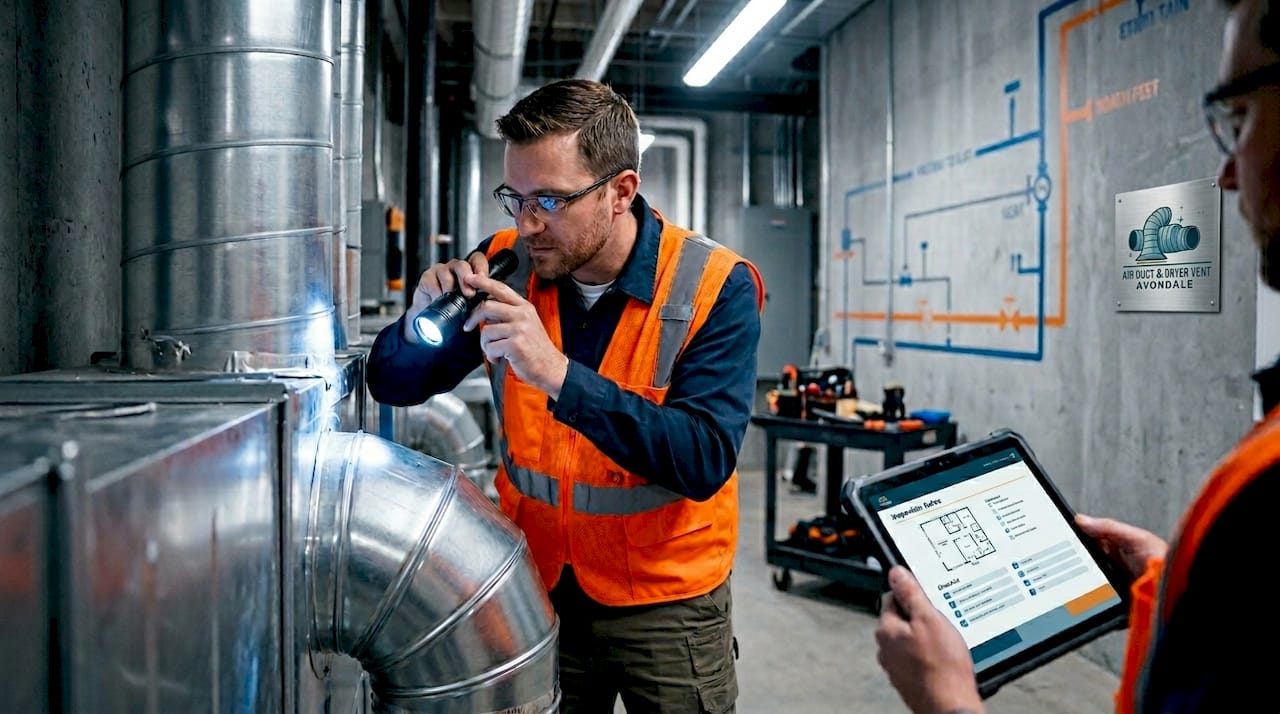
The equipment required for a compliant cleaning job is specific. Professional vent cleaning must include HEPA-filtered vacuums, rotary brushes sized to the duct diameter, and negative-pressure equipment that prevents dislodged debris from entering occupied spaces. Any contractor who cannot confirm they use negative-pressure containment during cleaning should not be on your vendor list.
Understanding your system's physical layout is a prerequisite that many property managers skip. Duct sizes, system types (single-zone versus multi-zone), air handler locations, and total linear footage all determine how long cleaning takes, what equipment is needed, and what the job should cost. Without this data, you cannot evaluate contractor bids accurately.
Dryer vent systems in commercial laundry facilities, hotels, and multi-family properties require a separate assessment. Dirty commercial dryer vents increase fire risk and energy consumption because lint restriction forces longer drying cycles and higher operating temperatures. A fire-risk assessment for dryer vent runs should be a standalone checklist item in your planning process, not an afterthought bundled into the general duct inspection.
Pro Tip: Map every vent, register, and air handler in your facility before your first planning meeting with a contractor. A simple floor plan with duct runs marked saves hours of on-site assessment time and gives you a baseline document for every future cleaning cycle.
Dryer vent runs and exterior caps must be inspected end-to-end, from the appliance connection point to the building's exterior termination. Blocked or damaged exterior caps allow pests and weather debris to enter the system, creating the exact conditions the EPA identifies as cleaning triggers. Schedule exterior cap inspection as a separate line item on your vent cleaning checklist.
Scheduling considerations also belong in the planning phase. Cleaning occupied commercial spaces requires coordination with tenants, building management, and sometimes local health authorities. Off-hours scheduling, phased cleaning by zone, and advance tenant notification are all decisions that must be made before a contractor sets foot on the property.
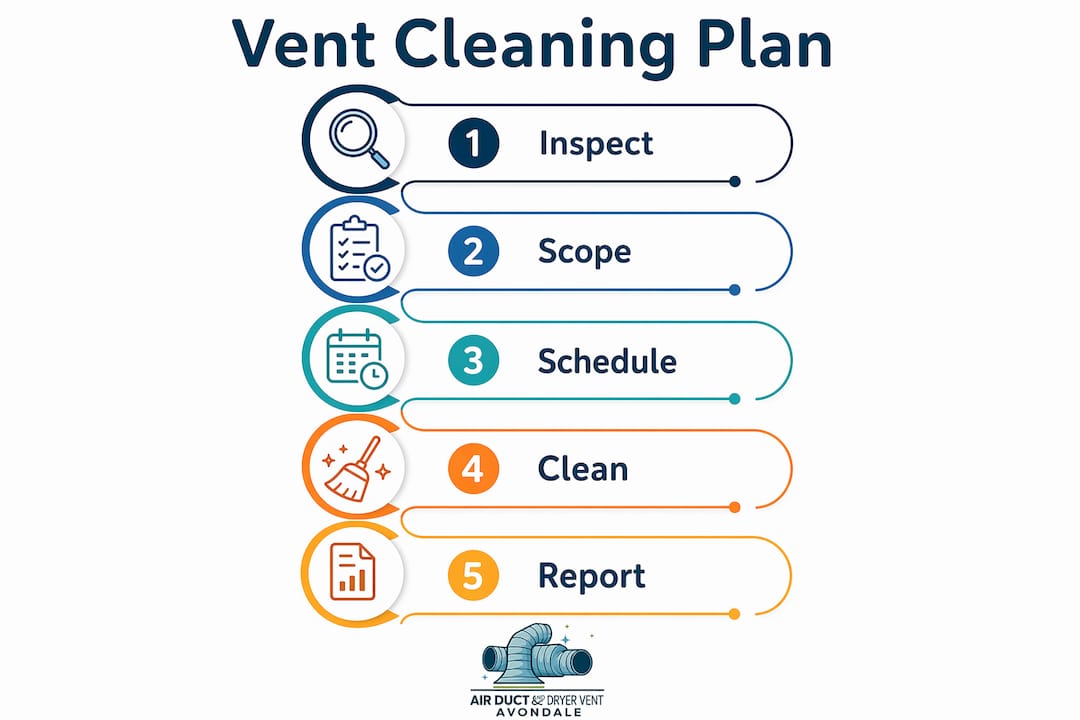
How to implement a step-by-step commercial vent cleaning plan
A structured execution process separates facilities that maintain clean, compliant systems from those that cycle through recurring problems. Follow these six steps to move from planning to verified completion.
-
Conduct initial inspections and document baseline conditions. Use visual inspection plus camera footage to record the current state of every duct run, air handler, and dryer vent. Photograph problem areas. This documentation protects you legally and gives contractors no room to overstate the scope of work.
-
Develop a detailed scope of work. Specify total linear footage of ductwork, number of air handlers, supply and return register counts, and any dryer vent runs requiring separate service. A vague scope produces vague bids and inconsistent results. Your scope document becomes the contract standard against which you measure completion.
-
Select and credential-check your service provider. Require NADCA certification for duct cleaning contractors and verify that their equipment list includes HEPA vacuums and negative-pressure systems. For dryer vent work, confirm the technician understands end-to-end dryer vent maintenance from appliance connection to exterior termination. References from comparable commercial properties carry more weight than general reviews.
-
Prepare the facility before work begins. Protect furniture, equipment, and sensitive areas with plastic sheeting. Notify all building occupants of the schedule, expected noise levels, and any temporary HVAC shutdowns. Coordinate with your facilities team to confirm system access points are unlocked and clear. Poor site preparation is one of the most common causes of property damage during commercial duct cleaning services.
-
Monitor the cleaning process and require visual documentation. Before-and-after photographs of each duct section and air handler component are standard practice for reputable contractors. Thorough cleaning procedures require that all HVAC components, not just the main duct runs, are addressed. Spot-check the work in progress rather than waiting for a final walkthrough.
-
Verify completion with a post-cleaning inspection. Confirm that all access panels are resealed, system airflow has been restored to normal levels, and no debris was left in occupied spaces. Run the HVAC system for at least 30 minutes and check supply registers for any residual dust release. Log the completion date, contractor credentials, and scope fulfilled in your maintenance records for ASHRAE 180 compliance.
Pro Tip: Request a written post-cleaning report from your contractor that includes before-and-after photos, a list of components cleaned, and any deficiencies found during the process. This report is your compliance record and your baseline for the next cleaning cycle.
The comparison below shows how a documented planning process differs from an ad-hoc approach across key performance areas.
| Planning approach | Outcome |
|---|---|
| Documented scope of work | Accurate bids, measurable contractor accountability |
| Credentialed contractor selection | Compliant cleaning methods, reduced property damage risk |
| Pre-cleaning site preparation | Minimal occupant disruption, no collateral damage |
| Post-cleaning verification | Confirmed compliance, documented baseline for next cycle |
| Root cause assessment included | Prevents recurrence of mold, pest, or moisture-driven contamination |
What common mistakes derail commercial vent cleaning planning?
The most expensive errors in ventilation system maintenance are not technical. They are planning failures that occur before a single tool enters the building.
- Skipping the inspection phase. Scheduling cleaning without a prior inspection means you are paying for a scope of work that may not match actual conditions. You may over-clean low-contamination areas and miss critical problem zones entirely.
- Ignoring underlying causes. Poor planning that skips root cause analysis leads to recurring contamination within months of cleaning. Moisture intrusion, pest entry points, and filter bypass issues must be corrected as part of the same work order.
- Hiring unqualified contractors. A contractor without NADCA certification or proper negative-pressure equipment can dislodge contaminants into occupied spaces, creating the indoor air quality problem you were trying to solve. Always verify credentials before signing a contract.
- Treating cleaning as a one-time event. Scheduled dryer vent cleaning programs are now standard preventive maintenance in commercial properties. The same logic applies to air duct systems. A single cleaning without a follow-up schedule is not a maintenance program. It is a deferred problem.
- Failing to communicate with occupants. Cleaning in an occupied building without advance notice creates complaints, disrupts operations, and sometimes triggers health concerns from tenants who were not warned about temporary dust or odors. Build a communication plan into every cleaning project.
For guidance on identifying the right timing and triggers for your specific facility type, the commercial cleanout tips for managers resource offers practical frameworks that apply directly to vent and duct maintenance scheduling. Pairing that with a clear HVAC cleaning schedule gives you both the trigger criteria and the scheduling structure in one planning cycle.
Key takeaways
Effective commercial vent cleaning planning requires documented inspections, credentialed contractors, root cause correction, and a recurring maintenance schedule tied to EPA triggers and NADCA intervals.
| Point | Details |
|---|---|
| Use EPA triggers as your minimum threshold | Clean immediately when you find visible mold, vermin, or debris releasing particles into occupied spaces. |
| Apply NADCA's 3 to 5 year interval proactively | Schedule cleaning before contamination worsens, and shorten the interval for high-use facilities. |
| Document scope before hiring any contractor | Specify linear footage, air handler counts, and dryer vent runs to get accurate bids and enforce accountability. |
| Correct root causes during every cleaning cycle | Moisture, pest entry, and filter bypass issues must be fixed alongside the cleaning to prevent recurrence. |
| Require post-cleaning verification and records | Before-and-after documentation and a written completion report are your compliance record and planning baseline. |
What I've learned from watching facilities skip the planning step
I have seen the same pattern repeat across commercial properties of every size. A property manager schedules duct cleaning because a tenant complained about dust or a health inspector flagged an issue. A contractor comes in, runs equipment through the main duct runs, and leaves. Six months later, the problem is back. Sometimes it is worse.
The failure is almost never the cleaning itself. It is the absence of a plan. No inspection was done before the work started. No root cause was identified. No post-cleaning verification confirmed the system was actually clean. The contractor was paid for activity, not results.
What I find most telling is how quickly the mindset shifts once a property manager experiences one well-planned cleaning cycle. When you have before-and-after camera footage, a documented scope, and a written report from a credentialed contractor, you stop thinking about vent cleaning as a reactive expense. You start treating it as a scheduled asset protection activity, the same way you treat roof inspections or fire suppression system checks.
The importance of vent cleaning becomes obvious when you connect it to the numbers that matter to your operation: energy bills, tenant retention, insurance premiums, and liability exposure. A facility with documented, compliant ventilation system maintenance is a different risk profile than one with no records at all. Insurers notice. Tenants notice. And when something goes wrong, the documentation is the difference between a covered claim and an out-of-pocket loss.
My recommendation is to treat your first planned cleaning cycle as a system audit, not just a cleaning event. Use it to build the baseline documentation that every future cycle will reference. Partner with a certified provider who can deliver that documentation as a standard deliverable, not an add-on. The upfront investment in planning pays back every time you avoid an emergency cleaning call.
— Shaun
Ready to plan your commercial vent cleaning in Avondale?
Airanddryerventcleaningavondale serves commercial property managers and business owners across Avondale, AZ with certified duct and dryer vent cleaning built around the planning framework described in this guide.
The team at Airanddryerventcleaningavondale uses HEPA vacuums, negative-pressure equipment, and flexible rotary brushes to clean commercial air duct systems from supply registers to air handlers. Services include air quality testing, dryer vent cleaning, vent replacement, and duct repairs. Every job includes before-and-after documentation and a written completion report. For facilities that need dryer vent fire risk addressed as a standalone service, the team handles end-to-end inspection and cleaning from appliance connection to exterior cap. Contact Airanddryerventcleaningavondale to schedule a commercial assessment and get a scope-based quote for your facility.
FAQ
What triggers the need for commercial duct cleaning?
The EPA identifies three non-negotiable triggers: visible mold inside ducts or on HVAC components, confirmed vermin infestation, and ducts releasing excessive dust or debris into occupied spaces. NADCA adds a proactive interval of every 3 to 5 years for commercial buildings regardless of visible symptoms.
How long does commercial vent cleaning take?
Cleaning time depends on total linear footage of ductwork, the number of air handlers, and system accessibility. A mid-size commercial facility typically requires one to two full days, while large multi-zone buildings may require phased cleaning over several days to minimize operational disruption.
What should a vent cleaning checklist include for commercial properties?
A complete vent cleaning checklist covers pre-inspection documentation, scope of work with linear footage and component counts, contractor credential verification, site preparation steps, in-process monitoring, and post-cleaning verification with written documentation. Dryer vent runs and exterior caps should appear as separate line items.
What does commercial duct cleaning cost?
The cost of vent cleaning services for commercial properties varies by system size, contamination level, and scope of components cleaned. Facilities with documented scopes of work and credentialed contractors typically receive more accurate bids and avoid the cost overruns that come from undefined or reactive cleaning projects.
How often should commercial dryer vents be cleaned?
Commercial dryer vent programs are now standard preventive maintenance in hotels, laundromats, and multi-family properties. High-use facilities should inspect dryer vents every 6 to 12 months and clean whenever lint restriction reduces airflow or extends drying cycle times.