

TL;DR:
- Blocked air vents can cause HVAC system damage, higher energy bills, and indoor air quality issues. Regular cleaning and proper maintenance prevent most blockages and extend system lifespan. Professional inspections are essential for diagnosing hidden duct problems and ensuring optimal airflow.
Common air vent blockages are physical or maintenance-related obstructions that restrict airflow inside HVAC systems, directly reducing home comfort and driving up energy costs. In HVAC terminology, these are called airflow restrictions or duct obstructions, and they rank among the most frequent causes of system inefficiency in both residential and commercial properties. Industry guidelines recommend maintaining at least 18 inches of clearance around all supply and return registers to preserve proper airflow. When that clearance disappears, your system works harder, your bills climb, and your indoor air quality drops. Understanding what causes these blockages, how to spot them, and when to call a professional is the fastest way to protect your HVAC investment.
1. What are the most common air vent blockages?
Vent blockages fall into two categories: physical obstructions placed in front of vents and internal buildup inside the ductwork itself. Both types restrict airflow, but they require different solutions.
Physical obstructions in front of vents:
- Furniture and rugs. Nearly 50% of older homes have furniture, rugs, or curtains blocking supply and return registers. That statistic means roughly one in two older properties already has a preventable airflow problem.
- Curtains and drapes. Long window treatments often fall directly over floor-level registers, cutting off supply airflow entirely.
- Stored items. In utility rooms and basements, boxes and equipment routinely get stacked against return air grilles.
Internal buildup inside ducts:
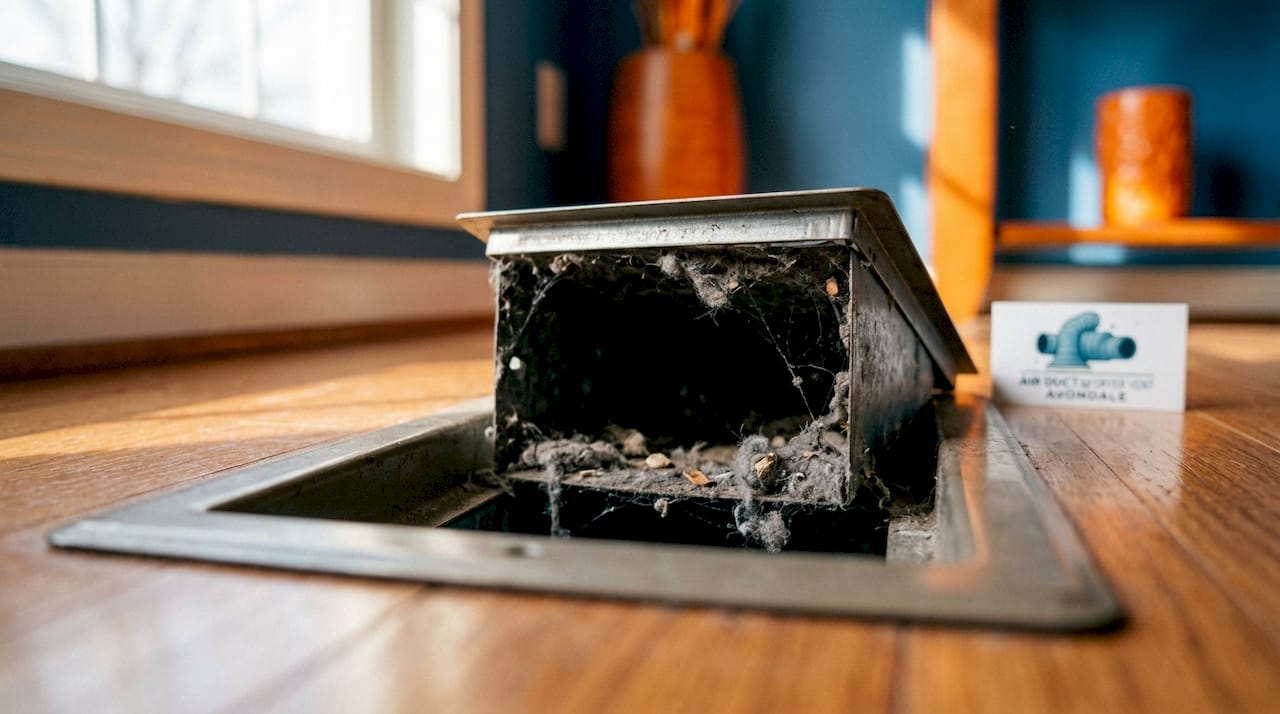
- Dust and debris accumulation. Every HVAC cycle pulls air through the duct system. Over time, dust, pet hair, and pollen settle on duct walls and vent covers, narrowing the passage.
- Closed or partially closed dampers. Dampers are the adjustable plates inside duct branches. Homeowners sometimes close them in unused rooms, which builds pressure and can crack duct joints.
- Dirty or clogged air filters. A saturated filter blocks airflow before it even reaches the ducts. Filters left unchanged for more than three months are a leading cause of restricted airflow.
- Damaged or disconnected ductwork. Flexible ducts can collapse, kink, or pull apart at joints, creating a near-total blockage at that section.
Pro Tip: Walk through your home and check every register. If any vent is within two feet of a sofa, bookcase, or rug edge, move the furniture or reroute the rug before calling a technician.
2. How to recognize the signs of blocked vents
Spotting a blockage early saves you from expensive repairs. The symptoms below are consistent indicators of ventilation system issues that need attention.
Uneven temperatures. Hot or cold spots in specific rooms are the clearest sign of restricted airflow. If one bedroom is always warmer than the rest of the house, a blocked or closed register is the first thing to check.
Weak or no airflow from registers. Hold your hand over a supply vent while the system runs. Weak airflow at a single register often points to a localized problem such as a crushed or kinked flexible duct behind the wall.
Visible dust buildup or black streaks. Dark streaks around vent covers signal that air is forcing its way past a dirty grille, carrying particles with it. This is a direct indicator of poor indoor air quality.
Unusual noises. Rattling, whistling, or hissing from vents indicates turbulent airflow caused by a partial obstruction. The noise gets louder as the blockage worsens.
Rising energy bills. HVAC vent problems can increase annual energy bills by over 20% due to system strain from restricted airflow. A sudden spike in your utility bill without a change in usage habits is a reliable early warning.
Frozen evaporator coils and water leaks. Restricted airflow leads to frozen evaporator coils, which then melt and drip water near your air handler. If you see pooling water around your indoor unit, check your vents immediately.
3. What risks do unaddressed vent blockages create?
Ignoring blocked vents does not just reduce comfort. It causes measurable mechanical damage and financial loss.
Blocked vents force the blower motor to work against elevated static pressure continuously. Over time, that strain burns out the motor, freezes the evaporator coil, and can push the compressor into thermal overload, turning a $50 maintenance call into a $2,000 repair.
Blower motor failure. The blower motor moves air through the entire duct system. When vents are blocked, it fights increased resistance on every cycle. Premature motor failure is a direct result.
Frozen evaporator coils. Without enough warm air passing over the coil, refrigerant temperatures drop below freezing. Ice forms on the coil, blocking airflow further and causing water damage when it melts.
Compressor overheating. The compressor is the most expensive component in your HVAC system. Sustained airflow restrictions raise operating temperatures and shorten compressor life significantly.
Allergen and mold buildup. Stagnant air inside blocked ducts creates conditions where dust and moisture accumulate, turning the duct boot area into a mold breeding ground. That mold then recirculates through your home on every fan cycle.
Reduced equipment lifespan. A system running under constant strain ages faster. What should last 15–20 years may need replacement in 10.
4. How to clear air vents and keep them clean
Effective vent maintenance combines regular DIY cleaning with professional service at the right intervals. Here is a practical sequence to follow.
- Remove and wash vent covers every 3–6 months. Unscrew the grille, soak it in warm soapy water, scrub with a soft brush, and let it dry fully before reinstalling. Professional duct cleaning costs $300–$600, so consistent DIY maintenance delays that expense significantly.
- Vacuum the duct boot. The duct boot is the metal sleeve between the vent cover and the duct opening. Use a vacuum with a brush attachment to clean 12–18 inches into the opening. Cleaning the duct boot removes hidden dust layers that reenter your home air on every fan cycle.
- Replace air filters every 1–3 months. Standard 1-inch filters need replacement monthly in homes with pets or allergy sufferers. Thicker 4-inch media filters can last up to three months. Never run the system without a filter installed.
- Keep all registers open and unobstructed. Closing vents in unused rooms builds pressure that cracks duct joints and strains the blower. Leave all registers open, even in rooms you rarely use.
- Schedule professional duct cleaning when needed. Call a professional when you see mold growth inside ducts, find evidence of pest activity, notice persistent dust after cleaning, or have recently completed a renovation. Post-construction dust is particularly damaging to duct interiors.
Pro Tip: Never force a vacuum hose deep into flexible ductwork. Improper cleaning methods can tear the inner liner of flexible ducts, creating air leaks that waste energy and require costly repairs.
A useful comparison for deciding between DIY and professional cleaning:
| Situation | Recommended action |
|---|---|
| Dusty grilles, no odor | DIY cleaning every 3–6 months |
| Weak airflow after cleaning | Professional duct inspection |
| Visible mold or musty smell | Professional remediation required |
| Post-renovation dust in ducts | Professional cleaning recommended |
| Pest droppings near registers | Professional cleaning and pest control |
For homeowners who want to stay ahead of problems, DIY vent inspection tips provide a structured checklist to follow between professional visits. Pairing that with a professional carpet and upholstery cleaning routine also reduces the volume of fiber and dust that enters your duct system from floor surfaces.
5. What systemic issues do blocked vents signal?
A vent blockage is sometimes a symptom of a deeper mechanical problem, not just a surface maintenance issue.
Localized weak airflow points to duct damage. Weak airflow at a single register generally indicates a crushed or disconnected flexible duct behind the wall, not a dirty grille. Cleaning the vent cover will not fix a collapsed duct.
Air pressure imbalances affect the whole system. When ducts are partially blocked or closed, pressure builds unevenly across the system. That imbalance forces air through unintended gaps, reducing efficiency and creating noise. HVAC air balancing corrects these pressure differences and restores even airflow to every room.
Persistent problems require diagnostic tools. HVAC airflow imbalances caused by partial duct blockages require specialized tools such as manometers and inspection cameras to diagnose properly. A manometer measures static pressure at different points in the duct system. A camera inspection reveals collapsed sections, disconnected joints, or pest damage that no visual check from the register can detect.
When to call for a professional inspection:
- Airflow does not improve after clearing visible obstructions
- Multiple rooms show temperature inconsistencies simultaneously
- The blower runs longer than usual to reach the thermostat setpoint
- You hear persistent rattling or whistling after cleaning
Blocked vents may conceal deeper mechanical failures, so a lack of airflow improvement after clearing visible obstructions always warrants professional diagnostics. Scheduling annual HVAC maintenance keeps these hidden issues from becoming expensive emergencies.
Key Takeaways
Blocked air vents cause measurable HVAC damage, higher energy bills, and poor indoor air quality, and most blockages are preventable with consistent maintenance and timely professional service.
| Point | Details |
|---|---|
| Maintain 18-inch clearance | Keep furniture and rugs at least 18 inches from all supply and return registers. |
| Clean vents every 3–6 months | Regular DIY cleaning delays costly professional interventions and reduces indoor dust. |
| Never close unused room vents | Closed vents build pressure that cracks duct joints and strains the blower motor. |
| Call a pro for persistent weak airflow | Single-register airflow loss often signals crushed or disconnected ductwork, not surface dirt. |
| Replace filters every 1–3 months | A clogged filter is the fastest path to frozen coils and blower motor failure. |
What I've learned after years of seeing the same vent mistakes
The most common mistake homeowners make is treating vent blockages as a cosmetic issue. They wipe the grille, call it done, and wonder why their energy bill keeps climbing. The real problem is almost always deeper, either inside the duct boot, in a kinked flexible duct behind the wall, or in a filter that has not been changed in six months.
The second mistake is closing vents to "save energy" in rooms that are not being used. That logic sounds reasonable but it is wrong. Closing vents raises static pressure across the entire duct system, which forces the blower to work harder and can split duct joints at their seams. You end up paying more, not less.
What actually works is a simple rhythm: clean the grilles every few months, replace the filter on schedule, and keep every register open. Then, once a year or after any major renovation, bring in a qualified technician to inspect the duct system properly. The cost of that annual check is a fraction of what a blower motor replacement or compressor repair will run you.
Choose a technician who uses camera inspection and pressure testing, not just a visual walk-through. Anyone who quotes you a price without looking inside the ducts is guessing.
— Shaun
Professional vent cleaning services for Avondale homes and properties
Airanddryerventcleaningavondale provides residential and commercial air vent cleaning services in Avondale, Arizona, covering everything from routine grille cleaning to full duct inspection and repair. The team uses professional-grade equipment to clear blockages, test airflow, and identify duct damage that DIY methods cannot reach. For property managers dealing with multiple units or post-renovation cleanup, commercial duct cleaning services are available with flexible scheduling, including after-hours appointments. If your system shows signs of persistent blockages, uneven temperatures, or rising energy costs, a professional inspection is the most direct path to a solution.
FAQ
What causes most air vent blockages in homes?
Furniture, rugs, and curtains placed over registers cause the majority of blockages in residential properties. Internal causes include dirty air filters, dust buildup inside duct boots, and damaged flexible ductwork.
How often should I clean my air vents?
Clean vent covers and duct boots every 3–6 months as part of routine HVAC maintenance. Replace air filters every 1–3 months depending on filter thickness and household conditions such as pets or allergies.
Can blocked vents damage my HVAC system?
Blocked vents force the blower motor to work against higher pressure, which leads to motor burnout, frozen evaporator coils, and compressor overheating. Unaddressed blockages can reduce system lifespan by years.
When should I call a professional instead of cleaning vents myself?
Call a professional when airflow does not improve after clearing visible obstructions, when you see mold or smell musty odors near registers, or after a home renovation that generated significant dust inside the ductwork.
Does closing vents in unused rooms save energy?
Closing vents does not save energy. It builds pressure inside the duct system, which cracks duct joints, strains the blower motor, and ultimately increases energy consumption and repair costs.