

TL;DR:
- Dryer vent blockages mainly result from lint buildup inside the duct and physical damage that restrict airflow. Proper maintenance involves regular cleaning of the lint trap, inspecting for crushed ducts, and checking exterior vents for nests or debris. Neglecting these steps increases fire risk and causes longer drying times, emphasizing the importance of professional inspections and design upgrades.
Dryer vent blockage is primarily caused by lint accumulation inside the duct and physical restrictions that cut off airflow, leading to longer drying times, higher energy bills, and serious fire risk. Most homeowners clean the lint trap after every load and assume that is enough. It is not. Fine lint particles bypass the trap screen and coat the inside of the duct over time, and that is just one of several dryer vent blockage causes that quietly build up until your dryer stops working safely. Understanding each cause gives you a clear path to prevention.
1. Lint buildup inside the duct
Lint accumulation inside the duct is the most common cause of blocked dryer vents, and it happens even when you clean the lint trap religiously. The trap screen catches most fibers, but fine particles pass straight through and accumulate inside ducts at bends, seams, and elbows. Over months and years, those layers compress into a dense coating that steadily narrows the duct opening.
The result is reduced airflow that forces your dryer to work harder and run hotter. Clothes take longer to dry, and the dryer itself retains heat it cannot exhaust. That retained heat is what creates a fire risk.
Lint tends to compact most heavily near duct bends and just beyond the dryer connection, creating hidden buildup hotspots that are invisible from outside the duct. You cannot see them during a casual inspection, which is exactly why so many homeowners are caught off guard.
- Fine lint particles pass through lint trap screens on every drying cycle.
- Buildup concentrates at elbows, seams, and the first section of duct behind the dryer.
- Compressed lint layers reduce the duct's effective diameter over time.
- Restricted airflow forces longer drying cycles and raises internal dryer temperatures.
Pro Tip: Pull your dryer away from the wall twice a year and check the first 12 inches of duct by hand. If you feel a thick, felted layer of lint, the rest of the duct is likely worse.
2. Skipping lint trap cleaning between loads
Skipping lint trap cleaning is a direct contributor to dryer vent lint buildup. When the trap is already full, airflow through the trap drops sharply. The dryer compensates by pulling air harder, which pushes more fine lint past the screen and deeper into the duct.
A full lint trap also raises the temperature inside the drum. Higher temperatures cause more lint to shed from fabrics, creating a compounding cycle. The trap fills faster, more lint escapes into the duct, and the blockage grows more quickly than it would with consistent cleaning.
Cleaning the trap before every load takes about five seconds. That one habit slows the rate of dryer vent lint buildup significantly, even though it does not eliminate it entirely.
3. Crushed or kinked flexible duct sections
Flexible ducts are the most common duct type used to connect a dryer to the wall vent, and they are also the most vulnerable to physical damage. Flexible ducts flatten when a dryer is pushed too close to the wall, creating a near-total airflow restriction just inches from the dryer itself.
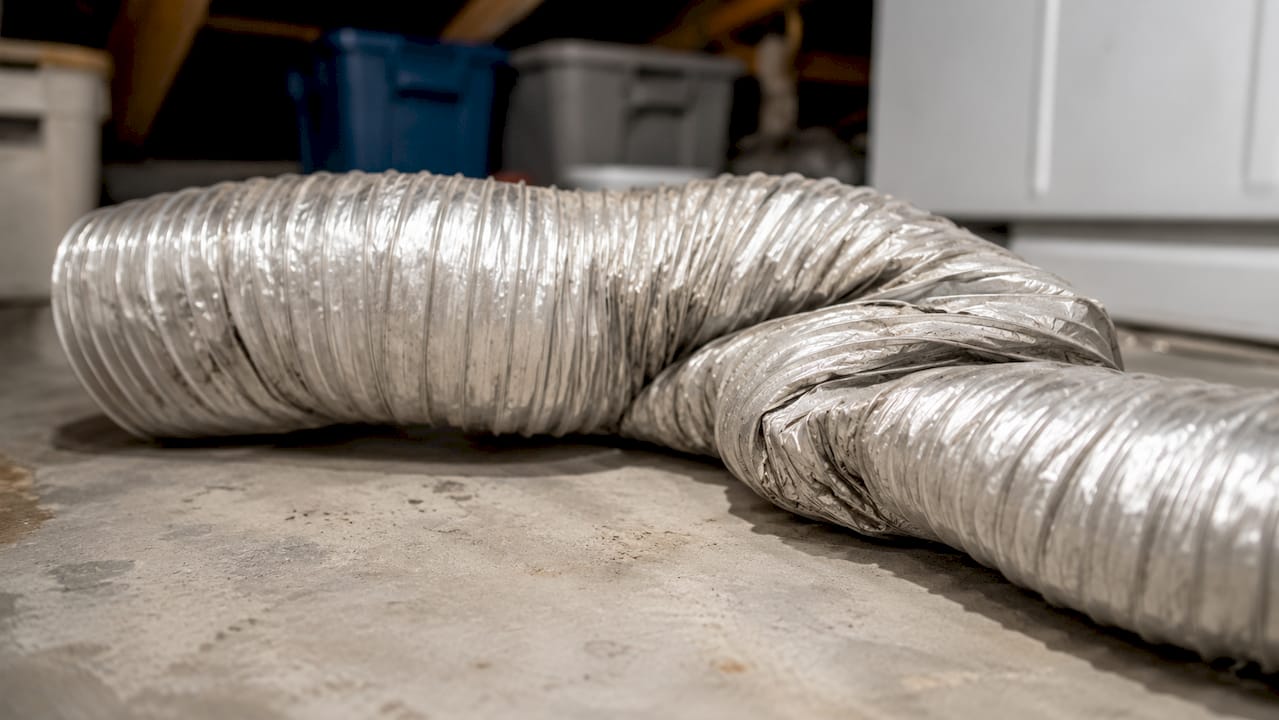
A crushed section does two things at once. First, it blocks airflow directly. Second, it creates a low point where lint collects and compacts rapidly. Even a partial crush reduces the duct's cross-section enough to cut airflow significantly.
Here are the most common physical duct problems that cause blockages:
- Dryer pushed against the wall. The flexible connector behind the dryer gets flattened, cutting airflow at the source.
- Duct routed with sharp 90-degree bends. Each hard turn slows airflow and gives lint a surface to cling to.
- Plastic or thin foil accordion duct. These materials sag, tear, and collapse more easily than rigid metal duct. Sagging sections trap lint and moisture.
- Loose or disconnected duct joints. A joint that has separated leaks lint into the wall cavity and loses the pressure needed to push exhaust out.
- Duct run that is too long. The longer the duct, the more resistance airflow faces. Lint deposits increase with every additional foot.
Pro Tip: Replace plastic or thin foil accordion duct with rigid or semi-rigid metal duct. Metal holds its shape, resists sagging, and is far easier to clean. The upgrade costs less than a single service call.
4. Exterior vent cover blockages
The exterior vent cover is the last point in the exhaust path, and it is one of the most overlooked causes of blocked dryer vents. Lint, debris, and animal nests all accumulate at this opening. Blocked vent covers trap exhaust air inside the duct, forcing lint to back up toward the dryer.
Bird and small animal nests are a particularly serious problem. Animals are drawn to the warmth of dryer exhaust, especially in cooler months. A nest inside or directly behind the vent cover creates what fire safety professionals describe as a flammable plug. It blocks airflow completely and gives lint a dense surface to pack against. Animal nests near the vent significantly accelerate overheating and fire risk.
Safety note: Lint buildup is the leading cause of residential dryer fires in the U.S., accounting for 31% of fire incidents. A blocked exterior vent is one of the fastest ways to reach that danger point.
Common exterior vent blockage sources include:
- Lint packed around or behind the vent flap from months of normal use.
- Bird nests built inside the vent hood during spring and summer.
- Small rodent nests pushed into the vent opening during fall and winter.
- Debris such as leaves, dirt, and insect nests accumulating at the opening.
- Damaged or stuck vent flaps that no longer open when the dryer runs.
A stuck vent flap is often caused by internal duct restrictions or a crushed flexible section, not just external debris. The flap cannot open because there is not enough air pressure to push it. That is a sign the blockage is deeper inside the duct, not just at the cover.
Check your exterior vent cover every three months. The inspection takes under a minute and can catch a nest or stuck flap before it becomes a fire hazard.
5. Vent design flaws and hidden duct leaks
Poor vent design is a cause of blocked dryer vents that most homeowners never consider because it was built into the home before they moved in. Long vent runs with multiple elbows create airflow resistance that slows exhaust velocity. When exhaust moves slowly, lint drops out of suspension and sticks to duct walls instead of being pushed outside.
Hidden duct leaks make this worse. A joint that has separated inside a wall or ceiling releases lint directly into the building structure. That lint never reaches the exterior vent, so it does not show up during an exterior inspection. It simply accumulates in the wall cavity, creating a hidden fire hazard.
The table below compares common vent design problems and their effects on airflow and lint accumulation.
| Design problem | Effect on airflow | Lint accumulation risk |
|---|---|---|
| Duct run over 25 feet | High resistance, slow exhaust velocity | High |
| More than two 90-degree elbows | Significant pressure drop at each bend | High |
| Plastic accordion duct | Sagging creates low points and tears | Very high |
| Disconnected duct joint | Lint escapes into wall cavity | Severe |
| Vent terminating in crawl space | No exterior exhaust, moisture and lint trapped | Severe |
Multiple design flaws often exist in the same installation. A long duct run combined with several sharp bends and a plastic connector creates compounding resistance. Each factor alone is manageable. Together, they produce a blockage that builds faster than any single cause would.
6. Improper vent materials
The material your vent duct is made from directly affects how quickly blockages form. Smooth-wall rigid metal duct gives lint the least surface area to grip. Plastic accordion duct and thin foil accordion duct have ridged interiors that catch lint on every ridge, every inch of the run.
Plastic duct is a particular concern because it is also a fire risk on its own. If lint ignites inside a plastic duct, the duct itself becomes fuel. Most local building codes and appliance manufacturers now prohibit plastic dryer duct, but older homes frequently still have it installed.
Foil accordion duct is better than plastic but still inferior to rigid metal. The ridges trap lint, and the thin material tears or collapses under pressure. When a section collapses, it creates a physical restriction identical to a crushed flexible connector. Upgrading to rigid metal vent duct removes both the lint-trapping ridges and the collapse risk in one step.
7. Washing habits that increase lint production
Certain laundry habits produce significantly more lint than others, which accelerates dryer vent lint buildup. Washing and drying new towels, fleece fabrics, and flannel generates far more lint than washing cotton t-shirts or synthetic athletic wear. Running oversized loads also increases lint production because fabrics rub against each other more aggressively.
Drying items that are still heavily saturated rather than spin-dried increases drying time and the number of lint-shedding cycles the fabric goes through. Each extra minute in the dryer produces more lint. That lint has to go somewhere, and most of it ends up coating the duct walls.
Separating heavy lint-producing items like towels and fleece from lighter fabrics reduces the lint load per cycle. It also shortens drying time for lighter items, which reduces total energy use. Neither change eliminates duct buildup, but both slow the rate at which a professional dryer vent cleaning becomes urgent.
8. Warning signs that your dryer vent is blocked
Blocked dryer vents produce clear operational symptoms before they become dangerous. Longer drying times, high surface temperature, and burning odors are the three most reliable warning signs. Treat any one of them as a reason to inspect the vent immediately.
A dryer that needs several drying cycles to dry a single load is working against restricted airflow. The dryer is not broken. It is being choked. The same restriction that forces multiple cycles also causes the dryer cabinet and exhaust duct to run hotter than designed.
Watch for these specific warning signs:
- Clothes are still damp or warm but not dry after a full cycle.
- The outside of the dryer feels unusually hot to the touch during operation.
- A burning smell comes from the dryer or laundry room during a cycle.
- Visible lint accumulates around the lint trap opening or on the floor near the dryer.
- The laundry room feels more humid than usual after a drying cycle.
- The exterior vent flap does not open when the dryer is running.
Increased humidity in the laundry room is a sign the dryer is exhausting moisture back into the room instead of outside. That happens when the duct is blocked or disconnected. Moisture in the wall or laundry space also encourages mold growth, adding an indoor air quality problem to the safety concern.
Pro Tip: Run your dryer for 10 minutes, then go outside and hold your hand near the exterior vent. You should feel a strong, steady flow of warm air. Weak airflow or no airflow means the duct needs inspection.
Key takeaways
Dryer vent blockages result from lint buildup, physical duct damage, exterior obstructions, and poor vent design working alone or together to restrict airflow and create fire risk.
| Point | Details |
|---|---|
| Lint trap cleaning is not enough | Fine lint bypasses the screen and coats duct walls, requiring periodic full duct cleaning. |
| Physical duct damage causes immediate blockage | Crushed or kinked flexible duct cuts airflow at the source and must be replaced. |
| Exterior vent covers need regular checks | Animal nests and stuck flaps block exhaust and accelerate overheating risk. |
| Vent design flaws compound the problem | Long runs, multiple bends, and leaking joints increase lint buildup faster than cleaning can keep up. |
| Warning signs require immediate action | Longer drying times, burning smells, and excess heat are signals to inspect the vent before a fire occurs. |
What I've learned after years of inspecting dryer vents in Avondale
The pattern I see most often is not a single dramatic blockage. It is three or four smaller problems stacked on top of each other. A homeowner has a slightly too-long duct run, a plastic accordion connector that has partially collapsed, and an exterior flap that stopped opening six months ago. Each issue alone would be manageable. Together, they create a vent that is 80% blocked, and the homeowner has no idea because the dryer still technically runs.
The exterior vent check is the one inspection almost nobody does. I have found bird nests the size of a softball packed into vent hoods on homes where the owners were meticulous about cleaning the lint trap. The trap was spotless. The vent was completely blocked. Those two things can coexist, and that is what makes exterior blockages so dangerous.
My honest recommendation is to stop thinking of dryer vent maintenance as a once-a-year task. Check the exterior vent cover every season. Pull the dryer out and look at the flexible connector every six months. If your duct runs more than 15 feet or makes more than two turns, schedule a professional vent inspection annually. The cost of a cleaning is a fraction of the cost of a dryer fire or a dryer replacement.
Proper vent design matters more than most homeowners realize. If your home was built with plastic accordion duct or a vent that terminates in a crawl space, no amount of cleaning fully solves the problem. The design itself needs to change. That is not a DIY project for most people, but it is a straightforward job for a qualified technician.
— Shaun
Professional dryer vent cleaning for Avondale homeowners
Lint buildup, crushed ducts, and blocked exterior covers are problems that get worse the longer they go unaddressed. Airanddryerventcleaningavondale provides professional dryer vent cleaning in Avondale that reaches the sections of your duct you cannot access or inspect on your own.
The team at Airanddryerventcleaningavondale clears lint from the full duct run, checks for crushed or damaged sections, inspects the exterior vent cover for nests and stuck flaps, and confirms airflow is restored before the job is done. Homeowners in Avondale, Arizona can schedule an inspection with flexible appointment times, including after-hours options. If your dryer is taking longer than one cycle to dry a load, that is the right time to call.
FAQ
What is the most common cause of dryer vent blockage?
Lint buildup inside the duct is the leading cause of dryer vent blockages. Fine lint particles bypass the lint trap screen and accumulate on duct walls, especially at bends and elbows, gradually restricting airflow.
How often should a dryer vent be cleaned?
Most homes benefit from a full dryer vent cleaning once a year. Homes with longer duct runs, multiple bends, or high laundry volume may need cleaning every six months.
Can a blocked dryer vent cause a fire?
Yes. Lint buildup accounts for 31% of residential dryer fires in the U.S. A blocked vent traps heat and lint together, creating conditions where ignition can occur.
Does cleaning the lint trap prevent vent blockage?
Cleaning the lint trap slows vent blockage but does not prevent it. Fine lint particles pass through the trap screen on every cycle and accumulate inside the duct regardless of how consistently the trap is cleaned.
What are the signs of a blocked dryer vent?
The clearest signs are clothes that remain damp after a full cycle, a dryer cabinet that feels unusually hot, a burning smell during operation, and weak or no airflow at the exterior vent cover.