
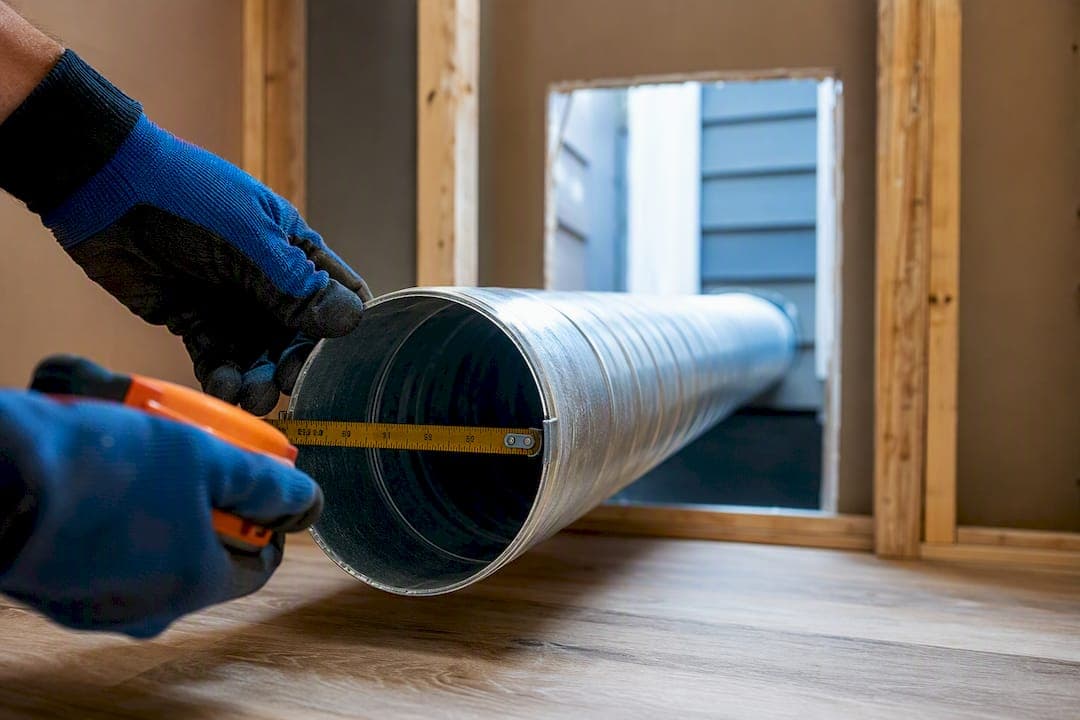
Every U.S. dryer vent must terminate outdoors through a listed back-draft damper, with no screens, using smooth metal duct at a nominal 4-inch diameter. Transition ducts connecting the dryer to the wall need a UL 2158A listing and must be no longer than the maximum allowed by code (commonly eight feet). Maximum duct length follows the dryer manufacturer's instructions first, or the code table when those aren't available, and any run exceeding that limit needs a permanent label documenting equivalent length and elbow count for the inspector.
TL;DR:
- The maximum duct length is primarily dictated by the dryer manufacturer's instructions, or the code table subtracting 2.5 feet per 45-degree elbow and 5 feet per 90-degree elbow.
- Rigid, smooth metal 4-inch ducts are required, with flexible foil, plastic, or corrugated ducts strictly prohibited due to lint buildup and fire risks.
- Dryer vents must terminate outdoors with a listed back-draft damper, no screens, and at least three feet from any building opening to prevent lint accumulation and fire hazards.
- A permanent label indicating the total equivalent length and elbow count must be placed if the run exceeds code limits, and joint orientation should ensure airflow toward the outside.
- Regular cleaning, ideally once a year, is essential to prevent lint buildup, maintain airflow, and ensure ongoing compliance with safety standards.
Table of Contents
- What the Dryer Vent Code Requirements Actually Say
- How Far Can a Dryer Vent Run? Calculating Maximum Length
- Which Materials and Duct Sizes Meet Code
- Where a Dryer Vent Can Terminate, and What Kind of Cap It Needs
- Installation Details Inspectors Actually Check
- The Violations Inspectors Flag Most Often
- Fire Safety and Clearance Around the Vent Duct
- Gas Dryers Versus Electric Dryers: Different Exhaust Rules
- Dryer Vent Rules for Apartments, Condos, and Commercial Buildings
- Cleaning and Maintenance That Keeps a Vent Code Compliant
- What Inspectors Look For and Where Homeowners Waste Effort
- Book a Vent Inspection Instead of Guessing at the Code
- Where to Verify These Code Requirements Yourself
- Sources
- FAQ
What the Dryer Vent Code Requirements Actually Say
Before you touch a single joint of duct, run through this. It catches the mistakes that fail inspections most often.
- Confirm the vent terminates outdoors with a listed back-draft damper attached. No mesh screen, no louvered vent standing in for one.
- Check the duct material: smooth interior metal, nominal 4-inch diameter, with any transition section carrying a UL 2158A listing.
- Add up total equivalent length and count every elbow. If you're past the table limit, plan on labeling the run.
- Verify joints are fastened correctly, with the male end pointed toward the exterior, and supported at proper intervals.
- Check whether the setup triggers makeup air requirements or closet ventilation rules.
The stakes behind this checklist aren't abstract. The National Fire Protection Association tracks thousands of home fires tied to clothes dryers and washing machines every year, and a large share trace back to exactly the shortcuts this checklist flags: blocked screens, crushed flexible duct, lint packed into joints that were installed backward.
How Far Can a Dryer Vent Run? Calculating Maximum Length
The dryer manufacturer's installation instructions set the ceiling on duct length first. When those instructions don't specify a number, the IRC 2021 and IMC Section 504 fall back on Table M1502.4.6.1, which pairs a baseline maximum with deductions for every fitting in the run.
The standard deductions: subtract 2.5 feet of allowable length for every 45 degree elbow, and 5 feet for every 90 degree elbow. Say your dryer's manual allows 35 feet of straight run. Add two 90 degree elbows and one 45 degree elbow, and you lose 12.5 feet of that allowance, leaving 22.5 feet of usable duct length before you've violated the equivalent-length rule.
| Fitting type | Deduction from max length |
|---|---|
| 45° elbow | 2.5 ft |
| 90° elbow | 5 ft |
Pro Tip: Manufacturer instructions always override the code table when they're more restrictive. If your dryer's manual caps the run at 25 feet and the code table allows more, 25 feet is your legal limit.
When the calculated equivalent length exceeds what the table or manual allows, code requires a permanent label near the connection point, within 6 feet, stating the equivalent length and elbow count. Inspectors look for that label specifically during concealment checks, before drywall goes up.
Which Materials and Duct Sizes Meet Code
Rigid or semi-rigid smooth metal duct at a nominal 4-inch diameter is the standard, and most jurisdictions adopting the IRC expect roughly No. 28 gauge material for the exhaust run itself.
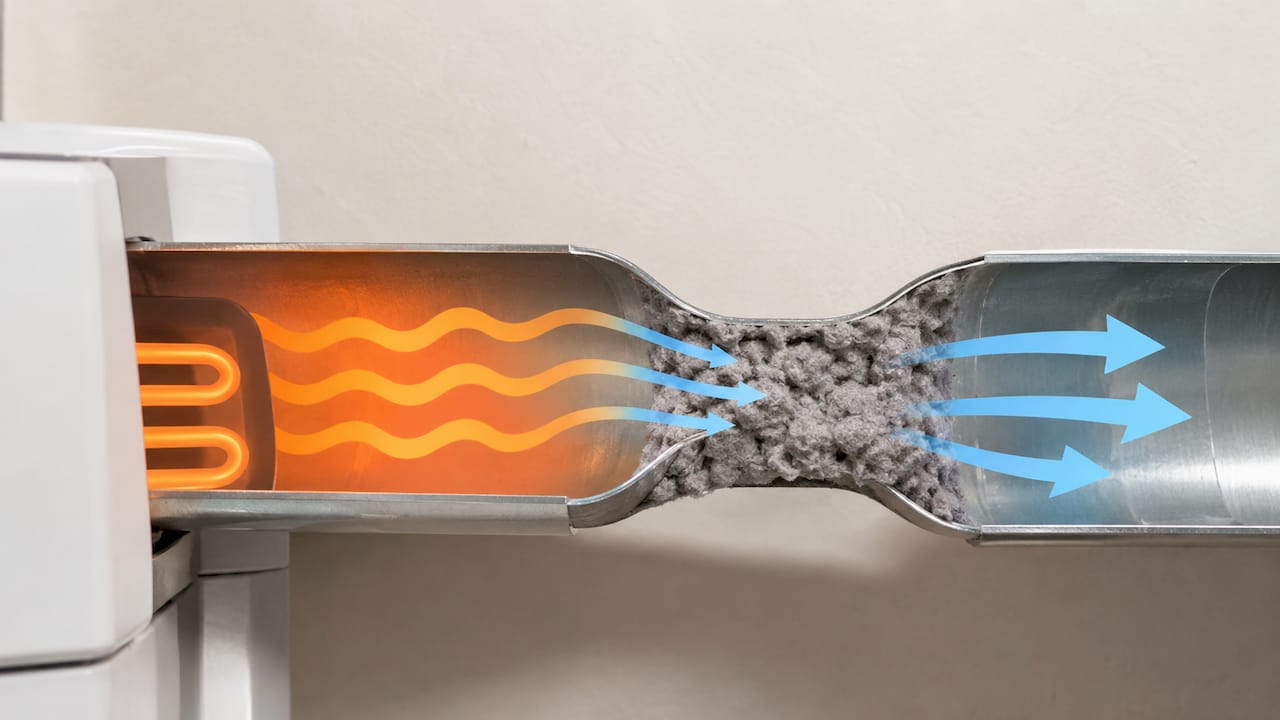
- The duct interior has to be smooth. Any corrugation or ribbing catches lint and slows airflow, which is exactly what turns a vent into a fire hazard over time.
- Flexible foil "accordion" duct and any plastic ducting are not acceptable for permanent dryer exhaust runs. They sag, crush at bends, and the ridges trap lint in ways smooth metal never does.
- Transition ducts, the short flexible piece connecting the dryer itself to the wall or floor outlet, must carry a UL 2158A listing, run no longer than 8 feet, and stay fully visible. They cannot be hidden inside walls or floors.
- Booster fans and power ventilators are barred from residential dryer exhaust unless the specific unit is listed under UL 705 and installed exactly per its manufacturer's instructions. An unlisted booster fan installed to fight a too-long run is one of the more common violations inspectors catch.
Where a Dryer Vent Can Terminate, and What Kind of Cap It Needs
Dryer exhaust has to exit outdoors. It cannot dump into an attic, crawl space, garage, or any interior plenum, even temporarily.
- Keep 3 feet of horizontal clearance from any building opening, meaning windows, doors, or fresh-air intakes. The IRC sets this as a firm minimum, and the 2021 edition added clearer guidance on minimum height above grade as well.
- Install a listed back-draft damper as part of the termination cap itself, not as a separate add-on. The damper opens under airflow and seals shut when the dryer isn't running, keeping pests and cold air out.
- Skip screens entirely. A screen or mesh insert traps lint on contact, which is precisely the buildup that turns a vent cap into a fire risk within a season or two.
- On roof terminations, use a cap rated for that application, flash it properly against the roofing material, and confirm the damper is built into the assembly rather than bolted on afterward. Poor flashing here is a frequent source of leaks that show up on a ceiling months later, described in more detail in this breakdown of dryer vent roof problems.
Pro Tip: If you can see daylight through the termination cap when the dryer is off, the damper isn't sealing. That's a five-minute fix that solves a surprising number of "my dryer takes forever" complaints.
Installation Details Inspectors Actually Check
Most failed dryer vent inspections come down to a handful of repeat offenders, not exotic code violations.
- Joint orientation matters more than people think. The male end of each duct section should point toward the exterior, so airflow doesn't catch a ledge at every seam. Reversed joints create exactly that ledge, and lint accumulates there fastest.
- No screws should protrude into the duct interior. A screw head poking inward is a lint snag waiting to happen; use foil tape or clamps at seams instead.
- Support the duct at regular intervals, generally no more than every 12 feet, and seal joints per the mechanical code's sealing requirements under M1601.4.1.
- If a dryer location is roughed in but no dryer is installed yet, the exhaust duct has to be capped and clearly marked "future use" so nobody down the line assumes it's dead ductwork and buries it in a wall.
- For concealment inspections, have the dryer's make and model plus the manufacturer's printed installation instructions on hand. Inspectors reference those instructions directly, and a documented equivalent-length label speeds up approval considerably.
- Watch for makeup air triggers. Exhaust systems moving more than 200 cfm can require dedicated makeup air, and enclosed dryer closets often carry their own ventilation opening requirements.
One detail worth flagging: NFPA fire data consistently ties dryer fires back to lint accumulation, and lint accumulates fastest exactly where these installation details get skipped.
The Violations Inspectors Flag Most Often
A handful of mistakes account for most failed dryer vent inspections, and they repeat across new construction and remodels alike.
- Screens or mesh at the termination. Banned outright, because lint clogs mesh within weeks and the blockage forces heat and moisture back into the wall cavity.
- Flexible foil or plastic ducting used as permanent exhaust. These materials sag, crush, and trap lint at every ridge, and most local code offices reject them on sight.
- Concealed or unlisted transition ducts. Once drywall covers an unlisted transition, the fix means opening the wall back up.
- Reversed joints and protruding screws. Small details, but they're the difference between airflow that clears lint and airflow that deposits it.
Some states go further than the base code. A handful of jurisdictions have adopted metal-only mandates or stricter height-above-grade rules, and it's worth checking your local amendments before assuming the baseline IRC language is the final word. Property managers handling multiple units should photograph each installation and keep those records on file; when a fire marshal or insurance adjuster asks questions after an incident, dated photos showing a compliant cap and clean duct run are worth far more than a verbal assurance.
Fire Safety and Clearance Around the Vent Duct
Dryer exhaust ducts don't carry open flame, but they carry hot, moist, lint-laden air, and that combination is exactly what code clearance rules are built to manage. The duct itself should stay clear of combustible insulation batts pressed directly against it, particularly at transition points near the dryer where heat is highest.
Code doesn't set a single blanket clearance number for every duct-to-combustible scenario the way it does for flue pipes, but the practical standard followed by most installers is to avoid direct contact between the duct and insulation, framing, or stored materials wherever the duct passes through an attic or wall cavity. Gaps around duct penetrations through fire-rated assemblies need proper fire-stopping material, not just spray foam or expanding sealant alone.
The bigger fire risk isn't radiant heat from the duct wall. It's lint. A duct packed with lint restricts airflow, which raises the temperature of the exhaust air and the heating element working against that restriction. That's the mechanism behind most of the fires in the NFPA's dryer fire statistics: not a duct touching wood, but a duct so clogged that heat has nowhere to go but back into the appliance and the wall cavity around it. Keeping the run short, smooth, and free of screens does more for fire safety than any clearance measurement.
Gas Dryers Versus Electric Dryers: Different Exhaust Rules
The core duct requirements, meaning 4-inch smooth metal, outdoor termination, listed damper, no screens, apply identically to gas and electric dryers. Where the two diverge is combustion air and moisture load.
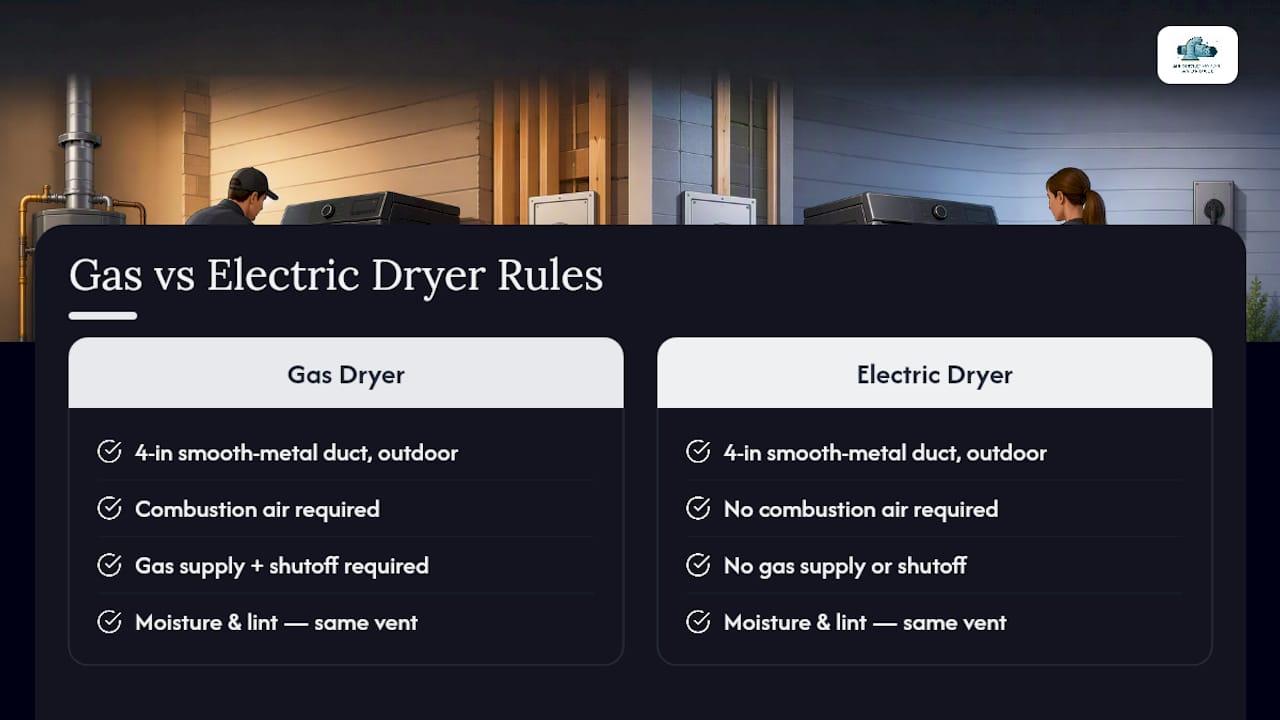
A gas dryer burns fuel to generate heat, which means it needs combustion air in addition to the exhaust venting that carries moisture and lint outdoors. That combustion air typically comes from room ventilation rather than the exhaust duct itself, but it means a gas dryer installed in a small, sealed closet needs the same closet ventilation openings code requires for other gas appliances. Skipping that detail can starve the burner of oxygen or create backdraft issues at the appliance itself, separate from anything happening in the exhaust duct.
Gas dryers also carry a specific installation requirement around the gas supply line and shutoff valve that has nothing to do with the vent duct, but inspectors checking a gas dryer installation typically verify both at the same visit. Electric dryers skip the combustion-air question entirely, since there's no flame and no fuel line, but they still produce the same volume of moist, lint-heavy exhaust air that needs the identical 4-inch smooth metal duct and outdoor termination.
One misconception worth correcting: neither gas nor electric dryers ever get an exception to run smaller than nominal 4-inch duct, regardless of how compact the unit is. Manufacturers occasionally list a shorter maximum equivalent length for gas models because of the added heat load, so check the installation manual specifically rather than assuming the electric-model number applies.
Dryer Vent Rules for Apartments, Condos, and Commercial Buildings
Multi-family buildings add a layer that single-family homes rarely deal with: shared walls, stacked units, and exhaust runs that sometimes travel through common areas rather than straight out an exterior wall.
The core rule doesn't change. Each dryer still needs its own dedicated exhaust duct terminating outdoors, and code prohibits connecting multiple dryers into a single shared exhaust duct. That's a common shortcut in older apartment buildings, and it's a violation wherever it's found, since a shared duct means one unit's lint and moisture backs into another's system.
Commercial laundry facilities and larger multi-family properties sometimes fall under different mechanical code provisions than a single detached home, particularly around makeup air and fire-rated shaft penetrations when the duct run travels vertically through multiple floors. Any duct passing through a fire-rated floor or wall assembly needs fire-stopping material rated for that specific penetration, and the equivalent-length math gets harder to manage the taller the building, since long vertical runs with multiple direction changes eat into the allowable length fast.
Property managers overseeing several units face a practical problem: verifying every dryer vent in a building meets these standards one unit at a time. That's where a professional inspection sweep across a property, rather than a unit-by-unit guessing game, saves both time and liability exposure if a fire marshal ever asks for documentation.
Cleaning and Maintenance That Keeps a Vent Code Compliant
Code compliance isn't a one-time install checkbox. A dryer vent that passed inspection five years ago can slide out of practical compliance if lint accumulation restricts airflow to the point the back-draft damper never fully opens or the duct joints separate from the vibration of built-up debris.
Most manufacturers and fire safety organizations recommend cleaning dryer exhaust ducts at least once a year for a typical household, and more often for larger families or units running multiple loads daily. Lint buildup doesn't just slow drying times, it raises the internal temperature of the duct run and the appliance itself, which is the mechanism behind the bulk of the fires tracked in NFPA's home fire data.
A yearly cleaning also doubles as a compliance check. A technician clearing lint from the run will spot a reversed joint, a missing damper, or a crushed transition duct long before it becomes a fire department report. For rental properties, scheduling that cleaning annually and keeping the service record on file gives a property manager the same kind of documentation an inspector wants to see at a concealment inspection, minus the drywall demolition. Regular dryer vent cleaning is less about extending appliance life, though it does that too, and more about keeping the exhaust path exactly as open as the code assumed it would be the day it was installed.
What Inspectors Look For and Where Homeowners Waste Effort
Final inspections aren't looking for perfection. They're looking for three things: a compliant termination cap with a working damper, duct material that matches code, and documentation that the run doesn't quietly exceed its allowable equivalent length. Homeowners often spend energy on cosmetic fixes, like repainting a vent hood, when the actual failure point is a joint installed backward or a builder-grade screen still bolted to the cap.
Replacing a cheap screened cap with a listed damper cap, and flipping a reversed joint so the male end faces outward, fixes more inspection failures than almost anything else in this list. Roof penetrations, masonry work, and any duct buried behind finished walls call for a licensed contractor. A straight run through an accessible wall or floor is reasonable for a confident DIYer to tackle.
A service visit worth paying for documents the work: photos of the finished cap and joints, a labeled tag noting equivalent length, and the manufacturer's instructions handed directly to the inspector.
— Shaun
Book a Vent Inspection Instead of Guessing at the Code
Reading code language is one thing. Confirming your actual duct run, elbow count, and termination cap match it is another, and that's where a professional vent cleaning service can save an Avondale homeowner or property manager the trial and error of doing it alone.
A service visit includes measuring the full duct run, counting elbows, checking the termination cap for a working listed damper, and clearing out the lint that's usually the real reason a dryer runs hot or slow. You get inspection-ready documentation out of it too: photos of the finished work, a permanent label near the dryer connection when equivalent length calls for one, and a record you can hand to a property inspector or keep on file for your own liability protection. The team also handles code-compliant vent replacement when an old accordion duct or screened cap needs to come out entirely, and broader air duct cleaning for properties dealing with dust and airflow issues beyond just the dryer. If you manage multiple units, the commercial air duct cleaning service covers a property-wide sweep in one scheduled visit. Book a visit through the dryer vent cleaning page to get a firm inspection date on the calendar.
Where to Verify These Code Requirements Yourself
- IRC Chapter 15, Exhaust Systems, for termination, material, and clearance rules
- IMC Section 504, covering booster fan restrictions and listed equipment
- UpCodes' consolidated dryer exhaust excerpts, for equivalent-length tables and labeling rules
- NFPA's dryer and washing machine fire statistics, for the safety data behind the rules
Always check with your local building department for amendments before finalizing an installation, since several states and municipalities apply stricter versions of these baseline rules.
Sources
- Clothes dryer exhaust | UpCodes
- Section 504 — Clothes Dryer Exhaust (IMC 2021)
- NFPA — Home fires involving clothes dryers and washing machines
FAQ
Is a dryer vent required by code?
Yes. Every clothes dryer needs a dedicated exhaust duct terminating outdoors, built to IRC/IMC standards, with no exceptions for ventless setups that still exhaust air.
Can I use a 3-inch duct for a dryer vent?
No. Code requires a nominal 4-inch diameter smooth metal duct for standard residential dryer exhaust; a 3-inch duct restricts airflow and violates the minimum sizing rule.
How many 90-degree turns can a dryer vent have?
Code doesn't cap the number outright, but each 90-degree elbow subtracts 5 feet from your allowable equivalent length, so enough turns will eventually exceed the maximum run your dryer's manual or the code table permits.
How long can a dryer vent be by code?
It depends on the dryer manufacturer's instructions first; when those aren't available, the IRC/IMC table sets the baseline maximum, reduced by 2.5 feet per 45-degree elbow and 5 feet per 90-degree elbow.