
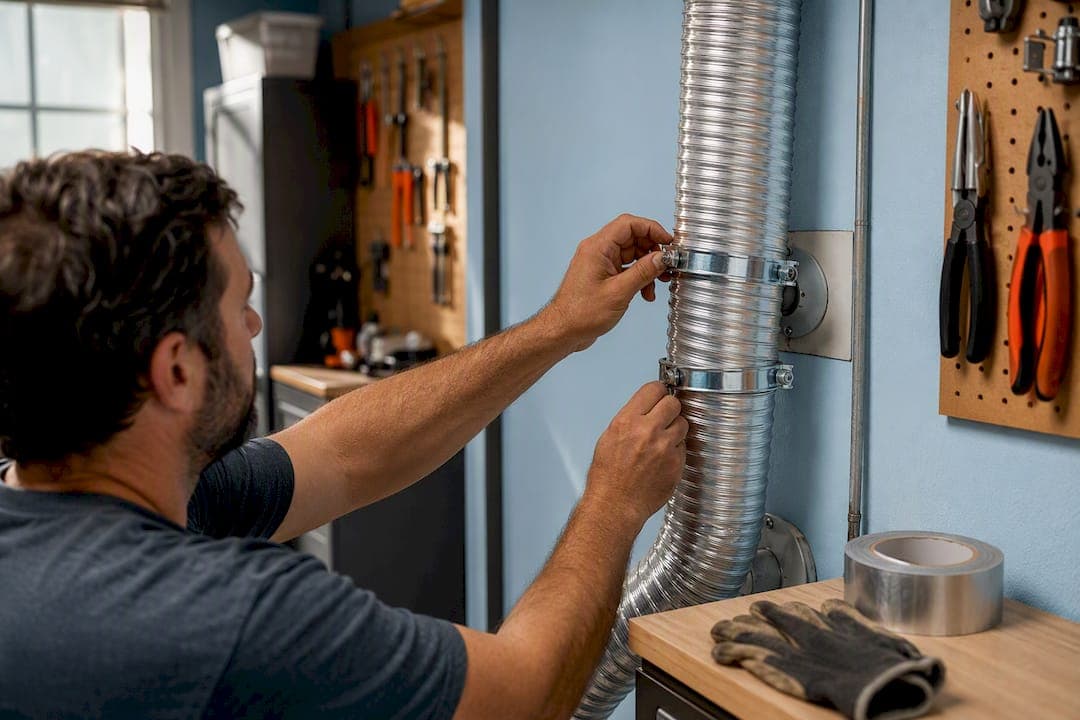
Replacing a dryer vent typically costs $140 to $600, with most homeowners paying around $200 for a standard job, according to HomeAdvisor's cost data. The common per-foot rule of thumb runs $12.50 to $15 per linear foot, though prices climb fast once a job involves roof access, long interior runs, or drywall repair.
The short answer: hire a licensed pro for anything beyond a simple exterior cap swap. Dryer vent fires are a real risk when ducting is undersized, poorly sealed, or made from the wrong material, and code compliance isn't something worth guessing at.
Quick reference for what drives your final number:
- Vent length and number of elbows (more bends means more labor and airflow loss)
- Duct material: rigid metal, semi-rigid, or flexible/vinyl
- Exterior wall type: vinyl siding, brick, or stucco
- Roof or attic access versus a straightforward wall penetration
- Permit requirements in your area
Key Takeaways
A dryer vent replacement typically costs $140 to $600 with rigid metal duct and proper sealing delivering the best long-term value despite a higher upfront material price.
| Point | Details |
|---|---|
| Typical cost range | Budget $140 to $600 for standard jobs, with an average near $200 for straightforward installs. |
| Per-foot rule of thumb | Expect roughly $12.50 to $15 per linear foot of duct before labor and add-ons. |
| Material choice drives safety | Rigid or semi-rigid metal duct resists lint buildup and heat far better than vinyl or flexible foil. |
| Complex access raises price fast | Roof penetration, brick or stucco walls, and long interior runs can push totals past $1,000. |
| Bundle to beat minimum fees | Combining vent replacement with dryer vent cleaning through Airanddryerventcleaningavondale spreads the call-out fee across more value. |
Table of Contents
- Breaking Down the Dryer Vent Replacement Cost Estimate
- What Makes One Dryer Vent Installation Price Higher Than Another?
- Should You Repair the Vent or Replace It Entirely?
- Can You Replace a Dryer Vent Yourself, or Do You Need a Pro?
- How Do You Get an Accurate Dryer Vent Replacement Price Estimate?
- How Long Does a Dryer Vent Replacement Job Take?
- What Actually Matters When You're Paying for This
- Editorial Perspective: What the Numbers Don't Tell You
- Get a Straight Answer on Your Dryer Vent, Not Just a Guess
- Sources
- FAQ
Breaking Down the Dryer Vent Replacement Cost Estimate
Most quotes bundle four things: materials, labor, a service or mobilization fee, and sometimes a permit charge. Once you see how those stack up, a contractor's invoice stops looking like a mystery.
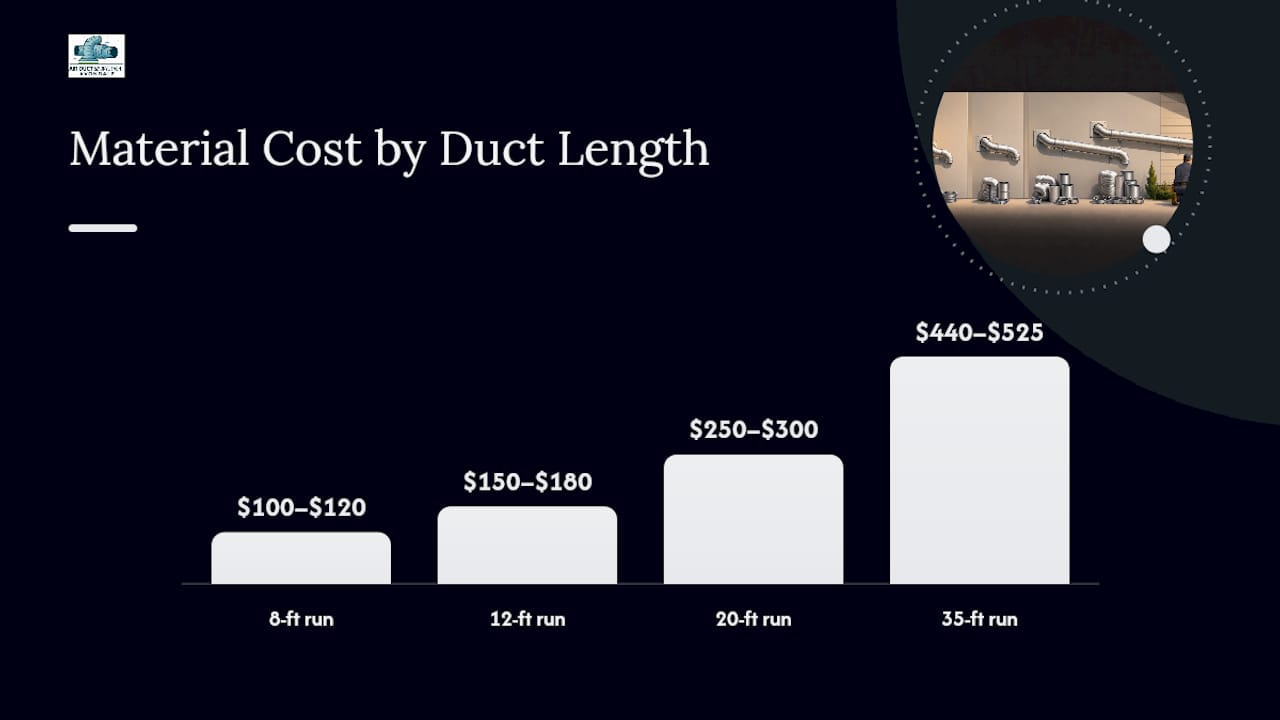
Start with the per-foot math. An 8-foot run through a nearby exterior wall, priced at roughly $12.50 to $15 per foot, lands around $100 to $120 in duct cost alone before labor. A 12-foot run pushes materials to $150 to $180. A 20-foot run, common when the dryer sits far from an exterior wall, runs $250 to $300 in ducting. A 35-foot run, the kind you see in a laundry room tucked into the center of a house, can hit $440 to $525 in materials before you add elbows, a hood, and labor. Thumbtack's national data puts full installed totals between $354 and $1,190, with a median near $639, because labor and access issues, not just duct length, drive the real cost up.
Material choice matters more than most people expect. Rigid metal duct costs more upfront but resists crushing, sheds lint better, and holds up to heat. Semi-rigid metal flexes around tight spaces and costs less than rigid pipe. Flexible vinyl or foil duct is the cheapest option and also the one professionals warn against, since it traps lint and poses a higher fire risk in tight or hot runs.
A basic professional job, according to HomeWyse's line-item breakdown, starts around $192 to $380 for mid-range conditions once you add labor and mobilization to the materials. Expect these common add-ons on top of the base:
- Exterior vent hood and back-draft damper: $10 to $40
- Foil tape and mechanical clamps: $5 to $20
- Drywall or siding patch after the old vent is removed: $75 to $250
- Roof penetration or flashing work: $150 to $400
- Permit fees and inspection, when required: $50 to $300
That last one catches people off guard. HomeWyse notes that permit costs vary widely by jurisdiction, especially when a job involves cutting through a roof or load-bearing wall. Ask your contractor upfront whether the quote includes the permit or leaves it to you.
What Makes One Dryer Vent Installation Price Higher Than Another?
Two homes with identical dryers can get wildly different quotes, and it almost always comes down to the same handful of variables; understanding venting principles can help, as discussed in Why Drain Venting Matters for Commercial Buildings.
- Run length and elbow count. Every foot of duct and every elbow adds friction, which means the installer needs a shorter overall run or a more powerful setup to keep airflow within code. A run with four elbows takes noticeably longer to install and inspect than a straight 10-foot shot.
- Exterior wall material. Cutting through vinyl siding takes minutes. Cutting through brick or stucco requires masonry tools, more time, and sometimes a specialist, which raises the labor line significantly.
- Attic, crawlspace, or roof access. Any job that requires a ladder, harness, or crawling through insulation adds setup time before a single cut is made. Roof penetrations also usually mean flashing and weatherproofing, which is its own skill set.
- Second-story or multi-unit properties. Property managers dealing with upper floors or shared walls often see higher quotes simply because access takes longer and sometimes requires two technicians instead of one.
- Regional labor rates and local code. Some cities require inspection sign-off for any vent that penetrates a fire-rated wall. Others don't. That single difference can add or remove $100 to $300 from a job.
If you're trying to guess your own price band before calling anyone, walk your dryer's route mentally. Count the elbows, note the exterior material, and check whether the vent exits through a wall or a roof. That's roughly the same checklist a contractor runs through before quoting you.
Should You Repair the Vent or Replace It Entirely?
Repair makes sense when the problem is small: a torn section of duct near the dryer, a missing clamp, or a damaged exterior cap. Angi notes that swapping a short section or a single vent cap is often the cheapest fix available, sometimes under $100 in materials plus a standard service call.
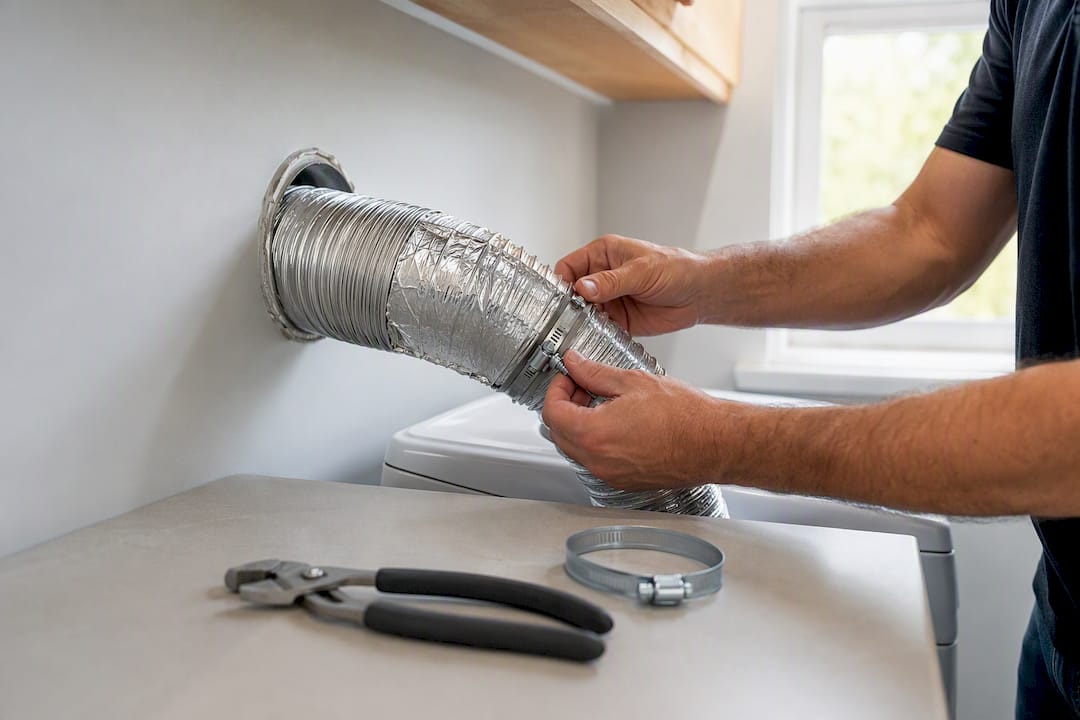
Full replacement is the better call when you're dealing with old vinyl or foil ducting, a system that clogs repeatedly no matter how often it's cleaned, or a concealed run behind walls that's already blocked. HomeAdvisor's research backs this up directly: repairing badly blocked ductwork can cost nearly as much as replacing it outright, so pros frequently recommend skipping the patch job and starting fresh with rigid metal.
Rerouting, moving the vent path from an interior wall to a shorter exterior run, costs more upfront (often $400 to $800+ depending on framing and drywall work) but usually pays for itself in fewer future clogs and lower fire risk.
Pro Tip: If your existing duct is the accordion-style vinyl hose, replace it now rather than waiting for it to fail. It's one of the most common safety upgrades we see requested, and it's inexpensive relative to the risk it removes.
Can You Replace a Dryer Vent Yourself, or Do You Need a Pro?
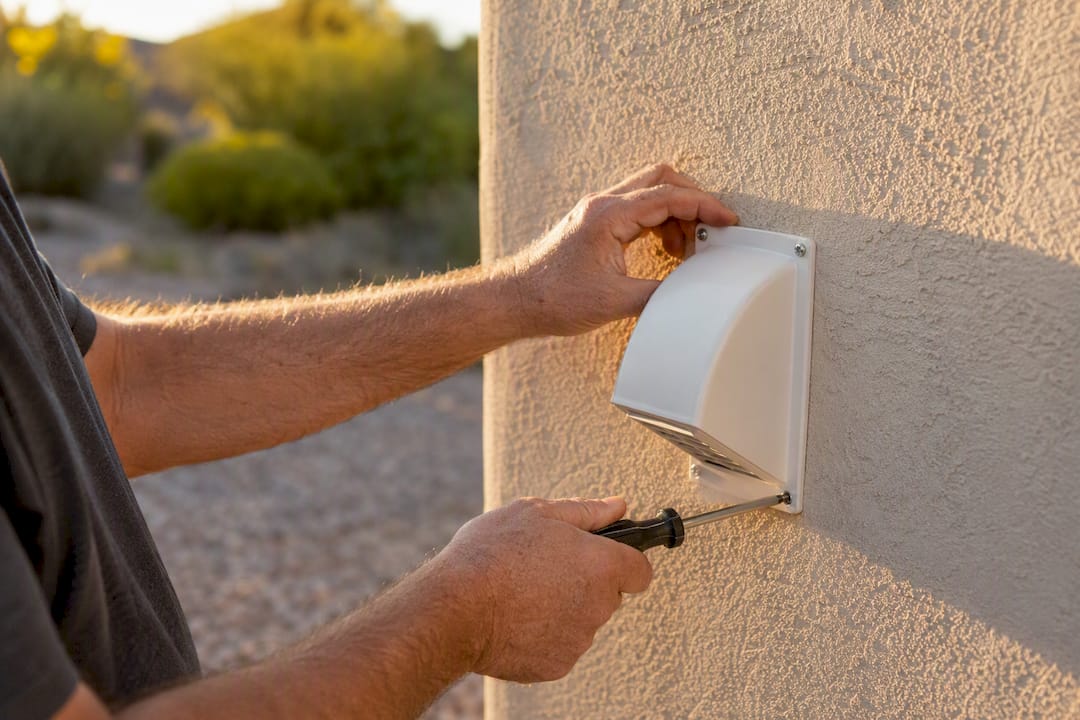
Some tasks are genuinely DIY-friendly. Swapping an exterior cap that's cracked or rusted, or replacing a short exposed section you can see and reach without tools beyond a screwdriver, is within reach for a handy homeowner. Anything involving wall penetration, roof work, or ductwork hidden behind drywall is where you should stop and call someone licensed.
The safety case for hiring a pro isn't about convenience. Dryer vent fires happen when lint accumulates in ducting that's too long, has too many bends, or uses the wrong material. A licensed installer knows to use rigid or semi-rigid metal instead of vinyl, seal joints with foil tape and mechanical clamps rather than standard cloth duct tape, and install a proper back-draft damper at the termination point so outside air and pests can't creep back in.
On pricing, expect a call-out or minimum service fee that covers the first hour or two of labor and equipment mobilization. That's why a five-minute cap swap can still run $100 or more. Crew size is usually one or two technicians for standard jobs; anything involving roof access might need a second person for safety.
A few ways to lower your bill without cutting corners:
- Bundle the vent job with other HVAC or dryer vent cleaning work to spread the minimum fee across more value.
- Clear the area around your dryer and washer before the crew arrives.
- Take clear photos of the vent route, including any elbows or exterior termination points, so the estimate you get by phone or email is closer to the final price.
Pro Tip: Send photos from multiple angles when requesting a quote, including one from outside where the vent exits. Contractors price more accurately, and more honestly, when they can see the actual run instead of guessing from a phone description.
How Do You Get an Accurate Dryer Vent Replacement Price Estimate?
Getting quotes you can actually compare starts with giving contractors the same information every time.
Before you call, gather:
- Photos of the dryer's current vent connection and the full visible duct run
- A rough measurement of the distance from the dryer to the exterior wall or roof
- The type of exterior material (vinyl, brick, stucco, or something else)
- Your dryer type (standard electric, gas, or a ventless model, if applicable)
- Whether you want the vent to terminate on a wall or through the roof
Once you have quotes in hand, ask each contractor the same set of questions:
- What duct material will you use, and is it rigid or semi-rigid metal?
- Does this quote include the permit fee, or is that separate?
- What's your warranty on labor and materials?
- Will one or two technicians handle the job?
- Do you test airflow after installation, and will you show me the result?
Compare quotes line by line rather than by total price alone. A lower bid missing a permit line or using flexible vinyl duct isn't actually cheaper once you account for what it leaves out. Most reputable contractors can start work within a week or two of booking, and a deposit of 10% to 30% is standard for jobs requiring special materials or roof work.
How Long Does a Dryer Vent Replacement Job Take?
A straightforward job, a two-person crew replacing a short exterior run with rigid metal duct, usually takes 2 to 4 hours start to finish. Complex jobs involving roof penetration, long interior runs, or drywall repair can stretch to 6 to 8 hours or more, sometimes spanning two visits if patching and painting are involved.
Before the crew arrives, clear a path to your dryer and move anything stored near the vent access point. Once the work is done, ask for a quick airflow test at the exterior termination and a visual check that the vent hood and damper are sealed properly. Request before-and-after photos if the work happened somewhere you can't easily inspect, like a roof or crawlspace.
What Actually Matters When You're Paying for This
Field experience backs up something the national cost data only hints at: the price difference between a good job and a bad one is rarely about the dollar amount you see on the invoice. It's about what material and technique that money bought.
We've replaced plenty of vents where the previous installer used standard cloth duct tape on the joints, which dries out, cracks, and lets lint escape into wall cavities within a couple of years. That's not a $50 mistake. That's a fire-risk mistake wearing a small price tag. Rigid metal duct, foil tape, and mechanical clamps cost more on the estimate and cost less over the life of the system, because you're not paying someone to come back and fix a preventable failure.
Bundling a vent replacement with a dryer vent cleaning visit is one of the simplest ways Avondale homeowners avoid paying two separate minimum service fees for what could easily be one appointment.
Editorial Perspective: What the Numbers Don't Tell You
The national averages, $140 to $600, sometimes climbing past $1,000 for complex jobs, are accurate but incomplete. They tell you what people paid. They don't tell you what people got for that money, and that gap is where most buyer's remorse comes from.
The conventional advice tells homeowners to shop for the lowest quote. That's backwards. A quote $150 lower that skips the permit or swaps rigid metal for vinyl isn't a better deal, it's a deferred cost with a fire risk attached. The advice worth following instead: ask what material and sealing method a contractor plans to use before you ask what they charge. Price the job second, not first.
What's overrated in most guides is the emphasis on per-foot pricing as if duct length were the whole story. Access and material choice move the needle more than a few extra feet of straight duct ever will. If you take one thing from this, prioritize a written breakdown of material, permit status, and warranty over a bare total number. That single habit prevents most of the expensive surprises homeowners run into after the crew has already packed up.
— Shaun
Get a Straight Answer on Your Dryer Vent, Not Just a Guess
Airanddryerventcleaningavondale gives Avondale homeowners something most quotes skip: a technician who tells you exactly what material and route your home needs before naming a price, not after. Where national averages leave you guessing between a $140 cap swap and a $600 full reroute, our team inspects your actual run, photographs the before-and-after, and quotes based on what your house needs rather than a generic per-foot number.
If your current vent is vinyl, repeatedly clogging, or you're simply not sure what's behind that wall, our air vent replacement service covers the inspection, the rigid metal upgrade, and the sealing details that keep small jobs from becoming fire risks. Property managers handling multiple units can also check our commercial air duct cleaning options for bundled scheduling across properties. Call or book online today for a photo-based quote before your next dryer cycle.
Sources
- How Much Does Dryer Vent Installation Cost? 2025 Data | HomeAdvisor
- How Much Does It Cost to Install or Replace a Dryer Vent? | Angi
- 2026 Dryer Vent Installation Cost (with Price Factors) | Thumbtack
- Cost To Install Dryer Vent | HomeWyse
FAQ
How Much Should You Charge to Replace a Dryer Vent?
Professionals typically charge $140 to $600 for a standard replacement, with complex jobs involving roof access or long runs reaching $1,000 or more. Most quotes include a minimum service fee covering the first hour or two of labor.
Can You Replace a Dryer Vent Yourself?
Simple tasks like swapping an exterior cap or a short, visible section of duct are reasonable DIY jobs. Anything requiring wall penetration, roof work, or hidden ductwork should go to a licensed professional because of fire risk and code requirements.
Can a Plumber Install a Dryer Vent?
Dryer vent work falls under HVAC and general contracting rather than plumbing, so most plumbers won't take the job. Look for an HVAC technician or a dryer vent specialist like Airanddryerventcleaningavondale instead.
Can You Use Your Dryer if the Vent Is Broken?
Running a dryer with a damaged or disconnected vent is a fire and carbon monoxide risk for gas dryers, and it also traps moisture and lint inside your home. Stop using the dryer until the vent is repaired or replaced.