
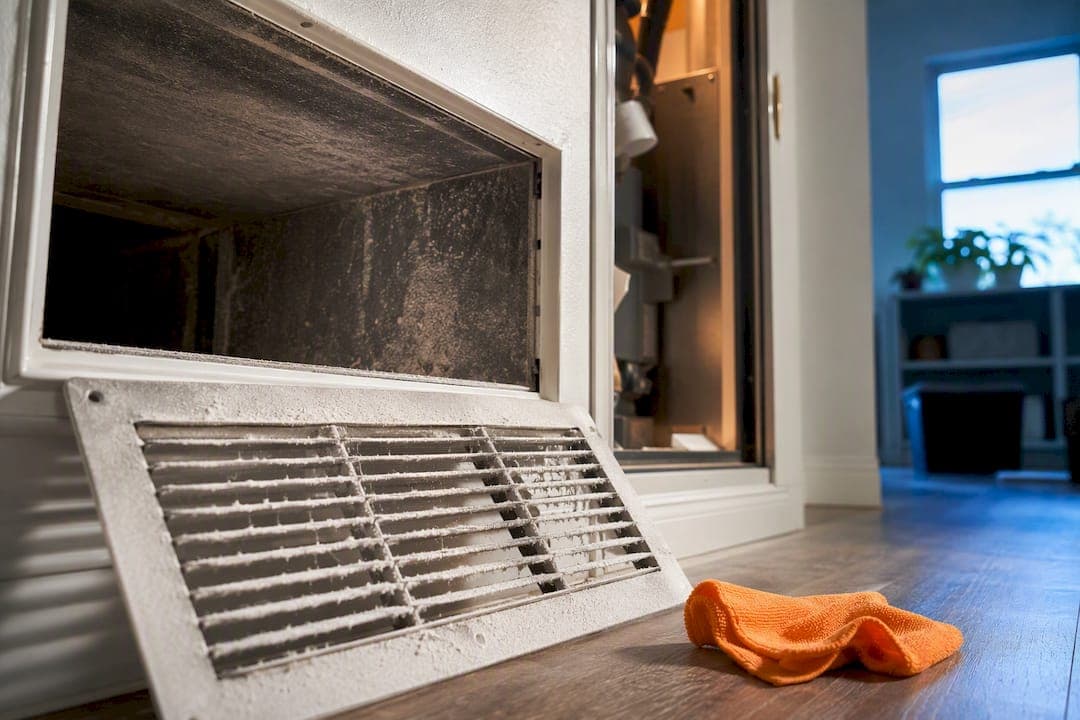
Yes, drywall dust commonly gets into ducts after sanding, and it needs quick action, not a wait-and-see approach. Turn off the system, swap in a fresh filter, and seal off registers in the work zone before anything else happens. Most of the time you can handle the surface cleanup yourself, but visible buildup inside the air handler or dust that keeps returning after a filter change means it's time to call a professional for a whole-system clean.
TL;DR:
- Drywall dust that enters ductwork often requires professional cleaning if it reappears after filter changes or visibly coats blower components.
- Turning off the HVAC system, replacing filters with MERV 8 to 13 filters, and sealing registers during sanding prevent dust intrusion.
- Visual signs of drywall dust inside ducts include a chalky film on registers and visible buildup in the air handler, which DIY cleaning cannot fully address.
- Professional cleaning involves thorough system disassembly, including coils and blowers, using NADCA standards and negative pressure methods.
- Preventative measures such as covering vents and keeping the system off during sanding minimize contamination and long-term health risks.
Table of Contents
- What To Do in the First 24 to 48 Hours After Drywall Work
- How Do You Know If Drywall Dust Reached the Ducts?
- Safe DIY Steps for Cleaning Registers and Reachable Ducts
- When Should You Call a Professional Duct Cleaner?
- How Do You Prevent Drywall Dust From Entering Ducts During Renovation?
- Field Notes on Drywall Dust Cleanup From Shaun
- Best HVAC Filters for Fine Drywall Dust
- How To Inspect Ductwork Beyond What You Can Reach
- Testing Your Ducts After Cleaning To Confirm It Worked
- Is Drywall Dust in Your HVAC a Health Risk?
- The Gap Between "It Looks Clean" and "It Is Clean"
- Let Air Duct and Dryer Vent Cleaning Avondale Finish the Job Your Filter Can't
- Sources
- FAQ
What To Do in the First 24 to 48 Hours After Drywall Work
The window right after sanding is when quick decisions matter most. Fine gypsum dust is light enough to ride air currents straight into your return grilles, and once it settles inside the ductwork, sweeping and vacuuming the room won't touch it.
- Shut the system down at the thermostat and, if you want to be thorough, at the breaker. A stopped blower cannot pull more dust into the trunk lines.
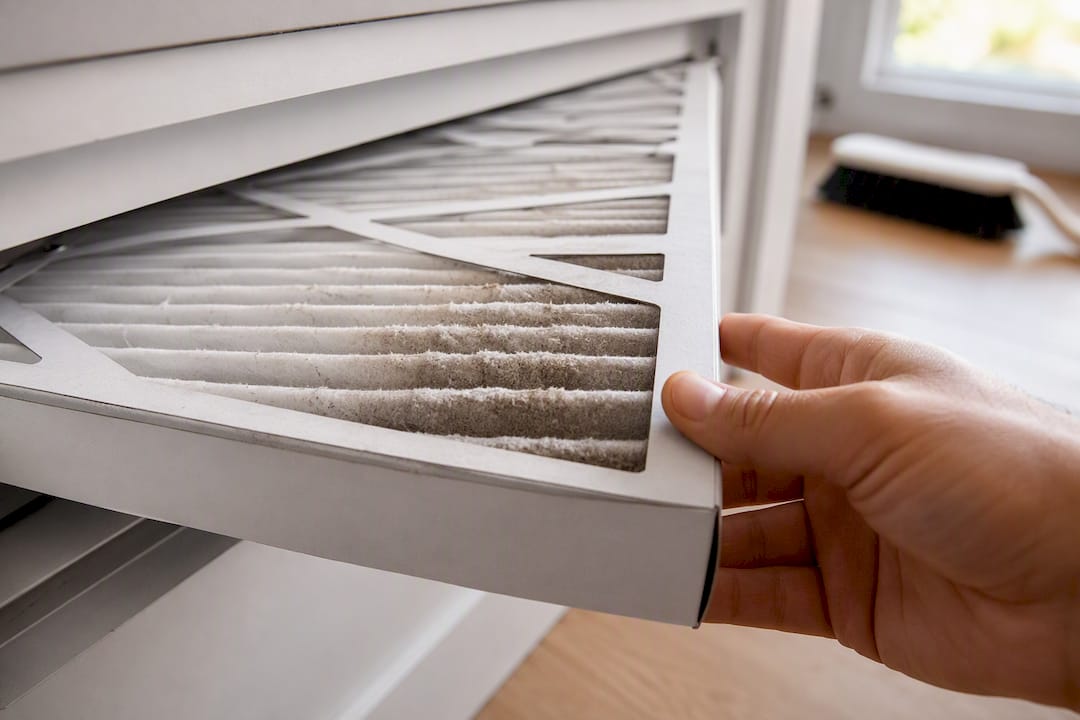
- Pull the old filter and drop in a new pleated filter rated MERV 8 to 13. Skip the cheap flat fiberglass filters during this stretch. They're built for a different job.
- Cover supply and return registers in the work area with plastic sheeting and tape. This keeps sanding dust from falling straight into the ductwork below.
- Clean up with a HEPA vacuum and, if you have one, a portable exhaust fan venting outside. Dry sweeping just launches dust back into the air.
- Swap filters frequently during heavy sanding days. A filter clogging quickly indicates high dust levels in the air.
- Keep foot traffic out of dusty rooms until the bulk of the debris settles or gets removed.
Pro Tip: Label the date on your filter box with a marker when you replace it during a renovation. If you're changing filters daily and one lasts less than 24 hours, that's a red flag that dust levels are still too high to run the system normally.
How Do You Know If Drywall Dust Reached the Ducts?
Some signs are obvious the moment you walk into a room; others take a flashlight and a little patience to confirm. Here's what to check before deciding whether a wipe-down will do or whether you need more than that.
- A chalky white film on registers, nearby baseboards, or electronics is often the first visible tell.
- A visible puff of dust when the blower kicks on means dust has already settled inside the supply trunk.
- Shining a flashlight into a register while holding a phone camera at an angle lets you see buildup a few feet in without removing anything.
- Dust coating the blower wheel, coil, or plenum inside the air handler is a different tier of problem. This is not a DIY fix.
- Filters that clog within days instead of weeks, or dust that reappears right after a fresh filter goes in, point to contamination deeper in the system.
- New or worsening allergy symptoms among household members while the system runs is a behavioral clue worth taking seriously.
Safe DIY Steps for Cleaning Registers and Reachable Ducts
Here's the honest version most guides skip: DIY cleaning works well for what you can reach, and it does nothing for what you can't. Register covers, grille faces, and the first few feet of ductwork are fair game with the right tools. The blower wheel, evaporator coil, and deep trunk lines are not.
Gather a HEPA-rated shop vac, an N95 mask, gloves, microfiber cloths, a soft brush, and a screwdriver before you start.
- Power down the system completely.
- Remove each register grille and wash it in soapy water, or wipe it down if it's not removable.
- Vacuum as far into each duct opening as the hose reaches, using a HEPA-rated shop vac.
- Use an extension wand with a soft brush attachment to loosen dust along visible duct walls.
- Reinstall grilles and drop in a fresh filter before restarting the system.
Never open the furnace cabinet yourself or spray cleaning products into ductwork. Both moves risk damaging components or spreading dust further, according to how-to guidance from Better Homes & Gardens. Anything past the reachable duct sections, including the blower wheel and coil, requires professional source removal to actually solve the problem instead of just delaying it.
When Should You Call a Professional Duct Cleaner?
A few clear triggers separate a job you can handle from one you shouldn't. Visible dust inside the air handler tops the list. If you open the cabinet and see gray or white film across the blower wheel or coil fins, DIY tools won't touch it.
- Dust keeps reappearing within days of a filter change, even after you've done the register cleanup.
- You spot mold growth or pest activity anywhere in the ductwork.
- Someone in the home has developed new respiratory symptoms since the renovation started.
- The system ran during heavy sanding, which raises warranty concerns tied to airflow restriction and coil buildup, per industry reporting from ACHR News.
NADCA's cleaning standard calls for cleaning the entire system, not just the visible ducts. That means the coil, blower, and plenums get the same treatment as the trunk lines, using agitation tools like brushes or air whips combined with continuous negative pressure so loosened dust gets pulled out rather than pushed further into the system.
When you're vetting a contractor, ask directly whether they follow NADCA methods, use negative-pressure containment, and provide before-and-after photos with a written report. A partial cleaning that skips the air handler almost guarantees the dust comes right back the first time the blower runs.
How Do You Prevent Drywall Dust From Entering Ducts During Renovation?
Prevention beats remediation every time, and it costs almost nothing compared to a professional cleanup later.
- Cover every register and return opening with plastic sheeting and tape before drywall installation or sanding starts.
- Keep the central HVAC system off entirely during sanding. Running it, even briefly, pulls dust straight into the trunk lines according to InspectApedia's documentation of contaminated HVAC systems.
- Set up local exhaust fans or negative-pressure containment in the work area so dust vents outside instead of drifting through the house.
- Use temporary high-efficiency filters and change them daily while sanding is underway.
- Before the first startup after construction, visually inspect the air handler and accessible ducts. If the system ran at any point during sanding, schedule a professional inspection before regular use resumes.
Following this sequence, drawn from PNNL's guidance on removing construction debris from ducts, keeps the whole job contained instead of turning into a system-wide cleanup after the fact.
Field Notes on Drywall Dust Cleanup From Shaun
Most calls we get after a renovation follow the same pattern: someone ran the HVAC during sanding, thought a filter change solved it, and then noticed dust puffing out of vents weeks later. By that point the blower wheel is usually caked, and a fresh filter can't fix what's already coating the coil.
The checklist in this guide mirrors what our team walks through on an initial inspection: register condition, static pressure, filter history, and a visual check inside the air handler access panel before recommending anything. Partial cleanups, where someone vacuums the visible ductwork but skips the blower and coil, are the number one cause of recontamination we see. The dust just gets stirred loose again the next time the system cycles on.
Best HVAC Filters for Fine Drywall Dust
Standard fiberglass filters are nearly useless against gypsum dust because their fibers are too sparse to trap particles that small. A pleated filter rated MERV 8 to 13 does a far better job, catching a much higher share of fine dust and pollen without choking airflow the way a MERV 16 HEPA-style filter can in a residential blower not designed for that resistance.
During active renovation, treat filters as disposable. Pleated filters rated MERV 11 or 13 can quickly become loaded during heavy sanding periods, which is normal. Keep a stack on hand rather than trying to stretch one filter through an entire project. Once the drywall phase ends and the space has been cleaned, you can drop back to a standard MERV 8 to 11 filter for everyday use.
Filter size matters as much as rating. A filter that doesn't seal tightly in its slot lets unfiltered air bypass it entirely, defeating the purpose regardless of MERV rating. Check the frame fit against your existing filter, not just the printed dimensions, since older housings sometimes run slightly off standard sizes. If you're unsure which rating your system can handle without restricting airflow, a straightforward filter replacement service can match the filter to your equipment instead of guessing.
How To Inspect Ductwork Beyond What You Can Reach
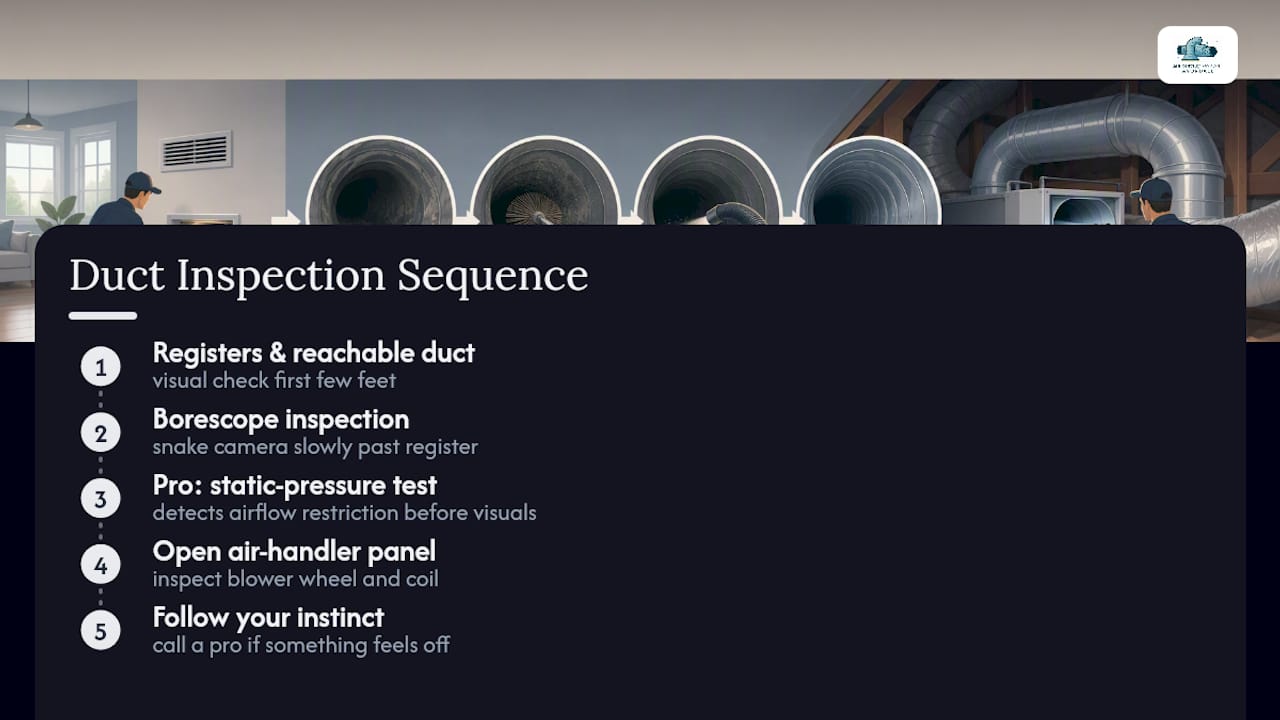
Once you've checked the registers and the first few feet of duct, the honest answer is that most homeowners can't safely go further without special tools. Interior trunk lines curve, narrow, and run through walls and ceilings, which is exactly why a flashlight and a camera phone only get you so far.
A borescope camera, essentially a small waterproof lens on a flexible cable connected to a phone or monitor, lets you snake a view several feet past a register without cutting into drywall. If you own one or can borrow one, feed it slowly through the register opening and watch for dust coating the duct interior, moisture staining, or debris that shouldn't be there.
Beyond that point, inspection requires the kind of access panels and lighting equipment that come with a professional visit. Technicians typically check static pressure readings first, since a system straining to pull air through clogged ductwork shows up in the numbers before it shows up visually. They then open the air handler's access panel directly to look at the blower wheel and coil, which is the fastest way to confirm whether dust penetrated past the visible sections. If your gut says something's off further down the line but you can't confirm it yourself, that instinct is usually worth listening to.
Testing Your Ducts After Cleaning To Confirm It Worked
A cleaning job that looks fine on the surface can still leave the air handler contaminated. Confirming the work actually solved the problem takes more than a visual glance at the nearest register.
Ask for before-and-after photos of the coil and blower wheel specifically, not just the duct interior. That comparison is the clearest evidence a whole-system clean, not just a surface pass, took place. A written report documenting the areas accessed and the method used, whether agitation with negative pressure per NADCA standards, gives you a record if problems resurface.
Run the system for a few days after cleaning and watch the filter. If it loads up with dust again within a day or two the way it did during active sanding, something was missed, likely inside the air handler itself. If it behaves like a normal filter, loading gradually over weeks, that's a strong sign the source contamination is gone.
For households where someone reported symptoms before the cleaning, an indoor air quality test afterward gives you an objective read on airborne particulate levels rather than relying on how everyone feels. It's a useful step when symptoms, not just visible dust, were the reason you started this process.
Is Drywall Dust in Your HVAC a Health Risk?
Drywall dust itself is mostly gypsum, a mineral that's not classified as highly toxic, but the sanding process kicks up more than gypsum alone. Joint compound and some drywall products contain small amounts of crystalline silica, and the CDC's NIOSH program notes that respirable silica dust, meaning particles fine enough to reach deep into the lungs, carries documented respiratory risks with repeated exposure.
The immediate symptoms are the ones you'll notice fastest: throat irritation, coughing, itchy eyes, and worsened symptoms for anyone with asthma or existing allergies. These tend to show up during and shortly after active sanding, when airborne concentrations are highest.
The longer-term concern is different. Once dust settles inside ductwork, every heating or cooling cycle redistributes a small amount of it through the house, turning a one-time construction mess into an ongoing low-level exposure. That's a meaningfully different problem than a room that just needs a good dusting.
The EPA is careful to note that routine duct cleaning hasn't been proven to prevent health problems in general. But the agency draws a clear line for ducts with visible substantial contamination, mold, or pests: those should be cleaned. Fresh drywall dust that's visibly caked on the blower or coil falls squarely into that category, not the routine maintenance category.
The Gap Between "It Looks Clean" and "It Is Clean"
Most homeowners judge duct cleanliness by what they can see at the register, and that's the mistake worth correcting. A spotless grille tells you nothing about the blower wheel three feet back in the air handler. That disconnect is exactly why so many post-renovation dust complaints come back a second time after a homeowner already wiped everything down and called it solved.
The conventional advice to "just change the filter and vacuum the vents" isn't wrong, it's incomplete. It handles the visible symptom while leaving the source untouched. NADCA's whole-system standard exists precisely because partial cleaning creates a cycle: dust gets stirred loose, resettles, and the homeowner is back to square one within weeks.
If there's one thing worth prioritizing above all else here, it's the decision to stop running the system the moment you notice sanding dust in the air, not after you've already seen it puff out of a register. That single habit prevents more contamination than any cleaning method fixes after the fact. Everything else, filters, vacuuming, professional agitation tools, is damage control for a decision that's already been made.
— Shaun
Let Air Duct and Dryer Vent Cleaning Avondale Finish the Job Your Filter Can't
A new filter and a HEPA vacuum handle the visible layer of drywall dust, but they can't touch what's caked onto a blower wheel or packed into a trunk line you can't reach. That's the gap Air Duct and Dryer Vent Cleaning Avondale closes for homeowners and property managers across Avondale after a renovation leaves dust somewhere a shop vac can't follow.
A visit starts with an inspection of the registers, ductwork, and air handler, followed by a written report and before-and-after photos so you can see exactly what was found and what got removed. From there, services cover whole-system duct cleaning, coil and blower cleaning, air filter replacement, and indoor air quality testing for households still dealing with symptoms after cleanup. Commercial properties and multiunit buildings can get the same scope through the commercial duct cleaning service.
If your filter is loading up fast or you spotted dust inside the air handler, request an inspection through the air duct cleaning page and get a straight answer on what your system actually needs.
Sources
- Removing Construction Debris From Ducts | PNNL BASC resource guides
- Proper cleaning methods | NADCA
- Should You Have the Air Ducts in Your Home Cleaned? | US EPA
FAQ
Is Breathing Drywall Dust Harmful?
Drywall dust irritates the throat, eyes, and lungs, and repeated exposure to fine silica-containing particles carries documented respiratory risks according to NIOSH. Anyone with asthma or allergies typically reacts faster and more severely.
Can Dusty Air Ducts Make You Sick?
Ducts contaminated with substantial dust, mold, or pests can contribute to indoor air problems, and the EPA recommends cleaning in those specific cases even though routine cleaning isn't proven to prevent illness generally. Persistent symptoms after a renovation, especially respiratory ones, are worth investigating with an inspection.
How Do You Get Rid of Drywall Dust in the Air?
Turn off the HVAC system, run a portable exhaust fan or air purifier, and use a HEPA vacuum instead of dry sweeping to avoid re-suspending particles. If dust has already reached the ductwork, filtration alone won't fully clear it since the system keeps recirculating what's trapped inside.
How Long Does Drywall Dust Stay in the Air?
Airborne drywall dust can settle within hours once sanding stops, but dust trapped inside ductwork keeps getting redistributed every time the system runs, sometimes for months, until it's professionally removed. That's the core reason source removal matters more than repeated surface cleaning.
Does Air Duct and Dryer Vent Cleaning Avondale Handle Drywall Dust Cleanup?
Whole-system duct cleaning, coil and blower cleaning, and air quality testing are available services suited to post-renovation drywall dust contamination in homes and businesses.