
TL;DR:
- Duct cleaning before move-in removes dust, mold, and allergens to ensure fresh indoor air from day one. It is recommended only when contamination such as mold, pests, or debris is present, not as routine maintenance. Scheduling the cleaning between closing and move-in maximizes access and minimizes occupant exposure.
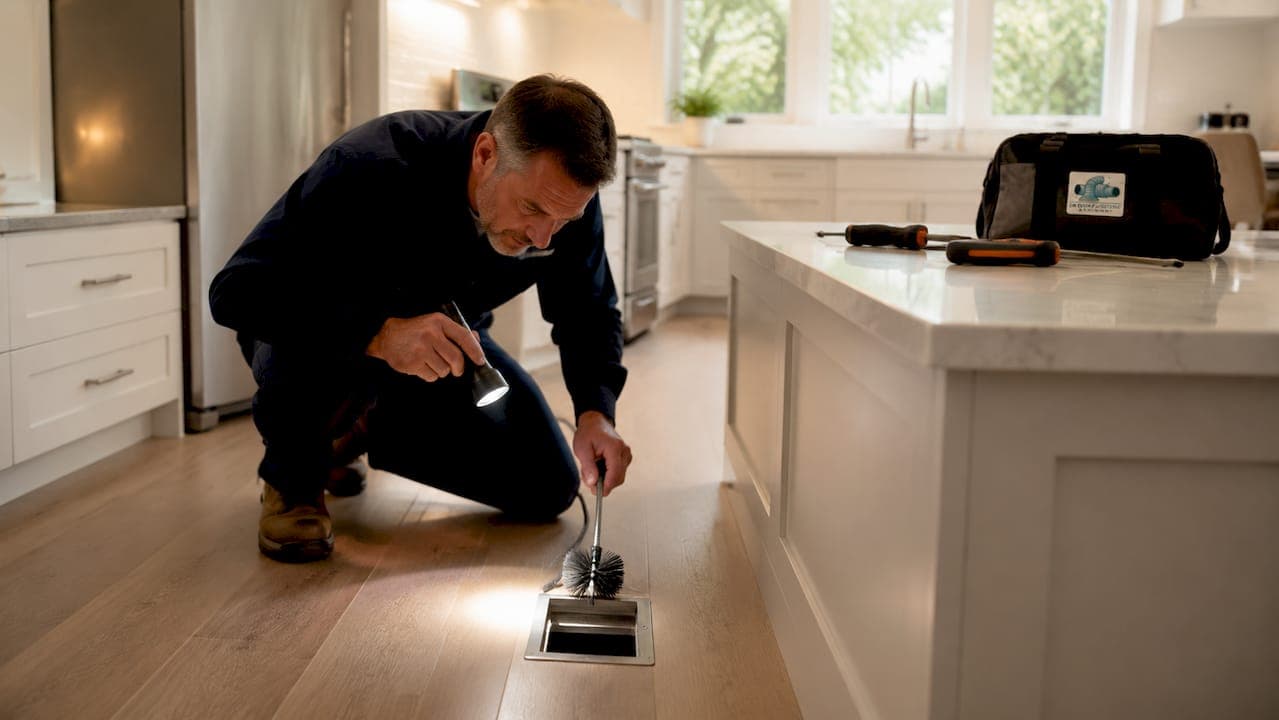
Duct cleaning before move-in is the process of removing dust, mold, allergens, pet dander, and construction debris from your HVAC ductwork before you occupy a new home. The goal is simple: you breathe clean air from day one instead of inheriting whatever the previous occupants left behind. Standard home inspections check HVAC functionality but not duct cleanliness, which means hidden contaminants often go undetected. The EPA and NADCA both provide guidance on when this cleaning is warranted and how it should be performed. Knowing what is duct cleaning before move-in, and whether your situation calls for it, puts you in control before you unpack a single box.
What is duct cleaning before move-in and when is it needed?
Duct cleaning before move-in is not routine maintenance for every home. The EPA's 2026 guidelines state clearly that cleaning is recommended only when specific contamination evidence exists, not as a standard step every homebuyer should take. That said, the exceptions cover a wide range of situations that are very common in previously occupied homes.
The scenarios that genuinely call for pre-move-in duct cleaning include:
- Visible mold growth inside ducts or on HVAC components
- Pest or rodent infestation evidence, including droppings or nesting material
- Recent renovation or construction that pushed debris and drywall dust into the system
- Excessive dust buildup visible at registers or inside accessible duct sections
- Strong odors from pets, smoke, or mildew coming from the vents
- Long vacancy periods where the system sat unused and accumulated debris
Each of these conditions creates a real air quality problem the moment you run the HVAC system. Construction debris and pet dander accumulate in ducts during vacancy or after renovations, making pre-move-in cleaning especially valuable in homes with heavy HVAC use. That is not a minor inconvenience. It means the first air your family breathes in the new home is loaded with whatever was left behind.
Pro Tip: Ask the seller directly whether any renovation work was done in the past two years. Renovation is one of the top triggers for duct contamination, and sellers are often required to disclose major work.
One practical advantage many homebuyers overlook: documented duct contamination found during a pre-purchase inspection can be used as leverage during negotiations. You can request a credit or require the seller to pay for cleaning before closing. That turns a potential health hazard into a financial tool.
What does the professional duct cleaning process involve?
Professional duct cleaning is a full HVAC system service, not just a vacuum run through the vents. Full system cleaning covers the blower motor, heat exchangers, cooling coils, and air handler in addition to the duct runs themselves. That scope matters because contaminants on the coils or blower can re-enter the airstream even after the ducts are cleaned.
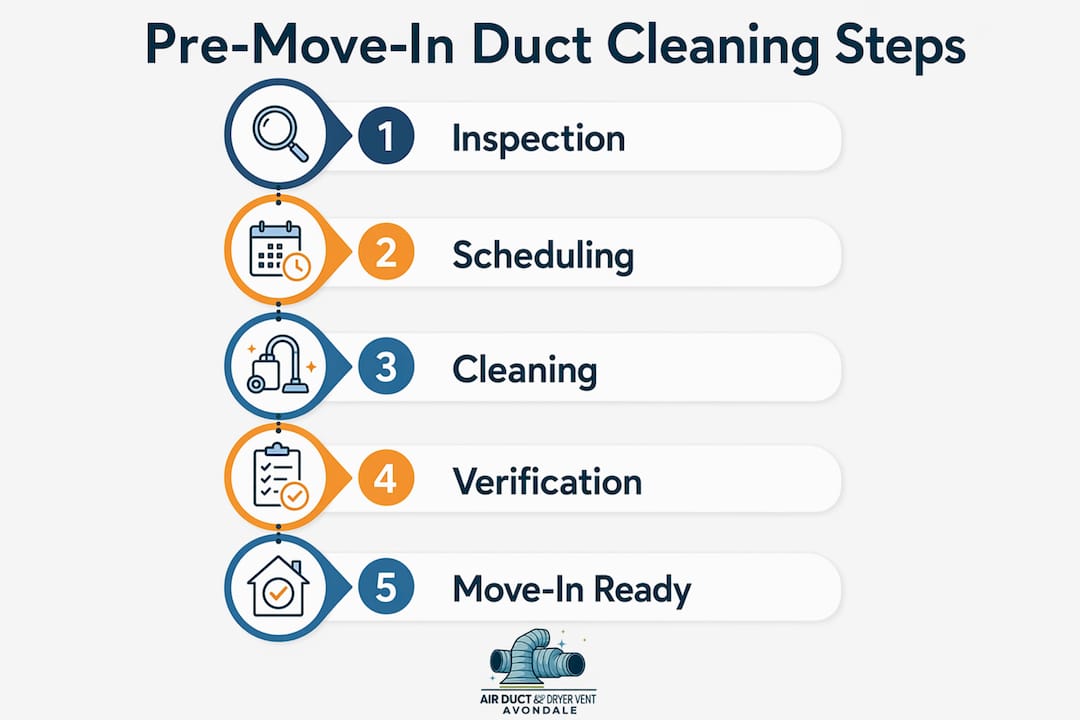
A professional pre-move-in cleaning follows these steps:
- System inspection. The technician inspects all accessible duct sections, registers, and HVAC components to identify contamination type and severity before any cleaning begins.
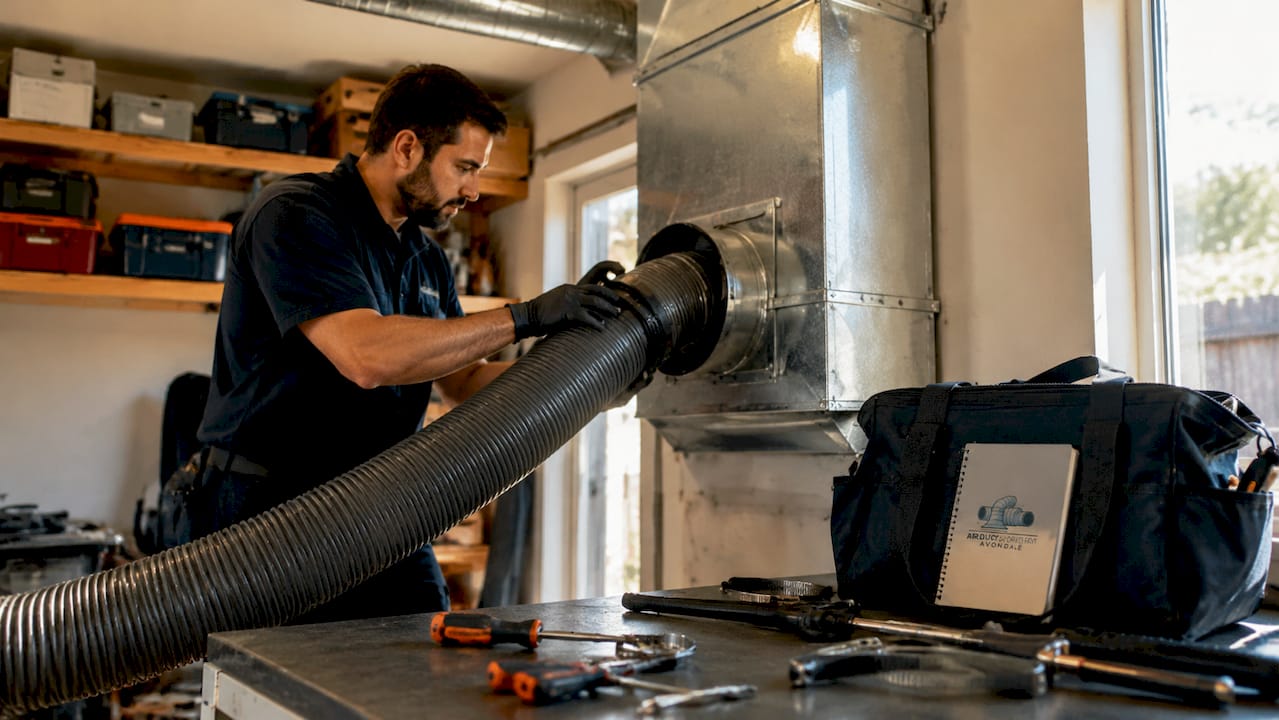
- Negative pressure setup. A high-powered industrial vacuum is connected to the main trunk line, placing the entire duct system under negative pressure so dislodged debris travels toward the vacuum rather than into the home.
- Mechanical agitation. Rotary brushes and compressed air tools loosen debris from duct walls, registers, and grilles throughout the system.
- Component cleaning. The blower motor, evaporator coil, drain pan, and air handler are cleaned individually. This step is what separates a thorough job from a superficial one.
- Disinfection (if warranted). When mold or microbial growth is confirmed, EPA-registered disinfectants are applied to affected surfaces after mechanical cleaning.
- Final inspection and filter replacement. The technician verifies airflow at each register and installs a fresh air filter before the system is restarted.
The table below shows the key components addressed in a full pre-move-in HVAC cleaning and why each one matters.
| HVAC Component | Why It Gets Cleaned |
|---|---|
| Supply and return ducts | Primary pathway for airborne contaminants to reach living spaces |
| Blower motor and fan | Redistributes debris throughout the system if left dirty |
| Evaporator coil | Mold and microbial growth thrive on damp coil surfaces |
| Drain pan | Standing water in the pan creates mold and odor problems |
| Registers and grilles | Visible buildup here signals deeper contamination inside ducts |
| Air handler cabinet | Debris accumulates inside the cabinet and bypasses filters |
NADCA certification is the industry benchmark for technicians performing this work. NADCA-certified professionals follow a documented standard that covers both the cleaning method and the equipment specifications required for effective contaminant removal. DIY duct cleaning is often ineffective and can worsen indoor air quality by redistributing contaminants rather than removing them. Consumer-grade shop vacuums simply do not generate the airflow needed to pull debris from deep inside duct runs.
Pro Tip: Schedule the cleaning after closing but before your furniture arrives. An empty home gives technicians full access to every register and return vent, and it means no belongings are exposed to the dust stirred during the process.
Scheduling between closing and move-in is the optimal window because the home is empty, technicians have unrestricted access, and any residual dust settles before you move in.
What are the benefits of duct cleaning before moving in?
Clean ducts at move-in deliver benefits that go well beyond a fresh smell. Removing allergens from ducts directly improves indoor air quality, which matters most for households with children, elderly members, or anyone managing asthma or allergies. The HVAC system circulates air throughout the entire home multiple times per day. Whatever is in the ducts ends up in the air you breathe.
The specific benefits of pre-move-in duct cleaning include:
- Odor elimination. Pet odors, cigarette smoke, and mildew smells embedded in ductwork disappear with thorough cleaning and disinfection.
- Allergen reduction. Dust mites, pollen, mold spores, and pet dander are physically removed rather than recirculated.
- Improved airflow. Debris-clogged ducts restrict airflow, forcing the HVAC system to work harder. Clean ducts restore designed airflow capacity.
- Reduced mechanical strain. Full system cleaning yields measurable airflow and efficiency improvements that duct cleaning alone does not deliver.
- Baseline for future maintenance. Starting with a documented clean system makes it easier to track when cleaning is next needed.
- Peace of mind. You know exactly what condition the system is in before you and your family start living there.
"Starting in a home with clean, sanitized ducts prevents immediate exposure to previous occupants' contaminants, setting a healthy baseline for air quality." This is the core value of pre-move-in cleaning: you are not guessing about what is in the air.
The maintenance angle deserves more attention than most homebuyers give it. Regular filter replacement is the single most important ongoing action for sustained indoor air quality. A clean duct system combined with consistent filter changes every 60–90 days gives you the strongest possible foundation for healthy air in your new home. Duct cleaning sets the starting line. Filter maintenance keeps you there.
The economic case is also real. If a pre-purchase inspection reveals mold or pest contamination in the ducts, that documentation gives you concrete grounds to negotiate with the seller. You can request a price reduction, a closing credit, or require the seller to fund the cleaning before transfer of ownership. That is a direct financial return on the cost of an inspection.
How to choose and schedule a duct cleaning service before move-in
Choosing the right service provider is as important as deciding to clean. Not every company that offers duct cleaning delivers the full-system service that actually improves air quality. The checklist below covers what to verify before you book.
- NADCA certification. Ask for the technician's NADCA member number and verify it at nadca.com. This confirms they follow the industry standard for equipment and method.
- Proof of insurance. The company should carry general liability and workers' compensation coverage. Request certificates before work begins.
- Full-system scope. Confirm the quote includes the blower motor, coils, drain pan, and air handler, not just the duct runs and registers.
- Written estimate. Get the scope of work and price in writing before the appointment. Verbal quotes lead to disputes.
- References or reviews. Look for reviews that specifically mention pre-move-in or new homeowner cleaning, not just general service.
- No pressure for add-ons. Reputable companies recommend disinfectants only when mold is confirmed, not as a default upsell.
To prepare your home for the cleaning appointment, walk through and make sure every register and return vent is accessible. Move any boxes or furniture that might block vents if you have already started moving items in. Confirm the HVAC system is operational so the technician can run it during the final inspection phase.
Scheduling HVAC cleaning works best when you coordinate it with your closing date. Book the appointment for the day after closing or within the first week, before movers arrive. That window gives you a clean system and an empty home, which is the best possible combination for thorough access.
Pro Tip: Ask the service provider whether they use HEPA-filtered vacuums. Standard shop vacuums exhaust fine particles back into the air. HEPA filtration captures particles down to 0.3 microns, which includes mold spores and fine dust.
Questions worth asking every provider before you commit:
- What specific components are included in the cleaning scope?
- Do you use negative pressure containment during the job?
- How do you confirm mold before applying disinfectants?
- What does your post-cleaning inspection include?
- Do you provide a written report of conditions found?
A provider who answers these questions clearly and without hesitation is a provider who knows what they are doing. One who deflects or rushes past them is a warning sign.
Key Takeaways
Pre-move-in duct cleaning is worth doing when contamination evidence exists, and the optimal time to schedule it is between closing and move-in when the home is empty and access is unrestricted.
| Point | Details |
|---|---|
| EPA recommends targeted cleaning | Clean ducts only when mold, pests, or significant debris are confirmed, not as routine maintenance. |
| Full system scope matters | Effective cleaning covers the blower motor, coils, and air handler, not just the duct runs. |
| Timing is the key variable | Schedule between closing and move-in for full access and minimal occupant exposure. |
| Contamination is a negotiating tool | Documented duct contamination before purchase can support price reductions or seller-funded cleaning. |
| Filter changes sustain the results | Regular filter replacement every 60–90 days maintains the air quality gains from professional cleaning. |
What I've learned from years of pre-move-in duct inspections
The condition of ducts in previously occupied homes surprises most homebuyers. People assume a home that looks clean on the surface has clean ducts. That assumption is almost always wrong. I have seen duct systems in well-maintained homes that were packed with pet hair, mold colonies on the evaporator coil, and construction debris from a kitchen remodel done years earlier. None of it was visible from the outside.
The misconception I encounter most often is that home inspectors cover duct cleanliness. They do not. A standard home inspection confirms the HVAC system turns on and produces conditioned air. It does not assess what is traveling through the ducts with that air. Homebuyers who skip pre-move-in cleaning because "the inspector said the HVAC is fine" are making a decision based on incomplete information.
The other thing I see consistently is homebuyers underestimating the value of full-system cleaning. They book a basic duct cleaning and skip the coil and blower motor because it costs more. Six months later they are dealing with mold on the coil that is now circulating spores through freshly cleaned ducts. The system is interconnected. Cleaning one part while leaving contaminated components in place is like washing half a dish.
My honest recommendation: if you are moving into a home that had previous occupants, pets, or any renovation work in the past three years, schedule a professional inspection of the duct system before you move in. If contamination is found, use it. Either negotiate with the seller or get it cleaned before your family's first night in the home. And once you are in, change the air filter every 60–90 days without exception. That single habit does more for sustained air quality than any cleaning service.
— Shaun
Professional duct cleaning in Avondale, AZ before your move-in date
Moving into a new home in the Avondale area? Airanddryerventcleaningavondale specializes in residential air duct cleaning timed specifically around closing and move-in dates. The team handles full HVAC system cleaning, including blower motors, coils, and registers, not just the duct runs.
Airanddryerventcleaningavondale also offers dryer vent cleaning and indoor air quality testing to give you a complete picture of your new home's air systems before you move in. Flexible scheduling, including after-hours appointments, makes it easy to fit cleaning into the window between closing and move-in day. Reach out to Airanddryerventcleaningavondale to book your pre-move-in inspection and start your new home with clean air from the first day.
FAQ
What is duct cleaning before move-in?
Duct cleaning before move-in is the professional removal of dust, mold, allergens, and debris from HVAC ductwork before a new homeowner or renter occupies the property. The goal is to establish clean indoor air quality from the first day of occupancy.
Should I always clean ducts before moving into a new home?
The EPA recommends duct cleaning only when specific contamination evidence exists, such as mold, pest activity, or significant dust buildup, not as a routine step for every move. If none of those conditions are present, cleaning may not be necessary.
How long does a professional duct cleaning take?
A full-system professional cleaning for a standard single-family home typically takes 3–5 hours, depending on home size and the number of HVAC components included in the scope.
Can I clean the ducts myself before moving in?
DIY duct cleaning is generally ineffective because consumer equipment cannot generate the airflow needed to remove debris from deep inside duct runs. Improper cleaning can actually spread contaminants further into the home.
What does duct cleaning cost for a new home?
Pricing varies by home size, system complexity, and regional market rates and is not publicly standardized. Request written quotes from at least two NADCA-certified providers and confirm the scope includes all HVAC components, not just the duct runs.