
TL;DR:
- Duct cleaning frequency varies based on conditions, with the EPA recommending cleaning only when contamination occurs. NADCA suggests a proactive 3–5 year schedule for typical homes, while commercial properties often require annual inspections and cleaning every 1–3 years. Homeowners should perform visual inspections and address root causes like moisture and filtration to maintain duct cleanliness effectively.
No single universal schedule defines what is duct cleaning frequency standard. The EPA states that duct cleaning is generally unnecessary unless specific contamination exists, while NADCA recommends a proactive 3–5 year interval as a baseline for most homes. Understanding both positions, and knowing which risk factors push your property outside that baseline, is what separates a smart maintenance decision from an expensive one made on a calendar.
What are the key industry guidelines for duct cleaning frequency?
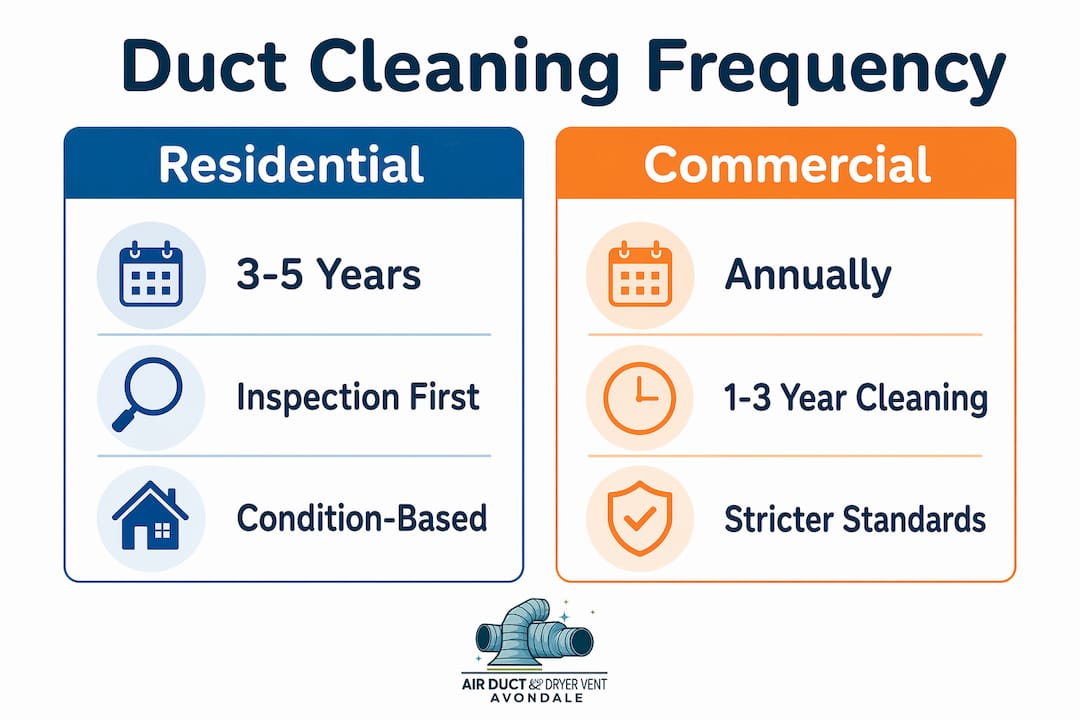
The duct cleaning frequency standard is best understood as two overlapping frameworks, not one fixed rule. The EPA takes a condition-based stance, stating there is no evidence that routine duct cleaning prevents health problems. Cleaning is recommended only when specific triggers are present, not on a set schedule.
NADCA, the National Air Duct Cleaners Association, takes a different approach. Its 3–5 year guideline is proactive and assumes typical household conditions. That gap between EPA's reactive stance and NADCA's proactive recommendation causes real confusion for homeowners and property managers trying to set a schedule.
Commercial properties operate under stricter expectations. Commercial ductwork is typically inspected annually and cleaned every 1–3 years, triggered by contamination findings rather than a fixed calendar. Higher occupant density, stricter air quality regulations, and greater liability exposure all push commercial standards toward more frequent attention.
The table below shows how residential and commercial duct cleaning guidelines differ in practice.
| Setting | Inspection frequency | Cleaning interval | Primary trigger |
|---|---|---|---|
| Residential (typical) | Every 3–5 years | Every 3–5 years | Contamination, complaints, or risk factors |
| Residential (high risk) | Annually | Every 1–3 years | Pets, allergies, renovation, or mold |
| Commercial | Annually | Every 1–3 years | Contamination findings, regulatory requirements |
Pro Tip: Schedule an inspection before committing to a cleaning. An inspection costs less and tells you whether cleaning is actually needed right now.
What factors influence how often ducts should be cleaned?
Condition-based cleaning only works if you know which conditions matter. Several factors reliably push a property's cleaning interval shorter than the NADCA baseline.
- Pets. Dogs and cats shed dander and hair that accumulates inside ductwork faster than in pet-free homes. Homes with multiple pets often need duct cleaning more frequently than the standard 3–5 year window.
- Allergies and asthma. Occupants with respiratory conditions are more sensitive to dust, mold spores, and allergens circulating through the HVAC system. Shorter cleaning intervals reduce symptom triggers. Removing allergens from ducts directly improves indoor air quality for these households.
- Recent renovation or construction. Drywall dust, insulation fibers, and debris from remodeling work enter ductwork quickly. Cleaning vents after renovation is one of the clearest condition-based triggers the EPA recognizes.
- Indoor smoking. Tobacco residue coats duct surfaces and degrades air quality throughout the home. Smoking households should not rely on the standard 3–5 year interval.
- Low-quality HVAC filtration. A MERV 8 filter captures far less particulate than a MERV 13. Homes running low-grade filters accumulate debris inside ducts faster. Upgrading filtration reduces how often cleaning becomes necessary.
- Geographic and environmental factors. Properties in high-dust regions, near construction zones, or in areas with frequent wildfires face higher particulate loads. Avondale, Arizona's desert climate means dust infiltration is a year-round concern, not a seasonal one.
Homes with pets, allergies, or recent renovations often need cleaning on a 1–3 year interval rather than the standard baseline. That shorter window is not a sales tactic. It reflects a genuinely higher contamination rate.
Pro Tip: Keep a simple log of filter change dates and any visible dust buildup at vent covers. That record gives a professional inspector real data to work with instead of guesswork.
How should homeowners and property managers decide when to clean ducts?
Inspection drives the decision. A condition-based approach only works when someone actually checks the conditions. Here is a practical process for making that call.
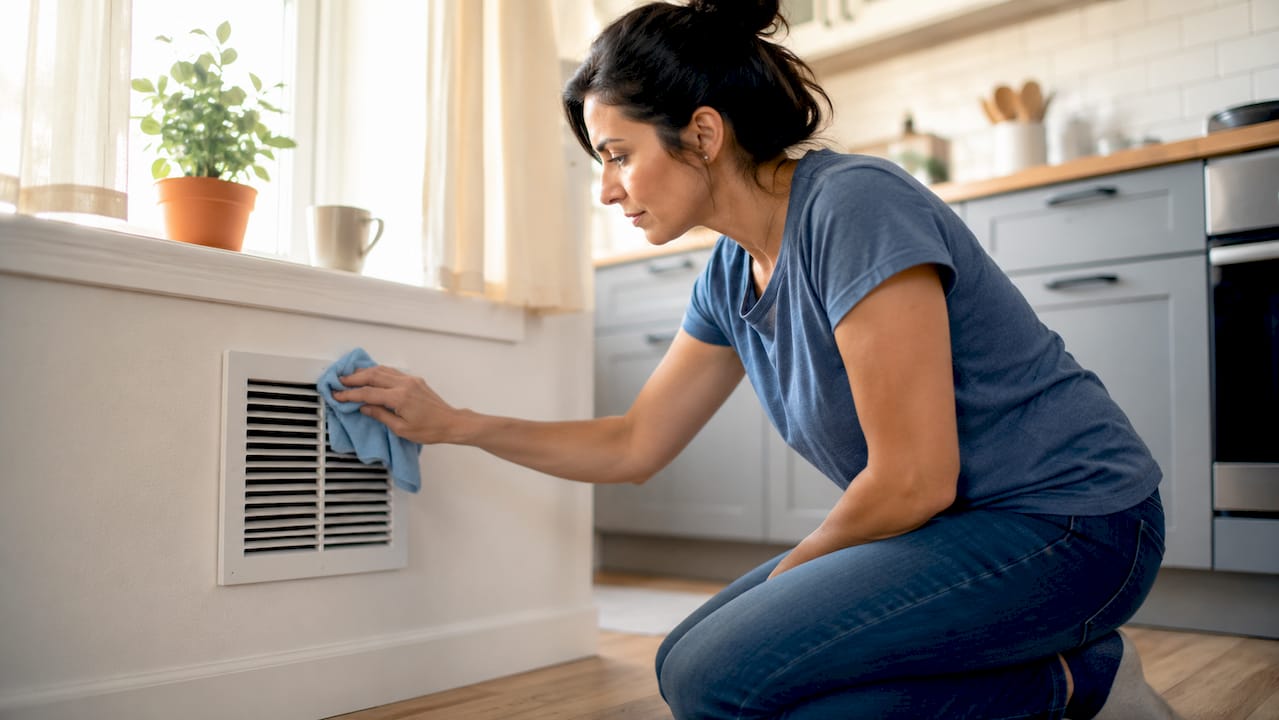
- Perform a visual check at vent covers. Remove a register and shine a flashlight into the duct. Visible dust buildup, debris, or dark residue on the duct walls signals accumulation worth investigating further.
- Check for odors when the HVAC runs. Musty smells when the system starts often indicate mold or moisture inside the ductwork. Burning or stale odors can point to debris near the heat exchanger.
- Look for signs of pests. Rodent droppings, nesting material, or insect activity inside or near vents are EPA-recognized triggers for immediate cleaning. Pest contamination is not a wait-and-see situation.
- Schedule a professional inspection. A trained technician uses cameras and pressure testing to assess the full duct system, not just the visible register area. The routine duct inspection workflow covers components that a flashlight check cannot reach.
- Address root causes before or during cleaning. If moisture, a failed filter, or a gap in the duct system caused the contamination, cleaning without fixing the source guarantees the problem returns.
A professional duct cleaning should include full system cleaning with a verified visual inspection of components after the work is done. Claiming ducts are "cleaned" without checking each component is not a complete service. Effective cleaning removes contaminants and confirms their removal.
Verification after duct cleaning should be a component-focused visual inspection, not just a technician's verbal assurance. Ask to see the post-cleaning inspection results before signing off on the job.
What are best practices for maintaining duct cleanliness over time?
Cleaning frequency drops when maintenance habits are strong. The goal is to reduce contamination rates so that cleaning becomes a less frequent need, not an annual expense.
- Replace filters on schedule. A clogged filter bypasses particulate into the duct system. Most residential systems need filter changes every 1–3 months depending on filter grade and household conditions. This single habit has more impact on duct cleanliness than any cleaning schedule.
- Control moisture at the source. Mold in ductwork almost always traces back to a moisture problem, whether from a leaking coil, poor drainage, or high indoor humidity. Routine maintenance focuses on moisture control as a first line of defense, not remediation after mold appears.
- Seal duct gaps and leaks. Unsealed joints pull in unconditioned air carrying dust, insulation fibers, and outdoor particulate. Sealing those gaps reduces the contamination load entering the system.
- Avoid cleaning too often without fixing underlying problems. Frequent cleaning without addressing root causes leads to recurring contamination and wasted service costs. Cleaning is remediation, not prevention.
- Integrate duct health into your overall HVAC maintenance plan. Annual HVAC tune-ups give a technician the opportunity to flag duct issues before they escalate. Pairing HVAC maintenance with periodic duct inspections is more cost-effective than reactive cleaning alone.
Cleaning frequency standards differ across residential settings because no two homes accumulate contamination at the same rate. The best schedule is the one built around your specific property's conditions, not a generic calendar.
Key Takeaways
The duct cleaning frequency standard is not a fixed schedule. It is a condition-based decision framework guided by EPA triggers, NADCA's 3–5 year baseline, and your property's specific risk factors.
| Point | Details |
|---|---|
| No universal fixed schedule | EPA recommends cleaning only when contamination triggers are present, not on a calendar. |
| NADCA's 3–5 year baseline | This is a starting point for typical homes, not a rule that applies to every property. |
| Commercial properties need more attention | Annual inspections and 1–3 year cleaning intervals are standard for commercial ductwork. |
| Risk factors shorten the interval | Pets, allergies, renovation dust, and poor filtration all push cleaning needs earlier. |
| Fix root causes first | Cleaning without addressing moisture or filtration issues leads to rapid recontamination. |
Why I think most homeowners are asking the wrong question
Most people ask, "How often should I clean my ducts?" The better question is, "What does my duct system look like right now?"
I have seen homes where the ducts were spotless after six years and others that needed cleaning after eighteen months because of a leaking coil that nobody caught. A rigid schedule would have wasted money in the first case and caused real air quality problems in the second. The EPA's condition-based approach is not a cop-out. It is actually the more rigorous standard because it requires you to look at the evidence rather than trust a number.
Property managers often push back on inspection-driven scheduling because it feels less predictable than a fixed contract. I understand that. But a documented inspection schedule with clear contamination thresholds gives you better cost control than annual cleaning contracts that may not reflect actual need. You pay for what the system requires, not what a service cycle demands.
The one thing I would tell every homeowner in Avondale specifically: desert dust is not the same as typical household dust. It is finer, it penetrates filters faster, and it accumulates in ductwork at a rate that genuinely justifies shorter inspection intervals than the national NADCA baseline suggests. If you are running standard filters in a high-dust environment, you are almost certainly on the wrong schedule.
— Shaun
Professional duct inspection and cleaning in Avondale, AZ
Airanddryerventcleaningavondale provides condition-based duct inspections and full system cleaning for homeowners and property managers in Avondale, Arizona. Every service starts with a thorough assessment to determine whether cleaning is actually needed and what is driving any contamination found.
For residential clients, air duct cleaning services cover the full HVAC system, including vent covers, duct interiors, and component verification after cleaning. For commercial properties, commercial air duct cleaning meets the annual inspection and condition-triggered cleaning standards that building managers need. Airanddryerventcleaningavondale also offers indoor air quality testing to identify contaminants before and after service, giving you documented results rather than a verbal assurance.
FAQ
What is the standard duct cleaning frequency for homes?
The industry standard, set by NADCA, is every 3–5 years for typical residences. The EPA recommends cleaning only when specific contamination triggers are present, such as visible mold, pest infestation, or excessive dust release.
How often should commercial ducts be inspected and cleaned?
Commercial ductwork is typically inspected annually and cleaned every 1–3 years, with cleaning triggered by contamination findings rather than a fixed calendar date.
What are the EPA's triggers for duct cleaning?
The EPA identifies three primary triggers: visible mold growth inside ducts or on HVAC components, evidence of rodent or insect infestation, and excessive dust or debris being released into occupied spaces through supply registers.
Do pets or allergies change how often ducts need cleaning?
Yes. Homes with pets or occupants who have allergies or asthma often need cleaning on a 1–3 year interval rather than the standard 3–5 year baseline, because dander, hair, and allergens accumulate faster in those environments.
Is frequent duct cleaning harmful?
Cleaning too often without fixing underlying moisture or filtration problems leads to recurring contamination and unnecessary expense. The EPA warns that cleaning without addressing root causes does not solve the problem and may disturb settled contaminants unnecessarily.