
TL;DR:
- Dust builds up in vents from airborne particles entering through filters and duct leaks, which bypass filtration. Uneven accumulation across vents indicates airflow issues or leaks needing professional correction. Regular maintenance, sealing leaks, and balancing airflow can reduce dust and improve indoor air quality.
Dust accumulation in vents is defined as the gradual settling of airborne particles inside HVAC ductwork, where reduced airflow velocity allows them to collect on interior surfaces. Particles like skin cells, pet dander, pollen, and textile fibers enter your system constantly through return air grilles. Once inside, they bypass filters, settle in low-velocity zones, and build up layer by layer. The EPA, Sky Clean Air, and AirDuctIQ all confirm this process is normal, but left unchecked it restricts airflow, strains your HVAC system, and recirculates allergens throughout your home. Understanding why it happens is the first step toward controlling it.
How does dust accumulate inside vent ducts?
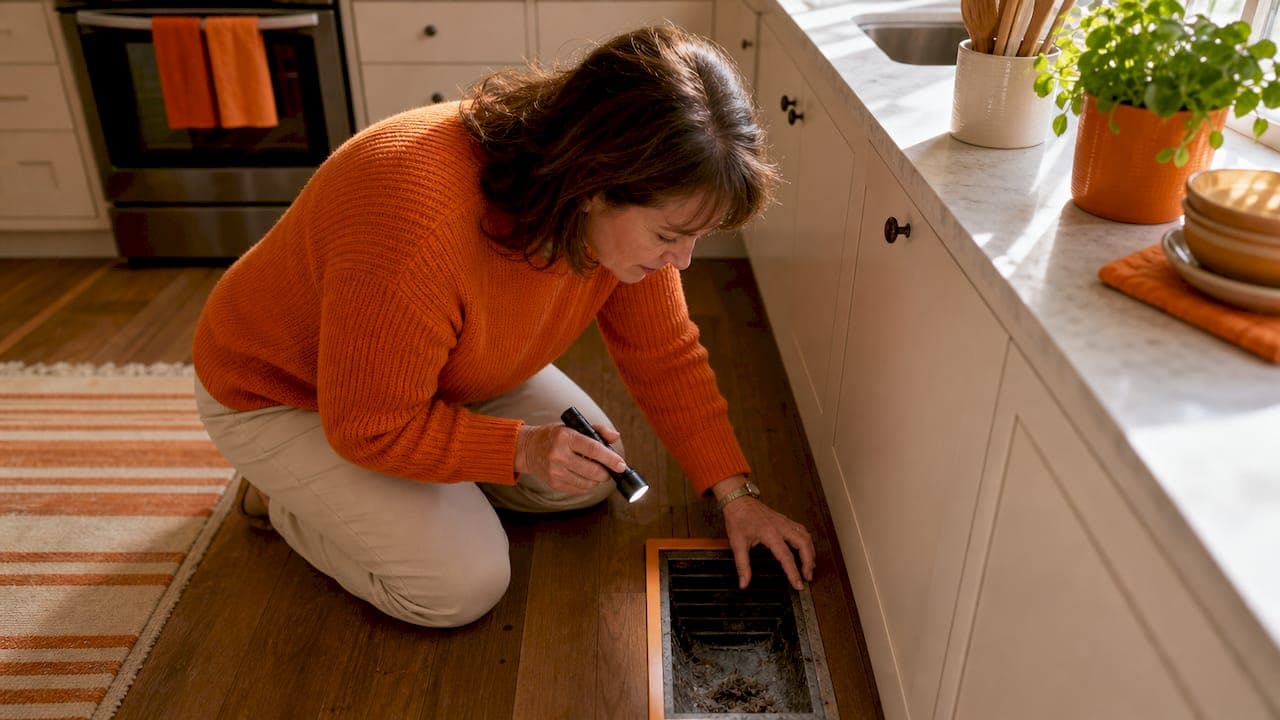
Dust buildup in vents begins with the air you breathe indoors. Every time someone walks across carpet, a pet shakes itself, or a window lets in outside air, particles become airborne. Your HVAC system pulls that air through return vents, and the ductwork becomes the path those particles travel.
The main indoor particle sources include:
- Skin cells and hair shed continuously by people and pets
- Pet dander, which is microscopic and stays airborne for hours
- Pollen tracked in from outside or drawn through gaps in the building envelope
- Textile fibers from carpet, upholstery, and bedding
- Cooking and combustion byproducts from stoves and candles
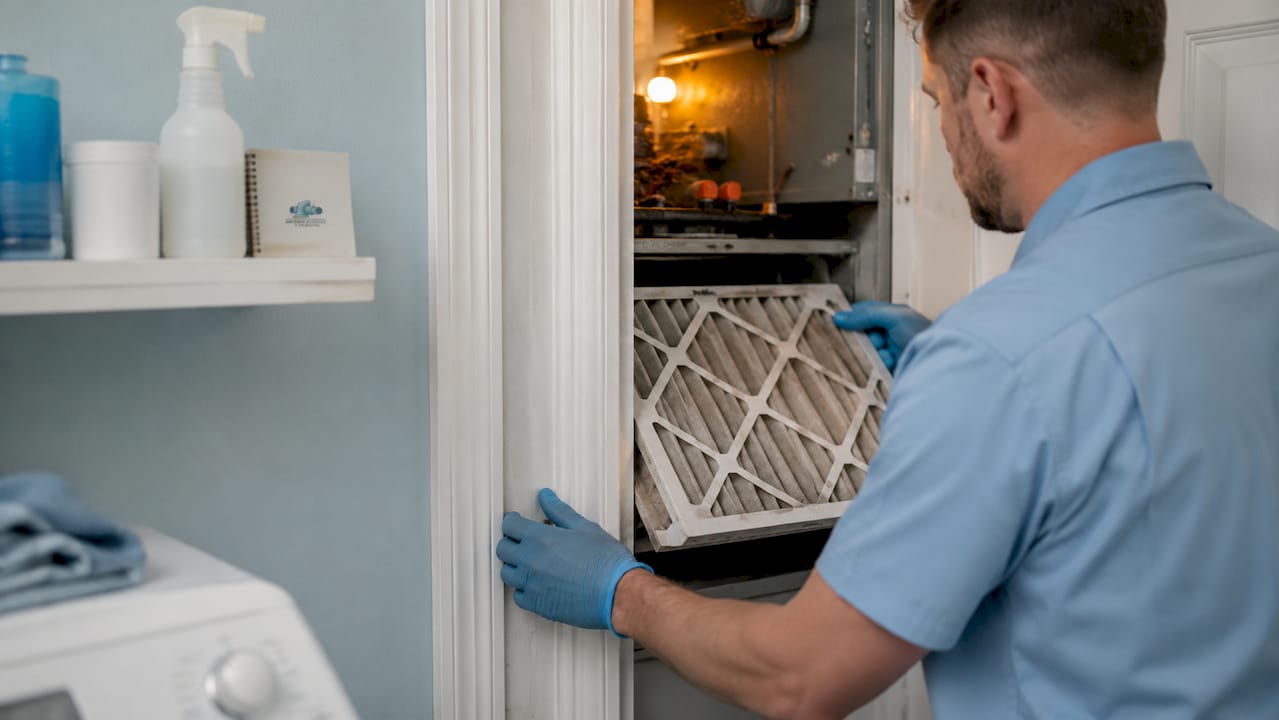
Air filters are the first line of defense, but they have real limits. Standard fiberglass filters capture large particles but allow finer ones to pass through. This filtration bypass combined with duct leakage is a primary contributor to dust accumulation that most homeowners never consider. Dust infiltrates ductwork even when filters look clean.
Duct leaks compound the problem significantly. Gaps at joints, loose connections, and unsealed penetrations pull unconditioned air directly from attics, crawlspaces, and wall cavities. That air carries construction debris, insulation fibers, and heavy concentrations of outdoor allergens. The result is dust loading that no filter can prevent because the contaminated air bypasses the filter entirely.
Low-airflow zones inside ductwork are where settling actually happens. When air slows down around bends, at branch takeoffs, or near partially closed dampers, particles lose their momentum and drop to the duct floor. Over months and years, those deposits grow thick enough to restrict airflow and become a reservoir for mold spores and bacteria.
Pro Tip: After any home renovation, run your HVAC system with a fresh filter for 48 hours, then inspect the filter. Heavy loading within two days signals that fine particulates like drywall dust are actively entering your duct system and require professional containment cleaning.
Why does dust build up unevenly around certain vents?
Uneven dust deposits across your vents are a diagnostic signal, not just a cosmetic issue. Dust buildup around vents signals poor airflow balance, creating low-velocity zones where particles settle instead of moving through the system. That means one room's vent can look caked while another stays relatively clean.
Several factors drive uneven accumulation:
- Duct design flaws: Sharp bends and long horizontal runs slow air and create turbulence that drops particles
- Undersized branch ducts: Reduced diameter cuts velocity and causes settling before air reaches the vent
- Partially closed dampers: Restricting a damper drops velocity in that branch, turning it into a dust trap
- Leaky duct connections: Gaps near joints pull in attic or crawlspace dust at specific points in the system
- Distance from the air handler: Vents farthest from the blower receive the weakest airflow and accumulate dust fastest
Dust patterns across vents tell you whether you have a localized problem or a system-wide issue. Dust on every vent in the house points to the main air handler or trunk line as the source. Dust concentrated at one or two vents points to a specific branch duct or a nearby leak pulling in contaminated air.
The tissue test is a practical diagnostic tool. After replacing your filter, hold a tissue near a supply vent and run the system for 24 hours. Persistent dust blowing from vents after this test indicates an active dust feed from duct system problems, not just residual settling. If the tissue stays clean, the issue was likely a dirty filter rather than a structural duct problem.
Pro Tip: Mark each vent cover with a small piece of tape and the date you last cleaned it. Comparing accumulation rates across vents over two months gives you a clear map of which branches have airflow problems worth investigating.
Duct design issues require professional correction, not just cleaning. A technician can measure static pressure and airflow at each branch to identify exactly where velocity drops below the threshold needed to keep particles suspended. That data guides targeted repairs rather than guesswork.
What health and HVAC problems does dust in vents cause?
Dust inside ductwork does more than look dirty. Dirty ducts act as reservoirs of contaminants that get recirculated through your living spaces every time the system runs. Each heating or cooling cycle pushes those stored particles back into the air you breathe.
The health consequences are real and measurable. Dust carries pollen, pet dander, and mold spores, all of which trigger allergic reactions and respiratory symptoms. A 2026 occupied classroom study confirmed that certified HVAC cleaning reduces occupants' exposure to both fine and coarse particulates. That finding applies directly to homes and commercial buildings with similar duct configurations.
The HVAC performance consequences are equally serious:
- Airflow restriction: Dust layers on duct walls narrow the effective diameter, reducing the volume of air the system can move
- Coil fouling: Particles that reach the evaporator coil coat the fins, cutting heat transfer efficiency and forcing longer run cycles
- Blower strain: Restricted airflow makes the blower motor work harder, increasing energy consumption and accelerating wear
- Uneven temperatures: Rooms at the end of restricted branches receive less conditioned air, creating hot and cold spots
"Dust accumulation restricts airflow, reduces blower efficiency, and damages heat transfer at coils, leading to weaker airflow and higher energy bills." — Arthur Air
The symptoms you notice at home map directly to these mechanical failures. Weak airflow from a vent, rooms that never reach the set temperature, and energy bills that climb without explanation are all consistent with dust buildup reducing HVAC efficiency. The system runs longer to compensate, which accelerates wear on every moving component.
Renovation projects create a specific and severe version of this problem. Drywall dust involves fine particulates that easily bypass standard filters. Without special containment and cleaning protocols after construction, those particles coat duct interiors and continue recirculating for months.
How to reduce dust accumulation in vents
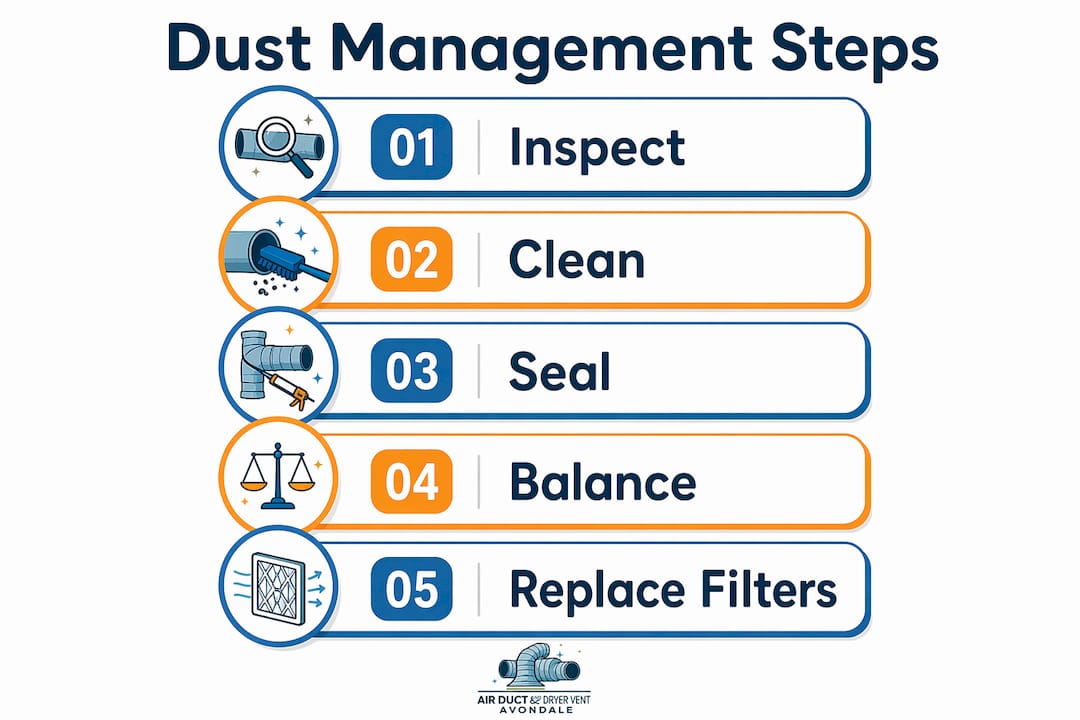
Controlling dust buildup in vents requires consistent maintenance across four areas: filtration, vent cover cleaning, duct integrity, and airflow balance. Neglecting any one of them limits the effectiveness of the others.
Filter selection and replacement schedule
| Filter Type | MERV Rating | Replacement Frequency | Best For |
|---|---|---|---|
| Fiberglass | 1–4 | Monthly | Basic debris capture |
| Pleated polyester | 8–11 | Every 1–3 months | Most residential homes |
| High-efficiency pleated | 12–13 | Every 3 months | Allergy sufferers, pet owners |
| HEPA (standalone units) | 17+ | Per manufacturer | Supplemental room filtration |
Routine filter changes every 1–3 months are the single most effective step a homeowner can take. A clogged filter forces air around its edges, sending unfiltered particles directly into the duct system. Homes with pets or allergy sufferers should replace filters monthly.
Monthly vent cover maintenance
Vent covers collect dust on their louvers and frames before that dust gets pulled back into the system. Remove each cover monthly, vacuum the louvers with a brush attachment, wash the cover with warm soapy water, and dry it completely before reinstalling. Moisture left on covers promotes mold growth at the vent opening.
Sealing duct leaks
Duct leaks are the most underaddressed cause of dust in vents. A professional can pressurize your duct system and identify every leak point. Mastic sealant applied at joints and connections stops unconditioned air from pulling attic and crawlspace dust into the system. Spray foam insulation around duct penetrations also reduces the HVAC load and dust infiltration from unconditioned spaces.
Airflow balancing
Balancing your system means adjusting dampers and verifying airflow at each branch so that every vent receives adequate velocity. Uneven dust accumulation points to low-velocity zones that need system tuning, not just cleaning. A certified HVAC technician uses a flow hood or anemometer to measure actual airflow at each register and adjust the system accordingly.
Pro Tip: After sealing duct leaks, replace your filter and run the system for one week before scheduling a professional cleaning. Sealing first prevents new contamination from entering during the cleaning process, making the service far more effective.
Shaun's take: what the dust pattern tells you before you spend a dime
Most homeowners call for duct cleaning the moment they see dust on a vent cover. That instinct is understandable, but it often leads to spending money on the wrong fix. The dust pattern across your vents is a diagnostic tool that most cleaning companies never mention.
When I look at a home with dust complaints, the first thing I check is whether the buildup is uniform across all vents or concentrated at specific ones. Uniform buildup across the whole system points to the air handler, a dirty coil, or a filter that has been bypassed. Localized buildup at one or two vents almost always points to a nearby duct leak or a branch with a velocity problem. Cleaning the whole system when only one branch is the source wastes money and misses the actual fix.
The tissue test is the most underused diagnostic in residential HVAC. Fresh filter, 24-hour run, tissue at the supply vent. If dust still blows through, you have an active contamination source inside the duct system. If the tissue stays clean, the problem was the old filter. That one test can save you hundreds of dollars by telling you whether you need cleaning, sealing, or just a better filter.
The other thing I see constantly is homeowners who clean their vents religiously but never address duct leaks. Cleaning without sealing is like mopping the floor while the faucet runs. You can inspect your vents for early signs of these problems yourself, but sealing requires a professional with the right tools. Fix the leak first. Then clean.
— Shaun
Professional duct cleaning services in Avondale, AZ
Persistent dust problems that survive filter changes and vent cover cleaning point to contamination inside the duct system itself. Professional cleaning uses negative pressure vacuums, rotary brushes, and containment equipment to remove built-up deposits without redistributing particles into your living space.

Airanddryerventcleaningavondale provides professional air vent and duct cleaning for residential and commercial properties in Avondale, Arizona. The team addresses both the visible dust on vent covers and the deeper contamination inside ductwork that drives ongoing air quality problems. Services include air duct cleaning, vent replacement, duct repairs, and indoor air quality testing to verify results after cleaning. Flexible scheduling and after-hours appointments are available. Contact Airanddryerventcleaningavondale to schedule an assessment and get a clear picture of what is actually inside your ducts.
Key takeaways
Dust accumulation in vents is driven by filtration bypass, duct leaks, and low-velocity zones, and it requires both cleaning and structural correction to resolve permanently.
| Point | Details |
|---|---|
| Dust enters through multiple paths | Filtration bypass and duct leaks introduce particles that no filter alone can stop. |
| Uneven buildup signals airflow problems | Dust concentrated at specific vents points to low-velocity branches or nearby duct leaks. |
| Health and efficiency both suffer | Recirculated dust carries allergens and restricts airflow, raising energy costs and health risks. |
| Maintenance requires four steps | Replace filters every 1–3 months, clean vent covers monthly, seal duct leaks, and balance airflow. |
| Clean after sealing, not before | Sealing duct leaks before professional cleaning prevents immediate recontamination of cleaned ducts. |
FAQ
What causes dust to accumulate in vents?
Dust accumulates in vents when airborne particles like skin cells, pet dander, pollen, and fibers enter ductwork through return grilles and settle in low-velocity zones. Duct leaks and filter bypass accelerate the process by introducing unfiltered air from attics and crawlspaces.
How often should I clean my vent covers?
Monthly vent cover cleaning is the recommended frequency for most homes. Remove covers, vacuum the louvers, wash with soapy water, and dry completely before reinstalling to prevent mold growth.
When does dust in vents require professional cleaning?
The EPA's updated guidance states that professional duct cleaning is recommended when there is visible mold growth, pest infestation, or excessive dust actively releasing particles into the home. Routine cleaning without these conditions is not evidence-based.
Can dust in vents make you sick?
Yes. Dust inside ductwork carries pollen, pet dander, and mold spores that recirculate through your home with every heating or cooling cycle. A 2026 study confirmed that certified HVAC cleaning measurably reduces occupant exposure to both fine and coarse particulates.
How do I know if my dust problem is a filter issue or a duct problem?
Replace your filter and run the system for 24 hours, then hold a tissue at a supply vent. Persistent dust after this test indicates an active dust source inside the duct system. A clean tissue after 24 hours means the old filter was the primary cause.