
TL;DR:
- Eco-friendly duct cleaning focuses on physical source removal using mechanical tools and verified containment to improve indoor air quality. Proper use of certified HEPA vacuum systems and eco-friendly antimicrobial agents ensures a sustainable and effective cleaning process. Regular maintenance and sustainable duct materials support long-term HVAC performance and environmental responsibility.
Eco-friendly duct cleaning is a workflow centered on mechanical source removal, responsible chemical use, and verified containment to improve indoor air quality and energy efficiency without harming the environment. The industry term for this approach is "source removal," as defined by the NADCA ACR 2021 Edition standard, which requires physical agitation and negative pressure containment to prevent cross-contamination. The EPA reinforces this by recommending that chemical biocides be applied only after physical cleaning is complete and only when microbial growth is confirmed. For homeowners and small business owners in Avondale, Arizona, following a structured workflow for eco-friendly duct cleaning means cleaner air, lower energy bills, and a smaller environmental footprint.
What tools and materials are essential for an eco-friendly duct cleaning workflow?
The right tools make the difference between surface-level cleaning and true source removal. Mechanical tools do the heavy lifting, while sustainable materials handle the finishing work without introducing toxic residues into your air supply.
Mechanical tools for source removal
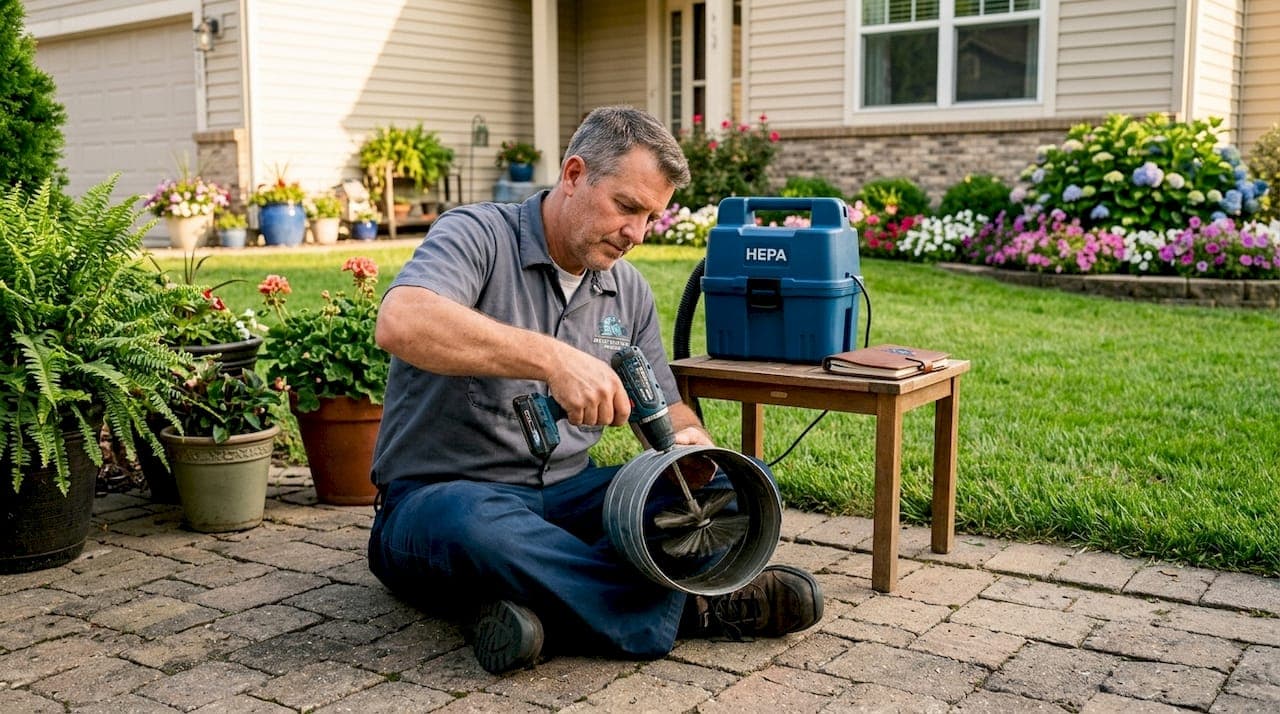
Three tool categories form the core of any green duct cleaning process. Rotary brushes dislodge compacted dust and debris from duct walls. Compressed air whips blast loosened particles toward the collection point. HEPA-filtered vacuum systems then capture 99.97% of those particulates, preventing them from re-entering your living or working space. That 99.97% capture rate is the standard that separates genuine eco-friendly HVAC cleaning from basic shop-vac approaches.
Sustainable materials and chemical use
After mechanical cleaning, the only finishing materials that belong in an eco-friendly workflow are EPA-approved, non-toxic antimicrobials, and only when microbial growth is confirmed. Non-toxic, biodegradable sprays and ecological sealants reduce VOC emissions and extend duct lifespan without leaving harmful residues. Chemical sealants used as a substitute for physical cleaning are not eco-friendly. They trap debris inside the duct rather than removing it.
| Tool or Material | Function | Eco-Friendly Attribute |
|---|---|---|
| Rotary brushes | Agitate and dislodge debris | No chemicals required |
| Compressed air whips | Move debris to collection point | Zero waste byproduct |
| HEPA vacuum systems | Capture 99.97% of particulates | No airborne re-release |
| EPA-approved antimicrobials | Post-cleaning microbial control | Non-toxic, biodegradable |
| Bio-based duct sealants | Seal leaks and restore airtightness | Low VOC, renewable compounds |
Pro Tip: Verify that any vacuum used on your duct system carries a true HEPA rating, not just a "HEPA-style" label. The difference in filtration performance is significant, and only a certified HEPA filter meets the 99.97% capture standard.
How to perform each step of the green duct cleaning process?
A structured, step-by-step approach is what separates a thorough job from one that simply moves dust around. Each phase builds on the last, and skipping any step undermines the entire effort.
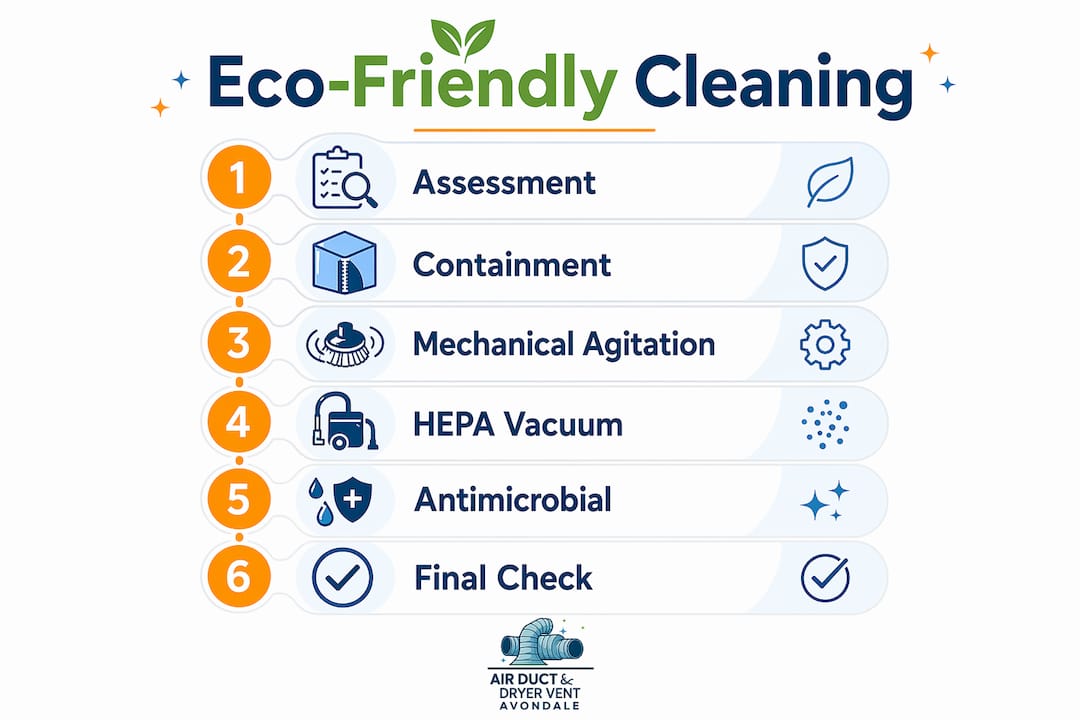
Step 1: Pre-service assessment and visual inspection
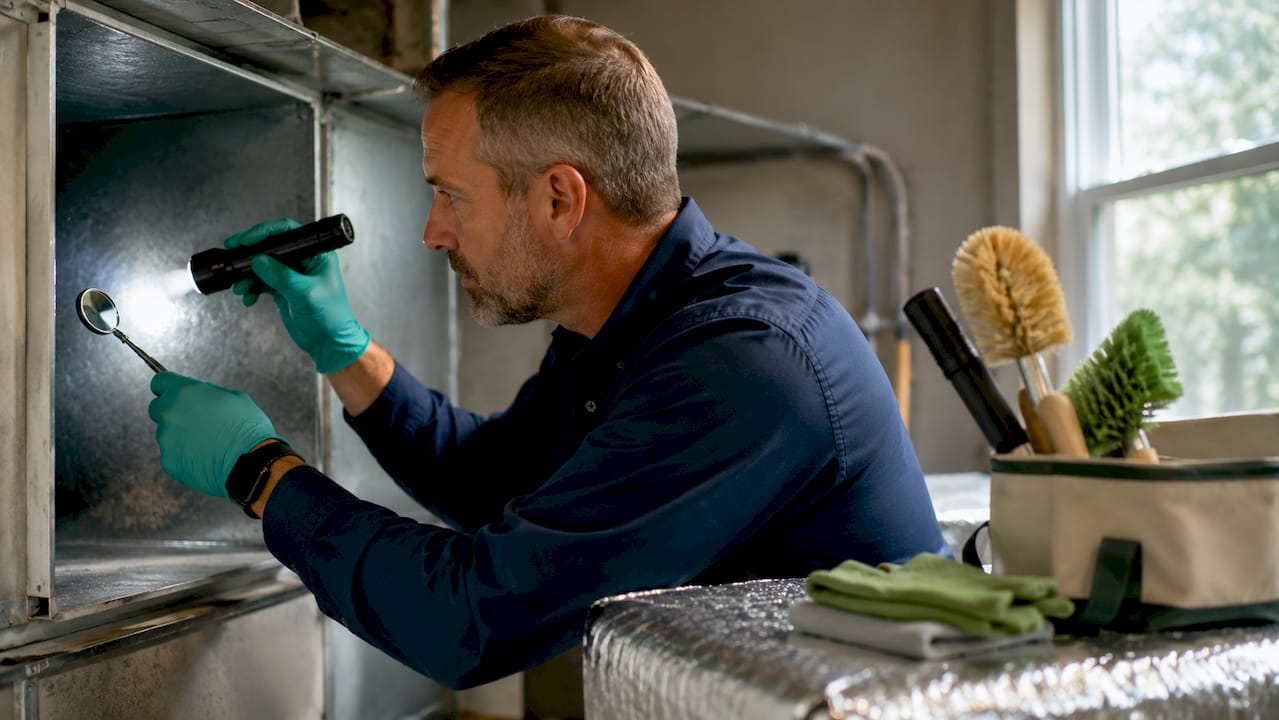
Start by inspecting every accessible section of the duct system, including supply registers, return air grilles, and the air handler unit. Look for visible debris, mold growth, pest activity, and damaged duct sections. Document your findings with photos. This baseline assessment tells you which areas need the most attention and whether any repairs are needed before cleaning begins. A routine duct inspection also reveals duct leaks that would otherwise waste energy and allow contaminants to bypass the filtration system.
Step 2: Set up negative pressure containment
Negative pressure containment is the step that makes eco-friendly cleaning genuinely safe. A high-powered HEPA vacuum unit connects to the main trunk line and creates suction throughout the system. This negative pressure keeps dust and debris moving toward the collection unit rather than escaping into the room. Manometers confirm that the pressure differential is correct before any agitation begins. Without verified containment, mechanical cleaning simply redistributes contaminants.
"Proper negative pressure containment is not optional. It is the single step that determines whether eco-friendly duct cleaning actually protects your indoor air or just rearranges the problem."
Step 3: Mechanical agitation
With containment confirmed, rotary brushes and compressed air whips work section by section through the duct system. Technicians move from the farthest supply registers back toward the main trunk line, pushing debris toward the HEPA vacuum collection point. This directional approach prevents already-cleaned sections from being re-contaminated. The NADCA ACR 2021 Edition requires this physical agitation as the primary cleaning method, not a supplemental one.
Step 4: HEPA vacuuming and debris collection
As agitation dislodges debris, the HEPA vacuum system captures it continuously. Technicians also vacuum all accessible interior duct surfaces after brushing to remove any remaining particulate. The collection unit's filter must be inspected and, if needed, replaced before the job starts. A clogged filter reduces suction and defeats the purpose of the entire setup.
Pro Tip: Ask your cleaning provider to show you the debris collected in the HEPA unit after the job. The volume and type of material tells you a lot about the condition of your system and whether the cleaning was thorough.
Step 5: Optional antimicrobial application
If the pre-service inspection confirmed active mold or bacterial growth, an EPA-approved, non-toxic antimicrobial spray is appropriate at this stage. Apply it only to affected areas, not as a blanket treatment for the entire system. The EPA is clear that chemical biocides should never replace physical cleaning. They are a targeted finishing step, not a shortcut.
Step 6: Final inspection and documentation
Walk the entire system again after cleaning. Check that all access panels are resealed, registers are reinstalled, and the air handler is reassembled correctly. Document the post-cleaning condition with photos and compare them to your pre-service baseline. This verification step is required under NADCA guidelines and gives you a clear record of the work completed.
What common mistakes and challenges arise during eco-friendly duct cleaning?
Even well-intentioned cleaning efforts can fall short when key steps are skipped or misunderstood. These are the most common errors and how to avoid them.
- Cleaning only part of the system. Neglecting exterior vents or supply registers causes immediate re-contamination. The entire duct path must be addressed in a single session.
- Skipping containment setup. Without negative pressure, mechanical agitation releases debris into the room. This is the opposite of environmentally safe duct maintenance.
- Over-relying on chemical biocides. Spraying antimicrobials without completing physical cleaning first traps debris in place and introduces unnecessary chemicals into your air supply.
- Ignoring duct leaks. Leaky ducts pull unfiltered air from attics, crawl spaces, and wall cavities directly into your living area. Cleaning the ducts without sealing the leaks solves only half the problem.
- Using non-HEPA vacuums. Standard shop vacuums exhaust fine particulates back into the air. Only true HEPA filtration meets the capture standard required for genuine eco-friendly HVAC cleaning.
Pro Tip: A good maintenance program, including yearly inspections, regular filter changes, and moisture control, reduces how often you need deep cleaning. Prevention is always more sustainable than repeated remediation.
How can sustainable duct materials and long-term maintenance improve HVAC performance?
Eco-friendly duct cleaning is one part of a larger picture. The materials your ducts are made from, and how well they are maintained over time, determine your system's long-term environmental impact.
Duct material choices matter more than most homeowners realize. Recyclable steel ducts and closed-cell rigid insulation improve HVAC distribution efficiency by 15–25% compared to standard alternatives. That efficiency gain directly reduces energy consumption and carbon output. Standards like LEED, ASHRAE, and NADCA all recognize sustainable duct material selection as a meaningful contributor to building performance.
Internal duct sealing with bio-based, nonallergenic compounds is one of the most cost-effective sustainability strategies available. It extends duct lifecycle, reduces waste from premature replacement, and cuts energy loss from leaks. This approach aligns with circular economy principles by restoring existing infrastructure rather than discarding it.
Proper duct sealing and insulation in unconditioned spaces, such as attics and crawl spaces, also prevents moisture intrusion. Moisture is the primary driver of mold growth inside duct systems. Controlling it reduces the need for chemical treatments and keeps your indoor air quality consistently high between cleaning cycles.
- Recyclable steel ducts reduce material waste at end of life and support LEED certification goals.
- Closed-cell rigid insulation maintains thermal efficiency and resists moisture better than flexible duct alternatives.
- Bio-based internal sealants restore airtightness without introducing VOCs or synthetic chemicals.
- Vapor barriers in unconditioned spaces prevent condensation that leads to mold and structural duct damage.
| Sustainability Factor | Standard or Approach | Benefit |
|---|---|---|
| Recyclable duct materials | LEED, NADCA | Reduces lifecycle waste and energy use |
| Rigid insulation | ASHRAE standards | Improves thermal retention by 15–25% |
| Bio-based internal sealing | Circular economy practice | Extends duct life, cuts replacement waste |
| Moisture and vapor control | EPA indoor air quality guidelines | Prevents mold, reduces chemical treatment need |
Why mechanical cleaning beats chemical shortcuts every time
After years of working in and around HVAC systems, I have seen the same pattern repeat itself. A homeowner gets a low-cost quote that promises "sanitization" and "deodorization." What they actually get is a chemical spray applied to ducts that were never physically cleaned. The smell improves for a few weeks. Then the dust, allergens, and debris that were never removed start circulating again.
The marketing around chemical-heavy duct treatments is genuinely misleading. True eco-friendly HVAC cleaning is not about what you spray. It is about what you remove. Mechanical source removal, verified containment, and HEPA capture are the only methods that actually reduce the particulate load in your air supply. Everything else is cosmetic.
My honest recommendation: treat your duct system as a long-term asset, not a one-time fix. Schedule a DIY inspection between professional cleanings, change filters on schedule, and address leaks as soon as you find them. When you do hire a professional, ask specifically whether they follow NADCA ACR 2021 Edition standards and whether they use certified HEPA equipment. Those two questions will filter out most of the shortcuts.
The broader environmental impact of responsible duct cleaning is real but often overlooked. A well-maintained, airtight duct system uses less energy, which means lower emissions from your HVAC unit over its lifetime. That is a tangible contribution to a smaller carbon footprint, and it starts with getting the cleaning workflow right.
— Shaun
Airanddryerventcleaningavondale's approach to green duct cleaning
Airanddryerventcleaningavondale serves homeowners and small business owners in Avondale, Arizona, with professional duct cleaning built around mechanical source removal, certified HEPA vacuuming, and EPA-compliant chemical use.
Their commercial duct cleaning service uses rotary brushes, compressed air whips, and HEPA-filtered equipment to meet NADCA standards on every job. For properties with aging or leaking ductwork, Airanddryerventcleaningavondale also offers duct sealing and air vent replacement using low-VOC materials that extend system life without adding chemical waste. If you want to know exactly what is circulating in your air before scheduling a cleaning, their indoor air quality testing service gives you a clear baseline. Flexible scheduling, including after-hours appointments, makes it easy to fit a professional cleaning into your routine.
FAQ
What is the most important step in eco-friendly duct cleaning?
Negative pressure containment is the most critical step. It prevents loosened debris from escaping into your living space during mechanical agitation, making the entire cleaning process genuinely safe and effective.
When should chemical biocides be used in duct cleaning?
The EPA states that chemical biocides should only be applied after physical cleaning is complete and only when microbial growth is confirmed. They are never a substitute for mechanical source removal.
How often should ducts be cleaned sustainably?
A yearly inspection combined with regular filter changes and moisture control reduces the need for frequent deep cleaning. Most systems benefit from a full professional cleaning every 3–5 years, depending on occupancy and local conditions.
What does NADCA ACR 2021 Edition require?
The NADCA ACR 2021 Edition requires pre-assessment, negative pressure containment, physical agitation using mechanical tools, and post-cleaning validation to confirm the system is clean before the job is considered complete.
Can duct sealing replace duct cleaning?
No. Sealing addresses air leakage and energy loss, while cleaning removes accumulated debris and particulates. Both are part of a complete, sustainable air duct management program and should be performed together when the system requires it.
Key takeaways
A workflow for eco-friendly duct cleaning requires mechanical source removal, verified HEPA containment, and EPA-compliant chemical use to deliver lasting indoor air quality and energy efficiency gains.
| Point | Details |
|---|---|
| Mechanical source removal first | Rotary brushes and HEPA vacuums must complete physical cleaning before any chemical is applied. |
| Containment is non-negotiable | Negative pressure verified by manometer prevents debris from re-entering indoor air during cleaning. |
| Chemicals are a last resort | EPA-approved antimicrobials apply only to confirmed microbial growth, never as a primary cleaning method. |
| Sustainable materials extend duct life | Recyclable steel and bio-based sealants improve efficiency by 15–25% and reduce lifecycle waste. |
| Maintenance reduces cleaning frequency | Yearly inspections, filter changes, and moisture control cut the need for repeated deep cleaning. |