
TL;DR:
- HVAC systems pose fire risks from electrical faults, dust buildup, and neglected dampers that often go unnoticed. Regular maintenance, inspections, and professional servicing significantly reduce potential hazards and ensure safety. Treat HVAC upkeep as essential fire prevention to protect properties and lives effectively.
Your HVAC system runs quietly in the background every single day, and that invisibility is exactly what makes it dangerous. Most fires traced back to heating and cooling systems start with something nobody noticed: a dusty duct, a frayed wire, a damper that stopped working years ago. To prevent HVAC fire hazards before they become emergencies, you need more than a once-a-year filter swap. This article walks you through the real fire risks hiding in your system, what to do before, during, and after maintenance, and the specific steps that separate a safe property from a liability.
Table of Contents
- Key takeaways
- Common HVAC fire hazards you need to know about
- Preparing for HVAC fire safety: tools, inspections, and checklists
- Step-by-step HVAC fire hazard prevention and maintenance
- Troubleshooting common HVAC fire prevention mistakes
- Verifying your prevention efforts actually work
- My take on why most properties are under-protected
- Get professional HVAC fire safety help in Avondale
- FAQ
Key takeaways
| Point | Details |
|---|---|
| Electrical faults are a top cause | Arc faults start half of all home electrical fires; surge protection and wiring checks are non-negotiable. |
| Dust and lint are silent accelerants | Accumulated debris in ducts and vents creates fuel for fire that builds undetected over months. |
| Damper access matters as much as dampers | You cannot inspect or fix what you cannot reach; access panels are a compliance requirement, not an option. |
| Shutdown timing changes everything | Cutting HVAC power at the wrong moment during a fire can spread smoke instead of containing it. |
| Verification closes the loop | Scheduled professional inspections and written records confirm your prevention efforts are actually working. |
Common HVAC fire hazards you need to know about
Most people associate house fires with candles or cooking accidents. What they rarely consider is that fire risks in HVAC systems are building up inside walls, ceilings, and mechanical rooms every single day. Knowing what you are up against makes everything that follows much easier to act on.
Electrical faults and arc events
Wiring problems are one of the most overlooked fire threats in any HVAC setup. Arc faults cause 50% of home electrical fires, and HVAC systems carry significant electrical loads that stress wiring over time. Loose connections, damaged insulation, and aging components all create conditions where arcing can ignite nearby materials before any alarm sounds.
Arc fault circuit interrupters, commonly called AFCIs, cut that risk considerably. Studies show they reduce wiring-related fires by 40%, and pairing them with properly installed surge protection adds another layer of defense. The electrical side of HVAC fire prevention is not optional. It is where fires tend to start.
Dust, lint, and debris accumulation
Dust does not just lower air quality. It fuels fires. When debris coats heating elements, motor housings, and the inner walls of your ductwork, you have created a fire-ready environment inside the system you depend on most. Dryer vents are particularly notorious for this. Lint is highly flammable, builds fast, and is completely invisible until someone pulls the vent line and sees what has collected.
Beyond dryers, bathroom exhaust fans and refrigerator condenser coils carry the same risk. Cleaning these components every 6 to 12 months is one of the most direct ways to prevent air conditioner fires and heating system ignitions.
Faulty or neglected fire and smoke dampers
Fire dampers are designed to close automatically and stop flames from traveling through your ductwork during a fire. Smoke dampers do the same for smoke. Both are critical, and both fail silently when they are not tested and maintained. NFPA standards require damper inspection one year after installation, then every four years for most facilities. Neglected dampers drop from 98% closure reliability down to 57%, according to FM Global data. That difference is enormous when lives depend on it.
Overheated motors and heating elements
Heat-producing components inside your HVAC unit, especially older motors and electric heating elements, can overheat when airflow is restricted or when parts begin to fail. Restricted airflow caused by clogged filters is a major contributing factor. When a system has to work harder to push air through dirty ducts and blocked returns, motor temperatures climb, and the risk of component failure rises with them. Poorly maintained filters complicate both fire response and day-to-day operation.
Preparing for HVAC fire safety: tools, inspections, and checklists
Before you touch anything inside your system, get your preparation right. Good preparation is what separates a productive safety check from a missed hazard.

What you need before you start
Gather these items before any HVAC inspection or cleaning session:
- A flashlight or inspection light for dark duct spaces
- A screwdriver set for accessing panels and electrical boxes
- A non-contact voltage tester for checking live circuits safely
- A shop vacuum or blower for removing debris from accessible areas
- A camera or phone to document what you find
- Replacement air filters sized to your system
- Personal protective equipment, including a dust mask and safety glasses
Your visual inspection checklist
Walk through these steps every time you conduct a self-inspection:
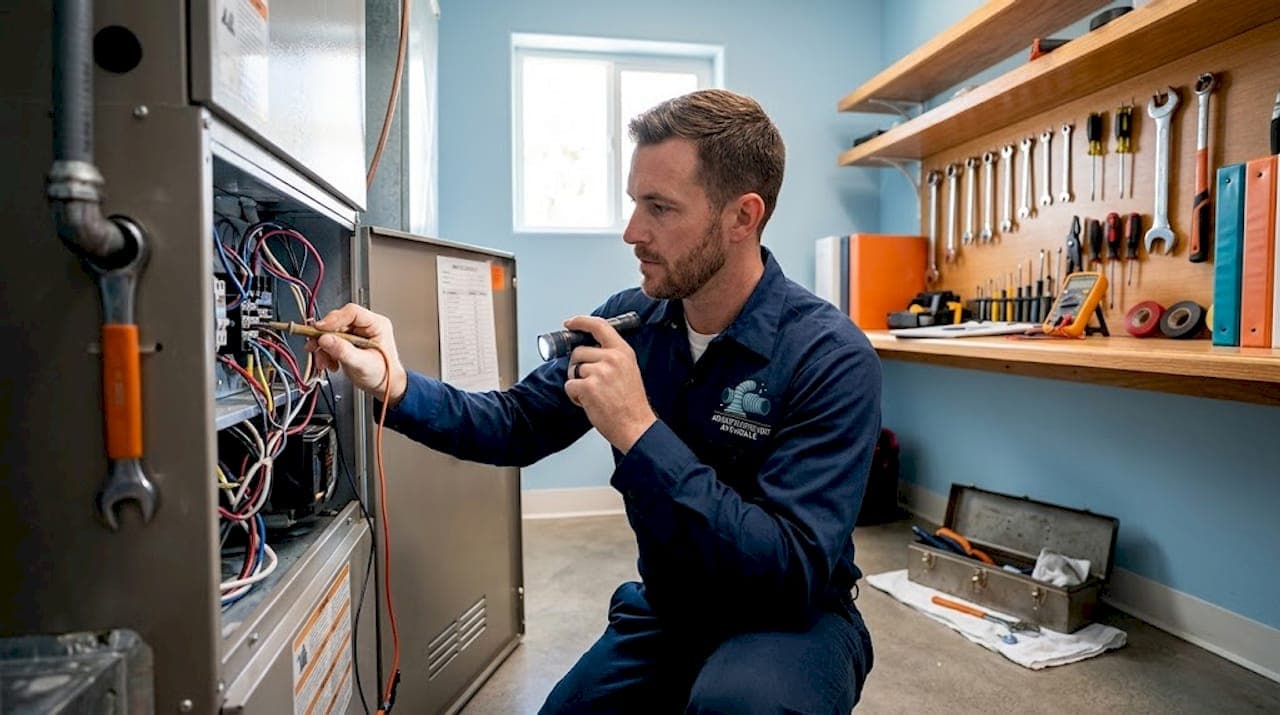
- Check all accessible wiring connections for signs of scorching, fraying, or heat discoloration
- Look at your air filter and note color, thickness of debris, and whether airflow feels restricted
- Inspect exhaust fans in bathrooms and kitchens for visible dust or grease buildup
- Locate your damper access panels and confirm they are unobstructed
- Look for any unusual smells, especially burning or musty odors, near vents or the air handler
Pro Tip: Take dated photos during every inspection. A photo record lets you compare conditions over time and serves as documentation if you ever need to show compliance during a facility audit.
Understanding fire and smoke dampers before you inspect them
Fire dampers sit inside your ductwork at the point where ducts pass through fire-rated walls or floors. When a fusible link melts at a set temperature, the damper closes. Smoke dampers operate on signals from your fire alarm system rather than heat alone. You need to know which type you have and where they are located before you can meaningfully inspect them.
Physical access to dampers is a requirement, not a convenience. NFPA mandates that access doors be installed for each damper so inspection and maintenance are actually possible. If your building lacks those panels, you already have a compliance problem.
| Damper type | Trigger mechanism | Inspection interval |
|---|---|---|
| Fire damper | Fusible link (heat) | Every 4 years (NFPA standard) |
| Smoke damper | Fire alarm signal | Every 4 years (NFPA standard) |
| Combined fire/smoke | Both triggers | Every 4 years (NFPA standard) |
| Hospital fire dampers | Fusible link (heat) | Every 6 years (NFPA exception) |
Step-by-step HVAC fire hazard prevention and maintenance
Now for the execution. These are the specific steps that actually reduce fire risks in HVAC systems. Work through them in order and document each one as you go.
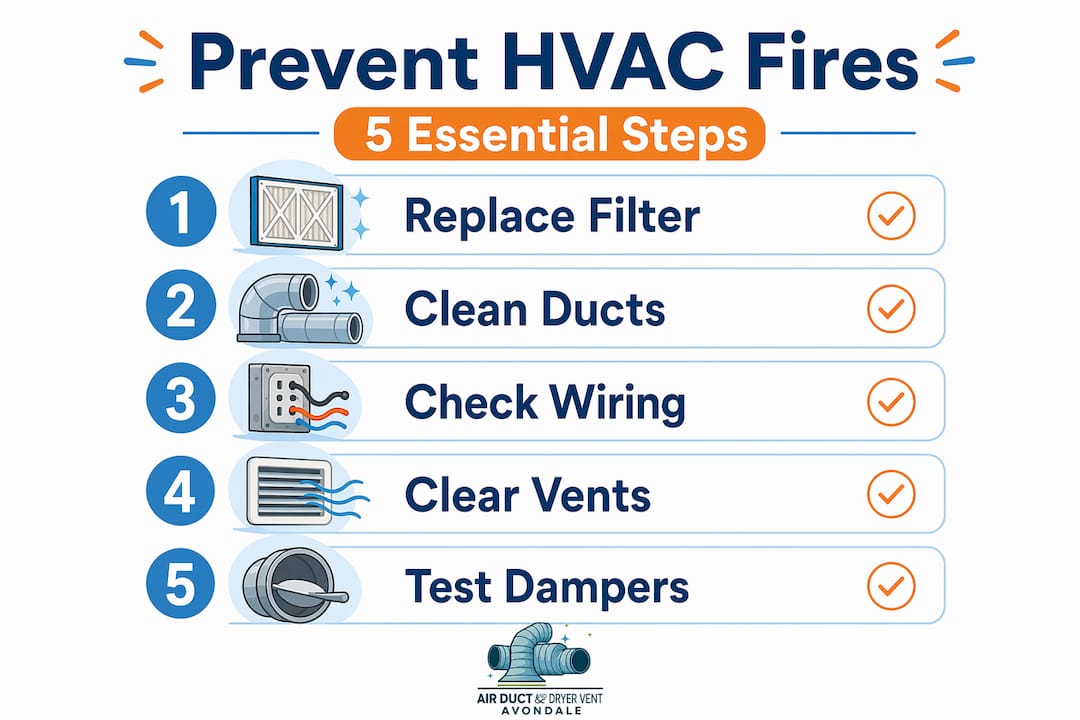
Step 1: Replace your air filter on schedule
This is the simplest and most frequently skipped step in HVAC maintenance for safety. Depending on your system and environment, filters need changing every one to three months. A clogged filter forces the blower motor to work harder, raises temperatures inside the air handler, and gives dust a place to collect directly next to heating elements.
If you want professional help staying on schedule, air filter replacement services from Airanddryerventcleaningavondale take the guesswork out of the timing and the sizing.
Step 2: Clean your ducts and vents thoroughly
Duct cleaning goes deeper than what a vacuum attachment can reach. Inside the ductwork of a home or commercial building, years of dust, skin cells, construction debris, and sometimes mold create a buildup that sits close to heating components.
For residential properties, air duct and vent cleaning should happen every three to five years at minimum, and more often in dusty climates like Avondale, Arizona. For commercial properties, the stakes and the traffic load are higher. Commercial duct cleaning from a professional service is the only way to be confident the job is done completely.
Step 3: Clean exhaust fans and condenser coils
Bathroom exhaust fans collect lint and dust on their blades and housings over time. That material sits near an electric motor and creates a localized fire risk that most homeowners never think about. Wipe down fan blades and housing with every seasonal HVAC check.
Refrigerator and HVAC condenser coils need the same attention. Frequent cleaning reduces fire risk in heating elements by 45%. That is not a marginal improvement. It is a nearly cut-in-half reduction in risk from one cleaning step.
Step 4: Inspect and secure electrical connections
Turn off power at the breaker before opening any electrical panel. Once safe, look for connections that have loosened over time, wiring that shows heat discoloration or melted insulation, and any components that show burn marks. Tighten loose connections and replace any damaged wiring before restoring power.
If your HVAC system does not yet have AFCI protection on its circuit, speak with an electrician about adding it. The fire prevention payoff is significant.
Step 5: Install and properly position surge protection
Surge protective devices are an underused tool in HVAC fire prevention. They stop voltage spikes from reaching sensitive components and prevent 90% of fire-related surges. However, installation matters enormously. Every extra inch of lead wire between the device and the panel increases let-through voltage by 20%. Keep those lead wires as short as physically possible.
Pro Tip: If you are adding surge protection to an HVAC unit, mount the device as close to the unit's disconnect as possible and use a licensed electrician for installation. Correct positioning makes the difference between real protection and a false sense of security.
Step 6: Know the correct HVAC shutdown sequence during a fire
This is where many building owners make a critical mistake. Cutting power to your HVAC system at the wrong moment can make a fire situation worse. Shutting down air handling units before pressurization fans are running can remove the barriers that keep smoke from spreading into corridors and stairwells.
Most modern commercial buildings have fire alarm systems that manage HVAC shutdown automatically in the correct sequence. If yours does not, or if you are unsure, consult with your fire safety engineer about your specific setup. For residential properties, the general guidance is to let your system shut down through its automated tie-in with your smoke detectors rather than manually cutting the breaker.
Step 7: Clear dryer vents completely
Dryer vent fires are among the most preventable fires in residential HVAC. Lint accumulates with every load of laundry and slowly chokes the vent line until heat has nowhere to go. Dryer vent cleaning on an annual basis, or more often for households that do heavy laundry, removes that fuel source entirely.
Troubleshooting common HVAC fire prevention mistakes
Even well-intentioned homeowners and facility managers fall into predictable traps. Here are the most common mistakes and how to correct them.
-
Inaccessible damper panels: 70% of facilities find critical damper failures during inspections. One of the biggest reasons inspectors cannot complete the job is missing or blocked access panels. If your dampers cannot be reached, they cannot be confirmed as functional.
-
Skipping duct cleaning because the system "seems fine": Dust and debris do not produce obvious symptoms until they are severe. By the time your system sounds or smells different, the buildup is already significant. Schedule cleaning on a calendar, not based on how the system feels.
-
Misunderstanding when to shut off HVAC during a fire: Many people assume cutting all power is the safest move. Timing and sequence in shutdown are what actually protect escape routes. Acting without a plan can remove pressurization that was protecting a stairwell.
-
No documentation of inspections or maintenance: Without records, you cannot prove compliance, identify trends, or know when the last service was performed. A simple dated log stored with your HVAC records is far better than relying on memory.
-
Ignoring warning signs of electrical trouble: Flickering lights near HVAC circuits, breakers that trip repeatedly, or any burning smell near the air handler are signals that something is wrong. These are not nuisances to reset and ignore. They are warnings that need immediate attention from a qualified technician.
-
Letting filter replacement slip past its date: Poorly maintained filters reduce airflow and complicate fire response. The fix takes five minutes and costs a few dollars. There is no reasonable excuse for skipping it.
Verifying your prevention efforts actually work
Completing maintenance steps is not the same as confirming they worked. Verification is the part of HVAC fire safety that most people skip entirely, and it is the part that closes gaps before they become emergencies.
Scheduling professional damper tests
NFPA standards give you a clear schedule. Damper inspections happen one year after installation, then every four years. For the vast majority of property owners, this is not a DIY task. Professional damper testing involves physically cycling each damper, checking for full closure, inspecting the fusible link, and documenting the results in writing.
Well-maintained dampers achieve 98% closure reliability versus 57% for neglected ones. That 41-point gap in reliability is the clearest possible argument for keeping your inspection schedule current.
Keeping records and tracking maintenance cycles
Build a simple maintenance log with these columns:
| Service type | Date completed | Next due date | Technician or provider |
|---|---|---|---|
| Air filter replacement | Record date | 1 to 3 months out | DIY or service name |
| Duct cleaning | Record date | 3 to 5 years out | Provider name |
| Damper inspection | Record date | Per NFPA schedule | Licensed inspector |
| Electrical check | Record date | Annually | Licensed electrician |
| Dryer vent cleaning | Record date | Annually | Provider name |
Pro Tip: Set calendar reminders for every maintenance item on the day you complete the service. Doing it immediately, while the details are fresh, means you will never have to guess when something is due.
Knowing when to replace rather than repair
Some HVAC components reach the end of their reliable service life. Motors that run hot, dampers that do not fully close even after lubrication and adjustment, and ductwork with cracks or corrosion are candidates for replacement rather than another repair. Repair is the right answer until it is not. When a component has failed repeatedly or cannot be brought back to full function, replacement is the fire-safe choice.
My take on why most properties are under-protected
I have seen a lot of HVAC systems in the Avondale area, and the pattern is consistent. Homeowners and business owners are not careless. They are busy, and HVAC fire risks are silent. The system runs, the air blows, and nothing obvious signals that lint is packing tighter or that a damper has stopped responding. So maintenance gets pushed to later, and later never comes.
What I have learned from years in this field is that the properties that avoid serious fire incidents share one trait: they treat HVAC maintenance as a fixed recurring obligation, not something done in response to a problem. They do not wait for a burning smell or a breaker trip to call someone. They have a schedule, they keep records, and they bring in professionals for the things that genuinely require professional tools and training.
The balance between DIY and professional help is actually not complicated. Filter swaps, exhaust fan wipe-downs, and visual inspections are things you can do yourself. Duct cleaning, damper testing, and electrical diagnosis require equipment and expertise that most property owners do not have. Knowing that distinction saves money and, more critically, prevents the kind of quiet failure that causes fires.
My honest advice: stop thinking of HVAC maintenance as an expense and start treating it as the fire prevention system it actually is. You insure your property. You test your smoke alarms. Maintaining your HVAC to the same standard is the logical next step.
— Shaun
Get professional HVAC fire safety help in Avondale
If reading through this guide made you realize your system is overdue for a serious look, Airanddryerventcleaningavondale is ready to help. The team serves residential and commercial properties throughout Avondale, Arizona, with professional air duct and vent cleaning that goes far deeper than any DIY approach can reach. For business properties with higher occupancy and greater compliance requirements, the commercial duct cleaning service is built specifically for those demands. And for homeowners worried about dryer lint, professional dryer vent cleaning removes the single most flammable material in most residential HVAC setups. Flexible scheduling, including after-hours appointments, means there is no reason to keep putting this off. Reach out today and schedule a service before a small oversight becomes a serious problem.
FAQ
Can HVAC systems actually catch fire?
Yes, HVAC systems can and do catch fire. Electrical faults, lint accumulation, dust-coated heating elements, and faulty dampers are all documented ignition sources in both residential and commercial systems.
How often should I clean my air ducts to prevent fires?
Most homes benefit from air duct cleaning every three to five years. Properties in dusty climates, those with pets, or buildings that have undergone recent construction should clean more frequently to prevent debris from reaching dangerous levels.
What are the must-do HVAC fire safety steps for business owners?
Business owners should prioritize four things: regular duct and filter maintenance, damper inspection on the NFPA schedule, documented electrical checks, and a clear fire response plan that includes the correct HVAC shutdown sequence.
How does surge protection help prevent HVAC fires?
Surge protective devices stop voltage spikes from damaging HVAC components, preventing 90% of fire-related surges. Proper installation with the shortest possible lead wires is critical to making that protection effective.
When should I call a professional instead of doing HVAC fire prevention myself?
Call a professional for duct cleaning, damper testing, electrical diagnosis, and any repair that involves opening the air handler or ductwork. These tasks require specialized tools and training, and mistakes can create fire risks rather than eliminate them.