
TL;DR:
- HVAC air quality devices include monitors, purifiers, and ventilators to improve indoor air health and efficiency. Choosing the right system depends on your space size, pollutant concerns, and budget, with regular maintenance essential for effectiveness. A monitor guides appropriate device selection, and automation can optimize performance while reducing energy costs.
HVAC air quality devices are specialized tools integrated with or paired alongside your heating, ventilation, and air conditioning system to monitor, purify, or control indoor air for better health and energy efficiency. The full hvac air quality devices list covers three core categories: monitors that detect pollutants, purifiers that remove them, and ventilators that replace stale air with fresh. Brands like IQAir, RenewAire, Carrier, AirGradient, and PurpleAir lead the field with products built for both residential and commercial use. Choosing the right combination of indoor air quality solutions depends on your building size, your specific pollutant concerns, and your budget.
1. What types of HVAC air quality monitors are available?
Air quality monitors are diagnostic tools, not curative devices. They detect what is wrong so you can act on it with the right purification or ventilation equipment.
Single-parameter vs. multi-parameter monitors
Single-parameter monitors track one pollutant, such as carbon monoxide or radon. Multi-parameter monitors track several at once, including CO2, volatile organic compounds (VOCs), PM2.5 particulate matter, temperature, and humidity. Multi-parameter devices give you a complete picture of indoor conditions without needing multiple units.
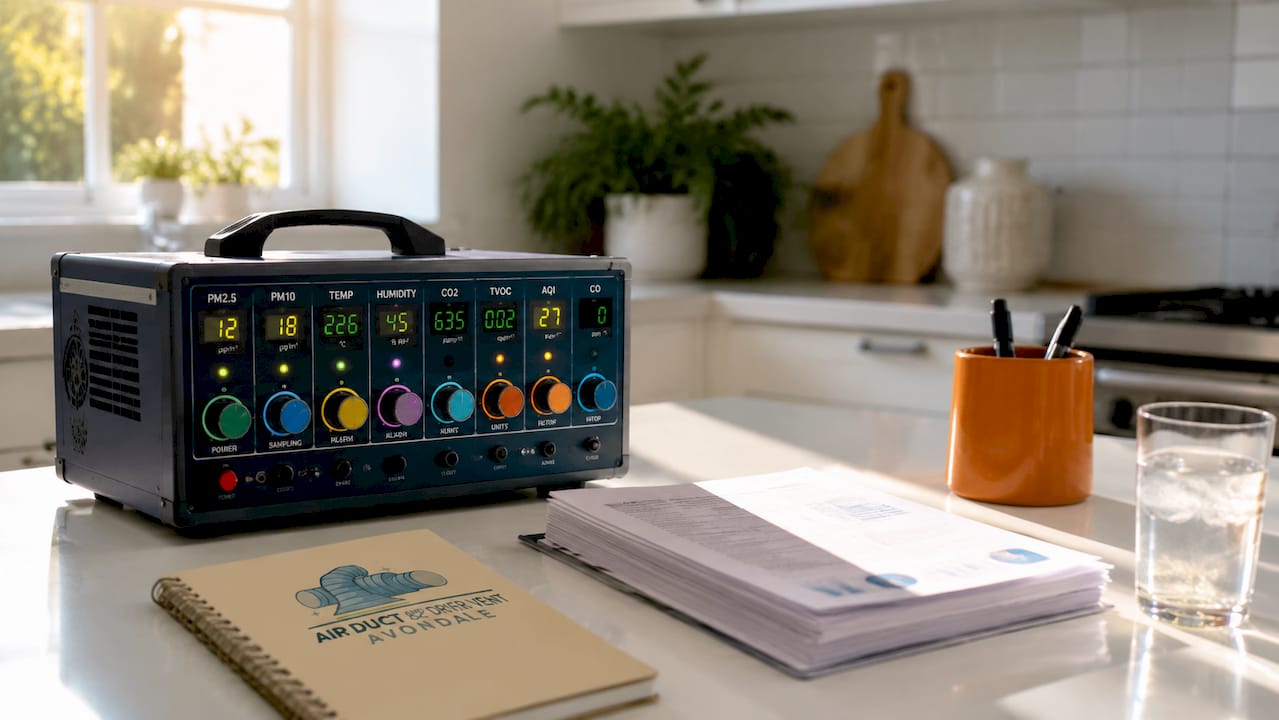
The best air quality devices in this category update readings frequently. Monitors updating every minute help you link specific activities, like cooking or cleaning, to air quality changes. That connection drives real behavioral adjustments that improve your indoor environment over time.
Notable monitor models
- AirGradient One: An open-source monitor that tracks CO2, PM2.5, VOCs, NOx, temperature, and humidity. It integrates with home automation platforms and displays data locally.
- PurpleAir Zen: A wall-mounted monitor designed for indoor use. It connects to the PurpleAir network and provides real-time PM2.5 readings with a color-coded display.
- Qingping Air Monitor Pro: A multi-sensor device covering CO2, PM2.5, PM10, VOCs, temperature, and humidity. It works with Apple HomeKit and other smart home ecosystems.
Pro Tip: Read your monitor's trend data over 7–30 days rather than reacting to single spikes. Short-term fluctuations are normal and rarely require immediate HVAC adjustments.
2. HVAC-integrated air purification devices and systems
Air purification devices work inside or alongside your HVAC system to actively remove particles, microbes, and chemical pollutants from circulating air. Unlike portable room purifiers, whole-home units treat every room served by your ductwork.
MERV-rated filters
MERV stands for Minimum Efficiency Reporting Value. Higher MERV ratings capture smaller particles. A MERV-13 filter captures most bacteria, smoke particles, and fine dust. The tradeoff is airflow resistance. High-MERV filters can reduce airflow if your HVAC fan is not rated for the increased static pressure. That restriction raises energy bills and can damage the blower motor over time.
UV-C germicidal lights
UV-C lights mount inside the air handler or ductwork and destroy bacteria, mold spores, and viruses as air passes through. Installation typically takes 15 minutes for a basic coil-mounted unit. More complex duct-mounted systems take longer. UV-C bulbs degrade within 9–12 months and require scheduled replacement to maintain germicidal effectiveness.
Energy Recovery Ventilators (ERVs)
ERVs exchange stale indoor air with fresh outdoor air while transferring heat and moisture between the two airstreams. This keeps your heating or cooling load low while delivering continuous fresh air. ERVs prevent the negative pressure problems caused by exhaust-only fans, which pull unfiltered outdoor air through gaps in walls and foundations. RenewAire is one of the most recognized ERV manufacturers in the residential and light commercial market.
Key purification device comparison:
| Device | Primary function | Installation time | Maintenance need |
|---|---|---|---|
| MERV-13 filter | Particle filtration | Under 5 minutes | Every 60–90 days |
| UV-C germicidal light | Microbial control | 15 minutes to several hours | Bulb every 9–12 months |
| Energy Recovery Ventilator | Balanced fresh air exchange | Several hours | Filter cleaning quarterly |
| Whole-home HEPA unit | Fine particle removal | Several hours | Filter annually |
Pro Tip: Always confirm your HVAC fan's static pressure rating before upgrading to a MERV-13 or higher filter. Your HVAC technician can check this in under 10 minutes and save you a costly blower motor repair.
3. How to choose the right devices for your space and budget
Selecting from the full range of indoor air quality solutions requires matching device capabilities to your actual problems. A monitor tells you what you have. A purifier or ventilator fixes it.
| Device type | Best for | Space size | Estimated cost range |
|---|---|---|---|
| Multi-parameter monitor | Diagnosing all pollutant types | Any size | $100–$300 |
| MERV-13 filter upgrade | Allergens, dust, pet dander | Small to large homes | $20–$60 per filter |
| UV-C germicidal light | Mold, bacteria, viruses | Any ducted system | $150–$700 installed |
| ERV system | Fresh air, odor control, humidity | Medium to large homes, commercial | $1,000–$3,500 installed |
| Whole-home HEPA purifier | Chemical pollutants, fine particles | Large homes, commercial | $800–$2,500 installed |
For small homes under 1,500 square feet, a multi-parameter monitor paired with a MERV-13 filter upgrade covers most allergen and particle concerns at low cost. For larger homes or commercial spaces, an ERV combined with UV-C lights and a smart monitor creates a complete system. Business owners with open-plan offices benefit most from whole-home HEPA units that handle high occupancy and variable pollutant loads.
Budget-conscious homeowners should start with a monitor to identify their actual problem before spending on purification hardware. Buying a UV-C system when your real issue is high CO2 from poor ventilation wastes money. The monitor tells you which device to buy next.
4. How smart HVAC sensors and automation improve air quality
Smart HVAC sensors connect your air quality monitors directly to your purification and ventilation equipment. Smart ecosystems where monitors and purifiers communicate activate purifiers only when air quality drops below a set threshold. That demand-driven operation reduces energy use compared to running purifiers continuously at full speed.
The practical benefits of connected systems include:
- Automatic fan speed adjustment: The purifier ramps up when PM2.5 rises during cooking or cleaning, then returns to low speed when air clears.
- CO2-triggered ventilation: ERVs or fresh air dampers open automatically when CO2 climbs above 1,000 parts per million, a level linked to reduced cognitive performance.
- Humidity alerts: Sensors alert you when indoor humidity drops below 30% or rises above 50%, the range recommended by the US EPA for health and mold prevention.
- Remote monitoring: Apps for AirGradient, PurpleAir, and Qingping let you check conditions from anywhere and receive push alerts for sudden pollutant spikes.
Pro Tip: Pair your smart monitor with a compatible ERV or purifier from the same ecosystem when possible. Devices that share a communication protocol, like Zigbee or Matter, respond faster and require less manual configuration than mixed-brand setups.
Automation does not replace professional assessment. A smart system can tell you that VOCs are elevated, but it cannot identify the source. Understanding air quality data as trends over weeks, rather than reacting to momentary readings, leads to better HVAC decisions and fewer unnecessary system changes. You can learn more about how HVAC systems and smart monitors work together to cut energy use and improve air quality.
5. Maintenance schedule to keep HVAC air quality systems effective
Every device on the hvac air quality devices list requires regular upkeep. Neglecting maintenance does not just reduce performance. It can damage your HVAC system and raise your energy bills.
- Replace MERV filters every 60–90 days. Clogged filters restrict airflow, force the blower motor to work harder, and can cause the heat exchanger to overheat. Homes with pets or allergy sufferers should replace filters closer to the 60-day mark.
- Replace UV-C bulbs every 9–12 months. A UV-C bulb that has passed its rated lifespan still glows but no longer produces enough germicidal radiation to be effective. Mark the replacement date on the unit when you install a new bulb.
- Clean ERV filters quarterly. ERV cores accumulate dust and debris that reduce heat transfer efficiency. Most residential ERV filters rinse clean with water and dry in a few hours.
- Schedule professional air duct cleaning every 3–5 years. Dust, mold spores, and debris accumulate inside ductwork regardless of how good your filters are. Professional duct cleaning removes buildup that filters cannot catch and restores airflow to designed levels.
- Have your HVAC system professionally inspected annually. A technician checks refrigerant levels, electrical connections, and blower motor condition. This inspection catches problems that degrade air quality before they become expensive failures.
- Test your air quality monitors annually. Electrochemical sensors in CO2 and VOC monitors drift over time. Some manufacturers offer calibration services. Others recommend replacing sensors every 2–5 years depending on the technology used.
Key takeaways
The most effective indoor air quality strategy combines a multi-parameter monitor, a correctly rated filtration system, and balanced ventilation through an ERV, maintained on a consistent schedule.
| Point | Details |
|---|---|
| Start with a monitor | Identify your actual pollutants before buying purification hardware. |
| Match filter rating to your fan | High-MERV filters can damage blowers not rated for increased static pressure. |
| Use ERVs for fresh air | ERVs deliver balanced ventilation without the negative pressure caused by exhaust fans. |
| Automate with smart sensors | Demand-driven purifier operation cuts energy use while maintaining healthy air. |
| Maintain on schedule | UV-C bulbs, filters, and ducts all have specific replacement timelines that affect system performance. |
What I've learned after years of seeing these systems in the field
The most common mistake I see homeowners and business owners make is buying a purifier before they know what they are actually dealing with. They install a UV-C light because they heard it kills mold, but their real problem is high CO2 from a poorly ventilated conference room. The UV-C does nothing for CO2. A monitor would have told them that in the first week.
The second mistake is treating exhaust fans as a ventilation solution. Bathroom and kitchen exhaust fans create negative pressure inside the building. That pressure pulls unfiltered outdoor air through every gap in your walls, around window frames, and through electrical outlets. An ERV from a brand like RenewAire solves this by exchanging air in a controlled, balanced way. The energy penalty is minimal compared to the air quality gain.
I also see people react to single spikes on their monitor and make drastic HVAC changes that were not needed. A PM2.5 spike during dinner is normal. A PM2.5 reading that stays elevated for three days is a problem worth investigating. Read your data over 7–30 days before you call a technician or change your filter schedule.
Finally, no device on any best air quality devices list performs well inside dirty ducts. A MERV-13 filter upstream of a duct system packed with five years of debris is fighting a losing battle. Clean ducts are the foundation. Everything else builds on top of that.
— Shaun
Professional HVAC air quality services in Avondale, AZ
Devices work best when the system behind them is clean and properly maintained. If your ducts have not been cleaned in several years, or if you have never had a professional indoor air quality test, that is the right place to start before investing in new hardware.
Airanddryerventcleaningavondale serves residential and commercial clients in Avondale, Arizona with air duct cleaning, air vent cleaning, dryer vent cleaning, and HVAC system inspections. The team identifies pollutant sources, removes built-up debris, and helps you determine which devices will actually solve your specific air quality problems. Flexible scheduling, including after-hours appointments, makes it straightforward to fit a service visit into a busy week. Contact Airanddryerventcleaningavondale for a professional assessment before your next device purchase.
FAQ
What is the difference between an air quality monitor and an air purifier?
A monitor detects and measures pollutants like CO2, VOCs, and PM2.5 but does not remove them. A purifier actively removes pollutants through filtration, UV-C light, or other treatment methods.
How often should HVAC filters be replaced for good air quality?
Most MERV-rated filters need replacement every 60–90 days. Homes with pets, allergy sufferers, or high dust levels should replace filters at the shorter end of that range.
Are UV-C lights safe to use in home HVAC systems?
UV-C lights installed inside air handlers or ductwork are safe because the UV radiation stays contained within the system. Occupants are never exposed to the light directly during normal operation.
What does an ERV do that a regular exhaust fan cannot?
An ERV exchanges stale indoor air with fresh outdoor air while recovering heat and moisture from the outgoing airstream. A standard exhaust fan simply expels air and creates negative pressure, pulling unfiltered air in through building gaps.
How do I know which HVAC air quality device I need first?
Start with a multi-parameter air quality monitor and run it for at least two weeks. The trend data will show which pollutants are consistently elevated and point you toward the right purification or ventilation solution.