
TL;DR:
- Proper thermostat settings and ceiling fan use significantly reduce cooling costs in Avondale.
- Sealing ductwork and regularly replacing filters prevent energy loss and improve indoor air quality.
- Small, consistent household habits outperform expensive upgrades in managing summer energy bills.
Avondale summers are brutal, and your electric bill proves it. Cooling accounts for 50% or more of a typical Arizona home's electric bill, which means your HVAC system is the single biggest lever you have for cutting monthly costs. But most homeowners and small business owners make the same mistake: they wait until things break or bills spike before taking action. This guide walks you through practical, research-backed strategies designed specifically for Avondale's climate, so you can reduce energy waste, improve indoor air quality, and stay comfortable all summer long without overhauling your entire system.
Table of Contents
- How to set your thermostat for maximum savings
- Fan settings: Choosing auto versus on for real savings
- Seal and maintain ductwork to prevent energy loss
- Air filters and indoor air quality: Save energy without sacrificing health
- Ceiling fans and smart ventilation: The final piece for comfort and savings
- Our take: Small changes, big wins for Avondale's energy bills and air quality
- Professional help for lasting HVAC efficiency in Avondale
- Frequently asked questions
Key Takeaways
| Point | Details |
|---|---|
| Smart thermostat settings | Set your thermostat between 78°F and 80°F when home and save about 2–3% per degree on cooling. |
| Use fan 'auto' mode | Keep your HVAC fan on 'auto' to reduce energy bills by up to $25 per month. |
| Seal your ducts | Fixing leaky ducts can prevent up to 20% energy loss and improve both air quality and comfort. |
| Change air filters regularly | Replace filters every 1–3 months to balance clean air and efficient system performance. |
| Harness ceiling fans | Strategic use of fans can let you raise the thermostat without sacrificing comfort or adding cost. |
How to set your thermostat for maximum savings
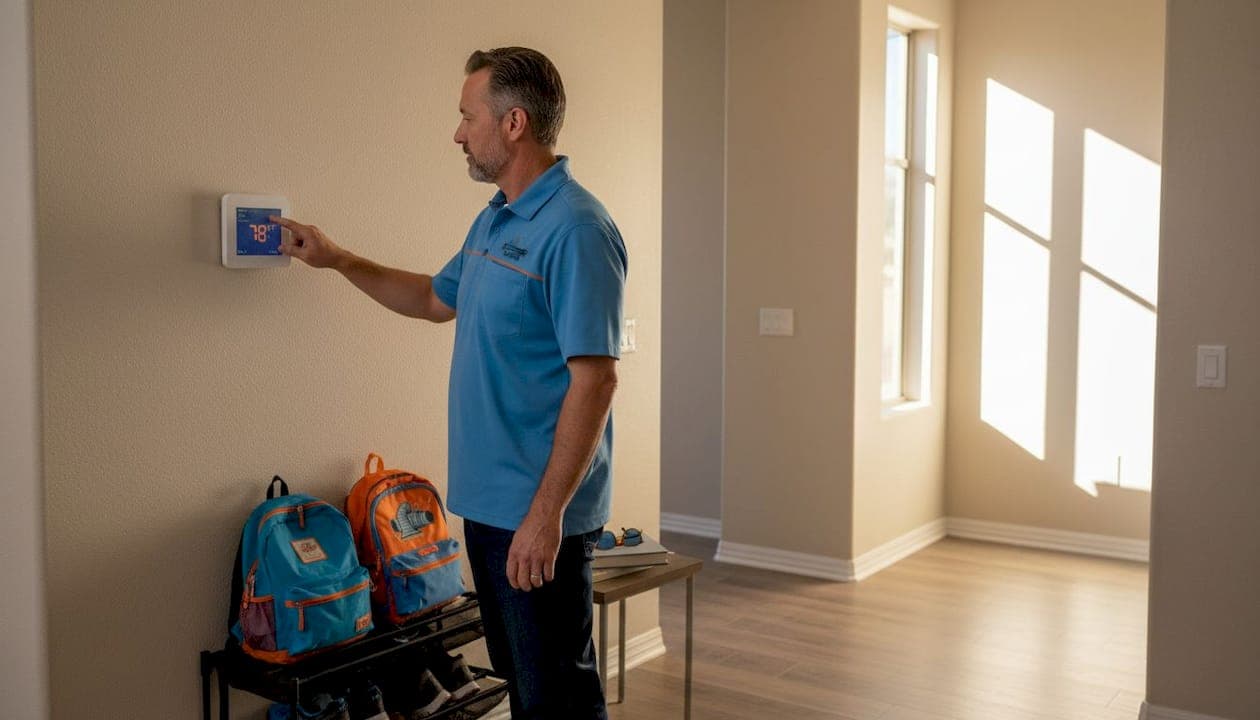
With the high cost of cooling firmly in mind, the thermostat is the best place to start. It's the control center for your entire system, and small changes here produce immediate, measurable results. The good news is that you don't need a fancy smart thermostat to benefit. You just need to know the right numbers.
The recommended setpoints for Avondale homes and businesses:
- Set your thermostat to 78–80°F when you're home and awake.
- Raise it to 85°F when you're away or at work during the day.
- Keep it at 82–83°F while sleeping if 80°F feels too warm at night.
- Avoid dropping the thermostat dramatically when you get home. Gradual changes are easier on the system and your wallet.
- Pair every thermostat setting with ceiling fans to extend the comfort range at higher setpoints.
SRP, Arizona's major utility, recommends these exact setpoints for cooling efficiency, estimating savings of about 2% to 3% per degree above 80°F. That means bumping your thermostat from 78°F to 83°F when you leave for work can trim roughly 10% to 15% off that portion of your bill, without any equipment purchase whatsoever.
One mistake we see constantly: people crank the AC down to 72°F the moment they walk in the door on a 112°F afternoon. This doesn't cool the house faster. Your system runs at the same speed regardless. What it does do is overshoot the target temperature and drive the runtime far longer than necessary. Moderate, planned setbacks outperform dramatic swings every single time.
"Every degree you raise your thermostat above 80°F during peak Avondale summer hours translates directly to dollars saved on your next bill. The math doesn't lie."
For homeowners who want to take things further, pairing these setpoints with efficient HVAC settings and regular system maintenance creates compounding savings over an entire season. You can also review HVAC maintenance tips to understand how thermostat strategy fits into the larger picture of system health.
Pro Tip: Use blackout curtains or solar shades on south and west-facing windows during peak afternoon hours. Blocking radiant heat from the sun reduces how hard your AC has to work, letting your thermostat setting do more of the heavy lifting.
Fan settings: Choosing auto versus on for real savings
Beyond thermostat settings, the way you run your system's fan can have a surprising impact on energy bills. This is one of the most overlooked controls in any home or business, and the right choice is almost always the same.
Your HVAC thermostat has two fan settings: Auto and On. Here's what each one actually does and what it costs you.
| Feature | Auto setting | On setting |
|---|---|---|
| Fan runs when? | Only during active cooling cycles | Continuously, 24/7 |
| Monthly energy cost | Lower | Higher by $15–$25/month |
| Air filtration | Standard, during cycles only | Slightly improved, continuous |
| Humidity control | Better (condenses moisture during cycles) | Worse (re-evaporates collected moisture) |
| Best for? | Most homes and businesses | Brief allergy relief periods only |
| Filter wear | Normal | Faster, requires more frequent changes |
Using "auto" over "on" saves Arizona households $15 to $25 per month on average, according to SRP. That's $180 to $300 per year from a single thermostat switch.
There's a real temptation to run the fan continuously, especially for households with allergy sufferers. Constant airflow does push air through the filter more often, which can reduce airborne particles. However, continuous fan operation in Arizona's climate creates a humidity problem. During an active cooling cycle, the evaporator coil collects moisture from your indoor air. When the cycle ends and the fan keeps running, it blows that collected moisture back into the living space. This actually worsens humidity levels and makes your home feel warmer and stickier at the same temperature.
The smarter play: run the fan on "on" for 30 to 60 minutes before guests arrive or during peak allergy hours, then switch back to "auto." You get the filtration benefit without the added cost or humidity hit.
If your system has a variable speed motor, you have more flexibility. These motors run at lower speeds continuously without the same energy penalty as single-speed fans, making the "on" setting more practical and affordable. If you're considering a system upgrade, variable speed is worth asking about.
Pro Tip: If you're scheduling HVAC cleaning, temporarily switching to "on" a few hours before the appointment maximizes how much debris the filter catches, giving your cleaning tech a clearer picture of what's circulating in your air.
Seal and maintain ductwork to prevent energy loss
Once you've optimized your system settings, it's time to address one of the most common and costly hidden problems in Avondale homes: leaky ductwork. You can have a perfectly set thermostat and a well-maintained air handler, and still waste enormous amounts of energy if your ducts are compromised.
The numbers here are striking. About 20% of cooled air moving through a typical home's duct system is lost before it ever reaches a room, due to poor installation, gaps at joints, or deteriorated sealing. SRP estimates that leaky ducts cost homeowners more than $200 per year in wasted energy. In a home with an older duct system or ductwork running through a hot attic space, that figure can be considerably higher.
Common signs that your ducts may be leaking:
- Rooms that never seem to cool down properly, even with the AC running hard
- Noticeably higher energy bills compared to similar homes or previous years
- Visible dust buildup around supply vents or registers
- Gaps, disconnected sections, or visible holes in accessible ductwork
- A musty or stale smell coming from vents, suggesting air is pulling from unconditioned spaces
| Problem | Energy impact | Air quality impact |
|---|---|---|
| Leaky supply ducts | Cooled air escapes to attic or walls | Contaminants pulled into supply air |
| Leaky return ducts | Unconditioned air mixes with cooled air | Dust, insulation fibers, and allergens introduced |
| Uninsulated ducts in attic | Heat gain from 150°F+ attic air | Condensation and mold risk inside ducts |
| Disconnected duct sections | Total airflow loss to unconditioned space | Major contamination pathway |
Repairing ductwork is one of the highest return-on-investment upgrades available to Avondale homeowners. Sealing leaks with mastic sealant (a thick, brush-on compound) or foil-backed tape, and insulating ducts in attics and garages, typically pays for itself within one to two cooling seasons.
If you're curious about what's actually inside your ducts, a DIY duct cleaning inspection can reveal buildup and identify obvious damage. For older homes or properties where ductwork runs through unconditioned spaces, a professional assessment is especially valuable.
Pro Tip: Schedule an annual duct inspection every spring, before the Avondale cooling season kicks into full gear. Catching a disconnected joint or a deteriorating flex duct in April costs far less to fix than running a compromised system from May through September.
Air filters and indoor air quality: Save energy without sacrificing health
Making your system run efficiently also means addressing what's inside it, and nothing inside your HVAC system has more daily impact than the air filter. It's the first line of defense for both your equipment and your lungs.
The right filter makes a real difference. MERV 8 to 13 rated filters offer the best balance of air quality improvement and system performance for most residential and light commercial systems. MERV stands for Minimum Efficiency Reporting Value, and it measures how effectively a filter captures particles. A higher MERV number catches smaller particles, which is great for allergy and asthma sufferers, but it also restricts airflow more.
"The wrong filter choice doesn't just affect your air quality. It can strain your entire system and drive up energy bills at the same time."
Key guidelines for air filter selection and maintenance:
- MERV 8 to 11 works well for most Avondale homes, capturing dust, pollen, and pet dander without overtaxing the blower motor.
- MERV 12 to 13 is ideal for households with allergy sufferers, asthma patients, or pets, but check that your system can handle the added resistance.
- MERV 14 and above should only be used in commercial or medical settings with systems designed for high-resistance filtration.
- Replace filters every 1 to 3 months in Avondale, leaning toward monthly during peak use season when outdoor dust and pollen counts are high.
- Check filters visually every month. A gray, clogged filter needs immediate replacement regardless of schedule.
A clogged filter forces your blower motor to work harder to pull the same volume of air. This increases electricity use and can cause the evaporator coil to freeze up, which leads to system shutdowns and repair calls. Staying on top of filter changes is genuinely one of the simplest ways to protect both your energy bill and your equipment's lifespan.
For a deeper look at what's available, the best HVAC filter types for different households and the specific benefits of regular air filter replacement are worth reviewing. You'll also find practical strategies for balancing air quality and energy efficiency in Avondale's unique desert environment.
Pro Tip: Mark your filter replacement date on the filter itself with a marker before you install it. Tape a reminder to the thermostat or set a phone alarm for one to three months out. That 30-second habit can prevent hundreds of dollars in unnecessary wear and repair costs.
Ceiling fans and smart ventilation: The final piece for comfort and savings
Alongside system tweaks, smart use of fans and fresh air can round out your energy-saving strategy in a big way. Ceiling fans and intentional ventilation are often treated as afterthoughts, but in Avondale's climate, they're genuine tools that can shift your energy math significantly.
How to get the most out of ceiling fans in Arizona summers:
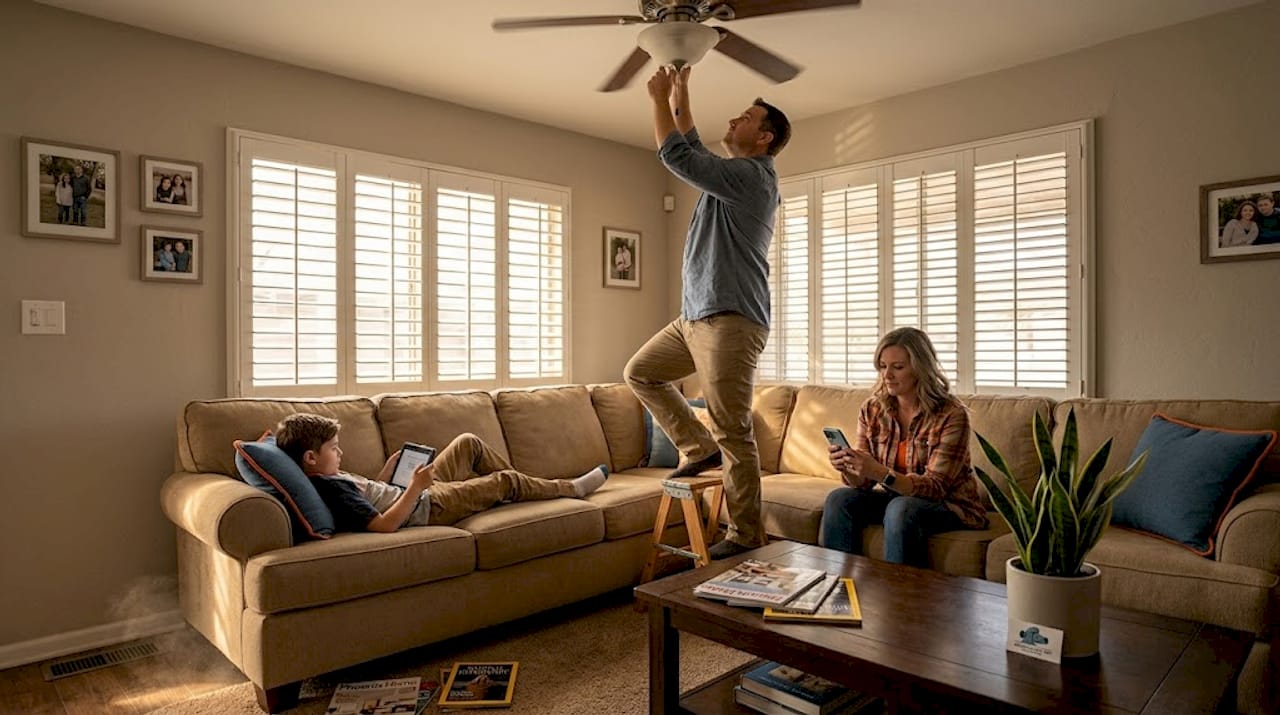
- Set ceiling fans to spin counterclockwise in summer (when viewed from below). This pushes air straight down and creates a wind chill effect that makes you feel 4 to 5 degrees cooler.
- Turn fans off when you leave the room. Fans cool people through wind chill, not by actually lowering air temperature. Running them in empty rooms wastes energy with zero benefit.
- Use bathroom exhaust fans during and after showers to remove humidity that forces your AC to work harder.
- In the early morning and late evening, when outdoor temperatures in Avondale occasionally drop, use strategic window ventilation to pull in cooler outside air and give the AC a break.
- Coordinate kitchen exhaust fans when cooking to reduce heat and moisture buildup that adds load to your cooling system.
Using ceiling fans correctly is something SRP specifically recommends as part of a broader cooling strategy rather than relying solely on your AC. The reason is straightforward: ceiling fans cost about 1 cent per hour to run, while central air conditioning costs anywhere from 15 to 40 cents per hour depending on system size and efficiency.
The combination of ceiling fans running counterclockwise in summer and thermostat setpoints raised by just 2 to 4 degrees can cut cooling energy use by up to 14%, according to energy efficiency research. That's a meaningful reduction from equipment most Avondale homes already have installed.
For homeowners thinking longer term, learning about upgrading your HVAC system to a higher efficiency model can help you understand when your current setup is holding you back versus when better habits are the real answer.
The ventilation piece matters more than people realize. In tightly sealed modern homes, indoor air quality can degrade quickly without intentional fresh air exchange. Exhaust fans, trickle vents, and occasional window ventilation keep air from becoming stale and reduce the concentration of indoor pollutants. This is especially relevant for small businesses in Avondale where multiple people occupy a space for extended hours.
Our take: Small changes, big wins for Avondale's energy bills and air quality
After working with homeowners and businesses across Avondale, we've noticed a consistent pattern: the people who get the best results aren't the ones who spend the most on upgrades. They're the ones who get the fundamentals right and stick with them.
There's a tendency in Arizona to think that surviving the summer heat requires a major technology investment, a new high-efficiency system, a smart home control panel, a whole-house dehumidifier. Those things have their place. But the evidence consistently shows that the unsexy basics, correct thermostat setpoints, clean filters, sealed ducts, and ceiling fan discipline, outperform expensive additions when the fundamentals are being ignored.
Here's the counterintuitive part: chasing a single solution almost always underperforms. We've seen homes with brand-new, high-efficiency HVAC systems that still have enormous bills because the ductwork is leaking 25% of the conditioned air into a 150°F attic. We've seen businesses with advanced air purification systems running filters that haven't been changed in eight months. The shiny upgrade doesn't fix the neglected baseline.
What actually works in Avondale's climate is a layered approach. You set the thermostat right. You change the filter on schedule. You seal the ducts. You run the fans correctly. None of those steps is impressive on its own. Together, they create a system that operates the way it was designed to, which means lower bills and genuinely better indoor air for the people living or working inside.
Our experience also points to something beyond energy savings: the air quality benefit is real and underappreciated. Cleaner ducts, fresh filters, and better ventilation habits reduce dust, allergens, mold spores, and chemical off-gassing in your home. For families with children, elderly relatives, or anyone with respiratory sensitivities, that's not a minor perk. That's a health outcome.
If you want a clear, step-by-step HVAC cleaning process to build on the strategies above, that resource will show you exactly how maintenance and cleaning tasks stack together for maximum impact.
The bottom line from our perspective: trust the basics, stay consistent, and the results will follow. Avondale's summers are not going to get cooler. Your approach to managing them can absolutely get smarter.
Professional help for lasting HVAC efficiency in Avondale
If you want to maximize the impact of these tips, here's how to connect with trusted local pros.
Reading about energy savings is valuable. Actually having your system inspected, cleaned, and optimized by someone who does this work every day in Avondale is where the real change happens. Our team at Air Duct and Dryer Vent Cleaning Avondale specializes in exactly the services that support everything covered in this guide.
Indoor air quality testing gives you a clear, data-backed picture of what's actually in the air you're breathing every day, from dust and allergens to mold and VOCs. Our air duct cleaning services remove the buildup that reduces airflow and drives up energy costs. And if you're not sure where to start, a visit to our HVAC cleaning services in Avondale page shows the full range of what we offer, including flexible scheduling and after-hours availability. Lower bills and cleaner air are within reach. Let us help you get there.
Frequently asked questions
What temperature should I set my AC in Avondale for lower bills?
Set your AC to 78–80°F when home and up to 85°F when away to balance comfort and energy savings; each degree above 80°F saves approximately 2% to 3% on your cooling costs.
How often should air filters be replaced for energy savings?
Replace HVAC air filters every 1 to 3 months; MERV 8 to 13 filters provide the best combination of air quality improvement and system performance for most Avondale homes.
Is it better to run the HVAC fan on 'auto' or 'on'?
The "auto" setting is recommended for most homes and saves $15 to $25 per month compared to running the fan continuously on "on."
How do I know if my ductwork is leaking?
Signs include uneven room temperatures, excessive dust near vents, and unexpectedly high bills; leaky ducts cost $200 or more per year in wasted energy and warrant a professional duct inspection.
Do ceiling fans really help save energy in Arizona?
Yes, correctly set ceiling fans allow you to raise your thermostat by several degrees with no comfort loss; proper ceiling fan use combined with smart thermostat settings can reduce cooling energy by up to 14%.