
TL;DR:
- Proper HVAC filters improve indoor air quality and protect system longevity.
- MERV ratings indicate filter efficiency, with higher ratings blocking smaller particles but requiring system compatibility.
- Regular maintenance and timely replacement are critical in Avondale’s dusty, storm-prone climate.
Not all HVAC filters are created equal, and if you're treating them like they are, your utility bills and your lungs are probably paying the price. In Avondale, where summer heat pushes AC systems into overdrive and monsoon season sends walls of dust rolling through neighborhoods, the filter you install makes a real difference in how well your home or business breathes. Choose the wrong one and you're either straining your system or letting allergens slip right through. This article breaks down how HVAC filters actually work, how to read MERV ratings, why Avondale's climate demands more attention to filter maintenance, and what you stand to gain in comfort, health, and savings when you get it right.
Table of Contents
- How HVAC filters protect your home and business
- Understanding MERV ratings: Finding the right filter for Avondale's air
- Why regular filter maintenance matters in Avondale
- Maximizing benefits: Clean filters, clean air, and lower energy bills
- What most homeowners miss about HVAC filters
- Get expert help for cleaner air and efficient HVAC in Avondale
- Frequently asked questions
Key Takeaways
| Point | Details |
|---|---|
| HVAC filters block pollutants | Your HVAC filter captures dust, pollen, and bacteria to keep indoor air healthier. |
| Choose the right MERV | Select the highest MERV rating your system can safely handle for better filtration and efficiency. |
| Replace filters regularly | Check and replace filters every 30-90 days—more often after dust storms or if you have pets. |
| Proper care saves money | Clean filters help lower energy bills and prevent costly HVAC breakdowns. |
How HVAC filters protect your home and business
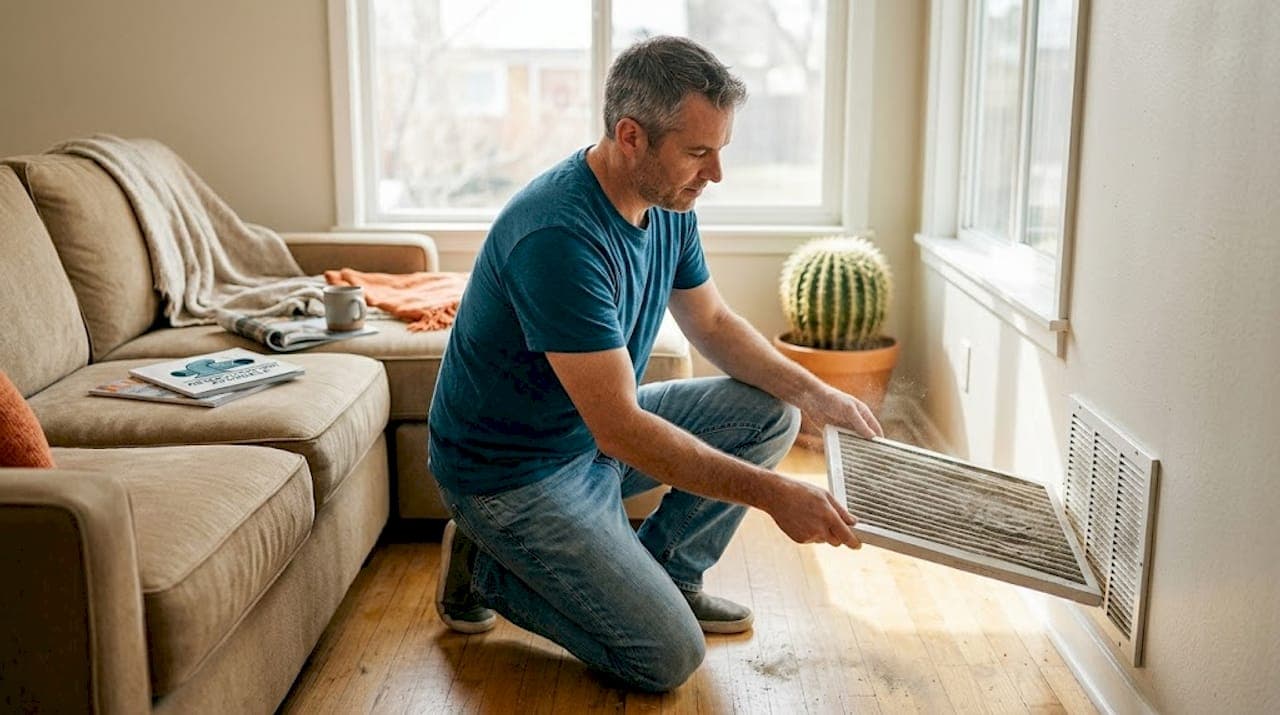
Think of your HVAC filter as a bouncer at the door of your air system. Everything that circulates through your home, including dust, pollen, pet hair, bacteria, mold spores, and microscopic debris, has to pass through that filter before it gets recirculated. A good filter keeps the bad stuff out. A cheap, clogged, or wrong-sized filter lets it float right back into the air you breathe.
In Avondale, this matters more than in most places. The desert climate means natural dust is always present, and after a monsoon haboob rolls through, fine particulate matter settles into every crack, including your ductwork. If your filter isn't up to the job, that debris circulates indoors for weeks. Families with pets face an added challenge since pet dander is one of the most common indoor allergens and one of the hardest to control without the right filter in place.
Here's a quick look at what a properly rated filter traps:
- Large particles like dust, lint, carpet fibers, and pollen (blocked by basic filters)
- Mid-size particles like pet dander, mold spores, and some bacteria (blocked by mid-range filters)
- Fine particles like smoke, viruses, and ultrafine dust (blocked only by high-efficiency filters)
- Airborne debris from construction including drywall dust and insulation fibers
Beyond protecting air quality, filters directly protect your HVAC equipment. When dust and debris bypass a weak filter, they coat the blower fan, the evaporator coil, and the heat exchanger. This buildup forces the system to work harder to move air, shortening its lifespan and increasing repair costs. Good filtration is one of the simplest ways to keep your HVAC running efficiently for years longer. Learning more about how HVAC systems and air quality are connected helps clarify just how much is at stake.
The most important measurement for filter performance is the MERV scale. MERV stands for Minimum Efficiency Reporting Value, and it was established under ASHRAE 52.2 as the standard way to rate filters: MERV 8 blocks large dust and pollen, MERV 11 captures pet dander and bacteria, and MERV 13 stops viruses and smoke, though each step up also increases airflow resistance. This is the critical trade-off that every homeowner and business owner in Avondale needs to understand before buying a filter.
Building efficient HVAC systems starts at the filter level. A system running through a dirty or mismatched filter works like a person trying to breathe through a wet cloth. Airflow drops, temperatures become harder to control, and energy consumption goes up.
Did you know? A single monsoon haboob can load a standard filter with more dust in one evening than several weeks of normal operation. That's why Avondale homeowners can't just set a replacement schedule and forget it.
Understanding MERV ratings: Finding the right filter for Avondale's air
Once you understand what filters do, the next question is which one to buy. The MERV scale runs from 1 to 20. Residential HVAC systems typically work best with filters in the MERV 8 to MERV 13 range. Anything above MERV 13 is generally designed for hospitals, cleanrooms, or commercial systems with the horsepower to push air through extremely dense filter media.
Here's a practical comparison to help you find the right fit:
| MERV Rating | What it blocks | Best for | Airflow resistance |
|---|---|---|---|
| MERV 8 | Dust, pollen, lint | Basic homes, low-dust areas | Low |
| MERV 11 | Pet dander, mold, bacteria | Pet owners, mild allergies | Moderate |
| MERV 13 | Smoke, viruses, fine dust | Asthma, severe allergies, Avondale post-storm | Higher |
| MERV 16+ | Ultrafine particles | Commercial/hospital use only | Very high |
The trade-off is real. A MERV 13 filter captures far more pollutants, but it also creates more resistance in your air system. If your HVAC unit was designed for a MERV 8 or MERV 10, forcing a MERV 13 into it can reduce airflow enough to cause your evaporator coil to freeze, your blower motor to overheat, or your utility bill to spike because the system runs longer cycles to reach the target temperature.
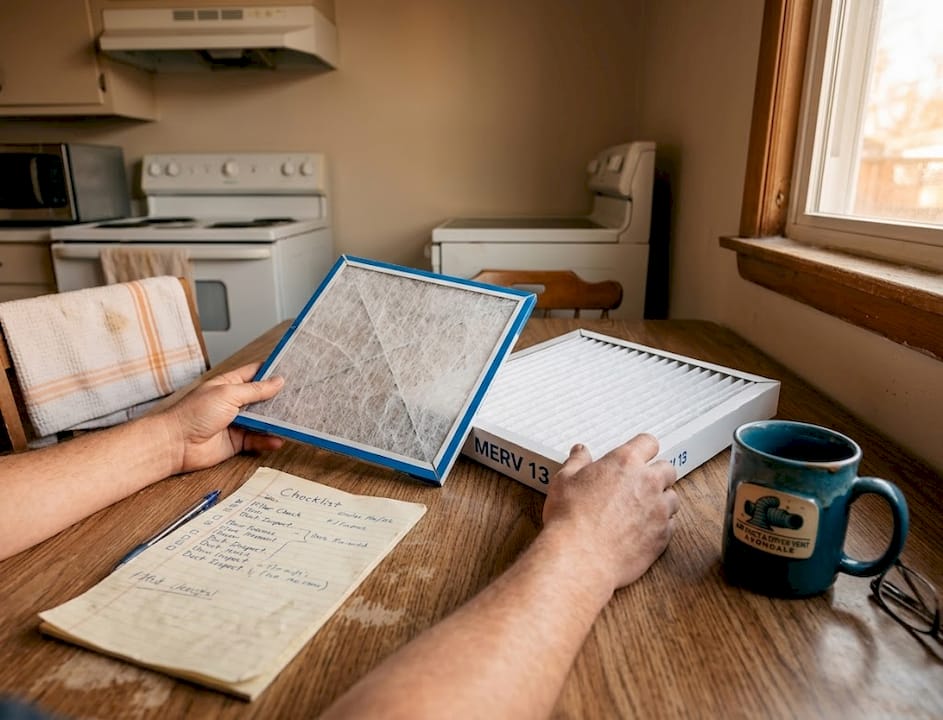
The EPA recommends MERV 13 or higher for strong indoor air quality, but also warns that system compatibility must be checked because the best outcome is the highest sustainable MERV rating your specific unit can handle. This is not a one-size-fits-all answer. Check your unit's manual or consult a local professional who knows how Avondale systems are built and what they can support.
Browsing filter examples for cleaner air gives you a real-world sense of what filter types look like, how they're installed, and what results people actually see. You can also get a deeper breakdown of types of air filters to compare fiberglass, polyester pleated, electrostatic, and media filters before you decide.
"Not all high-rated filters fit all systems. Choosing a MERV rating without checking your system specs is like buying high-performance tires for a compact car. The specs don't match, and performance suffers." This is something we hear from homeowners regularly after they've already made the mistake.
Pro Tip: Ask your HVAC technician which MERV rating the manufacturer lists as the maximum for your specific system model. Start there and only go higher if your system can be tested and confirmed to handle the added resistance without dropping airflow below safe thresholds.
One more thing worth noting: filter thickness matters as much as MERV rating. A 4-inch deep filter at MERV 11 will often outperform a 1-inch MERV 13 filter because the thicker media offers more surface area, meaning it captures more particles without creating as much resistance. If your filter housing allows for a thicker unit, that's almost always the smarter choice for Avondale homes running their systems hard through the summer.
Why regular filter maintenance matters in Avondale
Knowing your filter's MERV rating means nothing if you let it get choked with dust and debris. Maintenance is where most homeowners fall short, and in Avondale, the cost of neglect is higher than in most cities in the country.
Arizona's climate creates specific pressure on HVAC filters. Haboob season typically runs from June through September, and a single large dust storm can deposit enormous amounts of fine particulate matter across an entire neighborhood in minutes. That dust finds its way into intake vents, return air registers, and through any gaps in your duct system. Pair that with year-round pet ownership in suburban Avondale homes and you have a recipe for rapid filter clogging.
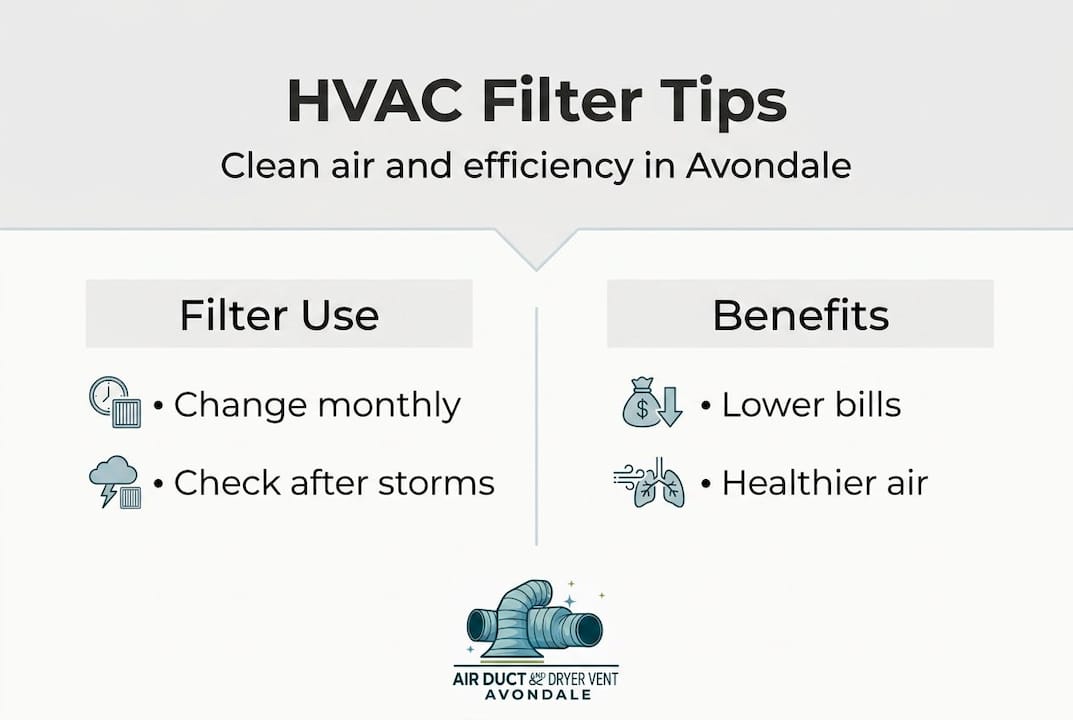
EPA guidelines set standard replacement intervals between 30 and 90 days: fiberglass filters need to be swapped every 30 days, pleated filters last 60 to 90 days, but those intervals shorten for pet owners (replace closer to 30 days), and Arizona residents should inspect filters immediately after every major dust event. Monthly inspection is the baseline.
Here's how to check and replace your filter properly:
- Turn off your HVAC system before removing the filter to prevent unfiltered air from cycling through the system while it's open.
- Locate the filter slot, usually at the return air vent, the air handler cabinet, or the furnace unit. Your system may have more than one.
- Remove the filter carefully and hold it up to a light source. If you can't see light through it, it needs to be replaced immediately.
- Check the filter dimensions printed on the frame and purchase an exact replacement in your chosen MERV rating.
- Insert the new filter with the arrow on the frame pointing toward the air handler, not away from it. A backwards filter significantly reduces performance.
- Mark the date on the filter frame with a permanent marker so you know exactly when it was installed.
- Dispose of the old filter in a sealed plastic bag to prevent releasing trapped particles back into your home.
The benefits of filter replacement go well beyond air quality. A clean filter reduces the strain on your system's blower motor, lowers energy consumption during those brutal Avondale summers, and dramatically cuts the risk of costly breakdowns right when you need your AC most.
Pro Tip: Keep a three-pack of replacement filters on hand at home so you're never caught without a spare after a storm. Waiting to buy a replacement after a haboob means running a clogged filter for days while supplies at local stores get cleaned out by other homeowners doing the same thing.
Don't overlook your ductwork either. Dirty filters eventually allow debris to bypass and coat the inside of your ducts. Duct cleaning for better air is a natural follow-up to consistent filter care, especially if your home hasn't had a professional duct cleaning in the past three to five years. For residents who'd rather hand this off to a pro, air filter replacement service is available locally in Avondale with flexible scheduling options.
Homes in desert climates see filters reach end-of-life capacity up to 40 percent faster than homes in cooler, lower-dust regions. That's not a reason to panic. It's a reason to check your filter more often than the package label suggests.
Maximizing benefits: Clean filters, clean air, and lower energy bills
With good filter selection and consistent maintenance in place, Avondale homeowners and business owners start seeing measurable improvements quickly. The results show up in your energy bill, in fewer allergy flare-ups, and in systems that simply run better for longer.
The connection between filters and efficiency is direct: clean filters allow proper airflow, which means your system reaches the target temperature faster, runs shorter cycles, and draws less power doing it. A clogged filter forces the system to compensate, running longer and working harder to move the same volume of air through a restricted opening.
Here's what the real-world impact looks like before and after consistent filter care:
| Metric | Neglected filter care | Consistent filter care |
|---|---|---|
| Indoor particle levels | High (visible dust, frequent sneezing) | Significantly reduced |
| HVAC runtime per day | Longer cycles, more runtime | Shorter, more efficient cycles |
| Monthly energy bill | 10 to 15 percent higher | Closer to manufacturer-rated efficiency |
| System repair frequency | Higher risk of coil and motor issues | Reduced mechanical strain |
| Indoor comfort (even temps) | Uneven cooling, hot spots | Consistent temperature control |
The benefits break down differently depending on who's in the home or building:
- Families with young children: Fewer airborne allergens mean fewer sick days and better sleep quality
- Pet owners in Avondale: Reduced pet dander in the air cuts down on odors and helps guests with pet allergies breathe easier
- People with asthma or seasonal allergies: Proper MERV-rated filtration reduces triggers significantly, especially after monsoon season when mold spores spike
- Small business owners: Clean filters protect equipment, maintain comfortable conditions for customers and employees, and reduce after-hours breakdowns
- Homeowners near construction: New development around Avondale means construction dust is a constant issue, and high-efficiency filters are often the only thing standing between your family and weeks of breathing fine drywall particles
Understanding health and efficiency benefits in detail helps frame just how much of your indoor environment is shaped by this one component. And if you want to get ahead of the problem at the source, learning about reducing ductwork dust gives you a complete picture of where particles come from and how to minimize them from multiple angles.
Pro Tip: Set a phone reminder for the first of every month to check your filter visually, even if you're on a 90-day replacement schedule. A 30-second check prevents the kind of neglect that leads to $300 repair calls in the middle of July.
The energy savings alone often justify the cost of a better filter. If you're replacing a MERV 4 fiberglass filter with a MERV 11 pleated filter and keeping up with monthly checks, most households in Avondale report their systems running noticeably quieter and their bills trending lower within the first billing cycle.
What most homeowners miss about HVAC filters
After working with Avondale residents and local businesses for years, a clear pattern stands out in how people make filter decisions, and it almost always falls into one of two traps.
The first trap is forgetting entirely. Filters go in and get ignored until the system stops keeping up or someone in the family starts having unexplained headaches and allergy symptoms. By that point, the filter is often so clogged it's restricted airflow for months, and the coil inside the unit is coated with enough dust to warrant a professional cleaning.
The second trap is more surprising: buying the highest MERV filter available and assuming that's the smart move. We see this a lot from homeowners who've done their research and want the best. But dropping a MERV 16 filter into a residential system designed for MERV 8 can choke airflow so badly that the system cycles off repeatedly on its safety limit switch. That's not better air quality. That's a system breaking itself trying to push air through a wall.
The real insight from HVAC cleaning best practices is that consistency beats specification every time. A MERV 11 filter changed faithfully every 45 days will outperform a MERV 13 filter that gets changed once a year. Your system runs within its design parameters, your air stays cleaner, and you avoid the expensive consequences of either extreme.
The professionals we trust in Avondale don't just recommend a MERV rating and walk away. They test the static pressure in your system, confirm the airflow is within safe limits after the new filter is installed, and set you up with a realistic maintenance schedule based on how you actually live, including pets, allergies, nearby construction, and how often your system runs. That's the approach that actually works.
Get expert help for cleaner air and efficient HVAC in Avondale
Managing filter selection, MERV ratings, replacement schedules, and post-storm inspections is a lot to stay on top of, especially when Avondale's dust season hits hard and fast.
Air Duct and Dryer Vent Cleaning Avondale makes it easy. Our team handles air filter replacement service tailored to your specific system and home environment, so you're never guessing which filter to buy or when to swap it. We also offer professional air vent cleaning to clear out the debris that gets past even the best filters over time. And if you're not sure what's actually in your air, our indoor air quality testing gives you a clear, data-backed answer. Flexible scheduling, including after-hours options, means we work around your life, not the other way around. Reach out today and let's build a cleaner, more efficient indoor environment for your Avondale home or business.
Frequently asked questions
How often should HVAC filters be replaced in Arizona homes?
Most filters should be changed every 30 to 90 days, but Arizona homeowners should inspect monthly and always check immediately after a haboob or if you have pets indoors.
Is a higher MERV filter always better for my HVAC system?
Not always. Very high MERV ratings can reduce airflow if your unit isn't designed for the added resistance, and system compatibility should always be confirmed before upgrading your filter rating.
What happens if I forget to change my HVAC filter?
A clogged filter leads to lower air quality, higher energy bills, and a much greater risk of mechanical breakdowns, often at the worst possible time during summer.
What type of filter is best for allergies and pets?
A pleated filter rated MERV 11 or higher is the best choice because it captures pet dander and common allergens that lower-rated filters allow to pass through freely.
Should I clean or replace my filters after a dust storm?
Yes, always check your filter right after a haboob and replace it if it's clogged, because post-storm filter inspection is one of the most important maintenance steps for Avondale homeowners during monsoon season.