
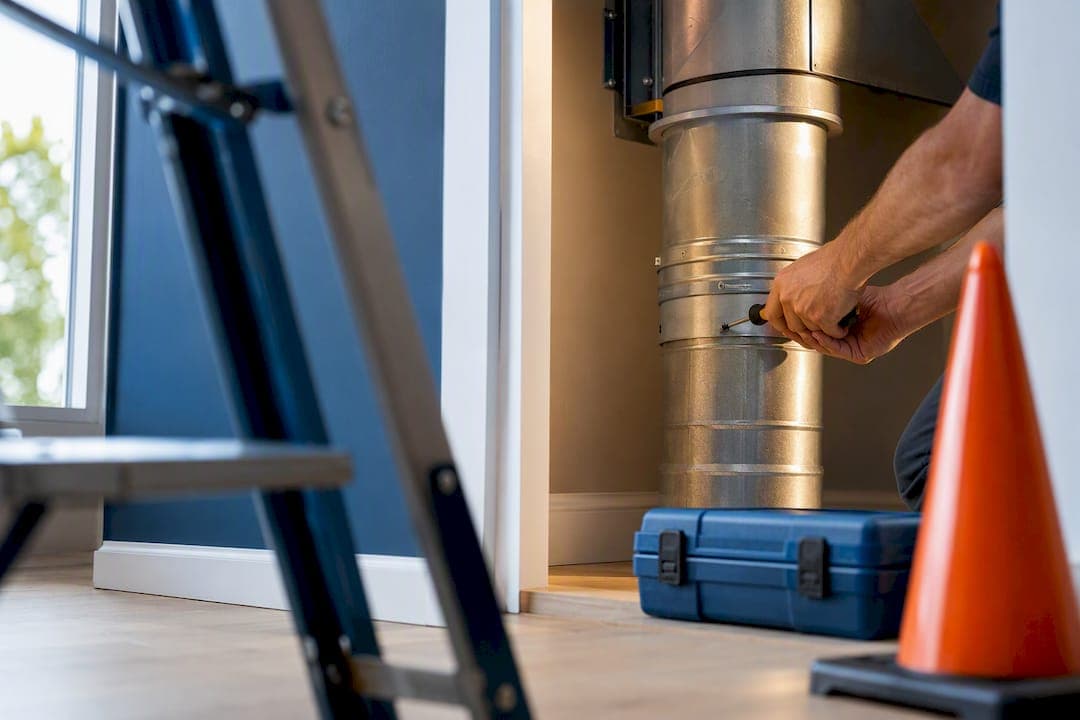
Most homeowners pay between $5,000 and $28,000 for a full HVAC system replacement, with the majority landing in the $8,000 to $16,000 range. The single biggest swing factor isn't the equipment brand or the season you buy in. It's whether your ductwork needs work and which system type you choose, since a heat pump, a mini-split, and a central AC and furnace combo can differ by thousands of dollars for the same square footage.
TL;DR:
- Ductwork condition and system type greatly influence total costs, with duct replacement potentially doubling the price of a standard central system.
- Full HVAC system replacements typically cost between $8,000 and $16,000, depending on the equipment, ductwork, and home's specifics, with geothermal being the most expensive option.
- Accurate quotes require a Manual J load calculation, detailed itemization, and verification that permits, ductwork, and warranties are included in the bid.
- Installing high-efficiency or variable-speed systems offers long-term savings and quieter operation but demands a higher upfront investment, which may not pay off in cooler climates.
- Older homes may need electrical upgrades or extensive duct repairs, adding significant costs and requiring careful assessment before replacement.
Table of Contents
- How Much Does HVAC Installation Cost on Average?
- What Does It Cost by System Type?
- What Factors Actually Drive Your Price Up or Down?
- What's Actually in Your HVAC Invoice?
- How Do You Get an Accurate HVAC Quote?
- How Can You Lower Your HVAC Installation Budget?
- Should You Repair Your HVAC System or Replace It?
- What Do Professional Installers Do Differently?
- New Construction vs. Retrofit: How Costs Differ
- My Take: Pick the Installer, Not Just the Price Tag
- Get a Straight Answer on Your HVAC Installation Cost
- Sources
- FAQ
How Much Does HVAC Installation Cost on Average?
The national average for a residential HVAC installation lands around $17,040, based on ServiceTitan's 2025 analysis of contractor invoices across the country. That figure moves a lot depending on where you live, what's already in your walls, and what you're replacing.
Quick Reference: Full system replacements typically run $5,000 to $28,000 nationally, with most homeowners paying $8,000 to $16,000. A single-component swap, like a furnace alone, usually costs less than a full split system replacement.
Here's how the numbers tend to break out by project scope:
- Single-component replacement (furnace or AC condenser only): $3,000 to $7,500
- Full central AC and furnace replacement: $8,000 to $16,000
- Ductless mini-split (single zone): $3,000 to $6,000, the cheapest full-system option on this list
- Multi-zone mini-split: $8,000 to $16,000, depending on how many indoor heads you need
- Heat pump system: $6,000 to $15,000
- Geothermal system: $18,000 to $35,000+, by far the highest upfront cost of any residential option
A medium-sized home with functional ductwork often has costs near the midrange of typical HVAC replacement expenses. Swap out a furnace and AC condenser, keep the ducts, and you're often looking at something close to the ServiceTitan average. A 3,000+ square foot home needs more tonnage, sometimes two separate zoned systems, and that pushes the estimate toward the higher end fast. Add failing or undersized ductwork to either scenario and the number climbs again, which is why two neighbors with similar homes can get quotes that look nothing alike.
What Does It Cost by System Type?
Not all HVAC systems price out the same way, and the differences come down to how the technology works, not just the size of the unit.
Central AC and furnace (split system). This remains the most common setup in American homes, typically running $8,000 to $16,000 installed. It relies on existing ductwork, so if yours is intact, you're mainly paying for equipment and swap-out labor. Expect a 15 to 20 year lifespan on the furnace and 12 to 15 years on the AC condenser.
Heat pump. A heat pump handles both heating and cooling from one outdoor unit, and installed costs run $6,000 to $15,000. In moderate climates it can replace a furnace entirely. In colder regions, many homeowners pair it with backup electric or gas heat, which adds cost but keeps the home comfortable during deep cold snaps. Lifespan runs 15 years on average, a bit shorter than a gas furnace because the compressor works year round.
- Ductless mini-split: $3,000 to $16,000 depending on zone count, no ductwork required, ideal for additions, garages, or homes without existing ducts
- Geothermal: $18,000 to $35,000+, but lasts 20 to 25 years for the indoor components and 50+ years for the buried ground loop
- Boiler (hydronic heat): $5,000 to $12,000 for a standard replacement, longer lifespan than forced-air furnaces at 20 to 30 years
The efficiency rating attached to any of these systems changes the math too. A unit rated at a higher SEER2 or HSPF costs more upfront, sometimes $1,500 to $3,000 more than a baseline model, but Energy backs up what installers see in the field: those higher ratings translate to lower monthly operating costs over the system's life. If you're in a hot climate and run cooling eight months a year, that upfront premium usually pays for itself faster than you'd expect. If you barely run AC, it might never fully pay back, and a mid-efficiency unit makes more financial sense.
What Factors Actually Drive Your Price Up or Down?
Your quote isn't random. A handful of specific variables account for almost all the variation you'll see between bids.
- Home size and tonnage. A properly sized system depends on square footage, ceiling height, insulation quality, window count, and local climate, not a rough per-square-foot guess. Oversizing wastes money on equipment and causes short-cycling; undersizing means the system runs constantly and never quite catches up.
- Ductwork condition. If your ducts are intact and properly sized, you're only paying for equipment and labor. If they need replacement, ductwork installation can roughly double the cost of a central system swap. Minor repairs or sealing add a much smaller percentage, often just a few hundred dollars.
- Labor and accessibility. A unit tucked in an easy-access basement costs less to swap than one crammed into a tight attic or crawlspace. Difficult access adds hours, and hours cost money.
- Permits and inspections. Most municipalities require a permit for HVAC replacement, typically $50 to $300, plus an inspection fee in some areas.
- Disposal fees. Removing and disposing of the old unit usually runs $100 to $300, sometimes bundled into the quote.
- Electrical work. Older homes with outdated panels sometimes need an upgrade to support a new system, particularly heat pumps or high-efficiency AC units. Panel upgrades run $500 to $2,200, and new refrigerant linesets add a few hundred dollars more depending on length and routing.
If your ductwork runs through a crawlspace with limited clearance, get an ductwork cost per linear foot estimate before you commit to a bid, since access alone can shift labor costs significantly.
Pro Tip: Ask every contractor whether their quote already includes permit fees and disposal. Some bids look cheaper simply because they've left those line items off, and you'll get hit with them later as "extras."
What's Actually in Your HVAC Invoice?
Understanding how your total breaks down helps you spot a padded quote or a suspiciously vague one before you sign anything.
Across most residential installs, equipment typically makes up 40% to 60% of the total cost, with labor accounting for another 40% to 50%.
A properly itemized quote should separate out:
- Equipment cost (make, model, tonnage, efficiency rating)
- Labor hours and hourly or flat-rate labor charge
- Permit and inspection fees
- Disposal of old equipment
- Any ductwork repair, sealing, or replacement
- Warranty terms, both manufacturer and labor
If a quote arrives as one lump number with no breakdown, treat that as a warning sign. A contractor quote missing a load calculation, itemized labor, or clear warranty language is reason enough to get a second bid. Vague bundling isn't always dishonest, but it makes comparing bids nearly impossible, and it hides where your money is actually going.
How Do You Get an Accurate HVAC Quote?
A reliable estimate starts before a contractor ever sets foot in your house.
Start with a rough sanity check. A common rule of thumb is roughly one ton of cooling per 400 to 600 square feet, but that's only a starting point. Ceiling height, window orientation, insulation, and local climate all shift the real number. Never let a contractor size your system off square footage alone.
Insist on a Manual J load calculation. This is the industry-standard method for sizing equipment correctly, and it accounts for insulation, window count, air leakage, and orientation. Skipping it is one of the most common reasons homeowners end up with an oversized, inefficient system that short-cycles and wears out early.
Before hiring anyone, request the following in writing:
- A completed Manual J load calculation, not a verbal estimate
- An itemized breakdown separating equipment, labor, permits, and disposal
- The specific make, model, and efficiency rating of the proposed equipment
- Written warranty terms for both parts and labor
- A realistic installation timeline, including permit lead time
Our guide on the best questions to ask HVAC professionals walks through exactly what to ask before signing anything.
Online calculators can give you a ballpark, but they can't account for your attic insulation or duct leakage. Use them to sanity-check a quote, never to replace one.
How Can You Lower Your HVAC Installation Budget?
You don't have to choose between a comfortable home and a reasonable budget. A few decisions move the needle more than others.
- Check DSIRE before you buy. The Database of State Incentives for Renewables & Efficiency lists federal, state, and utility rebates for qualifying high-efficiency systems, and many homeowners leave real money on the table simply by not checking.
- Schedule during shoulder season. Spring and fall installations often come with lower labor rates and shorter wait times than the peak of summer or the depths of winter, when demand spikes and so do prices.
- Seal and insulate ducts before upgrading equipment. A leaky duct system can waste 20% to 30% of conditioned air, so fixing that first sometimes lets you install a smaller, cheaper unit.
- Add a smart or programmable thermostat. It's a low-cost addition, typically $150 to $300, that pays back through reduced runtime.
- Ask about financing. Many contractors offer 0% or low-interest financing for a year or more, which can make a higher-efficiency system affordable without draining savings.
Higher-efficiency, variable-speed equipment costs more at purchase, but industry reporting consistently shows it pays back through lower utility bills and quieter operation over the system's lifetime. Whether that trade-off makes sense for you depends on your climate and how many months a year you're actually running the system.
Should You Repair Your HVAC System or Replace It?
A simple rule cuts through most of the guesswork: multiply the repair cost by the age of your system in years. If that number exceeds $5,000, replacement usually makes more financial sense than another repair.
A few other signals point toward replacement over repair:
- Age matters. Furnaces typically last 15 to 20 years, AC condensers 12 to 15 years. If your system is past that range and needs a repair, replacement is almost always the smarter long-term move.
- Repeated breakdowns are a pattern, not bad luck. If you've called for repairs two or more times in the past year, the system is telling you something.
- Compressor failure is often a deal-breaker. Replacing a compressor alone can cost $1,500 to $2,500, which frequently makes full replacement the better value.
- Efficiency standards keep shifting. Waiting for a failure during a heat wave means paying peak-season premium pricing and possibly settling for whatever's in stock, not what you actually want.
If your system is 10 to 15 years old and showing any of these signs, start getting quotes now. Lead times for equipment and installation crews stretch during summer and winter peaks, and planning ahead avoids both the premium pricing and the stress of a mid-July breakdown.
What Do Professional Installers Do Differently?
The equipment matters, but installation quality determines whether that equipment performs the way it's rated to for the next 15 years.
Correct duct sizing and clean, sealed ductwork are what separate a system that hits its efficiency rating from one that quietly underperforms for its entire lifespan. A unit connected to leaky, undersized, or dirty ducts works harder than it should, drives up utility bills, and shortens its own lifespan through added strain. Common duct installation mistakes like poor sealing at joints or crushed flex duct in tight spaces are things a homeowner rarely notices until the utility bill arrives or the airflow feels weak in certain rooms.
Before hiring, ask about:
- Whether duct cleaning or duct repair is included or recommended as part of the installation
- What warranty coverage applies to both parts and labor, and for how long
- Whether the crew performs post-installation commissioning to verify airflow and refrigerant charge
- Local licensing and insurance, and how long they've serviced your specific area
Local expertise counts for more than people expect. A contractor who has serviced hundreds of homes in your climate zone knows which duct configurations fail first and which equipment holds up to your specific conditions.
New Construction vs. Retrofit: How Costs Differ
Building new and replacing an existing system are two entirely different pricing conversations, even when the equipment itself is identical.
New construction typically costs less per system because there's no demolition, no old equipment to remove, and no existing ductwork to work around or replace. Ducts get designed and installed from scratch to match the home's actual layout, which often results in better airflow and fewer of the compromises retrofits require. Builders frequently install HVAC systems as part of a larger contract, which can bring per-unit costs down through bulk purchasing and streamlined scheduling. New builds also let you route ductwork through ideal locations rather than working around existing walls, floors, and finished ceilings.
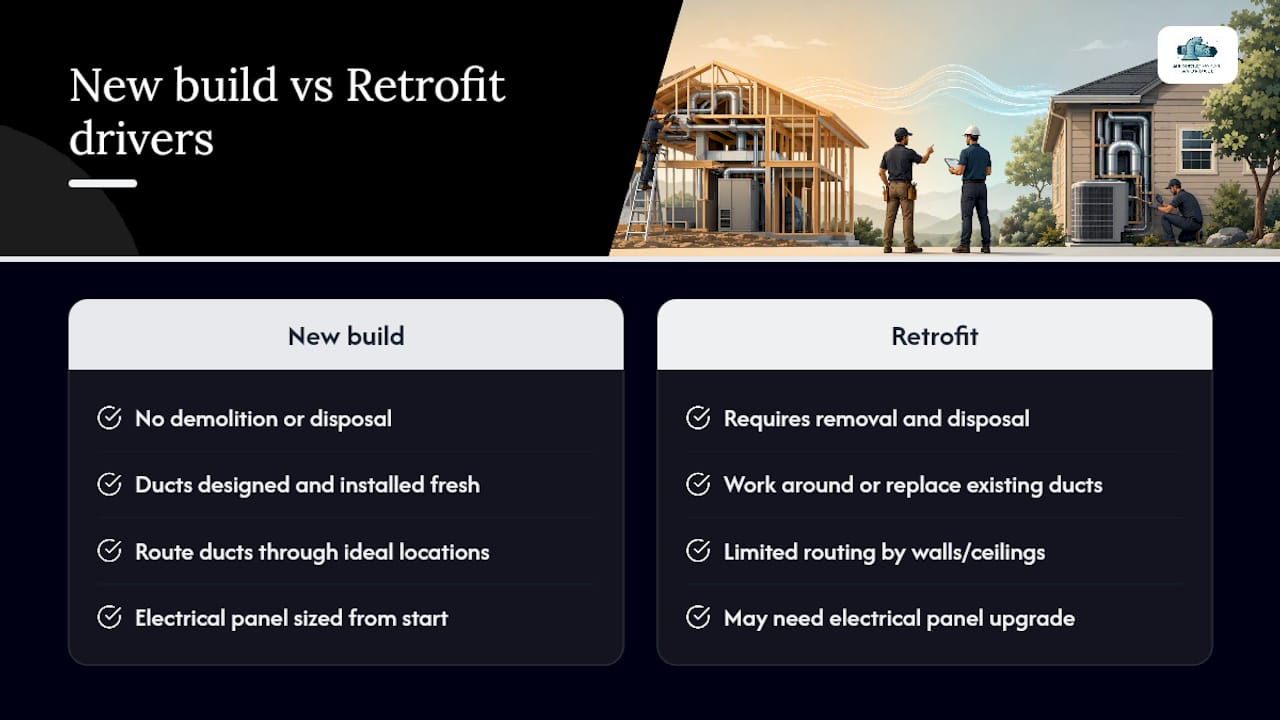
Retrofit installations in existing homes carry extra costs that new construction avoids entirely. Removing and disposing of the old system, working around existing walls and finished spaces, and adapting to ductwork that may not match the new equipment's airflow requirements all add labor hours. Older homes sometimes need electrical panel upgrades to support modern equipment, another cost new construction rarely faces since the panel is sized correctly from day one.
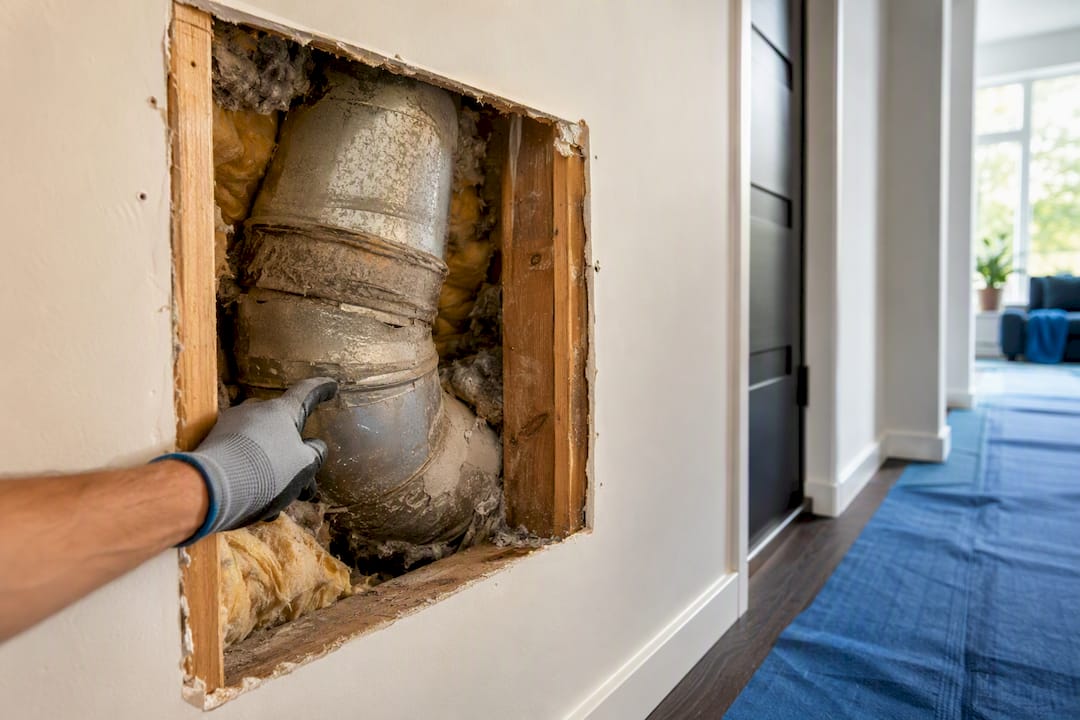
If you're retrofitting an older home, budget extra time and money for surprises. Ductwork hidden behind finished walls sometimes reveals damage, pest issues, or decades-old materials that need addressing before new equipment goes in.
My Take: Pick the Installer, Not Just the Price Tag
After reviewing how these projects actually price out, one thing stands out: the equipment matters less than who installs it. A mid-efficiency system installed correctly, with proper duct sizing and a real Manual J calculation, will outperform a premium unit crammed into leaky, undersized ductwork by someone chasing a fast job.
Before you sign anything, verify licensing and insurance, insist on a written Manual J, and get at least two itemized quotes. Skip the lowest bid if it can't answer basic questions about sizing or warranty terms. And if your system is limping along, start shopping now, not in July when everyone else has the same idea and installers are booked solid.
— Shaun
Get a Straight Answer on Your HVAC Installation Cost
Airanddryerventcleaningavondale gives Avondale homeowners something most HVAC quotes skip: a straight look at your ductwork before you spend a dollar on new equipment. Since a good chunk of your total cost depends on duct condition, we check that first, so you're not paying for a premium furnace connected to leaky, undersized ducts that undercut its performance from day one.
A consultation with our team gets you an itemized estimate covering equipment, labor, permits, and any duct repair or replacement your home actually needs, plus clear warranty terms up front. We also handle the air duct repair and replacement work that often gets bundled into vague HVAC quotes elsewhere, so you know exactly what you're paying for and why. If air quality is part of your concern alongside comfort, we offer indoor air quality testing alongside installation planning.
Serving homeowners and small businesses throughout Avondale, Arizona, with flexible scheduling including after-hours appointments. Reach out for a consultation and get your itemized estimate before you commit to a system.
Sources
- How much does a new HVAC system really cost in 2026? - CBS News
- What Does Residential HVAC Installation Actually Cost? Here’s What the Data Shows. - ServiceTitan
- DSIRE - Database of State Incentives for Renewables & Efficiency
FAQ
How Much Does a New HVAC System Cost Installed?
Most full HVAC replacements cost between $8,000 and $16,000, with a national average near $17,040 according to ServiceTitan's invoice data. The exact price depends heavily on system type and ductwork condition.
What's the Cheapest Type of HVAC System to Install?
A single-zone ductless mini-split is typically the least expensive full system, running $3,000 to $6,000 installed, since it requires no ductwork at all.
Is It Cheaper to Repair or Replace an HVAC System?
Multiply the repair estimate by your system's age in years. If that number tops $5,000, replacement usually costs less over time than continuing to repair an aging unit.
Does Ductwork Add Significantly to HVAC Installation Cost?
Yes. Full ductwork replacement can roughly double the cost of a central system swap, while minor duct repairs or sealing typically add only a few hundred dollars.
Can Duct Cleaning or Repair Lower My Long-Term HVAC Costs?
Properly sealed, correctly sized ductwork helps your system hit its rated efficiency instead of working harder than necessary. Airanddryerventcleaningavondale evaluates duct condition as part of every installation consultation in Avondale.
Are There Rebates Available for High-Efficiency HVAC Systems?
Federal, state, and utility rebates exist for qualifying high-efficiency systems, and the DSIRE database is the best place to check what applies in your area before you buy.