
TL;DR:
- Mold grows in HVAC systems due to humidity, standing water, and dust buildup.
- Regular maintenance, including humidity control and filter changes, prevents mold development.
- Professional inspection and cleaning are essential if mold is suspected or detected.
Avondale, Arizona, sits in one of the driest regions in the country, yet mold quietly grows inside thousands of local HVAC systems every year. The reason is surprisingly simple: your air conditioner pulls warm, humid air across cold coils, and that moisture has to go somewhere. When drain lines clog, filters get overloaded, or coils go uncleaned, you get standing water and dust buildup inside the very system meant to keep you comfortable. The result is mold that circulates spores through every room in your home or business without you ever seeing it. This article gives you a clear, practical roadmap for preventing that from happening, backed by research and local experience.
Table of Contents
- Know your mold risk: Factors that matter in HVAC systems
- Keep humidity in check: Dehumidification and routine checks
- Filters and coils: Your first line of defense against mold
- Drip pans, drain lines, and ductwork: Attack hidden moisture sources
- If you suspect mold: How to respond swiftly and safely
- The uncomfortable truth: Most mold in Arizona homes goes unnoticed
- Expert HVAC mold prevention help in Avondale, AZ
- Frequently asked questions
Key Takeaways
| Point | Details |
|---|---|
| Control indoor humidity | Keep relative humidity between 30-50% to reduce mold growth risk. |
| Change filters regularly | Swap HVAC filters every 1-3 months and use MERV 11+ for better air quality. |
| Clean coils and drains | Maintain coils, drip pans, and drain lines to keep your system dry and mold-free. |
| Act fast on mold | If you suspect mold in your HVAC, shut off the system and call a professional immediately. |
Know your mold risk: Factors that matter in HVAC systems
Now that you know why mold is a serious HVAC concern, let's break down what really enables mold to thrive in Avondale's HVAC systems. Three core factors drive mold growth inside any HVAC system: humidity, standing water, and organic dust. Remove even one of those three, and mold loses most of its advantage. Keep all three present, and you have a mold factory running 24 hours a day.
Humidity is the foundation. The EPA recommends keeping indoor relative humidity between 30% and 50%, and definitely below 60%, to prevent mold growth. Once humidity climbs past that threshold, mold spores that already exist in the air and on surfaces start germinating fast. In Avondale, outdoor air is often dry, which creates a false sense of security. Inside, however, your HVAC system is constantly moving moisture, and during monsoon season that outdoor humidity spikes fast.
The three key mold enablers in your HVAC:
- Humidity above 60% inside ducts, around coils, or near drain pans
- Standing water in condensate drip pans and clogged drain lines
- Dust accumulation on filters, coils, and duct walls that feeds mold colonies
Standing water is one of the most overlooked problems. When a condensate drain line gets clogged, water backs up into the drip pan. That pan becomes a mold breeding ground within 24 to 48 hours. Dust compounds the problem because mold eats organic matter, and household dust is loaded with it. Filters, coils, and unlined ductwork collect enough dust to feed a mold colony for months.
Avondale's unique climate deserves its own note here. The dry outdoor air means homeowners often underestimate the moisture their AC unit generates indoors. Your HVAC system and air quality are closely linked; a well-maintained HVAC system removes humidity efficiently, but a neglected one becomes a humidity trap.
| Mold risk factor | Risk level in Avondale | Key action |
|---|---|---|
| Indoor humidity above 60% | Moderate to high in summer and monsoon | Use hygrometer, run AC correctly |
| Standing water in drip pan | High if drain lines unchecked | Inspect twice yearly |
| Dust on filters and coils | High due to desert dust | Change filters every 1 to 3 months |
| Poor airflow in ducts | Moderate | Schedule duct cleaning |
The numbers back this up: even in arid climates, HVAC interiors can sustain microclimates that stay above 60% relative humidity for hours at a time, especially around the evaporator coil. That's all mold needs.
Keep humidity in check: Dehumidification and routine checks
Understanding mold's dependence on moisture, let's dive into practical strategies for keeping your indoor humidity under control. A $15 digital hygrometer placed near your return air vent tells you exactly what your system is working with. It's one of the cheapest, most useful tools a homeowner can own. Check it weekly, especially during Avondale's monsoon season from late June through September.
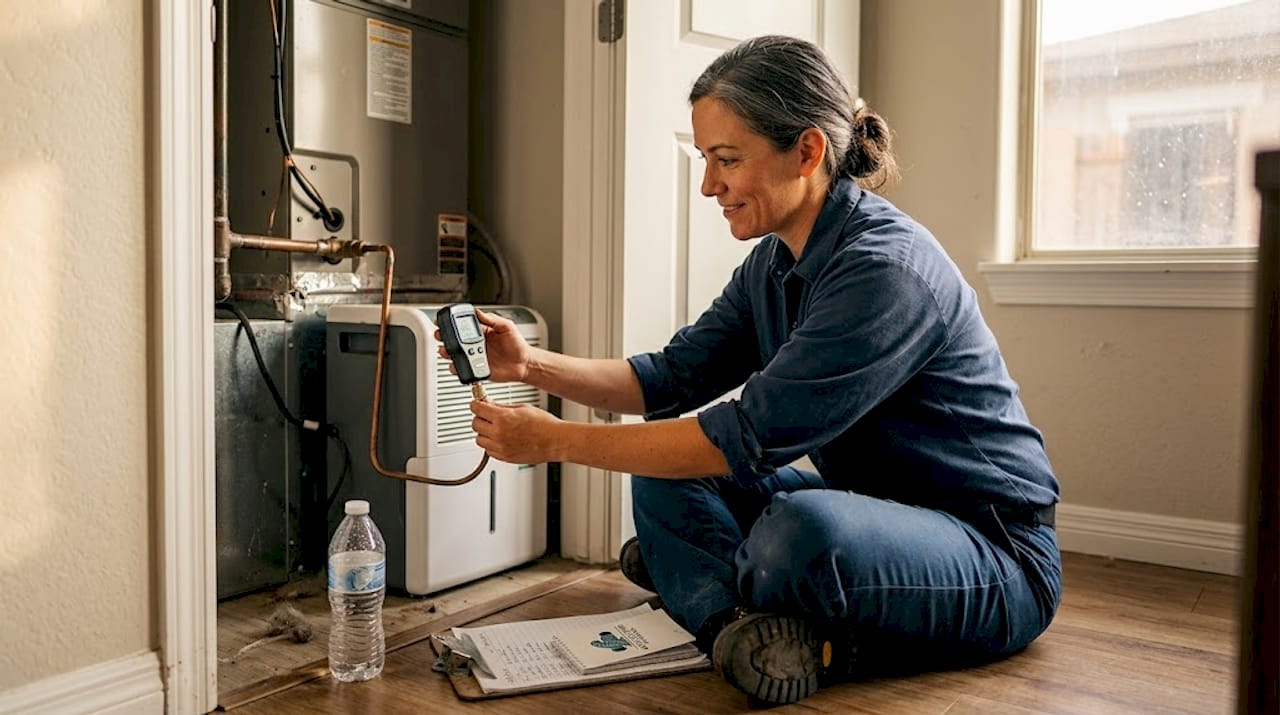
When humidity readings creep above 50%, act quickly. Your HVAC's cooling function does most of the dehumidification work, but only if the system is properly sized and maintained. An oversized unit that short-cycles (turns on and off too quickly) never runs long enough to pull humidity out of the air effectively.
Steps to maintain safe indoor humidity in Avondale:
- Place a digital hygrometer in your main living area and check it weekly.
- Keep your thermostat fan set to "auto," not "on," to avoid recirculating uncooled, humid air.
- Inspect drip pans and condensate lines every six months, or right after heavy monsoon rains.
- Dry any visible water leaks or condensation within 24 to 48 hours to stop mold before it starts.
- Schedule annual professional coil cleaning to maintain your system's dehumidification efficiency.
"Maintain indoor relative humidity between 30% and 50% or below 60% to prevent mold growth." — EPA Mold Guide
Monsoon season is when Avondale homeowners need to be most alert. Humidity outside can jump from 20% to over 60% in a matter of hours during storm events. If windows or doors are open during a monsoon, that humid air floods your space. Your HVAC then has to work overtime, and if the system is even slightly compromised, moisture builds up inside.
Pro Tip: After any monsoon storm, check the area around your HVAC air handler for condensation, rust stains, or standing water. These are early warning signs that your drain system needs attention before mold can establish a foothold.
Annual coil cleaning is not optional if you want consistent humidity control. Dirty evaporator coils lose their ability to pull moisture from the air efficiently, which means humidity stays higher inside your home even when the AC is running. Scheduling HVAC cleaning once a year keeps your system working at its designed performance level.
Filters and coils: Your first line of defense against mold
Since controlling moisture is crucial, the next biggest line of defense is stopping dust and spores from building up, starting with filters and coils. A low-grade filter with a MERV rating below 8 allows fine dust and mold spores to pass right through and settle on your coils and duct walls. That's not a maintenance shortcut; it's an invitation.
High-efficiency HVAC filters rated MERV 11 or higher should be changed every one to three months, depending on how often your system runs and how dusty your environment is. Avondale's desert location means dust loads are generally higher than average, so lean toward the one-month end of that range during peak AC season.
| Filter type | MERV rating | Mold spore capture | Recommended for |
|---|---|---|---|
| Standard fiberglass | MERV 1 to 4 | Poor | Not recommended |
| Pleated filter | MERV 8 | Moderate | Minimal dust environments |
| High-efficiency pleated | MERV 11 to 13 | Good | Most Avondale homes |
| HEPA filter | MERV 17+ | Excellent | Allergy sufferers, businesses |
Evaporator coil cleaning deserves equal attention. When dust and debris coat the coil surface, two things happen: first, the coil's ability to absorb heat drops, reducing efficiency; second, its ability to pull moisture from the air decreases, which drives up indoor humidity. The EPA's guidance is clear that regular coil cleaning is essential to prevent mold buildup in HVAC systems.
Signs your filter or coils may be overdue:
- Reduced airflow from vents
- Higher energy bills without a change in usage
- Musty smell when the AC first turns on
- Visible dust on vent covers and registers
- Allergy symptoms that worsen indoors
Pro Tip: Hold a new filter and your used filter up to a light source side by side. If light barely passes through the used one, it's past due. Don't wait for the calendar reminder.
For homes with pets or residents with asthma or allergies, MERV 13 or HEPA is worth the investment. Standard filters let too many spores through. Explore HVAC filter options that match your specific household needs, and review the types of air filters available for Avondale's conditions before your next replacement.
Drip pans, drain lines, and ductwork: Attack hidden moisture sources
Aside from filters and coils, some of the worst HVAC mold issues start out of sight, right in your system's water handling parts. Standing water inside your HVAC drip pan is the single most common source of internal mold growth. Most homeowners never see the drip pan because it sits beneath the air handler, often in an attic, closet, or utility room. That out-of-sight location is exactly why it's so dangerous.
The EPA is direct on this point: keep drip pans and drain lines free of standing water to eliminate the primary mold source inside any HVAC system. A clogged condensate drain line is usually the culprit. Algae, dust, and debris collect in the line over time and create a blockage that backs water up into the pan.
How to inspect and clear your HVAC condensate system:
- Locate your air handler and find the drip pan beneath it. Look for standing water, rust stains, or a slimy film.
- Locate the PVC condensate drain line that exits the air handler. Trace it to where it drains outside or to a floor drain.
- Use a wet/dry vacuum on the drain line opening to pull out clogs. A simple flush with diluted white vinegar every six months prevents algae buildup.
- If the pan has visible rust or mold staining, clean it with a mild bleach solution. Wear gloves and eye protection.
- If you find heavy mold growth or a cracked pan, stop and call a professional. DIY cleanup of significant mold inside HVAC units can spread spores throughout the system.
"Standing water in drip pans and clogged condensate lines are a primary mold source in HVAC systems and must be cleared to protect indoor air quality."
Ductwork is the next hidden risk zone. Condensation can form inside ducts when cold air passes through sections of duct running through unconditioned attic space, which is extremely common in Avondale homes. Over time, this moisture creates the perfect environment for mold on the duct liner. A step-by-step HVAC cleaning process addresses these areas systematically. If you notice a persistent musty smell from specific vents, those duct sections may already have mold and need professional HVAC cleaning services. You can also learn more about how exterior mold prevention strategies apply to overall property maintenance.
If you suspect mold: How to respond swiftly and safely
Even with great maintenance, what if you still spot mold or musty smells? Here's how to tackle the problem safely. The single most important rule: do not run your HVAC system if you suspect active mold growth. A running system turns your entire duct network into a spore delivery system, pushing contamination into every room simultaneously.
The EPA's guidance is unambiguous: shut down the system immediately when mold is suspected and bring in certified professionals before restarting it. This is not a situation where waiting a few days to schedule a convenient appointment makes sense.
What to do if you suspect HVAC mold:
- Turn off the HVAC system at the thermostat immediately.
- Do not attempt to clean moldy duct liner material yourself. Lined ducts with visible mold should be replaced, not wiped down.
- Open windows for ventilation if outdoor air quality allows, but do not use fans that might push spores further into the home.
- Note the location of any visible mold or the vents where musty odors are strongest.
- Contact a certified HVAC cleaning specialist who uses HEPA vacuums and proper containment procedures.
- Do not restart the system until a professional has cleared it.
Pro Tip: Take photos of any visible mold before calling a professional. It helps the technician prioritize which sections of ductwork or components to inspect first, which saves time and money.
Professional remediation for HVAC mold uses containment barriers to prevent spore spread, HEPA vacuums to capture microscopic particles, and EPA-registered antimicrobial treatments to sanitize surfaces. Understanding why professional HVAC cleaners are essential for mold situations will help you ask the right questions when you call. You should also understand what HVAC sanitizing actually involves so you know what to expect from the process.
The uncomfortable truth: Most mold in Arizona homes goes unnoticed
Here's what years of working with Avondale homeowners has made clear: most people only call about HVAC mold after they smell it or after a family member starts having unexplained respiratory issues. By that point, mold has usually been growing for weeks or months.
Arizona's dry reputation creates a blind spot. Homeowners assume desert air means no mold risk. But the reality is that Avondale homes run their HVAC systems heavily from April through October, often with windows closed and limited ventilation. That closed environment, combined with minimal maintenance, is exactly the scenario where HVAC mold thrives undetected.
The most dangerous mold situations are the ones you never see. Mold in attic air handlers, inside flexible duct sections, and behind return air grilles rarely shows itself until the colony is large. By the time there's a visible patch or a persistent smell, the system has already been circulating spores for some time.
Routine, seasonal checks are far more effective than a single big fix. One professional inspection each year, combined with monthly filter checks and a quick drip pan look every six months, catches problems when they're still small and cheap to fix. A professional HVAC inspection isn't an indulgence. In Avondale's climate, it's genuinely the most practical thing you can do for your family's health and your property's value.
The homeowners who never have serious mold problems aren't lucky. They're consistent.
Expert HVAC mold prevention help in Avondale, AZ
If the steps in this article feel like a lot to track, you don't have to manage them alone. At Air Duct and Dryer Vent Cleaning Avondale, we've spent years helping homeowners and small business owners in Avondale keep their indoor air clean, safe, and mold-free.
Our team handles commercial air duct cleaning for businesses and residential air vent cleaning for homes, using advanced equipment that removes dust, mold spores, and debris that standard maintenance misses. We also provide dryer vent cleaning services to eliminate another common hidden fire and mold risk. Every service comes with flexible scheduling, after-hours availability, and a free consultation so you know exactly what your system needs before we start. Reach out today and take the guesswork out of keeping your Avondale property mold-free.
Frequently asked questions
How often should I clean my HVAC drip pan and drain lines?
Inspect and clean drip pans and condensate drain lines at least twice a year, and address any standing water immediately when you find it. The EPA notes that unobstructed drain lines are essential to preventing standing water, the primary mold source inside HVAC systems.
What humidity level should I keep to prevent mold in my HVAC?
Keep indoor relative humidity between 30% and 50% to stop mold from gaining a foothold, and never let it exceed 60%. The EPA Mold Guide confirms this range is the most effective threshold for mold prevention in residential and commercial settings.
Can I remove mold in my HVAC ducts myself?
For surface-level mold on hard components like a drip pan, careful DIY cleaning with protective gear is possible, but moldy duct liner material must be replaced by a certified professional. The EPA recommends that suspected HVAC mold be handled with HEPA vacuums and containment to prevent spore spread.
What type of HVAC filter is best for preventing mold?
Filters rated MERV 11 or higher are the practical minimum for most Avondale homes, with HEPA filters offering the strongest protection for allergy sufferers or businesses. Experts recommend changing filters every one to three months and selecting high-efficiency options to reduce dust and spore circulation through your system.
Recommended
- How to schedule HVAC cleaning for better air quality
- HVAC Cleaning Services: Better Air & 46% More Airflow
- Step-by-step HVAC cleaning: Boost air quality and efficiency
- How HVAC Systems Improve Air Quality and Efficiency
- How HVAC systems improve indoor air quality: 2026 guide – Akita AC
- How carpet cleaning improves health and indoor air quality