
TL;DR:
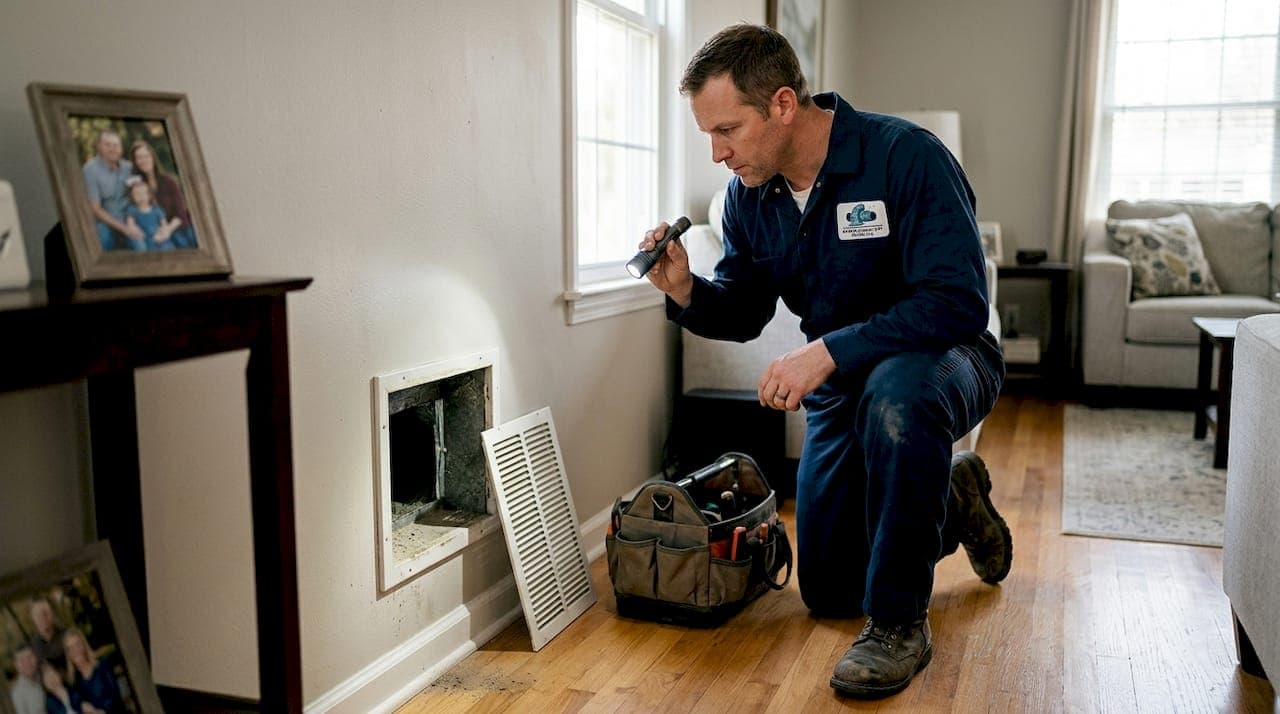
- HVAC odors originate from mold, bacteria, dust, dead animals, VOCs, or humidity issues deep inside systems.
- Professional cleaning involves inspection, mechanical removal, and targeted treatments like UV or antimicrobials.
- Regular maintenance with filter changes, humidity control, and annual inspections prevents recurring odors and improves air quality.
HVAC Odor Removal: How to Eliminate Unwanted Smells for Good
Most homeowners and business owners in Avondale reach for a can of air freshener the moment a strange smell starts coming through the vents. It's a completely understandable reaction, but it does nothing to fix the actual problem. HVAC odors are not a surface issue. They live inside your ductwork, on your coils, and in the moisture that collects in places you can't easily see. Sprays, plug-ins, and even standard air filters only cover the symptom while the real source keeps circulating through your building. This article walks you through exactly what causes HVAC odors, what professional removal actually involves, and how to keep your air clean for the long haul.
Table of Contents
- Understanding HVAC odor sources and their impact
- Professional HVAC odor removal: What really works
- The HVAC odor removal process: Steps and options
- Prevention and maintenance: Keeping odors away long-term
- Why the real challenge in HVAC odor removal is hidden until it isn't
- Breathe easier with trusted HVAC odor removal experts in Avondale
- Frequently asked questions
Key Takeaways
| Point | Details |
|---|---|
| Odors reveal system issues | Persistent HVAC odors indicate underlying problems like mold, bacteria, or dust accumulation that need expert attention. |
| Professional cleaning is essential | Certified pros use advanced methods to eliminate odors at the source for lasting clean air. |
| Prevention prevents recurrence | Routine maintenance and humidity control guard against future odors and protect your indoor air quality. |
| Avondale's climate needs special care | Local dryness and dust make odor control and regular cleaning especially important for Avondale homes and businesses. |
Understanding HVAC odor sources and their impact
Before anyone can fix an odor problem, they need to understand what they're dealing with. There's an important distinction that most people miss: odor removal and odor masking are two completely different things. Masking means covering a smell with something stronger or more pleasant. Removal means eliminating the biological, chemical, or physical source that's generating the odor in the first place. One is a temporary fix. The other actually works.
HVAC systems are complex environments. Air moves through them constantly, and that air carries particles, moisture, and organic material. Over time, those elements settle and build up. Here are the most common odor sources found in residential and commercial HVAC systems in Avondale:
- Mold and mildew: These grow in any area where moisture collects, including drain pans, coils, and duct linings. They produce a musty smell that travels through every vent in the building.
- Bacteria: Biological growth on coils or inside ductwork releases gases that smell foul, sometimes described as dirty socks or rotting material.
- Accumulated dust: Dust itself has a faint smell when it burns off a heat exchanger, often noticed at the start of heating season.
- Dead animals: Small rodents, birds, or insects sometimes get into ductwork and die there. The resulting smell is unmistakable and impossible to mask.
- Volatile organic compounds (VOCs): Off-gassing from building materials, cleaning products, or equipment gets pulled into the return air and redistributed throughout the space.
- Humidity imbalance: In Avondale's dry desert climate, people sometimes overcorrect with humidifiers. Too much indoor moisture combined with Arizona dust creates perfect conditions for mold growth inside AC systems.
Avondale's climate creates a unique combination of risks. The desert air carries fine particulate matter that enters HVAC systems constantly. Fresh air benefits are real, but only when that air is properly filtered and the system is clean. When dust accumulates on wet cooling coils during the monsoon season, mold can establish itself quickly, even in a climate most people associate with dryness.
"Filters rated MERV 13 or higher can capture 50% or more of PM2.5 particles, and keeping indoor humidity below 60% is essential to prevent mold. However, filters alone cannot address moisture or mold already present inside the system." This is exactly why upgrading your filter does not resolve an active odor problem.
The health impact of poor indoor air quality is significant. People spend the majority of their time indoors, and when HVAC systems circulate contaminated air, the effects include respiratory irritation, worsened allergies, headaches, fatigue, and reduced productivity. For small business owners, that means real costs in employee performance and customer comfort. For homeowners, it means living in a space that feels persistently unpleasant even when everything else looks clean.
Understanding HVAC sanitizing as a concept helps clarify why source elimination matters so much. You can mop a floor endlessly, but if the source of contamination is in the ceiling, you will never get ahead of it. HVAC odors work the same way. Comprehensive HVAC cleaning services address those hidden sources directly rather than working around them.
Professional HVAC odor removal: What really works
Once you understand where odors come from, it becomes clear why most DIY approaches fall short. Replacing a filter, wiping down vent covers, or spraying a disinfectant into a vent opening addresses only the very edge of a much larger system. Professional odor removal starts with source identification, and that requires both the right tools and the right training.
Here is how professional techniques compare to common DIY approaches:
| Method | What it addresses | Effectiveness | Safety |
|---|---|---|---|
| Filter replacement | Airborne particles only | Low for odors | Safe |
| Vent cover cleaning | Surface dust | Minimal | Safe |
| Air fresheners/sprays | Surface smell | Temporary only | Varies |
| Mechanical duct cleaning | Accumulated debris, dust | High | Safe when done correctly |
| UV light treatment | Biological growth on coils | High for mold/bacteria | Safe for occupants |
| Antimicrobial application | Residual biological material | Moderate (post-cleaning only) | Safe after cleaning |
| Ozone treatment | VOCs and microbial odors | High | Unsafe for occupied spaces |
NADCA (the National Air Duct Cleaners Association) sets the professional standard for HVAC cleaning. Certified technicians follow a systematic process: inspect the entire system first, use negative pressure equipment to capture loosened debris, mechanically clean every accessible component, and then evaluate whether additional treatment is needed. Cutting corners at any step means the odor returns.
Ventilation is often misunderstood as a solution. ASHRAE 62.1 standards confirm that ventilation dilutes airborne pollutants effectively, but it does not eliminate low-volatility compounds or biological sources already embedded in ductwork. Opening windows helps temporarily but does nothing for mold growing on your evaporator coil.
Ozone treatment is one of the more misunderstood tools in odor removal. It works by oxidizing odor-causing molecules, which makes it genuinely effective for VOCs and some biological odors. However, ozone at effective concentrations is harmful to humans and pets. It should only be used in unoccupied spaces, with full ventilation afterward before anyone re-enters. Never let anyone apply ozone while your family or employees are present.
Pro Tip: Always ask your technician whether they plan to apply any chemical treatment before or after mechanical cleaning. Applying antimicrobials before cleaning is like painting over rust. The NADCA standard is clear: physical cleaning must come first.
Chemical treatments, including enzyme-based cleaners and antimicrobial coatings, have their place. They are most effective when applied after thorough mechanical cleaning, targeting any residual biological material on duct surfaces. Used correctly, they provide a layer of protection against regrowth. Used incorrectly or prematurely, they simply coat debris and create a false sense of resolution.
Hiring professional HVAC cleaners also means getting a post-cleaning assessment. Reputable technicians will verify that airflow has improved, note any areas that may need monitoring, and recommend follow-up if they discover structural issues in the ductwork. Understanding the step-by-step HVAC cleaning process before hiring someone gives you a baseline for evaluating their work.
One more thing worth noting: the size and layout of your home or commercial space directly affects how much labor and equipment the job requires. A large commercial building with extensive ductwork needs significantly more time and specialized tools than a single-family home. Make sure any estimate you receive reflects an actual inspection, not a flat-rate guess based on square footage alone.
The HVAC odor removal process: Steps and options
With a clear view of what works best, here's how HVAC odor removal unfolds when you hire a pro. Knowing what to expect helps you ask better questions, prepare your space, and evaluate the quality of the work you receive.
Step 1: Initial inspection and source identification A technician inspects the entire system: supply and return ducts, air handler, evaporator coils, drain pan, blower motor, and vent covers. They use inspection cameras in larger duct systems to identify where debris, moisture, mold, or biological material is concentrated. This step determines the scope and method of treatment. Scheduling HVAC cleaning starts with this diagnostic conversation.
Step 2: System isolation and negative pressure setup Professionals attach a high-powered vacuum collection unit to the main duct trunk. This creates negative pressure inside the system, meaning any debris they loosen gets pulled toward the collection unit rather than blown into your living or working space.
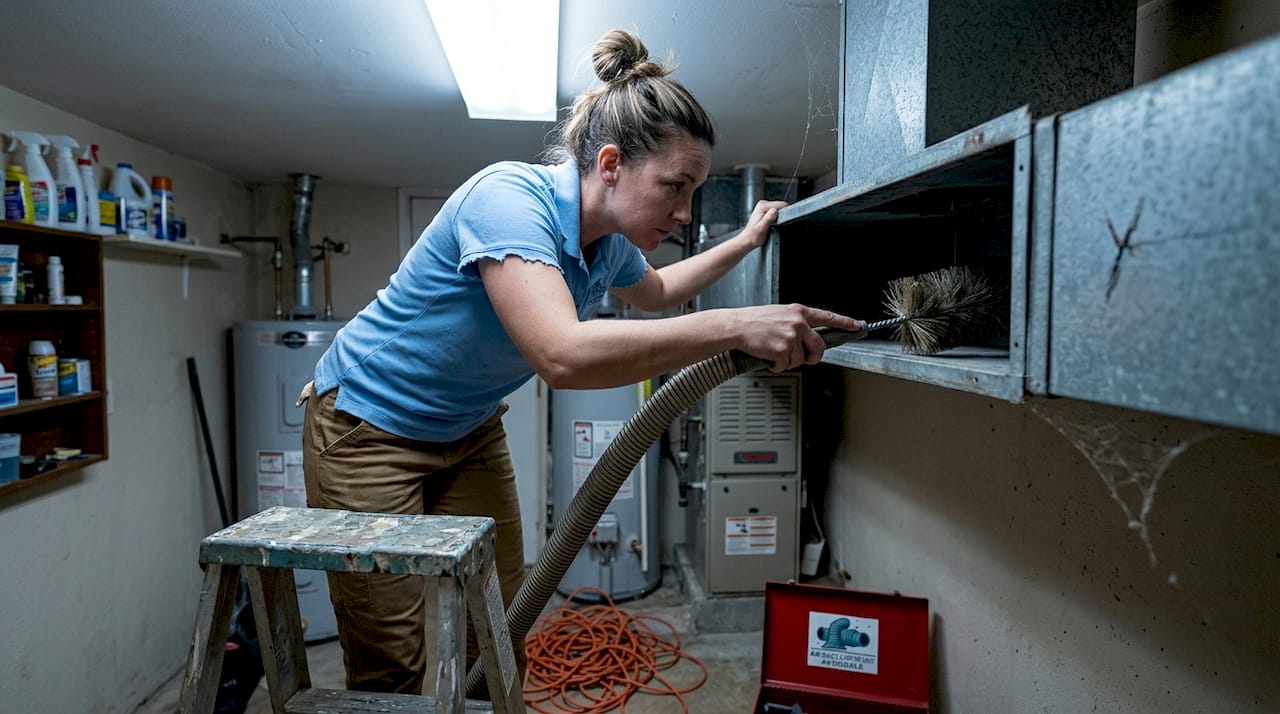
Step 3: Mechanical agitation and cleaning Technicians use rotating brushes, air whips, and compressed air tools to loosen and dislodge accumulated material from duct walls, coils, and the blower assembly. Each supply and return register is cleaned individually. Air duct and vent cleaning at this level is thorough and time-consuming when done correctly.
Step 4: Treatment selection based on findings Here is where findings from step one guide decisions:
| Finding | Recommended treatment | What to avoid |
|---|---|---|
| Mold on coils | UV light installation, antimicrobial spray post-cleaning | Spray without cleaning first |
| Bacterial odor in ducts | Enzyme-based cleaner after mechanical cleaning | Ozone in occupied space |
| VOC contamination | Ventilation plus source removal | Air fresheners alone |
| Dead animal | Physical removal, sanitization | Masking sprays |
| General dust buildup | Mechanical cleaning, filter upgrade | Filter-only approach |
Step 5: Post-cleaning air quality verification The EPA emphasizes source identification over masking as the foundation of effective indoor air quality management. After cleaning, a quality service provider will conduct or recommend air quality testing to confirm that particulate levels and odor-causing compounds have dropped. This gives you objective evidence that the work was done effectively, not just a technician's word that everything looks better.
Step 6: Documentation and recommendations You should receive a written summary of what was found, what was cleaned, what treatments were applied, and what follow-up is recommended. This record matters for warranty claims, property sales, and future service scheduling.
The entire process for a standard residential home typically takes two to four hours. Commercial properties take longer depending on system complexity. Plan to be present at the start for the inspection briefing, and make sure pets and children are kept clear of the work area during the process.
Prevention and maintenance: Keeping odors away long-term
Once odors are gone, it's vital to keep your HVAC system smelling clean year-round. The good news is that consistent, simple habits can dramatically reduce the chance of odors returning. The bad news is that most people stop thinking about their HVAC system the moment it stops bothering them.
Here are the most effective long-term strategies for Avondale homeowners and business owners:
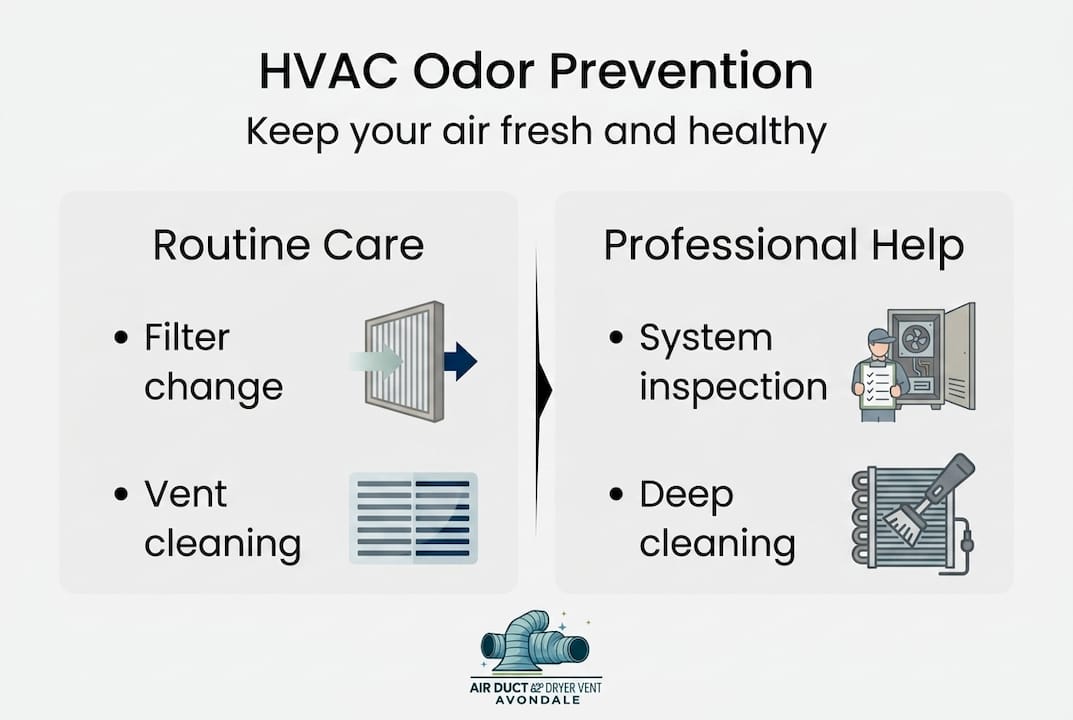
- Change filters on schedule. High-efficiency filters rated MERV 13 or higher capture significantly more fine particles, including dust, pollen, and some biological matter. In Avondale's dusty environment, checking filters monthly and replacing them every 60 to 90 days is realistic for most households. Filters clogged with dust restrict airflow, causing moisture to collect on coils and creating conditions for mold.
- Control indoor humidity actively. Keep indoor humidity below 60% year-round. During monsoon season, when outdoor humidity spikes, your AC system works harder and moisture can accumulate in the drain pan. A stuck or slow drain line is one of the most common hidden causes of recurring musty odors.
- Schedule annual inspections. An annual inspection catches problems before they become odors. A technician can spot early mold growth, identify a partially clogged drain line, or notice a developing animal entry point before it turns into a full infestation.
- Watch for early warning signs. A faint musty smell that appears briefly when you first turn on the AC is an early indicator of mold or biological growth on the coil. A burning smell at the start of heating season usually means dust on the heat exchanger, which is normal but worth noting. A persistent foul odor that does not fade is a clear signal to call a professional.
- Upgrade aging vents and registers. Old or damaged vents can harbor bacteria and reduce the effectiveness of your filtration. Air vent replacement is a simple upgrade that improves both airflow and hygiene.
- Address water intrusion immediately. Any moisture that enters your ductwork, whether from a roof leak, a plumbing issue, or condensation problems, creates a mold risk within 24 to 48 hours. Do not wait to investigate.
Pro Tip: After any significant dust storm in Avondale, check your outdoor unit and return air filter. Haboobs carry extraordinary amounts of fine particulate that can overwhelm filters and coat system components in a single event. A quick inspection after a major storm can prevent months of odor problems.
For business owners with unusual operating hours, after-hours cleaning services allow maintenance to happen without disrupting customers or employees. This flexibility means there's no excuse to delay service when something smells off.
Consistency is the key. A system that gets attention once and then is ignored will cycle back to odor problems. One that receives regular filter changes, annual inspections, and prompt attention to warning signs will stay clean and comfortable for years.
Why the real challenge in HVAC odor removal is hidden until it isn't
Here is something we see repeatedly in Avondale: a homeowner or business owner calls us after months of dealing with a smell they assumed would go away on its own. They changed the filter twice. They bought an air purifier. They had someone come out and spray the vents. Nothing worked. And when we inspect the system, we find mold that has been growing behind the coil for a year or more, completely untouched by everything that came before.
The real problem with HVAC odor removal is not the removal itself. It's that most people approach it backward. They focus on treatment before identifying the source. They spend money on products and services that work at the perimeter of the system while the actual cause sits deeper inside, undisturbed.
Avondale's climate makes this especially deceptive. Because the air feels dry most of the year, people underestimate how much moisture their AC system is actually managing. A system that runs heavily from April through October is condensing and moving significant amounts of water. If the drain system isn't perfectly clear, that moisture goes somewhere. Usually into a pan that overflows or into duct insulation that never fully dries.
The technicians who deliver lasting results are the ones who prioritize diagnosis above everything else. True expert cleaning means spending real time on the inspection, using the right tools to see what's actually happening inside the system, and having honest conversations about what was found. It's slower. It costs more up front. But it's the only approach that actually works.
The lesson: if your odor problem keeps coming back, the source has never been properly identified. Start there.
Breathe easier with trusted HVAC odor removal experts in Avondale
If the odors in your home or business have been lingering despite repeated attempts to fix them, it's time to bring in a team that understands Avondale's specific air quality challenges. Dust, monsoon humidity, and a heavily used AC system create conditions that require a local expert, not a generalist.
At Air Duct and Dryer Vent Cleaning Avondale, we provide thorough inspection, mechanical cleaning, and targeted treatment for both residential and commercial clients. Our commercial air duct cleaning services help businesses maintain healthy, comfortable environments for employees and customers alike. Homeowners can count on our home air duct cleaning to address the sources of odors directly, not just the surface. We also offer indoor air quality testing so you can see the before-and-after difference in measurable terms. Flexible scheduling, including after-hours options, makes getting started simple.
Frequently asked questions
What causes persistent odors in my HVAC system?
Odors in HVAC systems are mainly caused by mold, bacteria, dust, or moisture that accumulate and circulate through the ductwork. Importantly, MERV 13 filters and humidity control help prevent these conditions, but they cannot resolve biological growth that is already established inside the system.
Can I remove HVAC odors myself, or do I need a professional?
Minor odors may improve with a fresh filter and clean vent covers, but persistent smells almost always point to a source deeper in the system that requires professional inspection. Source identification before any treatment is essential to avoid simply redistributing contaminants.
Are chemical or ozone treatments safe for homes and offices?
Ozone treatments and chemical antimicrobials should only be applied by trained professionals after thorough physical cleaning is complete. Ozone at effective concentrations is unsafe for occupied spaces and requires full ventilation before anyone re-enters.
How often should HVAC odor removal or cleaning be performed?
HVAC systems should be professionally inspected at least once per year and cleaned whenever odors, increased dust, or allergy symptoms suggest buildup is present. In Avondale's dusty climate, more frequent attention is often warranted, particularly after heavy dust storms or monsoon season.