
TL;DR:
- HVAC safety compliance involves multiple regulatory agencies, including OSHA, EPA, ASHRAE, and local codes, all requiring proper documentation and safety measures.
- Property owners must ensure routine maintenance, accurate records, and infrastructure upgrades, especially with new refrigerant standards like A2L, to remain compliant and safe.
Most homeowners and property managers assume HVAC safety means changing filters and scheduling annual checkups. That assumption can cost you. HVAC safety standards explained in full reveal a complex web of federal regulations, certification requirements, refrigerant rules, and documentation mandates that directly affect your health, your legal standing, and your system's reliability. Whether you own a single-family home, manage a commercial building, or run a small business in Avondale, Arizona, understanding HVAC compliance requirements is no longer optional. This article breaks down what the standards actually require, what the real risks are, and what you need to do about them.
Table of Contents
- Key takeaways
- HVAC safety standards explained: the regulatory bodies you need to know
- Common HVAC hazards and the compliance risks behind them
- Practical HVAC compliance steps for homeowners and property managers
- The refrigerant transition and what it means for your property
- My honest take on HVAC compliance after years in the field
- Keep your HVAC system clean, safe, and compliant
- FAQ
Key takeaways
| Point | Details |
|---|---|
| Multiple agencies set the rules | OSHA, EPA, ASHRAE, and local codes all govern HVAC safety, and each one covers different risks and requirements. |
| Documentation gaps trigger penalties | Missing calibration records or maintenance logs are among the most common causes of compliance failures and enforcement actions. |
| Refrigerant rules just changed | The EPA removed the 2026 R-410A installation deadline, giving property owners more flexibility but introducing new A2L safety obligations. |
| Filters need dynamic scheduling | Fixed calendar-based filter replacement can lead to motor burnout; inspection frequency should match your actual environment. |
| Professional cleaning supports compliance | Scheduled duct and vent cleaning reduces hazards, supports air quality standards, and helps maintain a documented maintenance record. |
HVAC safety standards explained: the regulatory bodies you need to know
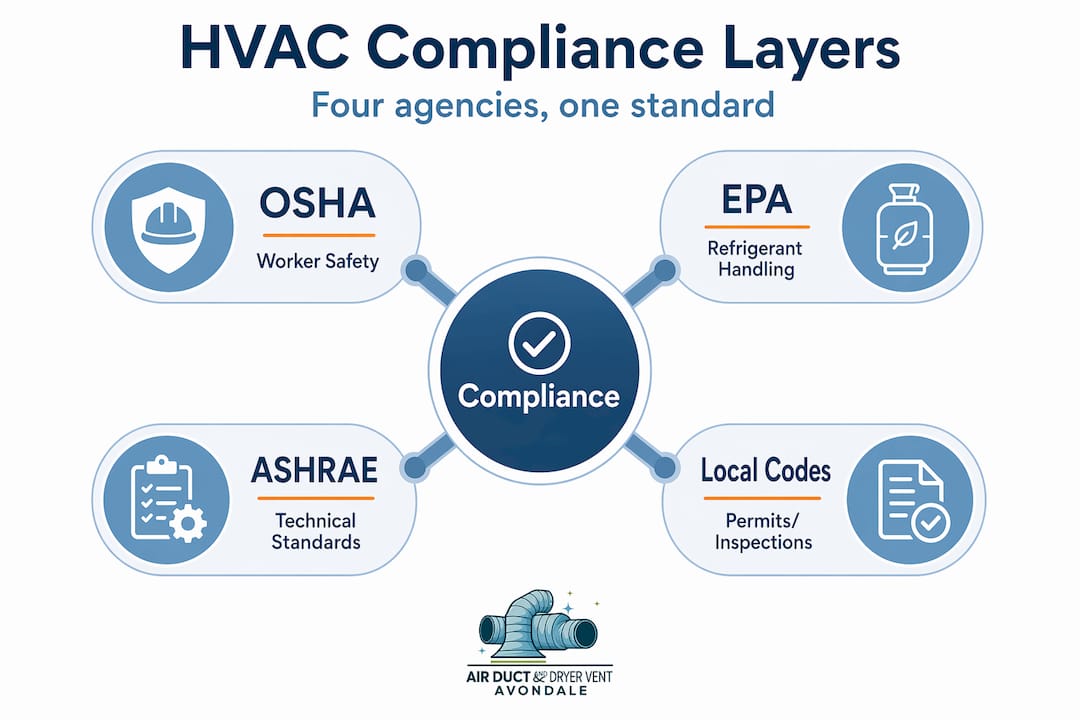
When people talk about HVAC safety guidelines, they often picture a single rulebook. In reality, four distinct layers of regulation govern what you install, how you maintain it, and who is allowed to touch it.
OSHA (Occupational Safety and Health Administration) sets the baseline for worker safety during installation and maintenance. If a technician is working on your property, OSHA rules apply. Those rules cover electrical hazard protocols, fall protection, confined space entry, and lockout/tagout procedures that prevent accidental equipment startup during service. As a property owner or manager, you can be held liable if a contractor is injured on your site without proper safety measures in place.
The EPA governs refrigerant handling through Section 608 of the Clean Air Act. Any technician who purchases or handles refrigerants must hold EPA Section 608 certification. The EPA also controls which refrigerants can be used, imported, and installed, which matters enormously given the current transition away from high-GWP (global warming potential) refrigerants.
ASHRAE (American Society of Heating, Refrigerating and Air-Conditioning Engineers) publishes the technical standards that form the backbone of HVAC design and maintenance. ASHRAE 180 prescribes scheduled inspections and maintenance tasks with defined frequencies, giving facility managers a structured framework for compliance. ASHRAE 62.1 covers ventilation for acceptable indoor air quality, and ASHRAE 90.1 addresses energy efficiency standards for commercial buildings.
Local building codes add another layer. Your municipality or state may require specific permits, inspections, and licensed contractors for any HVAC work. In Arizona, for example, the Registrar of Contractors licenses HVAC professionals, and unlicensed work can void warranties and insurance coverage.
Here is a quick reference to help you map the major standards:
| Standard / Regulation | Governing Body | What It Covers |
|---|---|---|
| Section 608 | EPA | Refrigerant handling and technician certification |
| ASHRAE 180 | ASHRAE | Inspection and maintenance frequency schedules |
| ASHRAE 62.1 | ASHRAE | Indoor ventilation and air quality minimums |
| OSHA 29 CFR 1910.147 | OSHA | Lockout/tagout for hazardous energy control |
| Local Building Codes | State/Municipal | Permits, licensed contractors, inspections |
Key certification and documentation requirements to keep on your radar include:
- EPA Section 608 certification for any technician handling refrigerants
- Maintenance logs with dates, technician credentials, and work performed
- Calibration records for sensors and controls (especially for commercial properties)
- Permit documentation for any new HVAC installation or major modification
- Inspection reports filed according to the frequency ASHRAE 180 specifies
Understanding HVAC standards at this level tells you one thing clearly: compliance is a multi-agency responsibility, and gaps in any one area create real exposure.
Common HVAC hazards and the compliance risks behind them
The hazards connected to HVAC systems are not limited to fire or refrigerant leaks. Many of the most serious risks are procedural, meaning they occur when the right safety steps are skipped during routine maintenance or emergency repairs.
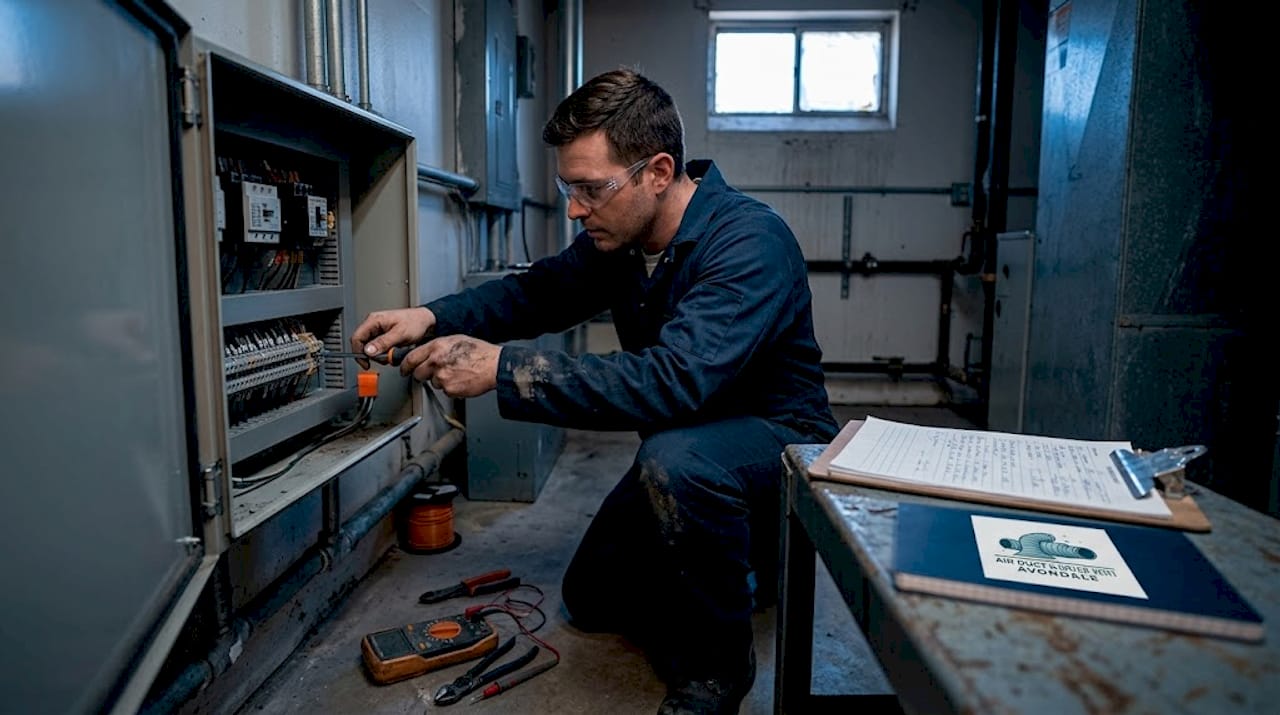
Electrical hazards top the list. HVAC systems carry high-voltage components including compressors, motor starters, and control boards. Working on energized equipment without proper lockout/tagout procedures is one of the most cited OSHA violations, alongside fall protection failures and confined space entry without permits. Each of these citations carries penalties that can exceed $16,000 per violation. For a property manager overseeing multiple units, a single incident can trigger a cascade of financial and legal consequences.
Refrigerant mishandling is another critical area. R-410A, the refrigerant used in most systems installed before 2025, is not directly toxic but displaces oxygen in enclosed spaces and can cause suffocation. The newer A2L refrigerants being phased in are mildly flammable, which introduces fire and explosion risks that older HVAC infrastructure was never designed to manage. A2L refrigerant transition requirements include leak sensors, alarms, and ventilated fire-rated shaft enclosures for refrigerant piping. Legacy systems often lack all three.
Confined space entry applies any time a technician enters an air handling unit, crawl space, or mechanical room that qualifies as a permit-required confined space under OSHA definitions. Without written permits, atmospheric testing, and a trained attendant outside the space, a service call can become a life-threatening situation.
Fall hazards are especially relevant for rooftop and split-system units. Mandatory 100% tie-off is required when working above six feet, and this requirement applies to contractors working on your property.
Pro Tip: Ask any HVAC contractor for proof of their safety program before they begin work on your property. A reputable company will have written lockout/tagout procedures, fall protection plans, and current EPA certifications on file. If they hesitate, find someone else.
Beyond fines, non-compliance creates liability exposure for property owners when workers or occupants are harmed. Explaining HVAC safety codes to your tenants and service providers before work begins is one of the simplest risk-reduction steps you can take.
It is also worth knowing that poor calibration records for CO2 sensors and other demand-controlled ventilation components are among the most common triggers for enforcement penalties in commercial buildings. A sensor that works perfectly but lacks a current calibration certificate still puts you out of compliance.
Practical HVAC compliance steps for homeowners and property managers
Understanding HVAC standards matters most when it translates to specific actions. Here is how to keep your system compliant and safe without needing an engineering degree.
-
Follow a structured maintenance schedule. ASHRAE 180 outlines the inspection frequencies you should use as a baseline. For residential properties, that typically means semi-annual inspections covering filters, coils, drainage, refrigerant levels, and electrical connections. For commercial properties, quarterly inspections are often recommended, with monthly checks on filters and controls in high-use environments.
-
Replace air filters based on your environment, not a calendar. Clogged air filters are the leading cause of HVAC motor burnout and premature system failure. If you have pets, live in a high-pollen area, or recently completed renovation work, inspect your filter every 30 days rather than waiting for a 90-day reminder. A filter that looks gray and matted needs to come out now, regardless of when you last changed it.
-
Seal and test your ductwork. Proper duct sealing and maintaining indoor humidity between 30 and 50 percent can prevent 20 to 30 percent conditioned air loss and inhibit mold growth. Leaky ducts do not just waste energy. They draw in unconditioned air from attics and crawl spaces that can carry dust, mold spores, and pests directly into your living or working environment. Learn more about duct sealing and efficiency and what a difference it makes for air quality.
-
Build a written safety program if you manage commercial property. A comprehensive safety program covers policies, PPE requirements, lockout/tagout procedures, fall protection, and emergency response plans. This is not just a regulatory checkbox. It is the document that protects you when something goes wrong.
-
Document everything digitally. Paper logs get lost, misfiled, or damaged. Digital safety management platforms reduce human errors in compliance tracking by over 60 percent. At minimum, keep a digital folder with dated service records, technician credentials, filter change logs, and any inspection reports. Most HVAC companies now provide digital service summaries you can save directly to cloud storage.
-
Prepare for inspections proactively. Before any scheduled compliance inspection, pull your maintenance records and confirm that calibration certificates for any sensors are current and asset-specific. An inspector who cannot find documentation will fail your system regardless of its actual condition.
Pro Tip: Set a recurring calendar reminder 30 days before your next scheduled HVAC inspection to audit your documentation. Check that every service record is dated, signed, and includes the technician's certification number.
These steps make how to ensure HVAC safety less about reacting to problems and more about running a tight, documented operation that holds up under scrutiny.
The refrigerant transition and what it means for your property
The shift away from high-GWP refrigerants is the single biggest change reshaping HVAC compliance requirements right now. Most systems installed before 2025 use R-410A, which carries a global warming potential roughly 2,088 times that of CO2. Under EPA regulations, the manufacture and import of new R-410A equipment has been heavily restricted, pushing the industry toward A2L refrigerants like R-32 and R-454B.
Here is where it gets important for property owners. The EPA removed the January 1, 2026 installation deadline for equipment using refrigerants with GWP above 700, provided that equipment was manufactured or imported before January 1, 2025. That means contractors can still install stockpiled R-410A equipment without a hard cutoff date. For property owners sitting on replacement quotes that were rushed due to the original deadline, this change offers breathing room.
However, moving to A2L refrigerants is not simply a matter of swapping out equipment. The A2L transition requires facility-wide safety infrastructure changes that catch many owners off guard.
| A2L Safety Requirement | Why It Matters | Applicable To |
|---|---|---|
| Refrigerant leak detectors | Detect ignitable concentrations before they become hazardous | All new A2L installations |
| Audible and visual alarms | Alert occupants to refrigerant buildup in enclosed spaces | Commercial and multi-unit residential |
| Ventilated fire-rated pipe shafts | Contain and vent refrigerant if piping passes through floors | Multi-story buildings |
| Updated technician training | A2L handling requires different protocols than R-410A | All service personnel |
The ventilated fire-rated shaft enclosures deserve special attention. For any building where refrigerant piping passes through multiple floors, current code now mandates that this piping be enclosed in shafts that are both fire-rated and mechanically ventilated. Retrofitting an existing building to meet this requirement is expensive and time-consuming. Many property managers discover this requirement only after signing a contract for new equipment.
For roof ventilation tied to HVAC systems, watching for signs of ventilation problems early can prevent costly structural and air quality failures that complicate any refrigerant transition.
If you plan to keep an older R-410A system running past its original service life, talk to your HVAC contractor about a documented legacy system plan. That means confirming refrigerant supply availability, establishing a leak monitoring protocol, and setting a realistic replacement timeline before a failure forces your hand.
My honest take on HVAC compliance after years in the field
I have talked with hundreds of homeowners and property managers about their HVAC systems, and the pattern I keep seeing is the same. People invest in good equipment and then treat the paperwork as an afterthought. Missing a calibration certificate or losing a filter change log sounds minor until an inspector or an insurance adjuster asks for documentation you cannot produce.
What surprises most people when they dig into HVAC safety regulations is how much of compliance lives in documentation rather than hardware. Your system can be functioning perfectly, but if the service records are incomplete or the technician's certification number is missing from the last maintenance report, you have a compliance gap.
The A2L refrigerant transition is where I see property managers struggling most right now. Many are focused on whether their equipment qualifies under the updated EPA deadline, but the deeper challenge is the building infrastructure. If you manage a multi-story commercial property and your piping runs through floors, the fire-rated shaft requirement alone can turn a routine equipment upgrade into a six-figure renovation project.
My practical advice: start your transition planning now, even if you are running R-410A equipment that has years of life left. Get a contractor to assess your building's piping layout and identify what infrastructure changes an A2L upgrade would require. Knowing that number in advance gives you time to budget and plan rather than scrambling when your compressor fails in July.
I also believe that digital maintenance tracking is one of the highest-leverage changes a property manager can make. I have seen facilities that managed dozens of HVAC units with nothing but a shared spreadsheet and sticky notes on the mechanical room door. That approach creates compliance exposure every single day. A basic CMMS or even a structured cloud folder can transform that chaos into a defensible maintenance record that protects you when it matters.
— Shaun
Keep your HVAC system clean, safe, and compliant
Maintaining HVAC safety standards does not stop with inspections and documentation. The physical condition of your air ducts, vents, and dryer vents directly affects both air quality and system performance. Dust and debris buildup inside ducts restricts airflow, forces your system to work harder, and creates conditions where mold and allergens circulate through your property. Regular professional cleaning is one of the most direct ways to prevent HVAC fire hazards and keep your system operating within safe parameters.
Airanddryerventcleaningavondale provides professional air duct and vent cleaning services for residential and commercial properties in Avondale, Arizona. Scheduling regular cleanings creates a documented maintenance record that supports compliance inspections and keeps your indoor air quality where it needs to be. Contact Airanddryerventcleaningavondale to schedule a cleaning and keep your HVAC system safe, efficient, and inspection-ready.
FAQ
What agencies set HVAC safety standards?
OSHA, the EPA, ASHRAE, and local building codes each govern different aspects of HVAC safety, covering worker protection, refrigerant handling, maintenance schedules, and installation requirements respectively.
What is the EPA's current rule on R-410A installations?
The EPA removed the January 1, 2026 installation deadline for R-410A equipment, allowing property owners to install qualifying stockpiled units after that date until supply is depleted, as long as the equipment was manufactured or imported before January 1, 2025.
How often should HVAC air filters be changed?
Filters should be inspected every 30 days in homes with pets, allergies, or recent construction, rather than following a fixed schedule. Waiting for a 90-day reminder in high-demand environments risks motor burnout and system failure.
What are the biggest OSHA violations in HVAC maintenance?
The top OSHA citations in HVAC work are lockout/tagout violations, fall protection failures, and confined space entry without permits. Each violation can carry penalties exceeding $16,000.
Do A2L refrigerants require special building modifications?
Yes. A2L refrigerants require leak detectors, audible alarms, and ventilated fire-rated pipe shaft enclosures in multi-story buildings. These are infrastructure changes, not just equipment swaps, and can be costly to retrofit in older buildings.