
TL;DR:
- HVAC system wear is primarily caused by dust buildup, incorrect filters, and lack of maintenance.
- Proper filter selection and regular cleaning can significantly extend system lifespan and improve air quality.
- Proactive routine inspections, timely filter changes, and duct cleaning prevent unnecessary damage and costly repairs.
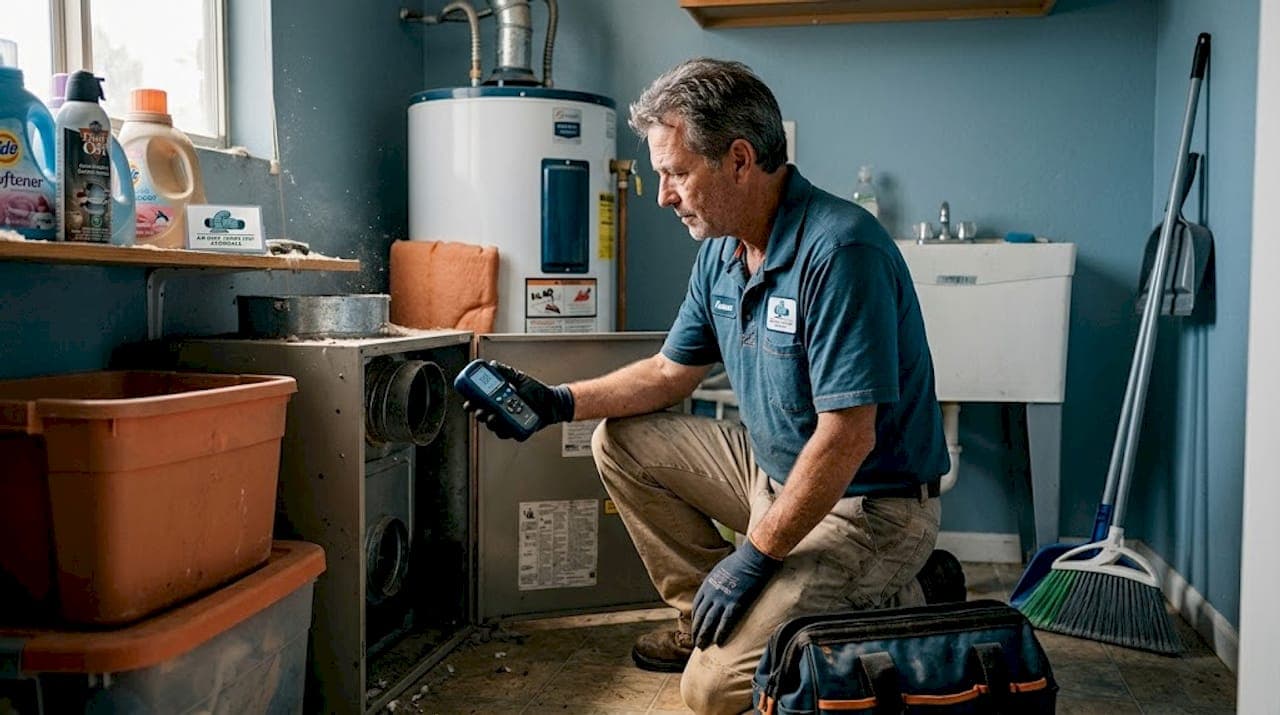
Most Avondale homeowners assume their HVAC system wears out simply because it gets old. That assumption costs real money. The truth is that preventable factors like dust storms, wrong filter choices, and skipped maintenance sessions accelerate wear far more than calendar years ever will. Your system could be three years old and showing signs of serious strain, or fifteen years old and running efficiently because it's been properly maintained. This guide breaks down exactly what causes HVAC system wear, how it connects to your indoor air quality and monthly energy bills, and what specific steps you can take right now to stop it from getting worse.
Table of Contents
- What is HVAC system wear and why does it matter?
- Major causes of HVAC system wear
- Filter choices and their surprising impact on system wear
- How indoor air quality and cleanliness affect HVAC lifespan
- Practical steps to reduce HVAC system wear
- A local expert's take: why system wear in Avondale is rarely 'just age'
- Ready for cleaner air and a longer-lasting HVAC system?
- Frequently asked questions
Key Takeaways
| Point | Details |
|---|---|
| System wear goes beyond age | Environmental factors and maintenance habits matter as much as equipment age. |
| Proper filter choice is critical | Using an incompatible filter can harm your system—even if it promises cleaner air. |
| Regular cleaning prevents wear | Routine duct and filter cleaning reduce energy use and extend HVAC lifespan. |
| Local climate speeds up wear | Avondale's dust means quicker buildup, making upkeep even more important. |
What is HVAC system wear and why does it matter?
HVAC system wear refers to the gradual degradation of the mechanical and air-handling components inside your heating, cooling, and ventilation equipment. Think of it like the wear on a car engine. Some of it is unavoidable, but most of the damage happens because of how the car is driven and maintained, not simply because of mileage.
The components most vulnerable to wear include blower motors, evaporator and condenser coils, air filters, ductwork, and control boards. Each one serves a different function, but they all share one trait: when any single part starts to struggle, the entire system works harder to compensate. That cascading effect is what drives up your energy bills and shortens your system's lifespan.
Here's a breakdown of the key areas where wear typically begins:
- Blower motors: These spin constantly to move air through your home or business. Dust buildup on motor windings causes overheating, and restricted airflow from clogged filters forces the motor to run at higher loads.
- Evaporator coils: Located in the air handler, these coils absorb heat from indoor air. A thin layer of dust or debris on the coil surface acts as insulation, reducing heat transfer and forcing the compressor to work overtime.
- Air ducts: Cracks, gaps, and accumulated debris in ductwork reduce airflow efficiency and allow contaminants to recirculate through your space.
- Filters: These are the first line of defense, but when clogged or improperly chosen, they become a major source of strain on the entire system.
- Control boards and sensors: Frequent voltage fluctuations and overheating conditions degrade electronic components faster than most people expect.
One of the most persistent misconceptions is that only age causes wear. In Avondale, the desert climate creates conditions that speed up wear dramatically compared to more temperate regions. Dust storms, called haboobs, push enormous volumes of fine particulate matter into the air. That dust infiltrates your system through every gap, dirty filter, and unsealed duct connection it can find.
"Most wear damage we see in Avondale systems isn't from age. It's from dust accumulation and filter mismatches that went unaddressed for just one or two seasons."
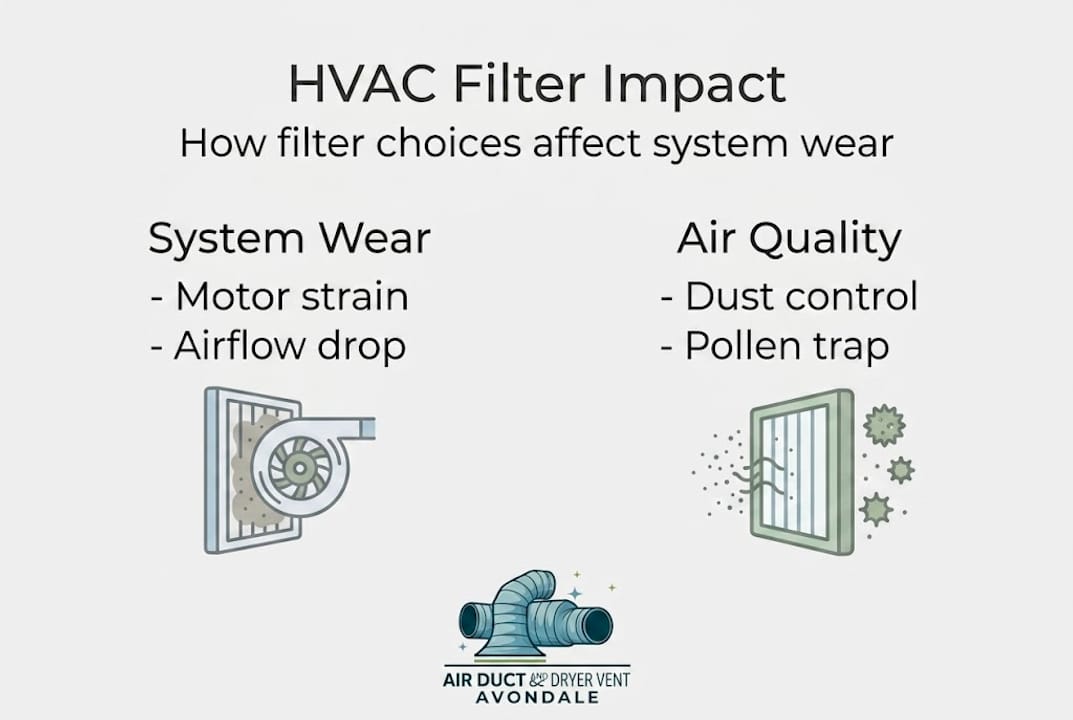
Another underappreciated factor is filter selection. Many well-meaning homeowners install the highest-rated filter they can find at the hardware store, thinking it protects the system better. In reality, high-MERV filters above 13 improve air quality but significantly increase static pressure when the HVAC system wasn't designed to handle that resistance, causing blower wear. This is a common mistake that silently damages blower motors over months of use.
Understanding wear in this broader context is the first step toward improving air quality and efficiency inside your Avondale home or commercial property. With the basics out of the way, let's unpack what, specifically, causes wear inside your HVAC system.
Major causes of HVAC system wear
Now that you know what system wear is, let's break down the biggest culprits and what you can do about them.
HVAC wear comes from three main categories: environmental factors, operating habits, and maintenance routines. Each one compounds the others, meaning that a dusty environment combined with poor maintenance and aggressive operation is far worse than any single factor alone.
Environmental factors in Avondale
Avondale sits in the greater Phoenix metro area, where annual dust events are routine and summer temperatures regularly exceed 110 degrees Fahrenheit. That heat alone forces air conditioning systems to run nearly non-stop from May through September. Extended run times mean more motor cycles, more refrigerant compression cycles, and more opportunity for components to fatigue. Add in fine desert dust that infiltrates return air vents, and you have a recipe for accelerated wear.
Pollen from Bermuda grass, olive trees, and desert shrubs also contributes significantly during spring months. Pollen particles are stickier than dust, meaning they adhere to coil surfaces and filter media more stubbornly, reducing airflow faster than dust alone.
Operating habits that cause wear
How you use your thermostat matters more than most people realize. Setting your thermostat to extreme low temperatures, say 68 degrees in a 112-degree summer, forces your system to run at 100 percent capacity for hours without cycling off. This constant full-load operation wears bearings and compressor valves faster than a system that cycles normally.
Conversely, leaving a system completely off for extended periods in high heat can cause lubricants inside the compressor to settle and degrade, leading to a rough restart.
Maintenance routines and the filter mistake
The single most controllable maintenance factor is filter management. Understanding the difference between filter types and choosing the right one is critical. The HVAC filter replacement benefits go well beyond cleaner air. Regular, correct filter changes reduce motor load, lower energy consumption, and prevent coil fouling.
Reviewing HVAC filter examples can help you understand what's appropriate for your specific system before you buy.

Here's a comparison to help clarify the most common wear causes and the corresponding best practices:
| Wear cause | Best practice to reduce it |
|---|---|
| Clogged or wrong filters | Change filters every 1 to 3 months, match MERV to system specs |
| Dust buildup on coils | Schedule annual coil cleaning |
| Duct leaks and gaps | Seal and inspect ducts every 2 to 3 years |
| Extreme thermostat settings | Use programmable settings to reduce full-load run time |
| Skipped professional tune-ups | Schedule a certified HVAC inspection each spring and fall |
| Running without cleaning after dust storms | Check and replace filters after major dust events |
Pro Tip: After any significant dust storm, check your return air filter before you run the system again. If it looks gray and matted, replace it immediately. Running a clogged filter after a haboob is one of the fastest ways to cause blower motor strain.
- Check the filter within 24 hours after any dust storm.
- Replace if visibly clogged, regardless of how recently it was changed.
- Inspect return air vents for debris and clear any blockages before restarting the system.
Using the wrong filter increases motor load and wear by restricting the airflow your blower motor was designed to move, forcing it to work harder and overheat over time.
Filter choices and their surprising impact on system wear
Of all the system wear factors, few are as misunderstood or impactful as filter selection. Here's why it matters so much.
Walk into any hardware store and you'll see filters ranging from MERV 1 to MERV 16 and beyond. The MERV rating, which stands for Minimum Efficiency Reporting Value, tells you how effectively a filter captures particles of different sizes. A higher number means smaller particles get caught. Sounds straightforward. But here's where it gets complicated.
Every HVAC system is engineered to move a specific volume of air against a specific amount of resistance. Filter manufacturers call this resistance "static pressure." A dense, high-MERV filter creates more static pressure than a thin, low-MERV filter. If your system was designed for a MERV 8 filter and you install a MERV 14, the blower motor suddenly has to push air through a much denser barrier. Over weeks and months, this strains the motor, overheats the windings, and can lead to premature failure.
That's why high-MERV filters above 13 are only beneficial when the system is specifically designed or retrofitted to handle the increased resistance. This is not a minor technicality. It's a real and common source of accelerated blower wear.
Here's how common filter types compare:
| Filter type | MERV range | Particle capture | System strain risk | Best for |
|---|---|---|---|---|
| Fiberglass | 1 to 4 | Very low | Very low | Equipment protection only |
| Standard pleated | 5 to 8 | Moderate | Low | Most residential systems |
| High-efficiency pleated | 9 to 12 | Good | Moderate | Allergy-sensitive households |
| High-MERV pleated | 13 to 16 | Excellent | High if incompatible | Systems designed for high resistance |
| HEPA | 17 and above | Near total | Very high if incompatible | Hospitals and specialty applications |
Signs that your current filter may be causing system strain:
- Reduced airflow from vents, even right after a filter change
- Unusual noise from the air handler, especially a low hum or whine
- Rising energy bills without a change in usage habits
- Longer run times to reach the thermostat set point
- Frost or ice on the evaporator coil, which signals restricted airflow
Pro Tip: Check your HVAC system's manual or the label on the air handler for the maximum recommended MERV rating. If you can't find it, call your HVAC manufacturer's support line. Using a filter rated two to three MERV points above your system's limit for just one season can reduce blower motor life by years.
Understanding how filter replacement boosts efficiency is about more than buying a better filter. It's about buying the right filter for your specific system. Reviewing examples of efficient air filters matched to different system types can save you from an expensive mistake.
How indoor air quality and cleanliness affect HVAC lifespan
Once you see how critical filters are, it's time to factor in Avondale's unique air quality challenges.
The air inside an Avondale home during summer can carry significantly higher concentrations of fine dust than air in a coastal or northern city. When that particulate-heavy air moves through your HVAC system, it deposits a fine layer of dust on every surface it contacts: coils, duct walls, blower blades, and drain pans. Over time, these layers build up and become a real problem.
Dirty evaporator coils lose heat transfer efficiency because dust acts as an insulating barrier. The system then runs longer to achieve the same cooling effect, putting more hours on the compressor and motor. Dirty duct walls narrow the effective diameter of the airflow path, increasing resistance similar to what an overly dense filter does.
The top local air quality threats in Avondale include:
- Dust storms and haboobs, which spike particulate counts dramatically
- Pollen from seasonal desert plants, particularly spring-blooming species
- Construction activity in growing neighborhoods, which generates fine silica dust
- Pet dander, which combines with dust to form a sticky, coil-coating mixture
- Mold spores that develop in drain pans and on coils when moisture sits unchecked
"A system operating in dirty duct conditions doesn't just clean less effectively. It burns out faster. Every pound of dust inside a duct system is friction and heat that the blower motor was never designed to work against."
Regular duct cleaning removes the accumulated debris that forces your system to work harder. Scheduling HVAC cleaning for better airflow addresses the root problem, not just the symptom. Many Avondale business owners find that flexible scheduling matters, and after-hours HVAC cleaning options make it possible to keep operations running without interruption.
Understanding the elements of efficient HVAC systems shows clearly that cleanliness is not a luxury feature. It's a core requirement for efficiency and longevity. And in Avondale's environment, the margin for neglect is simply smaller than in most other cities.
Also worth noting: high-MERV filters above 13 can improve particle capture in dirty-air environments, but only when the system is designed to handle the added resistance. Better filtration paired with clean ducts is the winning combination.
Practical steps to reduce HVAC system wear
With a full understanding of what drives wear, you can use these simple steps to make your HVAC last.
The goal is to build a maintenance routine that addresses all three wear categories: environmental, operational, and maintenance-related. Consistency is more important than perfection. A system that gets basic care every month and a professional inspection twice a year will almost always outlast a system that gets intensive attention once and is then ignored for years.
Your step-by-step maintenance plan
- Change your air filter every 1 to 3 months. In Avondale's dusty environment, lean toward monthly changes during summer and after dust events. Always use a filter with a MERV rating compatible with your system specs.
- Inspect return air vents monthly. Look for visible dust buildup, debris, or signs of pet hair blocking the grille. Clear any obstructions before they reach the filter.
- Schedule a professional HVAC inspection each spring and fall. Spring inspections prepare your system for the brutal summer cooling season. Fall inspections catch any damage the summer months inflicted.
- Have your air ducts professionally cleaned every 3 to 5 years, or sooner if you've had recent construction, a pest issue, or a major dust storm season.
- Clean the area around your outdoor condenser unit monthly. Clear away leaves, dirt, and debris. Maintain at least two feet of clear space around the unit for airflow.
- Test your thermostat seasonally. A malfunctioning thermostat can cause your system to run constantly or short-cycle, both of which accelerate wear on the compressor.
- Keep interior vents open and unobstructed. Closing vents in unused rooms doesn't save energy. It increases static pressure and forces the system to work harder.
Pro Tip: Listen to your system during the first week of every season. New rattles, hums, squeals, or grinding sounds are early warning signs that a component is beginning to fail. Catching a worn blower belt or dirty coil in April costs a fraction of what a failed compressor costs in July. If you hear anything unusual, contact professional HVAC cleaning specialists before the issue escalates.
If your system is more than 10 to 12 years old and showing multiple signs of wear, it may be worth evaluating upgrading your HVAC system as a more cost-effective path than repeated repairs. Modern systems operate at significantly higher efficiency ratings and are better designed to handle today's higher-filtration demands.
The same filter compatibility issue applies to new and old systems alike. Even a brand-new unit can be damaged by mismatched high-MERV filters that create static pressure beyond its design limits. Always verify compatibility before upgrading your filter type.
A local expert's take: why system wear in Avondale is rarely 'just age'
After working in Avondale's climate for years, the pattern becomes impossible to ignore. Homeowners come in convinced their system is wearing out because it's old. They expect to hear that it's time to replace everything. But when we dig into the service history, the real story almost always involves neglected filters, skipped duct cleanings, or filter choices that didn't match the system's design.
Age is a factor, sure. But it's rarely the lead actor. The most common culprits are completely preventable.
Here's what most HVAC guides leave out: the conversation about filter compatibility is almost never had at the point of sale. A homeowner buys a MERV 14 filter because the packaging says it captures 99 percent of particles. Nobody at the store asks what system they have or whether the blower is rated for that level of resistance. The filter gets installed, the system struggles silently for months, and eventually the motor fails. The homeowner assumes it's age. It isn't.
This is especially critical in Avondale because the desire for better air filtration is completely understandable given our dust levels. But the answer isn't always the highest-rated filter. The answer is the highest-rated filter your system can safely handle, combined with clean ducts and regular maintenance.
Genuinely real air quality improvements come from a system-wide approach, not from one product swap. And as research consistently shows, filters with MERV ratings above 13 only improve outcomes when paired with a system designed for them. Avondale's climate makes attention to every detail matter more than in most places. Don't let the age myth distract you from the fixes that are actually within your control.
Ready for cleaner air and a longer-lasting HVAC system?
Understanding system wear is only half the equation. The other half is acting on that knowledge before a minor issue becomes an expensive repair or full replacement.
At Air Duct and Dryer Vent Cleaning Avondale, we specialize in exactly the kind of targeted maintenance that prevents the wear patterns described in this article. Whether you manage a commercial property that needs commercial air duct cleaning to protect equipment and staff health, or you want a professional indoor air quality testing session to understand what's actually circulating in your home, we have you covered. Our full-service HVAC cleaning in Avondale includes flexible after-hours scheduling, so maintenance never has to interrupt your life or business. Reach out today and let's give your system the care it deserves.
Frequently asked questions
How often should HVAC filters be replaced to minimize wear?
Change filters every 1 to 3 months in most homes, and more frequently in Avondale's dusty conditions. After major dust storms, check the filter immediately and replace it if it's visibly clogged, regardless of when it was last changed.
What's the danger of using a high-MERV filter?
A filter with too high a MERV rating for your system creates excess static pressure that strains the blower motor, and as HVAC experts note, this can cause premature blower wear even in relatively new equipment. Always verify your system's maximum MERV rating before upgrading.
Does regular duct cleaning reduce HVAC wear?
Yes, clean ducts reduce the airflow resistance your system has to work against, which lowers motor load and can meaningfully extend the lifespan of your blower, coils, and compressor. In Avondale's dusty climate, duct cleaning every 3 to 5 years is a practical standard.
How can I tell if my HVAC system is experiencing premature wear?
Unusual noises like humming or grinding, noticeably weak airflow from vents, and rising energy bills without any change in usage are all early warning signs. Catching these symptoms early and calling a professional gives you the best chance of resolving the issue before it becomes a costly repair.