
TL;DR:
- Indoor air in Avondale homes is significantly more polluted than outdoor air due to poor filtration and ventilation.
- Regular HVAC maintenance, including filter changes and duct cleaning, greatly improves air quality and energy efficiency.
- Proper control of humidity and targeted filtration reduce health risks from mold, dust, ozone, and radon buildup.
The air inside your Avondale home is likely far dirtier than the air outside, even on a dusty Arizona afternoon. Indoor air runs 2-5x more polluted than outdoor air, according to the EPA. With Avondale summers pushing HVAC systems to their limits for months at a stretch, what happens inside those ducts and filters directly affects your health, your comfort, and your monthly energy bill. This guide breaks down exactly how your HVAC system shapes the air you breathe, what maintenance tasks actually move the needle, and what local conditions in Avondale mean for your approach to indoor air quality.
Table of Contents
- How HVAC systems impact indoor air quality
- Maintenance essentials: Cleaning, filters, and energy savings
- Filtration and pollutants: What HVAC removes and what it doesn't
- Practical tips for Avondale: Maximizing your HVAC system's air quality impact
- The overlooked truth about HVAC and air quality
- Get expert HVAC cleaning and air quality solutions in Avondale
- Frequently asked questions
Key Takeaways
| Point | Details |
|---|---|
| HVAC maintenance boosts air | Regular cleaning and filter changes improve indoor air quality and can cut energy bills dramatically. |
| Filter efficiency matters | Using high-efficiency filters and replacing them often reduces harmful particles and ozone more effectively. |
| Humidity impacts health | Controlling indoor humidity through HVAC helps prevent respiratory irritation and mold. |
| Local climate shapes needs | Avondale’s high heat and dust require more frequent HVAC service for optimal air quality. |
| Multi-pollutant monitoring advised | Tracking more than just CO2 ensures your indoor air is safe across all major contaminants. |
How HVAC systems impact indoor air quality
Most people think of their HVAC system as a heating and cooling machine. That framing misses a lot. Your HVAC system is also the lungs of your home, pulling air through filters, circulating it through ducts, and exchanging it with outdoor air. Every one of those steps either improves or worsens what you breathe.
The three main mechanisms are ventilation, filtration, and humidity control. Ventilation brings outdoor air in and pushes stale indoor air out. Filtration catches particles as air moves through the system. Humidity control keeps moisture levels in a range that supports health rather than mold. When any one of these breaks down, air quality suffers, even if the system is still heating and cooling just fine.
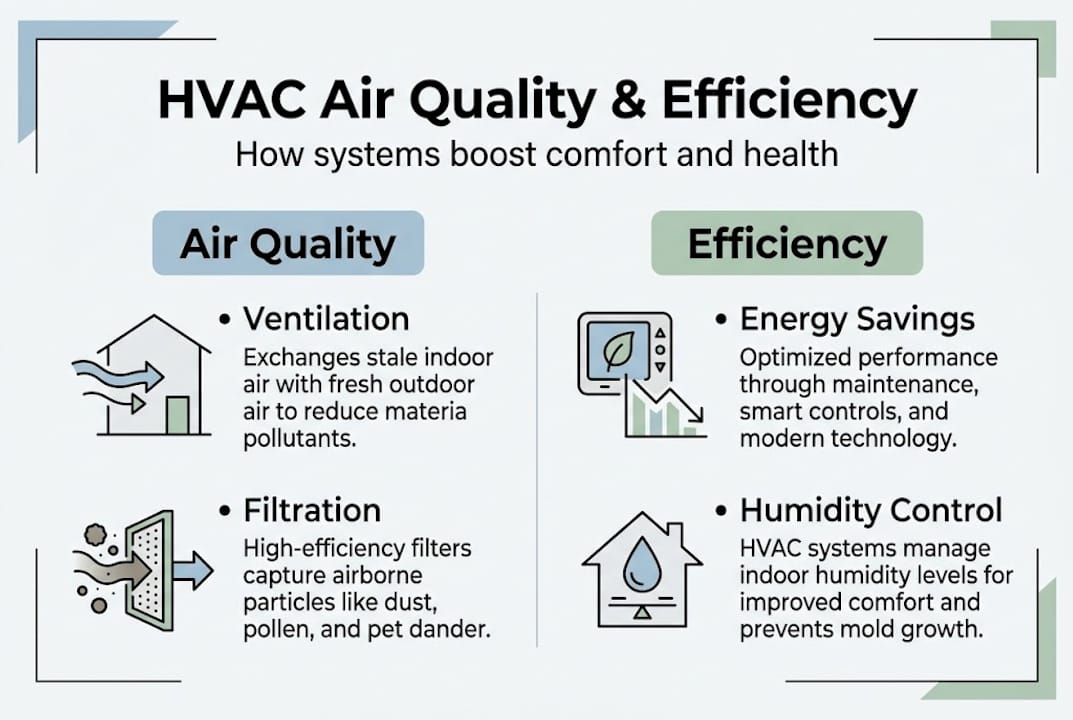
Understanding the efficient HVAC elements that drive both performance and air quality helps you make smarter decisions about maintenance. The American Society of Heating, Refrigerating and Air-Conditioning Engineers (ASHRAE) sets the standards that govern acceptable ventilation rates and humidity ranges for occupied spaces. These standards exist because getting either wrong has measurable health consequences.
Outdoor air exchange is more complicated than it sounds. Bringing in more outdoor air reduces CO2 buildup, which is good. But it also introduces outdoor ozone, which is not. Research shows that higher outdoor air exchange raises indoor ozone levels while lowering CO2. The same study found that HVAC filters and ducts remove up to 18% of ozone passing through the system. That means your filter choice and replacement schedule directly affect ozone exposure, not just dust.
Here is a quick comparison of how each HVAC mechanism affects common indoor pollutants:
| Mechanism | Pollutants reduced | Limitations |
|---|---|---|
| Filtration | Dust, pollen, PM2.5, some ozone | Depends on filter efficiency rating |
| Ventilation | CO2, VOCs, stale air | Can introduce outdoor ozone |
| Humidity control | Mold, bacteria, dust mites | Must stay between 30% and 60% RH |
| Duct circulation | Distributes filtered air evenly | Dirty ducts reintroduce contaminants |
Key facts worth knowing about HVAC and air quality:
- A clogged or low-efficiency filter does not just reduce airflow. It can actually make particulate exposure worse.
- Humidity below 30% dries out respiratory membranes and makes you more vulnerable to infections.
- Humidity above 60% creates ideal conditions for mold growth inside ducts and on surfaces.
- Professional HVAC cleaning removes the accumulated debris that recirculates through your home every time the system runs.
- HVAC sanitizing goes a step further by treating surfaces inside ducts to reduce mold and bacteria.
The takeaway is that your HVAC system is not passive. It actively shapes what you breathe, for better or worse, depending on how well it is maintained.
Maintenance essentials: Cleaning, filters, and energy savings
Routine HVAC maintenance is where air quality improvements become real and measurable. The tasks are not glamorous, but the results show up in your health and your utility bills.
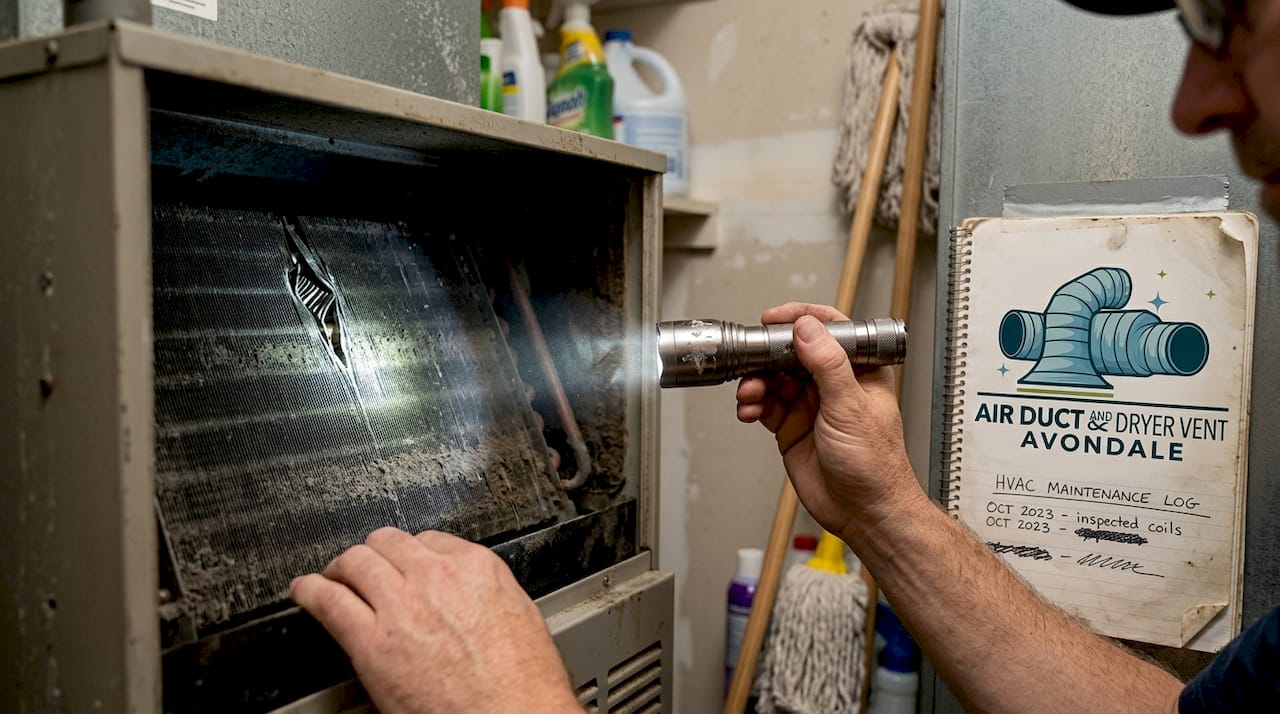
Dirty coils are one of the most overlooked problems in residential HVAC. When evaporator and condenser coils get coated in dust and grime, the system has to work much harder to move heat. Dirty coils raise energy use by 20 to 30%, according to maintenance data. That is not a marginal difference. On an Avondale summer electric bill, that kind of inefficiency adds up fast.
Filter changes are the single highest-impact maintenance task most homeowners can do themselves. During heavy use months, monthly replacement is the right call. A filter that is too dirty restricts airflow, which strains the blower motor and reduces the system's ability to filter anything at all. Our filter replacement guide walks through exactly which filter types work best for different situations.
Pro Tip: In Avondale, dust storms (haboobs) can load up your filter in a single event. Check your filter within 24 hours after any major dust storm, regardless of when you last changed it.
Professional duct cleaning delivers results that go beyond what filter changes alone can accomplish. A landmark NADCA study on HVAC cleaning found that cleaning reduced fan energy use by 41 to 60% and increased airflow by 10 to 46%. Those are not small improvements. They translate directly into lower bills and better air distribution throughout your home or business.
Here is what a basic annual maintenance schedule should include:
| Task | Frequency | Why it matters |
|---|---|---|
| Air filter replacement | Monthly (peak season), every 3 months otherwise | Maintains airflow and filtration efficiency |
| Coil cleaning | Annually | Prevents 20-30% energy waste |
| Drain pan and line cleaning | Annually | Prevents mold and water damage |
| Duct inspection and cleaning | Every 3-5 years or after construction | Removes debris that recirculates |
| Blower motor inspection | Annually | Catches wear before failure |
Our HVAC cleaning services cover all of these tasks for Avondale residents. Knowing when to schedule HVAC cleaning matters as much as the cleaning itself.
Core maintenance tasks that prevent the most common failures:
- Clean evaporator and condenser coils annually to prevent efficiency loss.
- Clear condensate drain lines to avoid water backup and mold growth.
- Inspect ductwork for leaks that waste conditioned air and pull in attic dust.
- Replace filters on schedule, not just when they look dirty.
- Have a technician check refrigerant levels and electrical connections each year.
Neglecting these tasks does not just raise your bills. It shortens the life of the equipment and creates conditions where mold, bacteria, and allergens thrive inside the system.
Filtration and pollutants: What HVAC removes and what it doesn't
Not all filters are equal, and not all pollutants respond the same way to HVAC filtration. Understanding the difference helps you make better choices for your specific situation.
Particulate matter (PM2.5) is one of the most studied indoor pollutants because of its direct link to respiratory and cardiovascular health. Research published in PMC on PM2.5 and radon found that air conditioning recirculation can reduce PM2.5 exposure by up to 4.5% when filters have at least 30% efficiency. But here is the counterintuitive part: filters with only 10% efficiency can actually increase PM2.5 exposure compared to no recirculation at all. A low-quality filter is not neutral. It can make things worse.
Ozone is a different challenge. It is a gas, not a particle, so standard filters do not catch it the way they catch dust. However, HVAC filters and ducts do remove up to 18% of ozone passing through the system through surface reactions. That is meaningful but not sufficient if outdoor ozone levels are high, which they can be in the Phoenix metro area during summer.
"The filter you choose is not just about dust. It determines your exposure to fine particles, ozone byproducts, and allergens. A filter upgrade is one of the highest-value changes you can make."
Humidity control is where HVAC earns its keep in ways most people never think about. Indoor relative humidity below 30% dries out nasal passages and makes respiratory infections more likely. Above 60%, mold and dust mites thrive. Your HVAC system is the primary tool for keeping humidity in the healthy 30 to 60% range, especially during Avondale's monsoon season when outdoor humidity spikes.
Radon is a pollutant that surprises many homeowners. It is a naturally occurring radioactive gas that seeps up from soil. The same PMC study found that AC recirculation raises indoor radon levels by 14 to 19% because it reduces the pressure differential that would otherwise push radon out. This does not mean you should avoid running your AC. It means that if radon is a concern, ventilation strategy matters alongside filtration.
For a step-by-step HVAC cleaning approach that addresses these pollutant types, the process involves more than running a vacuum through the ducts. It includes inspecting filter housing, treating coil surfaces, and checking for duct leaks that could pull in soil gases.
Pro Tip: Upgrade to a MERV 11 or MERV 13 filter if your system can handle the airflow restriction. These ratings capture significantly more fine particles than standard MERV 8 filters, without the extreme restriction of HEPA-level options that most residential systems cannot support.
Key limitations of standard HVAC filtration:
- Does not remove carbon monoxide or radon effectively.
- Low-efficiency filters may worsen PM2.5 exposure under recirculation.
- Ozone removal is partial and depends on filter surface area and contact time.
- VOCs (volatile organic compounds) from paints, cleaning products, and furniture pass through most standard filters.
- After-hours cleaning insights show that scheduling service during off-peak hours can reduce disruption while still addressing these pollutant pathways. Understanding HVAC efficiency essentials helps you match your system's capabilities to your air quality goals.
Practical tips for Avondale: Maximizing your HVAC system's air quality impact
Avondale's climate creates specific challenges that generic HVAC advice does not address. Extreme summer heat, dust storms, and monsoon humidity all hit your system hard and in different ways.
During the summer cooling season, your HVAC runs almost continuously. That constant operation is good for humidity control but brutal on filters and coils. Research shows that proper HVAC maintenance prevents up to 80% of system failures and cuts operating costs significantly. The same research highlights that standard CO2-focused ventilation standards often miss ozone and occupancy-related pollutant spikes, which is why multi-pollutant monitoring is becoming a smarter approach for both homes and businesses.
Here is a practical seasonal action plan for Avondale:
- Before summer (April/May): Schedule a full coil cleaning, drain line flush, and filter replacement. Have a technician check refrigerant charge and electrical connections.
- During summer (June through September): Replace filters monthly. Check after every major dust storm. Monitor for unusual odors or reduced airflow, both are early warning signs.
- Monsoon season (July through September): Watch humidity levels closely. If indoor humidity climbs above 60%, check that your drain pan and condensate line are clear.
- After summer (October): Inspect ductwork for any damage or debris accumulation from the heavy-use season. This is also a good time for duct cleaning scheduling if it has been more than three years.
- Year-round: Keep return air vents clear of furniture and debris. Blocked returns force the system to work harder and reduce filtration effectiveness.
Pro Tip: Place a simple indoor air quality monitor in your main living area. Models that track PM2.5, humidity, and CO2 are affordable and give you real-time feedback on whether your HVAC system is doing its job. If you see PM2.5 spikes when the system runs, it is a strong signal that your ducts need cleaning.
Local conditions that Avondale homeowners and business owners should factor in:
- Desert dust is ultra-fine and penetrates standard filters more easily than typical household dust.
- Construction activity in growing neighborhoods around Avondale introduces drywall dust and insulation fibers into duct systems.
- Pollen seasons in the Phoenix metro are longer than in most of the country, extending allergen pressure on your filters.
- Monsoon moisture creates a narrow window where mold can establish itself inside ducts if drain systems are not clear.
Using air filter tips tailored to desert conditions helps you choose the right filter type and replacement schedule for Avondale's specific mix of pollutants.
The overlooked truth about HVAC and air quality
The HVAC industry spends a lot of time talking about standards. ASHRAE ventilation rates, MERV ratings, CO2 thresholds. These are useful frameworks, but they can create a false sense of security. A system that meets every published standard can still deliver poor air quality if it has not been cleaned in three years and is running a filter that is two months overdue for replacement.
What the research actually shows is that the gap between a well-maintained system and a neglected one is enormous. NADCA's empirical data on cleaning outcomes (41 to 60% fan energy reduction, 10 to 46% airflow improvement) is not theoretical. Those are measured results from real systems. No amount of upgrading to a higher ASHRAE standard delivers that kind of improvement if the ducts are caked with debris.
The other thing most advice misses is filter efficiency as a variable, not just a checkbox. Having a filter is not the same as having effective filtration. A 10% efficient filter under recirculation can worsen PM2.5 exposure. That is a counterintuitive finding that matters enormously for real-world decisions. Choosing the right filter for your system and your local air conditions is not a minor detail. It is one of the highest-leverage decisions you make for indoor air quality.
Our perspective, shaped by working with Avondale homes and businesses directly, is that practical maintenance beats abstract compliance every time. The homeowner who changes their filter monthly and schedules professional cleaning every three years breathes cleaner air than the one who installs a premium system and ignores it. Connecting with expert HVAC cleaning advice grounded in real data makes that maintenance easier to get right.
Get expert HVAC cleaning and air quality solutions in Avondale
Putting all of this into practice is easier when you have a local team that understands Avondale's specific conditions. Dust storms, monsoon humidity, and near-constant summer cooling demand a maintenance approach built for this climate, not a generic checklist.
At Air Duct and Dryer Vent Cleaning Avondale, we offer the full range of services that make a measurable difference: duct cleaning, coil cleaning, filter replacement, and air quality testing that goes beyond CO2 to cover the pollutants that actually affect your health here. Our commercial air duct cleaning services help Avondale businesses maintain healthy environments for employees and customers alike. For residential clients, our air vent cleaning service removes the debris that standard maintenance misses. Flexible scheduling, including after-hours options, means service fits your life, not the other way around.
Frequently asked questions
How often should I replace my HVAC air filter in Avondale?
Replace your HVAC filter monthly during peak use and at least every three months otherwise to maintain air quality and efficiency. Avondale's dust storms can load a filter in a single event, so always check after major storms regardless of your regular schedule. Monthly filter changes during heavy-use seasons prevent the coil strain that drives up energy costs by 20 to 30%.
Can HVAC cleaning really reduce energy bills?
Yes. NADCA studies confirm that professional HVAC cleaning reduces fan energy use by 41 to 60% and improves airflow by 10 to 46%, delivering real, measurable savings on your utility bills.
What types of indoor pollutants can HVAC filtration remove?
HVAC filtration removes particulates, allergens, and some ozone, but filter efficiency is critical. HVAC filters remove up to 18% of ozone passing through the system, while higher-efficiency filters significantly cut PM2.5 exposure compared to low-efficiency options.
Why does humidity matter for HVAC and air quality?
Humidity outside the 30 to 60% range creates real health problems. Low humidity irritates airways and increases infection risk, while high humidity promotes mold growth inside ducts and on surfaces throughout your home.
Should I monitor for more than just CO2 indoors?
Absolutely. Standard CO2-focused ventilation misses ozone spikes and occupancy-driven pollutant changes. Tracking PM2.5, humidity, ozone, and radon alongside CO2 gives you a complete picture of what your household is actually breathing.