
TL;DR:
- Indoor air in Avondale homes and businesses can be up to five times more polluted than outdoor levels, affecting health. To improve indoor air quality, source control, proper ventilation, and air cleaning must be combined, considering local climate challenges like dust and wildfire smoke. Regular maintenance, testing, and professional duct cleaning further support healthier indoor environments.
The air inside your Avondale home or business might be making you sick, and you may not even realize it. Indoor pollutants can be 2 to 5 times higher than outdoor levels, and since most people spend roughly 90% of their time indoors, that exposure adds up fast. Symptoms like headaches, fatigue, sneezing, and itchy eyes are often blamed on stress or allergies, but the real culprit is frequently the air circulating through your own vents. Avondale's desert climate adds another layer of complexity, with dust, dry air, and seasonal wildfire smoke creating challenges that most generic air quality advice simply doesn't address.
Table of Contents
- Understand the sources of indoor air pollution
- Step 1: Source control – The best way to tackle indoor pollutants
- Step 2: Ventilation – Bringing in fresh air safely
- Step 3: Air cleaners and filtration – Making the most of modern technology
- Allergen reduction: Dust mites, mold, and more
- Our take: Why a layered approach always works best for Avondale air quality
- Professional help for lasting indoor air quality improvements
- Frequently asked questions
Key Takeaways
| Point | Details |
|---|---|
| Source control dominates | Eliminating or reducing pollutants at the source is the most effective, budget-friendly indoor air quality strategy. |
| Ventilate, but be smart | Increase outdoor air only when quality is good; Avondale’s conditions require flexible ventilation habits. |
| Choose the right filters | MERV 13 or HEPA filtration in HVAC and portable cleaners significantly reduce indoor allergens and pollutants. |
| Humidity matters | Maintain indoor humidity between 30 and 50 percent to prevent mold and dust mites, but avoid air that's too dry. |
| Pro help solves tough cases | Professional cleaning and testing tackle stubborn IAQ and allergen problems for homes and businesses. |
Understand the sources of indoor air pollution
If your indoor air isn't as clean as you'd like, it's crucial to identify where the problems are coming from before spending money on solutions.
Indoor pollutants fall into two broad categories: those generated inside your space and those that drift in from outside. Inside sources include household cleaning products, mold growth, dust mites, pet dander, cooking fumes, and tobacco smoke. Outside sources include vehicle exhaust, pollen, and in Arizona specifically, windblown dust and wildfire smoke. Radon, a naturally occurring soil gas, is also worth noting because testing indoor air quality in Arizona homes sometimes reveals elevated radon levels that go undetected for years.
What makes Avondale's situation unique is the combination of low humidity, extreme heat, and the occasional poor air quality day from regional wildfires. Low humidity keeps mold in check, but it also dries out nasal passages and airways, making people more susceptible to irritants. Dust storms, known locally as haboobs, push fine particulate matter into every crack and crevice of your home or office.
The good news is that three clear strategies improve IAQ: source control (removing or reducing the pollution), better ventilation (bringing in clean outdoor air), and air cleaning (filtering what's already inside). These strategies work best together, not in isolation.
| Strategy | What it does | Cost level |
|---|---|---|
| Source control | Removes or reduces pollutants at origin | Low |
| Ventilation | Dilutes indoor pollutants with outdoor air | Low to medium |
| Air cleaning | Filters and removes particles from indoor air | Medium to high |
Key pollutants to watch for in Avondale spaces:
- Dust and particulate matter from desert soil and HVAC systems
- Volatile organic compounds (VOCs) from paints, adhesives, and cleaning products
- Mold spores from any moisture intrusion or plumbing leaks
- Carbon monoxide from gas appliances and attached garages
- Radon from soil beneath the foundation
If you're curious about what's actually in your air before taking action, consider starting with a DIY duct cleaning assessment to see how much debris your system has accumulated.
Step 1: Source control – The best way to tackle indoor pollutants
Once you know the sources, you can take steps to eliminate or reduce many of them directly, often for less money than you'd think.
Source control is the most cost-efficient method for addressing most home and business IAQ problems. The logic is simple: if you stop the pollutant from entering your air in the first place, you don't need to spend as much on ventilation or filtration to clean it up afterward.
Here's a practical step-by-step approach for Avondale homeowners and small business owners:
- Establish a no-smoking policy indoors and in attached garages. Tobacco smoke contains hundreds of harmful compounds that cling to surfaces for months.
- Test for radon. Arizona soil conditions make radon a real concern for many properties. Radon test kits are inexpensive and widely available.
- Fix water leaks immediately. Even a slow drip under a sink creates the moisture mold needs to grow. Mold can establish itself within 24 to 48 hours on wet materials.
- Install a range hood that vents outside when cooking. Gas stoves release nitrogen dioxide and carbon monoxide; even electric stoves generate particulate matter and grease vapors.
- Switch to low-VOC or VOC-free products. Paints, adhesives, air fresheners, and many cleaning sprays release VOCs that linger long after the smell fades. Replacing them with allergy-friendly cleaning products makes a measurable difference.
- Seal gaps around doors, windows, and duct connections to reduce dust infiltration, which is especially important in Avondale where fine desert dust can enter through the smallest openings.
"Eliminating the source of a pollutant is almost always more effective than trying to dilute or filter it out after the fact. It also saves energy because your HVAC system doesn't have to work as hard."
Pro Tip: Before buying any new air freshener or scented candle, check the label for VOC content. Many popular home fragrance products release formaldehyde and benzene, which are classified as carcinogens. Unscented beeswax candles and essential oil diffusers with water are safer alternatives.
The lasting benefit of source control is that it keeps working even when your HVAC system is off. Ventilation and filtration require energy and maintenance to function, but removing a pollutant source means it simply isn't there anymore. For small businesses in Avondale, this can translate to lower sick day rates and better employee comfort without a major equipment investment. Pair source control with regular duct cleaning tips to keep your system from redistributing old debris.
Step 2: Ventilation – Bringing in fresh air safely
With sources tackled, your next line of defense is bringing in clean air. Here's how to do it strategically in Avondale.
Ventilation works by diluting indoor pollutants with outdoor air. Natural ventilation means opening windows and doors. Mechanical ventilation uses fans, HVAC systems, and dedicated fresh air intakes to move air in a controlled way. Both have a place in Avondale, but timing matters enormously.
For business owners, ASHRAE Standard 62.1 ventilation rates provide specific targets you should know:
| Space type | Per person (cfm) | Per square foot (cfm) |
|---|---|---|
| Office | 5 | 0.06 |
| Retail | 7.5 | 0.12 |
| Restaurant dining | 7.5 | 0.18 |
These numbers help you determine whether your current HVAC system is actually delivering enough fresh air. Many older commercial buildings in Avondale fall short of these targets, which contributes directly to employee fatigue and customer discomfort.
For Avondale homeowners, natural ventilation is a great option on cooler mornings in spring and fall, when outdoor air quality is good. However, in dry climates like Arizona, low humidity reduces dust mite and mold growth but can irritate airways if indoor relative humidity drops below 30%. Use a simple hygrometer (a humidity meter) to monitor your indoor levels.
Key ventilation guidelines for Avondale:
- Check the AQI (Air Quality Index) before opening windows. On days when wildfire smoke or dust storms push AQI above 100, keep everything closed and rely on your HVAC system.
- Use exhaust fans in kitchens and bathrooms every time you cook or shower to remove moisture and pollutants at the source.
- Consider a whole-house ventilation system if your home is tightly sealed for energy efficiency. Tight homes trap pollutants without a dedicated fresh air intake.
- Add a humidifier if indoor humidity drops below 30% during dry winter months. Overly dry air causes nosebleeds, dry coughs, and makes you more vulnerable to airborne viruses.
"In Avondale, the best ventilation strategy is opportunistic. Open up when the outdoor air is genuinely clean, and lock down tight when it isn't."
Pro Tip: Download a free AQI app like AirNow on your phone. Check it every morning before deciding whether to open windows or run your HVAC on fresh air intake mode. This one habit alone can dramatically reduce the amount of smoke and dust particles you bring inside during bad air days.
For more detailed guidance on how your HVAC system affects air quality, the team at improving air quality with HVAC covers the connection between system performance and the air you breathe. You can also learn about protecting air quality as your system ages. If you operate a commercial space and want a professional assessment, business air quality testing can confirm whether your ventilation is meeting code requirements.
Step 3: Air cleaners and filtration – Making the most of modern technology
Ventilation helps, but filtration and cleaning take your air quality to the next level, especially if outdoor air quality fluctuates.

The two most important terms to understand are MERV and HEPA. MERV stands for Minimum Efficiency Reporting Value. It's a scale from 1 to 16 that rates how well a filter traps particles. A higher MERV rating means finer particles get caught. HEPA stands for High Efficiency Particulate Air. A true HEPA filter captures 99.97% of particles as small as 0.3 microns, which includes most allergens, mold spores, and fine dust.
For Avondale homes and businesses, MERV 13 or higher filters in your central HVAC system are the recommended starting point. Pair those with portable HEPA air cleaners in bedrooms, living rooms, or office spaces where people spend the most time.
When choosing and maintaining air cleaners, follow these steps:
- Calculate the room size before buying a portable unit. Every air cleaner has a CADR rating (Clean Air Delivery Rate), which measures how quickly it cleans a specific room size. Bigger rooms need higher CADR values.
- Match the filter type to your main concern. HEPA handles particles. Activated carbon handles odors and VOCs. Many units combine both.
- Replace filters on schedule. A clogged filter doesn't just stop working; it forces your HVAC system to work harder, raising energy bills. Check HVAC filter options to find the right fit for your system.
- Don't skip filter replacement to save money. The benefits of filter replacement include both healthier air and lower monthly energy costs.
- Avoid ozone-generating air purifiers. Some ionic and UV purifiers produce ozone as a byproduct. Ozone is a lung irritant, which is the opposite of what you want.
For a practical overview of maintaining your system between professional visits, HVAC DIY maintenance walks through the basics any homeowner can handle safely.
Allergen reduction: Dust mites, mold, and more
Even with filtration in place, allergen reduction requires dedicated steps. Let's zero in on dust mites, mold, and more.
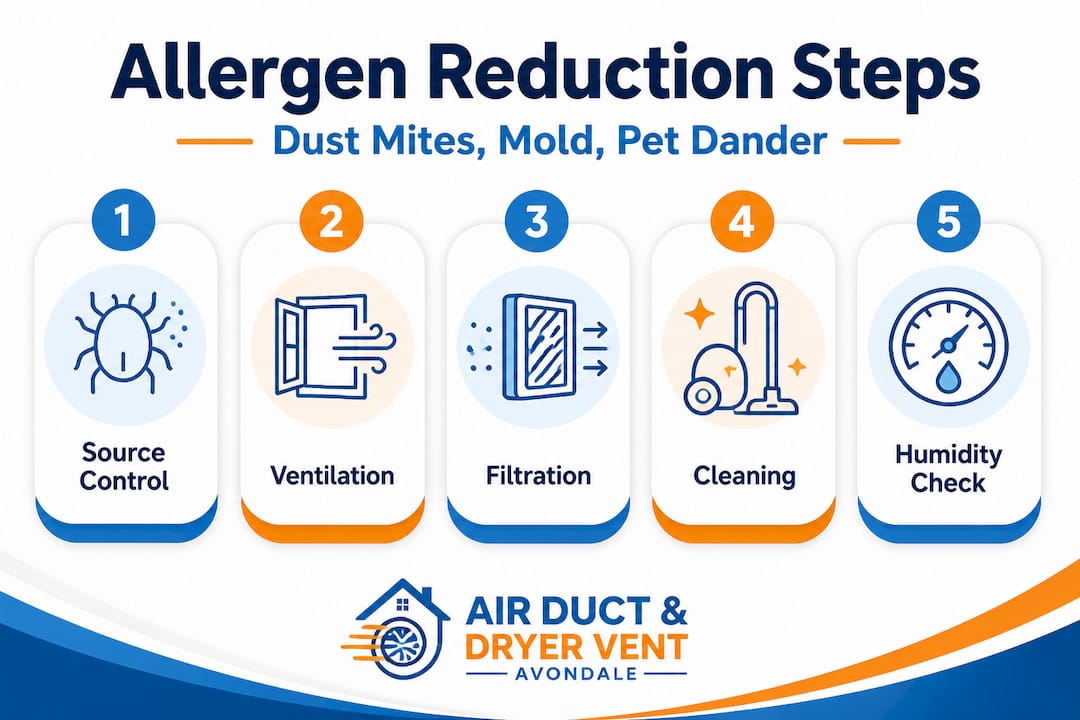
Dust mites are microscopic creatures that live in bedding, upholstery, and carpets. They don't bite, but their waste particles are one of the most common indoor allergens. In Avondale, the dry climate naturally limits dust mite populations compared to humid regions, but they still thrive in mattresses and pillows where body moisture concentrates overnight.
Here's a practical allergen control routine:
- Wash all bedding weekly in hot water at 130°F or higher. Hot water kills dust mites and removes their waste particles from fabric fibers.
- Use allergen-proof encasements on all mattresses and pillows. These zippered covers create a physical barrier that mites cannot penetrate.
- Vacuum carpets and upholstery twice a week using a vacuum with a HEPA filter. Standard vacuums can actually blow fine particles back into the air.
- Keep indoor humidity between 30 and 50%. Dust mites need humidity above 50% to reproduce. Staying below that threshold slows their population growth significantly.
- Fix any plumbing leaks within 24 hours. Mold prevention requires keeping surfaces dry and humidity below 50%, using exhaust fans in bathrooms and kitchens, and using a dehumidifier if needed.
- Keep bathroom surfaces dry after showering. Wipe down tile walls and leave the exhaust fan running for at least 15 minutes after bathing.
"For Avondale residents, the biggest allergen risk isn't humidity-related mold. It's the fine dust that settles into carpets, vents, and upholstery after every dust storm. Regular cleaning and HEPA filtration are your best defenses."
Pro Tip: Replace carpeting in bedrooms with hard flooring if allergy symptoms are severe. Carpets trap allergens deep in their fibers where vacuums can't reach. Hard floors are much easier to keep allergen-free with a damp mop. If carpet removal isn't an option, allergy cleaning solutions designed for deep fiber treatment can reduce allergen loads significantly.
Our take: Why a layered approach always works best for Avondale air quality
Here's the uncomfortable truth that most air quality articles skip: no single product or strategy fixes everything. We've seen Avondale homeowners spend hundreds of dollars on a premium air purifier, then wonder why their allergies haven't improved. The reason is almost always that they skipped source control or their ducts were circulating years of accumulated dust through the whole house.
The three-strategy approach works because each layer covers the weaknesses of the others. Source control stops pollutants from entering the air. Ventilation dilutes what's already there. Filtration catches what ventilation misses. Remove any one layer and the system develops gaps.
Avondale's climate demands flexibility that most people underestimate. During a haboob, you need to seal up tight and rely entirely on filtration. On a crisp February morning with low AQI, you should throw open the windows and let fresh air do the heavy lifting for free. The strategy shifts with the season and the weather.
Air cleaners are genuinely powerful tools, but air cleaner effectiveness equals efficiency times air flow, measured as CADR. A high-efficiency filter in a unit that moves too little air for your room size won't deliver the results you expect. Maintenance matters just as much as the initial purchase. A filter that hasn't been changed in six months is often worse than no filter at all because it restricts airflow and becomes a breeding ground for mold.
The most effective IAQ habits are small and frequent rather than occasional and dramatic. Changing your filter on schedule, running exhaust fans consistently, checking the AQI before opening windows, and washing bedding weekly all add up to dramatically cleaner air over time. For a deeper look at how your system's overall efficiency connects to air quality, explore efficient HVAC systems and what separates a well-maintained system from one that's quietly working against you.
Professional help for lasting indoor air quality improvements
When DIY efforts aren't enough or you want ultimate peace of mind, local professionals can make a huge impact on your home or business air quality.
Dust, allergens, and debris accumulate inside air ducts over years of normal use. No amount of filter changes removes what's already built up inside the ductwork itself. Professional cleaning reaches where homeowners can't, removing contaminant layers that recirculate every time your HVAC runs.
At Air Duct and Dryer Vent Cleaning Avondale, we specialize in exactly these stubborn problems. Our professional vent cleaning service removes years of accumulated dust, allergens, and debris from your entire duct system, giving your filtration efforts a clean foundation to work from. We also offer indoor air quality testing to identify hidden issues like mold, elevated VOCs, or radon that you can't detect without professional equipment. Both residential and commercial clients in Avondale can schedule flexible appointments, including after-hours service, to minimize disruption.
Frequently asked questions
How often should HVAC filters be replaced in Avondale homes?
Replace HVAC filters every one to three months, especially in dusty Arizona environments or during high-use seasons when your system runs continuously.
Which is the best filter type for trapping allergens?
MERV 13 or higher filters work best in central HVAC systems, while portable HEPA air cleaners provide supplemental filtration in individual rooms.
What humidity level should I keep indoors to reduce mold and dust mites?
Keep indoor humidity between 30 and 50%. Humidity above 50% encourages mold growth and dust mite reproduction, while levels below 30% irritate airways.
Is it safe to open windows for ventilation during wildfire smoke events?
Avoid opening windows during wildfire smoke or poor outdoor AQI days. Instead, reduce indoor exposure by running your HVAC on recirculate mode with a high-MERV filter and using portable air cleaners.
What simple habits help control indoor allergens?
Wash bedding weekly in hot water above 130°F, use allergen-proof encasements on mattresses and pillows, vacuum regularly with a HEPA-filtered vacuum, and fix any water leaks within 24 hours.