

TL;DR:
- Indoor air is often 2 to 5 times more polluted than outdoor air, making visible cleanliness misleading. Effective IAQ management requires measuring invisible pollutants with sensors, addressing pollution sources first, and implementing proper ventilation and humidity control. Relying solely on air purifiers, plants, or duct cleaning is insufficient without a comprehensive, system-based approach.
Indoor air quality (IAQ) is defined as the condition of the air inside a building as it relates to the health and comfort of occupants. The EPA confirms that indoor air is often 2 to 5 times more polluted than outdoor air, even when it looks and smells clean. That single fact makes most of the popular indoor air quality myths debunked in this article genuinely dangerous, not just inconvenient. If you run a home or a small business in Avondale, Arizona, the beliefs you hold about your air directly shape the decisions you make about filtration, ventilation, and maintenance. This article cuts through the noise and tells you what the science actually says.
1. The biggest indoor air quality myths debunked, starting with "clean-looking air is safe air"
The most persistent air quality misconception is the belief that visible dust is the only real threat. If your floors look clean and your vents aren't caked with gray fuzz, many homeowners assume the air is fine. That assumption is wrong, and it leads to years of inaction on problems that are actively affecting health.
The pollutants that cause the most harm are invisible to the naked eye. Volatile organic compounds (VOCs) from paint, cleaning products, and furniture off-gassing have no color or odor at dangerous concentrations. Mold spores, pollen, and fine particulate matter (PM2.5) are measured in microns. A human hair is roughly 70 microns wide. PM2.5 particles are 2.5 microns or smaller, meaning thousands can float in a single cubic foot of air without producing any visible haze.
The practical fix is measurement, not observation. Tools like CO2 sensors and PM2.5 monitors give you a real baseline. CO2 levels above 1,000 ppm signal that fresh air exchange is insufficient, even when a room smells neutral. That number matters because poor ventilation concentrates every other pollutant already present indoors. You can learn more about which specific metrics to track by reviewing household air quality indicators worth measuring at home.
Key invisible pollutants that sensors catch but eyes miss:
- VOCs from adhesives, paints, and synthetic fabrics
- Mold spores, especially in humid Arizona monsoon seasons
- Fine particulate matter from cooking, candles, and outdoor infiltration
- Carbon dioxide from occupant breathing in poorly ventilated spaces
- Radon, which is odorless and colorless but measurable with a test kit
2. "My air purifier handles everything" is one of the top home air quality myths
Air purifiers are genuinely useful tools. The problem is that marketing language has inflated expectations far beyond what any single device can deliver. Understanding what purifiers actually do, and what they cannot do, is central to debunking air quality myths that cost homeowners real money.
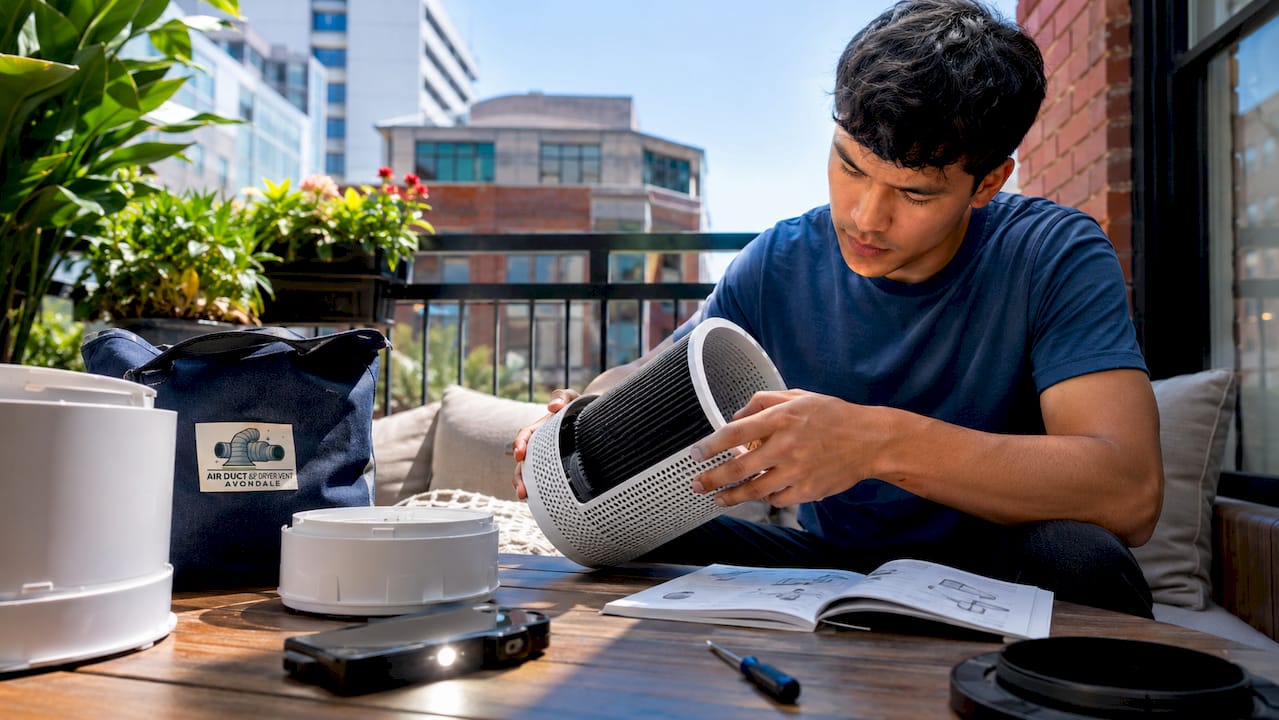
HEPA purifiers reduce airborne particles by 25 to 50 percent in a given space, which is meaningful but not total elimination. A HEPA filter captures particles 0.3 microns and larger with high efficiency. It does not capture gases, odors, or VOCs. For those pollutants, you need activated carbon filtration in addition to HEPA. Buying a HEPA-only unit and expecting it to handle cooking odors or off-gassing furniture is a setup for disappointment.
Ionizers are frequently marketed as superior alternatives to HEPA filters. They are not. Most ionizers produce no measurable reduction in airborne particles compared to true HEPA filtration. Some release trace amounts of ozone as a byproduct, which creates a secondary problem rather than solving the first one.
Ozone generators are not approved for use in occupied spaces by the EPA. They produce harmful secondary pollutants and worsen respiratory conditions. If a product is marketed as an "ozone air purifier" for home use, that is a red flag, not a feature.
Pro Tip: If you want odor and VOC control alongside particle filtration, look for units that combine a true HEPA filter with an activated carbon layer. Neither filter type alone covers the full spectrum of indoor pollutants.
One more myth worth addressing: a single purifier cannot clean an entire house. Air purifiers are rated by CADR (Clean Air Delivery Rate) for specific room sizes. Running one unit in your living room while your bedrooms remain unaddressed means most of your occupied space is getting no benefit at all.
| Device type | What it removes | What it misses |
|---|---|---|
| True HEPA filter | Particles 0.3 microns and larger | Gases, VOCs, odors |
| Activated carbon filter | Odors, VOCs, gases | Particles, mold spores |
| Ionizer | Minimal particle reduction | Gases, odors; may produce ozone |
| Ozone generator | Not recommended for occupied spaces | Creates harmful secondary pollutants |
3. "Running the HVAC fan means my home is ventilated" is a costly misconception
This is one of the most widespread air quality misconceptions among homeowners, and it has a direct cost. Running your HVAC fan feels productive. The air moves, the system hums, and the house feels less stuffy. None of that means fresh outdoor air is entering your home.
Most HVAC systems recirculate indoor air without introducing fresh outdoor air unless the system is specifically equipped with a dedicated fresh air intake. Standard residential systems pull air from inside, pass it through a filter, heat or cool it, and push it back into the same rooms. The same air cycles repeatedly. Every pollutant already present, whether VOCs, CO2, or mold spores, stays in circulation and concentrates over time.
Ventilation is a specific term. It means introducing fresh outdoor air to dilute and displace indoor pollutants. Circulation means moving existing air around. These are not the same thing, and confusing HVAC circulation with ventilation is a documented pattern that leads homeowners to skip the mechanical ventilation upgrades their homes actually need.
Modern energy-efficient homes trap pollutants more effectively than older construction because tight building envelopes reduce natural air infiltration. That is great for energy bills and genuinely problematic for air quality without a compensating ventilation strategy. Homes built after 2000 in particular often require dedicated mechanical ventilation systems such as energy recovery ventilators (ERVs) or heat recovery ventilators (HRVs) to maintain healthy air exchange rates.
Opening windows helps but is not a whole-home solution. Wind direction, outdoor pollution levels, and seasonal conditions in Avondale all affect how much fresh air actually enters. Proper ventilation controls moisture, odors, and pollutant buildup in a way that occasional window-opening cannot replicate consistently.
Pro Tip: Ask your HVAC technician whether your system includes a fresh air intake damper. If it does not, an ERV or HRV addition can introduce controlled fresh air exchange without significantly increasing your energy costs.
4. Houseplants do not purify your air in any meaningful way
The houseplant myth is one of the most beloved air quality misconceptions, partly because it originated from real NASA research. The 1989 NASA Clean Air Study found that certain plants removed VOCs in sealed chamber conditions. That finding was accurate for the experimental setup. It does not translate to your living room.
Houseplants provide no significant air purification in real-world home environments. The pollutant removal rates measured in sealed lab chambers do not scale to standard living spaces with normal air exchange rates. To match the air-cleaning effect demonstrated in those lab conditions, you would need hundreds of plants per room, with the soil surface exposed and actively managed. A few pothos on a shelf are not moving the needle on your VOC levels.
This does not mean plants are worthless indoors. They add humidity in dry climates, support mental well-being, and make spaces more pleasant. They just are not an air quality strategy. Treating them as one means you are not addressing the actual sources of pollution in your space.
5. "Duct cleaning is a one-time fix" misunderstands how HVAC systems work
Many homeowners get their ducts cleaned once, feel satisfied, and assume the job is done indefinitely. Duct cleaning is not a one-time fix. It is a maintenance task with a recommended schedule, and skipping it has measurable consequences for air quality and system efficiency.
Professional duct cleaning is recommended every two years as a baseline. Homes with pets, children, recent renovations, or residents with allergies need more frequent inspection and cleaning. Construction debris, pet dander, and mold spores accumulate in ductwork regardless of how often you change your filter. Changing your filter regularly does not prevent dust and debris from building up inside the ducts themselves. These are two separate maintenance tasks that complement each other.
The myth that duct cleaning alone solves all air quality problems is equally misleading. Duct cleaning removes accumulated debris from the distribution system. It does not address pollutant sources, filter quality, or ventilation rates. A freshly cleaned duct system running stale, recirculated air through a low-grade filter still delivers poor air quality. You can read more about HVAC cleaning misconceptions that affect homeowners making these decisions.
6. High humidity is just uncomfortable, not an air quality problem
Humidity is treated as a comfort issue in most home conversations. The reality is that indoor humidity levels directly affect allergen concentrations, mold growth, and the effectiveness of your filtration systems. Getting this wrong means your air quality suffers even when everything else is managed well.
Humidity above 50 percent worsens pollen allergen effects and accelerates mold growth on surfaces and inside ductwork. Dust mites, one of the most common indoor allergens, thrive at humidity levels above 50 percent and die off significantly when humidity drops below 35 percent. Maintaining indoor humidity between 30 and 50 percent is the target range for allergy relief and mold prevention.
In Avondale, the challenge cuts both ways. Summer monsoon season pushes outdoor humidity up sharply, which infiltrates homes and raises indoor levels. Winter months can drop indoor humidity low enough to irritate airways and dry out mucous membranes, which actually reduces your body's natural defense against airborne particles. A whole-home humidistat or smart thermostat with humidity monitoring gives you control over this variable year-round. The relationship between humidity and air quality in home environments is more direct than most homeowners realize.
| Humidity level | Effect on indoor air quality |
|---|---|
| Below 30% | Dry airways, increased particle irritation, static buildup |
| 30 to 50% | Optimal range: inhibits dust mites and mold, supports comfort |
| Above 50% | Mold growth risk increases, dust mites thrive, allergens worsen |
| Above 60% | Active mold colonization likely in ductwork and wall cavities |
7. "Source control doesn't matter if I have a good filter" gets the priority backwards
The most effective indoor air quality strategy starts with source control over purification. The EPA is direct on this point: removing or reducing the source of a pollutant is more effective than trying to filter it out after it has already entered the air. Buying a better air purifier while ignoring the source of your pollution is treating the symptom rather than the cause.
Source control means identifying where pollutants originate and addressing them directly. That includes switching to low-VOC paints and cleaning products, sealing crawl space moisture sources, fixing plumbing leaks before mold establishes, using exhaust fans during cooking and showering, and choosing furniture and flooring materials that off-gas minimally. None of these steps require expensive equipment. They require awareness of what is generating pollution in your specific space.
Filtration and ventilation are the second and third layers of an effective IAQ strategy, not the first. When you understand what causes indoor air pollution in Avondale homes specifically, the source control priorities become much clearer. A systematic approach that starts with sensors to diagnose baseline conditions, moves to source control, then adds ventilation improvements and enhanced filtration, produces far better results than any single device or service purchased in isolation.
Key takeaways
Debunking indoor air quality myths requires replacing vague assumptions with measurable facts: the most effective IAQ strategy combines source control, proper ventilation, targeted filtration, and humidity management rather than relying on any single device or service.
| Point | Details |
|---|---|
| Invisible pollutants are the real threat | VOCs, PM2.5, and mold spores require sensors, not visual inspection, to detect. |
| HEPA filters have real limits | HEPA reduces particles by 25 to 50 percent but needs activated carbon to address odors and VOCs. |
| Circulation is not ventilation | HVAC fans recirculate air; fresh air requires dedicated intake systems or mechanical ventilation. |
| Duct cleaning needs a schedule | Every two years is the baseline; pets, renovations, and allergies call for more frequent service. |
| Source control comes first | Removing pollutant sources is more effective than filtering air after contamination has occurred. |
What I've learned after years of seeing these myths play out in real homes
I've walked through hundreds of homes and small businesses where the owners were genuinely trying to do the right thing for their air quality. They had air purifiers running in every room, a collection of houseplants on every windowsill, and filters they changed religiously every 90 days. And yet their ducts were packed with debris, their humidity was running at 60 percent through monsoon season, and their HVAC system had no fresh air intake at all.
The marketing around air quality products is extraordinarily good at selling the idea that one device solves everything. It doesn't. What I've found consistently is that homeowners who get real results treat IAQ as a system, not a product purchase. They measure first, identify the actual sources of their problems, address those sources directly, and then layer in filtration and ventilation as support tools.
The houseplant myth is the one that surprises people most when I explain it. There's something emotionally satisfying about the idea that a living thing is cleaning your air. I understand the appeal. But if you're relying on a snake plant to offset the VOCs from your new laminate flooring, you're not solving the problem. You're just feeling better about not solving it.
My honest recommendation: spend $50 on a CO2 and PM2.5 sensor before you spend $500 on an air purifier. The data will tell you what your actual problem is. Then you can spend money on the right solution instead of the most heavily advertised one. Understanding how HVAC systems actually improve air quality versus what they're commonly believed to do is a good starting point for that education.
— Shaun
Get your Avondale home's air quality assessed by professionals
Knowing the facts about indoor air quality is the first step. Acting on them is where real improvement happens. Airanddryerventcleaningavondale provides professional air duct and vent cleaning services for residential and commercial properties in Avondale, Arizona, removing the accumulated dust, mold spores, and debris that no filter change alone can address. If you're not sure what your air actually contains, professional indoor air quality testing gives you a measured baseline so improvements are targeted, not guesswork. Flexible scheduling, including after-hours options, means getting your system serviced doesn't require rearranging your week.
FAQ
Does indoor air really get more polluted than outdoor air?
Yes. The EPA states that indoor air is often 2 to 5 times more polluted than outdoor air, even in spaces that appear clean. Pollutants like VOCs, mold spores, and fine particulate matter concentrate indoors without adequate ventilation.
How often should air ducts be professionally cleaned?
Professional duct cleaning is recommended every two years as a baseline. Homes with pets, recent renovations, or residents with allergies or asthma may need more frequent inspection and service.
Can a HEPA air purifier eliminate all indoor pollutants?
No. HEPA filters reduce airborne particles by 25 to 50 percent but do not capture gases, VOCs, or odors. Activated carbon filtration is required alongside HEPA to address the full range of common indoor pollutants.
Is opening windows enough to ventilate a modern home?
Opening windows helps but is not a reliable whole-home ventilation strategy. Modern energy-efficient homes are built tightly, and natural air infiltration is insufficient to dilute pollutants without a dedicated mechanical ventilation system.
What humidity level is best for indoor air quality?
Maintaining indoor humidity between 30 and 50 percent inhibits dust mite populations, reduces mold growth risk, and supports respiratory comfort. Levels above 50 percent accelerate mold colonization and worsen allergen concentrations.