
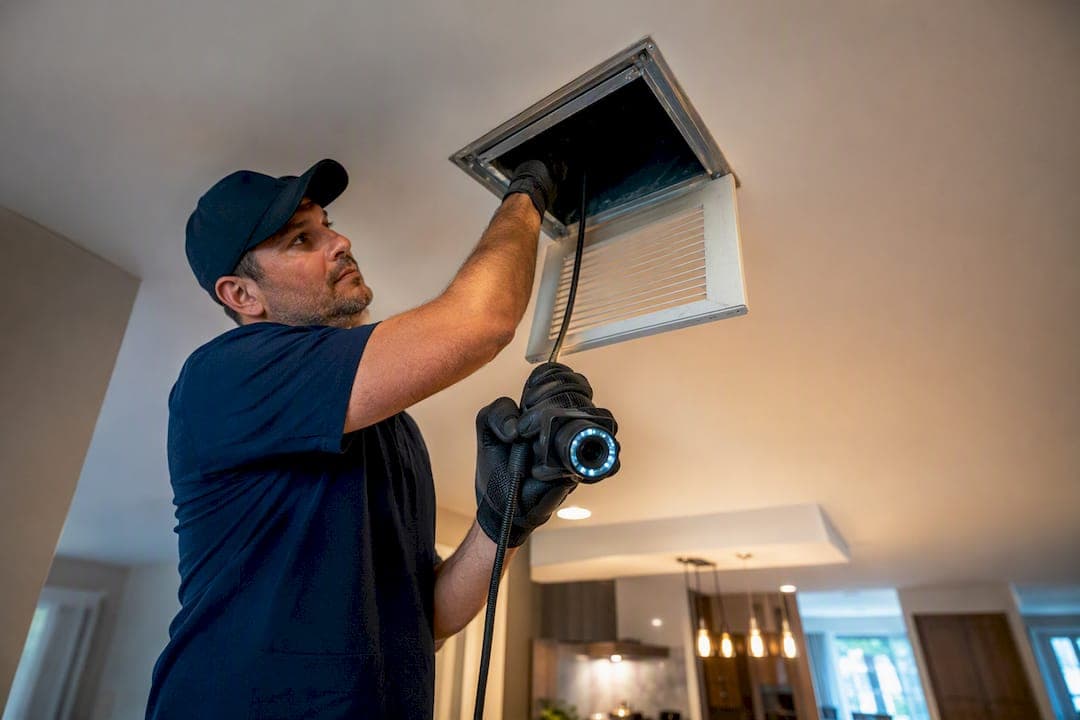
For most homes, routine air duct cleaning is unnecessary. The EPA doesn't recommend scheduled cleaning without a documented reason, and it's worth paying for only when you can point to visible mold, pest activity, or heavy debris. Skip the calendar-based approach; use evidence instead.
TL;DR:
- Duct cleaning is justified only when there is visible mold, pest infestation, excessive debris, water damage, or post-construction dust, not as routine maintenance.
- High-quality work requires camera inspection before and after, heavy-duty vacuum equipment, and transparent documentation, with prices typically ranging from $400 to $1,000.
- Upgrading filters, maintaining coils and blowers, and controlling humidity generally offer greater benefits for indoor air quality and energy efficiency than routine duct cleaning.
- Hiring a credentialed, reputable contractor with proper inspection and documented work is essential to avoid scams and ensure effective remediation.
Table of Contents
- Is Duct Cleaning Necessary, or Just Marketing?
- When Duct Cleaning Is Worth It: The Scenarios That Actually Justify It
- What Does Duct Cleaning Cost, and What Drives the Price?
- Air Duct Cleaning Scams and Poor Workmanship to Watch For
- How to Check Your Ducts and Vet a Contractor Before You Hire
- Better Investments Than Routine Duct Cleaning for Air Quality
- When It Makes Sense to Call a Professional Like Airanddryerventcleaningavondale
- What I'd Actually Do About My Own Ducts
- Book a Duct Inspection With Airanddryerventcleaningavondale
- Sources
- FAQ
Is Duct Cleaning Necessary, or Just Marketing?
Duct cleaning is not a maintenance task you schedule like an oil change. It's a remediation service, something you call in when a specific problem shows up, not something you do because a flyer showed up in your mailbox promising a "spring special." That distinction sits at the center of every legitimate answer to whether duct cleaning is worth the money.
A proper professional job is more thorough than most homeowners expect. The technician inspects the entire system first, using a camera to check supply and return runs, the plenum, and the air handler before touching anything. Source control comes next. If there's standing moisture or an active leak feeding mold growth, that gets addressed, because cleaning around an active water problem just buys you a repeat visit in six months. Only then does the physical work start.
A full-system job typically includes:
- Mechanical agitation of duct interiors using brushes, air whips, or skipper balls to loosen dust, debris, and pet hair stuck to the walls
- Whole-system vacuuming under negative pressure, so loosened contaminants get pulled into a containment unit instead of blown into your living space
- Cleaning of the blower assembly and, when contaminated, the evaporator coil, since these two components affect airflow and efficiency more than the ducts themselves
- Sealing of access points cut into the ductwork to reach hard-to-clean sections
- Camera documentation showing before-and-after conditions, so you have proof of what was actually removed
Equipment matters here. Truck-mounted vacuum systems generate far more suction than portable units, and that difference determines whether debris actually leaves the house or just gets stirred up and resettles a few feet downstream. A systematic review published in 2010 found that cleaning effectiveness varies widely between providers, and weak equipment is often the reason.
What should you walk away with when the job's done? A written scope of work that names every component cleaned, photo or video evidence, and ideally a brief explanation of what the technician found and fixed. If a company can't show you the inside of your own ducts, you have no way to verify anything happened beyond a truck parked in your driveway for an hour.
When Duct Cleaning Is Worth It: The Scenarios That Actually Justify It
The EPA lists specific triggers for cleaning, and they're worth memorizing because they're the closest thing to an official checklist homeowners get. If none of these apply to your house, you're probably better off spending the money elsewhere.
- Visible mold growth inside the ducts or on components of the heating and cooling system. Not a musty smell alone, actual visible growth, confirmed by inspection.
- Evidence of rodent or insect infestation, including nests, droppings, or dead pests found in the ductwork.
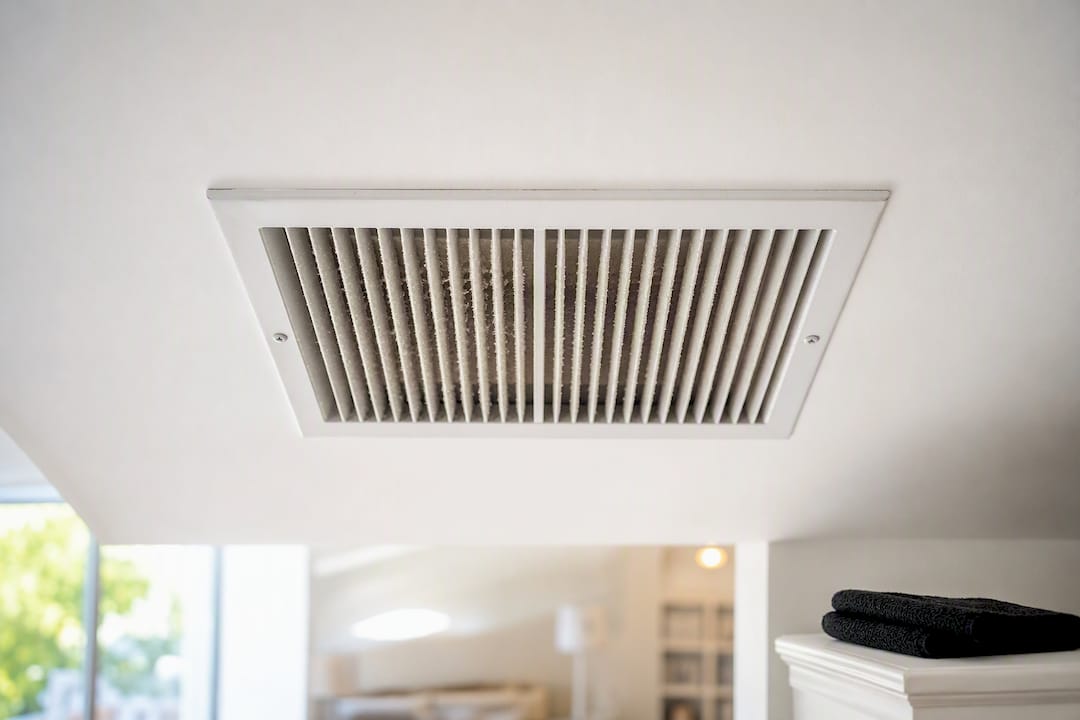
- Ducts clogged with excessive amounts of dust and debris, to the point where particles are visibly discharging into rooms from the vent registers.
- Persistent water damage, whether from a slow leak, condensation buildup, or a past flood, especially if porous materials inside the duct system got wet.
- Post-construction or renovation dust, since drywall dust and insulation particles from a remodel can coat duct interiors and get redistributed every time the system runs.
- Fire or smoke residue, which leaves soot and odor-causing particulates that regular filters don't catch.
When mold has colonized porous duct liner or fiberglass insulation, cleaning often isn't enough. The EPA notes that porous materials contaminated by mold typically need to be replaced rather than scrubbed, because mold can grow into the material itself, not just sit on the surface. That's a materially different (and pricier) job than a standard cleaning, and any contractor who quotes you a flat cleaning fee for visible mold in your insulation liner is either underqualified or cutting corners.
Water damage deserves its own callout because it's the scenario homeowners most often mishandle. A slow leak around a duct joint can look like a minor issue for months while it quietly seeds mold growth inside the metal or flex duct. Fixing the leak without addressing what grew during those months just leaves contamination in place. Similarly, if your home floods or you've had major fire damage, ducts are one of the systems most likely to trap and redistribute what got into the air, right alongside carpet, drywall, and insulation.
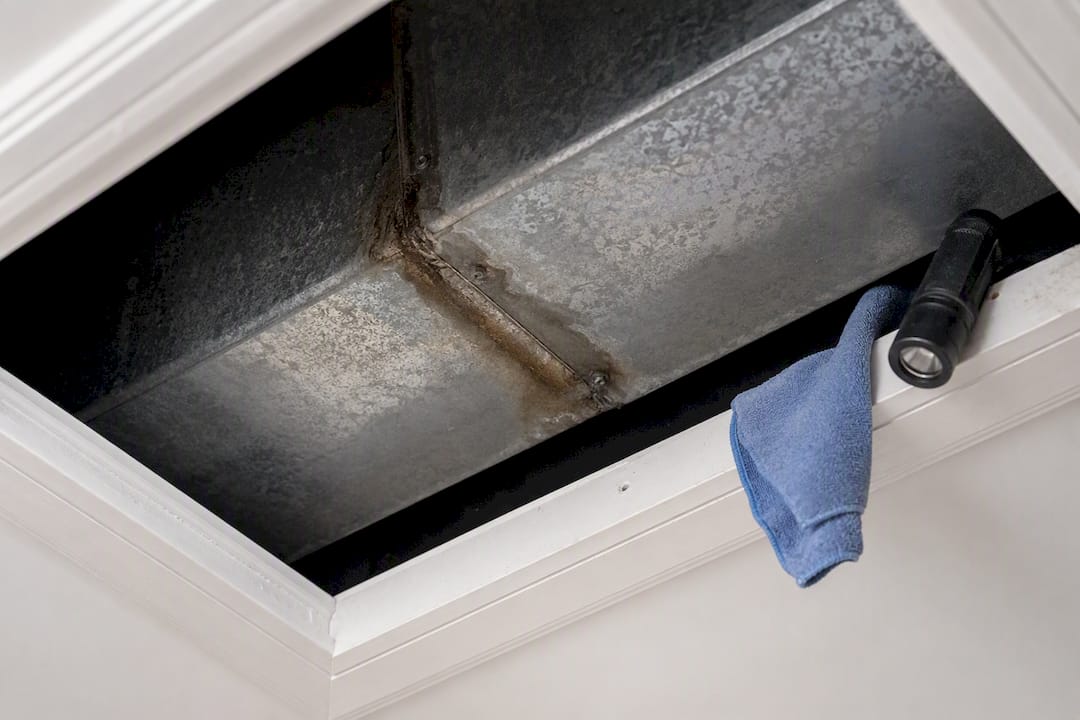
Pro Tip: If you just finished a renovation and can see a fine layer of dust on the vent covers or hear it rattle when the system kicks on, that's a legitimate cleaning trigger, not routine maintenance. It's also worth pairing with a fresh filter change, since a clogged filter will just recontaminate the newly cleaned ducts within weeks. Read more about the specific hazards worth watching for in the most dangerous air duct issues homeowners tend to miss.
What Does Duct Cleaning Cost, and What Drives the Price?
A legitimate, full-system duct cleaning in the U.S. typically runs $400 to $1,000, according to Wirecutter's reporting on the industry. That's a wide range, and the spread comes down to a handful of real cost drivers, not arbitrary pricing.
- Home size and duct run count. More vents and longer duct runs mean more labor time and more linear feet to agitate and vacuum.
- Level of contamination. A house with heavy pet hair, visible mold, or post-construction debris takes longer to clean properly than a system with light dust buildup.
- Access difficulty. Ducts routed through tight crawl spaces or finished ceilings without easy access panels add labor time.
- Coil and blower cleaning. If these components need attention beyond the ductwork itself, that's additional work, and it should show up as a line item, not get bundled invisibly into a flat fee.
- Sanitizing or biocide application. Optional in most cases, and one of the more debatable add-ons, more on that below.
A real job takes time. Expect a technician or two-person crew to spend several hours in an average single-family home doing the inspection, agitation, and vacuuming properly. If a company is offering a $79 or $99 "whole house" special, ask yourself how that price covers labor, truck-mounted equipment, and disposal. It usually doesn't, which means either the job gets rushed to unprofitability, or the low price is a hook to get a salesperson in your house to pitch expensive add-ons once they're inside.
Not every up-sell is a scam. Coil cleaning and blower cleaning are often genuinely justified, especially in older systems that haven't had a tune-up in years, because a dirty coil reduces airflow and drives up energy costs more than dusty ducts ever will. Sanitizing chemicals and encapsulant sealants are the ones to question harder. The 2010 systematic review flagged that biocide use inside ductwork carries its own uncertainty, and in some cases, aggressive chemical treatments raised concerns rather than resolving them. If a technician pushes a sanitizing spray as mandatory rather than optional, ask what specific problem it's solving.
Air Duct Cleaning Scams and Poor Workmanship to Watch For
Here's the uncomfortable part of this industry: it has one of the highest ratios of low-effort operators to legitimate technicians in home services, largely because the barrier to entry is low and the work is hard to verify after the fact. That gap is exactly what fuels most air duct cleaning scams.
The most common warning sign is the price itself. Door-knocker flyers, mailers, and online ads offering whole-house cleaning for $79, $99, or "per vent" pricing under $20 are almost always bait. Once a technician arrives, the pitch shifts to "we found extensive mold" or "your coil is filthy" and the real invoice balloons past what a straightforward job would have cost anyway, minus the trust you'd have in a company that quoted honestly from the start.
Watch for these behaviors:
- Refusal or inability to show camera footage of the inside of your ducts, before or after
- A vague, one-line invoice ("duct cleaning: $350") with no breakdown of what was actually done
- High-pressure upsells for sanitizing chemicals or coatings presented as mandatory rather than optional
- Technicians who spend less than 30 to 45 minutes total for a full-size home
- No mention of source control, meaning they'll clean around a mold problem or leak without addressing why it's there
Poor workmanship can leave physical evidence, and it's worth checking for it after any job. Look for disconnected duct sections that weren't resealed, torn flex duct near access panels the technician cut, or a noticeable increase in dust in your rooms for the first day or two after cleaning. A small amount of settling dust right after a job is normal and temporary, but if it persists for more than a couple of days, that usually means the vacuum system wasn't running strong enough negative pressure to actually capture what got agitated, and debris just redistributed through your house instead of leaving it. The Trane guidance on duct cleaning specifically recommends hiring NADCA trained technicians as a way to avoid exactly this outcome. For a broader look at how to spot a bad HVAC contractor before you sign anything, see this rundown of contractor red flags.
How to Check Your Ducts and Vet a Contractor Before You Hire
You don't need special equipment to do a basic self-check before deciding whether to call anyone. Start with your own eyes and nose, then move to the questions that separate a real NADCA affiliated company from a truck-and-flyer operation.
Homeowner inspection steps:
- Remove a few vent covers around the house and look down the register with a flashlight for dust buildup, debris, or signs of pests.
- Turn the system on and stand near a supply vent for a minute. Watch for visible dust or particles blowing into the room, not just a faint musty smell.
- Smell test each major vent. A persistent moldy or mildew odor localized to the ducts (not the whole house) is a real signal, distinct from a general "stale house" smell.
- Check around visible ductwork in the attic, basement, or crawl space for water stains, rust, or standing moisture near duct joints.
- If anything above raises a flag, ask a contractor for a camera inspection before agreeing to any cleaning. This should be low-cost or free, and it turns guesswork into evidence.
Questions to ask before hiring:
- Are your technicians NADCA certified, and can you provide documentation? This is the closest thing to an industry credential that exists for this trade.
- Will you show me camera footage before and after the job?
- Does the quoted price include the blower assembly and coil, or are those separate?
- What vacuum equipment do you use, truck-mounted or portable, and what's the CFM rating?
- Can I get a written scope of work listing every component you'll clean, plus a fixed price before you start?
- What's your warranty on the work, and do you have references from local jobs?
Pro Tip: Ask for the camera inspection before you agree to anything, even if it costs a small trip fee. A company confident in its own work will show you the footage without hesitation. One that hedges, or claims the equipment "isn't working today," just told you everything you need to know. For more on why credentials matter here, see why professional HVAC cleaners consistently outperform unlicensed operators on documentation and follow-through.
Red flags to walk away from: no camera equipment at all, a scope of work that says only "clean ducts" with no component breakdown, and any pressure to sign same-day without time to think it over.
Better Investments Than Routine Duct Cleaning for Air Quality
If your ducts don't show any of the EPA triggers, your money almost always goes further elsewhere. The 2010 review found insufficient evidence that routine cleaning meaningfully improves indoor air quality, occupant health, or energy costs when no specific contamination is present. That's not a reason to ignore your air quality. It's a reason to redirect the budget.
Filter upgrades are the highest-return move most homeowners skip. A filter rated MERV 11 to 13 captures a meaningfully higher share of fine particulates than the basic MERV 4 to 6 fiberglass filters that ship standard with most systems, and swapping it every 60 to 90 days matters more than any one-time duct cleaning. ENERGY STAR recommendations consistently point to regular filter changes and coil maintenance as the maintenance actions with the most reliable impact on both efficiency and air quality.
Beyond filters, a few upgrades typically outperform duct cleaning on return for the dollar:
- Coil and blower cleaning during a seasonal HVAC tune-up. A dirty evaporator coil restricts airflow and drives up energy use in ways that dusty ducts simply don't.
- Condensate pan maintenance. A neglected pan grows mold and mildew that gets circulated every time the system runs, and it's often overlooked entirely during a duct-focused cleaning.
- Whole-house or portable HEPA filtration. For allergy or asthma concerns, a dedicated HEPA unit captures particulates a standard duct system was never designed to filter.
- Humidity control. Keeping indoor relative humidity between 30 and 50 percent limits mold growth at the source, which prevents the very problem that triggers a legitimate duct cleaning need.
- Air sealing and duct sealing. Leaky ductwork pulls in unconditioned, dusty attic or crawl space air, undermining any cleaning you've already paid for.
Sequencing matters. If you're dealing with a moisture problem, fix the leak and control humidity first; cleaning ducts before source control just resets the clock on the same mold regrowing. If you're finishing a renovation, install a new filter right after the cleaning, since a fresh filter catches whatever settled during construction before it recirculates. For more on how allergen buildup in ducts interacts with broader air quality, see why removing allergens from ducts matters more in some homes than others, or check low-risk DIY maintenance steps you can handle between professional visits.
When It Makes Sense to Call a Professional Like Airanddryerventcleaningavondale
Once you've confirmed one of the EPA triggers, the decision shifts from "should I clean" to "who should I trust to do it right." That's where a local, credentialed provider earns its cost over a discount operator.
Airanddryerventcleaningavondale handles the scenarios that actually justify a call: mold found during a home inspection, pest infestation cleanup, post-renovation dust and debris, heavy contamination in older systems, and documented water damage that's already been repaired. The company also offers air quality testing, which is useful when you suspect a problem but don't have visible confirmation yet, letting you make the cleaning decision based on evidence rather than guesswork.
Hiring a professional makes the most sense in these situations:
- You've found visible mold and need cleaning coordinated with source control and possible material replacement
- A renovation left visible dust discharging from your vents
- You've had a pest infestation and need the ductwork cleared and sanitized
- Water damage has been repaired and you need confirmation the ducts are clear before closing out the issue
- You want air quality testing before committing to any cleaning at all
What you should expect when you book: a camera inspection of the system before any work starts, a written estimate with a clear scope of work, and a warranty on the completed job. That combination, evidence first, documentation second, guarantee third, is what separates a real service call from a $79 special that leaves you no better off than before the truck arrived.
What I'd Actually Do About My Own Ducts
The evidence here isn't ambiguous, even if the marketing around it is. Routine cleaning without a specific problem doesn't reliably improve air quality or cut energy costs, and paying for it on a schedule is mostly wasted money. But when you can point to mold, pests, water damage, or visible debris, cleaning stops being optional and becomes the right call.
If I were deciding this weekend, I'd do three things in order. First, inspect: pull a few vent covers, run the system, and use your nose before you spend a dollar. Second, control the source, fix the leak, handle the pest problem, before anyone touches the ductwork, because cleaning around an active problem just delays the same bill. Third, upgrade your filter regardless of what you decide on cleaning, since that's the cheapest lever with the most consistent payoff.
If step one turns up real evidence, call a contractor who'll show you camera footage and put the scope in writing. That's the whole checklist. Everything else is either upsell or noise.
— Shaun
Book a Duct Inspection With Airanddryerventcleaningavondale
Airanddryerventcleaningavondale is the alternative to guessing whether that $79 flyer special is legitimate. Local technicians document what they find with camera footage before quoting a price, so you're paying for a confirmed problem instead of a sales pitch.
The company's core services cover the scenarios that actually warrant a call: full-system air duct cleaning, air vent cleaning and replacement, dryer vent cleaning, and air quality testing when you want evidence before committing to anything. Every job starts with an inspection, moves to a written estimate with a clear scope of work, and ends with a warranty on the completed cleaning, so there's no ambiguity about what you paid for. Most appointments can be scheduled within a few days, including after-hours slots for homeowners who can't take time off during the week.
If you've spotted visible dust at your vents, water stains near ductwork, or signs of pests, ask for a camera inspection before agreeing to any price. Book your air duct cleaning appointment and request to see the footage yourself.
Sources
Should You Have the Air Ducts in Your Home Cleaned? | US EPA DOHS Fact Sheet On HVAC Duct Cleaning | NIH/ORS Systematic review on effectiveness of ventilation duct cleaning (2010) So, Is Duct Cleaning Kind of a Scam? We Asked the Experts. | Wirecutter 4 Things You Need to Know About Duct Cleaning - Trane
- Should You Have the Air Ducts in Your Home Cleaned? | US EPA
- So, Is Duct Cleaning Kind of a Scam? We Asked the Experts. | Wirecutter
- Systematic review on effectiveness of ventilation duct cleaning (2010)
- 4 Things You Need to Know About Duct Cleaning - Trane
FAQ
What are the drawbacks of duct cleaning?
Poor technique can temporarily raise indoor dust levels if the vacuum equipment lacks strong enough negative pressure to fully capture loosened debris, and unnecessary sanitizing chemicals can introduce their own concerns without clear benefit.
Is it a waste of money to have your air ducts cleaned?
It's a waste only when there's no specific problem to address; the EPA doesn't recommend cleaning on a routine schedule, but it's money well spent when you have visible mold, pests, or heavy debris.
Will my house be dusty after duct cleaning?
A small amount of settling dust for a day or two is normal as loosened particles finish clearing the system, but persistent dust beyond that usually signals weak vacuum equipment that didn't fully contain the debris.
Is it really necessary to have your ducts cleaned?
Only in specific cases: visible mold, pest infestation, persistent water damage, or heavy debris visibly discharging from vents. Outside those triggers, filter upgrades and coil maintenance typically deliver more benefit.
How much does a legitimate duct cleaning cost?
A full, reputable job typically runs $400 to $1,000 depending on home size, contamination level, and whether coil or blower cleaning is included.