
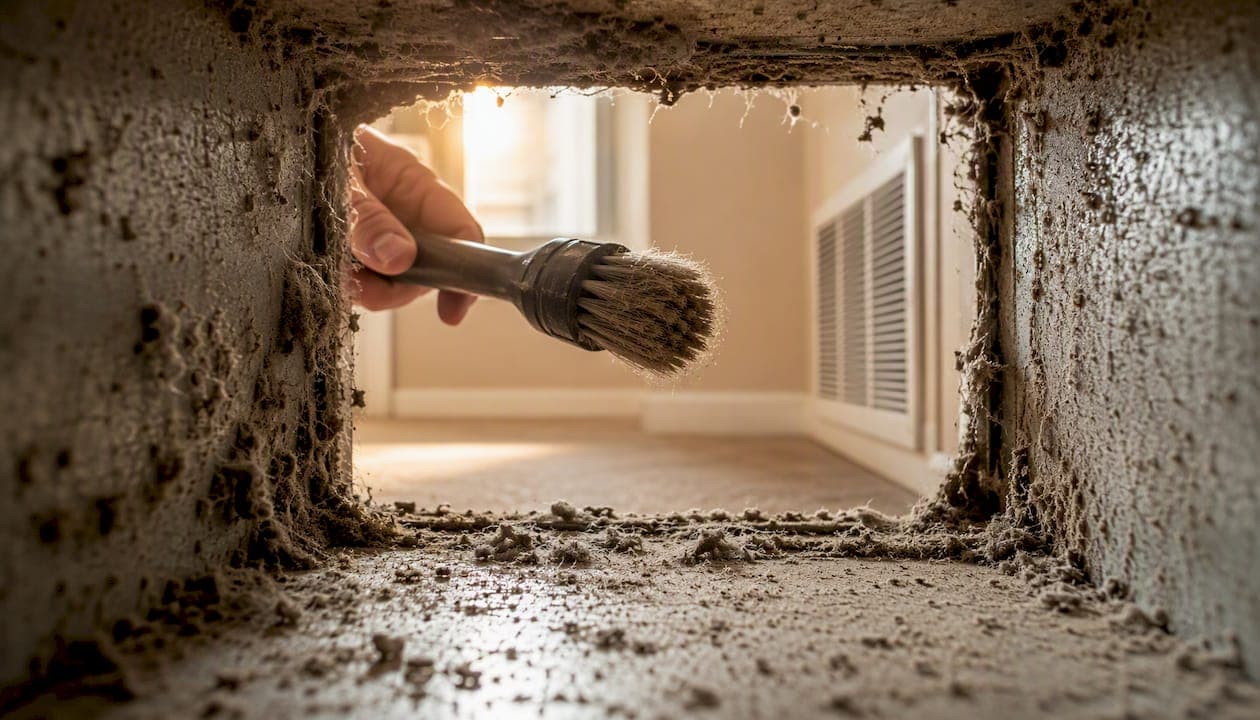
Seven allergen categories commonly turn up in home and building vents: dust mites, pet dander, pollen, mold and fungal spores, cockroach and rodent allergens, bacteria, and plain accumulated house dust made of skin cells and fabric fibers. If you're dealing with allergy symptoms that seem to track with your HVAC system turning on, the first move is simple: check your filter and look inside the nearest supply and return vents for visible dust buildup, musty smells, or a filter that's damp or gray with grime.
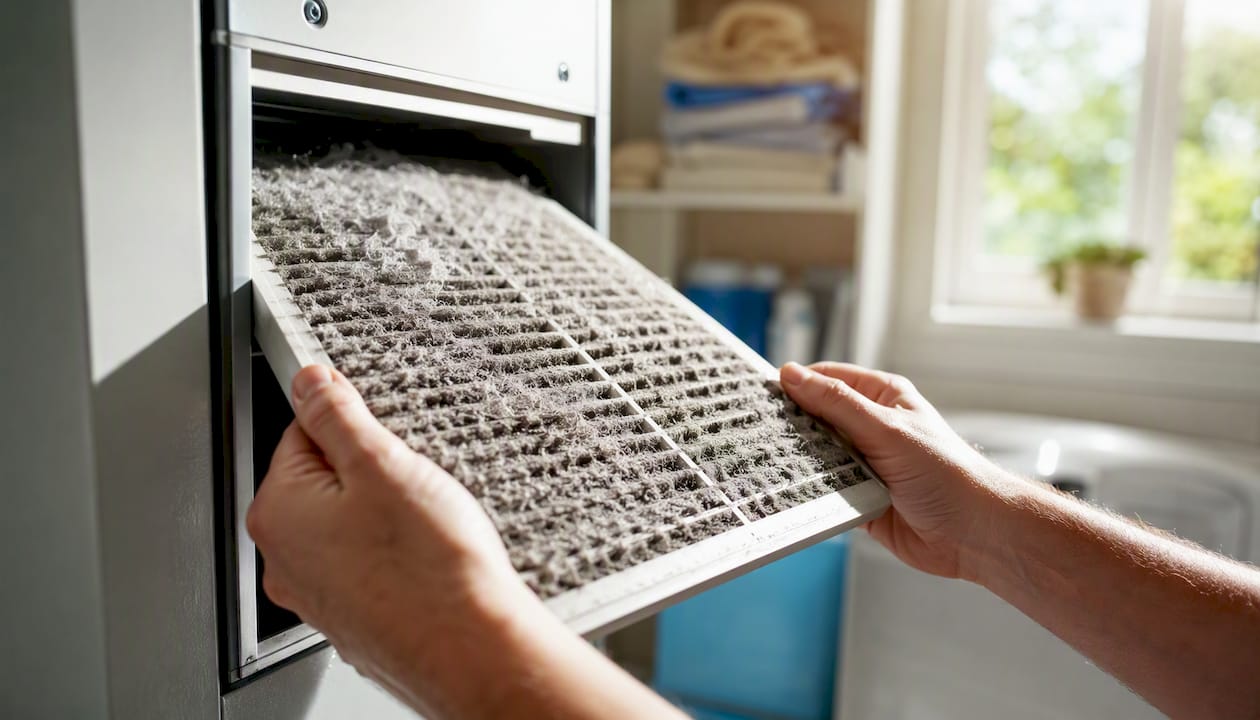
That single check tells you more than a week of guessing. A filter caked in dust or holding moisture is doing the opposite of its job, and it's often the clearest early sign that your ductwork has become a reservoir rather than a clean air pathway, according to NCBI's review of indoor allergen engineering controls.
Government and medical authorities back this up consistently. The EPA identifies mold, dust mites, pollen, pet dander, and pest allergens as the primary biological contaminants affecting indoor air, and the NCBI Bookshelf's review of indoor allergen sources confirms these same categories accumulate in building reservoirs, including HVAC components. The Asthma and Allergy Foundation of America pushes source control as the first line of defense, not air purifiers or spray treatments. If your symptoms line up with when the system runs, this is where to start looking, and it's also where a local inspection from a company like Airanddryerventcleaningavondale can settle the question with a physical look at your ductwork instead of a guess.
- Dust mites (feces and body fragments) settle in dust-laden filters and low-airflow duct sections.
- Pet dander circulates through return air and lodges in porous duct lining and insulation.
- Pollen enters through outdoor air intakes and settles near coils and plenums.
- Mold and fungal spores grow wherever moisture sits: condensate pans, wet filters, cold coils.
- Cockroach and rodent allergens accumulate in ducts that run through infested crawl spaces or attics.
- Bacteria and microbial aerosols build up in stagnant water or biofilm inside HVAC components.
- Skin cells, fibers, and general house dust form the "dust cake" that filters and duct walls trap.
Quick stat to remember: ASHRAE guidance specifically flags outdoor air intake placement as an under-addressed contamination risk. If your fresh-air intake sits near an exhaust vent, dumpster, or landscaping bed, you're pulling in pollen and microbial particles before the air ever reaches your living space.
Key Takeaways
Vents and ductwork act as both reservoirs and distribution pathways for dust mites, pet dander, pollen, mold, insect and rodent allergens, and bacteria, and controlling them requires source control, filtration, and humidity management working together.
| Point | Details |
|---|---|
| Seven core allergen categories | Dust mites, pet dander, pollen, mold/fungal spores, cockroach/rodent allergens, bacteria, and general house dust all accumulate in ducts. |
| Check filters first | A gray, clumped, or damp filter is the single fastest sign your system needs attention. |
| Humidity under 50% | Keeping relative humidity below 50% is the most effective lever against mold and dust mite growth in ducts. |
| Watch for reappearing dust | Dust returning within days of cleaning signals the ductwork itself is the reservoir, not the room. |
| Professional inspection when needed | Airanddryerventcleaningavondale offers inspection, cleaning, filter replacement, and testing for Avondale homes and businesses showing mold, odor, or persistent allergy symptoms. |
Table of Contents
- Why Vents and Ducts Spread Allergens, Not Just Air
- The Full List of Allergen Sources Hiding in Your Vents
- Where Allergens Hide: The Highest-Risk Hotspots in Your System
- Can dirty AC ducts cause allergies?
- How to Reduce Allergen Sources in Vents: A Prioritized Plan
- When to Hire a Professional for Duct and Vent Cleaning
- A Simple Maintenance Timeline That Prevents Most Problems
- What Practitioners Actually See in the Field
- Professional Help When You Need It
- Sources
- FAQ
Why Vents and Ducts Spread Allergens, Not Just Air
Vents and ductwork don't just move air. When they contain dust, moisture, or biological growth, they redistribute allergen reservoirs throughout an entire building every time the blower kicks on.
Here's the mechanical reality most homeowners never think about. Your return vents pull air (and whatever is floating in it) back toward the air handler, where it passes through the filter and across the evaporator coil before getting pushed back out through the supply vents. That return path is doing double duty: it's collecting allergens from every room and concentrating them at one point in the system. If the filter isn't rated to catch fine particles, or if it's overdue for replacement, a "dust cake" forms on its surface. That cake isn't inert. It can shed particles back into the airstream and if it gets damp, become a growth medium for fungi, a dynamic explained in detail in NCBI's engineering control strategies review.
Persistent dust that reappears on vent covers or nearby surfaces shortly after cleaning is one of the clearest signals that a home's ductwork is redistributing particles rather than simply delivering clean air. When that pattern shows up, the source is rarely the room. It's almost always upstream, inside the ducts themselves.
Coils and plenums carry their own risk. Evaporator coils run cold and wet during cooling season, and if condensation lingers instead of draining properly, that moisture becomes a foothold for microbial growth right in the airstream. Porous duct insulation compounds the problem: it traps moisture and dust in a material that's hard to clean thoroughly once contaminated.
Outdoor air intakes deserve a specific mention here because they're the entry point most people overlook. If an intake sits too close to an exhaust vent, standing water, or dense vegetation, it pulls pollen, mold spores, and even bacteria straight into the system before any filtration happens. ASHRAE ventilation standards address intake placement precisely because this design detail gets skipped so often during construction or remodeling.
The Full List of Allergen Sources Hiding in Your Vents
Here is the comprehensive breakdown, organized by source, with where each one hides and why it matters for your health.
1. Dust Mites
Dust mites don't cause allergies through the mites themselves. It's their feces and body fragments, both loaded with proteins your immune system reacts to. They thrive in warm, humid conditions and ride into ducts on household dust, then settle in filters, low-airflow duct sections, and any porous insulation lining. Indoor allergen research consistently ranks dust mites among the most common triggers for allergic rhinitis and asthma flare-ups, a pattern confirmed across residential settings in the NCBI review of indoor allergen sources.
Pro Tip: Check your filter monthly by holding it up to a light. If you can't see light through it, dust mite allergen levels in that filter are almost certainly high, and it's overdue for a swap.
2. Pet Dander
Cat and dog dander is microscopic, light enough to stay airborne for hours, which means it travels easily through return air and settles deep inside ductwork rather than just on furniture. Homes with pets often show measurable dander buildup on duct interior surfaces even months after a pet has left the household.
3. Pollen
Pollen gets in mainly through outdoor air intakes, open windows near supply runs, and on clothing and shoes tracked through the house. It settles near coils and plenums, where it mixes with dust and moisture. Spring and early summer bring the heaviest loads, with tree pollen peaking first and grass pollen following, so seasonal allergy sufferers often notice symptoms intensify right when the AC kicks on for the season.
4. Mold and Fungal Spores
Mold needs three things to grow: moisture, a food source (dust and organic debris work fine), and time. Ducts provide all three whenever condensate pans back up, coils stay wet, or humidity control lapses. Fungal spores are a documented respiratory irritant, and exposure has been linked to both allergic rhinitis and asthma aggravation in sensitive individuals, per the EPA's biological contaminants guidance. Homes in humid climates or those that went through a wet season without dehumidification see spikes in duct-related mold complaints.
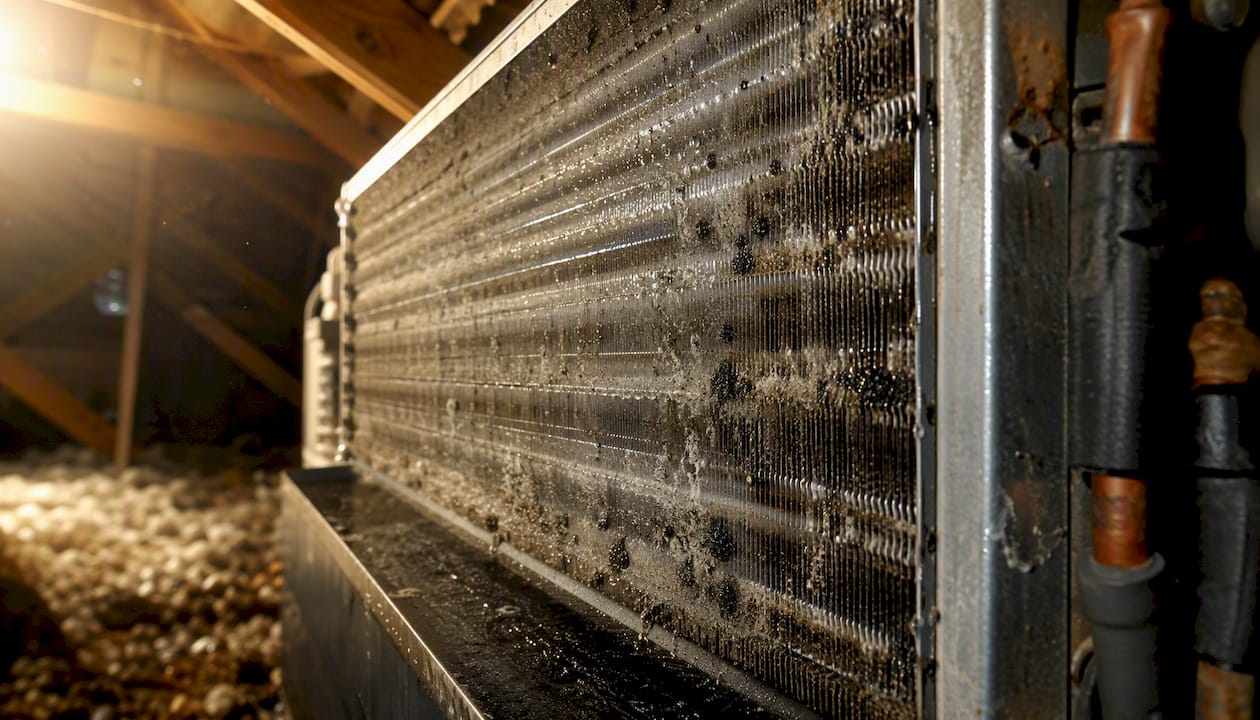
Pro Tip: A musty, earthy smell when the system first kicks on is one of the most reliable indicators of hidden mold growth, usually near the coil or condensate pan.
5. Cockroach Allergens and Insect Fragments
Cockroach saliva, feces, and shed body parts are potent allergens, particularly for children, and they concentrate in ducts running through infested crawl spaces, basements, or wall cavities. Older buildings and multi-unit properties with shared wall systems see this more often than newer single-family construction.
6. Rodent Allergens
Mouse and rat urine proteins are recognized asthma triggers, and rodents love the warm, hidden runs that ductwork provides, especially in attics and crawl spaces. If ducts pass through areas with a known rodent history, allergen contamination is likely even without a visible infestation right now.
7. Bacteria and Microbial Aerosols
Standing water anywhere in an HVAC system, condensate pans, humidifier reservoirs, or poorly sloped drain lines, creates a breeding ground for bacteria that then aerosolize into the airstream. This is a subtler source than mold because it rarely produces an obvious smell, which is exactly why it gets missed during casual inspections.
8. Accumulated House Dust (Skin Cells and Fibers)
General house dust, made up of shed skin cells, carpet and clothing fibers, and outdoor particulates, forms the bulk of what collects in ducts over time. It's the base material that other allergens (mite feces, dander, pollen) bind to and ride along with, which is why duct dust as a whole tends to carry a mixed allergen load rather than a single contaminant.
9. Building Material Particulates
In newer construction or recently renovated buildings, drywall dust, insulation fibers, and other construction debris sometimes remain trapped in ductwork after the crew leaves. Commercial buildings and homes coming off a remodel deal with this more often than long-settled residential systems, and it's a common trigger for occupants who notice symptoms only after moving in.
Where Allergens Hide: The Highest-Risk Hotspots in Your System
If you only have time to check a handful of spots, focus on these: filters, evaporator coils, condensate pans, plenums, return registers, porous insulation, and outdoor air intakes. These seven locations account for the overwhelming majority of allergen buildup in residential and commercial HVAC systems alike.
Filters are the obvious starting point, but they're also the easiest to check and the cheapest to fix. A filter that's visibly gray, clumped with debris, or slightly damp needs immediate replacement, not a scheduled swap next month. Evaporator coils run a close second in priority because they're wet by design during cooling cycles, and any dust that reaches them turns into a growth surface almost immediately. A musty smell paired with visible discoloration on the coil fins is your signal here.
Condensate pans and their drain lines are the hotspot most homeowners forget entirely. These pans collect the water that condenses off the coil, and if the drain is clogged or the pan isn't sloped correctly, standing water sits there for weeks. That standing water is a near-perfect incubator for bacteria and mold. Plenums (the box-like sections connecting the air handler to the duct network) collect settled dust because airflow slows down as it transitions from a narrow unit into a wider distribution point.
Return registers deserve a visual check every few months. Dust that builds up on the grille itself, especially if it reappears within days of wiping it down, points to a system actively redistributing particles from somewhere upstream. Porous duct insulation is harder to inspect without professional equipment, but visible staining, sagging, or a persistent odor near insulated sections are red flags worth documenting. Outdoor air intakes round out the list. Walk outside and look at where your fresh-air intake sits. If it's near a dumpster, a exhaust vent, standing water, or overgrown landscaping, that intake is likely pulling in contaminants before your filter ever gets a chance to catch them.
Pro Tip: Take a flashlight to your return grille and shine it into the duct opening. If you see a visible layer of dust more than a quarter-inch thick within arm's reach, that's a reasonable proxy for what the rest of the run probably looks like.
Can Dirty AC Ducts Cause Allergies?
Yes, dirty ducts can contribute directly to allergy symptoms when they contain active allergen reservoirs or microbial growth, though how strong that link is depends on the system's condition and what other allergen sources exist in the home. A duct system with a wet, moldy coil and a saturated filter is a meaningfully different risk than one with light surface dust and a fresh filter, even though both would technically qualify as "dirty."
The clearest sign vents are the culprit is timing. If symptoms consistently worsen within minutes of the HVAC system starting, or if dust reappears on surfaces just days after a thorough cleaning, that pattern points to the ductwork rather than to general household dust. A musty or earthy odor specifically when the system runs, one that fades when it's off, is another strong indicator. Symptom improvement when you're away from the building for an extended stretch (a vacation, a work trip) and a return of symptoms upon coming back also supports a building-source diagnosis rather than a seasonal or outdoor cause.
Testing becomes worthwhile in a few specific situations: visible mold anywhere in the system; allergy symptoms that persist despite typical medication and don't respond to usual seasonal patterns; or a household that just moved into a newly built or newly renovated space. In any of these cases, professional indoor air quality testing gives you actual data instead of a guess, something Airanddryerventcleaningavondale's air quality testing service is built to provide for exactly this kind of diagnostic question.
Humidity is the number that ties most of this together. Fungal growth becomes significantly more likely once relative indoor humidity climbs above a certain threshold, which is why humidity control sits near the top of every prevention strategy. Below is a quick reference for how humidity levels translate into practical risk.
| Relative Humidity | Practical Risk Level |
|---|---|
| Below 50% | Low risk for mold and dust mite proliferation |
| 50% | Moderate risk; monitor condensate drainage and filter condition |
| Above 50% | High risk for active mold growth in ducts and coils |
- Symptoms worsen within minutes of the HVAC starting up.
- Dust returns to cleaned surfaces within just a few days.
- A musty smell appears specifically when the system runs.
- Symptoms ease noticeably when away from the building for several days.
How to Reduce Allergen Sources in Vents: A Prioritized Plan
Source control comes first, followed by filtration, humidity control, ventilation strategy, targeted cleaning or repairs, and testing only when the situation calls for it. That order matters because fixing filtration without addressing a moisture problem, for example, just delays the same issue.
- Replace your filter on schedule, and immediately if it looks saturated or discolored.
- Seal visible duct leaks, since gaps let ducts pull in unfiltered attic or crawl space air.
- Clean condensate pans and clear drain lines to eliminate standing water.
- Keep indoor relative humidity under 50%, using a dehumidifier if your climate runs humid.
- Relocate or seal outdoor air intakes that sit near exhaust vents, standing water, or dense vegetation.
- Remove nearby allergen reservoirs, like unwashed carpets, stored boxes, or clutter near return vents.
- Schedule professional testing if symptoms persist despite these steps.
Filter selection deserves its own breakdown, because a MERV rating that's too low won't catch the particles causing your symptoms, and a rating that's too high can restrict airflow if your system wasn't designed for it.
| MERV Rating | Particles Captured | Typical Use |
|---|---|---|
| 1 to 4 | Large particles like dust and lint | Minimal filtration, not recommended for allergy control |
| 5 to 8 | Mold spores, pet dander, dust mite debris | Standard residential filtration |
| 9 to 12 | Fine dust, pollen, most pet allergens | Recommended for allergy-sensitive households |
| 13 | Bacteria, fine particulates | Higher-end residential and light commercial systems |
The EPA's guidance on MERV ratings confirms that most homes benefit from filters in the 9 to 12 range without needing a full commercial-grade filter, which can overtax a residential blower motor. For a deeper walkthrough on matching filter type to your specific system, Airanddryerventcleaningavondale's filter guide breaks down fit and replacement timing in more detail, and the technical mechanics of how filters interact with airflow are covered well in Upright's filter overview.
Target humidity: keep indoor relative humidity below 50%. That single number does more to prevent mold and dust mite proliferation in ducts than almost any other single intervention, according to guidance the American Lung Association attributes to AAFA source control principles.
One trade-off worth understanding before you crank up outdoor air ventilation to "dilute" indoor contaminants: a case-study assessment published in Atmosphere found that increasing outdoor air intake reduces microbial transmission risk but can substantially raise energy consumption. If you're managing a commercial property, that's a real budget conversation, not a minor footnote.
When to Hire a Professional for Duct and Vent Cleaning
Call a professional when you see visible mold inside the ducts themselves, notice a persistent musty odor tied specifically to HVAC operation, recently completed a renovation that left debris in the system, or dealt with a pest infestation that likely contaminated the ductwork. Any one of these on its own justifies a professional inspection rather than a DIY attempt.
A legitimate inspection covers more than a quick look through the return grille. Professionals typically check filter condition, coil cleanliness, condensate pan function, plenum dust accumulation, and outdoor intake placement, then document what they find with photos before recommending a scope of work. Standard service includes vacuuming the duct interior, agitating stuck-on debris, cleaning the coil and drain pan, replacing the filter, and sealing any leaks discovered along the way.
Watch for companies that promise to "kill all mold" without ever inspecting your system first, or that plan to spray unapproved biocides directly into ductwork. Legitimate providers document what they find with before-and-after photos and explain the specific scope of work before touching anything.
Ask for documentation of certifications, a written scope of work, and photo evidence of both the problem and the completed job. Pricing should reflect the actual condition of your system, not a flat rate pushed on every caller regardless of what's inside the ducts. If a company can't explain why a particular treatment is necessary, that's worth a second opinion. Well-known industry guidance from HVAC Base's allergen control resource lists visible mold, excessive debris, infestation evidence, and post-construction contamination as the clearest triggers for scheduling professional cleaning, which lines up closely with what field technicians see day to day.
A Simple Maintenance Timeline That Prevents Most Problems
Consistent, small actions prevent the majority of vent-related allergen problems before they start. You don't need an elaborate system, just a schedule you actually follow.
- Check your filter visually every month, even if you're not replacing it yet.
- Replace filters every 3 months as a baseline, adjusting based on your specific MERV rating and manufacturer guidance.
- Schedule a full HVAC inspection once a year, ideally before your heaviest usage season.
- Have ducts professionally inspected or cleaned when any red flag appears (mold, odor, infestation, renovation debris), or on a schedule your property's usage history suggests.
- Commercial properties with higher occupancy or more foot traffic generally need more frequent inspection than a typical single-family home, given the volume of dust and skin cells entering the system daily.
Print this timeline and stick it near your thermostat or filter access panel. Consistency beats intensity here. A home that swaps filters religiously every three months will almost always outperform one that does a single, dramatic annual deep clean and ignores the system the rest of the year, a scheduling principle covered in more depth in Airanddryerventcleaningavondale's guide to scheduling HVAC cleaning.
What Practitioners Actually See in the Field
The pattern that comes up more than any other isn't dramatic mold outbreaks or infestations. It's dust reappearing on a vent cover within days of a thorough cleaning, which almost always traces back to a saturated filter or a coil that never fully dries between cooling cycles. Homeowners tend to assume they need a new HVAC system when the real issue is a $15 filter that's three months overdue.
The second most common issue is poor outdoor intake placement, usually a leftover decision from whoever designed the original ductwork without much thought given to what sits nearby. Nobody budgets to move an intake vent, so it gets ignored for years even after someone notices the pattern.
Property managers face a genuine trade-off that homeowners rarely think about: pulling in more outdoor air lowers microbial risk but raises energy costs, sometimes significantly, particularly in extreme climates. There's no universal right answer here. The correct call depends on occupancy density, local climate, and the building's specific ventilation design, which is exactly why a blanket "more fresh air is always better" recommendation falls apart in practice. The lowest-cost, highest-impact fix in most buildings isn't a system upgrade at all. It's fixing the drain slope on a condensate pan and keeping humidity under control, two things that cost almost nothing compared to a full duct replacement.
Professional Help When You Need It
Airanddryerventcleaningavondale gives Avondale homeowners and property managers something a filter change alone can't: a physical inspection of the exact hotspots covered above, backed by a real scope of work instead of a guess.
A typical service visit covers inspection of filters, coils, condensate pans, plenums, and outdoor intakes, followed by vacuuming, agitation of stuck-on debris, coil and drain pan cleaning, and filter replacement where needed. Duct sealing and repairs are available when leaks are found during inspection, and the team documents findings with before-and-after photos so you know exactly what was addressed. Residential clients can start with the air vent cleaning service, while property managers overseeing larger buildings have a dedicated commercial air duct cleaning option built around multi-unit and higher-occupancy needs. If lint buildup in your dryer exhaust is part of the concern, the dryer vent cleaning service addresses that separately. If you're not sure whether your symptoms trace back to your vents at all, the indoor air quality testing service gives you actual sampling data instead of another guess. Request an inspection or a quote today and get a straight answer about what's actually in your ductwork.
Sources
- Engineering Control Strategies - Indoor Allergens - NCBI Bookshelf
- Biological Contaminants and Indoor Air Quality (EPA)
- Microbial Contamination and Ventilation Strategies in HVAC Systems: A Case-Study Assessment...
This article is general information, not a substitute for advice from a qualified doctor. Consult a qualified healthcare professional about your own circumstances before acting on anything here.
FAQ
What are the 14 main allergens list?
Regulatory food allergen lists cover food ingredients, not airborne indoor allergens, so they don't directly apply to vents or HVAC systems. For indoor air, the relevant categories are dust mites, pet dander, pollen, mold spores, cockroach and rodent allergens, and bacteria.
Can dirty AC ducts cause allergies?
Yes, dirty ducts can contribute to allergy symptoms when they hold allergen reservoirs like mold, dust mite debris, or pet dander, especially if symptoms worsen shortly after the system starts running. The strength of that link depends on how contaminated the ducts are and what other allergen sources exist in the home.
Does pet dander travel through vents in HVAC?
Yes, pet dander is light enough to stay airborne and travels through return air into the HVAC system, where it can settle on duct walls, coils, and filters. This means dander exposure isn't limited to rooms your pet actually enters.
What are the 12 most common allergens?
There's no single universal "12 allergens" list, but for indoor and vent-related exposure, the most frequently cited sources include dust mites, cat and dog dander, cockroach allergens, mold spores, pollen, and rodent allergens, all recognized by EPA indoor air quality guidance.
How often should vents and ducts be cleaned?
Filters need checking monthly and typically replacing every three months, while full duct cleaning depends on visible red flags like mold, odor, or infestation rather than a fixed calendar, though Airanddryerventcleaningavondale can assess your specific system's condition during an inspection.