
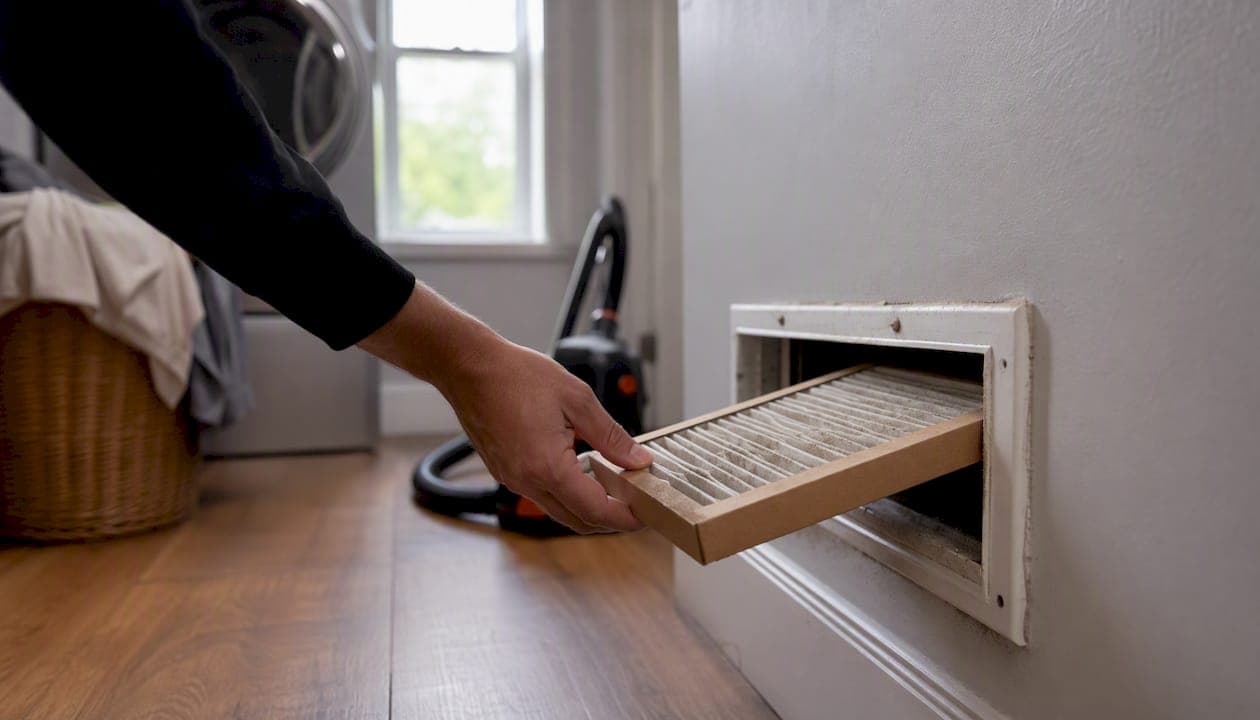
Your main HVAC air filter is almost always in one of three places: behind a return vent grille on a wall, ceiling, or floor; in a dedicated slot on the air handler or furnace where the return duct connects; or inside the duct/plenum near the system intake. According to Trane, return air vents are the most common spot in residential homes.
Before you start searching, here are the fastest visual cues for each location:
- Return vent grille: A large grille (often 14x24 inches or bigger) that doesn't blow air when the system runs. The cover usually unlatches or unscrews, and you'll see the filter sitting just behind it.
- Air handler or furnace slot: A narrow panel or tray on the side or bottom of the unit, often in a basement, attic, or utility closet. Look for a seam, a small door, or a cardboard frame edge peeking out.
- Duct/plenum slot: A hinged or removable cover on the large duct section directly above or beside the air handler. Less common, but worth checking if the first two come up empty.
Start at the thermostat: turn the system off, then head to the largest grille in your hallway or main living area.
Key Takeaways
Your main HVAC air filter is most often behind a return vent grille, with the filter size printed on the cardboard frame and the airflow arrow pointing toward the blower.
| Point | Details |
|---|---|
| Three primary locations | Check return vent grilles first, then the air handler slot, then the duct/plenum near the intake. |
| Check monthly, replace quarterly | The EPA recommends monthly checks and replacement at least every three months, more often with pets or allergies. |
| Read the filter frame | Nominal size (e.g., 20x25x1) and the airflow arrow are printed on the cardboard edge; photograph both before discarding. |
| Arrow orientation matters | The airflow arrow must point toward the blower; a backward filter loads faster and strains the motor. |
| Airanddryerventcleaningavondale | Avondale homeowners can book a professional filter-locate-and-replace visit that covers all returns, the air handler, and a blower inspection. |
Table of Contents
- Why knowing your filter's location keeps your home healthier
- The main air filter locations in a typical house
- How to tell return vents from supply vents
- How to safely access, remove, and reinstall your filter
- How to confirm you've found every filter in your home
- How to read filter size and choose the right MERV rating
- When to check and replace your filter
- Signs it's time to call an HVAC technician
- An honest note from the field
- Airanddryerventcleaningavondale handles the whole job for Avondale homeowners
- Sources
- FAQ
Why knowing your filter's location keeps your home healthier
Finding your filter is step one. Knowing why it matters is what keeps you from skipping it.
A clogged filter doesn't just reduce air quality — it forces the blower motor to work harder, which drives up energy bills and accelerates system wear. The EPA recommends checking your HVAC air filter every month and replacing it at least every three months, with more frequent changes for homes with pets, allergy sufferers, or high dust exposure.
The practical consequences of a missed filter change add up fast:
- Higher utility bills: Restricted airflow makes the system run longer cycles to reach the set temperature.
- Reduced airflow: Rooms feel stuffy or uneven in temperature, especially rooms farthest from the air handler.
- Premature HVAC wear: The blower motor strains against the blockage, shortening its lifespan.
- Worse indoor air quality: Dust, pollen, and pet dander that the filter would have caught recirculate through your home.
One safety note worth repeating: always power off the system at the thermostat before opening any cabinet or grille. Furnace and air handler cabinets can have exposed electrical connections, and a running blower can pull debris into the system the moment you open the panel.
The main air filter locations in a typical house
Industry sources consistently point to three primary spots, and most homes use at least one of them. Here's what to look for at each.
Behind return vent grilles
Return grilles are the most common home air filter spots. They're typically large — much bigger than the small rectangular supply vents near the floor — and they pull air in rather than blowing it out. You'll find them most often in hallways, near the center of the home, or in main living areas.
The filter sits directly behind the grille face. When you unlatch or unscrew the cover, the filter slides out toward you. It's usually a flat, rectangular panel with a cardboard frame, and the nominal size (like 20x25x1) is printed right on that frame.
Air handler or furnace filter slot
If your home has a dedicated air handler (common in attics and utility closets) or a gas furnace (usually in the basement or garage), there's almost always a filter slot where the return duct connects to the unit. Look for a narrow rectangular opening, a small hinged door, or a tray that slides out from the bottom or side of the cabinet.
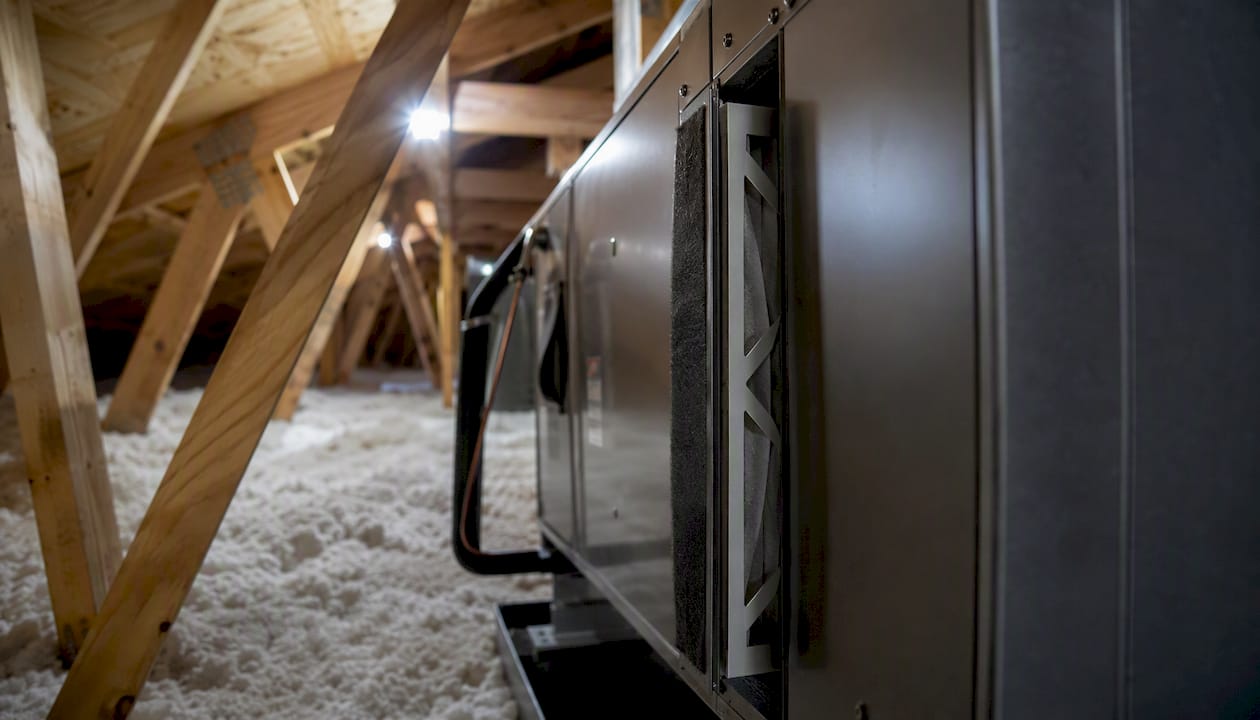
In some setups, the filter sits in a rack inside the cabinet itself. Open the access panel carefully, and you'll see the filter positioned just before the blower compartment.
Duct/plenum slot near the intake
Less common but worth knowing: some systems have a filter slot built into the return plenum, the large sheet-metal box that feeds air into the air handler. This is often found in utility rooms or mechanical closets. Look for a hinged cover or a removable panel on the plenum's flat face.
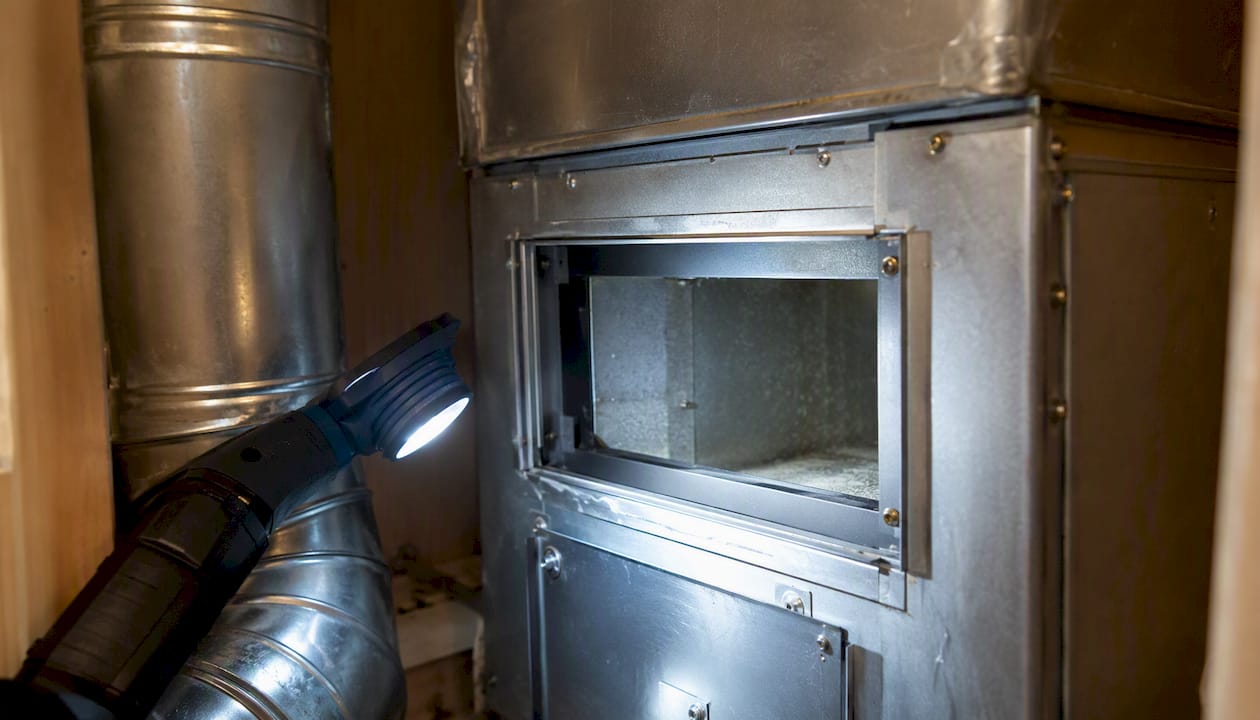
Pro tip: If you've checked the return grilles and the air handler slot and still haven't found a filter, the plenum is your next stop. Bring a flashlight.
How to tell return vents from supply vents
Filters belong behind return vents. Putting one in a supply vent restricts outgoing airflow and can damage the system, so getting this right matters.
The fastest check: hold your hand or a tissue near the grille while the system runs. Supply vents blow air out; return vents pull air in. That single test settles it in about two seconds.
Here's a quick step-by-step for identifying return vents:
- Feel for airflow direction. Supply vents push air toward you. Return vents create a gentle suction — a tissue held near the grille will get pulled toward it.
- Check the size. Return grilles are noticeably larger than supply vents. A return might be 20x25 inches; a supply vent is often 4x10 or 6x12.
- Look at the grille style. Return grilles often have a deeper frame and may have a visible slot or latch for filter access. Supply vents are usually flush with the wall and don't open.
- Note the location. Returns are typically in hallways, central areas, or near the air handler. Supply vents cluster near exterior walls, under windows, and along the floor perimeter.
Pro Tip: If you're still unsure, check the ductwork in your attic or basement. Return ducts are the large, uninsulated (or lightly insulated) trunks that lead back to the air handler. Supply ducts branch out from the other side of the unit toward individual rooms.
Never insert your fingers or tools past the grille face. The blower can start unexpectedly if the thermostat calls for heating or cooling.
How to safely access, remove, and reinstall your filter
These steps follow the guidance from Lowe's home improvement how-to resources and align with standard HVAC technician practice.
- Turn off the system. Go to the thermostat and switch it to "off," not just "fan only." For filters inside a furnace cabinet, also flip the disconnect switch on the unit or the breaker in your electrical panel.
- Open the grille or access panel. Return grilles usually unlatch at the bottom or unscrew at the corners. Air handler panels often have two screws or a simple push-tab.
- Slide the filter straight out. Don't tilt or force it — a bent filter frame can tear and leave gaps. Pull it out slowly so you don't shake loose dust back into the air.
- Read and photograph the filter frame. The nominal size (e.g., 20x25x1) and an airflow arrow are printed on the cardboard edge. Take a photo before you throw the old filter away.
- Note the arrow direction. The arrow points toward the blower, away from the return air. This is the direction the new filter must face.
- Insert the replacement with the arrow pointing the right way. Slide it in fully so no edges gap. A loose filter lets unfiltered air bypass it entirely.
- Reseal the panel or latch the grille. Restore power and turn the system back on.
Pro Tip: Photograph both the filter frame and the slot itself before you close up. That photo tells you the exact size, the arrow direction, and whether the slot has any damage — all useful if you're ordering replacements online or calling a technician.
If you open a furnace cabinet and see exposed wiring, a cracked heat exchanger, or anything that looks burned or corroded, stop. Close the panel and call a pro. That's not a filter problem anymore.
How to confirm you've found every filter in your home
Finding one filter doesn't mean you've found them all. Larger homes, multi-zone systems, and homes with add-on air cleaners often have more than one filter location.
Start with a simple count: walk through the house and tally every return grille. Each one may have its own filter. Then check the air handler directly, because some systems have a filter at the unit in addition to filters at the return grilles.
A practical checklist for multi-return homes:
- Walk each floor and mark every large grille that doesn't blow air.
- Open each one and check for a filter behind it.
- Go to the air handler in the attic, basement, or closet and inspect the filter slot or tray.
- If the home has a media cabinet or whole-home air cleaner installed inline, check that unit for its own thick filter (often 4–5 inches deep).
- In homes with multiple air handlers (common in two-story houses with separate upstairs and downstairs systems), each unit has its own filter slot.
Industry experts note that filters hidden in plenum slots or attics need the same monthly attention as the ones behind visible return grilles. Out of sight doesn't mean out of the maintenance schedule.
How to read filter size and choose the right MERV rating
The cardboard frame of almost every residential filter carries two pieces of information you need: the nominal size (printed as height × width × depth in inches, like 16x20x1) and an airflow arrow. Read both before you order a replacement.
Common thicknesses and where you'll typically find them:
| Thickness | Typical location | Notes |
|---|---|---|
| 1 inch | Return grille or basic air handler slot | Most common; replace every 1–3 months |
| 2 inches | Air handler slot or media cabinet | Slightly longer life; inspect monthly |
| 4 inches | Whole-home media filter cabinet | Can last 6–12 months; still inspect monthly |
If the printed size has worn off, measure the slot: height × width × depth in inches, then round up to the nearest standard size. Airfilters stock custom dimensions and offer subscription delivery, which helps if your size isn't on the shelf at the hardware store.
MERV rating basics: MERV (Minimum Efficiency Reporting Value) measures how well a filter captures particles. A few practical guidelines:
- MERV 8: Catches dust, pollen, and mold spores. Good baseline for most homes.
- MERV 11: Also captures pet dander and finer particles. A solid choice for homes with pets or allergy concerns.
- MERV 13+: Hospital-grade filtration. Effective, but can restrict airflow in systems not designed for it. Check your HVAC manufacturer's specs before going above MERV 11.
Higher MERV isn't always better. A filter your system can't pull air through efficiently defeats the purpose.
When to check and replace your filter
The EPA's guidance is straightforward: check monthly, replace at least every three months. That's the baseline for a typical home with no pets and average dust levels.
Real-world exceptions shift that schedule:
- Pets: Pet dander loads filters faster. Monthly replacement is the safer default.
- Allergy sufferers: More frequent changes reduce the particle load recirculating through the home.
- High-dust periods: Construction nearby, desert dust storms (common in Avondale), or post-renovation cleanup all clog filters faster than normal.
- Thicker media filters (4"): These can last longer between changes, but still inspect them monthly. A 4-inch filter that looks gray at month two needs to come out.
The simplest system: set a recurring phone reminder on the first of every month to check the filter. If it looks gray or clogged, swap it. If it still looks clean, close it back up and check again next month. Pairing that reminder with a subscription order from a filter retailer means you always have a replacement on hand when you need one.
Signs it's time to call an HVAC technician
Most filter swaps are genuinely DIY-friendly. A few situations aren't.
Call a pro when you encounter any of these:
- Exposed or damaged wiring inside the furnace or air handler cabinet.
- Burned smell coming from the unit or the filter slot.
- A breaker that trips when you open the cabinet or restore power.
- A filter slot that's bent, corroded, or doesn't hold the filter flush — gaps around the frame let unfiltered air bypass the filter entirely.
- Airflow problems that persist after you've replaced a clean filter. That points to a duct issue, a blower problem, or a refrigerant issue, not the filter.
- Filters in hard-to-access locations — attic air handlers with no safe platform, or plenum slots that require moving ductwork.
Pro Tip: If you're in Avondale and prefer to skip the ladder and the guesswork, Airanddryerventcleaningavondale's technicians locate all filters, swap them, and inspect the blower and plenum in a single visit. They also flag any red flags — damaged slots, worn components — before those issues become expensive repairs.
For persistent air quality concerns, an indoor air quality test can identify whether the problem is the filter, the ducts, or something else entirely.
An honest note from the field
The single most common mistake homeowners make isn't forgetting to change the filter. It's installing the new one backward.
The airflow arrow on the filter frame is there for a reason: it tells you which direction air moves through the filter media. Install it backward and the filter works against the airflow, loading up faster and straining the blower. The fix is a ten-second check before you slide the new filter in.
The second most common error is buying the wrong size because the old filter got thrown out before anyone photographed the frame. A filter that's even a half-inch short leaves a gap, and unfiltered air takes the path of least resistance every time.
Both mistakes are easy to avoid. Photograph the old filter before it goes in the trash. That photo takes five seconds and saves a return trip to the hardware store.
Airanddryerventcleaningavondale handles the whole job for Avondale homeowners
Locating every filter in your home, swapping them correctly, and checking the blower and plenum takes about 30 minutes when you know what you're doing. When you don't, it can take most of an afternoon and still leave a gap somewhere.
Airanddryerventcleaningavondale's residential filter service covers the full job: locating all filters in the home, replacing them with the correct size and orientation, inspecting the blower compartment, and flagging any duct or vent issues that need attention. No guesswork, no missed returns, and no backward filters. The team serves Avondale homeowners with flexible scheduling, including after-hours appointments.
For homes where the ducts themselves need attention, the air vent and duct cleaning service goes deeper than a filter swap. Ready to book or get a quick quote? Reach out to Airanddryerventcleaningavondale directly to schedule a visit.
Sources
- Where is the Air Filter in My HVAC System? - Trane®
- Guide to Air Cleaners in the Home — EPA
- HVAC Air Filter Location: How to Find It Fast and Why It Matters for Your Home
- How To Change Your Home Air Filters
- Airfilters
FAQ
Where is the furnace air filter located?
The furnace filter sits in a slot where the return duct connects to the furnace, usually on the side or bottom of the unit. Look for a narrow rectangular opening or a small hinged door on the furnace cabinet.
How often should a central AC filter be changed?
The EPA recommends replacing it at least every three months for a standard home. Homes with pets, allergy sufferers, or high dust levels should replace it monthly.
Do all AC units have filters in the attic?
Not all. Attic air handlers do have a filter slot, but many homes keep the filter at the return grille on a wall or ceiling instead. Check both locations if your system's air handler is in the attic.
Where is the engine air filter located in a car?
Vehicle filters are separate from home HVAC filters. The engine air filter sits in the engine bay inside a plastic airbox, while the cabin air filter is typically behind the glove box or under the hood cowl. These are unrelated to home air filter spots.
What if I find more than one filter in my home?
That's normal in larger or multi-zone homes. Count every return grille and check the air handler separately. Each return grille may have its own filter, and the air handler may have an additional slot. Replace all of them on the same schedule.