
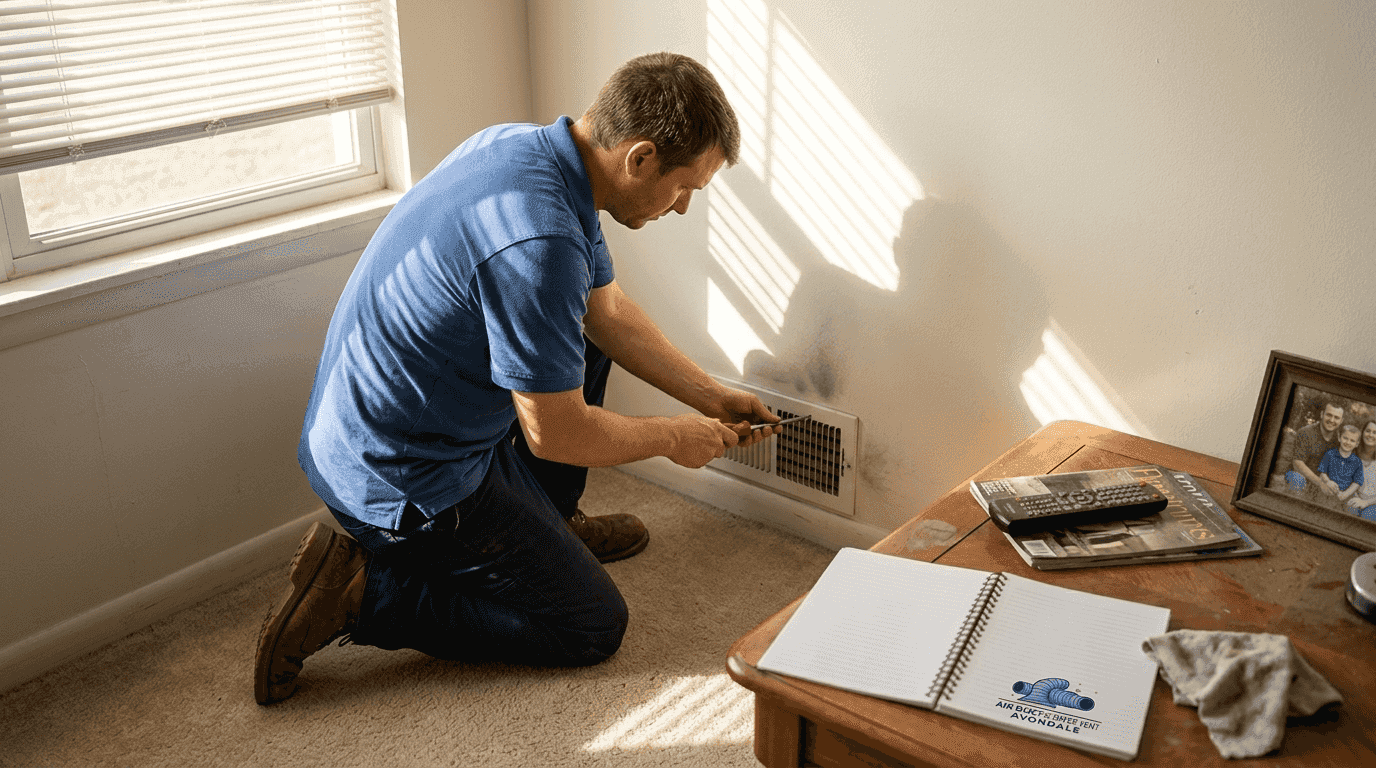
Dirty vents silently compromise your indoor air quality while driving up energy bills. In Avondale's dusty climate, dust, allergens, and debris accumulate faster than you might expect, forcing your HVAC system to work harder and exposing your family or employees to airborne contaminants. This guide walks you through the complete vent cleaning process, from understanding why it matters to executing professional-grade cleaning techniques that restore fresh air and efficiency. Whether you manage a home or business, mastering these steps helps you breathe easier and save money.
Table of Contents
- Understanding Why Vent Cleaning Matters In Avondale
- Preparing For The Vent Cleaning Process: What You Need To Know
- Executing The Vent Cleaning Process Step-By-Step
- Verifying Results And Maintaining Your Vents For Long-Term Benefits
- Professional Vent Cleaning Services In Avondale, Arizona
Key takeaways
| Point | Details |
|---|---|
| Vent cleaning removes contaminants | Professional cleaning eliminates dust, mold, pollen, and bacteria that compromise indoor air quality and respiratory health. |
| Three-phase method ensures thoroughness | Protection, mechanical cleaning with negative pressure, and antimicrobial treatment deliver comprehensive ventilation restoration. |
| Regular maintenance cuts energy costs | Clean vents restore airflow, reducing HVAC strain and lowering monthly utility bills by up to 20%. |
| Professional inspections verify quality | NADCA-certified technicians use telescopic cameras and airflow testing to confirm cleaning effectiveness and system performance. |
Understanding why vent cleaning matters in Avondale
Your vents harbor more than dust. Over months and years, air duct cleaning improves indoor air quality by removing accumulated allergens, mold spores, and bacteria that circulate through your living or working spaces every time your HVAC system runs. In Avondale, the dry desert environment creates unique challenges that accelerate contamination.
Avondale's climate brings constant exposure to airborne particles. Wind carries dust, pollen, and sand that infiltrate even well-sealed buildings. Weather patterns create unique challenges for HVAC systems and ductwork, making regular maintenance essential rather than optional. When these particles settle in your vents, they create breeding grounds for mold in areas where condensation occurs.
The health implications extend beyond minor allergies. Contaminated vents distribute irritants that trigger asthma attacks, worsen seasonal allergies, and cause persistent respiratory discomfort. Children and elderly family members face heightened vulnerability. Business owners notice increased sick days when indoor air quality deteriorates. The EPA identifies indoor air quality as a critical health factor, often ranking among the top environmental risks.
Energy costs tell another story. Dirty vents restrict airflow, forcing your HVAC system to run longer cycles to maintain desired temperatures. This inefficiency shows up monthly on utility bills. Your system works harder, wears faster, and requires more frequent repairs. Regular air vent cleaning prevents these compounding problems.
Pro Tip: Schedule vent inspections after dust storms or during seasonal transitions when pollen counts spike to catch contamination before it impacts your health or wallet.
Recognizing these factors helps you prioritize maintenance. Avondale homeowners and business owners who understand the connection between clean vents and healthy, efficient environments make smarter decisions about when and how to address their ventilation systems.
Preparing for the vent cleaning process: what you need to know
Proper preparation separates mediocre cleaning from transformative results. Before any work begins, understanding what the process requires ensures you get maximum value whether you tackle it yourself or hire professionals.
Essential equipment includes powerful negative pressure vacuums, rotating brush systems, telescopic inspection cameras, and antimicrobial treatments. NADCA-certified professionals bring specialized tools designed for thorough vent access. Visual inspection with cameras reveals hidden contamination that explains mysterious odors or health symptoms. These cameras document before and after conditions, providing proof of cleaning effectiveness.
Safety measures protect both workers and your property:
- Cover furniture and flooring near vent access points to prevent dust exposure during initial opening
- Seal off rooms not being serviced to contain any dislodged particles
- Ensure proper ventilation during antimicrobial application to allow safe drying
- Use protective gear including respirators when accessing heavily contaminated systems
Choosing qualified professionals matters enormously. NADCA certification is a seal of quality for air duct cleaning, ensuring technicians follow industry best practices and use appropriate methods. Certified professionals understand ventilation system design, recognize when repairs are needed, and avoid damaging delicate components. They carry proper insurance and stand behind their work with verifiable guarantees.
| Preparation Element | Purpose | Outcome |
|---|---|---|
| Visual inspection | Identify contamination severity and access points | Customized cleaning plan |
| Site protection | Prevent secondary contamination during cleaning | Clean work environment |
| Equipment staging | Ensure all tools are ready and functional | Efficient workflow |
| Safety protocols | Protect occupants and technicians | Risk-free service |
Commercial properties require additional considerations. Commercial air duct cleaning involves coordinating around business hours, protecting sensitive equipment, and addressing larger, more complex ventilation networks. Restaurants face unique grease accumulation challenges. Medical offices need heightened sanitation standards.
Dryer vent cleaning follows similar preparation principles but focuses on fire prevention. Lint buildup creates extreme fire hazards that require specialized removal techniques.
Pro Tip: Schedule cleaning during mild weather when you can open windows for natural ventilation, making the process more comfortable and allowing faster drying of treated surfaces.
Timing matters strategically. Spring and fall offer ideal conditions in Avondale, avoiding extreme summer heat and rare winter cold snaps. Booking during off-peak seasons often brings better availability and pricing. Planning ahead prevents last-minute scrambling when air quality suddenly deteriorates.
Executing the vent cleaning process step-by-step
The actual cleaning unfolds through carefully sequenced stages, each building on the previous to deliver comprehensive results. Understanding this workflow helps you recognize quality service and set realistic expectations.
Step 1 involves protecting your environment. Technicians seal supply and return vents in rooms not being serviced, preventing dislodged contaminants from escaping into living spaces. Drop cloths cover nearby surfaces. Access panels are carefully opened to minimize damage to walls or ceilings. This containment strategy keeps disruption minimal while ensuring thorough cleaning.
Step 2 brings mechanical cleaning using negative pressure vacuums and rotating brushes. Powerful vacuums create suction at the main trunk line, pulling dislodged debris toward collection points. Rotating brushes mounted on flexible rods scrub duct walls, breaking loose years of accumulated buildup. Compressed air tools blast stubborn deposits. This phase removes the bulk of contamination, restoring physical airflow capacity.
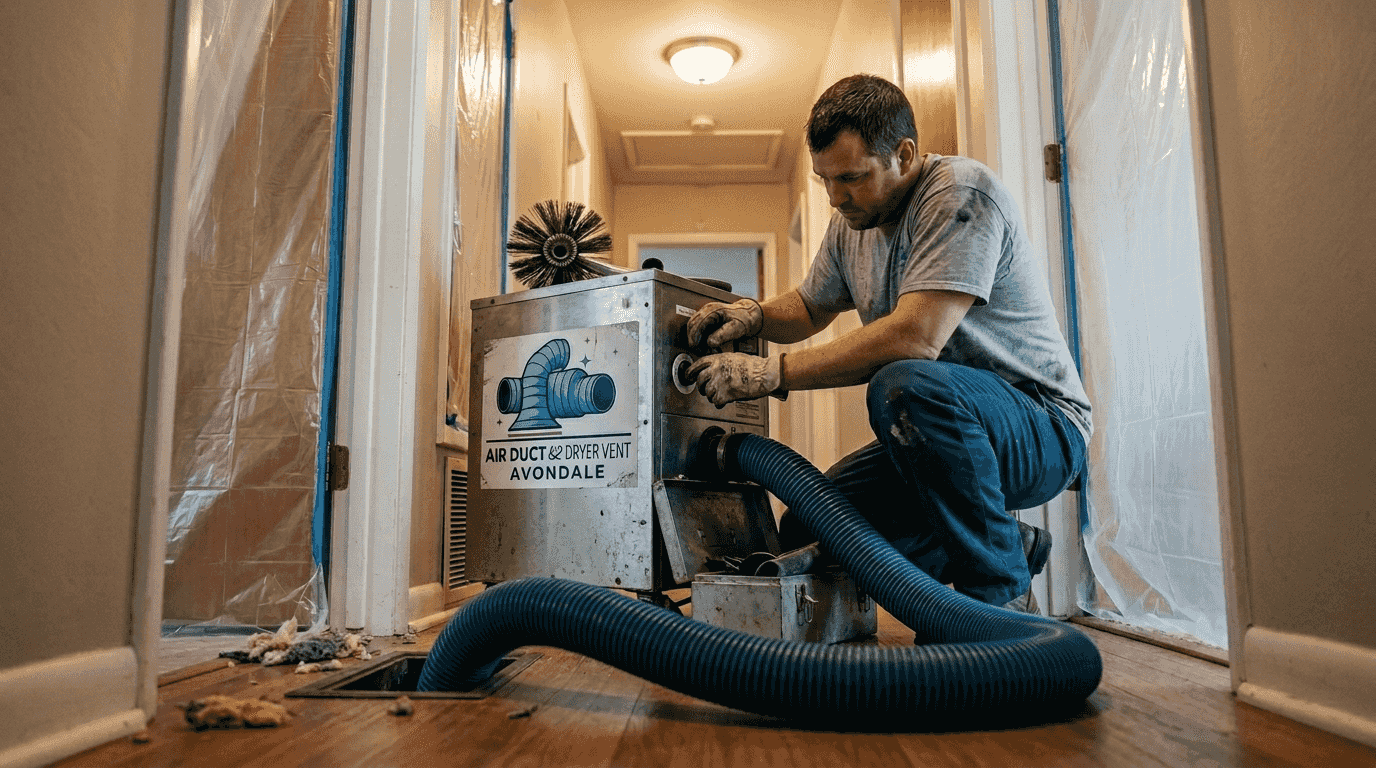
Step 3 applies antimicrobial treatments targeting remaining mold, bacteria, and odor-causing microorganisms. EPA-registered solutions sanitize surfaces without leaving harmful residues. Foggers distribute treatment evenly throughout the system, reaching areas mechanical cleaning cannot fully address. This biological cleanup prevents rapid recontamination and eliminates musty smells.
Step 4 optimizes airflow through testing and adjustment. Technicians measure air pressure at various points, identifying restrictions or imbalances. Dampers are adjusted to ensure even distribution. Filters are replaced with appropriate MERV-rated options. This final tuning maximizes system efficiency and comfort.
| Cleaning Stage | Methods Used | Primary Benefit |
|---|---|---|
| Protection | Sealing, covering, containment | Prevents secondary contamination |
| Mechanical cleaning | Negative pressure, brushes, compressed air | Removes physical debris and buildup |
| Antimicrobial treatment | EPA-registered sanitizers, foggers | Eliminates biological contaminants |
| Airflow optimization | Pressure testing, damper adjustment, filter replacement | Restores system efficiency |
Professional air duct cleaning typically takes three to five hours for average residential systems. Larger homes or commercial buildings require more time. Rushing compromises results, so adequate scheduling ensures no corners are cut.
Pro Tip: Request before and after photos from telescopic camera inspections to document the transformation and verify that all accessible ductwork received attention.
Each step requires specific expertise. DIY attempts often lack the equipment to create proper negative pressure or reach deep into duct runs. Incomplete cleaning leaves contamination that quickly spreads, wasting effort and money. Understanding these technical requirements helps you appreciate why professional service delivers superior outcomes.
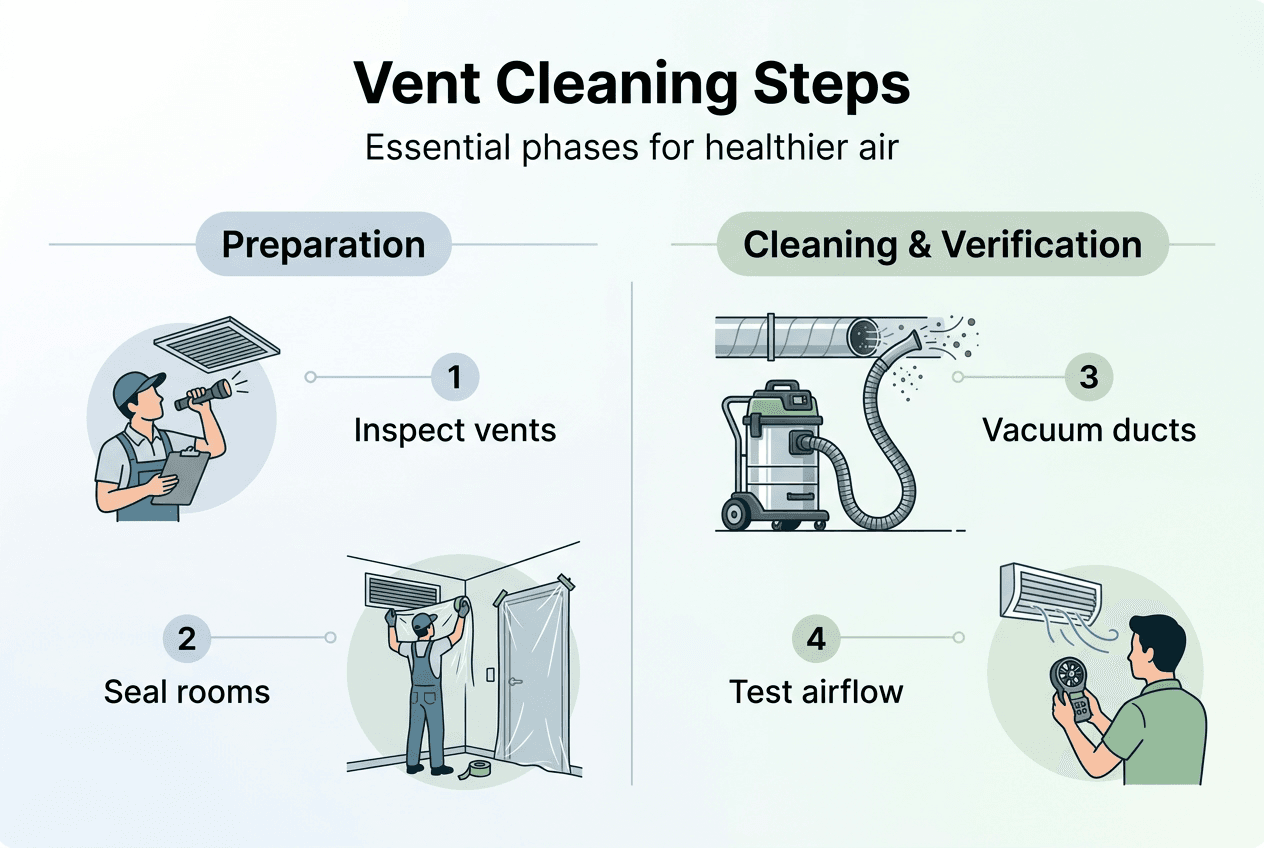
The three-phase approach addresses contamination comprehensively. Physical removal tackles visible debris. Chemical treatment handles microscopic threats. Airflow optimization ensures your investment translates to measurable performance improvements. Together, these stages transform your ventilation from liability to asset.
Verifying results and maintaining your vents for long-term benefits
Cleaning means nothing without confirmation. Verification separates legitimate service from superficial efforts that leave hidden contamination.
Telescopic camera inspections provide irrefutable evidence. Technicians navigate cameras through your ductwork, capturing video of interior conditions. Comparing before and after footage shows exactly what was removed and confirms thorough cleaning. Request copies of this documentation for your records. It proves value and establishes a baseline for future maintenance.
Expected improvements manifest quickly. Within days, you notice fresher air and reduced dust accumulation on surfaces. Allergy sufferers experience fewer symptoms. HVAC systems cycle less frequently, running quieter and more efficiently. Energy bills drop as airflow resistance decreases. One case study documented a 15-20% energy consumption drop after professional ventilation cleaning due to better heating system performance.
| Factor | Dirty Vents | Clean Vents |
|---|---|---|
| Indoor air quality | Circulates allergens, mold, bacteria | Fresh, contaminant-free air |
| Energy efficiency | Restricted airflow increases HVAC runtime | Optimal airflow reduces energy consumption |
| System lifespan | Excess strain accelerates wear and failures | Reduced stress extends equipment life |
| Comfort consistency | Uneven temperatures, poor circulation | Balanced distribution, stable comfort |
Maintaining results requires ongoing attention. Simple practices extend the benefits of professional cleaning:
- Replace air filters every 60 to 90 days, more frequently during high pollen seasons
- Keep supply and return vents clear of furniture, curtains, and other obstructions
- Vacuum vent covers monthly to prevent surface dust from entering ducts
- Schedule annual professional inspections to catch early contamination before it spreads
- Address water leaks immediately to prevent mold growth in ductwork
Indoor air quality testing provides objective measurement of your environment. Professional testing identifies specific contaminants and their concentrations, guiding targeted interventions. Baseline testing after cleaning establishes benchmarks for future comparison.
Pro Tip: Mark your calendar for yearly inspections during the same month each year, making maintenance automatic rather than reactive and avoiding costly emergency repairs.
Commercial properties benefit from more frequent attention. High-traffic businesses accumulate contamination faster. Restaurants require quarterly inspections due to grease and cooking byproducts. Medical facilities need stringent protocols to maintain patient safety.
Long-term thinking transforms vent maintenance from expense to investment. Preventing major contamination costs less than remediation. Extending HVAC lifespan through reduced strain saves thousands on premature replacements. Healthier indoor environments boost productivity and reduce illness-related costs.
Verification and maintenance close the loop, ensuring your vent cleaning delivers lasting value. Without follow-through, even excellent initial cleaning gradually loses effectiveness. Building these practices into your routine protects your investment and sustains the health and efficiency gains you worked to achieve.
Professional vent cleaning services in Avondale, Arizona
Mastering the vent cleaning process empowers informed decisions, but executing it requires specialized expertise and equipment. When you're ready to transform your indoor environment, professional services deliver guaranteed results without the learning curve or equipment investment.
NADCA-certified technicians bring years of training and proven methods to every job. They understand Avondale's unique climate challenges and tailor approaches accordingly. Whether you need residential air vent cleaning, commercial dryer vent services, or comprehensive commercial duct solutions, expert care ensures thorough contamination removal and system optimization. Professional inspections verify quality, providing documentation and peace of mind. Flexible scheduling, including after-hours options, minimizes disruption to your daily routine or business operations.
FAQ
How often should vents be cleaned to maintain air quality and efficiency?
Most Avondale homes and businesses benefit from professional vent cleaning every two to three years under normal conditions. Properties with pets, smokers, recent construction, or occupants with allergies need annual service. Watch for warning signs like visible dust buildup on vent covers, musty odors when the system runs, or unexplained increases in energy bills. Dryer vents require annual cleaning minimum due to fire risk from lint accumulation.
What are the benefits of hiring an NADCA-certified vent cleaning professional?
NADCA certification represents industry best practices and verified expertise in air duct cleaning. Certified professionals follow standardized procedures that ensure thorough contamination removal without damaging your system. They use proper equipment, understand ventilation design complexities, and provide documentation of their work. Certification also means ongoing education about new techniques and safety protocols. For commercial properties, this expertise becomes especially critical given larger, more complex systems.
Can vent cleaning help reduce energy bills in Avondale homes and businesses?
Absolutely. Clean vents restore unrestricted airflow, allowing your HVAC system to reach desired temperatures faster and maintain them with shorter run cycles. This efficiency directly translates to lower energy consumption. Research shows ventilation cleaning can reduce energy use by 15-20% in buildings with significant contamination. Avondale's extreme summer heat makes this savings particularly valuable. Professional energy-efficient air duct cleaning pays for itself through reduced utility costs while extending equipment lifespan.
What should I expect during a professional vent cleaning appointment?
Technicians arrive with specialized equipment and begin by inspecting your system with cameras to assess contamination levels. They protect your property with drop cloths and seal vents to contain debris. The cleaning process involves powerful vacuums creating negative pressure while rotating brushes and compressed air dislodge buildup throughout your ductwork. Antimicrobial treatments follow mechanical cleaning. Finally, airflow testing and filter replacement optimize performance. Most residential jobs take three to five hours. You receive before and after documentation showing the transformation.
Are there specific times of year best for scheduling vent cleaning in Avondale?
Spring and fall offer ideal conditions in Avondale's climate. Mild temperatures allow you to open windows for natural ventilation during the process, making it more comfortable and speeding treatment drying times. Scheduling before peak cooling season in late spring ensures your system runs efficiently when you need it most. Post-summer cleaning in fall removes accumulated dust from intense use. Avoid scheduling during extreme heat or the rare cold snaps. Off-peak seasons often provide better availability and potentially lower rates, making strategic timing beneficial for both comfort and budget.
Recommended
- Air Vent Cleaning, Air Duct Cleaning, Avondale, AZ
- Dryer Vent Cleaning in Avondale, AZ
- What is residential air vent cleaning? 2026 Avondale guide
- Air Duct Cleaning, Dryer Vent Cleaning, HVAC Services, Avondale, AZ
- Why Routine Dryer Vent Cleaning: Prevent Fires & Boost Efficiency
- Drying Towels Indoors for Hygienic and Cozy Results