
TL;DR:
- Mold in HVAC systems is a fungal growth caused by moisture, warmth, and organic material, spreading spores throughout your home every cycle. Professional remediation following NADCA standards, including HEPA extraction and porous material replacement, is necessary for effective removal. Preventative measures like humidity control, proper filtration, and UV lights are essential to stop mold growth and maintain indoor air quality.
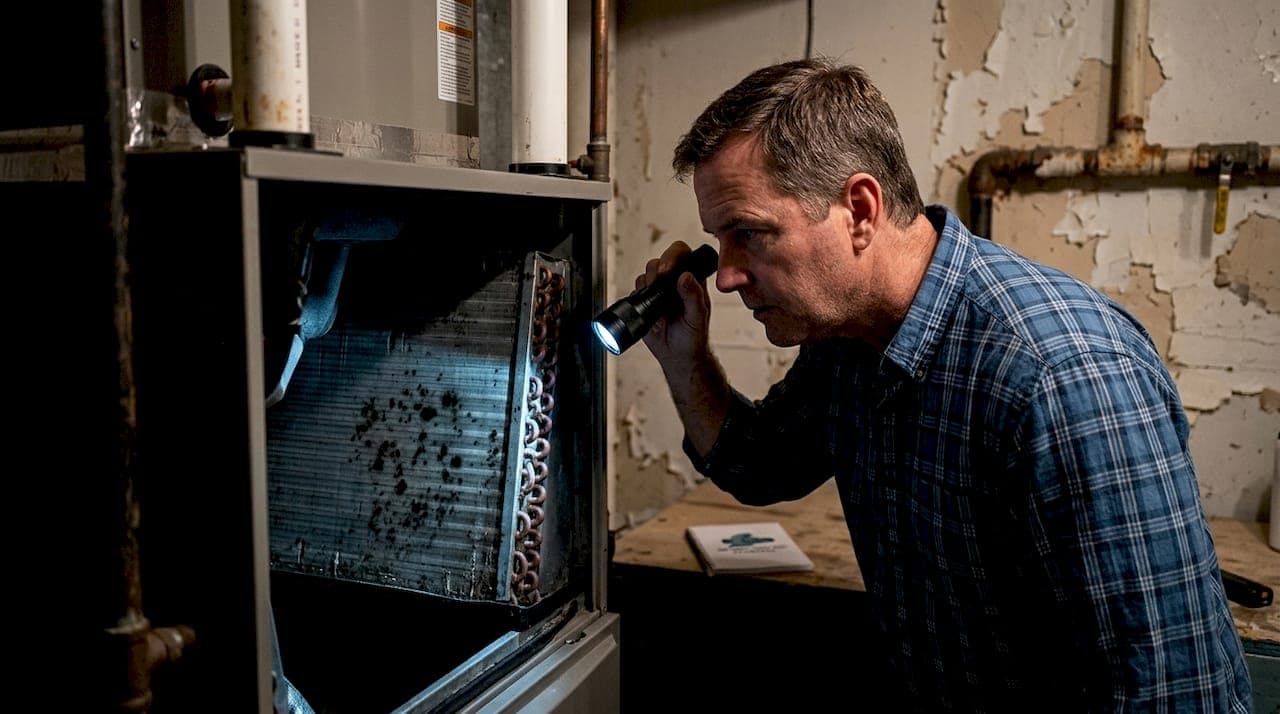
Mold in HVAC systems is a fungal growth that colonizes moist, warm surfaces inside air handlers, evaporator coils, drain pans, and ductwork, then spreads spores throughout your entire home every time the system runs. The EPA and NADCA both recognize HVAC mold as a serious indoor air quality threat, not a cosmetic nuisance. Understanding what causes it, how to spot it, and what proper remediation looks like is the difference between a clean home and one where every breath carries a hidden health risk.
What is mold in HVAC systems and why does it grow there?
Mold in HVAC systems is a category of fungus that thrives wherever three conditions align: moisture, warmth, and organic material to feed on. Your HVAC system delivers all three in abundance. The evaporator coil stays wet during normal air conditioning operation, and the fine layer of dust that coats it provides exactly the organic food source mold needs to establish a colony. This is not a rare or unusual situation. It is the predictable result of how these systems function.
The industry term for this problem is HVAC microbial contamination, though most homeowners and technicians simply call it HVAC mold. Both terms describe the same condition: fungal growth inside the mechanical components and ductwork of a heating, ventilation, and air conditioning system. What makes it particularly dangerous is the delivery mechanism. A contaminated HVAC system acts as a high-velocity distribution network, pushing mold spores into every room of your home at the same rate it pushes conditioned air.
Avondale, Arizona presents specific risk factors worth naming directly. High summer humidity combined with aggressive air conditioning use creates repeated condensation cycles on coils and in ductwork. Systems that run hard in summer and sit idle in winter create the stop-start moisture conditions that mold colonies exploit most effectively.
What causes mold growth in HVAC systems?
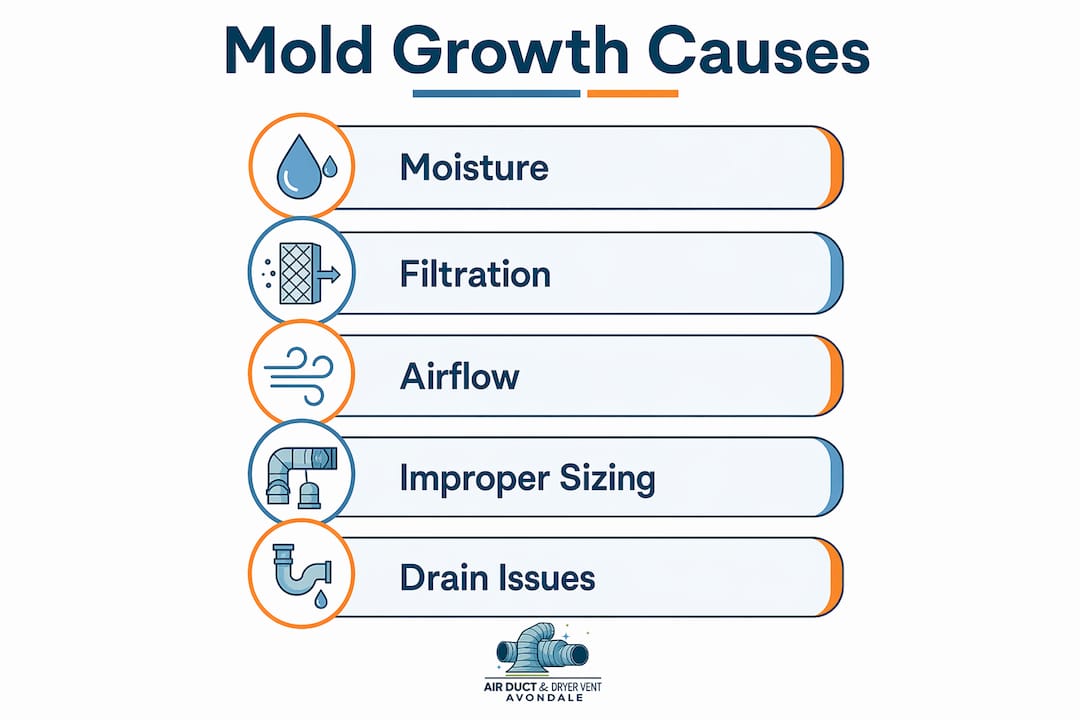
Several mechanical and environmental factors create the conditions mold needs to take hold inside an HVAC system. Understanding each one helps you target prevention at the source rather than treating symptoms after the fact.
Moisture sources inside the system
- Condensation on evaporator coils: The coil surface drops below the dew point during cooling, pulling moisture from the air. That moisture is supposed to drain away, but any disruption to that process leaves standing water.
- Clogged drain pans and lines: Algae, dust, and debris block the condensate drain line over time. When the pan overflows or water backs up, it soaks surrounding insulation and duct liner materials, creating a persistent wet zone.
- Duct leaks and poor insulation: Unsealed ductwork running through unconditioned spaces like attics or crawlspaces develops condensation on the outer surface, which migrates inward through gaps and seams.
Filtration and airflow failures
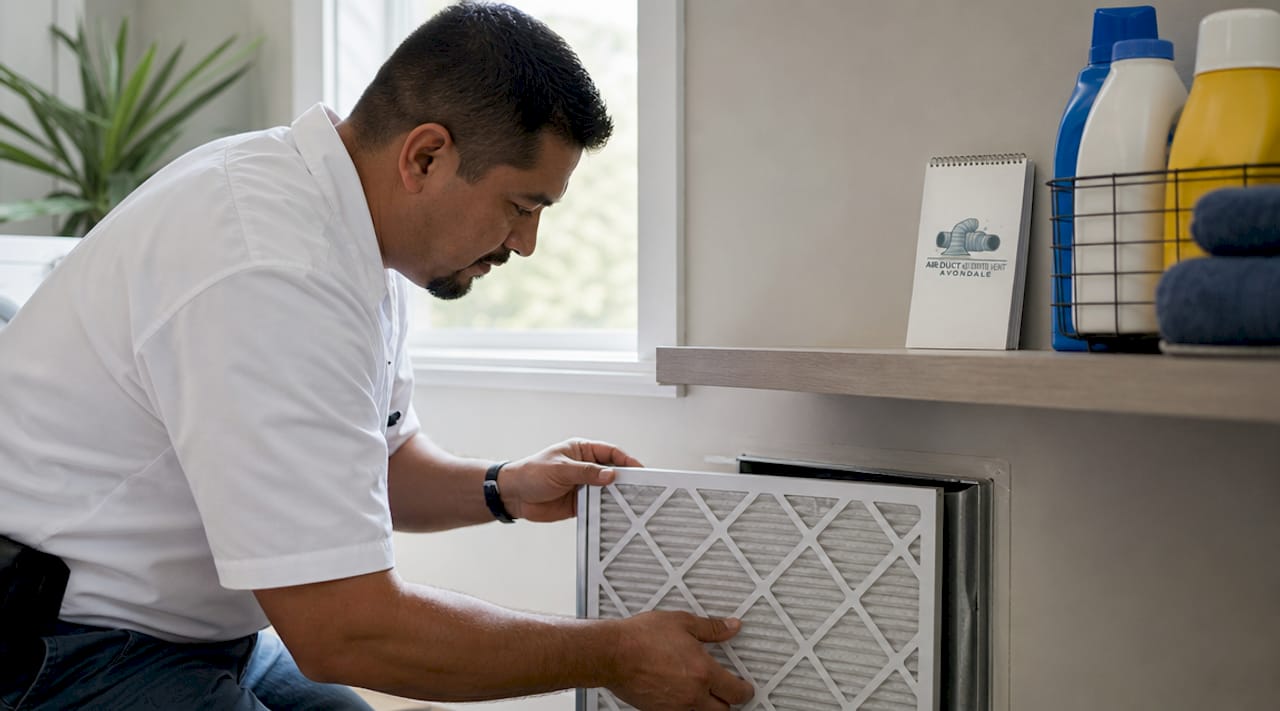
Poor filter maintenance increases the volume of dust that reaches the coil surface, directly feeding mold growth. A filter that has not been changed in four months is not just inefficient. It is actively contributing to the organic food supply that mold colonies depend on. Low-quality fiberglass filters with MERV ratings below 8 allow fine particulates to pass straight through to the coil.
Improper HVAC sizing compounds the problem significantly. An oversized unit cools the air too quickly, cycling off before it can adequately dehumidify the space. The result is air that feels cool but carries high relative humidity, which settles as moisture on every surface the air touches inside the system. This is one of the root causes of recurring mold that many homeowners never identify.
Pro Tip: Inspect your condensate drain pan every spring before cooling season starts. A pan with standing water or a dark ring of algae is a reliable early warning sign that mold conditions are already present, even before visible growth appears.
What are the signs and effects of mold in HVAC systems?
Musty odors, visible mold spots, and worsening allergy symptoms are the three most consistent indicators that mold has established itself inside an HVAC system. Each one points to a different stage of contamination, and recognizing them early limits both the health damage and the remediation cost.
Sensory and visual warning signs
- Musty or earthy smell when the system runs: This odor is produced by microbial volatile organic compounds (MVOCs) released by active mold colonies. If the smell disappears when the system shuts off, the source is almost certainly inside the HVAC unit itself.
- Visible dark spots on vent covers or inside registers: Black, green, or gray discoloration around supply vents indicates spores are being deposited as air exits the duct. This is a late-stage sign. By the time mold is visible at the vent, the colony inside the system is well established.
- Dust accumulation patterns that seem excessive: Mold-contaminated systems often show unusual dust buildup near vents because spores and debris travel together through the ductwork.
Health effects of mold in air conditioning
The health effects of mold in air conditioning systems range from mild irritation to serious respiratory conditions, depending on the mold species present and the duration of exposure. Common symptoms include persistent sneezing, nasal congestion, eye irritation, and skin rashes. For people with asthma, mold exposure can trigger attacks. For immunocompromised individuals, certain mold species pose genuinely serious infection risks.
Indoor mold exposure is not a minor inconvenience. The EPA identifies mold as a significant contributor to poor indoor air quality with documented links to respiratory illness. When your HVAC system is the source, exposure is continuous and building-wide. Every occupant breathes contaminated air for as long as the system runs. Checking your HVAC system for replacement signs becomes relevant when mold contamination is severe enough that remediation costs approach the value of the equipment itself.
Pro Tip: If allergy or asthma symptoms improve noticeably when you leave the house and return when you come back, the indoor air quality of your home is the likely cause. Have your HVAC system inspected before assuming the problem is seasonal pollen.
How is mold professionally removed from HVAC systems?
Professional HVAC mold remediation follows the NADCA ACR Standard, which is the recognized industry protocol for assessing and cleaning contaminated HVAC systems. The process is methodical, requires specialized equipment, and cannot be replicated with household cleaning products or a shop vacuum.
The standard remediation sequence works as follows:
- System shutdown. The HVAC system must be shut off immediately upon confirmed mold contamination and kept offline until remediation is complete. Running a contaminated system spreads spores to every area the air reaches.
- Containment setup. Technicians seal off the work area and establish negative air pressure using HEPA-filtered air scrubbers. This prevents disturbed spores from migrating to clean areas of the building.
- HEPA vacuum extraction. The NADCA ACR protocol requires HEPA-filtered vacuum extraction under continuous negative pressure across all system components, including ducts, blower assembly, evaporator coil, and drain pan.
- Component cleaning and treatment. Hard surfaces are cleaned with EPA-registered antimicrobial agents. Coils receive specialized coil-safe cleaners. Drain pans are flushed and treated to eliminate algae and mold residue.
- Porous material replacement. Mold penetrates porous duct liner materials that cannot be cleaned effectively. Internal duct insulation, flexible duct sections, and foam gaskets that show mold penetration must be removed and replaced entirely.
- Post-remediation verification. Air sampling or surface testing confirms that spore counts have returned to acceptable levels before the system is returned to service.
Why DIY mold removal makes things worse
DIY mold removal consistently worsens contamination by disturbing colonies without containment, releasing far more airborne spores than were present before cleaning began. Spraying bleach on a mold-covered duct surface kills surface cells but does nothing to the root structure embedded in the material. Within weeks, the colony regrows from the surviving mycelium. The EPA explicitly advises against homeowner attempts to clean HVAC mold for this reason.
| Approach | Outcome |
|---|---|
| DIY cleaning with bleach or vinegar | Kills surface cells only; colony regrows from embedded mycelium within weeks |
| Professional NADCA ACR remediation | Removes all accessible mold, replaces porous materials, addresses moisture source |
| Ignoring the problem | Colony expands, spore counts increase, health effects worsen over time |
Pro Tip: Ask any remediation contractor whether they follow NADCA ACR Standards before hiring them. Contractors who cannot answer that question directly are not qualified for HVAC mold work.
How can homeowners prevent mold growth in HVAC systems?
Prevention is significantly cheaper than remediation. A single professional mold remediation job for a mid-size residential HVAC system can cost several thousand dollars. The prevention measures below cost a fraction of that and address the root conditions mold requires.
Humidity and moisture control
- Keep indoor relative humidity below 60% year-round. The EPA recommends this threshold as the upper limit for mold prevention. In humid climates, a whole-home dehumidifier integrated with the HVAC system is the most reliable way to maintain this level consistently.
- Clear the condensate drain line every three to six months using a diluted bleach flush or a wet-dry vacuum at the exterior drain outlet. A blocked line is one of the fastest paths to standing water in the drain pan.
- Seal and insulate all ductwork running through unconditioned spaces. Exposed metal duct in a hot attic creates condensation every time cool air passes through it, and that moisture eventually finds its way inside.
Filtration and maintenance
Replace air filters every one to three months and use filters rated MERV 11 to 13 for residential systems. This range captures fine particulates including mold spores without restricting airflow enough to cause pressure problems. Filters rated below MERV 8 allow too much dust to reach the coil. Filters rated above MERV 13 can reduce airflow enough to cause the coil to freeze, which creates more moisture problems.
Schedule professional HVAC maintenance at least once per year, ideally before cooling season in spring. A qualified technician will inspect the evaporator coil, clean the drain pan, check refrigerant levels, and verify that the system is sized and operating correctly for your home's load. This single annual service catches the conditions that lead to mold growth in HVAC before they become a remediation project.
UV germicidal light installation
UV germicidal lights installed near evaporator coils continuously kill mold spores and bacteria on the coil surface, preventing new colonies from establishing between maintenance visits. This technology is well established in commercial HVAC applications and has become increasingly common in residential systems. The lights require annual bulb replacement to maintain effectiveness, but the cost is minimal compared to the protection they provide.
Pro Tip: If your HVAC system is more than 10 years old and has never had a UV light installed, adding one during your next annual service is one of the highest-value upgrades available for indoor air quality.
Key takeaways
Mold in HVAC systems requires moisture control, proper filtration, and professional remediation to eliminate effectively and prevent recurrence.
| Point | Details |
|---|---|
| Moisture is the root cause | Clogged drain pans, coil condensation, and duct leaks create the wet conditions mold requires. |
| HVAC spreads spores building-wide | A contaminated system distributes mold spores to every room each time it runs. |
| DIY removal worsens contamination | Disturbing mold without containment releases more spores than were present before cleaning. |
| NADCA ACR Standard is the benchmark | Professional remediation must include HEPA extraction, negative pressure, and porous material replacement. |
| Prevention costs far less than remediation | MERV 11-13 filters, humidity control below 60%, and annual maintenance prevent most mold scenarios. |
What I've learned after years of seeing HVAC mold up close
The most persistent misconception I encounter is that a standard duct cleaning solves an HVAC mold problem. It does not. Duct cleaning removes loose debris from duct surfaces. Mold remediation is a different process entirely, governed by different standards, requiring different equipment, and addressing a different category of contamination. Conflating the two is how homeowners end up paying for a service that leaves the actual problem untouched.
The second thing I have learned is that mold always comes back when the moisture source is not fixed. I have seen systems that were professionally remediated and recontaminated within a single cooling season because nobody addressed the oversized unit that was short-cycling and failing to dehumidify. Moisture control and airflow management are not optional add-ons to remediation. They are the remediation. Without them, you are cleaning a surface that will grow back.
The third thing worth saying plainly: not every contractor who offers "mold cleaning" is qualified to do it. Ask specifically whether they follow NADCA ACR Standards. Ask whether they use HEPA-filtered equipment under negative pressure. Ask whether they test air quality after the work is done. A contractor who cannot answer those questions with confidence is not the right person for the job. You can also review common HVAC cleaning misconceptions before hiring anyone, so you know exactly what questions to ask.
Mold in an HVAC system is a solvable problem. But it requires the right diagnosis, the right process, and the right follow-through on moisture control. Anything less is temporary.
— Shaun
Protect your Avondale home with professional HVAC mold services
If you have noticed a musty smell from your vents, worsening allergy symptoms indoors, or visible discoloration around your registers, your HVAC system deserves a professional inspection before the problem spreads further.
Airanddryerventcleaningavondale provides residential and commercial air duct and vent cleaning services in Avondale, Arizona, following NADCA ACR Standards for mold contamination. Services include evaporator coil cleaning, drain pan treatment, UV germicidal light installation, MERV-rated filter upgrades, and full air quality testing after remediation. For property managers overseeing multiple units, commercial duct cleaning services are available with flexible scheduling and documented post-service verification. Contact Airanddryerventcleaningavondale today to schedule an inspection and get your indoor air quality back under control.
FAQ
What is mold in HVAC systems exactly?
Mold in HVAC systems is a fungal growth that colonizes moist surfaces inside air handlers, evaporator coils, drain pans, and ductwork. It spreads spores building-wide each time the system operates, making it a direct indoor air quality threat.
How do I know if there is mold in my HVAC system?
The most reliable signs are a musty odor when the system runs, visible dark spots near supply vents, and allergy or respiratory symptoms that improve when you leave the building. A professional inspection with air quality testing provides definitive confirmation.
Can I remove HVAC mold myself?
The EPA advises against DIY HVAC mold removal because disturbing mold colonies without proper containment releases far more airborne spores than were present before cleaning. Professional remediation using HEPA equipment and negative air pressure is the safe and effective approach.
How often should I replace my air filter to prevent mold?
Replace your air filter every one to three months and use a filter rated MERV 11 to 13. This captures mold spores and fine particulates without restricting airflow enough to cause coil icing or pressure imbalances.
Does UV light actually prevent mold in HVAC systems?
Yes. UV germicidal lights installed near the evaporator coil continuously kill mold spores and bacteria on the coil surface, preventing new colonies from forming between maintenance visits. Bulbs require annual replacement to maintain full effectiveness.