
TL;DR:
- Properly sealed and maintained ducts prevent energy waste and improve indoor air quality. Leaky ducts can waste up to 30% of home energy, increasing costs and reducing system efficiency. Regular inspection, sealing with appropriate materials, and timely cleaning are essential for optimal HVAC performance.
Air ducts are the circulatory system of your HVAC setup, delivering conditioned air to every room and returning stale air back to the unit. These must-know air duct facts cover everything from duct types and common failures to ventilation standards and energy costs. Leaky ductwork can waste up to 30% of your home's total energy output, according to EPA data. The ASHRAE 62.2 standard sets the minimum ventilation rates every residential system must meet. Cleaning every 3–5 years is the industry baseline, though your home's specific conditions may require more frequent attention.
1. Must-know air duct facts start with duct types
Three main duct types appear in residential HVAC systems, and each behaves differently over time.
- Sheet metal ducts are the most durable option. They resist mold growth, clean easily, and last the full lifespan of a well-maintained system. Most older homes and commercial buildings use galvanized steel or aluminum sheet metal.
- Flexible ducts use a wire coil wrapped in plastic and insulation. They cost less to install and work well in tight spaces, but they restrict airflow when bent sharply or allowed to sag. A kinked flex duct can cut airflow significantly, forcing your HVAC to work harder.
- Fiberboard ducts are panels of compressed fiberglass bonded with resin. They dampen sound and provide natural insulation, but their inner surface can harbor mold if moisture enters the system.
Duct lifespan runs 20–25 years, and inspections are recommended after the 15-year mark due to seal and material deterioration. Knowing your duct type helps you predict maintenance needs before problems appear.
2. Proper sizing is non-negotiable
Duct sizing directly controls how well your HVAC system performs. Manual D sizing guidelines require technicians to calculate airflow for every room based on the unit's capacity, duct length, and number of bends. Skipping this step causes noise, hot and cold spots, and premature equipment failure. An undersized duct starves rooms of conditioned air. An oversized duct moves air too slowly, reducing efficiency and allowing moisture to settle.
3. Common air duct problems and what they signal
Most duct problems show up as comfort or cost issues before they become visible damage. Recognizing the signs early saves you from expensive repairs.
- Uneven heating or cooling across rooms points to leaks, blockages, or sizing errors.
- Noisy vents (rattling, whistling, or banging) indicate loose connections, debris, or pressure imbalances.
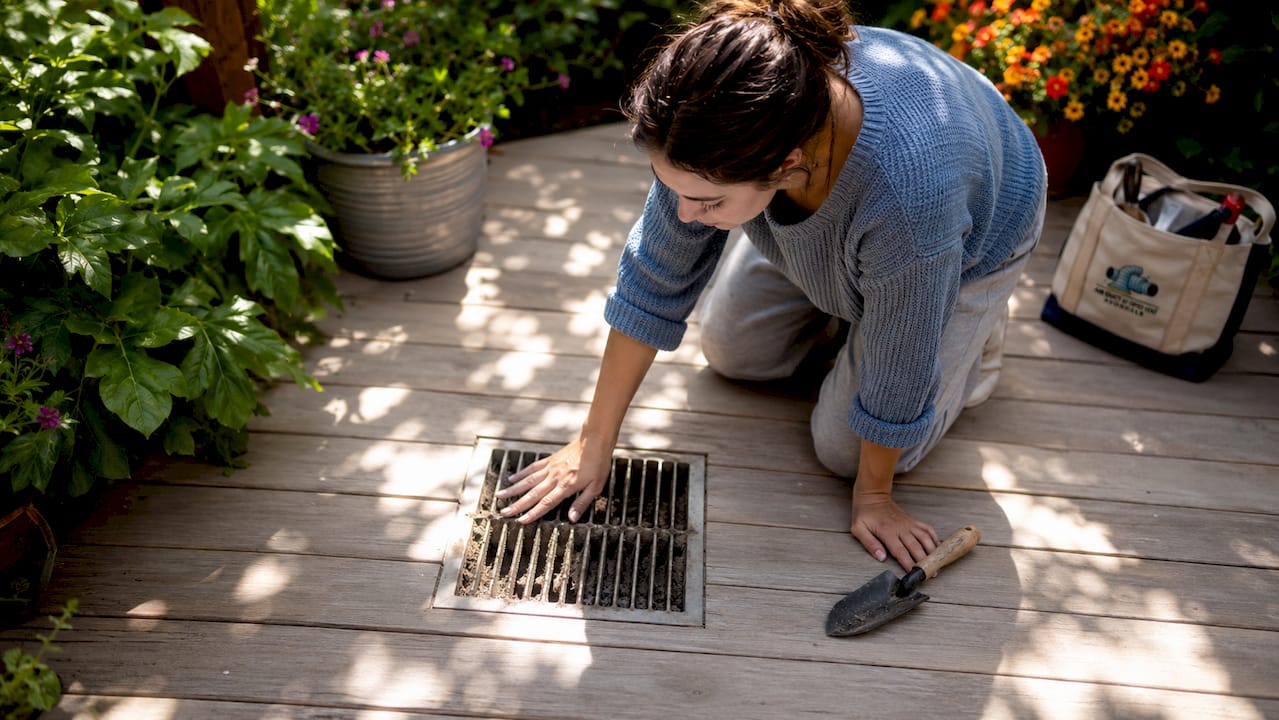
- Excessive dust on surfaces near vents suggests the system is pulling in unfiltered air through gaps.
- Visible damage such as crushed flex duct, disconnected joints, or torn insulation requires immediate attention.
- Pest activity inside ducts introduces debris, dander, and bacteria that degrade air quality fast.
- Mold odors near vents signal moisture intrusion, which can spread spores throughout the home.
Air duct leaks account for up to 30% of total energy loss in a home. That number represents real money leaving your wallet every month.
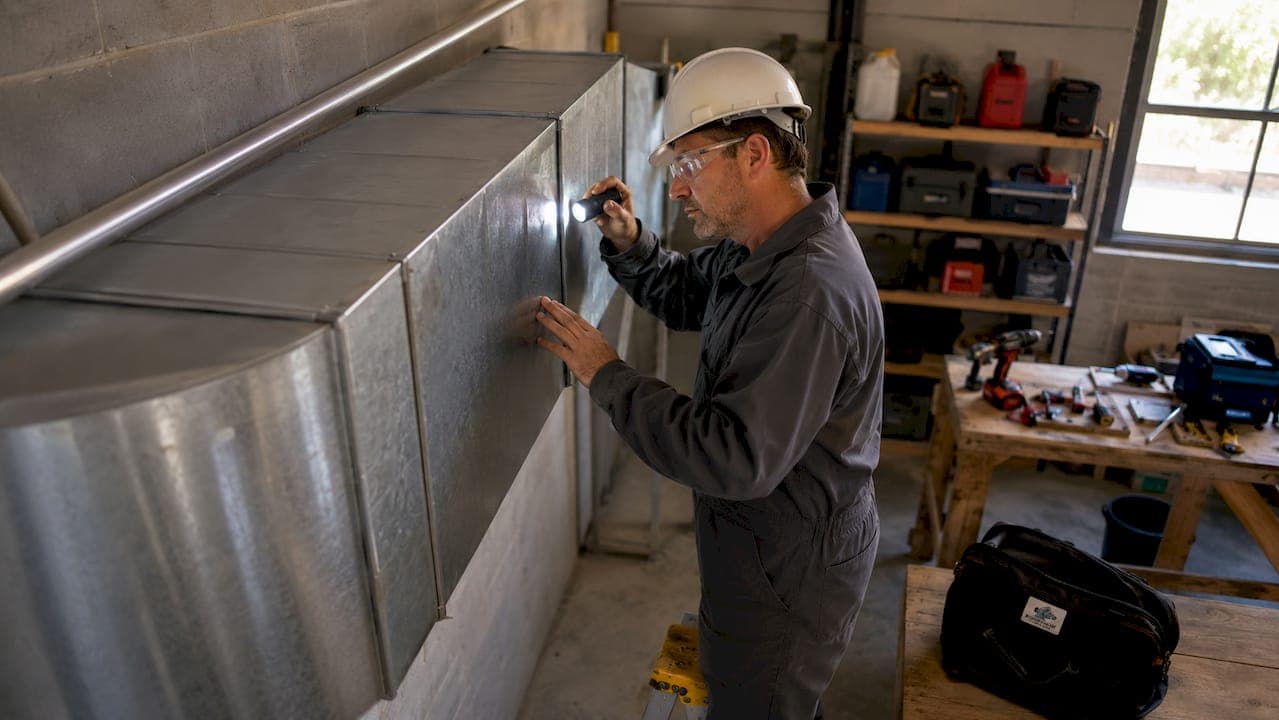
Pro Tip: Inspect your duct connections in the attic or crawlspace once a year. A flashlight and a smoke pencil reveal gaps that visual inspection alone misses.
4. Sealing materials matter more than most homeowners realize
The wrong sealing material turns a minor leak into a chronic problem. Ordinary duct tape fails within months under temperature cycling, leaving gaps that grow over time. Mastic sealant, a paste applied with a brush, bonds permanently to sheet metal and flex duct alike. Foil-backed tape rated for HVAC use is the second approved option. Neither degrades under heat, cold, or humidity the way standard duct tape does. If a contractor uses regular duct tape on your system, that is a red flag worth addressing before the job is done.
5. Air duct maintenance tips and cleaning frequency
Cleaning frequency depends on your household conditions, not just a calendar date.
- Every 3–5 years is the standard interval for most homes with no special conditions.
- Every 2–3 years if you have pets that shed, since dander accumulates in ducts faster than dust alone.
- After any renovation that generates drywall dust, insulation fibers, or construction debris. These particles coat duct walls and clog filters quickly.
- After mold remediation anywhere in the home, since spores travel through the air system.
- Annually if a household member has asthma, severe allergies, or a compromised immune system.
Cleaning intervals of 3–5 years reflect the rate at which dust, allergens, and debris accumulate under normal conditions. Professional cleaning removes contaminants that no filter catches once they coat duct walls.
Pro Tip: Before scheduling a cleaning, check your vents for visible dust buildup and your filter for heavy loading. Both indicate the system is overdue and help the technician prioritize problem areas.
Check the duct cleaning frequency guide from Airanddryerventcleaningavondale for a detailed breakdown by household type.
6. Ventilation standards and indoor air quality
Ventilation is health management, not just comfort. Pollutant buildup from inadequate airflow triggers respiratory issues, especially in children, the elderly, and anyone with existing lung conditions.
The ASHRAE 62.2-2022 standard sets the minimum continuous mechanical ventilation rate for homes using this formula: 0.03 × floor area (sq ft) + 7.5 × (number of bedrooms + 1), measured in cubic feet per minute (CFM). A 2,000 sq ft home with three bedrooms needs at least 90 CFM of continuous fresh air exchange. Most homes fall short of this without a properly commissioned mechanical ventilation system.
"Ventilation is critical health management beyond comfort, reducing pollutant buildup that triggers respiratory issues especially in vulnerable populations. Failure to properly commission ventilation systems in new builds can void occupancy permits and manufacturer warranties."
CO2 monitoring gives you a real-time read on ventilation effectiveness. CO2 levels above 1,500 ppm indicate inadequate air exchange. Levels below 1,000 ppm are the target for healthy indoor air. A basic CO2 monitor costs under $100 and tells you more about your air quality than a visual inspection ever could.
| Ventilation Indicator | Healthy Range | Action Needed |
|---|---|---|
| Indoor CO2 level | Below 1,000 ppm | Above 1,500 ppm: increase ventilation |
| Relative humidity | 30%–60% | Below 30% or above 60%: adjust system |
| Mechanical ventilation rate | Per ASHRAE 62.2 CFM formula | Below formula result: upgrade system |
| Air filter condition | Clean, no heavy loading | Replace filter; schedule duct inspection |
Indoor humidity between 30% and 60% reduces viral transmission, prevents dust mite proliferation, and stops mold from taking hold. Outside that range, your home becomes a more hospitable environment for the things that make people sick.
7. Energy efficiency and the real cost of leaky ducts
Leaky ducts do not just waste air. They force your HVAC system to run longer cycles to reach the thermostat setpoint, accelerating wear on the compressor, blower motor, and heat exchanger.
Properly sealed and insulated ducts improve HVAC efficiency by up to 20%. That improvement shows up directly on your utility bill and extends the life of your equipment. The table below shows how duct condition affects key performance outcomes.
| Duct Condition | Energy Impact | Equipment Risk |
|---|---|---|
| Well-sealed, insulated | Up to 20% efficiency gain | Low wear, longer lifespan |
| Minor leaks (under 10%) | Moderate energy loss | Increased runtime, manageable |
| Significant leaks (10%–30%) | Up to 30% energy wasted | High strain, early failure risk |
| Disconnected joints | Severe loss, unheated spaces | Immediate repair required |
Closing supply vents raises static pressure inside the duct system, forcing the blower to work against resistance it was never designed to handle. This can crack heat exchangers and freeze evaporator coils. Every vent in your home should stay open, even in rooms you rarely use.
Learn more about how ducts affect energy savings from Airanddryerventcleaningavondale's detailed breakdown of efficiency factors.
Key takeaways
Well-maintained, properly sealed air ducts are the single most effective way to protect both your HVAC investment and your household's air quality.
| Point | Details |
|---|---|
| Leaks cost real money | Duct leaks waste up to 30% of total home energy, raising bills every month. |
| Clean on a schedule | Plan professional cleaning every 3–5 years, sooner with pets, allergies, or renovations. |
| Sealing material matters | Use mastic sealant or foil tape. Standard duct tape fails under temperature cycling. |
| Ventilation has a standard | ASHRAE 62.2-2022 sets the minimum CFM formula every residential system must meet. |
| Closed vents cause damage | Shutting supply vents raises static pressure and risks cracked heat exchangers or frozen coils. |
What I've learned from years of watching homeowners ignore their ducts
Most homeowners think about their HVAC system only when it stops working. That is the most expensive way to manage it. The ducts are invisible, so they feel abstract. But every dollar lost to a leaky duct is a dollar you paid to heat or cool your attic, crawlspace, or wall cavity instead of your living room.
The fact that catches most people off guard is the sealing material issue. I have seen systems where a previous contractor used standard duct tape on every joint. Within two or three years, every one of those joints was open. The homeowner had no idea why their bills kept climbing. Switching to mastic sealant on those joints cut their runtime noticeably.
The other thing I push hard on is the CO2 monitor. Most homeowners have never measured their indoor CO2. When they do, they are often surprised. A reading above 1,500 ppm in a bedroom is not rare in tightly built homes without mechanical ventilation. Opening interior doors helps, but a properly commissioned ventilation system is the real fix.
My honest advice: schedule an inspection before you think you need one. Catching a disconnected joint or a sagging flex duct early costs a fraction of what a failed compressor or a mold remediation job will run you. Proactive maintenance is not a luxury. It is the cheaper option.
— Shaun
Professional duct care for Avondale homes and businesses
Airanddryerventcleaningavondale serves residential and commercial properties across Avondale, Arizona, with technicians trained to inspect, clean, and restore duct systems to full performance. Services cover air duct and vent cleaning, dryer vent cleaning, duct repairs, and professional indoor air quality testing to identify contaminants your filter never catches. Every service comes with flexible scheduling, including after-hours appointments, and a warranty on completed work. If your ducts are overdue for inspection or you have noticed rising energy bills, uneven temperatures, or excess dust, Airanddryerventcleaningavondale is ready to assess your system and give you a clear picture of what it needs.
FAQ
How often should air ducts be cleaned?
Clean air ducts every 3–5 years under normal conditions. Increase frequency if you have pets, household allergies, or recent renovations.
What causes the most energy loss in duct systems?
Leaks at joints and disconnected sections are the primary cause. Leaky ductwork wastes up to 30% of a home's total conditioned air output.
Is it bad to close vents in unused rooms?
Closing supply vents raises static pressure and forces the blower to overwork, which risks cracked heat exchangers and frozen coils. Keep all vents open regardless of room use.
How do I know if my home has poor ventilation?
A CO2 monitor is the most direct method. Readings above 1,500 ppm signal inadequate air exchange and require ventilation improvements.
What is the correct sealant for air duct repairs?
Mastic sealant or foil-backed HVAC tape are the industry standards. Standard duct tape degrades quickly under temperature changes and should never be used on duct joints.