
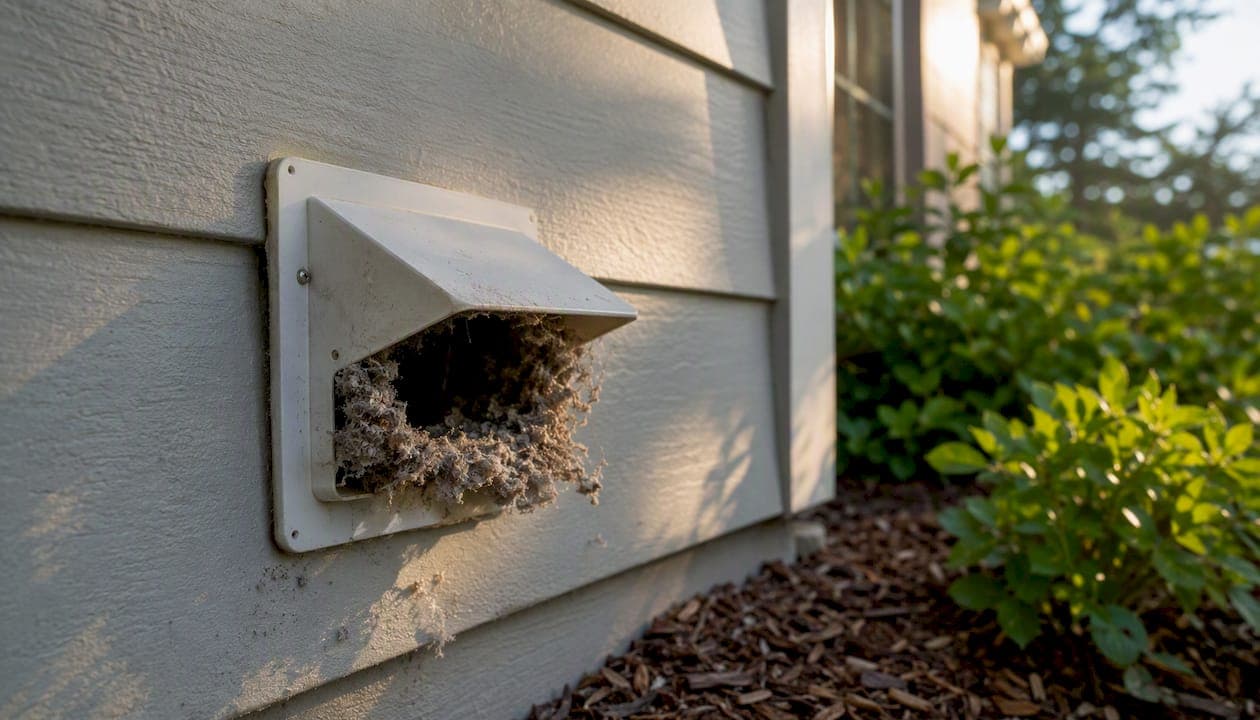
Blocked HVAC and dryer vents create a short list of serious problems: fire risk, higher energy bills, reduced comfort, and worsening indoor air quality. The U.S. Fire Administration identifies "failure to clean" as the leading factor in residential dryer fires, the EPA cautions that duct cleaning only helps when contamination is visible or affecting function, and the NFPA recommends annual dryer-vent cleaning at minimum. For Avondale homeowners and business owners, those aren't abstract warnings.
Check these right now:
- Pull out the lint screen and look for buildup or damage
- Go outside and confirm the dryer vent flap opens freely when the dryer runs
- Note whether your last load took longer than usual or clothes came out hotter than normal
Any one of those signs points to a blockage that needs attention today, not next month.
Key Takeaways
Clogged dryer vents are the single biggest fire risk in most Avondale homes, and the fix is straightforward: annual professional cleaning plus basic monthly checks.
| Point | Details |
|---|---|
| Fire risk is the top priority | USFA identifies lint buildup and blocked exhaust as the leading cause of residential dryer fires. |
| Annual dryer-vent cleaning is the minimum | NFPA recommends cleaning at least once a year, or sooner when drying times increase. |
| EPA limits on duct-cleaning claims | Duct cleaning helps only when visible contamination, microbial growth, or functional restriction exists. |
| Avondale climate raises the stakes | Heat, dust, and local pests accelerate blockages; interior dryer locations need more frequent service. |
| Airanddryerventcleaningavondale | Provides inspection, HEPA-collection cleaning, UL-listed repairs, and written reports for Avondale properties. |
Table of Contents
- What problems do clogged vents actually cause?
- When should you DIY and when should you call a pro?
- Why Avondale's climate makes this more urgent than you'd expect
- Ready to book dryer-vent or duct cleaning in Avondale?
- Sources
- FAQ
What problems do clogged vents actually cause?
Fire risk from dryer-vent blockages
Lint is highly flammable, and a blocked exhaust vent traps it while simultaneously raising the dryer's internal temperature. The USFA reports that "failure to clean" is the primary operational factor behind residential dryer fires, with blocked exhaust and lint accumulation cited as the direct ignition pathway. Animal nests and damaged duct sections compound the hazard by creating additional obstructions.
HVAC performance and energy costs
A blocked supply or return duct forces your air handler to work harder against elevated static pressure. The blower motor strains, airflow drops, and some rooms get too hot or too cold while others stay comfortable. Blocked or leaking return ducts cause uneven temperatures, faster HVAC wear, and increased dust throughout the home, according to KO Inspections. Over time, that strain shortens system lifespan and raises repair costs.
Moisture, mold, and indoor air quality
Long vent runs with multiple bends trap warm, humid air. Condensation forms, lint sticks, and microbial growth follows. The EPA's NEPIS technical report recommends sealing duct seams, controlling humidity, and maintaining proper filtration to prevent HVAC contamination. Musty odors from supply vents are a reliable sign that moisture has already found a home inside your ductwork.
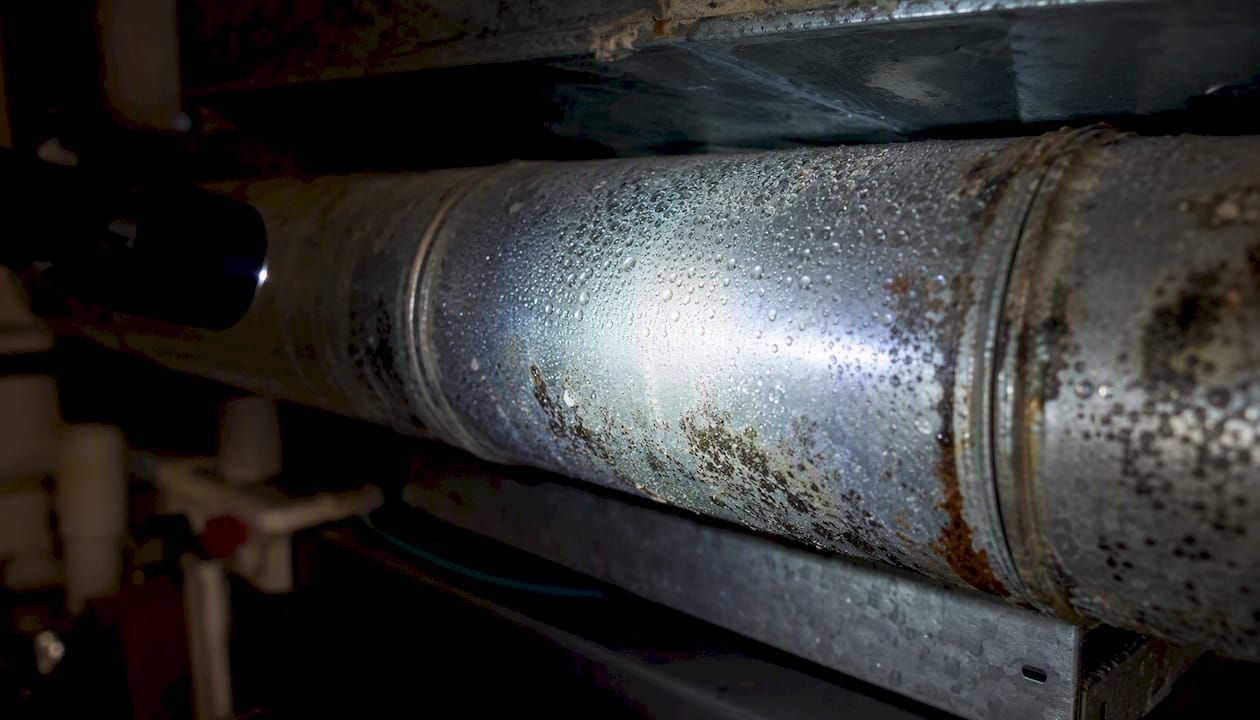
The EPA is also clear that duct cleaning doesn't automatically improve air quality. Cleaning is warranted when there is visible debris, evidence of microbial growth, or persistent odors — and only after the contamination source is controlled. Filtration and source control come first.
Dryer-vent fire causes: key data
| Contributing factor | Status per USFA/NFPA |
|---|---|
| Failure to clean (lint buildup) | Leading cause of dryer fires |
| Blocked or improper exhaust vent | Frequently cited operational factor |
| Animal nests or debris in vent | Common secondary blockage cause |
| Plastic or foil flexible duct use | Increases fire and lint-trap risk |
| Vent terminating indoors (attic/crawlspace) | Hidden fire and mold hazard |
When should you DIY and when should you call a pro?
Safe DIY checks every homeowner can do
- Clean the lint screen before or after every cycle, as NFPA guidance recommends.
- Inspect the outside vent flap for blockages, nests, or debris.
- Track drying times. Longer cycles or clothes that come out hotter than normal signal a restriction.
- Move furniture away from supply and return registers.
- Replace your HVAC filter on schedule; a clogged filter is often the first domino.
Pro Tip: Pair filter replacement with a quick outside-vent check every time. Two minutes twice a year catches most early-stage blockages before they become fire hazards.
Red flags that mean call a pro now
Longer drying times, clothes hotter than expected, visible vent damage, a vent flap that stays shut during operation, musty odors from supply registers, persistent uneven temperatures room to room, or any visible mold near vents. These are symptoms of blocked vents that go beyond what a lint-screen cleaning can fix. Common dryer-vent contaminants include lint, pet hair, nesting material, and compacted debris that only a professional brush-and-vacuum system removes safely.
What not to attempt yourself
Do not dismantle gas dryer components. Do not substitute plastic or foil flexible duct for rigid metal. Do not use a shop vac without proper brush attachments and containment. Improper cleaning can dislodge lint into living spaces and worsen indoor air quality, which is exactly the outcome the EPA warns against when cleaning methods lack negative-pressure collection.
When you hire a pro, ask for: a written inspection report, before-and-after photos, negative-pressure vacuuming with HEPA collection, and confirmation that any replacement materials are UL-listed metal duct.
Why Avondale's climate makes this more urgent than you'd expect
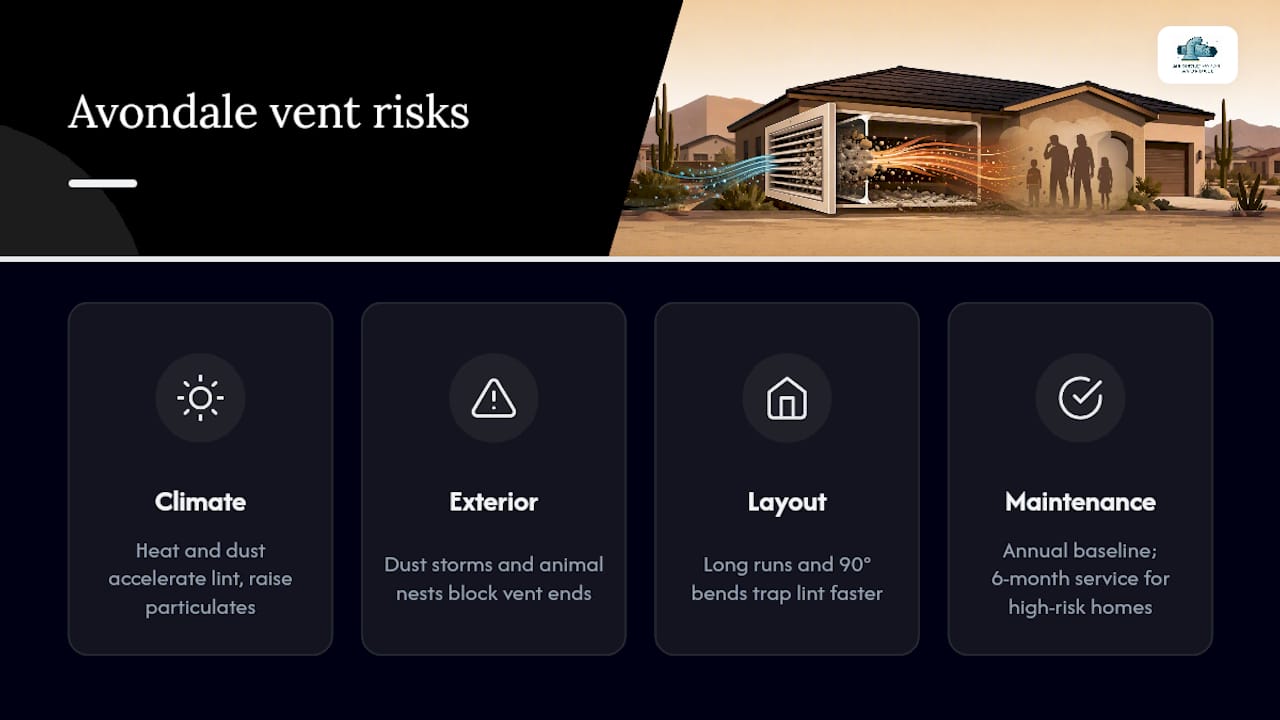
Avondale's heat and dust load are not typical. Summer temperatures push HVAC systems to run longer cycles, which accelerates lint accumulation in dryer vents and draws more particulate through air ducts. Seasonal dust storms deposit fine debris around exterior vent terminations, and the area's bird and rodent activity means nesting blockages are a genuine local hazard, not a theoretical one.
Newer construction in the West Valley often features longer vent runs and more 90-degree bends to accommodate open floor plans. Those layouts trap lint faster than shorter, straighter runs. Dryers tucked into interior laundry closets compound the problem because the vent path is longer and harder to inspect visually.
For Avondale properties, annual dryer-vent cleaning is a floor, not a ceiling. Homes with pets, high laundry volume, or interior dryer locations may need service every six months. Duct cleaning frequency depends on condition: clean when contamination is visible, odors persist, or airflow is measurably reduced. When hiring any local company, request technician certifications, proof of UL-listed materials, and a written warranty before work begins.
Ready to book dryer-vent or duct cleaning in Avondale?
Airanddryerventcleaningavondale is the local specialist for Avondale homeowners and businesses who need more than a basic vacuuming. Every job starts with a visual inspection and before photos, moves through negative-pressure vacuuming with HEPA collection, and closes with a written report and final airflow test. Damaged or improperly routed sections get repaired or replaced using UL-listed metal duct materials.
Services include dryer vent cleaning, residential and commercial air duct cleaning, vent replacement, air quality testing, duct repair, and filter replacement. Scheduling is flexible, including after-hours appointments. Dryer vents typically take under an hour; full duct cleaning varies by property size. Contact Airanddryerventcleaningavondale for an exact quote — and book before the next dust season hits.
Sources
- Should you have the air ducts in your home cleaned? - EPA
- Topical Fire Report Series: Clothes Dryer Fires in Residential Buildings (2008-2010)
- Dryer safety tips - NFPA (PDF)
FAQ
What are the most dangerous problems caused by clogged vents?
Dryer-vent blockages are the most dangerous: lint accumulation and restricted exhaust can raise temperatures enough to ignite a fire. The USFA identifies "failure to clean" as the leading cause of residential dryer fires.
How do I know if my dryer vent is clogged?
Longer drying times, clothes that feel unusually hot after a cycle, and a vent flap that doesn't open during operation are the clearest symptoms of a blocked dryer vent.
Does cleaning air ducts actually improve indoor air quality?
Not always. The EPA states there is no conclusive evidence that routine duct cleaning prevents health problems; it recommends cleaning only when visible debris, microbial growth, or persistent musty odors are present.
How often should dryer vents be cleaned in Avondale?
At least once a year, per NFPA guidance. Avondale homes with pets, high laundry volume, or longer vent runs may need service every six months.
What should a professional vent cleaning include?
A proper service includes a visual inspection, before-and-after documentation, negative-pressure vacuuming with HEPA collection, and a written report. Any replacement materials should be UL-listed metal duct.