
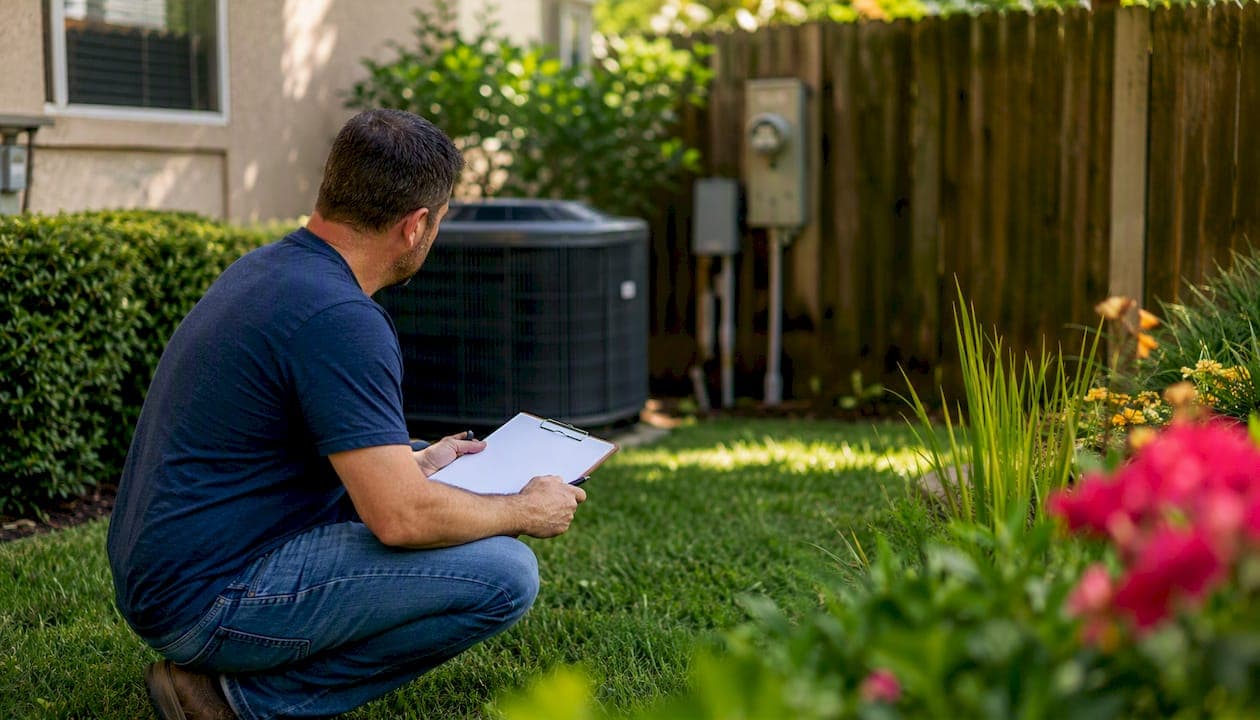
Before you call a single contractor, have these questions ready: Are you licensed and insured in Arizona? Do you carry EPA refrigerant certification? Will you perform a Manual J load calculation? Can you provide a written, itemized estimate? What warranties cover parts and labor? Will you pull the permits? When can you start, and what's your emergency response policy?
That's your starting checklist. Print it, screenshot it, or keep it open on your phone during every call.
- State contractor license number (verify at Arizona ROC)
- Proof of liability insurance and workers' comp
- EPA Section 608 refrigerant certification
- NATE or HVAC Excellence technician credentials
- Manual J load calculation (written report, not a guess)
- Written, itemized estimate with model numbers and labor
- Permit handling confirmed in writing
- Parts warranty AND labor warranty explained separately
- Timeline from start to final inspection
- Emergency callback policy
Pro Tip: Ask for the license number before scheduling a site visit. Arizona's Registrar of Contractors (ROC) lets you verify it online in under two minutes at azroc.gov.
Key Takeaways
Hiring the right HVAC professional comes down to six verifiable items: license, insurance, Manual J, a written itemized estimate, documented warranties, and confirmed permit handling.
| Point | Details |
|---|---|
| Verify credentials first | Confirm Arizona ROC license, liability insurance, workers' comp, and EPA certification before scheduling a visit. |
| Require Manual J in writing | Any replacement quote without a load calculation report is a guess; oversized systems short-cycle and wear out faster. |
| Itemized estimate only | The estimate must list model numbers, labor, permits, ductwork, disposal, and exclusions so you can compare bids accurately. |
| Separate warranty questions | Manufacturer warranties cover parts; labor warranties are separate. Ask about both and confirm registration requirements. |
| Permit handling confirmed | Unpermitted work can void insurance and create code violations; confirm permit responsibility in the signed contract. |
| Airanddryerventcleaningavondale | Offers documented duct cleaning, IAQ testing, and duct repair with written warranties for Avondale, AZ homeowners. |
Table of Contents
- What should you gather before calling contractors?
- What questions to ask HVAC professionals on the first call
- What to ask when hiring for repair or diagnosis
- Key questions for system replacement or new installation
- How do you compare installation estimates fairly?
- Red flags that should make you pause or walk away
- What should you expect after you hire a contractor?
- What good looks like: a duct-focused IAQ job in Avondale
- Does your HVAC system work with smart home technology?
- What cleanup and site restoration should you expect?
- Local specialist vs. national chain: what actually matters
- Airanddryerventcleaningavondale serves Avondale homeowners who want verified results
- Where to verify credentials and find more information
- Sources
- FAQ
What should you gather before calling contractors?
Productive calls start with you, not the contractor. Walk to your air handler or furnace and photograph the data plate: brand, model number, serial number, and tonnage. Check your thermostat model too. Pull any service records you have, even if they're just receipts.
- System age and model number (affects sizing decisions and parts availability)
- Last service date and what was done
- Thermostat type (smart, programmable, or manual)
- Known comfort complaints: hot or cold rooms, humidity issues, unusual sounds
- Attic and crawlspace access points
- Circuit breaker labels for HVAC equipment
- Recent utility bills (a spike often points to efficiency loss)
Pro Tip: Take photos of your breaker panel labels before the tech arrives. A contractor who asks to see them on-site is doing their job correctly; one who never asks may be skipping load verification.
What questions to ask HVAC professionals on the first call
The phone screen is your filter. A contractor who hesitates on any of these is worth a second look before you book.
- "What is your Arizona ROC license number, and can I verify it online?"
- "Do you carry general liability and workers' compensation insurance? Can you email proof?"
- "Are your technicians NATE-certified? Do they hold EPA Section 608 certification?"
- "Will you handle permits for this job, or is that my responsibility?"
- "Who specifically will be at my home, and will they arrive in a marked vehicle with ID?"
- "What's your typical arrival window, and how do you communicate delays?"
A confident contractor answers these without hesitation. Vague answers on licensing or insurance are a signal to keep looking. Contractors who handle refrigerants must be EPA-certified, and many Arizona jobs also require specific state registration.
What to ask when hiring for repair or diagnosis
Repair calls reveal a contractor's diagnostic depth fast. The best technicians explain what they're testing and why. Reputable providers start by discussing your comfort concerns before touching any equipment.
- "How will you diagnose the problem? What instruments do you use?"
- "Will you check refrigerant pressure, static pressure, and airflow?"
- "Can you show me the readings before and after the repair?"
- "What does the repair include, and what's excluded?"
- "Is there a labor warranty on this repair, separate from parts?"
- "What's your callback policy if the problem returns within 30 days?"
Pro Tip: Ask specifically: "Will you test static pressure and show me the results?" A tech who can't answer that question probably isn't testing it.
For duct repairs, request before-and-after leakage testing. Sealing without test verification often delivers no measurable improvement, and you have no way to confirm the work was effective.
- Ask for a written repair scope before work begins.
- Confirm parts sourcing (OEM vs. aftermarket) and lead times.
- Get the labor warranty in writing, not just verbal confirmation.
- Ask about HVAC system repair timelines so you can plan around the job.
Key questions for system replacement or new installation
Installation is where bad decisions cost the most. The single most important question: "Will you perform a Manual J load calculation, and can I see the report?"
A reputable professional prioritizes proper sizing over selling the largest unit. Oversized systems short-cycle, which wastes energy and causes premature wear on components. Any contractor who quotes a replacement without running Manual J is guessing.
- "What software do you use for load calculations? Will you show me room-by-room results?"
- "What SEER2 or HSPF2 rating are you recommending, and what's the realistic payback?"
- "Is this unit AHRI-certified and Energy Star rated?"
- "Does the estimate include ductwork modifications, permits, refrigerant, disposal, and startup?"
- "What commissioning checks will you perform after installation?"
Before you sign, confirm the contractor will provide a written, itemized estimate, perform a Manual J load calculation, show proof of license and insurance, explain the warranty, and pull necessary permits.
- Get the AHRI certificate number for the matched system.
- Confirm startup and airflow verification are included, not optional add-ons.
- Ask when the permit inspection is scheduled and who attends.
How do you compare installation estimates fairly?
Lowest price rarely means best value. An itemized estimate should list equipment model numbers, labor, permits, ductwork, disposal, and any exclusions so you can compare quotes accurately.

| Line Item | What to Verify |
|---|---|
| Equipment | Model number, SEER2/HSPF2 rating, AHRI match |
| Labor | Hours estimated, scope of ductwork included |
| Permits | Included or billed separately |
| Commissioning | Startup, airflow test, refrigerant charge verification |
| Warranty | Parts duration, labor duration, registration required |
| Financing | APR, term, deferred interest risk |
Rebates from Arizona utilities and federal tax credits for high-efficiency equipment can shift the real cost significantly. Ask each contractor which rebates they'll help you claim and whether they handle the paperwork.
Pro Tip: When two bids look close, ask both contractors for their commissioning checklist. The one with a written startup procedure is the safer hire.
Red flags that should make you pause or walk away
Some answers tell you everything you need to know.
- Refuses to perform a Manual J ("I've been doing this 20 years, I know what size you need")
- Won't provide a written, itemized estimate before work starts
- Asks you to sign a blank or incomplete contract
- Can't produce a license number or insurance certificate on request
- Pushes the largest available unit without calculations
- Quotes a price that expires "today only"
When you hear high-pressure language or vague pricing, the right move is to ask for everything in writing and give yourself 24 hours. A contractor worth hiring will wait.
What should you expect after you hire a contractor?
A professional process has clear milestones. Know what to look for.
- Signed contract with itemized scope, payment schedule, and change-order policy
- Permit pulled before work begins (you can verify at your city's building department)
- Scheduled permit inspection date confirmed in writing
- Contractor pulls permit and posts it on-site.
- Installation or repair is completed per the written scope.
- Startup and commissioning checks are performed and documented.
- Final inspection by the city or county inspector.
- You receive all paperwork: warranty cards, equipment manuals, inspection sign-off.
- Register equipment with the manufacturer within the required window to preserve warranty coverage.
Understanding HVAC warranty terms before the job ends protects you from gaps between manufacturer coverage and labor guarantees.
What good looks like: a duct-focused IAQ job in Avondale
A homeowner in Avondale calls about uneven cooling and higher-than-usual utility bills. Here's what a thorough local specialist does.
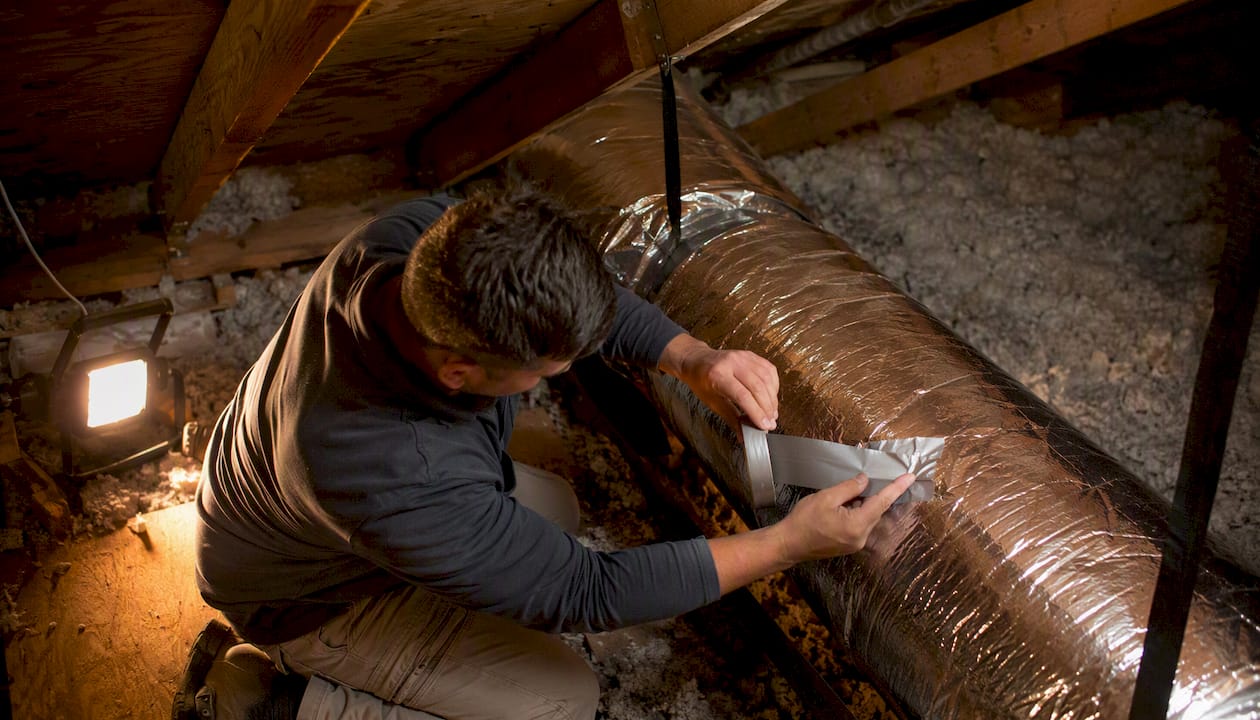
Initial call: Asks about comfort complaints, system age, and whether any prior duct work was done. Schedules a diagnostic visit, not a quote.
On-site diagnostics:
- Static pressure test across the air handler
- Airflow measurement at each register
- Duct leakage test (before repairs)
- Visual inspection of duct connections and insulation condition
Findings documented: Leakage rate measured, problem zones identified, photos taken.
Repairs performed: Duct sealing at identified leakage points, insulation corrected in attic runs.
Post-repair verification: Second duct leakage test confirms measurable improvement. Airflow at problem registers re-measured and documented.
Pro Tip: Ask for the actual leakage numbers, not just 'we sealed your ducts.' A trustworthy contractor hands you a written report with pre- and post-repair measurements.
- Written warranty issued for labor
- IAQ testing completed post-repair to confirm particulate and humidity levels
Does your HVAC system work with smart home technology?
Ask this before any installation or major repair: "Is this system compatible with my smart thermostat, and will you configure it during startup?"
Most modern systems work with Ecobee, Google Nest, or Honeywell Home thermostats, but compatibility depends on wiring (specifically, whether your system has a C-wire) and the control board. Some two-stage or variable-speed systems require proprietary communicating thermostats that limit your options later.
Questions worth asking:
- "Does this unit support two-way communication with smart thermostats?"
- "Will the installation include thermostat wiring and configuration?"
- "Are there HVAC innovations or zoning controls I should consider for this home's layout?"
What cleanup and site restoration should you expect?
A professional crew leaves your home the way they found it. Confirm this before work starts.
Ask: "What is your cleanup process, and who is responsible for debris removal and disposal of the old unit?"
Expect the contractor to:
- Remove and haul away the old equipment
- Vacuum or sweep the work area
- Patch any drywall or ceiling access points opened during duct work
- Dispose of refrigerant per EPA regulations (not vented)
- Leave all mechanical spaces accessible and clear
If duct cleaning is part of the scope, confirm they use HEPA-filtered vacuum equipment and cover registers during the process to prevent debris from spreading through the home.
Local specialist vs. national chain: what actually matters
National chains offer financing programs and brand recognition. Local specialists often know your specific neighborhood's duct configurations, utility rebate programs, and permit timelines better than a dispatcher two states away.
For focused IAQ work, duct cleaning, or dryer vent service, a local specialist with verifiable credentials and a real callback policy usually delivers more accountability than a franchise technician on a flat-rate ticket. For a full system replacement, the calculus shifts slightly: financing options and equipment availability matter more, but the verification checklist stays identical regardless of who you hire.
Match the project to the provider, and always verify the trust signals covered earlier: license, insurance, NATE certification, written estimate, and permit handling.
Airanddryerventcleaningavondale serves Avondale homeowners who want verified results
When you need a local specialist who shows up with the right equipment, pulls permits, and hands you documented before-and-after results, Airanddryerventcleaningavondale is the straightforward option for Avondale, AZ homeowners and property managers.
Services offered:
- Air duct and vent cleaning with HEPA-filtered equipment
- Dryer vent cleaning and safety inspection
- Duct repair and duct replacement
- Indoor air quality testing with written results
- HVAC installation support and commissioning verification
Every job includes a written scope, warranty on labor, and flexible scheduling including after-hours. To book a diagnostic visit or get a written estimate, contact Airanddryerventcleaningavondale directly through Airanddryerventcleaningavondale.
Where to verify credentials and find more information
- Arizona Registrar of Contractors (ROC): azroc.gov — verify any contractor's license status and complaint history
- NATE certification lookup: natex.org — confirm technician credentials by name or company
- EPA Section 608 certification: epa.gov/section608 — guidance on refrigerant handling certification requirements
- Energy Star: energystar.gov — verify equipment ratings and find utility rebate programs
- AHRI Directory: ahridirectory.org — confirm matched system efficiency ratings by model number
- Airanddryerventcleaningavondale: Airanddryerventcleaningavondale — local service and diagnostic scheduling for Avondale, AZ
Use the ROC lookup before every first call. Use AHRI to confirm the equipment model number matches the efficiency rating on your quote. Use NATE to verify the technician, not just the company.
Sources
Collecting multiple estimates and verifying references and online reviews helps you avoid contractors who miss appointments, add surprise costs, or disappear after the job.
Ask for three references from jobs similar to yours, completed within the past 12 months. When you call, ask: "Did they show up on time? Were there surprise charges? Would you hire them again?"
For online reviews, look at Google and the BBB. One or two negative reviews aren't disqualifying. A pattern of complaints about no-shows, billing disputes, or poor follow-up is.
- 10 tips for hiring (Energy Star)
- Questions to ask when choosing HVAC service providers (Home Depot)
- 10 Questions to Ask Before Hiring an HVAC Contractor (2024 checklist) — US (HVACDatabase)
FAQ
What are the most important questions to ask an HVAC contractor?
Ask for their license number, proof of insurance, EPA refrigerant certification, and NATE credentials. Then confirm they will perform a Manual J load calculation, provide a written itemized estimate, and handle permits.
What is the $5,000 rule for HVAC?
Replacement is usually the better financial decision when repair costs exceed the system's value, but there is no fixed dollar rule—it's a rough benchmark, not a hard standard.
What are the 3 R's in HVAC?
The 3 R's refer to Repair, Replace, and Retrofit. Technicians use this framework to evaluate whether a system should be fixed, swapped out entirely, or upgraded with efficiency improvements like variable-speed components or better controls.
What is the 20-year rule for HVAC?
Most HVAC systems have a functional lifespan that varies depending on maintenance and usage. Once older, repair costs typically outpace the value of keeping it running, and replacement with a higher-efficiency unit usually delivers a faster return through lower utility bills.