
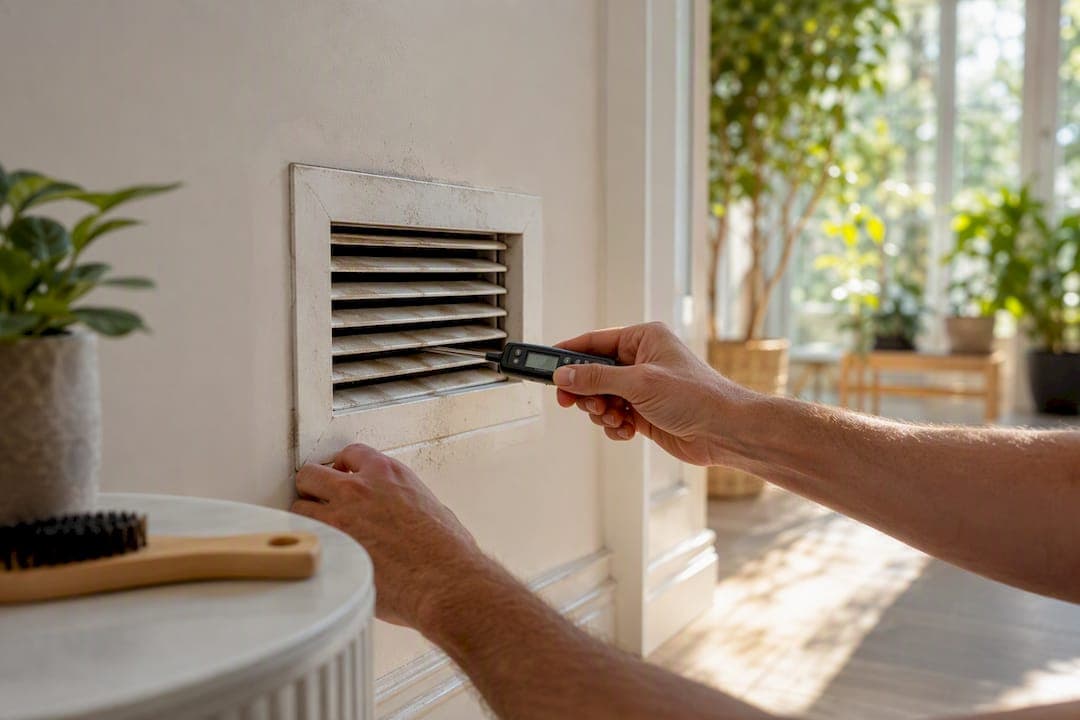
Most HVAC airflow loss traces back to something simple: a dirty filter, a closed or blocked vent, a leaking duct, or a struggling blower motor. Before you assume the worst, run three quick checks. First, pull the filter and hold it up to a light. If you can't see through it, replace it. Second, walk the house and confirm every supply register and return vent is open and clear of furniture or rugs. Third, look at your ducts and outdoor unit for visible damage, ice buildup, or standing water.
- DIY territory: dirty filter, closed vents, furniture blocking a return
- Call a technician now: ice on the indoor coil, a burning smell, water pooling near the air handler, or any hint of a refrigerant leak
That last group isn't optional troubleshooting. ENERGY STAR notes that in a typical house, 20 to 30 percent of conditioned air escapes through leaky or poorly connected ductwork before it ever reaches a room, which is often the hidden reason a system that "seems fine" still runs weak.
Key Takeaways
Most HVAC airflow loss comes from simple, fixable restrictions, and professional static-pressure testing confirms the cause before any part gets replaced unnecessarily.
| Point | Details |
|---|---|
| Start with the filter | Check monthly and replace every 1 to 3 months; a clogged filter is the single most common cause of weak airflow. |
| Ductwork loses a lot of air | Leaky or disconnected ducts can waste 20 to 30 percent of conditioned air before it reaches a room. |
| Delta-T tells the story | A healthy system shows roughly a 16 to 22 degree Fahrenheit split between return and supply air. |
| Ice and water mean stop | A frozen coil or water near the air handler calls for a technician, not a continued test-and-guess approach. |
| Airanddryerventcleaningavondale confirms the cause | Our Avondale technicians run TESP and duct-leakage testing to pinpoint airflow restrictions before recommending a fix. |
Where These Airflow Facts Come From
- ENERGY STAR on duct leakage rates and filter checks
- Fieldpiece on TESP and delta-T diagnostic testing
- Trane on filter schedules and return-air sizing
- Rod Miller HVAC on condensate drain and outdoor clearance upkeep
- Survey Merchant on basic homeowner heating-system checks
Table of Contents
- What Are the Most Common Causes of HVAC Airflow Loss?
- How Do I Check My HVAC Airflow Myself?
- What Tests Do Technicians Use to Diagnose Airflow Loss?
- Preventive Maintenance That Keeps Airflow Steady
- Can a Clogged Condensate Drain Cause Airflow Problems?
- Does Poor Air Quality or Humidity Affect Airflow?
- Sources
- FAQ
What Are the Most Common Causes of HVAC Airflow Loss?
Airflow loss almost always comes down to something physically blocking air, or a component that's too weak to push it. Here's the order most technicians check, ranked by how often each one turns out to be the culprit.
- Dirty or clogged air filters. A filter caked with dust acts like a wall. Airflow drops long before the filter looks obviously black, since resistance builds gradually as fibers fill in. Trane recommends checking filters monthly and replacing them every 1 to 3 months depending on the filter type, pets, and household dust. Fix: swap it. If you have pets or run the system constantly, check monthly rather than trusting a printed reminder date. Severity: simple DIY.
- Blocked supply registers and return vents. Furniture, rugs, curtains, and closed vents in unused rooms choke the return path the system needs to circulate air. Closing vents to "save energy" is one of the most common mistakes homeowners make. It raises pressure elsewhere and can freeze a coil. Fix: open every vent, pull furniture back at least a foot. Severity: simple DIY.
- Leaky, disconnected, or crushed ductwork. Ducts separate at joints, get crushed under stored boxes in a crawl space, or develop holes over time. This is where that 20 to 30 percent air loss figure comes from, and it's frequently misdiagnosed as a weak or failing unit when the equipment itself is fine. Fix: visually inspect accessible ducts for gaps or crushed sections; seal small leaks with mastic sealant or UL-listed foil tape, never cloth duct tape, which fails within months. Severity: DIY for accessible minor leaks, tech for hidden or extensive damage.
- Blower motor problems. A failing capacitor, worn bearings, or a fan set to the wrong speed all reduce the volume of air the system can push. You'll often hear grinding, humming, or a weaker-than-normal rush of air at the vents. Fix: listen for unusual noise, check that the fan setting matches the season. Severity: needs a technician.
- Frozen evaporator coil. Ice on the indoor coil almost always means airflow was already restricted, usually by a dirty filter or closed vents, and it starves the coil until it freezes. Never keep running the system with a visibly frozen coil. That's the classic DIY mistake that turns a filter problem into a compressor problem. Fix: turn the system off, let it thaw fully, then find and fix the airflow restriction. Severity: safety hazard, call a tech if it recurs.
- Dirty evaporator or condenser coils and outdoor obstructions. Dust-caked coils and a condenser buried in leaves or overgrown shrubs both cut airflow across the coil surface. Fix: clear a sufficient area around the outdoor unit; leave coil cleaning to a pro. Severity: DIY for outdoor clearance, tech for coil cleaning.
- Improper duct sizing or too few returns. Homes retrofitted with bigger HVAC systems sometimes keep the original, undersized return grilles. A rough benchmark suggests approximately two square feet of return area per ton of cooling; fall short of that and static pressure climbs. Severity: tech evaluation required.
- Thermostat or control issues. A fan stuck on "auto" when it should run continuously, or a miswired control board, can make airflow seem weak when the blower simply isn't running as much as it should. Severity: DIY to check settings, tech for wiring.
Pro Tip: If a room suddenly feels weaker than the rest of the house, check that room's vent and the nearest duct connection first. Isolated weak airflow is almost always local, not systemic.
How Do I Check My HVAC Airflow Myself?
Run these checks in order before you call anyone, and stop the moment you hit something outside your comfort zone.
- Hand test at every register. Feel for consistent airflow room to room. A big gap between rooms points to a duct or balancing problem rather than a system-wide issue.
- Inspect and pull the filter. Hold it to a window. Light passing through cleanly means it's fine; if it looks solid, replace it.
- Check register and return clearance. Confirm nothing is blocking vents, and that closed vents aren't the reason a room feels stagnant.
- Walk the outdoor unit. Clear leaves, grass clippings, and anything within 2 feet of the condenser.
- Look for ice or water. Ice on refrigerant lines or the indoor coil, or water pooling near the air handler, means stop and call a technician.
If you want one number that tells you something real, it's delta-T: the temperature difference between the air going into the return and the air coming out of the supply vent. A healthy system typically shows a 16 to 22 degree Fahrenheit split. A delta-T well outside that range, especially a smaller-than-expected gap, usually signals an airflow restriction rather than a refrigerant problem.
You need only basic tools for this: a simple thermometer, a flashlight, a screwdriver, and some tape to hold the thermometer at the vent. An anemometer or manometer can measure airflow speed and duct pressure directly, but those are professional-grade instruments used alongside the tests described below, not something most households need to own.
Stop and call a technician if you see exposed wiring, smell anything electrical or like burning plastic, or find refrigerant lines coated in ice or oily residue.
What Tests Do Technicians Use to Diagnose Airflow Loss?
A technician's first move usually isn't checking refrigerant. It's measuring total external static pressure, or TESP, which reveals whether airflow itself is the problem before anyone touches the refrigerant charge. Fieldpiece explains that a high TESP reading points straight to a restriction somewhere in the system, whether that's a dirty filter, an undersized return, or a crushed duct, and it saves the tech from chasing a refrigerant issue that doesn't exist.
Beyond TESP, expect a delta-T check under load, duct leakage testing to find where conditioned air escapes, blower amp draw to catch a struggling motor, refrigerant pressure checks, and a look at the condensate drain.
- Mastic sealant or UL-listed foil tape for duct repairs, since cloth duct tape degrades and fails within months
- A judgment call on repair versus replace: a weak but functioning blower motor often gets repaired, while a badly crushed or disconnected duct run may need replacement
- Realistic time expectations: a filter swap takes minutes, but a full static-pressure and duct-leakage diagnostic can run a couple of hours
Pro Tip: Fixing airflow restrictions promptly does more than restore comfort. A system straining against high static pressure burns more energy and wears out its blower and compressor faster.
Preventive Maintenance That Keeps Airflow Steady
A little routine upkeep prevents most of the causes listed above from ever becoming a problem.
- Inspect filters monthly; replace every 1 to 3 months depending on filter type, pets, and household dust
- Keep furniture and rugs 12 to 18 inches from every register and return vent
- Maintain at least 2 feet of clearance around the outdoor condenser
- Schedule a professional tune-up each spring for cooling and each fall for heating
- Seal accessible duct joints with mastic or foil tape, and have a technician inspect ducts you can't reach
Watch for early warning signs between tune-ups: climbing energy bills with no change in usage, a room that's suddenly hotter or colder than the rest of the house, ice on refrigerant lines, or water around the indoor unit. Catching those early is cheaper than waiting for a full breakdown, and Energy backs the same seasonal rhythm for coil cleaning and airflow checks.
Can a Clogged Condensate Drain Cause Airflow Problems?
Yes, though it's an indirect path. The condensate drain carries moisture pulled from the air off the evaporator coil. When algae, dust, or debris clog that line, water backs up around the coil and drain pan instead of draining away.
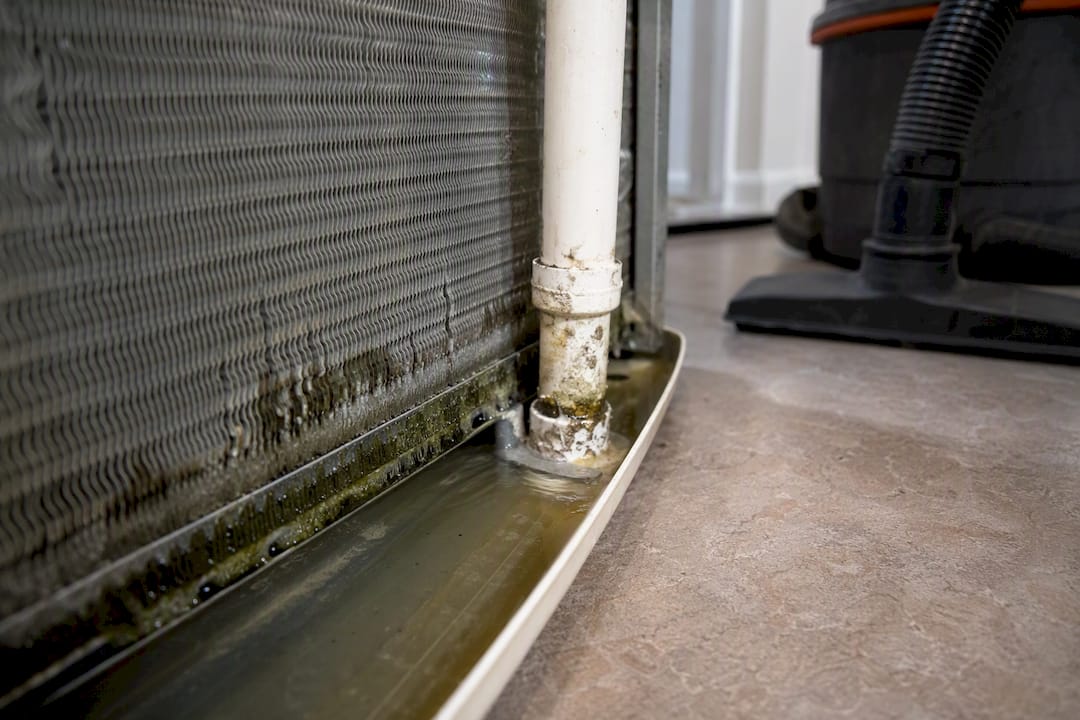
That backup does two things that hurt airflow. Standing water raises humidity right at the coil, which encourages more buildup on the coil fins and further restricts air moving across them. In more severe cases, a clogged drain trips a float switch that shuts the whole system down as a safety measure, which reads to a homeowner as sudden, complete airflow loss rather than a gradual decline.
A soft gurgle from the drain line, water stains near the air handler, or a musty smell near the indoor unit are the tells. Rod Miller HVAC recommends flushing the condensate drain seasonally as routine upkeep, right alongside outdoor clearance checks, because it's one of the easiest problems to prevent and one of the messiest to ignore. A wet-dry vacuum at the drain's outdoor exit point can clear a minor clog. Standing water pooling around the indoor unit, though, is one of those signs that means stop and call a technician rather than experiment further.
Does Poor Air Quality or Humidity Affect Airflow?
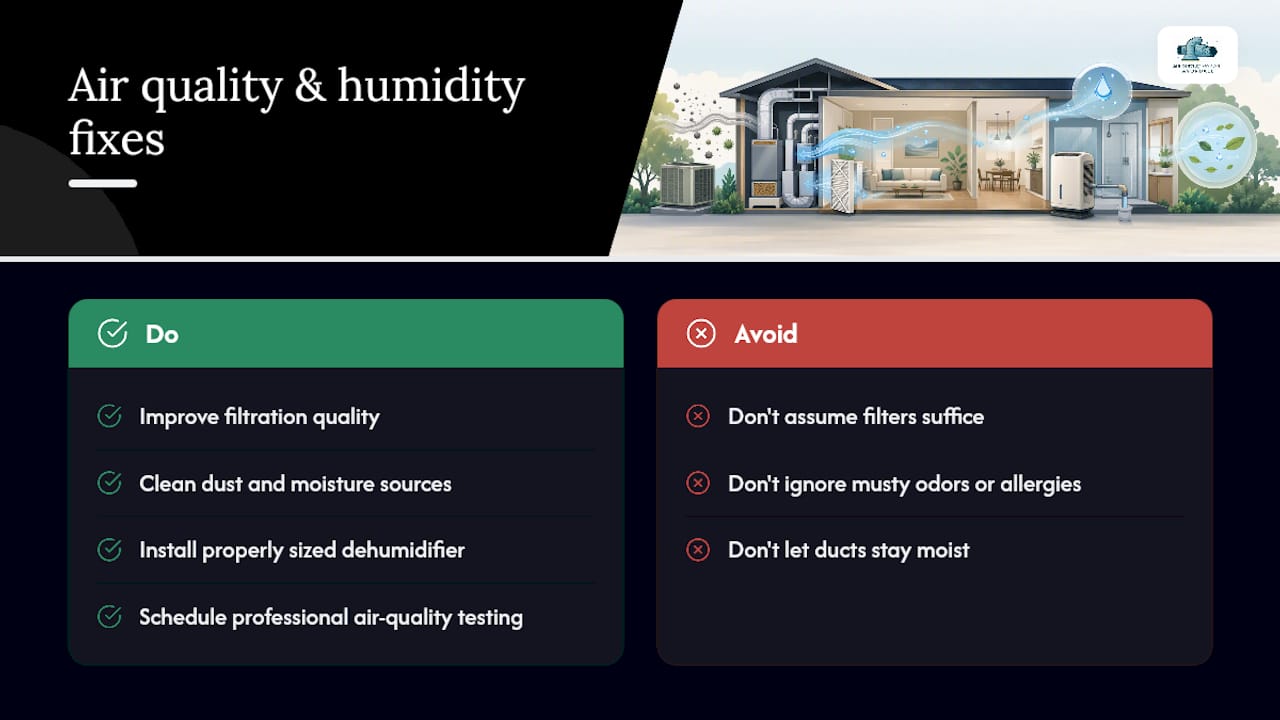
Indoor air quality and airflow feed each other in both directions. A home with high dust levels, pet hair, or poor filtration loads up filters and coils faster, which means the restrictions described earlier in this guide develop sooner and more often. If you're replacing filters more frequently than the usual 1 to 3 month window, that's usually a sign your indoor air quality needs attention, not just your filter schedule.
Humidity plays its own role. Excess moisture in the ductwork and around the coil encourages mold and biofilm growth on interior duct surfaces, and that buildup narrows the effective diameter of the duct just like dust does. High indoor humidity also makes a marginally undersized system work harder to reach its target temperature, which increases strain on a blower that may already be fighting restricted airflow elsewhere.
The fix isn't complicated: better filtration, a properly sized dehumidifier if humidity runs consistently high, and periodic professional air quality testing if allergy symptoms or musty odors persist despite a clean filter. Improving air quality and restoring airflow tend to move together. Clean the source of dust and moisture, and the system typically breathes easier within a season.
A Homeowner's Priority Order When Airflow Drops
My priority order is always the same: check the filter first, open every vent second, and call a technician the moment you see ice, smell anything electrical, or spot water where it shouldn't be. Snap a photo and jot down when the problem started. It speeds up any diagnosis dramatically.
Professional Duct and Airflow Inspection in Avondale
Airanddryerventcleaningavondale gets you a documented answer instead of another round of guesswork, because our technicians run the same TESP and duct-leakage checks described above and hand you the actual numbers, not just a "seems fine."
Our airflow-focused services cover professional duct cleaning, duct sealing, blower cleaning and inspection, condensate drain clearing, and air quality testing for homes and businesses throughout Avondale, Arizona. If lint buildup is choking your dryer's exhaust path too, our dryer vent cleaning service handles that separately in the same visit. A professional inspection finds leaks and restrictions you can't see from a hallway, safely, without guessing at refrigerant or electrical issues yourself. If your vents feel weak and the checklist above hasn't fixed it, schedule a free estimate and get a real diagnosis instead of another filter swap that doesn't solve it.
Sources
- Let's talk airflow: the often-overlooked step in HVACR diagnostics | Fieldpiece
- HVAC maintenance tips & checklist — Trane
- 10 HVAC maintenance tips | Rod Miller HVAC
FAQ
What Causes Poor Airflow in an HVAC System?
Poor airflow usually comes from a dirty filter, blocked vents, leaky or crushed ductwork, a struggling blower motor, or a frozen evaporator coil. Filters and blocked vents cause the majority of cases and are the easiest to check yourself.
Why Is My Air Conditioner's Airflow Suddenly Weak?
A sudden drop usually means something changed quickly: a coil froze over, a vent got closed or blocked, or the blower motor is failing. Check for ice on the indoor coil first, since running the system with a frozen coil can cause further damage.
Why Can I Barely Feel Air Coming Out of My Vents?
Weak airflow at the register typically points to a clogged filter, a closed or partially blocked vent, or high static pressure somewhere in the duct system. A technician's TESP test can confirm exactly where the restriction sits.
How Do You Fix Weak AC Airflow?
Start by replacing the filter and opening every supply and return vent, then check ductwork for visible damage and the outdoor unit for debris. If those checks don't resolve it, or you see ice, water, or smell anything electrical, a professional diagnostic with static-pressure testing is the next step.