
TL;DR:
- Removing pollutants from HVAC systems is the most direct way to improve indoor air quality by eliminating dust, mold, and bio-contaminants. Proper cleaning, strategic filtration, moisture control, and advanced technologies like UV-C and whole-home purifiers work together to maintain a healthier environment. Ongoing system management and professional inspections are essential to sustain clean, safe indoor air over time.
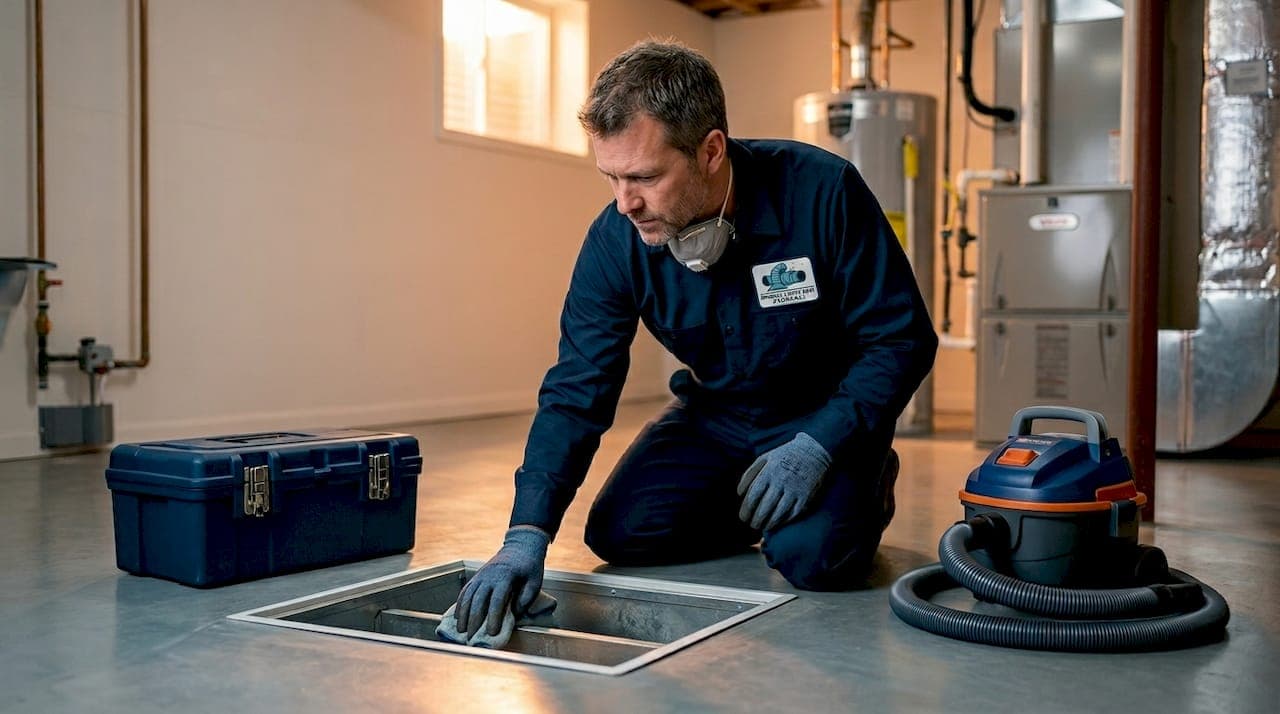
Removing pollutants from HVAC systems is the single most direct way to improve indoor air quality in any home or commercial building. The industry term for this practice is HVAC source control and system remediation, and it covers everything from duct cleaning and filter upgrades to UV-C disinfection and moisture management. Indoor air is 2 to 5 times more polluted than outdoor air, which means the air your HVAC circulates every day carries a real health burden. Technologies like HEPA filtration, UV-C light systems, and automated drying controls give homeowners and business operators a concrete path to cleaner, safer air and a more efficient system.
What are the common pollutants found in HVAC systems?
HVAC systems collect a surprisingly wide range of contaminants over time. Understanding what you are dealing with is the first step toward removing it effectively.
The most common categories of HVAC pollutants include:
- Dust and particulate matter: Skin cells, textile fibers, construction debris, and outdoor dirt pulled in through return air grilles accumulate in ductwork and on coil surfaces.
- Allergens: Pollen, pet dander, and dust mite waste particles recirculate through the system every time the fan runs, aggravating asthma and allergy symptoms.
- Mold spores: Any moisture inside ductwork or on evaporator coils creates conditions where mold colonies establish quickly. Spores then travel through the entire air distribution network.
- Microbial contaminants: Bacteria and viruses attach to airborne particles and survive on coil surfaces, drain pans, and duct walls where humidity is elevated.
- Volatile organic compounds (VOCs): Off-gassing from paints, adhesives, cleaning products, and furniture enters the return air stream and concentrates indoors.
- Carbon monoxide and combustion byproducts: In systems connected to gas furnaces, cracked heat exchangers or blocked flues can introduce combustion gases into circulated air.
Pollutants reach HVAC components through three main pathways. Outdoor air brings in pollen, soil particles, and vehicle exhaust through fresh air intakes and leaky duct seams. Indoor activities like cooking, cleaning, and renovation work generate fine particles and chemical vapors that the return system draws in. Moisture intrusion from condensation, roof leaks, or high ambient humidity then provides the biological fuel that turns ordinary dust into a breeding ground for mold and bacteria. Ductwork, coil fins, drain pans, and air filters are the four surfaces where these pollutants concentrate most heavily, which is why any effective removal strategy must address all four.
How does proper HVAC cleaning remove pollutants effectively?
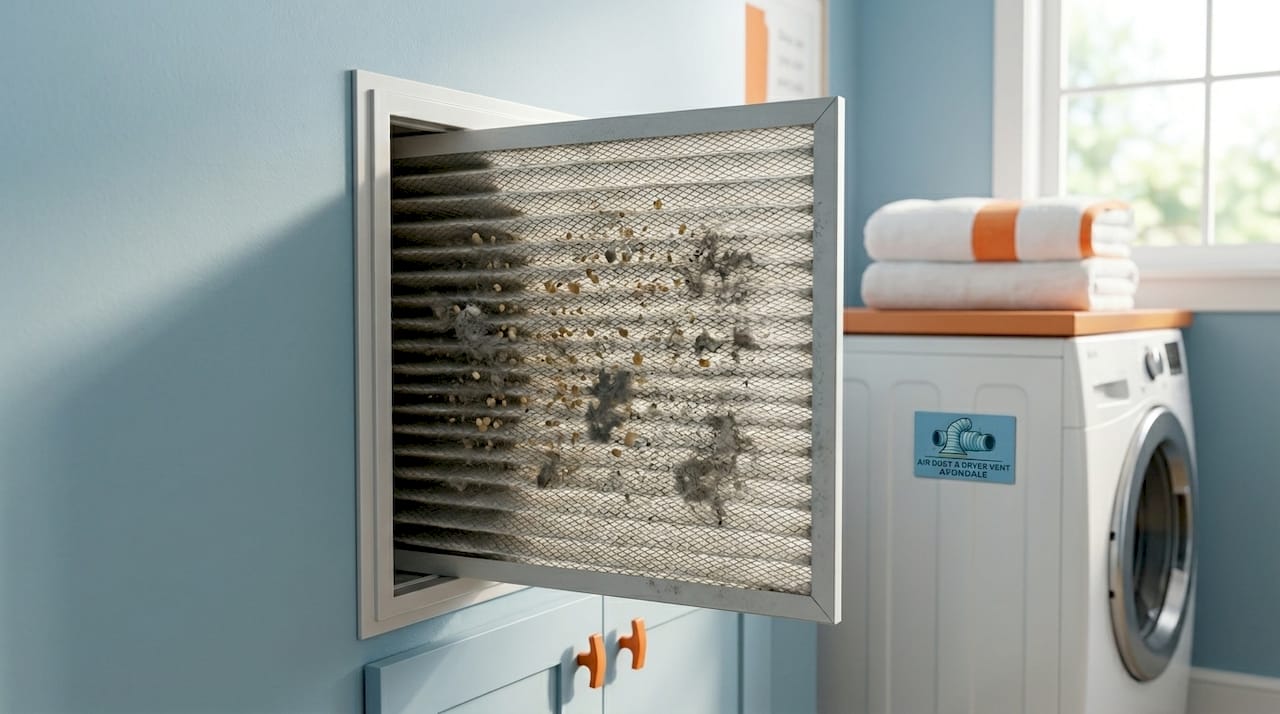
The EPA defines the standard for effective HVAC pollutant removal clearly: clean all contaminated components and control moisture to prevent microbiological spore release indoors. Cleaning only the accessible duct sections while leaving coils, drain pans, or air handlers untouched guarantees re-contamination within weeks.
A thorough HVAC cleaning follows this sequence:
- Pre-inspection and containment: A technician inspects the full system with a camera or mirror to locate debris concentrations, mold growth, and moisture damage before any work begins. Containment barriers protect living spaces from dislodged particles during cleaning.
- Negative pressure setup: High-powered vacuum extraction equipment connects to the main trunk line, creating negative pressure throughout the duct system. This prevents loosened debris from escaping into the room.
- Mechanical agitation: Rotary brushes, air whips, and compressed air tools dislodge debris from duct walls, coil fins, and blower components. Specialized tools and vacuum extraction are non-negotiable for full debris removal.
- Component cleaning: Evaporator coils, drain pans, blower wheels, and air handlers receive individual attention. Coil cleaning with approved no-rinse solutions removes biofilm that standard vacuuming cannot reach.
- Filter replacement: Old filters are removed and discarded before the system restarts. Installing a fresh, correctly rated filter at this stage prevents immediate re-contamination.
- Post-cleaning verification: A final camera inspection confirms debris removal. Moisture readings on coil surfaces and duct walls verify that conditions no longer support biological growth.
Scheduling this process every three to five years for most residential systems, and annually for commercial buildings with high occupancy, keeps pollutant loads manageable. Systems in homes with pets, smokers, or recent renovation work benefit from more frequent attention.
Pro Tip: Ask your cleaning contractor to show you before-and-after camera footage of the duct interior. Any professional who cannot provide this documentation has likely not completed a full-scope cleaning.
What role do filters and air purification technologies play?
Filtration is the continuous defense layer that operates between professional cleanings. The right filter, changed on schedule, removes the majority of particulates before they reach duct walls or coil surfaces.
Understanding filter ratings and replacement schedules
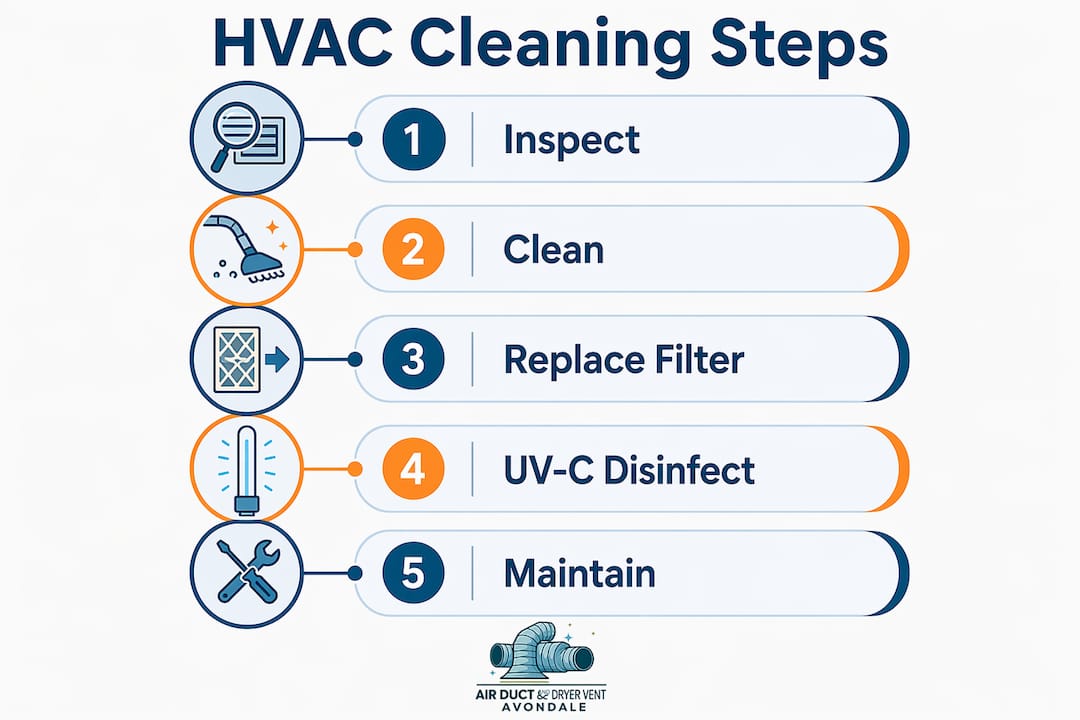
HEPA filters capture 99.97% of particles at 0.3 microns, making them the gold standard for allergen and fine particulate removal. That capture rate means a HEPA filter stops virtually all pollen, mold spores, and dust mite waste in a single pass. Consumer Reports recommends changing forced-air filters every 30 to 90 days, with shorter intervals during high pollen or wildfire smoke seasons. Homes in Avondale, Arizona face elevated dust and pollen loads for much of the year, which pushes most households toward the 30-day end of that range.
MERV ratings provide a practical comparison for standard residential filters. The table below summarizes the key differences:
| Filter type | MERV rating | What it captures | Best for |
|---|---|---|---|
| Fiberglass panel | 1–4 | Large dust, lint | Basic system protection only |
| Pleated polyester | 8–11 | Dust, pollen, mold spores | Most residential systems |
| High-efficiency pleated | 12–13 | Fine particles, pet dander, smoke | Allergy and asthma households |
| HEPA | 17–20 | 99.97% of particles at 0.3 microns | Medical-grade air quality needs |
One important caution: filters with MERV ratings above 13 restrict airflow in systems not designed for them, increasing static pressure and accelerating blower motor wear. Check your system's manufacturer specifications before upgrading. You can find HVAC filter examples that match common residential and commercial system types to make the right selection easier.
UV-C light disinfection
UV-C technology targets what filters cannot: live pathogens on coil surfaces and in the moving air stream. Upper-room UV-C systems deliver irradiance levels of 30 to 50 µW/cm² for effective microbial reduction, and ASHRAE, CDC, and NIOSH all recommend UV-C as part of a multi-layer indoor air quality strategy. In-duct UV-C lamps installed near evaporator coils continuously irradiate the coil surface, preventing biofilm formation between professional cleanings. This matters because a contaminated coil re-seeds the air stream with mold spores and bacteria every time the fan cycles on.
UV-C installations require proper engineering and commissioning. UV-C systems need documented irradiance measurements and occupant safety verification before use. An improperly installed lamp that faces occupied spaces rather than the coil surface creates an eye and skin hazard without delivering the intended disinfection benefit.
Whole-home air purifiers
Whole-home purifiers integrate directly with HVAC ductwork and treat every cubic foot of air the system circulates. Whole-home air purifiers use UV disinfection, photo-catalytic oxidation, and bi-polar ionization to handle microbes, chemicals, odors, and particles simultaneously. This multi-technology approach addresses the full spectrum of indoor pollutants that no single filter type can cover. Portable room purifiers, by contrast, treat only the air in one room and miss the ductwork entirely.
Key benefits of whole-home integration include:
- Treats all circulating air, not just one zone
- Reduces VOC and odor concentrations system-wide
- Works continuously whenever the HVAC fan operates
- Requires no additional floor space or separate maintenance schedule
Pro Tip: Combine a MERV-13 pleated filter with an in-duct UV-C lamp for the most cost-effective two-layer defense. This pairing handles both particulate and microbial threats without the airflow restrictions of a full HEPA upgrade.
How can moisture and microbial growth be controlled?
Moisture is the root cause of the most persistent HVAC contamination problems. Without moisture, mold cannot colonize duct surfaces and bacteria cannot sustain colonies on coil fins. Preventing water and dirt entry into HVAC ducts is the most effective way to prevent contamination and biological growth, according to the EPA.
The following steps address moisture at each point in the system:
- Seal duct leaks: Leaky duct seams allow humid outdoor air to enter the distribution system. Mastic sealant or metal-backed tape applied to all joints eliminates this pathway.
- Insulate ducts in unconditioned spaces: Ducts running through attics or crawl spaces in hot, humid climates develop condensation on their outer surfaces. Proper insulation keeps duct wall temperatures above the dew point.
- Maintain condensate drain lines: A clogged condensate drain causes standing water in the drain pan, which feeds mold growth directly on the evaporator coil. Flushing the drain line with a diluted bleach solution quarterly prevents blockages.
- Control indoor humidity: Keeping indoor relative humidity between 30% and 50% removes the biological fuel that sustains mold and bacterial colonies throughout the system.
The most advanced moisture control development in recent years is the automated post-shutdown drying system. Automated drying systems reduce coil humidity to approximately 60% within two hours of shutdown and decrease microbial counts to below detectable levels within 24 hours. The system uses real-time humidity feedback to control low-speed fan operation after the cooling cycle ends, evaporating residual moisture from coil surfaces before mold can establish. This technology is particularly relevant for HVAC mold prevention in hot, humid climates where coils stay wet for extended periods after each cooling cycle.
| Moisture control method | Effectiveness | Effort level |
|---|---|---|
| Duct sealing with mastic | High: eliminates humid air infiltration | Professional, one-time |
| Condensate drain maintenance | High: prevents standing water at coil | DIY, quarterly |
| Indoor humidity control | High: removes biological fuel system-wide | DIY, ongoing |
| Automated post-shutdown drying | Very high: suppresses microbial growth at source | Professional installation |
| Duct insulation in attics | Moderate: prevents condensation on duct exterior | Professional, one-time |
What are common mistakes to avoid when removing HVAC pollutants?
Most HVAC pollutant removal failures trace back to a short list of predictable errors. Avoiding them saves money and prevents the frustration of a system that seems clean but continues to degrade air quality.
- Partial cleaning: Cleaning supply ducts while skipping the return system, blower, or coils leaves the highest-concentration contamination zones untouched. Incomplete cleaning allows dust and bio-contaminants to remain and re-enter the air flow immediately. Every component in the air path must be addressed in the same service visit.
- Relying on a single method: Filters alone cannot remove mold colonies from coil surfaces. UV-C alone cannot capture particulate matter. Portable air purifiers cannot clean ductwork. Effective pollutant removal requires a combined approach using regular filter replacement, air cleaners, and ventilation together.
- Ignoring condensate pans and drain lines: These components sit directly below the evaporator coil and collect the moisture and debris that fall from it. A dirty drain pan is a mold incubator positioned at the center of your air distribution system.
- Using unverified chemical treatments or sealants: Some contractors apply biocide sprays or encapsulants to duct interiors without EPA registration or evidence of effectiveness. The EPA does not recommend applying chemical treatments to ducts as a substitute for physical cleaning and moisture control.
- Skipping post-cleaning filter replacement: Installing a new filter before cleaning and leaving it in place afterward defeats the purpose. The filter captures dislodged debris during cleaning and must be replaced when the job is complete.
- Neglecting regular inspections: A visual check of accessible duct sections, drain pans, and filter condition every three months catches developing problems before they require expensive remediation. Indoor air pollution causes that go undetected for months are far harder and more costly to address than those caught early.
Key takeaways
Effective HVAC pollutant removal requires cleaning every system component, upgrading filtration, controlling moisture, and integrating UV-C or whole-home purification technologies as a coordinated strategy rather than isolated fixes.
| Point | Details |
|---|---|
| Clean all components | Partial cleaning causes re-contamination; address ducts, coils, drain pans, and blowers together. |
| Upgrade filtration strategically | Use MERV-13 filters for most homes and replace every 30 to 90 days based on season and occupancy. |
| Control moisture at the source | Seal ducts, maintain drain lines, and consider automated post-shutdown drying to suppress microbial growth. |
| Layer purification technologies | Combine filters, UV-C lamps, and whole-home purifiers for full-spectrum pollutant removal. |
| Avoid common pitfalls | Never use unverified chemical sealants, skip post-cleaning filter changes, or rely on portable purifiers alone. |
What I've learned after years of HVAC pollutant work
The most common misconception I encounter is that a single duct cleaning solves the problem permanently. It does not. A thorough cleaning resets the system, but without moisture control, a proper filter schedule, and at least one active purification layer, the same contaminants rebuild within a year or two. The cleaning is the starting point, not the finish line.
What actually produces lasting results is treating the HVAC system as a living environment that needs ongoing management. I have seen homes where the ductwork was spotless but the drain pan was a petri dish. I have seen businesses that invested in expensive UV-C installations but never replaced their filters on schedule, so particulate loads overwhelmed the UV lamp's effectiveness. Neither approach works in isolation.
The other thing worth saying plainly: moisture control is undervalued by most homeowners. People focus on visible dust and ignore the invisible humidity conditions that make dust biologically active. An automated post-shutdown drying system is not a luxury for commercial buildings. For any home in a hot, humid climate running air conditioning for eight or more months a year, it is one of the most cost-effective investments available. The energy cost is minimal and the microbial suppression is documented.
My honest recommendation is to schedule a professional inspection before deciding what your system needs. A camera inspection of your ductwork and a moisture reading at the coil surface will tell you more in 20 minutes than any checklist. Then build your strategy around what you actually find, not what a generic maintenance schedule suggests.
— Shaun
Protect your indoor air with professional HVAC cleaning in Avondale
If you are ready to move from understanding the problem to solving it, Airanddryerventcleaningavondale provides the full range of services that make comprehensive pollutant removal possible for both residential and commercial properties in Avondale, Arizona.
The team at Airanddryerventcleaningavondale uses certified equipment and camera-verified cleaning protocols to address every component in your air distribution system, from supply and return ducts to evaporator coils and drain pans. For businesses managing larger systems, commercial duct cleaning services include high-powered vacuum extraction and post-cleaning documentation. Residential clients can also schedule air vent cleaning and indoor air quality testing to identify specific pollutant sources before committing to a full remediation plan. Flexible scheduling, including after-hours appointments, makes it straightforward to get started without disrupting your day.
FAQ
What pollutants does an HVAC system typically contain?
HVAC systems commonly harbor dust, pollen, pet dander, mold spores, bacteria, VOCs, and in some cases combustion byproducts. These accumulate on duct walls, evaporator coils, drain pans, and filters over time.
How often should HVAC ducts be professionally cleaned?
Most residential systems benefit from professional cleaning every three to five years, while commercial buildings with high occupancy typically require annual service. Homes with pets, smokers, or recent renovation work should clean more frequently.
Do HEPA filters eliminate the need for duct cleaning?
No. HEPA filters capture airborne particles but cannot remove mold colonies or biofilm already established on coil surfaces and duct walls. Filter replacement schedules and professional cleaning serve different functions and both are necessary.
Is UV-C light safe to use inside an HVAC system?
UV-C lamps installed inside ductwork near evaporator coils are safe for occupants because the light is contained within the system. UV-C installations require proper commissioning with documented irradiance measurements to confirm both effectiveness and occupant safety before operation.
What is the fastest way to improve indoor air quality from HVAC?
Replace your air filter immediately with a MERV-13 or higher rated option, flush the condensate drain line, and schedule a professional inspection of coil surfaces and ductwork. These three steps address the highest-impact pollutant sources with the least delay.