
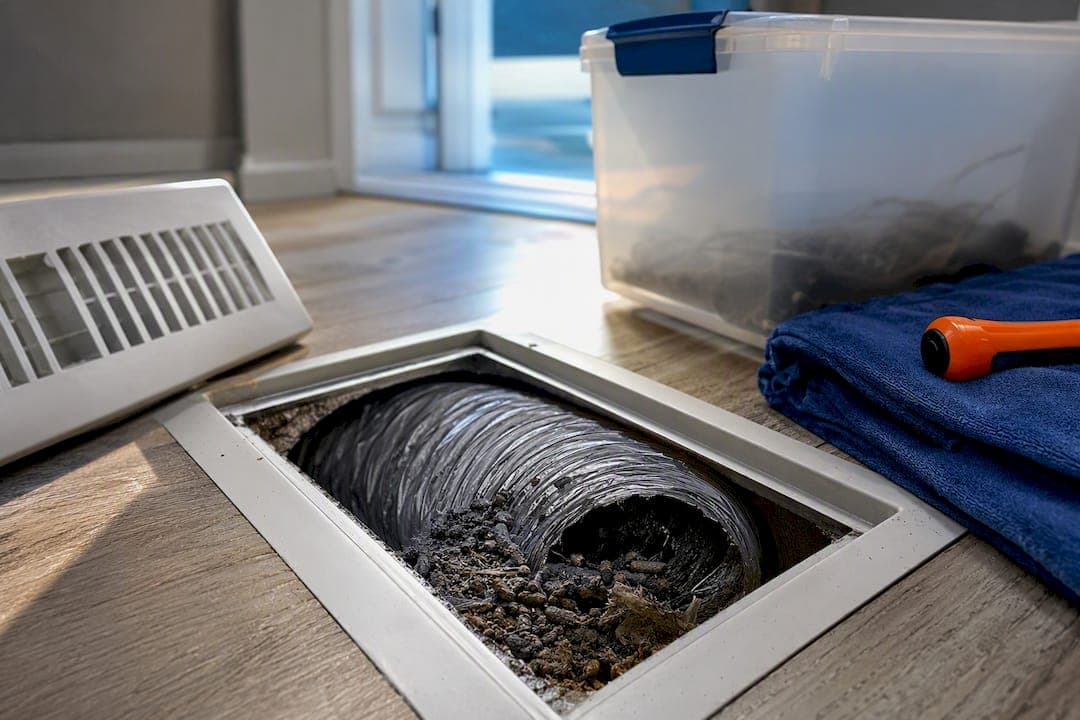
Rodent droppings in air ducts carry real contamination risk, so the first move is simple: shut off your HVAC system and leave the area alone until you've assessed it safely. Small, isolated droppings near a single vent can sometimes be cleaned carefully by a homeowner with the right gear. Widespread droppings, nesting material, or chewed ductwork mean it's time to call a professional.
TL;DR:
- Widespread rodent droppings or nesting materials in air ducts require professional cleaning and sealing to prevent re-contamination.
- Fresh droppings and odors signal active infestation, meaning immediate action and pest exclusion are necessary before cleaning.
- DIY cleaning with PPE is acceptable only for small, isolated droppings near accessible registers; widespread issues demand expert help.
- Sealing duct entry points and repairing or replacing damaged insulation are crucial steps to ensure long-term rodent exclusion.
- Never vacuum or dry sweep droppings; always damp-clean with disinfectant to avoid aerosolizing infectious dust and spreading contamination.
Table of Contents
- How to Spot Rodent Droppings in Air Ducts
- What Health Risks Come From Rodent Droppings in Ductwork?
- What to Do Right Now if You Find Droppings in Your Ducts
- Should You Clean It Yourself or Call a Professional?
- How to Keep Rodents Out of Your Ducts for Good
- What I've Learned About Rodent-Contaminated Ductwork
- Get Professional Help for Rodent-Contaminated Ductwork
- Where to Find Official Guidance on Rodent Contamination
- Sources
- FAQ
How to Spot Rodent Droppings in Air Ducts
Mouse droppings look like small dark grains, typically a few millimeters long with pointed ends. Rat droppings are noticeably bigger, with blunt or capsule-shaped ends. Fresh droppings are shiny and soft; older ones turn gray, dry, and crumbly, which tells you roughly how long the activity has been going on.
Droppings tend to collect where rodents travel and rest, which usually means return air plenums, near filters, and inside horizontal duct runs where debris settles. Beyond the droppings themselves, watch for these signs:
- A musty, ammonia-like odor coming from vents, especially when the system first kicks on
- Scratching, scurrying, or scratching noises inside walls or ductwork, most active at night
- Shredded insulation or fibrous nesting material visible at register openings
- Greasy rub marks along duct edges where rodents repeatedly squeeze through gaps
- Gnaw marks on flex duct, which rodents chew through regularly, leaving frayed insulation and exposed duct liner
If you're finding fresh droppings weekly rather than a single old pile, you're dealing with active infestation, not a past problem.
What Health Risks Come From Rodent Droppings in Ductwork?
Rodent droppings and urine can carry bacteria and, in rarer cases, viruses that pose genuine health concerns. Mayo Clinic identifies Hantavirus pulmonary syndrome as a serious, though uncommon, illness linked to inhaling dust contaminated with rodent droppings, urine, or nesting material. Salmonella exposure from contaminated dust is another concern homeowners should take seriously.
The ductwork itself is what makes this different from droppings in an attic corner. Every time your blower runs, it pushes air, and any dust riding on it, through every vent in the house. That means contamination in one duct section doesn't stay put. It gets redistributed into bedrooms, living rooms, and kitchens.
Older adults, young children, pregnant women, and anyone with respiratory conditions or a compromised immune system face higher risk from this kind of exposure. If anyone in your household develops fever, muscle aches, or breathing trouble within a few weeks of finding rodent contamination, contact a doctor and mention the exposure directly.
What to Do Right Now if You Find Droppings in Your Ducts
Your first 30 minutes matter more than anything you do afterward. Follow this order:
- Turn off your HVAC system at the thermostat and, if you're comfortable doing so, at the breaker. Running air handlers keep spreading contaminated dust the entire time.
- Seal accessible supply and return registers with tape or plastic sheeting if you plan to inspect further, so nothing gets disturbed by foot traffic or drafts.
- Put on PPE before touching anything. That means an N95 or better respirator, disposable gloves, and eye protection. This isn't overkill. CDC guidance specifically warns against sweeping or vacuuming rodent droppings, because dry disturbance can aerosolize infectious particles you then breathe in.
- Lightly mist visible droppings with a disinfectant or a bleach solution before touching them, then wipe them up with disposable paper towels. Never dry sweep.
- Double bag all waste and disinfected wipes, then dispose of them in an exterior trash bin, not an indoor one.
- Photograph everything before cleanup, especially chewed insulation or duct damage, so you have documentation if you call in a professional.
Pro Tip: Skip the poison bait inside ductwork entirely. A carcass decomposing inside a sealed duct run creates an odor problem that can linger for weeks and is far harder to trace than one in an open attic.
If you find a nest, droppings spread across multiple duct sections, or ductwork you can't physically reach, stop and call a professional instead of pushing further on your own.
Should You Clean It Yourself or Call a Professional?
A single dropping pile near an accessible register, cleaned with proper PPE and damp technique, is reasonably within DIY range. Everything beyond that tips toward hiring help.
Call a professional when you're facing widespread contamination, an active nest, ductwork you can't physically access, or a persistent odor that won't clear after a basic cleanup. The EPA notes that duct cleaning isn't always necessary for routine dust, but it becomes appropriate when there's visible contamination or a specific air quality problem, which rodent activity clearly qualifies as.
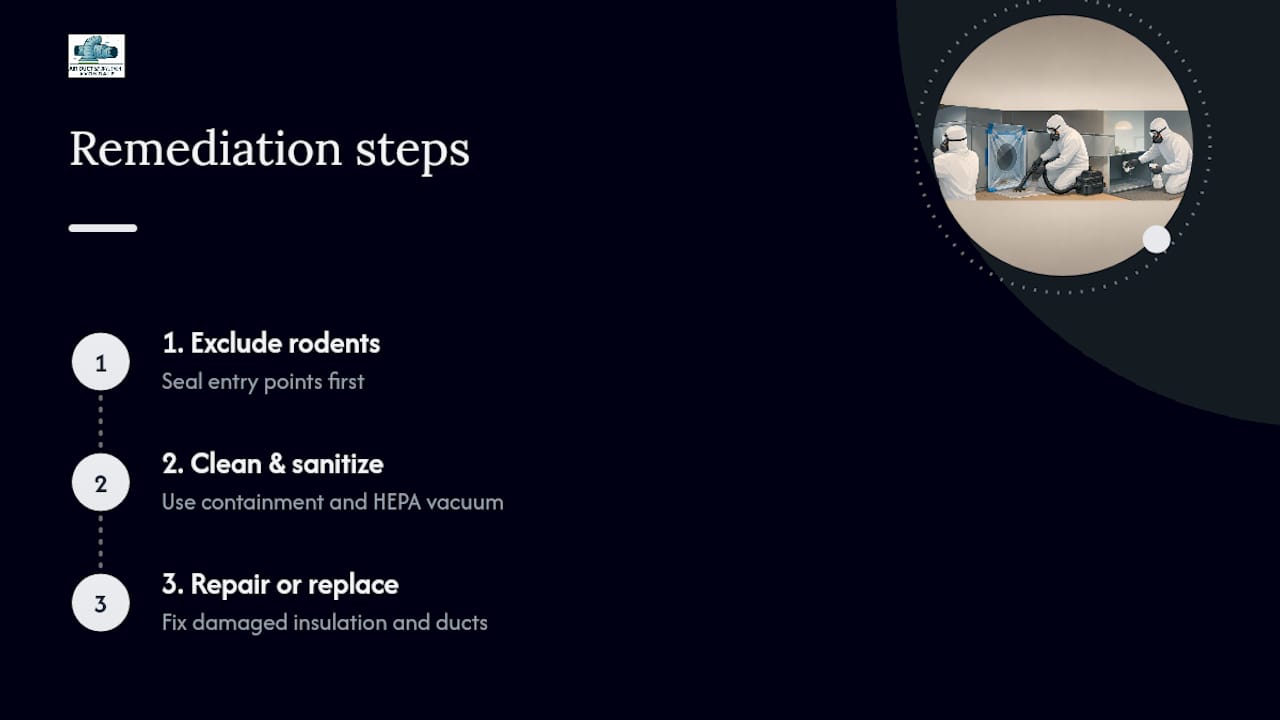
Professional crews bring HEPA-filtered vacuum equipment and containment barriers that keep contaminated dust from escaping into your living space during removal, something a household vacuum can't do safely. The correct sequence matters just as much as the tools: exclude the rodents first, then clean and sanitize, then repair or replace damaged insulation and duct sections. Skipping straight to cleaning without sealing entry points almost guarantees recontamination within weeks.
How to Keep Rodents Out of Your Ducts for Good
Cleaning solves today's problem. Exclusion is what keeps it from becoming next year's problem too.
- Seal any gap a quarter inch or wider around duct penetrations, foundation lines, and utility entries; that's roughly the width a mouse needs to squeeze through.
- Replace chewed flex duct runs rather than patching them. Damaged insulation left in place stays a weak point that invites re-entry.
- Use mastic sealant and metal collars at duct joints instead of tape, which rodents can chew through easily.
- Install or repair rodent-resistant screens on exterior vent openings.
- Trim vegetation and remove woodpiles near the foundation, since dense landscaping close to the house gives rodents cover to approach undetected.
- Schedule a duct inspection roughly once a year and swap air filters on schedule to cut down on dust that recirculates through any small gaps that remain.
What I've Learned About Rodent-Contaminated Ductwork
Most homeowners get the cleaning part right and the sequencing part wrong. They'll damp wipe droppings carefully, exactly as they should, then skip sealing entry points because the ducts finally look clean. Within a season, the same contamination pattern shows up again in the same duct run, because nothing stopped the rodents from getting back in.
The fix that actually holds is boring but reliable: exclude first, clean second, repair third. Chewed flex duct and shredded insulation aren't cosmetic damage. They're structural weak points that keep failing until someone replaces the material, not just vacuums around it.
— Shaun
Get Professional Help for Rodent-Contaminated Ductwork
If you're staring at a duct run full of droppings and shredded insulation, the smarter move isn't renting a HEPA vacuum for a weekend. It's booking a crew that already owns the containment equipment and knows exclusion has to happen before cleaning even starts. Specialized professional companies handle exactly this sequence for homeowners: inspection to confirm the extent of contamination, HEPA-based duct cleaning, odor removal for lingering smells, and repair or replacement of chewed duct sections and insulation.
Persistent odor, nesting material, or ductwork you can't safely reach on your own are all signs it's time to bring in help rather than keep working at it piecemeal. If symptoms or odors continue after cleanup, an air quality test can confirm whether your home is clear. Book an air vent cleaning inspection and get a straight answer on what your ducts actually need.
Where to Find Official Guidance on Rodent Contamination
For readers who want the primary sources behind the safety steps in this article, start here:
- CDC — Preventing rodent disease: guidance on exclusion and long-term prevention
- Mayo Clinic — Hantavirus pulmonary syndrome: symptoms tied to rodent exposure
If you develop unexplained fever, muscle aches, or breathing trouble after a suspected exposure, contact a doctor promptly and mention the rodent contamination.
This article is general information, not a substitute for advice from a qualified doctor. Consult a qualified healthcare professional about your own circumstances before acting on anything here.
Sources
FAQ
Is Mouse Poop in HVAC Ducts a Real Problem?
Yes. It can carry bacteria and, rarely, viruses like Hantavirus, and your HVAC system can spread contaminated dust to every room it serves once the blower runs.
How Long Do Mouse Droppings Stay Infectious?
There's no fixed timeline, but droppings and urine can remain a hazard as long as they stay disturbed and airborne, which is exactly why CDC guidance recommends damp cleaning instead of dry sweeping or vacuuming.
How Do You Get Rid of Rodents in Air Ducts?
Exclude the rodents first by sealing entry points, then clean and disinfect the ducts using damp methods and PPE, then repair or replace any chewed insulation and duct sections. Widespread infestations are best handled by a professional with HEPA containment equipment.
What Are the Signs of Rats in Air Vents?
Look for larger droppings than mice leave, shredded insulation, gnaw marks on flex duct, greasy rub marks along duct edges, and scratching noises that are usually most active at night.
Can I Vacuum Rodent Droppings Out of My Ducts?
No. A standard household vacuum can aerosolize infectious particles and spread them further through your home; use damp-cleaning methods instead, or call a professional with HEPA-filtered equipment for larger contamination.