
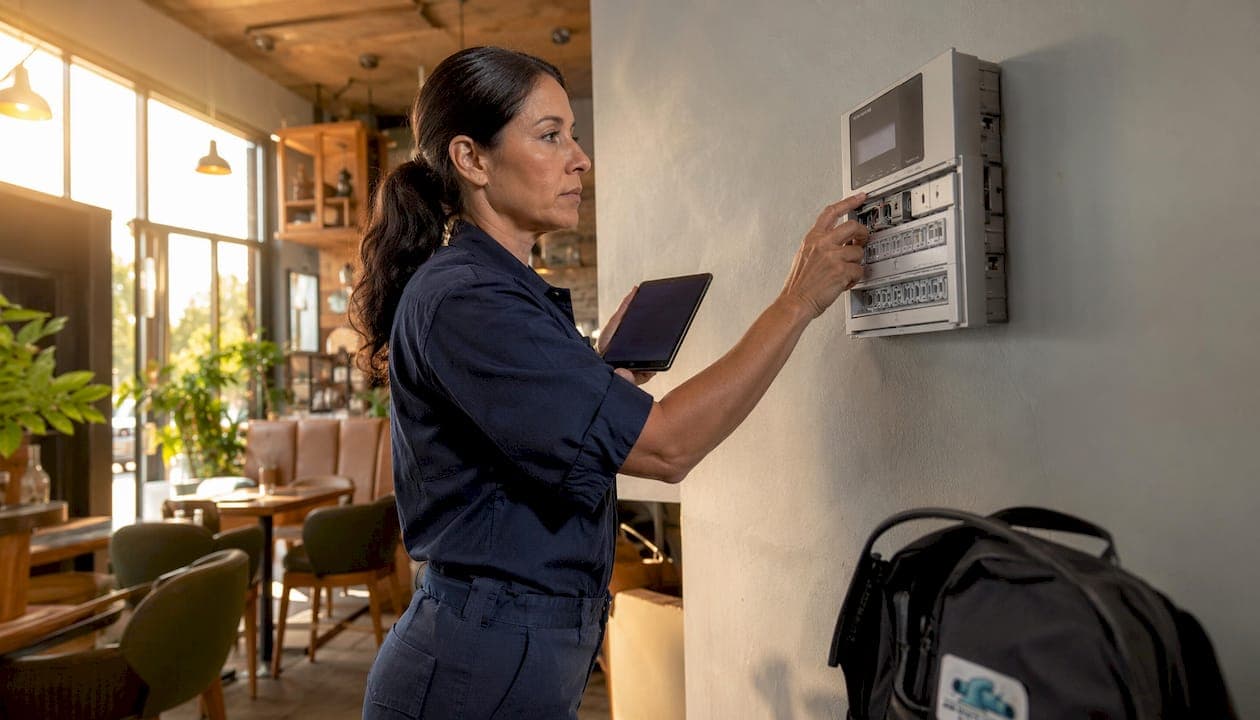
Your HVAC system is doing more for your business than you probably realize. The role of HVAC in customer comfort goes well beyond keeping a space warm in winter or cool in summer. A well-designed, properly maintained system regulates temperature, humidity, ventilation, and air quality simultaneously, and each of those variables shapes how long customers stay, how much they spend, and whether they come back.
Here is what a commercial HVAC system actually controls:
- Temperature consistency: Eliminates hot and cold spots that trigger complaints and drive customers out early
- Humidity levels: Keeps relative humidity in the 40–60% range where people feel comfortable and air feels fresh
- Ventilation and fresh air exchange: Removes stale air, odors, and airborne contaminants before customers notice them
- Noise levels: A quiet system stays invisible; a loud one becomes the only thing customers remember
- Airflow distribution: Balanced duct design prevents drafts and dead zones across occupied spaces
These factors work together. Fix one and ignore the others, and customers still feel something is off, even if they cannot name it.
Table of Contents
- How temperature control shapes what customers do in your space
- Why indoor air quality is the comfort factor customers feel but rarely mention
- How HVAC performance connects directly to business results
- Best practices for maintaining your commercial HVAC system
- Why humidity is the comfort variable most business owners underestimate
- How HVAC noise affects the customer experience in ways you might not track
- Energy efficiency and what it means for the customer experience
- How smart building technology makes HVAC comfort more consistent
- Why seasonal adjustments matter more than a single annual tune-up
- Professional HVAC cleaning for commercial properties in Avondale
- Key Takeaways
- FAQ
How temperature control shapes what customers do in your space
Temperature is the most immediate comfort signal a customer registers when they walk through your door. Spaces perceived as stuffy or drafty reduce browsing times in retail and hospitality, which means fewer purchases and shorter visits. The effect is not subtle.
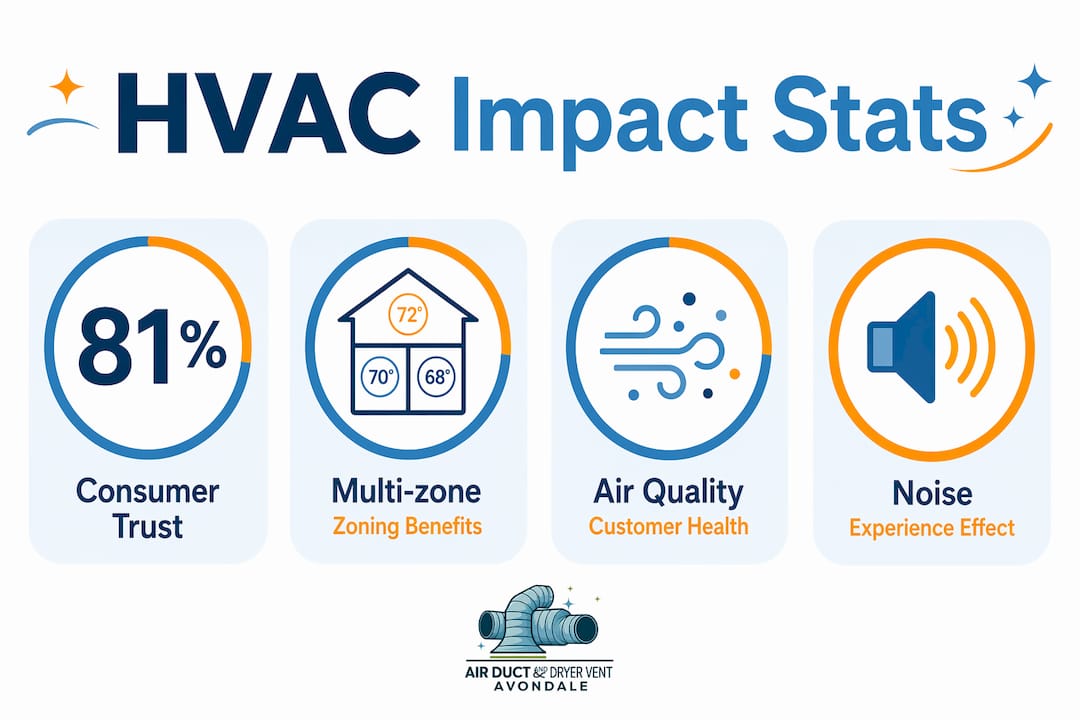
Modern HVAC zoning addresses this directly. Multi-zone systems with occupancy sensors adapt to how each area of a building is actually being used, which eliminates the "thermostat wars" common in commercial offices and keeps diverse groups of customers comfortable at the same time.
Pro Tip: If your space has areas that consistently feel warmer or cooler than the rest, that is a zoning problem, not a thermostat setting problem. A load calculation and rebalancing will fix it where adjusting the thermostat cannot.
Why indoor air quality is the comfort factor customers feel but rarely mention
Poor indoor air quality (IAQ) rarely announces itself with a dramatic symptom. Instead, customers feel vaguely uncomfortable, slightly headachy, or just ready to leave. The U.S. EPA notes that some indoor air pollutants can be two to five times higher indoors than outdoors, and occasionally 100 times higher, making adequate ventilation and filtration non-negotiable in commercial spaces.
Key IAQ factors your HVAC system controls:
- Fresh air exchange: Dilutes carbon dioxide, odors, and volatile organic compounds that accumulate in occupied spaces
- Filtration: Captures pollen, mold spores, dust, and allergens before they circulate through the building
- Duct cleanliness: Dirty ducts reintroduce contaminants into the air supply every time the system runs
Customers with allergies or respiratory sensitivities notice dirty air faster than anyone else. Losing those customers is a quiet, invisible cost. Learn more about removing pollutants from HVAC systems to understand what accumulates and how to address it.
Pro Tip: Replace air filters on a fixed schedule, not when they look dirty. By the time a filter looks clogged, airflow restriction has already been degrading your IAQ for weeks.

How HVAC performance connects directly to business results
The business case for HVAC investment is concrete. Many tenant complaints in commercial and multifamily buildings relate to temperature or noise issues. Proactive maintenance can reduce tenant complaints by up to 80% within two months, and lease renewal likelihood increases when HVAC comfort issues are managed proactively.
Trust drives brand loyalty in ways that go beyond the service visit itself: 81% of consumers say trust guides their choice of provider, and 74% report higher satisfaction when service is resolved on first contact. The same dynamic applies to how customers perceive the businesses they visit. A space that feels well-maintained builds trust before anyone speaks a word.
Best practices for maintaining your commercial HVAC system
Reliable comfort does not happen by accident. It comes from a consistent maintenance schedule that addresses the system before problems surface.
- Replace filters on a fixed cycle. Dirty filters restrict airflow and degrade air quality. In commercial spaces with high foot traffic, monthly checks are often necessary.
- Rebalance airflow seasonally. Damper settings that worked in winter may create hot spots in summer. A technician can adjust distribution to match seasonal load changes.
- Clean air ducts regularly. Debris buildup in ductwork reduces system efficiency and reintroduces contaminants into the air supply. Schedule HVAC cleaning at least annually for commercial properties.
- Inspect and isolate rooftop units. Vibration from rooftop equipment travels through the building structure. Proper isolation mounts prevent that vibration from becoming noise complaints inside.
- Test and calibrate thermostats and sensors. A thermostat reading two degrees off creates comfort complaints that look like equipment failures.
Pro Tip: Schedule preventive maintenance before peak season, not during it. A technician visit in April costs far less than an emergency call in July when your AC fails during a heat wave.
Why humidity is the comfort variable most business owners underestimate
Temperature gets all the attention, but humidity often does more damage to customer comfort. A 75°F room with high humidity can feel like 80°F because excess moisture prevents the body from cooling itself through evaporation. Customers feel hot and uncomfortable even when the thermostat reads a perfectly reasonable number.
Key humidity facts for commercial spaces:
- Relative humidity above 60% promotes mold growth and triggers respiratory discomfort
- Humidity below 40% causes dry air irritation, static electricity, and complaints about dry skin or eyes
- Controlling the "latent load" (moisture removal) is a separate engineering challenge from temperature control
For more on how humidity control affects indoor comfort, the interaction between moisture, air velocity, and perceived temperature is worth understanding before your next system upgrade.
How HVAC noise affects the customer experience in ways you might not track
Noise from HVAC equipment is one of the most underreported comfort complaints in commercial spaces. Customers rarely say "your ductwork is too loud." They just feel uneasy, distracted, or unwilling to linger. Acoustic lining in ducts, low-decibel diffusers, and proper vibration isolation for rooftop units are the standard engineering solutions, and they work. A quiet system is invisible. Customers notice it only when it is gone.

Energy efficiency and what it means for the customer experience
Energy efficiency and customer comfort are not competing priorities. Adjusting heating and cooling setpoints modestly during winter and summer can reduce energy costs without meaningfully affecting perceived comfort, provided humidity and airflow are correctly managed. The savings come from tighter control, which also means fewer temperature swings that customers notice. Buildings with HVAC systems that improve air quality and run efficiently tend to feel more stable and comfortable throughout the day.
How smart building technology makes HVAC comfort more consistent
Occupancy sensors, programmable controls, and building automation systems have changed what is possible in commercial HVAC management. A conference room that is empty scales back automatically; when it fills up, the system increases ventilation and cooling within minutes. Variable refrigerant flow (VRF) systems take this further by simultaneously heating and cooling different zones within the same building, operating at very low noise levels. When evaluating HVAC considerations for a property, smart controls and zoning capability are among the most important factors for long-term comfort management.
Why seasonal adjustments matter more than a single annual tune-up
A commercial HVAC system set for July is not set for January. Seasonal commissioning, where a technician reviews damper positions, setpoints, humidity targets, and filter condition at the start of each season, catches problems before customers feel them. The transition months of April and October are when most comfort complaints spike, because systems are running in modes they have not used in months. A brief seasonal check eliminates most of those complaints before they happen.
Professional HVAC cleaning for commercial properties in Avondale
Airanddryerventcleaningavondale delivers commercial air duct cleaning for business owners and property managers in Avondale, Arizona who want their HVAC systems performing at the level this article describes. Dirty ducts, clogged filters, and contaminated vents quietly undermine every comfort variable covered here: air quality drops, airflow becomes uneven, and the system works harder than it should. Airanddryerventcleaningavondale removes the buildup that causes those problems, with flexible scheduling including after-hours options so your operations are not disrupted. Contact Airanddryerventcleaningavondale to schedule a commercial cleaning assessment and get your system back to delivering the comfort your customers expect.
Key Takeaways
HVAC systems directly control the temperature, humidity, air quality, and noise conditions that determine whether customers stay, spend, and return.
| Point | Details |
|---|---|
| Temperature and zoning | Multi-zone systems with occupancy sensors eliminate hot spots and reduce thermostat conflicts in commercial spaces. |
| Humidity target range | Keeping relative humidity between 40–60% prevents mold, dry air complaints, and inflated perceived temperatures. |
| Maintenance ROI | Proactive HVAC maintenance can reduce tenant complaints by up to 80% within two months and increase lease renewal likelihood. |
| Seasonal commissioning | Adjusting setpoints and airflow at the start of each season prevents the comfort complaints that spike during transition months. |
| Airanddryerventcleaningavondale | Provides commercial air duct and vent cleaning in Avondale, AZ, restoring airflow and air quality for business properties. |
FAQ
What is HVAC customer service in a commercial context?
HVAC customer service in a commercial context means maintaining the indoor environment, temperature, air quality, humidity, and noise levels, so that customers and tenants feel comfortable throughout their visit or tenancy.
How does HVAC work in a commercial building?
A commercial HVAC system heats, cools, ventilates, and filters air through a network of ducts, fans, and controls, distributing conditioned air to each zone while removing stale air and managing moisture levels.
What are the five core functions of a commercial HVAC system?
The five core functions are heating, cooling, ventilation (fresh air exchange), humidity control, and air filtration. Together they regulate the thermal environment and air quality that determine occupant comfort.
How often should a commercial HVAC system be serviced?
Most commercial systems benefit from quarterly inspections and seasonal commissioning, with filter checks monthly in high-traffic spaces. Proactive maintenance can reduce complaint volume by up to 80% within two months.
Does HVAC noise really affect customer satisfaction?
Yes. Customers rarely identify HVAC noise as the source of their discomfort, but loud or vibrating equipment creates a background unease that shortens visits. Acoustic lining and vibration isolation are the standard fixes.