
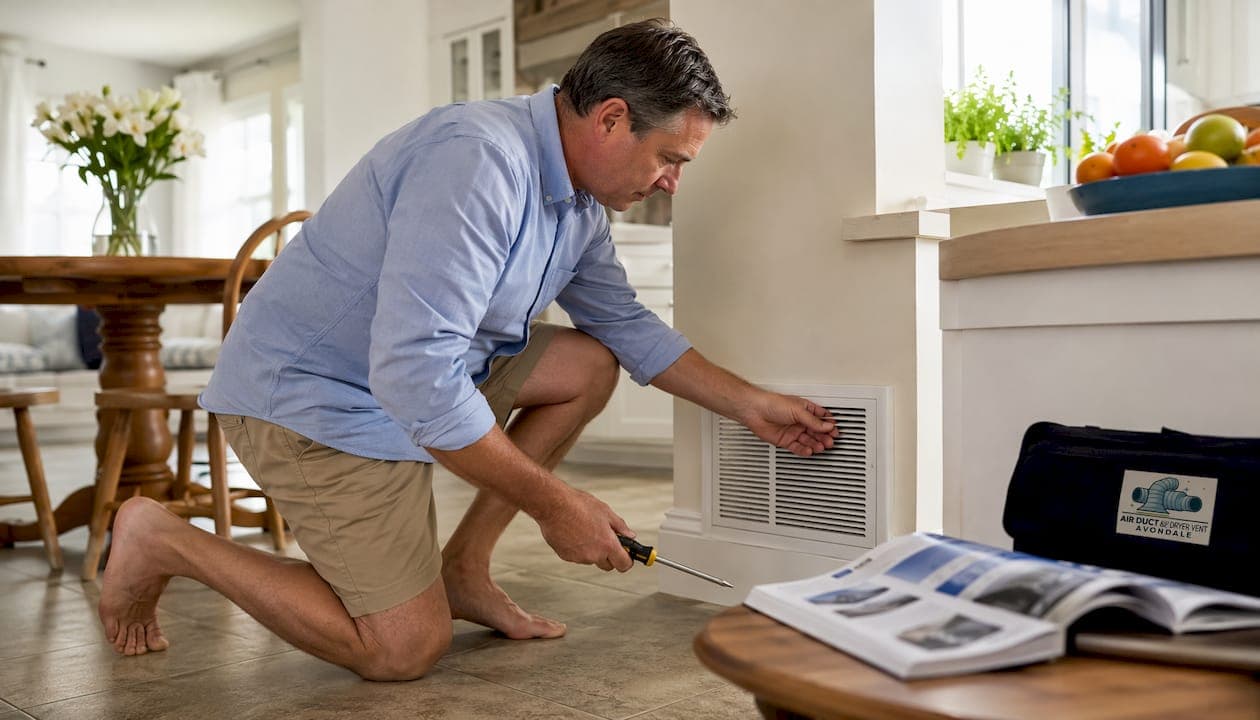
Return air vents are the intake side of your home's HVAC loop. They pull indoor air back to the air handler, where it gets filtered, reheated or recooled, and pushed out again through the supply vents. Without them, your system has nothing to work with, and the whole cycle breaks down fast.
Most homeowners focus on supply vents because they can feel the air coming out. The return side does its job silently, which is exactly why it gets ignored until something goes wrong.
What is the role of return air vents in your HVAC system?
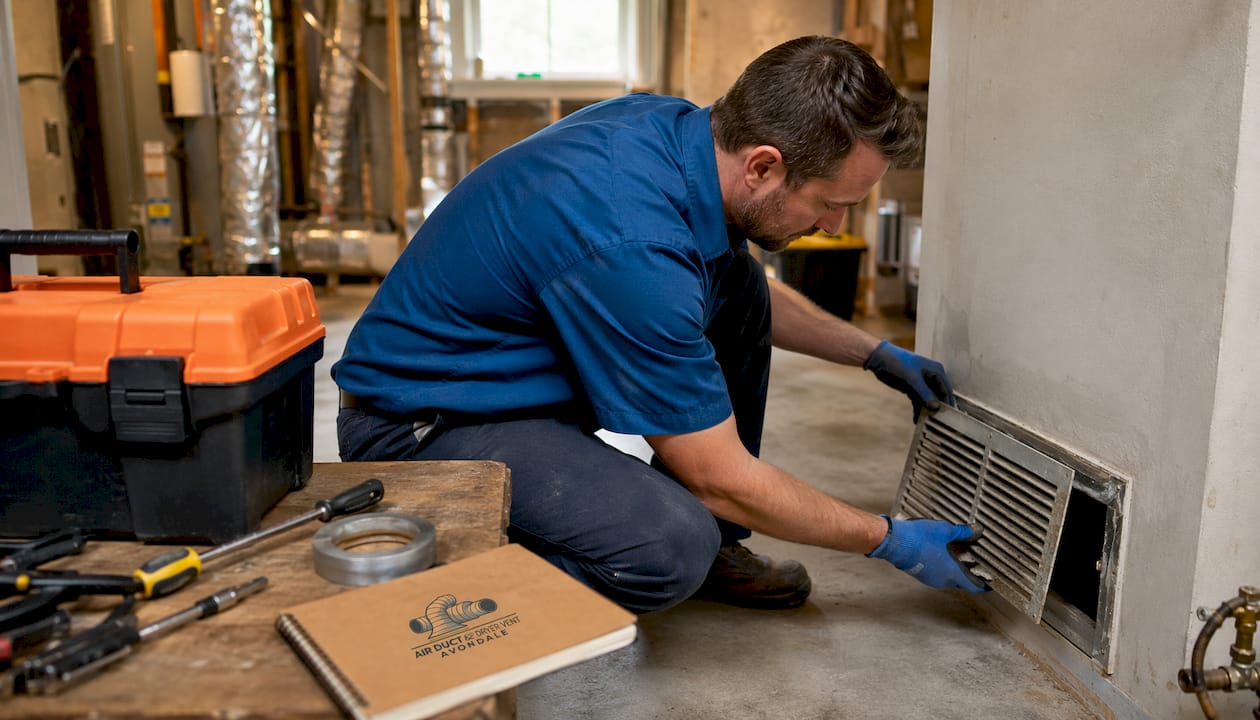
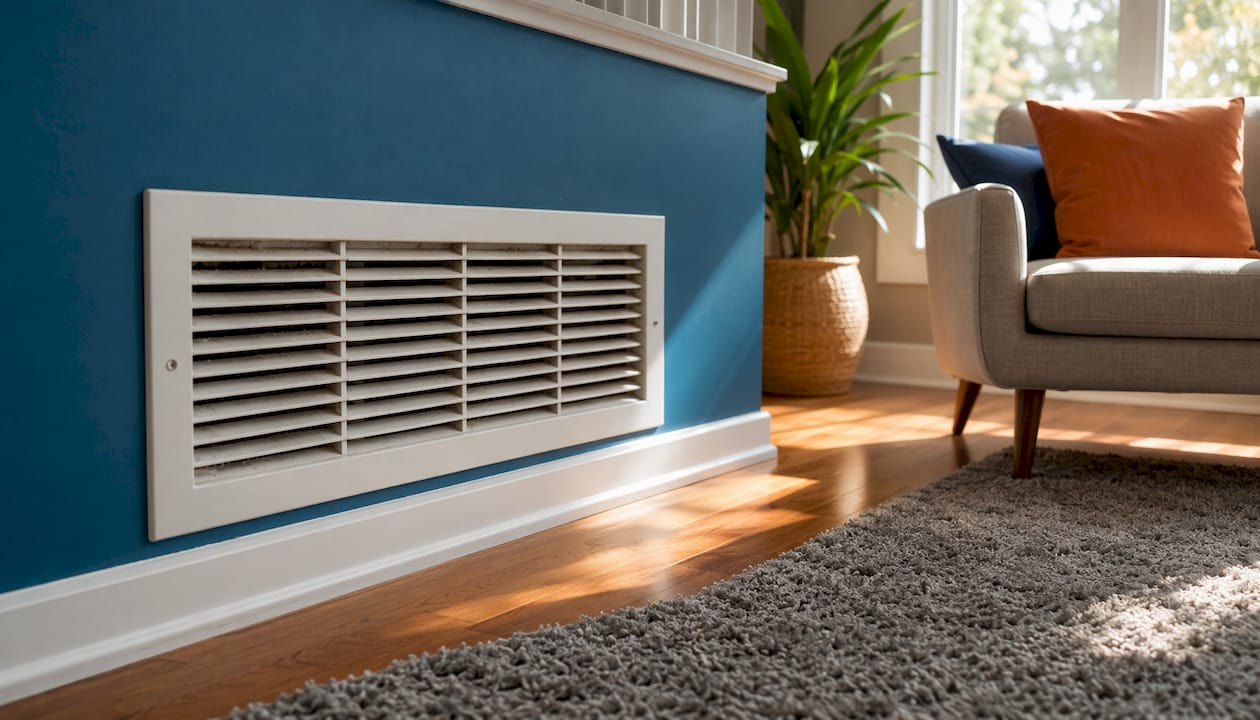
Return air vents, also called cold air returns, are fixed grilles mounted on walls, floors, or ceilings that draw room air back into the HVAC system for reconditioning. They are the "inhale" of your home's forced-air system, while supply vents are the "exhale." Every cubic foot of conditioned air pushed into a room must be replaced by a cubic foot pulled out through a return, or pressure builds and airflow slows.
Here is what return vents actually do in that cycle:
- Pull stale room air back to the air handler through return ductwork
- Pass that air through a filter to capture dust, allergens, and pet dander before it reaches the equipment
- Feed the blower motor with the air volume it needs to run at rated capacity
- Maintain balanced air pressure throughout the home, preventing hot and cold spots
- Complete the closed loop that lets your system heat or cool continuously
When return airflow is restricted or blocked, the blower strains against negative pressure it was never designed to handle. The result is uneven temperatures, faster filter clogging, and equipment wear that shortens the life of your system.
How supply vents and return vents differ
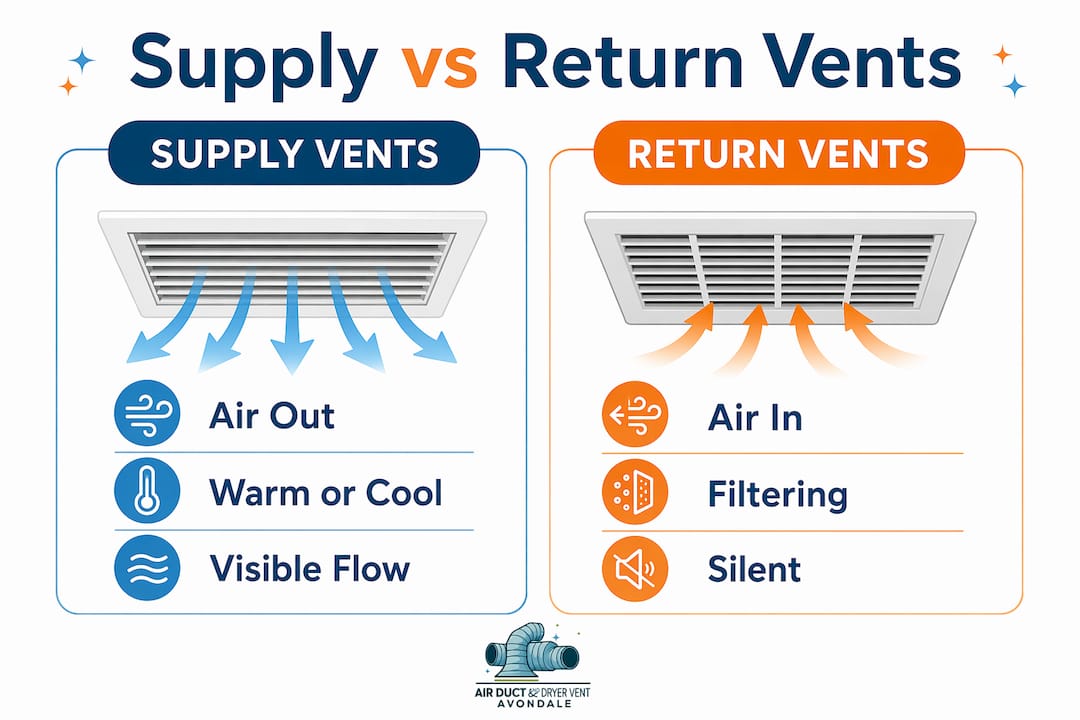
The core difference is direction. Supply vents push conditioned air into rooms; return vents pull air out. That single distinction drives every design difference between them.
- Size: Return vents are typically larger than supply registers because they need to move a high volume of air without creating excessive resistance.
- Louvers: Supply vents have adjustable louvers so you can direct airflow. Return vents have none. They are fixed grilles that must stay fully open at all times.
- Dampers: Return vents lack dampers by design. Any restriction disrupts the entire air cycle and can cause system damage.
- Filter slot: Most return vents house the HVAC air filter directly behind the grille, making them the system's first line of defense against dust and debris.
- Airflow test: Hold a sheet of paper near the grille while the system runs. Supply vents push the paper away. Return vents pull it in.
Confusing the two leads to real mistakes. Covering a return vent during a renovation or pushing furniture against it has the same effect as blocking the intake on an engine. The supply side keeps pushing air, pressure spikes in the room, and the system compensates by pulling air through gaps and cracks in the building envelope.
Where return air vents are typically located in homes
Placement determines how well the system balances airflow across the whole house. A return vent in the wrong spot, or too few returns overall, creates pressure imbalances that no amount of supply-side adjustment can fix.
- Hallways and central common areas: The most common location in older homes. One central return in a hallway can work if interior doors stay open, but closed bedroom doors cause pressure imbalances, whistling sounds, and draw outside air in through leaks.
- Interior walls, away from supply vents: Placing returns on the opposite side of the room from supply registers creates a natural airflow path across the space. Avoid positioning them directly across from supply vents, which causes short-circuiting where conditioned air returns before it circulates.
- Height based on climate: In heating-dominant climates, low returns near the floor capture cool air that naturally sinks. In cooling-dominant climates like Arizona, high returns near the ceiling capture warm air that rises. Many modern homes use high returns as a year-round compromise.
- One per room in modern design: Current HVAC design standards recommend at least one return in every room that has a supply vent, particularly bedrooms where doors close at night. Older homes often have only one central return, which is a common root cause of chronic comfort complaints.
- Never in kitchens, bathrooms, or garages: These spaces introduce moisture, odors, and potentially dangerous fumes directly into the air handler and ductwork.
Pro Tip: If your home has a single central return and you keep bedroom doors closed at night, transfer grilles installed above the door frames let air flow back to the hallway return even with the door shut. They are a cost-effective fix that avoids major ductwork changes.
Why return air vents matter for airflow, efficiency, and air quality
Properly functioning return vents affect three things homeowners care about most: comfort, energy bills, and the air their family breathes.
- Airflow balance: Returns maintain the pressure equilibrium that keeps conditioned air moving evenly through every room. Without that balance, some rooms overheat while others stay cold.
- Energy consumption: An unbalanced HVAC system caused by poor return airflow runs longer cycles to meet temperature settings, raising energy consumption. A properly balanced return system can reduce energy costs by 10–25%.
- Equipment protection: Return vents house the air filter that keeps dust and debris off the evaporator coil. A dirty coil kills efficiency and requires a professional cleaning call.
- Indoor air quality: Returns filter dust, allergens, and pet dander before that air reaches the equipment and recirculates. Rooms with blocked or covered returns show higher particulate levels because the system pulls air through gaps instead of through the filter.
- Improper placement penalty: Poor return vent placement can reduce airflow efficiency by up to 30%, a gap that affects both comfort and monthly bills.
The EPA's indoor air quality guidance consistently points to ventilation and filtration as the primary controls for airborne contaminants in homes. Return vents are where residential filtration actually happens.
How to maintain and optimize your return vents
Return vent maintenance is straightforward. The mistakes that cause problems are almost always about neglect or accidental obstruction.
- Keep 12 inches of clearance: Maintain at least 12 inches of open space around every return grille. Furniture, curtains, and storage boxes pushed against the wall are the most common cause of restricted return airflow.
- Vacuum monthly: Dust buildup on the grille face restricts airflow before it ever reaches the filter. A quick pass with a vacuum attachment takes less than a minute.
- Check and replace filters regularly: A clogged filter behind a return creates the same airflow restriction as a physically blocked vent. Check it monthly; replace it on the manufacturer's schedule or sooner if you have pets.
- Add transfer grilles for closed rooms: If certain rooms always run hot or cold, adding transfer grilles or return vents in those spaces often resolves the issue without replacing ductwork.
- Schedule professional air vent cleaning: Grilles and the ductwork behind them accumulate debris over time. Professional cleaning removes buildup that vacuuming cannot reach and restores full airflow capacity.
- Never close or cover returns to save energy: Closing a return is worse than closing a supply vent. It cuts the air volume the blower depends on and accelerates equipment wear.
Pro Tip: In Arizona's cooling-heavy climate, high-wall return placement outperforms floor-level returns during summer. If your home has low returns and you run the AC heavily, ask an HVAC technician whether repositioning or adding a high return makes sense for your layout.
Signs your return air vents have a problem
Most return vent problems announce themselves through comfort and performance symptoms before any equipment actually fails. Catching them early saves money.
- Uneven room temperatures: Rooms that never reach the thermostat setting, or that run noticeably warmer or cooler than the rest of the house, often trace back to inadequate return coverage or a blocked grille.
- Whistling or rushing sounds near grilles: A whistling return is the sound of air forced through a too-small opening or past a clogged filter. Change the filter first. If the sound continues, the return may be undersized for your system's output.
- Short cycling: When the HVAC turns on and off more frequently than normal, insufficient return air is a likely cause. The system overheats or overcools before enough air has circulated, triggering the limit switch.
- Rising energy bills without explanation: Blocked return vents force the system to run longer cycles, which shows up directly on your utility bill.
- Doors that slam or resist closing: Positive pressure building in a room because supply air has no return path pushes back against doors. It is a physical sign of pressure imbalance.
- Filters clogging faster than expected: When return airflow is restricted, the system compensates by pulling harder through whatever opening is available, dragging more debris into the filter in less time.
For persistent problems, a DIY inspection can identify obvious blockages. When symptoms continue after clearing the grilles and replacing the filter, a professional static-pressure test will pinpoint whether the issue is duct sizing, leaks, or inadequate return coverage.
What HVAC professionals say about return air vent care
HVAC technicians consistently describe return vents as the most overlooked component in residential systems, and the most common root cause behind airflow complaints. The analogy holds up in practice: closing return vents starves the system of air and causes premature equipment failure, the same way blocking an engine's air intake causes it to run rough and overheat.
A few things professionals flag most often:
- The filter at the return is the system's primary protection. Dust and debris that bypass it coat the evaporator coil, reducing heat transfer and eventually requiring a professional coil cleaning. Keeping that filter clean is the single highest-return maintenance task a homeowner can do.
- Single-return homes are a design limitation, not a permanent problem. Transfer grilles, jump ducts, or added return runs can bring older homes up to modern airflow standards without replacing the entire duct system.
- Duct integrity matters as much as grille placement. A return duct with leaks or loose connections pulls unconditioned air from attics or crawlspaces into the system, undermining both efficiency and air quality. Professional duct evaluation catches this where visual inspection cannot.
- Avondale's climate puts extra demand on return systems. Cooling loads in the Phoenix metro area are among the highest in the country. A return system that performs adequately in a mild climate may be undersized for the sustained summer demand here.
Airanddryerventcleaningavondale provides professional air duct and vent cleaning services for residential and commercial properties in Avondale, Arizona, including return vent cleaning, duct inspection, and air vent replacement for grilles that are damaged or undersized. For homeowners dealing with chronic airflow issues, a professional evaluation of the return side is usually the fastest path to a real fix. You can also explore HVAC compliance best practices for additional context on how return vent maintenance fits into broader system health.
Key Takeaways
Return air vents complete the HVAC loop by pulling indoor air back for filtering and reconditioning, and a properly balanced return system can reduce home energy costs by 10–25%.
| Point | Details |
|---|---|
| Return vents complete the loop | They pull room air back to the air handler so it can be filtered and reconditioned before recirculation. |
| Blockages raise energy costs | Poor return airflow forces longer run cycles; a balanced system can cut energy costs by 10–25%. |
| Placement affects performance | Poor placement can reduce airflow efficiency by up to 30%; place returns on interior walls away from supply vents. |
| Filter at the return is critical | The air filter sits at the return vent and protects the evaporator coil from dust and debris buildup. |
| Never close or cover returns | Closing a return starves the blower of air, causes short cycling, and accelerates equipment failure. |
FAQ
What happens if there is no return vent?
Without a return vent, the HVAC loop cannot close. Air pressure builds in the rooms, airflow slows, and the system runs continuously without reaching the thermostat setting, leading to hot and cold spots, duct stress, and equipment overheating.
What happens if a return air vent is blocked?
A blocked return creates negative pressure in the duct system, forcing the blower to work against resistance. The consequences include uneven room temperatures, short cycling, faster filter clogging, and rising energy bills. In severe cases, it can freeze the evaporator coil.
Is a return air vent necessary?
Yes. Every forced-air HVAC system requires return vents to function. They are not optional components. Without adequate return airflow, the system starves for air and cannot heat or cool the home efficiently.
What are the rules for return air ducts?
Return ducts must be sized to handle at least the same airflow volume as the supply side, measured in CFM. Modern design standards recommend at least one return per room with a supply vent. Returns should never be placed in kitchens, bathrooms, or garages, and must remain unobstructed at all times.