

TL;DR:
- Vents are critical components that control airflow, air quality, and energy efficiency in homes.
- Proper vent sizing, placement, and maintenance are essential, especially in Arizona's extreme climate.
- Regular inspection, cleaning, and weather-specific adjustments improve house comfort and reduce energy costs.
Most homeowners in Avondale treat vents like decorative grilles. You adjust a louver here, close one in a spare room there, and assume the system handles the rest. That assumption quietly costs you money and comfort every single month. Vents aren't passive openings. They're precision components in an engineered system that controls temperature, air quality, humidity, and energy consumption. In Arizona's extreme climate, where summer attic temperatures can exceed 160°F and dust storms roll through without warning, the stakes are even higher. This guide breaks down exactly how vents work, what each type does, why Avondale's environment demands a smarter approach, and what you can do right now to improve your indoor air and lower your bills.
Table of Contents
- Understanding airflow: Why vents matter
- Types of vents and their functions
- Arizona challenges: Airflow and vent strategies for Avondale
- Optimizing vent design, sizing, and controls for best performance
- A fresh perspective: What most people (and even contractors) get wrong about vents-get-wrong-about-vents)
- Get expert help for healthy, efficient airflow in Avondale
- Frequently asked questions
Key Takeaways
| Point | Details |
|---|---|
| Vents drive indoor airflow | Properly designed vents ensure even air distribution, better comfort, and safer air quality. |
| Arizona has unique vent needs | Dust storms, attic heat, and poor AQI require special vent cleaning, filtering, and attic ventilation approaches. |
| Smart systems boost efficiency | Upgrading to smart vent controls and maintaining clean vents can save 15-30% on energy bills. |
| Maintenance matters most | Regular vent inspection and cleaning prevent airflow problems before they become expensive fixes. |
Understanding airflow: Why vents matter
Think of your home's ventilation system like the circulatory system in your body. Blood flows out to deliver oxygen, returns to pick up waste, and a separate process removes what the body doesn't need. Vents work the same way. Without all three functions working together, the whole system breaks down.
Ventilation basics start with one core principle: air must move continuously and in balance. When supply air enters a room faster than return air can exit, pressure builds up and forces air through gaps in walls, ceilings, and around doors. When return air pulls more than supply delivers, negative pressure draws in unconditioned air from outside, including dust, pollen, and heat. Neither scenario is good for your wallet or your lungs.
According to air distribution system principles, vents serve as supply, return, and exhaust points to distribute conditioned air, pull stale air back for reconditioning, and remove contaminants. This balance is what keeps your HVAC running efficiently and your indoor air clean. Understanding how vents impact HVAC performance is the first step toward making smarter decisions about your home.
Here's a quick breakdown of what each vent type actually does:
- Supply vents push conditioned air (cooled or heated) from the HVAC unit into living spaces
- Return vents draw stale, unconditioned room air back to the air handler for filtering and reconditioning
- Exhaust vents remove moisture, odors, and airborne contaminants directly to the outside
| Vent type | Direction of airflow | Primary purpose | Key benefit |
|---|---|---|---|
| Supply | Into the room | Deliver conditioned air | Comfort and temperature control |
| Return | Out of the room | Recirculate air to HVAC | Efficiency and filtration |
| Exhaust | Out of the building | Remove moisture/contaminants | Air quality and moisture control |
One number worth remembering: bathroom exhaust fans must move at least 50 CFM to effectively remove moisture and prevent mold growth. Most homeowners never check this. If your bathroom feels stuffy or you see moisture on mirrors long after a shower, your exhaust vent may be undersized or clogged.
Balanced airflow isn't just a comfort issue. It directly affects how hard your HVAC system works, how long it lasts, and how much energy it consumes every month. Get the balance wrong, and you're paying for inefficiency you can't even see.
Types of vents and their functions
Now that you know why vents aren't just empty holes in the wall, it's important to break down the different vent types and their unique roles.
Each vent type in your home or business serves a specific job. Mixing them up or neglecting one category throws the whole system off. Here's how they each contribute:
- Supply vents deliver cooled or heated air from your HVAC unit into each room. They're usually found on floors, walls, or ceilings and have adjustable louvers.
- Return vents are typically larger, located low on walls or in central hallways, and pull room air back to the air handler for filtering and reconditioning.
- Exhaust vents are found in kitchens and bathrooms. They push air directly outside, removing humidity, cooking odors, and airborne pollutants.
- Attic and roof vents are a category many homeowners completely overlook, but in Arizona, they may be the most important of all.
| Vent type | Airflow direction | IAQ impact | Energy efficiency role |
|---|---|---|---|
| Supply | Inward | Delivers filtered, conditioned air | Reduces HVAC runtime |
| Return | Inward to system | Removes stale air and allergens | Improves filter performance |
| Exhaust | Outward | Removes moisture and odors | Prevents mold-related damage |
| Attic/Roof | Both (intake + exhaust) | Reduces heat infiltration | Lowers cooling load significantly |
Attic ventilation deserves special attention in Avondale. When your attic traps heat, that heat radiates down through your ceiling and forces your AC to work harder. Attic roof vents with soffit intake and ridge exhaust reduce heat load on ducts, directly lowering cooling costs. This is especially critical when ductwork runs through the attic, which is common in Arizona homes.
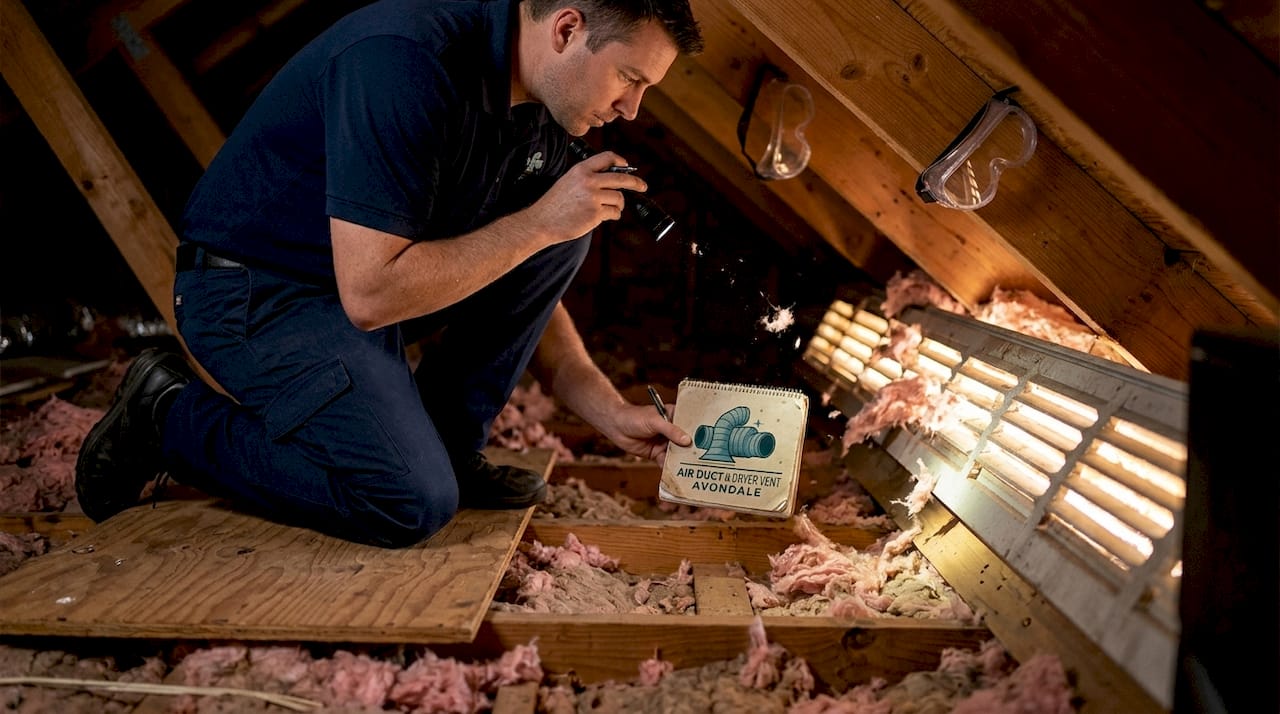
Pro Tip: Balanced attic ventilation following the 1:150 net free area ratio (one square foot of vent area for every 150 square feet of attic floor) can drop attic temperatures from over 160°F to under 120°F. That single improvement can meaningfully cut your summer AC costs.
For vent cleaning and efficiency, keeping all four vent categories clean and unobstructed is essential. Dust buildup inside supply and return vents reduces airflow volume, forcing your system to compensate. Dirty exhaust vents trap moisture and create ideal conditions for mold. Understanding the elements of efficient HVAC systems shows just how interconnected these components are.
For attic ventilation tips that apply across climates, proper intake and exhaust balance is always the starting point. In Avondale, it's non-negotiable.
Arizona challenges: Airflow and vent strategies for Avondale
Understanding these types sets the stage for addressing location-specific challenges.
Avondale isn't a typical climate. You're dealing with summer temperatures that regularly hit 110°F, humidity spikes during monsoon season, and haboobs that can drop air quality from good to hazardous in under an hour. Your ventilation system has to handle all of that.
Here are the specific local issues that affect your vents and airflow:
- Dust infiltration from haboobs clogs filters rapidly and deposits fine particulate inside ductwork and vents
- Extreme attic heat forces HVAC systems to work harder, especially when ducts run through unconditioned attic space
- Rapid AQI swings during storm events can push outdoor air quality into dangerous ranges within minutes
- Monsoon humidity creates moisture risks in exhaust systems and around return vents if not properly sealed
- Thermal cycling from dramatic day-to-night temperature swings stresses duct connections and vent seals over time
For managing Arizona duct dust, the key is understanding that standard MERV 8 filters aren't enough here. High-MERV filters (11-13) combined with temporary outdoor air reduction when AQI exceeds 150 is the recommended approach for Arizona homes. ERV (Energy Recovery Ventilator) systems are also worth considering because they exchange stale indoor air with fresh outdoor air while recovering energy, reducing the cost of conditioning that incoming air.
"Exhaust-only ventilation is inexpensive to install, but it pulls in unfiltered outdoor air through every crack and gap in your building envelope. In a dust-heavy climate like Avondale's, that means your home becomes a filter for every haboob that rolls through. Balanced mechanical ventilation costs more upfront but delivers real IAQ and energy savings over time."
Pro Tip: During a dust storm or when outdoor AQI exceeds 150, temporarily reduce your HVAC system's outdoor air intake if you have a controllable fresh air damper. Close windows and doors, switch to recirculation mode if available, and replace your filter immediately after the storm passes.
The HVAC cleaning steps that matter most after a storm include inspecting all vent covers for dust accumulation, checking return vent filters, and verifying that exhaust fans are still moving air effectively. For ventilation in hot climates, sealing duct connections and upgrading to humidity-sensing exhaust fans are two changes that pay off quickly in Arizona's environment.
Optimizing vent design, sizing, and controls for best performance
With Avondale's extremes in mind, let's look at how proper vent design, sizing, and smart controls can further optimize indoor comfort and air quality.
Getting vents right isn't just about cleaning them. It starts with making sure they're the right size, in the right place, and controlled intelligently. Here's a practical sequence for optimizing your system:
- Audit your current vent layout. Walk through every room and locate all supply, return, and exhaust vents. Note any that are blocked by furniture, rugs, or debris.
- Check sizing against ASHRAE benchmarks. ASHRAE 62.2 sizing recommends approximately 48 CFM of ventilation for a 1,800 square foot, three-bedroom home. If your system falls short, rooms will feel stuffy and air quality will suffer.
- Seal duct connections. Use mastic sealant or metal tape on leaky joints. Leaky ducts waste conditioned air and pull in attic heat.
- Upgrade filters to MERV 11-13. This is especially important after any construction, remodeling, or storm activity.
- Consider smart vent controls. These devices use sensors and zoning to direct airflow only where it's needed, which translates to real savings.
Smart vent systems can save 15 to 30% on energy through zoning, reducing the load on your HVAC by not conditioning unused rooms. That's a meaningful reduction on an already high Arizona cooling bill.
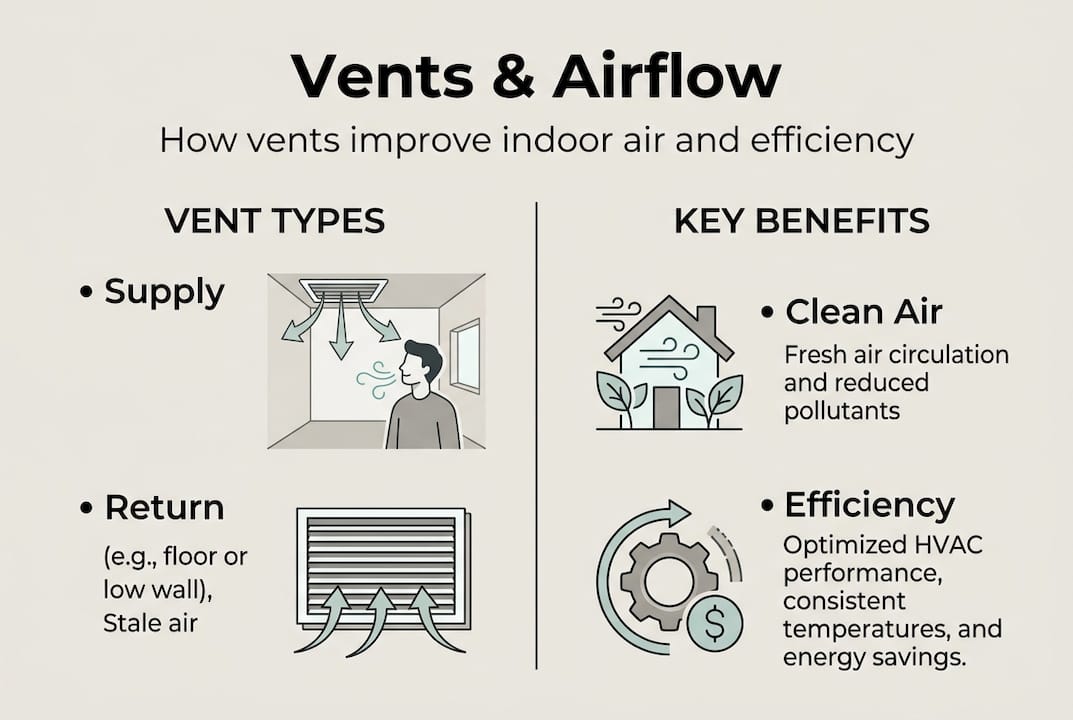
Pro Tip: Even perfectly designed vents lose performance over time. Dust, pet hair, and debris accumulate inside vent covers and ductwork, gradually restricting airflow. A vent cleaning workflow done annually keeps your system performing at its designed capacity.
Here's a maintenance checklist to keep your vents performing year-round:
- Inspect and clean vent covers every 3 months
- Replace MERV 11-13 filters every 60 to 90 days (more often after storms)
- Schedule professional duct and vent cleaning annually
- Test exhaust fan airflow in bathrooms and kitchen twice per year
- Check attic vent screens for debris or pest blockages each spring
Knowing when to schedule duct cleaning matters as much as the cleaning itself. After remodeling, after a major storm, or when allergy symptoms spike indoors are all strong signals. For vent sizing risks, undersized exhaust vents in utility rooms are a common but overlooked hazard that affects both safety and system efficiency.
A fresh perspective: What most people (and even contractors) get wrong about vents
These strategies cap off a full-circle view of how vents do far more than most realize. Now, here's how to spot what even experts often miss.
Here's the uncomfortable truth: most ventilation problems in Avondale homes aren't caused by bad equipment. They're caused by treating vents as a one-time installation rather than a living system that needs ongoing adjustment.
We see it constantly. A homeowner adds a room addition, and nobody recalculates the supply and return balance for the new square footage. A contractor replaces the AC unit but leaves the original duct layout untouched, even though the new system has different airflow requirements. A family installs new insulation in the attic and inadvertently covers soffit vents, turning a well-ventilated attic into a heat trap.
The biggest mistake isn't neglecting cleaning, though that matters too. It's assuming that what worked last year still works today. Avondale's dust cycles, seasonal temperature extremes, and the natural aging of duct seals and vent hardware mean your system's performance drifts over time. A vent that moved 200 CFM when it was installed may be moving 140 CFM three years later due to dust accumulation alone.
Even experienced contractors sometimes overlook local variables. They apply national averages and standard solutions to a climate that punishes generic approaches. Attic heat spikes after a remodel, dust infiltration post-storm, and humidity swings during monsoon season all demand reassessment, not just routine maintenance.
The homeowners and business owners who get the best results are the ones who treat their ventilation system as something that needs regular attention, not just a one-time fix. Knowing that clean vents boost airflow is one thing. Acting on it consistently, especially after Avondale's seasonal extremes, is what actually protects your air quality and your energy budget.
Get expert help for healthy, efficient airflow in Avondale
Arizona's climate doesn't forgive a passive approach to ventilation. Between haboobs that pack your filters with fine dust, attic temperatures that push your AC to its limits, and monsoon humidity that creates moisture risks, your vents need more than an occasional glance.
At Air Duct and Dryer Vent Cleaning Avondale, we work specifically with homeowners and small business owners in this region. We know what Avondale's environment does to ventilation systems because we see it every day. Whether you need air vent cleaning services to restore full airflow, dryer vent cleaning to eliminate a fire hazard, or indoor air quality testing to find out what's actually circulating through your home, we're ready to help. Flexible scheduling, including after-hours options, makes it easy to get the service you need without disrupting your day. Contact us to schedule your assessment and start breathing easier.
Frequently asked questions
What happens if air vents are blocked or closed?
Blocked or closed vents disrupt balanced airflow, reduce HVAC efficiency, cause uneven temperatures throughout your space, and can put damaging strain on your system over time.
How often should vents be cleaned in Arizona?
Vents should be inspected and cleaned at least once a year, and more often after haboobs and dust storms or after any remodeling work that generates debris.
What's the best vent filter for Avondale, AZ homes?
Use high-MERV filters (11-13) to capture fine dust particles during storm events, and replace or clean them more frequently during periods of high dust activity or poor outdoor air quality.
How does attic ventilation impact AC energy use in Arizona?
Proper attic venting with soffit intake and ridge exhaust lowers attic temperatures significantly, reducing the heat load on your ducts and cutting the amount of work your AC has to do every day.
What's the difference between supply, return, and exhaust vents?
Supply vents deliver conditioned air into rooms, return vents pull room air back to the HVAC system for reconditioning, and exhaust vents remove stale air and contaminants directly to the outside, as outlined in air distribution system fundamentals.