

TL;DR:
- Visible mold, pests, or debris are primary signs that duct cleaning is necessary for health and air quality.
- Urgent issues like mold in insulated ducts, post-remodel debris, or active pest infestations require immediate professional attention.
- EPA guidance recommends cleaning only when evidence like mold or vermin is present, while industry suggests more preventive cleaning in certain conditions.
Your air ducts work silently behind the scenes every day, but when they get dirty, the effects are anything but quiet. Contaminated ductwork can spread dust, allergens, mold spores, and even pest debris through every room in your home or business. The tricky part is that most people wait too long before calling a professional, either because they don't know what to look for or because the warning signs seem minor at first. According to the EPA, visible mold, vermin, and dust debris are the primary triggers that justify professional duct cleaning. This article breaks down the exact signs to watch for, so you can make a confident, evidence-based decision before small problems turn into costly ones.
Table of Contents
- Major warning signs your ducts need cleaning
- Other symptoms that signal dirty ducts
- Situations that demand immediate attention
- Comparing EPA and industry guidelines on duct cleaning
- The truth most homeowners miss about duct cleaning
- Get expert duct cleaning help in Avondale
- Frequently asked questions
Key Takeaways
| Point | Details |
|---|---|
| EPA evidence-based triggers | Look for visible mold, pests, or dust debris escaping vents before scheduling duct cleaning. |
| Other warning signs | Musty smells, allergy flares, or rapid dust buildup may suggest dirty ducts but need further checking. |
| Special cases | After renovations, during infestations, or with moldy insulated ducts, immediate action is required. |
| Compare guidelines | EPA and industry often differ, but Avondale homes benefit from evidence plus context-based decisions. |
Major warning signs your ducts need cleaning
Not every dusty vent means your ducts are in crisis. But some signs are hard to argue with. The EPA is clear that mold, pests, and blockages are the primary indicators that professional duct cleaning is necessary, and ignoring them puts your indoor air quality at real risk.
Here are the three major warning signs you should never brush off:
- Visible mold growth inside ducts or on vent covers. If you shine a flashlight into a supply register and see dark, fuzzy patches, that's mold. Mold spores travel through your HVAC system and land in every room, which is a serious health concern for anyone with respiratory conditions or allergies.
- Evidence of rodents or insects inside ductwork. Droppings, nesting material, or the sound of movement inside your vents are urgent red flags. Pests leave behind waste and bacteria that circulate through your air supply every time the system runs.
- Excessive dust or debris releasing from supply registers. If you notice visible puffs of dust coming out of your vents when the HVAC kicks on, your ducts are overloaded. This isn't normal, and it means contaminated air is actively being pushed into your living or working space.
"If any of your household members are experiencing unusual or unexplained symptoms or illnesses that you think might be related to your home environment, you should discuss the situation with your doctor." — U.S. Environmental Protection Agency
These three signs differ from general household dust because they point to active contamination inside the duct system itself. A dusty shelf is a cleaning chore. Mold inside your ductwork is a health issue that requires professional intervention.
Why does this matter more in Avondale? Arizona's dry, dusty climate means particulates accumulate faster than in many other regions. Add in seasonal pollen and the fact that most homes run their HVAC systems heavily for most of the year, and your ducts face a higher-than-average contamination load. Learning more about reducing duct dust can help you understand the root causes and take steps between professional visits.
Pro Tip: Use a flashlight and a small mirror to inspect the inside of your supply registers every few months. You don't need special equipment to catch early signs of mold or debris buildup.
Statistic to know: The EPA reports that indoor air can be two to five times more polluted than outdoor air, and dirty ducts are a major contributing factor in homes and businesses with poor ventilation.
Other symptoms that signal dirty ducts
Beyond the three major warning signs, there are secondary symptoms that frequently point homeowners and business owners toward a duct problem. These aren't automatic triggers for cleaning, but they're worth paying close attention to.
- Musty or stale odors when the HVAC runs. A persistent smell that appears only when your system is on often means mold, mildew, or accumulated debris inside the ductwork. The odor gets pulled through the system and distributed throughout the space.
- Frequent allergy or asthma flare-ups indoors. If your symptoms are worse at home or at work than they are outside, your indoor air quality may be the culprit. Dirty ducts can recirculate dust mites, pet dander, pollen, and mold spores continuously.
- Unusual dust buildup on surfaces. When furniture and countertops collect dust faster than normal, and especially when that dust reappears shortly after cleaning, your duct system may be the source.
- Uneven airflow or a drop in HVAC efficiency. Rooms that are noticeably hotter or cooler than others, or a system that runs longer to reach the set temperature, can indicate restricted airflow from debris buildup inside the ducts.
Here's the nuance the EPA wants you to understand: cleaning is warranted only when solid evidence of contamination exists, not simply because symptoms are present. A musty smell could come from a drain pan or evaporator coil, not the ducts. Allergy flare-ups might be caused by a dirty air filter rather than the duct system itself.
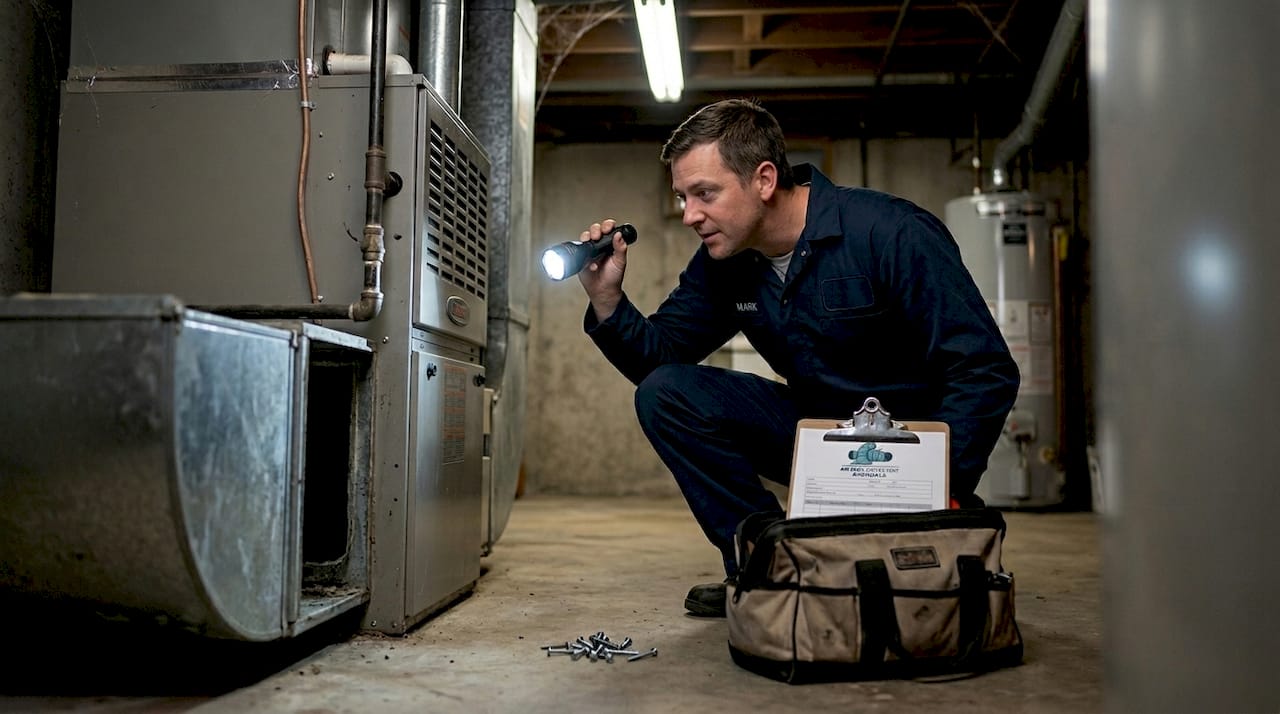
This is why professional assessment matters. A technician can trace the source of the problem rather than just treating the symptom. If you're unsure whether your symptoms point to the ducts or something else, scheduling duct cleaning with a professional inspection is the most reliable first step.
Pro Tip: Before assuming your ducts are the problem, replace your air filter and clean your vent covers. If symptoms persist after a week, the issue is likely deeper in the system.
Improving better HVAC airflow often starts with identifying whether the restriction is in the filter, the vents, or the ductwork itself. Don't skip that diagnostic step.
Situations that demand immediate attention
Some situations go beyond routine monitoring. Certain scenarios call for urgent action, and delaying can make the problem significantly worse or more expensive to resolve.
Here are the situations where you should act without hesitation:
- Mold found in insulated ductwork. This is critical. Unlike metal ducts, insulated ducts cannot be effectively cleaned once mold takes hold. The EPA is direct on this: insulated ducts with mold need to be replaced, not cleaned. Attempting to clean them only disturbs the mold and spreads spores further.
- Recent home or business renovation or construction. Remodeling generates enormous amounts of fine dust, drywall particles, and debris that settle directly into your duct system. Even if contractors sealed the vents during work, contamination almost always gets through. Post-construction duct cleaning is not optional; it's essential. Read more about cleaning vents after renovations to understand the full scope of what gets left behind.
- Active rodent or insect infestation. Pests must be eliminated by a pest control professional before duct cleaning begins. Cleaning ducts while an infestation is active only temporarily removes the waste without solving the source. The contamination will return.
Pro Tip: If you've just completed a kitchen or bathroom remodel, schedule duct cleaning within 30 days of project completion. Waiting longer allows fine particles to settle deeper into the system.
Here's a quick comparison to help you see the difference between routine cleaning and evidence-based cleaning:
| Situation | Action required | Urgency level |
|---|---|---|
| Visible mold in metal ducts | Professional cleaning | High |
| Mold in insulated ducts | Full duct replacement | Immediate |
| Post-construction debris | Professional cleaning | High |
| Active pest infestation | Pest control, then cleaning | Immediate |
| Dusty surfaces only | Filter replacement first | Low to moderate |
| Uneven airflow | Inspection and diagnosis | Moderate |
Understanding the urgency level for your specific situation prevents both under-reacting and over-spending. Not every issue requires the same response, but the high-urgency situations listed above should never be put off.
Comparing EPA and industry guidelines on duct cleaning
One of the most confusing aspects of duct cleaning is that the two main authorities, the EPA and the National Air Duct Cleaners Association (NADCA), don't always agree. Understanding where they differ helps you make smarter decisions for your home or business.
| Criteria | EPA guidance | NADCA recommendation |
|---|---|---|
| When to clean | Only with visible mold, vermin, or blockages | Every 3 to 5 years as preventive maintenance |
| Allergy-prone households | No specific schedule; clean if evidence exists | More frequent cleaning recommended |
| Post-construction | Clean after confirmed debris contamination | Always clean after renovation |
| Routine cleaning | Not supported without evidence | Supported as standard practice |
| Businesses and commercial spaces | Evidence-based triggers apply | Regular cleaning for IAQ compliance |
The EPA's position is conservative and evidence-driven. It does not support cleaning as a general preventive measure unless there is a confirmed reason. The EPA focuses on mold, vermin, and debris as the only solid justifications for cleaning, while NADCA promotes preventive maintenance, especially in allergy-prone or high-traffic settings.
"You should consider having the air ducts in your home cleaned if there is substantial visible mold growth inside hard surface (e.g., sheet metal) ducts or on other components of your heating and cooling system." — U.S. Environmental Protection Agency
For Avondale homeowners, this creates a practical question: which approach fits your situation? If you have pets, young children, or anyone with asthma or allergies in the home, the NADCA's preventive approach makes strong practical sense. If your home is newer, well-maintained, and has no known contamination, the EPA's evidence-based standard is a reasonable guide.
For small business owners, indoor air quality affects employee health and productivity, not just comfort. A commercial space with high foot traffic, older HVAC equipment, or a history of pest issues benefits from more frequent professional attention. Learning more about choosing professional cleaners can help you evaluate contractors and avoid services that don't meet industry standards.
The smartest approach is to use the EPA's criteria as your minimum threshold and the NADCA's guidance as your upper boundary, adjusting based on your specific environment, occupants, and history.
The truth most homeowners miss about duct cleaning
Here's something most standard advice skips over: the debate between "clean on a schedule" and "only clean when there's a problem" creates a false choice. Both extremes miss the point.
Homeowners who rely purely on a fixed schedule, say every three years regardless of conditions, often spend money on cleaning that delivers no measurable benefit. Their ducts weren't contaminated to begin with. On the other hand, homeowners who wait for a dramatic sign like visible mold or pest evidence often discover that the problem has been building for months or years before it became obvious.
The smarter approach is symptom-aware maintenance. You watch for the warning signs covered in this article, you pay attention to changes in your HVAC performance, and you factor in your specific risk profile. A household with two dogs, a recent renovation, and a family member with asthma has a very different risk profile than a newer home with no pets and a recently replaced HVAC system.
We've seen this pattern repeatedly in Avondale. Homeowners who engage with their system, who check their vents, notice unusual smells, and track their energy bills, catch problems early and spend far less over time. Those who ignore the system entirely until something breaks pay significantly more for reactive repairs.
If you want to understand what you can manage yourself versus when to call a professional, exploring DIY duct cleaning options is a good starting point. But know the limits of what DIY can accomplish when real contamination is present.
Get expert duct cleaning help in Avondale
If any of the warning signs in this article sound familiar, or if you simply want a professional set of eyes on your system, Air Duct and Dryer Vent Cleaning Avondale is ready to help.
Our technicians are trained to assess your specific situation using evidence-based criteria, not just a sales script. Whether you're dealing with post-renovation debris, a suspected mold issue, or just want to know where your system stands, we provide honest evaluations and targeted solutions. Our air vent cleaning services cover residential and commercial properties throughout Avondale, and our air quality testing gives you real data on what's actually in your air. We also offer dryer vent cleaning to keep your home safe from fire hazards. Schedule your service today and breathe with confidence.
Frequently asked questions
What are the most important signs my air ducts need cleaning?
The top signs are visible mold, vermin, and debris released from supply registers. These are the EPA's primary evidence-based triggers for professional duct cleaning.
Should I clean my ducts just because I see dust in my home?
Not always. The EPA recommends cleaning only when dust enters rooms from registers or solid evidence of contamination is confirmed, not based on general household dust alone.
Does duct cleaning improve indoor air quality for allergy sufferers?
It can, especially when mold, pests, or debris are confirmed in the system. NADCA also emphasizes more frequent cleaning for allergy-prone and IAQ-sensitive households as a practical preventive measure.
What should I do if there is mold in the insulated ducts?
Insulated ducts with mold should be replaced rather than cleaned, because mold penetrates the insulation material and cannot be fully removed through standard cleaning methods.