
TL;DR:
- Air balancing adjusts HVAC airflow to ensure each room receives the right amount of conditioned air. Proper balance improves comfort, reduces energy costs, and extends equipment life through accurate airflow measurement and duct adjustments. Regular assessments are necessary after any home or system modifications to maintain optimal performance.
Air balancing is the process of measuring and adjusting airflow in an HVAC system so every room receives the correct amount of conditioned air. When airflow is uneven, some rooms run too hot, others too cold, and your system works harder than it needs to. The role of air balancing goes beyond comfort. It directly affects your indoor air quality, your monthly energy bill, and how long your HVAC equipment lasts. For homeowners and property managers in Avondale, Arizona, where summers push cooling systems to their limits, a properly balanced system is not optional. It is the foundation of a healthy, efficient home.
What is the role of air balancing in HVAC systems?
Air balancing, known in the HVAC industry as system commissioning or airflow balancing, is the technical process of calibrating ductwork, dampers, and vents to deliver the right volume of air to each room. The unit of measurement is CFM, which stands for cubic feet per minute. Every room in a home has a design CFM target based on its size, use, and heat load. When actual airflow matches that target, the system operates as intended.
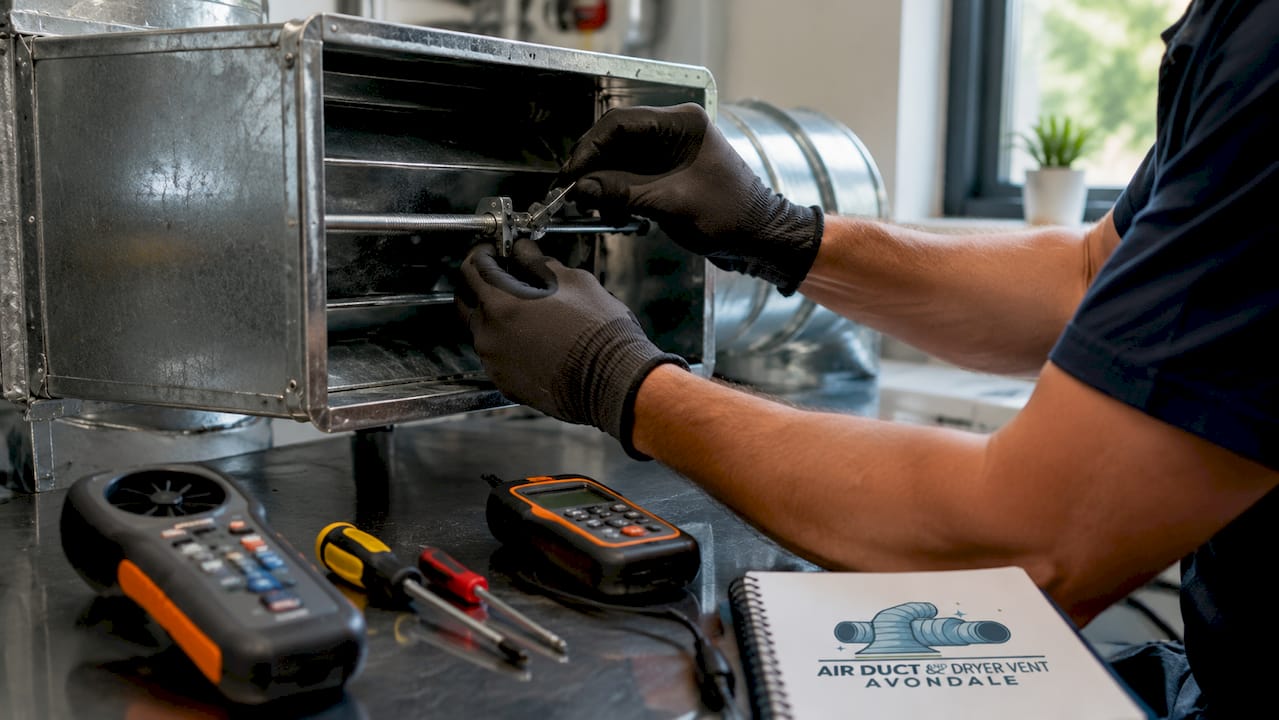
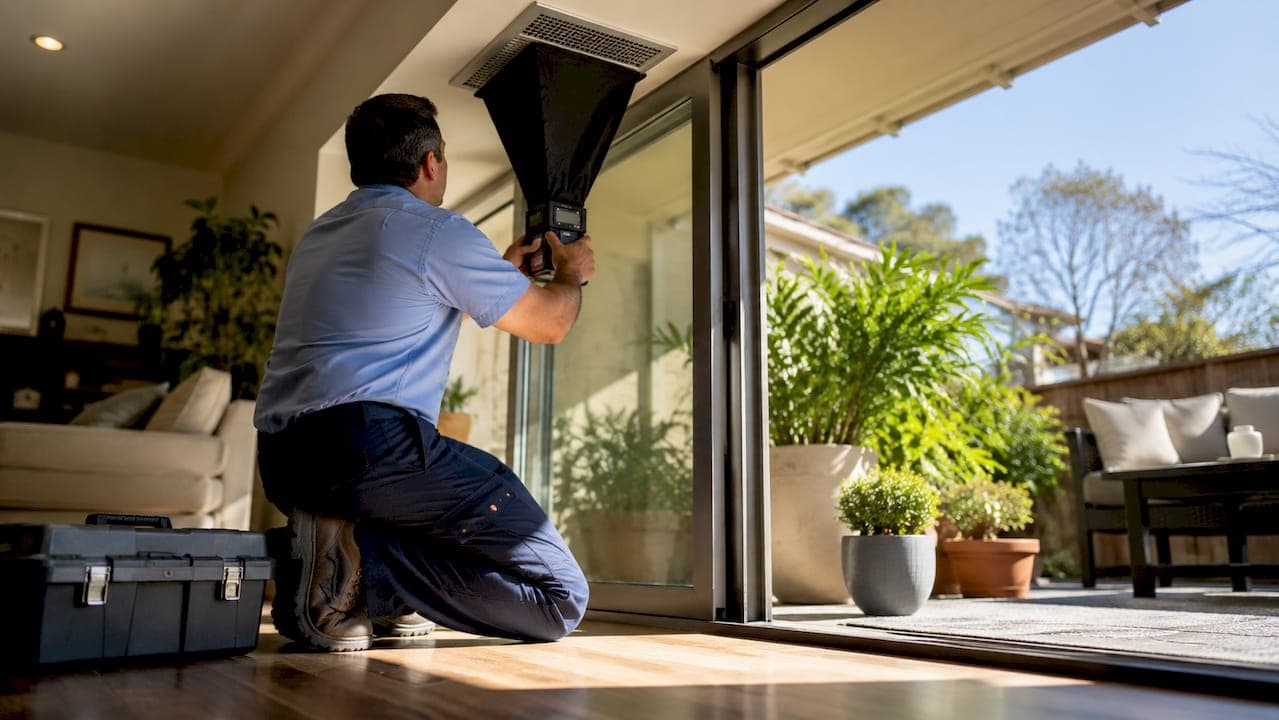
The process starts with measuring airflow at every supply and return vent using a device called a flow hood or anemometer. A technician compares those readings against the original design specifications. Rooms that receive too much air get their dampers partially closed. Rooms that receive too little get their dampers opened further or their duct paths adjusted. Fan speed settings on the air handler may also be modified to bring the whole system into range.
Air balancing is one of the most effective non-invasive methods to improve HVAC performance without replacing equipment. That matters because most comfort problems in homes trace back to airflow, not failing hardware. A system that moves air correctly does not need to run as long or as hard to reach the thermostat setpoint.
Return air is just as important as supply air. Room pressure imbalance occurs when supply air enters a room but there is no adequate return path to pull that air back into the system. The room pressurizes, airflow stalls, and the whole system loses efficiency even if the supply vents are correctly sized. Proper balancing accounts for both sides of the airflow equation.
What are the key benefits of air balancing for homeowners?
A balanced HVAC system delivers measurable improvements across four areas: comfort, energy costs, air quality, and equipment life. Each benefit compounds the others, which is why airflow balancing methods produce results that feel significant even in homes where the equipment itself is in good condition.
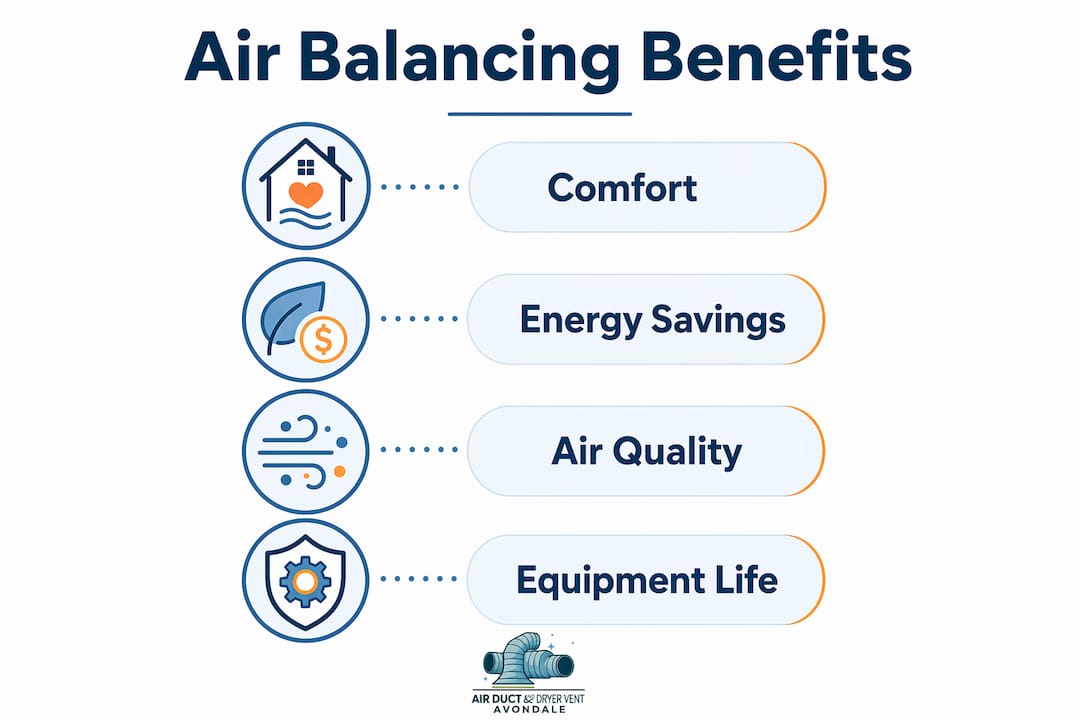
The comfort gains are immediate. Hot and cold spots disappear when every room receives its correct CFM allocation. Bedrooms that used to stay warm at night and living rooms that felt drafty in winter both stabilize. System balancing improves HVAC comfort by helping conditioned air reach rooms based on actual need rather than the path of least resistance through the ductwork.
The energy savings are substantial. A home can lose 25% to 40% of its heating and cooling energy through unbalanced ductwork. Proper balancing combined with duct sealing can cut those losses to 4% to 5%. That gap represents real money on every utility bill, month after month.
Beyond comfort and cost, air balancing produces benefits that are easy to overlook:
- Moisture control. Proper air balancing reduces moisture buildup by keeping air moving through every part of the home. Stagnant zones accumulate humidity, which creates conditions where mold can grow. Balanced airflow keeps relative humidity consistent across rooms.
- Quieter operation. Whistling or rushing sounds from vents are a sign of restricted airflow. When dampers and duct sizing are correctly set, air moves at the right velocity without generating noise.
- Longer equipment life. An HVAC system that runs fewer cycles under less strain lasts longer. Balanced airflow reduces the workload on the blower motor, heat exchanger, and compressor.
- Better indoor air quality. Consistent airflow means filters capture particles more effectively. Dead zones with poor circulation allow dust, allergens, and pollutants to settle rather than get pulled through the filtration system.
"Air balancing is one of the most cost-effective upgrades a homeowner can make. You get the performance your system was designed to deliver without buying new equipment."
For property managers overseeing multiple units, the impact of balanced airflow on tenant comfort and maintenance call volume is direct. Fewer complaints about temperature, fewer emergency service calls, and lower utility costs across the property all follow from a properly balanced system.
What are the signs of poor air balancing in a home?
Unbalanced airflow announces itself through specific, recognizable symptoms. Knowing what to look for helps you decide whether a professional assessment is needed before problems get worse.
The most common signs include:
- Uneven room temperatures. One bedroom runs noticeably warmer or cooler than the rest of the house. The thermostat reads comfortable, but the room does not feel that way.
- High energy bills. The system runs longer cycles trying to reach the setpoint because conditioned air is not reaching the rooms that need it. Runtime increases, and so does the bill.
- Moisture or damp spots. Rooms with poor airflow accumulate humidity. You may notice condensation on windows, a musty smell, or visible moisture on walls. These conditions also raise the risk of mold growth in the home.
- Noisy ducts or vents. Whistling, banging, or rushing sounds from supply vents indicate restricted airflow, often caused by dampers that are too far closed or ducts that are undersized for the load.
- Pressure problems when doors close. If closing an interior door causes a noticeable draft under the door or makes the room feel stuffy, the return air path for that room is inadequate.
Improper damper settings increase static pressure and damage system performance. Homeowners sometimes close dampers too much while trying to redirect airflow, which worsens the original problem. Static pressure that rises above the system's design limit stresses the blower motor and reduces airflow throughout the entire duct network, not just in the targeted room.
Pro Tip: If you notice that one room is always uncomfortable regardless of thermostat settings, do not adjust the damper yourself. Call a technician to measure actual CFM at that vent first. The problem may be in the return path, not the supply.
Pressure imbalance is one of the most misdiagnosed comfort issues in residential HVAC. A room can receive adequate supply air and still feel uncomfortable if the return path is blocked or undersized. Furniture placed over floor return grilles, closed interior doors with no undercut, and sealed-off hallways all restrict return airflow and create the same symptoms as a supply problem.
How often should air balancing be done?
Air balancing is not a one-time fix. It is a maintenance task that needs reassessment whenever the home or the HVAC system changes. The original balance a technician sets at installation reflects the duct resistance, room layout, and equipment specifications at that moment. Any change to those variables shifts the balance.
Air balancing needs re-evaluation after home modifications such as renovations, added rooms, or replaced diffusers because system resistance changes. A previously balanced system becomes unbalanced when you add a room addition, finish a basement, replace registers with a different style, or install a new air handler with a different fan curve. Each of those changes alters how air moves through the duct network.
Changes to home layout or replaced vents significantly alter duct resistance, requiring a full reassessment to restore optimal HVAC operation. This is a point most homeowners miss. They assume that because the system was balanced at installation, it stays balanced. It does not.
A professional assessment every few years is a reasonable baseline for homes that have not undergone major changes. For homes with active renovation projects, a reassessment after each significant modification is the right call. Signs that rebalancing is overdue include any of the symptoms listed above, a noticeable increase in energy bills without a rate change, or a new HVAC component such as a variable-speed air handler or zoning controls.
Zoning systems, which divide a home into independently controlled areas using motorized dampers, require particularly careful balancing. Each zone change affects pressure throughout the system. A technician needs to verify that the bypass damper and static pressure controls are set correctly for every zone configuration.
Pro Tip: Schedule an air balancing check whenever you replace your HVAC equipment. New equipment often has a different airflow output than the old unit, and the existing duct system may need adjustment to match.
Key takeaways
Proper air balancing is the single most effective non-invasive step a homeowner or property manager can take to improve HVAC comfort, cut energy costs, and protect indoor air quality.
| Point | Details |
|---|---|
| Airflow targets matter | Professional balancing keeps airflow within 10%–15% of design CFM to eliminate hot and cold spots. |
| Energy losses are preventable | Unbalanced ductwork can waste 25%–40% of heating and cooling energy; balancing with duct sealing cuts that to 4%–5%. |
| Return air is half the equation | Inadequate return paths pressurize rooms and reduce whole-system efficiency even when supply vents are correct. |
| Rebalancing is triggered by change | Renovations, new equipment, or replaced vents all shift duct resistance and require a fresh assessment. |
| DIY damper adjustments backfire | Closing dampers without measuring static pressure raises system stress and worsens airflow problems. |
Why I think most homeowners underestimate air balancing
After years of working with HVAC systems in Arizona homes, the pattern I see most often is this: a homeowner replaces an aging air conditioner, pays for a quality unit, and still ends up with the same comfort complaints they had before. The new equipment gets blamed. The real problem is almost always the ductwork and airflow distribution that nobody touched.
Air balancing gets skipped because it is invisible. You cannot see airflow the way you can see a dirty filter or a leaking pipe. Professional technicians use specialized tools to measure airflow, static pressure, and temperature differences. Without those measurements, any adjustment is a guess. And guessing with dampers, as the research shows, tends to make things worse.
The other mistake I see regularly is treating air balancing as separate from duct cleaning and sealing. They work together. A duct system full of debris restricts airflow and throws off measurements. A duct system with leaks loses conditioned air before it reaches the room. Balancing a dirty or leaking system produces results that degrade quickly. The right sequence is clean first, seal second, balance third.
My honest recommendation: if you have not had a professional airflow assessment since your last HVAC installation or major renovation, schedule one. The cost is modest compared to what you spend running an inefficient system month after month. And if you are in Avondale, the heat makes this more urgent, not less. A system that is even slightly out of balance works significantly harder in a Phoenix-area summer than it would in a milder climate.
— Shaun
Professional air duct and vent services in Avondale, AZ
Airanddryerventcleaningavondale works with homeowners and property managers across Avondale, Arizona to improve HVAC performance through professional cleaning and maintenance. Clean ducts and balanced airflow go hand in hand. Debris buildup in ductwork restricts airflow, throws off CFM readings, and undermines any balancing work done on the system.
Airanddryerventcleaningavondale offers air duct and vent cleaning for residential and commercial properties, along with indoor air quality testing to identify airflow and contamination issues before they become expensive problems. The team also handles duct repair and replacement for systems where leaks or damage are reducing airflow efficiency. Flexible scheduling, including after-hours appointments, makes it straightforward to get an assessment without disrupting your day. Contact Airanddryerventcleaningavondale to schedule a professional evaluation and get your system performing the way it was designed to.
FAQ
What is air balancing in a home?
Air balancing is the process of measuring and adjusting airflow through an HVAC system so each room receives its correct volume of conditioned air, measured in CFM. The goal is consistent temperatures, controlled humidity, and efficient system operation throughout the home.
How does air balancing improve indoor air quality?
Balanced airflow keeps air moving through every room, which means filters capture airborne particles more effectively and humid dead zones that promote mold growth are eliminated. Proper moisture control is a direct result of consistent airflow across the home.
Can I balance my HVAC system myself?
Adjusting dampers without measuring actual CFM and static pressure typically worsens airflow problems rather than fixing them. Professional technicians use flow hoods and pressure gauges to make accurate adjustments that a homeowner cannot replicate by feel alone.
How often does air balancing need to be done?
A professional assessment is recommended every few years under normal conditions, and immediately after any renovation, HVAC equipment replacement, or significant change to the home's layout. These changes alter duct resistance and shift the system out of its original balance.
What causes a room to stay hot even when the AC is running?
The most common causes are insufficient supply airflow to that room, an inadequate return air path that pressurizes the space, or duct leaks that lose conditioned air before it arrives. A technician can measure CFM at the supply and return vents to identify which factor is responsible.