
TL;DR:
- Humidity plays a critical role in HVAC performance by affecting moisture control, energy efficiency, and indoor air quality. Preventing surfaces from falling below dew point is more important than targeting a specific RH percentage, as condensation risk depends on surface temperature. Proper maintenance, sealing leaks, and using smart humidistats ensure optimal moisture levels, reducing mold growth and costly system issues.
Most homeowners think humidity is just a comfort issue. It's not. The role of humidity in HVAC goes much deeper than whether your home feels sticky on a summer afternoon. Humidity directly affects how hard your system works, how much energy it consumes, whether mold grows inside your ducts, and whether condensation quietly damages your walls and equipment. The real target isn't a perfect number on your hygrometer. It's keeping moisture levels low enough that water never has a chance to collect on cold surfaces inside your home or HVAC system. Once you understand that distinction, managing your indoor environment gets a lot simpler.
Table of Contents
- Key Takeaways
- The role of humidity in HVAC systems
- How humidity affects your HVAC performance and energy bills
- Optimal indoor humidity levels for your home
- Common humidity problems and how to solve them
- My take on humidity management most homeowners get wrong
- How Airanddryerventcleaningavondale can help you take control
- FAQ
Key Takeaways
| Point | Details |
|---|---|
| Condensation is the real risk | Preventing surfaces from dropping below dew point matters more than chasing a single RH number. |
| Optimal range is 30 to 50% RH | EPA and ASHRAE guidelines support this range for health, comfort, and system efficiency. |
| High humidity taxes your HVAC | Excess moisture increases cooling load and runtime, directly raising your energy bills. |
| Latent load is often overlooked | Moisture removal requires more energy than temperature control alone; undersized systems fail at this. |
| Maintenance directly affects humidity | Clean coils and ducts improve airflow and moisture removal, reducing condensation risks. |
The role of humidity in HVAC systems
Before you can manage humidity, you need to know what you're actually measuring. Two terms come up constantly: absolute humidity and relative humidity. Absolute humidity tells you the exact mass of water vapor in a volume of air. Relative humidity (RH) tells you what percentage of the maximum moisture air can hold at a given temperature is currently present. HVAC professionals and thermostats almost always use RH because it's practical and directly tied to how air feels and behaves in your home.
Here's the part most people miss. When air temperature drops, its capacity to hold moisture shrinks. So the same amount of water vapor that reads as 45% RH at 75°F can push well above 80% RH at 55°F. That's why cold spots in your home or inside your HVAC system are danger zones regardless of what your wall thermostat says.
The concept of dew point is what ties this all together. Dew point is the temperature at which air becomes fully saturated and water vapor begins to condense into liquid. According to HVAC technician guidance, controlling condensation risk is really about preventing surfaces from falling below the dew point rather than forcing overall RH as low as possible. If your air handler coil, duct wall, or a basement corner drops below dew point, moisture collects there regardless of what your hygrometer reads in the living room.
There's also the concept of humidity ratio (sometimes called specific humidity), which measures grams of water vapor per kilogram of dry air. Psychrometric tools use dew point, humidity ratio, and enthalpy together because RH alone doesn't give you the full picture HVAC systems need to operate at their best.
Pro Tip: If you want to know whether condensation is actually forming somewhere in your home, a simple infrared thermometer can help you check surface temperatures in suspect areas like basement walls, crawl space ceilings, and supply duct exteriors. Compare those readings to your current dew point, which your smartphone weather app usually shows.
Key points to keep in mind:
- RH always changes with temperature even when the actual moisture content stays the same
- Dew point is the more stable and telling indicator of condensation risk
- Cold surfaces below dew point will collect moisture no matter how "normal" overall RH seems
- Humidity ratio and enthalpy give HVAC professionals the full data picture for sizing and design
How humidity affects your HVAC performance and energy bills
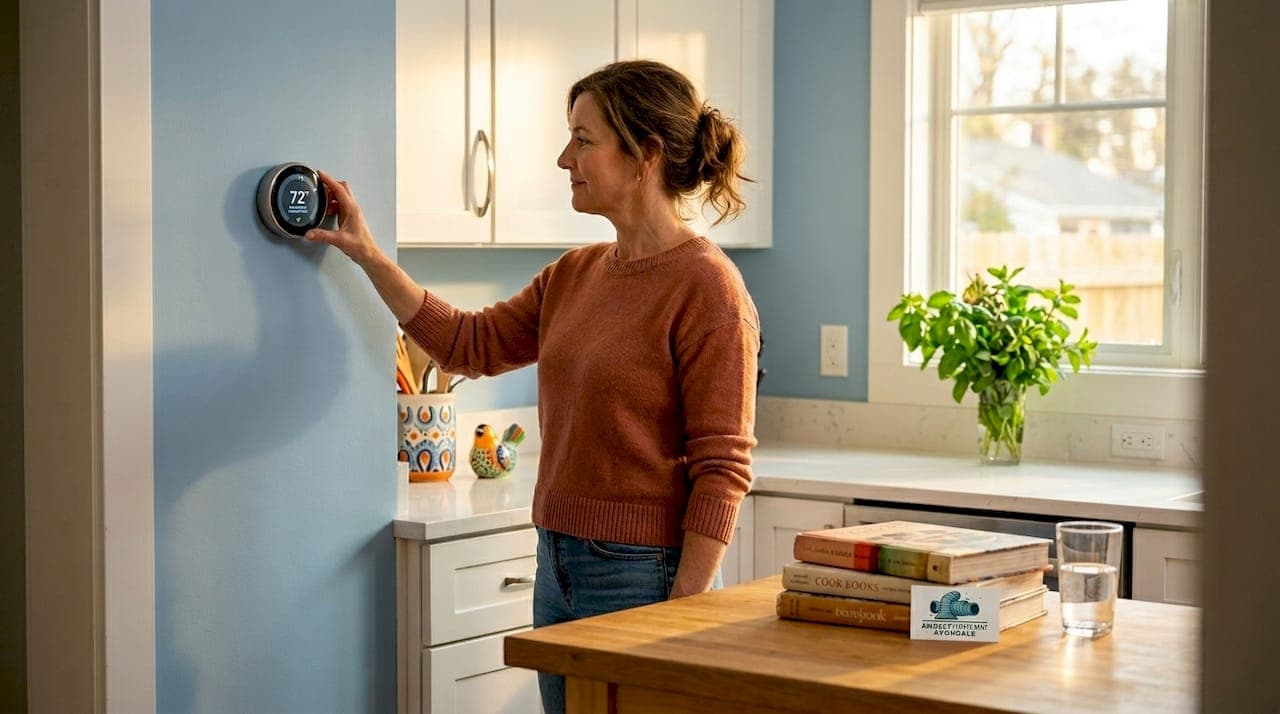
Here's where the role of humidity in HVAC gets expensive if you ignore it. Your air conditioning system handles two separate types of cooling load. Sensible load covers temperature reduction. Latent load covers moisture removal. These are not the same, and they don't cost the same to address. Latent load from moisture requires more energy than sensible cooling alone, and systems sized only around temperature can fail to remove enough moisture even when the thermostat reads a comfortable 72°F.
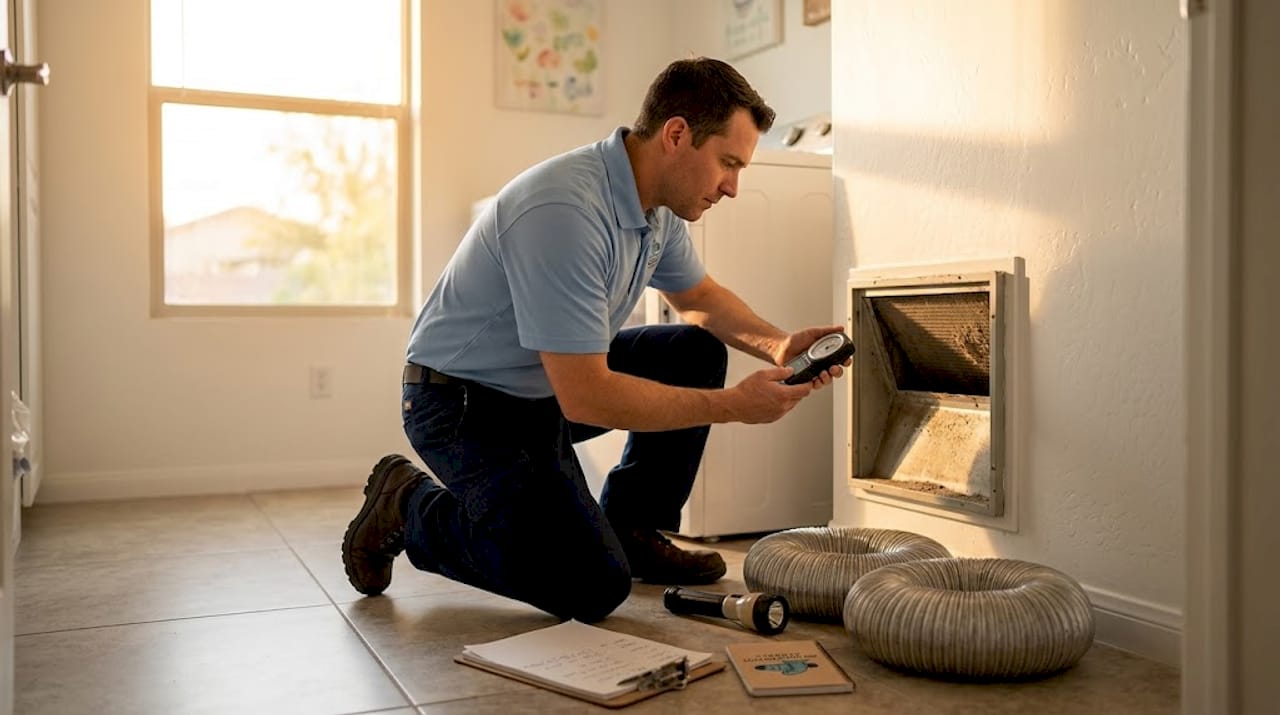
What does that look like in practice? You walk into a room that feels clammy and uncomfortable even though the temperature is right. The system is running, but it's not pulling moisture out fast enough. That's a latent load problem, often caused by a system that was never correctly sized for humidity control or a system running at too high a blower speed that moves air across the evaporator coil too quickly for proper dehumidification.
The impact of humidity on cooling efficiency is direct and measurable. High indoor humidity increases AC runtime as the system works harder to remove moisture, which inflates energy bills and adds wear to components. On the flip side, research has found that moderately elevated humidity can reduce HVAC energy use by reducing how often the system runs, as long as condensation is prevented. That's a counterintuitive finding that points back to the same core idea: it's not about forcing humidity to the lowest possible number but about keeping it in a range where condensation can't form.
High humidity also creates biological problems inside your system. Evaporator coils stay cold and wet during operation, which creates a hospitable surface for mold and bacteria if moisture lingers after the system shuts off. Proper HVAC maintenance, including cleaning coils and keeping drain pans clear, prevents moisture buildup that would otherwise degrade air quality and spread contaminants through every room in your home.
Pro Tip: Set your fan to "auto" rather than "on" at the thermostat. When the fan runs continuously, it blows air across a wet coil even when the system isn't actively cooling, re-evaporating moisture back into your home that the system just worked to remove.
The effects of high humidity on HVAC go beyond energy costs:
- Evaporator coil icing from poor airflow combined with high moisture load
- Condensate drain overflow leading to water damage near the air handler
- Accelerated corrosion on metal components and electrical connections
- Mold colonization in ductwork, distributing spores throughout living spaces
Optimal indoor humidity levels for your home
EPA and ASHRAE experts recommend maintaining indoor RH between 30% and 50% for health and comfort as a general target. That range works well for most situations. Thermal comfort guidelines extend this range up to about 60%, and research shows that indoor RH can safely reach up to 65% without material or health risks, as long as interior surfaces stay above dew point and air circulates well enough to prevent stagnant pockets.
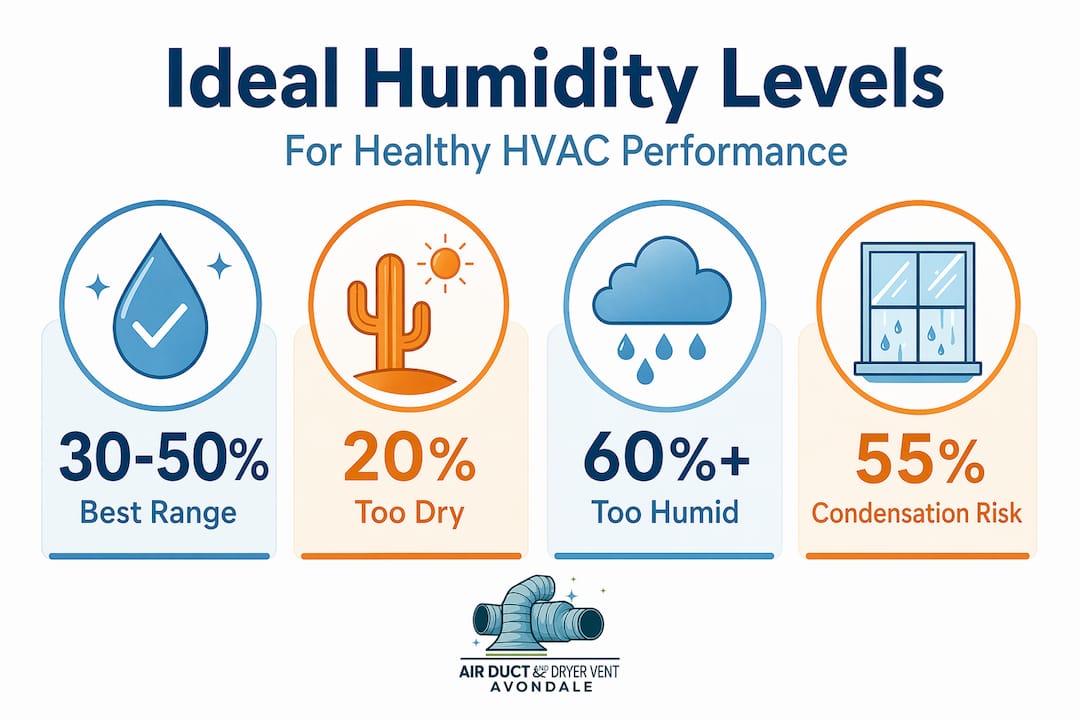
Both extremes cause real problems. The table below shows how different humidity ranges affect your home environment:
| RH Range | Comfort | Health Impact | Energy Effect | Condensation Risk |
|---|---|---|---|---|
| Below 20% | Very dry, irritating | Dry skin, respiratory irritation, increased static | Lower cooling load | Very low |
| 20 to 30% | Slightly dry | Mild respiratory discomfort | Moderate | Low |
| 30 to 50% | Comfortable for most | Reduced allergens, fewer dust mites | Balanced | Minimal |
| 50 to 60% | Comfortable to slightly humid | Borderline for dust mite growth | Slightly higher | Low if surfaces are warm |
| Above 65% | Clammy, uncomfortable | Mold and dust mites thrive | Higher runtime | High, especially on cold surfaces |
What this table shows clearly is that the 30 to 50% range isn't arbitrary. It sits in the zone where health risks from both ends are minimal and your system operates without fighting excess moisture load or straining to humidify bone dry air.
The missing piece in most humidity discussions is the condensation risk zone concept. Even at 55% RH, if a poorly insulated duct or wall cavity drops to a surface temperature below the current dew point, water collects there. This is why proper insulation and sealing are as much a part of optimal humidity levels for HVAC as the system itself. Good HVAC airflow management prevents stagnant cold spots that create localized condensation problems even when overall RH looks fine.
Pro Tip: Invest in a smart hygrometer that logs humidity over time rather than just showing current levels. A spike to 70% every evening in a basement tells you a very different story than a steady 48% throughout the day, and the pattern guides the right fix.
Common humidity problems and how to solve them
Recognizing humidity problems early saves you from expensive repairs and health issues down the road. Here are the most common signs that humidity management in your HVAC system needs attention:
- Condensation on windows or cold water pipes indoors
- Musty smell from vents when the system turns on
- Allergy symptoms that improve when you leave the house
- Visible mold near registers, vents, or in bathrooms
- Energy bills that spike without a clear change in usage
Once you spot these signs, the fixes follow a specific order of priority.
-
Control moisture sources first. Before you rely on your HVAC or a standalone dehumidifier to solve high humidity, find where the moisture is coming from. Moisture infiltration from outside or from leaks can overwhelm your system's dehumidification capacity entirely. Check for basement seepage, bathroom exhaust fans that vent into attic spaces, and crawl spaces without proper vapor barriers.
-
Seal the building envelope. Air leaks pull humid outdoor air directly into your conditioned space, adding latent load your system must constantly fight. Weather stripping doors and windows, sealing penetrations around plumbing and electrical, and checking attic hatch insulation all reduce how hard your HVAC works to manage humidity.
-
Inspect and clean your HVAC components. Dirty evaporator coils lose their ability to efficiently pull moisture from air. Clogged condensate drain lines back up and create standing water near your air handler. According to regular maintenance practices, keeping coils and drains clean directly reduces condensation problems and extends system life.
-
Add dedicated humidity control if needed. A whole house dehumidifier integrated into your HVAC system handles humidity independently of your cooling cycle. This matters in climates where humidity stays high even when temperatures are moderate, because your AC won't run as long, leaving moisture unaddressed. Standalone portable dehumidifiers work for single rooms but rarely solve a whole house issue.
-
Install a humidistat or upgrade to a smart thermostat with humidity control. Modern thermostats track RH alongside temperature and can trigger dehumidifier operation or adjust fan cycles to remove moisture more aggressively. This is one of the most cost effective upgrades for humidity management in HVAC systems because it puts control on autopilot.
-
Schedule professional assessment. If you've addressed the obvious sources and humidity remains a problem, an HVAC professional can evaluate whether your system is properly sized for your home's latent load, whether ductwork has leaks pulling in unconditioned air, and whether mold prevention steps are needed to clear what's already growing.
Pro Tip: If you manage a multi unit property, humidity problems in one unit often signal a building level issue, not just a tenant behavior issue. One uncapped condensate line or a shared crawl space with moisture intrusion can raise RH throughout an entire building.
My take on humidity management most homeowners get wrong
I've seen a lot of homeowners obsess over getting their hygrometer to read exactly 45% and then call it done. That number can genuinely mean very different things depending on what's happening inside your walls, your ductwork, and your crawl space. Chasing a single RH reading without checking whether your surfaces are above dew point is like checking your tire pressure while the wheel bolts are loose. You've looked at one number and missed the actual problem.
The biggest mistake I see in practice is treating humidity control as a product purchase rather than a system issue. People buy a portable dehumidifier, drop it in the basement, and assume the problem is solved. Meanwhile, the actual source, whether it's a leaking duct pulling humid attic air into the return, an uninsulated supply line sweating in a warm crawl space, or a bathroom fan that exhausts into the ceiling instead of outdoors, keeps feeding moisture into the home. You can't dehumidify your way out of an infiltration problem.
What actually works is starting with the HVAC system wear and maintenance picture first. Is the system clean and properly maintained? Are the ducts sealed? Are there moisture sources that bypass the system entirely? Once those fundamentals are addressed, even a modest adjustment to the target RH range can dramatically improve comfort and cut energy costs.
The newer smart humidity monitoring tools are genuinely useful, not just marketing. Continuous logging reveals patterns that single point readings miss entirely. A home that reads fine at 10am but climbs to 68% by 8pm has a clear and solvable evening ventilation or cooking exhaust problem. That kind of insight changes what you do about it.
Proactive maintenance beats reactive repair in this space every single time. By the time you smell mold from a vent, the problem has been building for months.
— Shaun
How Airanddryerventcleaningavondale can help you take control
If humidity problems are affecting your home or property in Avondale, Arizona, the solution starts with what's inside your ducts and vents, not just what's on your hygrometer. At Airanddryerventcleaningavondale, we specialize in the HVAC cleaning and maintenance work that directly impacts how well your system manages moisture.
Dirty air ducts restrict airflow and trap moisture, creating exactly the conditions where mold takes hold and humidity control fails. Our professional duct and vent cleaning services restore proper airflow so your system can pull moisture from the air the way it was designed to. We also offer indoor air quality testing to identify hidden moisture and contamination issues, and duct repair and replacement when leaking ductwork is feeding humidity problems throughout your home. Whether you're a homeowner noticing musty smells or a property manager dealing with system complaints across multiple units, we offer flexible scheduling and service warranties that protect your investment.
FAQ
What is the ideal indoor humidity level for an HVAC system?
Most experts recommend keeping indoor relative humidity between 30% and 50% for optimal health and comfort. Levels up to 60% are generally acceptable if interior surfaces stay warm enough to avoid condensation.
How does humidity affect air conditioning efficiency?
High humidity increases the moisture load your system must remove, which raises runtime and energy consumption. Properly managing humidity keeps your AC from working harder than necessary.
Why does my home feel humid even when the AC is running?
This usually means your system is sized for temperature but not for latent (moisture) load, or the blower speed is too high for effective dehumidification. It can also indicate infiltration of humid outside air through leaks in the building envelope.
Can humidity damage my HVAC system?
Yes. Excess moisture causes mold growth on evaporator coils, clogs condensate drains, and accelerates corrosion on metal components. Regular cleaning and maintenance prevent these issues before they become costly repairs.
How do I monitor humidity levels effectively at home?
Use a digital hygrometer that logs readings over time rather than just showing a current snapshot. Pair it with a smart thermostat that has built in humidity control for the most accurate and responsive management of your indoor environment.